Empowering the Digital Workforce with Sarah Krasley, Shimmy | Seamless
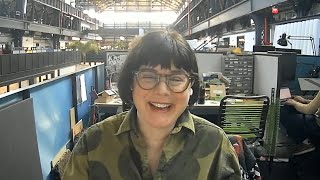
Sarah Krasley left Autodesk to start Shimmy, which uses 3D models and AI to train factory workers on advanced machinery. Her platform now operates in 25 factories, training 12,000 workers and delivering up to 20% efficiency gains. Winning the 3DRC Grand Challenge in 2018 gave her the credibility and customer access needed to bootstrap the company.
Chapters
Let's start, uh, with a bit about, about you, please. Can you introduce yourselves and tell us a little bit how you got into this industry?
Yeah, of course. Um, I've worked in digital transformation and manufacturing, I think, my whole life. Um, prior to starting in apparel, I worked at Autodesk leading an emerging technology group, so really looking at how you can take a 3D model, make that model extensible, and then bring it into all sorts of interesting applications across a design and manufacturing organization, and it felt like at the time the apparel space was just beginning that digital transformation, and it felt like a great industry where I could come and lend that expertise that I had from all those other manufacturing segments.
Amazing, I love that. And so you were our very first 3DRC Grand Challenge winner all the way back in 2018.
I was.
So yeah, what is that now, 7 years ago, which is, is crazy. Um, can you give us a brief overview of the solution or technology that you submitted that year for the Grand Challenge.
Yeah, I think it was very much within that thesis. You know, if you're going to the trouble of building this digital model of a garment, uh, how could you take that and bring it into other applications to really make it more cost-effective? So we thought about, can you take that 3D model and utilize it to train people? You know, we saw that the way people are trained, and this is still largely the case, is very manual. And inflexible, and the way the industry is moving, you just do not have time to make a paper-based curriculum and then codify that and then train a bunch of trainers to train people. So it just felt very natural to us that you would utilize digital technology to make sure that training is accurate every time, make sure that the quality stays consistent, make sure you can send it out just in time in case that manufacturer wants to or needs to upskill people for a more value-added product. So that was the— I believe that was the solution we pitched to you. And at the time, there was a lot of skepticism about it. I was looking back at the video we submitted with our application to you, and we really were not sure it was going to work either. And I think at that point, we were doing our very first pilots. We were utilizing AI for natural language processing. We were playing around with kind of more touchscreen applications due to the limited literacy that a lot of folks working in the supply chain have. We didn't have the money to go to Asia to do it, so we took the subway to Queens and worked with a few newly immigrated folks to New York City, and we found that it worked. It did indeed work, and it wasn't just a crazy idea. It was something that could actually get legs. So that's where we were, I think, when we first submitted to the competition.
I love that. And you've obviously come a long way since, which we'll get to in a moment. But you mentioned this a moment ago, but just to elaborate on it at the time, what were the specific kind of challenges that you saw in the supply chain that you were trying to tackle with this solution?
Well, at that point, brands were even having difficulty getting their vendors to, you know, purchase 3D modeling software, get enough folks there to be using it with a lot of mastery, so they were getting good virtual prototypes back. And we began looking at that challenge, but really quickly learned that the bigger opportunity, particularly when you're building a SaaS company, is to focus on a greater install of seats. And at that point, it was really like, how do we help folks on the manufacturing floor upskill so they can run multiple machines? And how do we give them the digital literacies they need to run those more advanced machines? And the interesting thing is that the digital pattern pieces that you find in modelers are also present in the digital controllers that you see in the newest machines. So it felt like, okay, this is a digital literacy that we can give these folks. We can build up their confidence and then over time upskill them and continue to upskill them into the jobs of the future as the industry becomes more automated and the factory floor has more digital tools.
I love that. I do remember it always sticking out in my head as probably one of the most sustainable kind of solutions that was put forward in the Grand Challenge. It really had people at its center, which I think was always such an important piece to it. So I always loved that. And in terms of challenges that you faced, either creating it back then or scaling it from both a technical or creative standpoint, what did you kind of come up against?
Well, I think it's a difficult go-to-market in this industry. We have— I heard Mara Hoffman talking about it recently on a podcast, and she's like, it's the same song over and over again. We don't have enough money, or if we had enough money, this is the way we would do it. And it's challenging when, you know, you have a new idea which you know is going to save people money, it's going to drive efficiency, just convincing that decision maker and getting over that first pilot phase. Is, is really a challenge. Like, we, we have gotten over that hurdle, but I remember it being tough. And I remember in the beginning, like, we're not venture-backed. We've, we've only grown through customer revenue. I'm not an heiress of a huge fortune. Um, so we've really, we've really bootstrapped. And the competition was so helpful in the beginning to give basically me visibility, to get in front of, you know, the Jamie Dunbars of the world and the Alexis Cantors and tell them, hey, this is my point of view on what I think this industry needs. What do you think? Where do you think it could go? And the challenge did so much for us to make that happen.
Amazing. And you just said it. I was going to ask, why did you decide to kind of submit for the Grand Challenge? But as you said, it was for the visibility. I remember you speaking then. I think it was at the New York event. It must have been, which by that point had been going on for a few years. And, you know, it still is one of our biggest events now that brings a lot of the brands. So No doubt the visibility side was great. In terms of what was the most valuable part of participating in the challenge? So, you know, was it more of a mentorship exposure, as you've mentioned? Was it funding? You said you weren't funded like that. So what were kind of the major values that you got out of it?
I think it was the chance to speak on a stage in front of an audience of people who would come to a PI Apparel, like since COVID it's harder and harder to get those speaking slots, particularly for, you know, a young company. So the chance to do that was really helpful. We met customers there, we met folks from VF who've been a long-term customer of Shimiz, and that was really valuable. So, so yeah, it was great. I mean, IEEE is, is also an amazing stamp of credibility. We've gone on to work on government contracts until recently, and having that credibility next to our brand has also been really helpful to say, yeah, these people are legit. This really renowned group has said, yeah, they're, they're onto something and it's something robust that you can count on.
Yeah, I love that. And was there a particular kind of a success moment that you look back and think on that was kind of a turning point for you guys?
Hmm. Well, I think they show up all the time, but Lourdes Foundation really took a chance on us right in the very beginning. I think right around the time we applied for that challenge and they saw something in it. I think I am, for better or worse, gifted with foresight. You know, I was working on carbon reduction 20 years ago. I saw that automation was coming. And now, you know, it's been 8 years and just now we're getting reports from Bangladesh saying 30% of their workforce is being reduced due to automation. So I'm always pretty far out ahead. Some would say maybe too early. I don't because I think—
Never.
—technology-laggard industry segments, it takes a lot of time to get folks to come along with you. But I think GLaDOS took that chance on us early, and I'll be forever grateful to Leslie and the team for doing so.
Amazing. And, you know, since then, so as we've said, it's been, uh, I keep on saying 8 years, but I guess it's 7 years. Um, how has your, uh, solution kind of, uh, developed or been commercialized more or scaled? Like, what does it look like today?
Yeah, well, we've been working in about 25 factories. We began looking at, um, because there's so much happening in the labor pool right now where a lot of workers are getting laid off They're not seeing a lot of success when they go to a new factory gate and try to get employed. So what we've begun doing— upskilling still in factory classrooms, but also in these neighborhood technical training centers. And that's been really interesting because this is like a neighborhood place where if you're a worker and you need to get some training, you go. But their machines are from the 1960s. They're not at all aligned with what they're going to face when they get employed. And it's been wonderful to see how a digital tool can fill that gap, make that experience more modern, and help bring everybody along. So that's been really exciting. I think we're almost at 12,000 workers that we've trained. And, you know, we've helped people get jobs. We've helped people gain promotions that allowed their family to save money and pay off debt. We've helped factories achieve 20% efficiency bumps, which is a big deal in this day and age where everybody's looking to save money. So yeah, it's been quite a ride.
Those are some big, those are some big numbers. Well done. That's amazing to hear. I'm so pleased for you.
And thank you.
I guess looking back now, you know, was there a particular lesson that you learned from the challenge itself or being part of the Pye Apparel event, or just in general in those early days? Was there a moment that really, you know, you learned a lot from?
I mean, I think I'm naturally a curious person, and I'm naturally somebody who believes if, if you lose, you, you win as long as you keep learning. I know it sounds cheesy, but it really is true. And I think if I imagine myself back then, it was quite a leap to put that thesis in front of that audience. I really didn't know many people at that point. I had been working with like crushers and cars and really heavy industry at Autodesk. So coming over, I was like, I don't know what they're going to think of me, but people were so receptive. I ended up doing some volunteer work with the 3DRC group that was looking to define, you know, what are these jobs of the future, what are the criteria these folks have, and how do we upskill them and reskill them so they can ascend to those positions. And that was a wonderful chance to think with people, you know, and that really built some amazing professional relationships that I deeply treasure. So yeah, amazing.
I'm so glad to hear that. And also that 3DRC work, which is still ongoing because of course the tech has never stopped, it keeps on scaling, keeps on changing. AI is now in the mix, which has changed it even more. So yeah, that subcommittee, the education subcommittee, I remember you being very involved in that in the beginning. Well, look, Sarah, I'll end with this then. The Grand Challenge is still going, so we're about to launch for 2025. What advice would you give to any startups, researchers, or innovators that are considering entering this challenge?
Well, I think you should. I think it's a wonderful chance to get some visibility, show your ideas to the folks who are the decision makers at all these brands and manufacturers that you'll be selling into. And I think like just know it's a long road. And it's so important to, you know, feel passionate about the thing you want to put out into the market, but also really think about it and say, is this something I'm going to be interested in for a long time? And I'm lucky enough and living proof to say, yeah, it's been 8 years and this is still the problem that I love to think about every day with myself and my team.










