Empowering your Manufacturers to achieve Your Goals | Coats Digital | PI Apparel
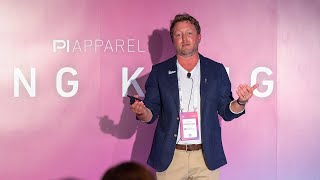
The presentation, led by Kunal Kapoor (Managing Director, Coats Digital) and Stuart (Global Brands Director), introduces Coats Group’s 270‑year heritage and its digital arm, Coats Digital, a decade‑old technology provider focused exclusively on the apparel, textile and footwear supply chain. It outlines the urgent need for digital transformation in fashion to meet consumer demands for speed, personalization, quality, price, and sustainability, emphasizing the triple‑P framework (people, planet, profit) and the risk of greenwashing. The speakers describe Coats Digital’s portfolio of solutions: Vision PLM for product development continuity, FastReact Fabric for fabric consumption and cutting optimization, GSD Cost for standardized bill‑of‑labour, SMV calculation, fair‑wage benchmarking and capacity planning, and FastReact Plan for production scheduling using a digital twin that balances capacity, material availability, and critical path while learning operator curves. Real‑world customer testimonials from Hyderabadi Group, Heller Apparel Holdings, and Gürmen Group illustrate measurable gains (e.g., 13% efficiency, 20% productivity, 23% hidden capacity). The narrative stresses collaborative vendor‑brand relationships, data transparency, and future‑proofing manufacturing. The session concludes with a brief Q&A about FastReact’s connectivity across brands and manufacturers.
Questions this video answers
FastReact Plan operates as a digital twin that ingests brand‑level order forecasts and confirmed orders, aligns them with material availability and capacity at each manufacturing site, and then pushes the optimized production schedule back to the brand’s ERP. Real‑time shop‑floor data is collected and fed back into the platform, allowing the brand to monitor execution, adjust plans, and maintain visibility across the entire supply chain.
Chapters
My name is Kunal Kapoor. I'm the Managing Director for Coats Digital, and I'll also share the stage with Stuart, who is our Global Brands Director, who's going to be the main presenter. I'm just here to talk to you a little bit about the organization and who I represent. So Coats, I think we don't need too much of an introduction. I mean, a lot of people in the apparel and the textile and the footwear space know about Coats, but just a quick one. We've been around for 270 years. We started in a small place called Paisley in Scotland. We are right now not headquartered there, we're headquartered in London. We're listed on the London Stock Exchange. We are part of the FTSE 250 and the FTSE4Good. We're the world's largest in threads and also the world's largest in footwear components. So, you know, we straddle both these spaces. We are also now recognized as the top 25 best places to work. By GPTW and Fortune, which we think is a great feather in our hat. And we've been present now in about 60 countries, 16,000 associates globally. All right, and of course I think we've straddled every single country, every single region, every single city, wherever textiles or apparel are made. So that's the parent company, and I'm gonna also talk a little bit about Coach Digital. Since, you know, I represent this specific part of the business, Coats Digital is pretty much a baby compared to Coats. We're just 10 years old, and we've put a set of softwares and businesses and solutions together to help our customers in the same apparel and textile space. We're the industry experts in whatever we do. We're not a general-purpose technology company. We're a technology company that supports people in apparel and textile and footwear. Okay, we also get differentiated because we understand the space, we understand the domain, we understand the industry wherever we fit in, and we've got associates and people in Codes Digital present in every single location where garments are made. Okay, so we straddle Latin America, Central America, we are present in Europe, we are present in North Africa, we are present in all countries in Asia. We are very well represented, even with Coach Digital, which is a much smaller part of our business, because we always tend to be very close to where our customers are. So we're positioning ourselves as technology leaders because each of the products that Stuart is going to talk about is a flag bearer, has leadership positions in the space we are in. We've generally for 270 years not known to play, you know, second or runner-up position. We've always been, you know, market leaders in whatever we do. With that, you know, I hand over to Stuart who's going to talk to you about our products, and before that, there's a quick video about who we are.
Yeah, let's do it.
The fashion industry has been changing slowly for some time, trying to keep up with consumers' evolving priorities, but it's simply not fast enough. People want more, and they want it now. More choice, more personalization, higher quality, better prices. And they want it done sustainably and responsibly with less waste, which for you means more complexity and cost. You know that, and we do too. As part of Coats Group, the world's leading industrial thread company with more than 250 years heritage, we know the industry, the processes, and the opportunities better than any other tech company. And we specialize and solutions for the industry's supply chain challenges. But it's not enough to know. We have to optimize, connect, and accelerate key processes in every link of the fashion supply chain. To meet customer demands, survive and thrive, we have to digitize. And we need to act fast and act together. Turn your promises into action now with Coats Digital's ecosystem of business-critical solutions covering design and development, cost optimization, production planning and control, fabric optimization, and shop floor execution. Leveraging deep industry and technology expertise, our solutions are developed specifically for fashion brands and manufacturers. As your long-term partner and proactive advisor, we'll show you a solution that addresses your challenges and supports your strategic goals, helping you to reduce costs, boost efficiency, increase speed and agility. But this is about much more than right now. It's about the future. Your digital transformation will connect people, processes and data, allowing you to deliver with speed and agility, with less waste and more transparency. It will help you look after your people, your performance and our planet. And it will provide the evidence and accountability you need to show you're contributing to a better and more sustainable world. Time Time is running out. You know it, we know it. To transform and grow your business, seize new opportunities, and secure your place in the future of fashion, talk to Coats Digital, your digital transformation partner for the fashion supply chain.
I forgot how long that video was. I could have sat down for another couple of minutes before getting up. My name's Stuart, and I, as Kunal quite rightly said, I am the brand director. So I kind of— and I want us to approach this slightly differently to me showing you what technology we have, because you guys mostly know what technology we have. I know a lot of the faces out here already. I spend most of my time doing two things. The first thing is working with brands to identify what it is that they're trying to achieve and how technology can help them do that themselves internally, adding into their existing infrastructure. Where are the gaps that they have? What is it they're trying to achieve? And what is it that we, and in collaboration with other solutions can help them with and support them with. The second one then is something that's probably not seen across many tech providers, and it's something that makes us slightly different, and really it's because of where our heritage comes from, is how relevant, how important are the vendors to helping us achieve those things that we're trying to achieve, those strategic goals, those ambitions. And Terry touched on quite a lot of those early on today as well, as well as other people in other presentations. So what we do is we look at the importance of the vendors in helping us, the brands, the sourcing. And I'm going to kind of oversimplify this a little. When I talk brands, I'm talking brands, retailers, and sourcing businesses. And then I'm going to talk manufacturers, just to kind of separate into two simple, two simple ways of thinking. So how important is it that the vendors are on this journey with us, that they understand our strategic goals, that they understand their importance in how they play that role in helping us achieve our goals. So the other half of what I do is not just look at what brands and retailers and sourcing businesses require, but also about how we make sure that the vendors that we're working with are ready. That, that it may not be a technology that we need, that, but actually they have intelligence, they have insights, they have data, they have information that really will support us achieving our goal. So the second half of what I do is spend time looking at those gaps. What have we got to access? Where are those holes in our supply chain partners? And how do we get that information back to us? So think about that as we, as we work through today's presentation. A lot of this we've seen, we speak about daily. These things don't seldomly change, they just change in terms of order of priority. And depending on where we are in the world today, whether it's pricing challenges that we're having in Bangladesh, whether it's a, you know, a pandemic, or whether it's the fact that we need to— all of these things just move around the geopolitical framework that we're working within. So I'm not going to spend too much time on that. We all understand, we all know those challenges, but actually those have real implications. They have real implications on us as brands and retailers, but also on the vendors and actually what's happening in real world. What are we really focusing on now though, and how we're managing those problems, those challenges that we're dealing with, is different for each business. There are some real common themes running through everything that we've seen, everything that we're talking about, albeit we might do it slightly differently within our own businesses. I'm going to touch first on sustainability. Sustainability is huge, and I think today I've sat in quite a few of the presentations When we talk about sustainability, I think people think about the green element, the planet element. How do we reduce waste? How do we put less toxins into the water? How do we reduce our carbon footprint? And that's a real big focus about what it is that we're trying to achieve. But I look— I like this, the triple P, the triple P model: planet, people, and profit. And it's the people and the profit bit that I just want to talk about a little bit more. I think everybody understands we need to be trying to focus on the green element of it. But when I talk about people, The people element for me, particularly, is the fact that there are people involved in the garment's production. We need to make sure that those people are being looked after, that we're taking care of them, but actually that we as brands and retailers and sourcing businesses are making sure that our ask of our vendors is not putting the pressure on them for them to be pushed into that kind of unethical way of working, particularly with the people. Are we putting too many demands on them that they have to be, you know, are we putting overtime on? Are we asking them to be pushing their workers too hard? So there's a people element that I really want to focus on, and I'm going to cover a little bit of that today. And then the profit or performance, whichever way you want to look at it. But it's about everybody in our supply chain, all of our partners, making sure that they're all, as Terry said earlier on, everybody wins. Everybody needs to win in order for us to be reinvesting in the future of our manufacturing, to be educating those people in their skill sets. So that margin has to be available and that profit has to be spread across the industry. One of the, one of the second things that I really want to think about is, is greenwashing. Greenwashing for us is what is the second highest after sustainability that's on the consumer's mind at the moment. And if you look at what greenwash is really doing is trying to make sure that whatever it is that we are doing, we're under huge pressure from consumers is to make sure that everything is visible, everything is evidenced, everything is transparent. One of the things that we make sure that we do and that we want to try and ensure that we're helping our partners with is making sure— is ensuring that whatever we are doing is exactly that, is transparent, is traceable, that we can make sure that we are evidencing how we are managing with each other to avoid the whole greenwashing. And thirdly, and I think this is what one of the things that we're really here to talk about today, is the future-proofing of the manufacturing. We know that since the pandemic, relationships between brands and sources has not been amazing. We know that what needed to happen was the relationship that we had with our manufacturers was heavily built on trust, long-time relationships. You know how I work, you know, we don't need to be that transparent and that visible, we understand each other. Those kinds of relationships went. So what ended up happening was that with the suppliers that we needed to build relationships with, they didn't know us, they didn't understand our request, they couldn't translate what we wanted because they know us well enough, which meant that we had to have a framework, an infrastructure that allowed us to do that, build those relations, build those strategic important relationships with them outside of that kind of longstanding knowledge and trust. So, having those strategic partnerships is one of the the third thing and one of the most important things that we need to be thinking about. So as tech providers, what's our responsibility? We can't do everything. Unlike lots of other tech providers, what Kunal showed you earlier on was that we have a number of technologies. So although Kunal talks about Coats Digital only being here for about 10 years and a baby, actually we have products in our suite that are over 30, 40 years old. What we've tried to do here is make sure that we can put together a portfolio of technologies that are support— that make sense, that are meaningful, and they can support each other. But obviously we can't do everything. No tech provider can. So how do we collaborate with each other and how do we make sure that we're getting all of these transparencies and these ways of communicating really effectively done and dusted? What we're going to focus on today— so we can't do everything, but what we can do is we can focus on a couple of those things and collaborate with the rest of them. I'm going to be talking about a couple of things of those today. One is productivity improvements. We've talked about the fact that sustainability, for example, does require additional cost, does require additional investments. So how do we close that gap between cost and savings, and how do we find those? And that's in the things like the productivity improvements, developing of skills, certainly around cost centers, and sharing that KPI, sharing that insights and that business intelligence. How do we make sure that what we're doing is we're using the intelligence we have all the way through the supply chain and making use of it, making decisions with that, making sure we have it back at the right time to be able to make sure we get it better and more— get it better the next time. So, what we have, and I'm going to work here from top left to bottom right, is a number of applications I'm not going to talk to you about them all today. I'm going to talk about two, but I just do want to give you a little bit of an understanding of what we have. The first one is Vision PLM, that's up in the top left-hand corner. Most brands, retailers we know have a PLM. Sourcing businesses and manufacturers, not so much. So it's how do we make sure that we can continue that product development piece all the way through the supply chain. The second on the top right is Fast React Fabric. So this is split into two parts. Fast React Fabric fabric has a buy element to it. So this is really about how do we calculate, project the fabric consumption of a particular garment in a particular order setting. So considering its quantity, its size ratio, the production environment that it's going to be produced in, so that we can think about what it is that we need to order to reduce that waste and how we use it best. The cut element of that, so the second part of this, is really about in real life, on shop floor, in the cutting room, what do I have available to me from a fabric perspective, and how am I going to consume that the most optimal way possible to reduce waste? Had several conversations with people in the room today about the fact that from a sustainability perspective, reducing that fabric waste is really, really important. So having an understanding of how to utilize what you have most effectively in the cutting room is a real key thing for them. So it's not just about sustainable materials or making sure that I don't buy too much, but actually what am I doing once I've got it in my cutting room and how do I make sure that I optimize that really well. The bottom two are probably the most— they certainly are the most long-standing solutions, and we have a real good presence here in Asia around GSD Cost and Fast React Plan. Does anybody know GSD Cost? I know some of you have it, perfect. Does anybody know Fast React Plan? You may know it as Fast React rather than Fast React Plan. Okay, so I'm going to start on the left-hand side here. So GSD cost, and I talk about GSD in two ways. The first way is that it's a methodology, and it's what mostly we see in manufacturers or within the manufacturing excellence teams within brands and retailers as well. This is about how do I remove any waste in the manufacturing process that means that it's becoming a less efficient production— garment to produce. So how ought we to produce a garment? Creating a full bill of labor, which allows us to do many things actually, but initially it just allows us to produce a standard by which we can operate with globally. So that methodology is something that's embedded into the factory itself. We then use that methodology and certainly for those who have manufacturing excellence teams will understand about methodology and the standardization of that. We then use that methodology in a different way, and this is where brands and retailers primarily use it. They take that methodology and they use it to build a bill of labor for a particular garment, and you can interact with that at different levels, which results in an SMV, a minute value. Now, that minute value for a brand or retailer is really important, one, from a costing perspective, How do we turn that minute value into a cost? And for us, that's really, really critical, certainly when we talk about the people element of sustainability. How do we make sure that we're looking after the people, we're paying our factories correctly? And as a result of that, we formed a relationship with a partner called the Fair Wage Network. Fair Wage Network independently produced for us benchmarks for geographical locations. So legislations within those particular regions that have different benchmarks. We use 3. We use a minimum wage, a living wage, and a mean living wage. They're slightly different criteria to them. But as a base level, if we just use the minimum wage for a second and think about that, what that means is that any moment in time, I can take an SMV for a particular garment, a standard minute value, and I can then run simulations of that within different geographical regions, different factories, and say, if I was taking that garment out of Bangladesh, if I was taking it out of China, if I was taking it out of India, what should that result in as a cost? And then we can start ring-fencing that cost. But it's not just a cost, it's a fully evidenced, broken-down bill of labor supporting the cost. So when we're speaking with our vendors, and in return when vendors are speaking to us, we can say this is exactly the cost that we've— we're expecting in line with the minimum wage or the fair wage for that particular region, and this is how we've got to it. So it becomes a fact based, evidenced negotiation— sorry, standing point benchmark for that particular cost in that particular region. Massive, huge when it comes to sustainability and of also optimization of cost projections. The second one then is then we use capacity. You know, everybody, we all book our capacities, we all use our vendors. It then gives us much more accurate control about how we better utilize and optimize that capacity. If I know it's a a 2-minute garment in that particular factory, it's a 2.2-minute garment in that particular factory, and it's a 2.4-minute garment in that particular factory. When I'm consuming that capacity, I'm consuming it in the most effective way. I'm sure some of you will probably understand and know a lot about that. I can't talk to you about them all as a quick overview. We do have a local team at the stand, so please do come out and have a chat to us, but there are a couple that I do want us to focus on. The first one is GSD Cost. I have already given you a quick overview, but I just want to talk about some of these things. You don't have to be an industrial engineer to use GSD Cost. I think people hear about GSD and the methodology around GSD and GSD practitioners. I'm not an industrial engineer, I can use GSD Cost. If you are an industrial engineer and you are GSD practitioner status, then this is a really, really powerful tool, but I don't have to to be. The reason that is, is because we take that level of complexity, that level of detail, that level of expertise, and we consolidate into a level that's usable. So, we kind of call it, it starts at the bottom with what we call motion codes. Those motion codes then get converted into operations, operations which we execute on the manufacturing floor, and then consolidate into features. So, my collar, my cuff, my front, my back, all of those types of things. It's at that level, people like me who aren't industrial engineers can start producing real accurate cost projections and SMV projections. Of course, then what we then start doing is pushing this information into other tools. So we have the API associated to this piece of technology, which then allows us to push that into our costing tools or allows it to push it into our production planning tools. But most importantly, this is theoretical. So at this point where we're running these, these simulations or these projections, it's theoretical. What we then need to understand is actually the actual execution on the shop floor. So it was a 3-minute garment in theory. If I then understand exactly what it is in that particular factory, and we can understand their output of that, what it actually was, we can then start pushing that data back and start getting it better and more, more refining it, more accurate for the next time. So there's lots of stuff in GSD cost. I want to speak to you briefly about it. Come and have a word with the team and we'll give you a detailed demo. All of these things result in benefits. They should. If we're doing it right, and we're doing it effectively, and people are trained the way they should be, we should be producing benefits. I'm not going to go through these videos, but I do want to just show you. This is an example, a case study of a vendor that we went into, and this is the types of things that we do when we talk about how to find those efficiency gains, how to get those cost improvements to then fund other things like the increase in raw material purchases for more sustainable fabrics, etc. We take an operation, we look at their motions, we break that down, and then we assess it. We then take it away, we remove any of those non-value-added motions, so those things that that particular operator is doing that isn't required to execute that particular operation. And then we train them on the GSD methodology. So we take that operation, we take it back to GSD. A GSD practitioner, for example, will then punch that into GSD, and it will give us a full breakdown of exactly what motions are required in order to execute that more effectively. And as you can see, they're the same but two different, two different ways of executing that particular operation. Here we're seeing a 13% improvement with GSD cost. Again, This is about empowering our vendors with the right technology, the right mindset, the right attitude to support the brands and the retailers as well, and achieving those goals that we talked about earlier on. FastRoute Plan. So this is probably our best-known product. It's 40+ years old, very well known in Asia, and it's a production planning tool. I talk about FastRoute Plan in 3 ways, and there are, there are FastRoute Plan experts in the room, so I need to be careful that I'm not getting this wrong. Fast React Plan operates on 3 concepts. So it's a production planning tool, again theoretical, it's a digital twin of their production environment, where we can then use this planning tool to take those orders, whether forecasted or confirmed orders or projected orders, and plan them the most optimal way, considering 3 things. The first thing is what capacity do you have available. Capacity can be defined different in different factories, of course, and also how you look at what capacity is available in which particular part of that factory is also slightly different. So, but we look at capacity and how we consume that. The second thing then is our material availability. You can't go ahead and sew anything if you haven't got the fabric to sew, so have we got material in the right place at the right time? And the third thing is critical path. So we've all been in that position where we either start sewing without the right approvals, or we hold the sewing line while we're still getting those approvals. This is about how we proactively manage all of those three things, and at two levels. We call it high level, which is kind of capacity consumption overall, or low level, where we're looking at particular sewing lines, for example, and exactly how those orders are placed on that particular sewing line. But it's really smart, it's really dynamic, so it does things like, it understands as an operator my learning curve, is going to change the more that I sew this particular garment. Things like that, that we build into this, so that of course it becomes much more realistic in terms of the, the way that we execute. When we then execute, again, it comes back to— this is theory— I want to then capture exactly what's happening on the shop floor to make sure if it's according to plan or not. It's about getting that data back from that shop floor data collection system back into into our planning tool so that we know actually how we're performing against our planning. And making sure that we're changing, we're updating that, and we're refining that as we go. A bit of a case study again here for FastTrack Plan, 20% improvement in productivity. If we can achieve 13% extra efficiency here, 20% extra productivity here, what this starts to become is each independent piece of technology providing a benefit. But actually, when you start consolidating those, and you consolidate those in a single factory, you start to see some real, real-world benefits being delivered here. As a brand in the sourcing business, actually, you've really done nothing. What we're trying to do is get this technology into the right place into the supply chain so that this becomes something that the vendors really benefit from. But as a result of the benefit, The vendor's benefiting from it, it feeds into and it supports your goals as brands, retailers, and sourcing businesses. This is a great example of how these two solutions work together, can actually really support everybody that's involved in the process. We kind of categorize it in cost optimization and manufacturing excellence, but having a real good way of projecting those costs, projecting that capacity, Being able to make sure that what we're asking for is fully evidenced is really key. And then seeing how that's then used and executed against on the shop floor and how that really provides benefits is really important. But, you know, I don't just want to be talking to you about it. I also want to share some experiences from our customers.
I'm Rakhil Hyderabadi. I'm a director at the Hyderabadi Group. We're a family-owned business. Headquartered out of Sri Lanka. We've been in business for over 100 years. We've chosen Coats Digital to be our partner on this journey simply because we have trust. There is an integrity factor, and we know that the Coats Digital consultants have that industry knowledge and really understood the business. FastReact Plan is, is an interesting tool because it's not just a production scheduling tool. It also also has the ability to run a critical path. We slowly started to see our efficiencies improve, and what it created was this understanding that, wow, we actually have 23% more installed capacity than we thought we had. The beautiful thing I really love about GSD is that it's a scientific approach. It's not using someone's feelings or someone's views When you work FastReact Planning, Coach Digital suite of GST cost together, you're suddenly able to unlock this value where you see the sea of opportunity, which is really exciting.
My name is Ruwanthi Fernando and I'm the Group Chief Information and Process Officer at Heller Apparel Holdings. We are a $270 million company with 10 factories. Heller Apparel Holdings has been using FastReact Plan for about 9 years. Having the functionality provided by FastReact Plan, we are able to accurately plan our capacity across our production sites, and by doing so, we are able to understand key metrics such as on-time delivery to meet the customer demands. For companies that require a planning solution integrated with its ERPs as well as the production systems, we would certainly recommend using FastReact Plan Welcome to Gürmen Group.
My name is Yasemin Gür Solmaz. I am a board member responsible for production of our company. We aim to make the premium suit with the best efficiency, the best quality, and the most productive-culottes. Within this journey, we have implemented GST solutions with Coats Digital. We have seen By adopting this great technology, that the worker, the management, and the product has become better, more effective, and accountable for all. Coach Digital was our main partner during this transformation roadmap. Why we chose Coach Digital? Because they are the market leader, they have great expertise, they have the best platform for this solution. And they have a great local team for the implementation.
Just before we conclude the session, one of the things that I spend a lot of my time doing, and it's really important as part of the overall process, is that we don't start thinking about the brand or the retailer separately from the supply chain partners. This has to be a real collaboration. We think when we approach this, we think about what is it that we're trying to achieve? How do we align ourselves on those, those responsibilities, those strategies, those priorities? And how do we make sure we're bringing our vendor partners along on the journey with us? So it's about brand and manufacturers, not just brand, not just manufacturers, not seeing them separately, but actually seeing them as a whole. And looking at how we support each other through the whole process. And if I bring this back to some of the things that we talked about earlier on in the presentation, you're only going to achieve your sustainability goals with your partners and your brands, your retailers, all aligned. It came up in some of the other presentations about people's, you know, the role of everybody in the supply chain process from beginning to end to deliver against their particular element to make that achievable. Because we have tools that operate on global standards, we can be fully transparent. We know we can share that detail, we can evidence that detail, we're avoiding those greenwashing issues that we're trying to avoid. And the way that we're future-proofing manufacturing to make sure that we're looking after tomorrow's generations, to support the demands of the consumer in the next, uh, for years to come, it's really about making sure that we've built those strategic relationships. Those strategic relationships are not just trust, or not just longevity. It's about integration of technology. It's about transparency of data. It's about insights and intelligence that we share with each other as part of that overall journey. So it's about, it's about everybody, not just about one. So how do we, how do we do this? How do we make sure that we're on the same page? How is it that we are sharing those things? We've had— I want to share a couple of experiences with you around how we are doing that. And last year and the beginning of this year, we've already started to be involved in and work and support and collaborate with some brands. Here's a couple of examples of them. But what— it's pretty much like what we're doing today, but on a smaller version. It's a single brand, but it's many vendors. It's those strategic vendors that we want to work with, aligning those goals, making sure that the vendors understand that, you know, their role, their importance, how important they are to making this achievable, how important it is that we get it right with them, that we upskill them, that we make them part of our extended family. We bring them together, we share that, we help them see their importance, and then we spend that time to help them understand how relevant this is to them, as well as their brand and their customers that they're trying to support. This isn't something— it can't be something that's seen as brand or retailers pushing technology onto their vendors. It has to be vendors understanding the value and the importance to them, how this becomes a strategic advantage, how it becomes a competitive advantage for them to be approaching customers saying, this is what I can offer you. This is how I want to be part of your infrastructure. This is how I want to give you this data and this intelligence back to you as a brand or as a retailer to make sure that I can add value to your process. I can give you what it is that you're needing in terms of your longer-term goals. So this is something that we do. It's a journey that we started. Now we've been doing it for a couple of years. Here's a couple of examples, and we want to continue doing that. So if you're thinking about how to— how is it that we start this journey, how is it that we start working with our vendors closely, then come and see us, and we'll talk to you about some of the shows that we've put on already. OK, that's everything I wanted to share with you. A couple of minutes ahead of time. You're not kicking me off just yet. So we're open to a couple of questions. Any questions from anybody? Anything you'd like to add? Come on, Mansi, you must have something. Oh, thank you. Hi.
Can you tell me a little bit more about how fast react is not just at the manufacturer end, but also at the brand? How does that connect? How does that connectivity work?
So, there are two— I would say there are two primary ways that it's connected. The first thing is that we need to plan the utilization of our supply chain. So, we need to do some high-level planning as a brand or as a retailer to make sure that we're optimizing it, giving the plans at both the forecasted and a confirmed stage to our vendors so that they can replan in much more detail themselves. Once they've then planned that, what typically happens is Fast React Plan becomes the, you know, the target, the benchmark to what we're trying to execute against. We then get those updates from their shop floor data collection systems that says, actually, this is how we're progressing. So some of the real questions that I have from brands to their vendors: how much open capacity have you got? How much is left? How much am I consuming? Are we on track with mine? And by the time you get the answer back from the vendor, it's a day or two late. And actually, there's probably a little bit of buffer in there in in terms of what it is that they're giving back to you. So the real— so the first thing is early forecasting. I want to give you a good sight of what it is that we want to be achieving from you. And then you can plan it at a lower level. But then once you've planned it, help us understand how you're actually achieving or performing against that plan. And then give that back to us. So as a brand retailer, I can say, I know this is my order book. I know all of these orders are on time, and actually those ones are progressing later, it may be because it's taking longer than expected. So there's a couple of things I need to do: adjust my capacity expectations or consumption within that factory, because we know it's going to reduce if certain orders are taking longer than planned. But also, I then need to go back to my, my original order, my original costing with my SMV, to make sure that that then is reflected in any future orders I place. So it may just— if I talk about it as just a production planning tool, actually Once it's in that factory, having updates of where they are is massively important to you. If all of a sudden they're overperforming on an order, man, so you've got some extra capacity that you could be utilizing. The better you utilize that capacity, more efficient they become, there's a cost advantage. Not only a cost advantage, but productivity advantage as well. Thank you so much for your time, guys.










