End-to-End 3D: But Where Does it Truly Ever End? | CLO 3D | PI Apparel
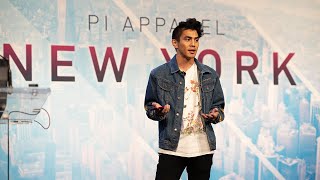
CLO Virtual Fashion executives explain their ecosystem for 3D garment creation and management. Their eClo system connects design tools, collaboration platforms, and a marketplace to let brands use digital garments across production, e-commerce, virtual try-on, and metaverse worlds like Roblox and Fortnite. A partnership with Epic Games deepens Unreal Engine integration.
Chapters
Hi, everyone. A lot of familiar faces. Good to see everyone. I looked at the agenda and realized lots of people are talking about end-to-end. So hopefully, this is interesting and what that means to everyone. But today, we wanted to talk mostly about, as Clo, we've been growing, and we kind of had this— forgive us, we love puns— an eClo system, if you will, of what we've been building. And so I'm more on the Clo side, so more on the software side itself, the creation tool. And then Serena will present about Closet. And then Jamie will present about Connect, which is kind of like looking into the future. But I wanted to start off to explain us as a company because I think that's really important to understand how we build things and how we function. One of the first things to know about us is that our mission statement is to empower everything related to garments, whether that's you as a patternmaker or designer who's trying to build something in 3D and actually make it have data, make it actually— empower you as a person and actually be able to speed things up and make things easier, or if it means something as simple as, how do I get a 3D asset onto my website? And then our vision is to be the beginning and end of every garment on Earth. And what that means is, what is the beginning? I think when we used to start it, when I started at CLO 7 years ago, the beginning was patterns. But now that's changed to trim, fabric, digitization of all these different things to build your asset library. And then the end back then used to be being able to get, reduce a proto sample. But nowadays, the end is what? The metaverse, video games, anything you can think of, AR, XR, et cetera. So that's what we're going to talk about today holistically. So as an organization, we've been trying to identify ourselves. I don't know if you guys have seen this before, this concept of group of groups. But this is kind of how hierarchies of different companies have been developed. And this is not how we work. We realize we're not a hierarchy as a company. We aren't all these different versions of Oracle, Apple. Definitely not a Microsoft in that kind of sense. But we're trying to figure out our own identity and what we have been doing as a company internally for a long time. So we realized that as a company, we're actually a holacracy. If anyone who works with us and knows us is that in reality, we have Serena here, we have Jamie here, none of us are above each other. Even as a team, we're always trying to work together to understand things in real time. So we lean on each other constantly. So this is kind of important to explain to you as a company because it's also how we build our products. Everything leans on each other, nothing is the center of the universe, we're all helping each other in real time. So, the other big part about a holacracy is that it's transparent. As a company, we are constantly transparent with each other. We all know in real time feature requests, what is going on, but we're trying to push this actually into the industry. And this is probably my hardest job in what I do on a daily basis at a client is that everyone here today and even at PI in general it's really hard to be transparent, to talk about how you're fixing things, how you're building things. And we do a lot of that behind closed doors because of NDAs, of course. But this is something that I really hope translates to a lot of you today is that transparency makes everything move faster. The more we know about each other, the more we can actually solve things at a faster rate. So as a company, we've always been trying to figure out where every real garment is tagged to a virtual garment and vice versa. So not only are you making a physical garment, how do you track it at the same time by using a 3D garment simultaneously? And that's what our goal has always been from day one. And a lot of people look at us and go, OK, you're a tech company. What's your 3-year plan? What's your 5-year plan? What's your 2023 strategies? We don't have any. And that's important because in reality, everything is moving so fast. Like, literally, Apple announces that they're having Apple Vision, and everyone wants to talk all of a sudden about XR. Everyone here is talking about AI in general. But in reality, what does that actually mean? So we follow our vision. We follow the users. Users will tell us what we need to develop, et cetera. And that's why our roadmaps are actually pretty short because we're actually being so agile in real time. And agility is important as well. So if you think about us as a company, a great— people who work with us know this, and it can sometimes probably be frustrating. But today, for example, 7.2 came out. And that has soft body deformation. Is it going to be exactly what you wanted? Probably not. But it's the first iteration. So would you rather wait 4 more months to get a perfect version or get a skateboard first and then get a scooter and then get a bicycle, et cetera, et cetera, et cetera. And this is a huge part of also how we develop and goes with the transparency that I was talking about earlier. So the same way that we stay agile is kind of how we have built the software. For those who know, in 2009, we actually first launched and no one in the fashion industry was interested in what we were doing. But the CGI gaming animation industry was interested. So Weta Digital was actually our first client. And so we developed Marvelous Designer. And then eventually over time, we kept researching and tried to help the apparel industry understand that 3D fashion was here and ready to stay. So we kept developing. And now our products started growing because of the hearing from the users of what they wanted. So not only do we have Mars Designer and CLO, which are the creation tools, we also have Cozette, which is the way to communicate that asset because that became a necessity. And then from there, now today, we now have Connect. What do we do beyond Cozette? What do we do beyond communication when you have a 3D asset that shouldn't die? The biggest thing that we want to tell you today is that a 3D garment is not just a garment. It's content. This is the future of today, that fashion is actually content. You can do so much more with this 3D garment. And it's not made just for that purpose. It's the same thing your patternmaker started with, your designer then designed upon. You keep iterating, iterating. And then you use that same 3D asset for sales samples. You then use it for e-commerce. You then use it for marketing. But what's going on beyond that? Metaverses, worlds, and stuff. And that's what Connect comes into today. So our ecosystem— again, puns. As you know. But we have two creation tools. We have CLO and Marvelous Designer. They serve completely different industries. CLO is for the apparel industry. Marvelous Designer is for the CGI gaming animation industry. The differences between these two software is quite simple for those who don't know. Marvelous Designer is all about just creating a virtual visual asset. It has nothing to do with producing it in real life. CLO, on the other hand, is about doing both. So if you want to put those things together, the MD software itself doesn't even have all these different tools about pattern making and seam allowance because that doesn't matter in the virtual world, whereas CLO has to be accurate and actually show all those things. And then from that point, we had to start communicating with that asset, which is Cozette, which Serena is going to talk about in a bit, and then connect to actually like, how do you digitize that marketplace? How do you actually find ways to use those 3D assets? And then from there on, that's where everything opens up for you. Virtual try-on, virtual stores, garments to the metaverse, trend and data analytics. Remember that your 3D file, it's a beautiful picture, but it has all this data. It knows your fabric information. It knows your pattern information, what zippers you use, what trim you use. Now it's all trackable. So that's really important as well. So yeah, sorry, I'll hand it off now to Serena.
Okay, can you guys hear me? Good. Thank you so much for an amazing intro, Ryan. Hello everyone, my name's Serena and I'm from Closet team and we're based in Seoul, Korea. So I actually flew all the way from Seoul for 14 hours to meet everyone in person and it has been amazing journey ever since I got here, I was able to talk a lot of users and also all the, including our team, to be able to talk about the vision and concern and stories. I feel like we are finally building the relationship one by one in person. So I'm very glad to be here. And from since Ryan was just talking about the e-close system that we made, and also as you can see, the closet is the biggest part part of it. So from here on, what I all— like, what I would like all of us to think and feel and even question today from here on is how do we work with 3D now, and how can we work with 3D? So I would like to start by sharing a little bit of history of Closet, how we actually came up with this idea based on the vision that we had from the beginning. So I would say nowadays everyone knows how important the 3D asset is. Everyone knows that the value of the 3D asset in the market. And from few years ago, since this value of 3D asset has been rising in the market, we started to get questions and feedbacks and requests and complaints. So based on that, since we are very much user-focused company, we are able to discover things about how they are using, how we are using within the workflow. First is how we communicate with 3D. So do you recognize how many channels that we use just to communicate and share, communicate with this 3D assets? It's a lot. And do we know how data are flowing in between each other? Yeah. So it's literally going everywhere. So I would say it's almost going nowhere. And based on the Harvard Business study, we toggle 3,600 times a day just to move around to the different application. For 3D assets. So we kind of figured that, oh, there is clearly a huge communication gap to communicate with 3D. And next thing was, how do we manage these assets? So I guess this must be very familiar to a lot of people here. Since the data digital transformation was a huge thing in this industry, a lot of people start stack, store, you know, manage, share this data in their laptop. So how do we start the 3D design? Memorizing all the style ID, name of the files, and downloading them from all this server, and then downloading into my laptop, re-upload everything into CLO 3D. And I believe that CLO Virtual Fashion has change the way of design with 3D garments and the mindset how we work with each other. So we also truly believe 3D design also should start with 3D. And the next one is, how do we proceed with 3D? So I would say that one of the great examples could be the colorway adoption. So we have this amazing 3D tool that can create a 3D garment, 3, you know, the different dimension, we can make amazing things. And boom, let's do the color adoption. All the way from zero, downloading everything to 2D and copy and paste it and put it in MiraBoard AI Illustrator and then make this little cute fabric swatches and color, Pantone color, put it all together next to the rendered image and make it super pretty. Export it, or print it out and share with everyone. And then what? Going all the way back to 3D for the final colorway adoption. And if you are gonna start with 3D and then anyway come back to 3D, the workflow should be more efficient than this. So we see a very inefficient workflow to manage and to communicate and to proceed the data. And the last example. So we are following all this process based on the workflow, and we made design, we did communicate with everyone. Now it's time to make the garment, right? And it's easy if we are talking to each other internally. We can just sit down next to each other, putting all the computer together, and then talking about it based on the clothes in front of my laptop. But that's not how we work. Most of the brands here, probably vendors are the one who creates the 3D garments, and you have to talk with factories. And how do we do? Put all the data manually and export the tech pack, or sometimes print it out, the tech pack, share it with vendors. They probably find it by fax, by email as an attachment, and then print it out again, And then anyway, all the work is happening back in CLO. And if you have any questions or if you have to give any feedback, capture it, screenshot it, and using this all Photoshop it to comment everything. And when we looked at this flow and when we also looked at the data inside of each, its documents, it literally is inside of the 3D assets. So we figured out, OK, 3D asset actually contains everything. So based on this workflow that we've kind of figured out, discovered by you all, we start think, let's see what we can do for you. So this is actually how we came up with this idea, which is Closet, based on the whole vision that we had from the beginning, which is a collaborative 3D creation workspace that can maximize the value of the 3D assets by bridging different stages of the product lifecycle in one digital, like one centralized digital space. And what I mean by one centralized digital space is not for storing, not for sharing. Just to be clear, CLO-SET is not just for store the data and share the data. It is communication and collaboration data based in 3D assets so that if all the data that is contained inside of 3D asset can be connected from start till the end within the workflow. And this has been our vision from the beginning. And also, this is how we've been working to develop the process. We call it as a component-based design. So if anyone changes one of the components inside of design, which is happening all the time in real life, so that these changes can apply in each stages for each different communication channel. So let's see, we all saw what we do now so far. So based by utilizing CLO-SET, and let's see what we can do with CLO, with 3D assets. Starting with managing the 3D assets. So now you can see how it looks like of the each assets, not just by rendered image, but having this 360 degrees of the asset all the time. But for sure, memorizing is always helpful to find everything. But then now the fact that you have the whole visibility of this asset really helps designer to collect things to this to start the design. And then when you're ready to collect and when you're ready to start the design, instead of downloading everything, just connect the account with the CLO 3D so that you will be able to see whole space of your closet. And also you can see all the favorite items just for you. So this gives you a very easy connectivity with CLO 3D and Closet so that you can have easily and have a seamless workflow to start the design. And now let's talk about the communications. Instead of capturing, copy, paste everything, what if you can do everything on top of 3D? You can change the colorway. You can change the texture and even change the composition of the texture as well on top of 3D in real time. And if you have anything to share with others, then you can directly put an annotation on top of the garments. This really gives you big access, not just for the 3D designers, but for a lot of different expertise, such as merchandisers, whoever needs to see these 3D assets. Because we feel like since 3D asset has so much potential, we feel like everyone should utilize it. So this could really give you a great access to communicate with other people based on the 3D assets. And let's see how we proceed with 3D assets. So let's think about even before the 3D asset existed in the world, let's think about how we actually manage and build assortment planning. So we have this amazing imagination in our head So we have to guess and assume how it would look like before the actual sample came out. And then boom, the actual sample came out, and I wish the dream comes true, but reality is not. And now that we have an amazing 3D where you can see everything from beginning till the end, why don't you also make decisions with it? So this assortment room is the space where you can collect many different garments together in one space, one space with many different results like render image or the avatar with it, so that you can see every garments with different, uh, results with the colorways. So this could be the good space to, uh, make a decision every each stages so that when you get all the line sheets Based on that, you can see the colorways you pick. So this could be the— this is also how we can proceed with the 3D asset. And let's move on to the production. So production is a headache, and it's a headache for us as well. It's also a huge challenge that we are also facing over time right now, but then We see this, we think that anyway, if you have to manage data and especially tech pack needs to be updated all the time, why don't we start with this data that is automatically generated from 3D assets? Of course, there needs to be a little bit of editing for the data for the manufacturers, but we can automatically generate the entire assets, entire data from the assets. And can be displayed in different ways depending on who you are talking to. So in this web-based tech pack provides you, uh, bill of material and cost estimation and all this measurement based in 3D. So you can directly talk to vendors and factories and even the internal members, um, an easier way. Okay, so, so far this was a process and workflow to make a garment in real life. And, um, we want to utilize this 3D asset even further than that. And nowadays we talk so much about like AI, ChatGPT, and metaverse. And why do we talk about this? Is it because it's new? No, because we need to look for and adopt the new opportunities and new business model to survive this market, to lead the market in the future. And in this sense, also Clover Virtual Fashion, especially Closet team, is also trying to see what else we can do. So one of the roadmap that we have is a virtual showroom. It's about to be launched. And this is— we believe that this can give you a lot of different values to communicate with wholesalers and even for the end users. To present your 3D garments in a prettier way. So you can just build your offline showroom images, and you can just drag and drop easily from the assortment room to connect your 3D viewers. So the end consumer can not only see the actual rendered image or the photo of that, they can also rotate it, zoom in it, check inside of the garment as well. And even further than that, we also provide a virtual trial. So actually, virtual fitting service has been a topic since I started my career around 7, 8 years ago. And it has been a huge investment for a lot of company and also huge interest. But I believe that there are different purposes of providing this service, and our purpose for this virtual try-on is scalability. So do we need to digitize the garment from the physical to digitize? No. Do we need to have some certain process to make this happen for the e-commerce? No. As long as you have 3D asset ready, you can just request the converting, and then boom, you will get the URL. And as you can see, nowadays we are trying trying many different challenges, such as having my face into the avatar. I don't know if anyone recognize it, but this is my avatar. So that actually the end user can put their face and they can make their own body based on your body measurement and try on different things. And that's not it, 'cause we always talk about the data. We always want user to utilize this, right? So all this consumer, customer behavior data can come back to assortment room so that for the next collection, for the next forecasting, you can see, oh, what colorway was the most popular one? What item was most preferred one by the consumer? So that's something that you can always utilize it. Okay, so I briefly introduce guys about what we can do with the 3D assets based on the workflow that you have. I have actually so much more to show, but I only have 15 minutes. So please come by our booth if you have any more questions. But yeah, let's talk, let's go back to the eClo system that we are envisioning. And to be able to achieve this eClo system from Closet team, we believe this is how data should interact. I don't think there's any more of this horizontal process in presentation anymore. I don't think it should exist anymore because we are living in so much more complex world in terms of data, in terms of communication channels. So we want every communication channel to be in one place and interact with it, with the data. And as a roadmap from Closet, we always try to expand more value and also the utilization for not for the CLO users, but also for the non-CLO users. So everyone can utilize 3D asset and see the value of it. And the more we have, the more asset we have in one group, it needs to be a bit smarter, right? Smarter and faster. So we want make them, we want users to use and search a bit smarter. So we are, implementing a lot of different way of like AI search and images. And then if you stack everything in one place and not using it, it's not an ecosystem. So we want everyone to use that and utilize it so that this data and also insight can circle back to the beginning, and then you can prepare another circle again in the future. So to do that, we provide many different kind of statistics and analysis data based on the asset that you are actively using. And next is metaverse. So as you can see, closet is not the end, and like making the garment in real life is not the end. So to give you more details about what we are planning to do in metaverse industry, uh, please welcome Jamie from Connect.
Team.
All right, so my name is Jamie.
I'm from Connect team at Clo Virtual Fashion. So this is actually first time introducing Connect to all the audience and PIs, so I'm very honored to be here. So let's get started since we have lunch to grab. All right, so Connect. With CLO, we have a 3D design software so that we could design the 3D design garment. Now with CLO Set, we have a platform to communicate, to collaborate. And then now what? With this tremendous amount of digital assets coming in and out on a daily basis, what do the users really want to do with this? We start asking these questions to ourselves So that we want to give the solutions based on our user insights. So we came up with community platform for fashion creators. So we wanted to create the global community platform for fashion creators so that they could impart their digital assets by, through an open marketplace, portfolio management tools, and also like networking solutions. And as our mindset is based on user-focused mindset, we started to, communicate with a lot of different users who are using CLO and also Marvelous Designer so that what do they really want to do. So Connect has been just launched last May, so it's just been about a year. So we actively communicate with our digital creatives and design experts who are in the industries where fashion, gaming, metaverse, just about everywhere the garment exists. So, not only do they have passion for creating garments and show off their creativity, but also they want to get the inspiration from it. So now, because of that, they wanted to gather all those digital assets and archive all those garment into the one platform so that we have a terms of portfolio for different creators. So creators are like frenemies to each other.
They—
it is very good competition when it comes to show off their creativity. So we have this platform so that we want our creators to engage more in one platform so that they could show off, they could engage, they could communicate, so that it's all in one platform. So how come the designers can design so so easily without worrying about finding different sources? Because if you're in the fashion industry, you know that it's really hard to find the right components like fabrics, trims, avatars, or even the accessories. So why don't we take the stress for you and let you fully enjoy as a designer to design the whole process? So now we have an open marketplace for fabric assets. So not only Fabric, we have some trims suppliers all onboarded on Connect. So they, they could just bring those assets on Connect and just put it on the closed software, and they could just design, and boom, there's different designs that you have. So one of the unique features that we have based on our component-based designs, it's all about the design source. So when you upload the item, we have a special tracking system code entered to it so that if you design the chain dress, it will show the design source at the bottom, that which kind of components that you use for the dress. So this kind of protects the rights of your design assets into it. But the thing is, it only protects inside of Connect. But what if our creators want to bring those assets outside of Connect and go into different platforms? Now we have empowered NFT technology by Digital Stamp. So basically Digital Stamp is where, it's like an online watermark/certification empowered by NFT technology. So we represent your true ownership of your digital assets. So NFT, it's really hard terms for us to really realize what is— how it's going to utilize. But we're taking small steps by empowering those NFT technologies so that you guys could fully understand and how to protect your digital assets. Now, it's a cliché, but after we talk about NFT, now we have to talk about the metaverse. So why are people so obsessed with this this whole metaverse thing. It's been about few years since everyone's talking about the metaverse. But the thing is, when we talk to our user base, they're like, oh, I want to express myself into a virtual world by customizing avatars, customizing skins, and that's their one of the fun factors to enjoy in the metaverse platforms. So that's what our users want. Then now what?
We let—
we have to make our software engineer to work. So it's really hard for— it's very hard and, um, difficult job for us to seamlessly connect those digital assets into different metaverse platforms. So we did test after test after test. We have came up with solutions for transferring those CLO garments and Marvelous Designer garments into different metaverse platforms. So these are the research and development phase that we are— we had. And now we have tested with Roblox avatar since it's one of the high, um, monthly active users, one of the metaverse platforms, and also ZEPETO and VRChat as well. So This is a one-stop solution that we have converting CLO garments into multiple virtual worlds. So it is very hard job, auto-grading, auto-rigging, auto-sizing, those job. We, with just few clicks on CLO, you don't have to bring those assets outside of CLO by bringing into different 3D software. It all happens in CLO. With that, it will seamlessly connect your digital assets to multiple virtual platforms. So imagine your designed garment into Unreal Engine, ZEPETO, Roblox, VRChat, and also even AR filter as well. And then it will— we are as a community platform, we want ourselves, we want you as a designer to bring those assets and not just use it as a metaverse, but it will open to another new business opportunity, opportunities as well. So this is the basic roadmap that we are painting it. So what really truly excites us is our user base, the diversity of our user base who are individuals, freelancers, industry professionals who are in the fashion, gaming, animation, film, advertisement, technology, production, all those, um, our user base to spearhead our platform to take the responsibilities and make the sustainable community platform as it is. So this is our current status and our future roadmap as Connect— what Connect is spearheading to. And I would like to sum it up by going back to our mission and vision. So overall, by touching each and every step of a journey of the garment, we envision our technology and solutions by creating this whole new e-clothes system of— and we are sure, we believe that we are going to bring those benefits to the industry by building sufficient efficient workflow, and also reducing production time and cost, and also enabling like higher qualities and accuracy. So we want to collaborate with all of you to bring the innovation where real garment is digitized and bring those digitized garment and maximize the value of 3D assets. So thank you all for joining our session today. We have a cool 7.2 release demo outside of our booth, so please welcome to join. And if you have any questions, please stop by for our booth as well.
Thank you. [APPLAUSE] I love that.
Do you have more you want to share?
You can. Do you want to do that?
All right, so there's Slido if you want to do the interactive Q&A.
We do have some time for that, so feel free to scan the QR code. And while they still have the time, you can ask some questions right here.
Thank you. Does it show up here? Yeah. Is it going to show up here, or do we have to—
Yeah. Oh, let's see. It's fun.
Oh, it's a counter.
Yeah, I mean, we started 10 minutes early.
Yeah, yeah, yeah, it's good.
What is that? Let's see if anything comes up.
I can take that one. Yeah, so can everyone see the question? Cool. Yeah, have we done any studies? The same way that we function and everything like I was saying earlier is we rely on the users. We've actually partnered with a lot of our clients who actually can do this because we can't actually produce garments ourselves for the most part. So we relied a lot on large sportswear companies in the beginning who were kind of at the head of innovation and trying to test out the accuracy of CLO. One example I remember is— I can't say who, but they were actually looking to create an actual 3D garment and then compared it when they actually made a physical sample. And even back then, I think this is like 5 years ago when I first started working here, The result that came out was, oh, the physical garment came in, CLO messed up. There's an inaccuracy with CLO. I can tell you nowadays that same company, when the garment comes in and looks weird compared to the 3D garment, they go back to the factory. Because in reality, if you send 12 patterns to 12 different factories, you will get 12 different samples. There's humidity, there's sewing issues, et cetera. CLO has no humidity. CLO has no issues with sewing because it's perfect. It's a perfect virtual sample if you did everything accurately, correctly in the software when you constructed it. So that is kind of how far the technology has come, and that's always a great question because I'm always concerned also about the accuracy of the software. So a lot of times when we hear from clients, like, "Hey, we saw something and the cardigan isn't sitting right," we always go back to it. And I have great examples of where a cardigan was actually opening for one of our clients and it wouldn't sit right. And they said that, "That doesn't happen in CLO. What's going on?" And when I asked to see an actual physical fitting, they went into the office with masks on, this is during COVID and they actually like, she put the physical sample on the mannequin and she went like this to the cardigan. And I was like, did you do that in CLO? And she goes, no. And so she, I was like, don't do that. Just put it on and line up the seams. And it, I swear to God, started floating open. And those are a lot of things where I'm like, oh, thank God the software's accurate.
So there's a lot of the studies that we've been doing in general. Adobe?
Are you playing?
Do you guys know?
No.
Yeah.
I mean, in general, there are integrations with Substance for Adobe Substance. I don't know if the question was more about Illustrator and Photoshop, if that was the question for Adobe. Yeah. But we do have an integration with Substance if that was more of that question. And feel free to stop by the booth. We could dive deeper into that subject as well.
Unreal.
And for the Unreal, we had recent partnership with Epic Games, and we start to collaborate with them at small steps. So let's say we have demands for avatars for our users. We decided to talk to MetaHuman, implementing MetaHuman to CLO so that our users can customize their avatar as as well. So we're taking small steps. So we first started off implementing MetaHuman. And then maybe Fortnite, they're going to open it to the metaverse because currently Fortnite is very closed environment. Now it will going to go to the open metaverse. So we are actually planning out together to how to let our users bring those assets to Fortnite and utilize them. So that's our main roadmap with Epic Games.
To give some context too, because I don't know if everyone knows the announcement. So a couple of months ago, basically, we did a stock swap with Epic Games to help each other's roadmaps to build upon these things. As a company, we're uniquely set to only be the ones to do that because we have, as we showed you earlier, Marvelous Designer, which is for the gaming industry, and Clo3d for the apparel industry. And basically, I would say we need Epic in order to do a lot of that functionality, whether it's MetaHumans like you that are game engines and running Unreal and plugins and things like that. But they also need us to get our clients into the different universes that they work in, whether it be Fortnite or other things like that. So that's why a stock swap is not only symbolic, but it also made a lot of sense.
Mm-hmm.
[SPEAKING CHINESE] So we haven't actually get into the development phase yet, but it will be— the CLO simulation all in the CLO software. And then it will go out to the Unreal editor for bringing out those assets to Fortnite. So that will be— if that answers your questions.
And there is a plugin in beta.
And there is a plugin for Unreal.
Yeah. If you want to see it, come to the booth. We just really want to hang out with you guys. I think that's it.
Yeah. Yeah.
Cool. Well, thank you everyone. And like we said, 7.2 came out today, which I found out this morning like everyone else did. So we will be showing a lot of those new features. But thank you.
Thank you.
Thank you.










