Fashion Forecasting Keynote: Unlocking Individual Style | PI Apparel
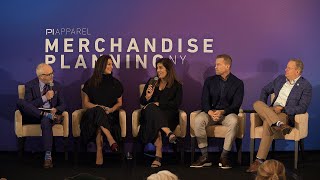
The panel, moderated by Speaker A, brought together experts from merchandise planning (Shilpa), luxury brand strategy (Leila), body‑measurement technology (Jeff), and Amazon retail technology (Justin) to explore how AI and emerging data tools are reshaping fashion forecasting, inventory management, and consumer experience. Shilpa described early experiments with AI‑driven store‑rebalancing and automated replenishment for seasonless, never‑out‑of‑stock items, emphasizing a small‑scale, pilot‑first approach. Leila explained the shift toward seasonless, timeless collections driven by sustainability concerns, consumer demand for adaptable pieces, and the operational benefits of reduced markdowns and smoother global manufacturing. Jeff detailed how scalable body‑measurement data collected at the point of sale can be segmented by region to train fit models, creating a feedback loop that improves sizing, reduces returns, and informs design. Justin illustrated Amazon’s hyper‑personalized recommendation engine, LLM‑based review summarization, and the challenges of delivering locally relevant imagery and storefronts for global brands, while also touching on image‑ownership, AI‑generated creative, and alternative payment methods. The discussion then turned to the macro‑economic environment, planning challenges, and tactics to re‑engage aspirational shoppers through pricing, promotions, and CRM. Finally, the panel shared perspectives on the skill set needed for the next generation of planners: strong Excel and data literacy, problem‑solving, logical thinking, communication, relationship‑building, learning agility, and common‑sense judgment when working with fallible generative AI. The conversation highlighted both the promise and the pitfalls of AI in fashion, emphasizing a balanced, data‑driven yet human‑centric approach.
Chapters
Let me start with, I've got a couple of questions and I wanted to start with Shilpa. And Shilpa, you know, you have some interesting background in planning and listening to the different companies where you've worked. And, you know, Jeff or Justin just did a great introduction around AI and obviously there's so much there. We'll dig into that, but maybe not too deeply. But I'm curious how, are you using AI in your planning processes at this point?
Not yet, but we are exploring options. We have some thoughts around it. So especially I want to get started with looking at small— starting small. We have a few ideas. One specifically is for store rebalancing inventory, and that's something I think could be an easier project to start with because it is very manual and tedious at the moment for us where our allocator spends a lot of time. A lot of many hours just implementing that project, looking at selling, analyzing selling, and then coming up with recommendations of how to balance inventory based on consumer demand. So, that's a project I'm exploring currently with certain companies and how we could automate that using AI. So, just the beginning. We have few other thoughts. We do replan through a partner currently, but it's not 100% AI. Generated project, but it's something that has potential and that kind of— it does auto-replenish our seasonless, never-out-of-stock items. But how can we take that and convert that to more an AI tool? And it's not there yet, but it's the beginning of the project. So we're hoping to explore more in that arena.
Yeah. Yeah. I mean, you think about basics versus fashion, to me, when I don't even like to use the word basic, I think of it as predictable. And fashion has sort of been inherently unpredictable. And so taking that next step from building your basic assortments into how do we take and learn and be better in terms of the fashion forecasting that we're doing. Layla, I wanted to direct a question your way. So there was some commentary around the idea of migrating away from seasons. And I've certainly seen this, that when I was growing up, in the industry, we had 3 seasons. We had spring, fall, holiday. Holiday was actually kind of new at the time. So how do you see, you know, this is in fact at David Yurman, are you guys seeing a more seasonless sort of situation? And do you see— how do you see that playing out in terms of preferences for consumers that they're interested in ongoing newness, I think, and how do you see that playing out? I know it's a very broad and loose question, but hopefully you'll have some commentary.
No, absolutely, it's a great question. I think this idea of seasonless really was— everybody started to focus on it during the pandemic, and I think it started with, you know, many of the shows canceling, and even in the luxury space, I remember like Saint Laurent said, I will— we will Showcase what we have whenever we're ready. So I think now we're back to more a calendarized season when it comes to fashion, when it comes to apparel in our world as well. But I think what brands are faced with is the— to your point, is the consumer preference. I think consumers now more than ever want products that are seasonless, they're timeless, they're focused more on slow fashion, and they're more concerned. I mean, again, it's Climate Week this week. They're more concerned about sustainability. They're concerned about their carbon footprints and how much they're consuming. So there is this need for addressing that consumer preference to have things available to them that are seasonless, and they want products that are adaptable. They can wear it both seasons. But at the same time, they want newness, and they want to know that there is creativity. So I think more and more brands are looking at their core assortments and thinking about, What can we have and how can we have a core assortment that could de-risk the business and also is available throughout the seasons? And then we, you know, add on top of that newness. So, I think that's quite critical to address that consumer need and preference. But then as we think about it as a brand, being seasonless also helps. I mean, in the apparel space, you have so many markdowns when you have seasons and then that's kind of embedded in your planning. So, if you go seasonless, you're reducing your markdowns, you're reducing overproduction. And then we have in all of the industries, right, these spikes that we have in manufacturing and then these gaps that we have to address. And, you know, we try to hopefully at some point with more AI, try to build these gaps and make sure that we're producing things when we need them. But having seasonless creates a more smooth manufacturing operation. And then last but definitely not least, I think as companies become more global, it becomes even more complex to address this global consumer that lives in very different climates. It's diverse, it's looking for different things, so you have different tastes. So having a very seasonal focus also creates this complexity that, okay, what does that mean for someone here versus Asia versus wherever we're thinking about? So I think there's a trend that I think everybody needs to follow now and try to address. Great.
That was wonderful. And it gave me a kind of a lead to Jeff because Jeff and I had a bit of a chance to talk prior to getting up here on stage. And in his work, they work with body measurements. And I found some of his commentary around the use case of different areas. And as Leila was saying, you know, how do you fit for consumers around the world? And it sounds like your technology may have some applicability in that area. Maybe you can just talk a little bit about that, Jeff.
Yeah, so because we calculate body measurements whenever someone uses us, like on an e-commerce site, it's basically net new scalable consumer body data. And our— some of our long-term clients are starting to see and use that data looking at it by regions and understanding, okay, how our body's different in certain, even parts of the US, you know, and then when you look globally, how our body's different, how our fit preferences different. So, you know, we have a client that we work with in North America, Europe, and Japan, and in all three areas we actually have different models that are being trained on those different fit preferences because people in Japan are dressing very differently than people in North America. So that's something that, that data can go back into that partner and they can learn, they can adjust fit and sizing, they can learn how the consumers are actually wearing the product versus how they thought they were going to wear the product. And really create a feedback loop. Going back to kind of the reducing returns, it's not just a magic button on the site that's going to do that. It's really a team sport. And the organization has to use the data and learn from it. The product designers have to understand how people are wearing it versus what they thought the trend was. They can update sizing. Around their actual customers versus who they think their customer is. So I mean, there's so much opportunity to kind of create this feedback loop through AI and learn and make adjustments and, you know, fix a lot of those fit issues at the front end of the process.
And that helps on so many different levels, right? You know, it can help around the sustainability aspect of, reducing markdowns because things fit better. And so really interesting stuff. I'm looking forward to talking to you a little bit more about that. Justin, I wanted to go to you. I really enjoyed your presentation.
First, thank you.
And I want to tell you a little something that I do in my class every year. And I have the students go— I always let them use their laptops in the classroom. And so I have them I say, "Pull up your Amazon page." And they, then I have them describe what's on the Amazon page. And I find what's unique as a marketer, you know, we think of segmentation. And segmentation, we used to think of demographic variables and other things that we would use. Amazon doesn't do that. You know, they use our behavior and segment down to one. And the other fun part about that little exercise that I did is I also have one kid open an incognito browser. And just see what they get. So I'm curious, you know, you guys are already so good. How do you see AI making that even better? And feel free to jump in on any of the other comments. Sure. That's just fine.
You should next time ask them to go to their orders page and ask them what they last bought on Amazon.
Oh, I've done that.
I mean, that's, that's one of our favorite icebreakers that we have groups together. That's, that would be very interesting. So of course, I mean, we talked about personalization earlier. We talked about reviews, right? You saw some examples of that. I mean, the idea, remember, of being the most customer-centric company. How do you make the experience even better for you and I as shoppers? But also think about some of the brands that sell through Amazon Fashion and Apparel. Like, if you've noticed, or if you haven't noticed that there are parts of the Amazon platform that are growing significantly in the fashion space, I think is, is one of those. So how do you provide the right detail for a seller, right? A seller being not just you and I, but the companies that sell through Amazon, either through 3P or 1P, and have the type of experience that they expect, right? Not just an e-commerce transactional experience, but a premium experience or a discount experience depending on your brand. But how do you provide the right storefront, the right creative, the right video content, the right imagery. You mentioned earlier the whole— you mentioned the word global. And so think about a brand that sells product globally but wants to be locally relevant to the shopper in that specific geography. There's a lot of tech that has to go into making that happen. So just as a simple example, the same image of a model wearing an outfit that works maybe here would not necessarily be relevant in Brazil or Eastern Europe and for the same product. And so how do you then take a product that has the same barcode or SKU and then sell it with imagery and kind of the packaging and the storefront that makes sense to the shopper in a different geography? So that's just an example of how you got to think global and then provide the tools to be able to activate more locally to the, to the actual consumer.
I'm curious on your, uh, when you're doing your recommendation engines, do you guys build your own corpus and, and take all of the, the different reviews and, and then create your own LLM around that?
Um, okay, so the— where— what you saw on the slides earlier was the application of a little technical, um, a large language model against reviews. Right. So if you go on your app and just pull up a product with hundreds of thousands of reviews, you'll see the summarization of what, of what shoppers like or didn't like. And you can actually click into that and that provides you kind of next level detail beyond just the summarization. But that's using— that's basically a large language model running against a bunch of text files, right? All the text of those reviews. So and what I was saying earlier is you guys can do this too. Like this is something if you have a D2C site, You could have that launched as well. I mean, that's something that's ready now. It's very accurate. It's very feasible. And then that is different than personalization. I think most of you get that personalization is an engine that's using inputs that then activates off those inputs to a customer using typically a customer data platform, right, as your hub. Not to get too, again, too technical, but that's a bit different in terms of how do you think about reviews versus personalization.
Yeah, one's regression and the other is using the LLM. So I wanted to go back to Leila and, and probably Shilpa as well. And been a lot of discussion recently around the consumer and their ability to spend, and seems like maybe the economy is heading back in the right direction, and that's a little bit of a positive. But I'm curious in merchandise planning, what have been some of the challenges around that? Have you had to really rethink some of your assortment and make it— think of like we were discussing predictable basics versus fashion? And as we saw the customer maybe pull back a bit, what did you guys do to try to excite them? And did it involve technology in any way?
I mean, I think the great thing about planning is It's like the company's nervous system, right? So, I think what it really helps you to do is react to what's happening externally, you know, if you have the capability at the right level, and also internally try to, you know, react to anything that you need to do from a supply shortage to whatever happens. So, I think nobody has a crystal ball, but we all have technology and we have insights. I think what you can do with the consumer data that's available to you with all the different levels of information that's out there to make your best guess. So, I think the role of planning in general is to figure out, okay, what can we do to respond to what's out there? And I think in every industry it's been different. I think in some industries have been hit harder and some have been hit less. And even, you know, there's been a lot of discussion within luxury around luxury slowing down, but in some cases it's it's not, right? So, I think from a macroeconomic standpoint, the best that we could do is to leverage all the data that's out there, leverage the information that we have on our consumers in the different channels that they're shopping, and make some decisions around what are they looking for. So, some of the things that we talked about, you know, consumers are looking for more focused assortments. They want to know what the brand stands for. So, we've done a lot of work to make sure that we have a very focused assortment for our consumers and make sure that we address what they're looking for. But also taking into account a lot of other factors, you know, commodity prices or other things that are out there that can impact what our demands are going to be or what the consumers really want to look for. So, I think, again, as a planner, you have the ability to really adjust either from an assortment, from a pricing, from a localization if you think that there is an economic downturn or what's happening. But at the same time, you can also see what are the trends that are out there and what are the products that people are looking for. So, I think you really have that control to help the company grow and also address any risks that's out there.
Thank you. Shilpa, I was going to let you continue if you would.
So definitely luxury has seen some slowdown. There are some brands that are an exception, but a lot of them— and what we've seen is the aspirational customer. So the aspirational customer was very actively shopping during COVID and a little post-COVID, but we've definitely seen the slowdown there. And what we've learned, like Lena mentioned, planning is the core of the company, the heart and the nervous system. So, we do a lot of analysis. Data is king, and we learn from that. And from what we've learned is price points, opening price points are key. So, protecting your assortment at the bottom level, the opening price point level is very important. And offering the value there and how can you draw that customer in. To continue the momentum. We've definitely seen resistance where the amount that the customer is willing to spend, there is a threshold and it's— we have to come up with new tactics on how to get them to spend more, to increase the order value, and that's again through engagement, through promotion or even including— again, it doesn't have to be like the promotion, the typical promotions, but How do you engage the customer more to get them to spend more? So that's been a challenge. So, and that's where our teams and stores are very involved in the outreach. So CRM is important. So these are the different tactics that we've been using to try to get back our, the aspirational customer. And of course we still can't forget our true luxury customer and how do we service them with better quality and the products that stand for the brand and are the brand identity.
Thank you. I'm going to just throw this out for the group. Justin, maybe I'll just start with you. It sounds like on the panel we have a number of years in the industry and I'm an educator. Part of my job is to help prepare kids to come into the world and everyone here is hiring young people and bringing them into your companies. And I'm curious, I think Maybe in the past or even today, I know our students have excellent skills around Excel, and I've found in talking to retailers that they love that, but that's an interface, right? And the interface is evolving. So I'm curious, I'd love to hear from everyone, just what do you think the new Excel is? What is the new thing that we need to be teaching our kids in order to have them be more prepared be successful and take your job one day, Justin?
Well, first, most of our customers are still running their business on Excel. As much as we love to talk about—
that's where our kids get hired—
and great ERP systems, you know, most retailers grew through acquisition, they never integrated their back office, so in order to get anything done, it's in Excel. Or, you know, we, we started the e-commerce group over here, now it's this huge function, but it doesn't connect with the rest of the traditional retail. So everyone's nodding their heads.
Hey, Justin, real quick, can we just show hands how many people are still using Excel in their planning tools? Love it. Okay, I'm going to keep it above.
Yeah. Um, so, but that data is what you need to be able to do, um, do things with more advanced tools. So, uh, you do see, uh, acceleration of, of spend in the technology space for retailers and consumer brands to try to make their systems more flexible and more accessible. Okay. And at the same time, there's a lot of pressure from the digital native e-commerce brands that are coming in. They're launching D2C, they're launching on Amazon, they're getting in through into other stores, and they don't have the technical debt that your companies do or that many of our customers do. And so there's tension playing out by many of the upstart brands, and I don't see it as much in fashion apparel But I see a ton of it in food and beverage. I mean, I could— you could walk down to the mart here and see some incredible new brands that are blowing up right now in food and beverage, and they don't have the problem of multiple ERP, SAP, Blue Yonder, you know, Oracle, all that. Like, they just started on cloud. They can—
thank God, right? So much easier.
I know I'm not sure—
question.
Um, so I think there's like this new digitally native student. I think technology is a bigger part of more education now than ever. The last 5 or 10 years we saw the launch of new analytics programs. Remember what kind of data and analytics was the hot thing? Remember big data about 10 years ago? So that I think was good in terms of helping to put some of that thinking in most colleges and universities. And the nice thing about some of the new tools that I showed you today is if there's even— if you're a very creative person, it's easy to actually learn them and experiment with them. They're more accessible than ever to whether you work for a big brand or you're an independent consultant. So I think that's a plus.
Yeah.
Jeff, love to hear your perspective.
Yeah, I think being willing to use data that hasn't existed before, what are you going to do with that data, really thinking about it. In a problem-solving way and getting the right teammates and people together to discuss it and digging into like how that can help you make decisions that maybe weren't data-backed in the past, could have been more of a hunch or, you know, there just wasn't the data there to really help you make those decisions. And I think people that people, you know, are coming into companies today, like, have to be able to think that way and problem solve around new data. And that would be what my suggestion is.
And I see too— I was talking to a colleague in Academentia, and I said that intentionally, and he was discussing the notion of human intelligence, and you just were articulating the idea of gut instinct. And I actually think that's multivariate processing. That this thing up here has the ability to not only look at sort of quantitative data or text-based data, but also visual data. We take information in music and other things that we have. And, and I think the best merchants are the ones that can coalesce that and be able to use that and produce trends. And of course, this is where I think this is where AI is heading, is to be this multivariate processing units. So I didn't mean to get long-winded there, but I'm just curious if you have any commentary around that.
As far as like trend recommendations? Yeah, yeah. I mean, there's a lot of— there's partners here at the show that are doing a lot in the trend forecasting, which I think is super interesting. I think, you know, data present can help you confirm, are those trends actually happening? And I think that that feedback loop and making decisions like that is going to be key. Because if they didn't happen, if the trend didn't happen or something else, the fit preference was different than what you thought it was going to be. If you don't learn from that, then it's kind of a waste of data. So kind of going back to that feedback loop of really learning from what the AI is telling you and did that actually happen and making adjustments from there.
Yeah. Shilpa?
From a planning perspective, I think just for future planners when they start, it's— and even college students in college, it's important to develop the Excel skills because you still need to learn and understand data. And I think problem solving and logical thinking is really, really important because as we go more into AI and technology, To be able to even interact with technology and to interpret what AI is recommending, you still need your problem-solving skills and your logical skills. So as long as those trends, those skills are strong, and you need to have your basics, and you need to understand the key metrics, how the data works, and that's when you can leverage technology and take it to the next level. And being open to that technology, so even starting in college, using tools that can help them prepare and be in that mindset to embrace technology as it evolves.
I totally agree with that. And it's, as Justin pointed out in his initial presentation, the pace of technology change is, our kids that we're teaching, really, we can't have them focus on a single technology. We have to make them fearless in the face of technology. Just be the first one in the company to say, "I can do that." And Leila, I'd love to hear your perspective on—
Yeah, I think when it comes to skill sets, I would say there are 3 things that I think are important in this era for planning or supply chain in general. I think number 1 still is communication and relationship building. I think, you know, what technology has done right now is kind of taken away some of the barriers that existed across the different functions. So I think I think it's so important to be able to understand if you're in planning, what's happening downstream in supply chain, what's happening in finance, what's happening in strategy, because it all comes together. And then building those relationships, being able to communicate and kind of share what you're seeing with everybody else. So I think that's number one. And then relationship building with others, but also with technology. I think it's super important to be able to build that relationship, feel comfortable using technology, because we all know we're not better without them and they're not better without us. So I think communication, relationship building, and then And to your point, I think learning agility is so important. I don't know how many of you have taken a course in AI maybe over a year ago. Okay. If you have taken anything over a year ago, unfortunately, I would say that at this point you would have to take it again, right? So I think the reality that we're faced with is it doesn't matter what your degree was. It doesn't matter what your experience is. You just have to have learning agility and feel very comfortable comfortable with not knowing something in front of you and be comfortable spending those hours really understanding what, you know, Gen AI is, what AI is, and understanding. And then I think the last one, which I think is super important, is common sense. Data analytics and common sense. I think I watched this TED Talk, and unfortunately I forgot the woman's name, but this fabulous computer scientist was talking about the different examples where GenAI just gives you wrong answers. And one of the examples she was giving is that, you know, you ask ChatGPT, can I cross a bridge with my bike if the bridge is, you know, just on top of— suspended on top of nails and glass? And the answer that ChatGPT gave was no, because you're going to get a flat tire. Yesterday I was thinking about that and I'm like, I wonder if the models have learned in the past year because that was April '23 when that TED Talk went up.
No.
Yeah. I asked the same thing. I said, can I go with my bike on a bridge that's suspended over nails? It said no. I mean, no offense to a lot of the technology and software companies that are here, but AI and GenAI is super smart, but at the same time could be quite stupid. So, so, you know, common sense is always super important.
Love it.
So I think these three are really—
I think we just got sounded off stage, if I'm correct. So I'm sorry we didn't get time for questions. I apologize. But obviously all of these folks will be walking around and encourage you to have a chance to interact. And we don't have time for questions or anything, right? Folks, yeah, it is good. Yep, 5 minutes. Okay, open the floor. Anybody like to ask us anything?
Well, there's some questions on the chart.
Oh, questions on the chart, my bad.
You're off. I'll just pick one out, um, the one around the question on, um, generating images. So when you create images in Amazon environment, uh, like the ones I showed you, uh, the dogs, remember the bottles you own those images. And so there's a whole dialogue, by the way, around who owns images and should we need to tag the images and say they were created by AI. I mean, we're working with a major fashion retailer that is not using models and putting outputs on different models and different backgrounds. Do they need to tell the consumer that? It's not an answer I will provide to you, but like, that's a question that— but when you create those images, you own those images, and you can then use those images in different advertising and whatnot. And then the question around payment, the question— there's a question on would you accept Bitcoin or Ethereum as a form of direct payment to cater to Gen Z?
Yeah, it's not—
to me, I'm not the expert.
My only comment on that would be that, uh, I'm going to just say this, but the notion of generational marketing is false. So, um, The, the, uh, whether certain people may prefer cryptocurrency as a mechanism of payment, but I don't think it's age-related. Uh, I think, uh, and in my opinion right now, I, I think that the number of people that would be interested in that, and you know, Justin, you're at Amazon. I mean, you know more about the challenges around deploying various payment technologies Is it worth it? Yeah. To take that at this point? Do you guys take Ethereum or anything like that? Yeah.
I'm not the expert on that, so I'll defer on that one.
Okay, yeah. I honestly don't know either. I would just think that the subset of people that really find that important to them right now is relatively small. And there's probably more important payment mechanisms that need to be embedded on one's website in order to be effective. So any other ones? There's one specifically, Justin, that says, what data is the Amazon AI trained on?
I think that the answer is it depends. There's many different examples I showed you across our business, whether it's Amazon Go, for example, or training on Palm, right, the Amazon One technology, or personalization or recommendation. Each of those is a bit different. I can dive in some level deeper with you if you want, whoever asked that, on the break. But just know that it's different datasets for different use cases.
Anyone else? Yeah, I see a hand up.
I'm curious, what sense do you have of— you guys spoke on the fact that AI, Gen AI, is fallible, and that's like obviously it's fallible. The newer generation that you work with, like the students, as opposed to like, you know, people in the world already, do you get a sense that there's more trust in like Gen Z and like Gen V, you know, the younger generations? Answers, like that common sense is kind of referred to, to the, to the AI?
I, I don't know. I, I think, uh, our students, uh, are encouraged to use, um, uh, large language models in particular, but we're looking at other AIs. And, uh, 18 months ago we adopted that position early on. We have a large professional communications group and within our school, and they were one of the first people on board in terms of encouraging students to utilize, in particular, ChatGPT in resume preparation, to as a prompt for maybe a writing for letters to businesses. And I'd like to think I think that our students are also taught that be critical of what that output looks like. And you still might want to run it by a human in a professional capacity. Like if I was, I would much rather have a recommendation from anybody on this panel in terms of a resume as a student than trust something that's been generated through AI. And I'm not sure if I answered your question. And if anybody else has a comment, please feel free.
Yep. And it can get you 90-95% of the way there, and you're doing the 5% of work.
Yeah.
So, you know, writing letters, songs, uh, I mean, there's a lot of really interesting writing use cases that don't have to be perfect. In fact, it's confidently wrong. That's the way I would describe the model, is confidently wrong in some cases, but it can get you closer to an end result, and you can customize.
I had them— I had ChatGPT, uh, I forget what the occasion was, but I had it write a nice letter to my daughter. She's 18, and I just put in some various stuff, like she's a soccer player, and she's good at school. And then I also did one for my wife, and it wrote these beautiful letters, and they didn't know it wasn't me. And I mean, they were literally crying at the end of this. And it was just, I mean, I'll give you guys the prompt in case you have a significant other that you need to impress. But this was— yeah, I've still got those letters, and I love this because it's making me look good.
So anyway, did you feel guilty though?
No, I live a hard life, Jeff. So, you know, I brutalize mostly around the house. So to win every once in a while is good.
Did you think it reflected your personality?
It absolutely did, because I included elements around that in the prompt. You know, so I think it was, yeah, good. So any other questions? Well, I think we're being called off, and thank you all very much for your attention, and feel free to reach out to all of us.










