FASHION MADE: Tailoring for Animation, with Juan Carlos Olmos
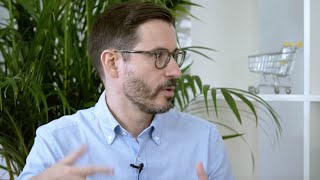
Juan Carlos Olmos, a character simulation director at Blue Sky Animation, explains how animators create realistic digital clothing by combining traditional pattern-making with 3D graphics. Fashion schools teach design but not computer graphics, while animation schools skip garment construction, leaving a skills gap he says universities need to fix. Virtual designs now influence real products like Frozen dresses.
Chapters
So I work at Blue Sky Animation Studios. I'm Senior Character Simulation Technical Director, and I'm specialized in building garments for the characters. And I think for that you need like a mix of skills between the fashion industry— I mean, the fashion design skills and construction skills— and then you need the computer animation and 3D skills to be able to create a product that is interesting.
And yeah, you need to marry both of those skills together.
Yeah, so for example, in animation there is a lack of fashion training, so lately the people is getting more involved into learning how to construct garments from the fashion side. And in the fashion industry, there is a lack of computer graphics knowledge, and you can— you need kind of this mix between these two worlds for working in animation related with garments or working in fashion related with 3D.
Okay. Do you think that, is it possible to have both those skills as you were saying, like 3D design construction and animation design construction? I mean, I guess they're similar, but people are in those separate departments actually.
Yeah, exactly. I think most of the people that they are learning animation probably are in a specific university, and most of the people that are learning fashion design are in another type of university. So if you want to get both skills, then you have to study first computer animation, and then when you are done with that, then you have to study fashion design and construction. So it's like you have to invest a lot of time. So I think in the future there will be like mixed programs that you can learn traditional physical fashion construction and then use like learn the 3D skills so you can combine together and be able to work in the fashion 3D design industry or in animation.
Okay, yeah. And so where did you start?
Um, so I just started 22 years ago working in computer graphics in Spain. Then I have been working with clothes, specializing in cloth simulation and hair simulation since 15 years ago. And 7 years ago, I started to specialize in garment construction and tailoring for animation. Oh wow. Then when I came to New York City, I was in a really good place to start learning all those skills because we have one of the best universities in the world. So I was like, I think it's the right time to start learning all this construction and fashion design skills, and I apply in that all these skills to my career in animation, and I can see the huge difference. It makes sense. The way of building nice and accurate garments in the computer is knowing how to build garments. There is no way to know how to build a garment if you don't study it.
Yeah.
And I think the physical way is the best way to learn how to build the garments. When I decided to learn pattern making, I was thinking if I should take like digital pattern making or physical, but I decided, no, I want to learn how to do the real thing with my hands. And I think when you do it with your hands, you learn why the things make sense. You understand better the complexity of the 3D shapes, and then it's easier to apply to the digital platform.
Yeah, yeah, that's interesting. Do you think there will be a time when that changes? And people will stop wanting to learn the analogue skill?
Yeah, I think that is going to happen, and it will be a mistake, and people will come back to the traditional way. It's kind of the same with music. There were a trend in the 2000s of using plugins and everything in the computer, and then after some years, the people were like buying crazy expensive vintage hardware and synths because they wanted to have the physical experience. Right now there is kind of a combination of two worlds between the analog and the digital, and they complement together. Because I think the, for example, in music, the, a synthesizer is built for creating music. A computer with a mouse or a MIDI keyboard is a different experience. So I think we can't lose the traditional way of doing things. We have to learn how to combine them together. And sometimes in the computer there are things that you can do it like pretty fast and the 3D technology is amazing for doing samples or testing colors or fabrics. But sometimes simple things like pleats or ruffles or things like that, it get a little complex in the computer. And sometimes it's easier just to do it by hand. For example, in my experience in animation, because our final product is always virtual, I always try to connect with the real thing, and I think that helps to do a better product in the computer, like to test real fabrics, to check, do some mock-ups with real fabric in physical, and then I can learn how I want to build those 3D garments.
Yeah, it's an interesting thing marrying the world of digital and physical. Do you feel like people, because technology is so exciting, that people maybe focus too much on the digital and they forget a little bit of the physical world?
Yeah, I think that can happen. In all this transformation that is happening in fashion, you can see that some of the garments are really accurate and some of them are like kind of sketchy and not really good. So I think it's because of the lack of the traditional techniques of garment construction.
So how do you think digital design can complement traditional design? I mean, what are the positive aspects of that?
Yeah, I think, for example, you can build or drape something in the physical dress form, and then you can scan your patterns, move it to the computer, and in the computer you can do a lot of tests, changing fabrics, changing properties, color, prints, and that will be a faster way of testing all these things. If you have to do it by hand, like cutting different fabrics, it will take a lot of time. So this is going to be a more sustainable way of creating product because you are going to do a lot of tests and you are not wasting a lot of fabric, a lot of muslin, and a lot of paper doing all those tests. So you can see all the different options in a quick way without all this waste. So it's going to help a lot for sustainability.
Yeah, the fashion industry and the animation industry seem to be more linked than ever before. For instance, I know that you can buy Nike skins in Fortnite or something like this, right? Do you think that we'll get to a point where the opposite will happen, where We'll get to somewhere where clothes are just being made within Fortnite first, and then we see them in Fortnite, and then we want to make them in real life.
Yeah, I think that is going to happen, and it's happening. For example, the design of the dresses for Frozen, it had like a huge impact, and everybody wanted to buy the real dresses. So there is going to be a communication back and forth. Like some of the things created in the real world will be designed in the 3D world, and in the other way, like some of the things that are happening in the real— sorry, in the virtual world are going to be translated into the real, because the people want it.
Yeah, the lines are getting very blurred now between reality.
Yeah, also in virtual reality there is going to be like a lot of development related with garments, fashion, and 3D. And I think in the future there is going to be a lot of designers, fashion designers, that they are just going to work for the virtual world. They are not going to produce anything that is physical. It's going to be designs made for virtual environments, for Instagram, or for virtual models.
Okay. How does that affect the design process then?
I think that is going to bring like a lot of more opportunities and jobs to the people. So I think in fashion some people are scared about that the 3D is going to replace a lot of jobs, but what is happening is that we need more people in this industry and there are more opportunities for the fashion designers to work. You can work in animation, you can work on VR, you can work in apparel. So there is going to be a lot of possibilities, and we need people trained on those skills to be able to advance in all these different industries.
Okay, interesting. Um, do you think that there is now a skills deficit? Do you think there's a digital skills deficit?
Yes, yeah, totally.
How do we solve this? Because it's so difficult.
I really— I think it's really difficult. I haven't taken traditional fashion classes, and many people doesn't even know what is 3D design. So I think there is a lot of work to do to get closer the 3D technology to the students. I think there will— there should be more programs that include classes in 3D. And for example, I think in fashion industry there is a deficit in computer graphics and 3D skills. And on the other hand, in animation, there is like related with garments in animation, there is a lack of skills related with fashion design. So maybe mixed programs is the way of solving this problem or make it easier to the students to access to 3D classes. For many people, the 3D software is kind of like something that is pretty far, and I was telling sometimes to my my— so to some of the students, like, 3D is the future, and they saw that like as something pretty far. I mean, it's not the future, it's the present. Like, the companies are looking right now for people trained in 3D, so you have to get focused and learn those skills if you want to find a job. So I think it's something that is really important, and I think the universities should be faster updating the programs and including 3D classes in the program.
Yeah, absolutely. So obviously we're here at PI Apparel in New York. This is the first time that you've joined us.
Yeah.
How have you found the event so far?
I'm so happy to be here. I knew about PI Apparel before, but I couldn't come to the, to the conference, and I'm enjoying a lot because it's so nice to see how this is growing, that there every year there are more companies involved in all this transformation in the fashion industry, and it's very nice to see that there is like a lot of advanc— advanc— sorry, that's okay. There's like a lot of advancement in the, in the industry and new developments and different ways of using the 3D technology in the fashion industry. Also, it's very nice to see that this is spreading and there are more talks about the virtual world, about virtual models, and all those things that are happening right now. Yeah. That is not just physical apparel.
Finally, I just wanted to know, when you obviously building garments digitally, when did you realise that the fashion industry as a whole was going to take up this skill that you applied to animation?
So for example, I was really lucky that I work in Terry Mugler Virtual Fashion Show in '98. So it was kind of like something really new at that time. It was one of the first experience of fashion using 3D technology. And at that point, I realized that 3D was going to be present in the fashion industry. But it was, I think, in 2012 when I started building garments for animation using pattern making that I was like, the fashion industry is going to use this for sure. Because we had the— because our final product is virtual, we had the need to make it in 3D. But at that time that there were new software that you could use like traditional pattern making techniques for building these garments is when I realized that the fashion industry was going to use it. And That was 2012, and I think the breaking point was around 2014 or something like that. It has been really fast. I remember to go to some events like 4 years ago, and there were like 20 people, and the next year there were like 150 or something like that. So it's growing really fast. But I think it was in 2012 when I realized that this is going to be the future of fashion.
Yeah, and now it's the now of fashion.
Yeah, exactly.
Yeah. Well, Juan Carlos, thank you so much for coming and talking to us today. It's been so interesting. Thank you.
Thank you.
Cheers.










