Fashion Meets Fortnite: How 3D, Gaming & the Metaverse Are Reshaping Apparel
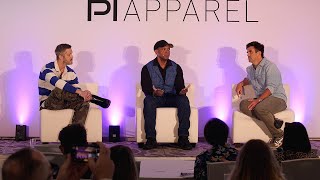
In this 2026 panel hosted by Michael Tanzillo (Adobe 3D Technical Artist Lead and founder of the 3D Artist Community), three experts—motion‑graphics artist Jonathan Winbush, footwear designer and founder of Superdigital Chad Knight, and Tanzillo himself—explore how 3D, gaming platforms (Fortnite, Roblox, Meta Horizons) and the emerging metaverse are reshaping apparel and footwear design, production, and marketing. They discuss why apparel brands should care about virtual worlds, the massive revenue potential of in‑game merchandise, and how younger demographics now value avatar‑first fashion. The conversation moves into practical workflow challenges: file‑format incompatibilities between engineering (Rhino, CAD) and VFX pipelines, the need for a holistic, cross‑industry framework, and the importance of standardizing terminology. AI tools (ComfyUI, Adobe Firefly) are presented as helpful side‑kicks for dataset creation, rapid prototyping, and visualizing garments on diverse bodies, but participants caution that AI cannot replace pixel‑perfect digital twins. Real‑time engines like Unreal enable faster iteration and client feedback. Mindset and organizational culture are identified as the biggest barrier to adopting immersive experiences, more than technology. Chad shares his top software stack for outsole ideation (Rhino + Grasshopper, Cinema 4D, Gravity Sketch/ZBrush) and the benefits of 3D printing. Jonathan stresses grassroots, culturally‑aligned marketing to engage Gen‑Z gamers, and both he and Michael outline how to prioritize new tools based on project needs and cost‑benefit. The panel concludes with practical advice for brands to future‑proof themselves: build accurate digital twins, leverage AI responsibly, adopt interoperable pipelines, and meet audiences where they already spend time—inside games and social metaverses.
Chapters
All right. Hello, everybody, and welcome in. So yeah, so I'm Michael Tanzillo. I am the head of the— well, I work at Adobe too. That's like my day job. I'm the head of the 3D technical artist team there. I'm also the founder of the 3D Artist Community, an online community collecting people from various industries, including fashion, motion graphics, all over the world to connect to understand how 3D things can help each other out. I'm very, very, very honored to be on the stage with these two guys. Let me introduce them a little bit and let them introduce themselves. I got Jonathan Winbush. Jonathan is a motion graphics artist who, if you've been on YouTube, you've probably seen him. He's done amazing things both for the artwork that he creates through Happy Madison Productions, and you were at Warner Brothers. Now you run Winbush Interactive. And you also give so much back to the community by having these tutorials and online sessions. And I'll let you introduce yourself a little bit more too. Then I'll just— then I'll just hype you up the rest of the time.
Check, check. Is this working? Can you hear me out there? All right. You forgot multi-award-winning.
Multi-award-winning. He's got like— when you, when you like, when you like Zoom with him, he's got like lots of awards behind him and like lots of cool lights. Like he's like, he's cool. Like And video games.
I got to flex because those awards, they weren't free to make. So when you win awards, sometimes they make you pay for them. I got BAFTA awards and Promax and stuff. And it's like, for me to get the trophies, they're like, yeah, that's going to be $500. Like, the studio gets the free one. I got to pay for it. But no, my name is Jonathan Wimbush. I'm a motion graphics artist originally from Pittsburgh, Pennsylvania. If we got any Steelers fans in the house. But been living in Philly?
Yeah.
OK, well, I mean, you guys got it last year, yeah? But I've been working professionally in Hollywood since around 2006. Got my start working under Adam Sandler at Happy Madison, went on to Warner Brothers, worked with Marvel, DC. Yeah, just a whole plethora of different studios out here in Hollywood. And very grateful for you guys inviting me out. All right.
And then we got Chad Knight. So Chad started as— so it turns out Chad Knight and I went to the same high school. We didn't find that out until many years later, a suburban Columbus, Ohio high school called Westerville. And so Chad did what every kid in Ohio does, grew up to become a professional skateboarder. Nobody does that, that's like unheard of. So Chad did that and then found his way into the footwear industry, and now he's running his own company called Superdigital. So Chad, take it away with your intro.
Thank you. Like Jonathan said, or like Michael said, sorry, my name's Chad Knight, I grew up in Ohio, I found my way to Southern California, escaping Ohio, to do professional skateboarding. And I was introduced to footwear that way, kind of formally. I'd always had an interest in it, but that was my segue from skateboarding out of it was footwear. And I discovered 3D, and then I went into— I worked at DC Shoes 2016, moved over to Vans, and then led teams at Nike in 3D design, but have had the luxury of kind of working through all of the different parts of the process. So I've had good exposure to concepting, design, development, production, marketing, etc. So the whole gamut.
And this is interesting to me because Jonathan comes from motion graphics background, has made his way towards the fashion and apparel space, where Chad started in the fashion apparel, is now working outward. I would say, so I'm actually gonna start with a couple questions for each of you guys first. Jonathan, 'cause you're closer to me. Also, Chad has a shoe after him too. You can go have the Chad Knight shoe. He's like the only one that I've ever met in real life with a shoe after him. Anyway, okay. So Jonathan and I were at a conference recently up in Vancouver. It's called SIGGRAPH. It's a, like a computer graphics conference, usually for like animation space. And we were on a panel like this, and somebody in the audience mentioned that they worked for an apparel brand. And Jonathan did the coolest thing I've ever seen, where he pitched his services from a stage to somebody. And he was like, hey, you should contact me. We'll make some stuff for Fortnite. And we'll go from there. But I didn't get a chance to ask him in the moment, like, say more things about that. So here, I'm going to say, say more things about that. So why would an apparel person or a company in the fashion space care about a Fortnite or a Meta Horizons or something like that? Like, why would that be a space to grow into?
Yeah, because, I mean, funny enough you bring that up. Just literally a couple of days ago. So Epic Games, the ones that make Fortnite, they just announced that you'll be able to sell your own assets within the game there, which is massive. Because I don't know how much about video games you guys know, but there's another platform called Roblox. And they make like $1 billion a year just off of selling merchandise and apparel and other assets inside the games. Like, I know I have— oh, they cut off. All right, I can project. It's all good.
No, you're good.
You're back on. You're back on now. So I have 2 kids, right? Like, when I was growing up, fashion was everything, right? Like, in the '80s and '90s, used to want to have the latest fashion. With my kids, they could care less. They wanted to have their avatars be the representation of themselves. So it's like, instead of asking for nice shoes, nice jeans, nice shirts, they were like, "Can I get Robux?" I'm like, "Well, where's Robux?" That's the currency for Roblox because they wanted to buy Adidas, they wanted to buy Nikes, all for the digital avatars. And that's the thing with the younger generation, like they'd rather have their digital avatars be stylish rather than themselves. And so Fortnite just opened up, and then also Meta Horizons. Like Meta, the Facebook company, they have a platform called Horizons, which is a social media hub with like digital avatars. And I was just at Meta last week, um, just getting a rundown on it, and they're opening up their storefront as well. So wow, yeah, there's a, there's a whole new avenue for you to be able to sell your assets digitally through, I guess we call it the metaverse. Yeah.
Yeah, because the idea of the metaverse was popular 5, 3, 4 years ago or whatever. And then it's just like, everyone's like, oh, the metaverse is dead. But it's still kind of brewing under the surface. Nobody talks about it, and it's allowing it to grow naturally. Chad, I want to bring you in because we talk a lot about workflows for the apparel industry. And the idea of building something out and then bringing it into the metaverse is like, is that something you've thought of or considered? I want to get your input on what Jonathan just said with that.
Yes.
After Nike, I actually left there to go pursue a metaverse game and was in charge of wearables for it. So it's definitely something that I agree with. It's a huge opportunity. And it's really fascinating in terms of what it offers for design, not having to worry about physics or manufacturing or construction. Yeah, I think it's a huge opportunity. I don't think it's going away. I think that the technology was just never mature enough for it during those last— 3 or 4 years. So we're like pre-Stone Age.
No, it's definitely— there's definitely like a hardware needs to catch up. The bandwidth on stuff needs to catch up. And in your experience of going from Nike out into this metaverse experience or immersive experience, you've probably started to come across other— the topic of this conversation— other workflows, whether it's gaming, motion graphics. And I know that you're interested in this stuff. So what have you discovered? What would you want to come back? Back to your old Nike or Vans self and tell yourself about what you learned working with some other software in the other spaces? I think so.
What I learned, which was the biggest jarring thing, was transitioning from product over to the entertainment space, I would call it, is I remember the first meetings we were going into, they would reference the product that was being designed for the characters as art. And I was used to that being considered design. And we would go through a whole process where we get a brief and we understand what the consumer's needs are. You go through all these phases. As opposed to entertainment, it was just art. You didn't have to think about what the garment would do, what its construction would be, what the materialization of it. So I think that there was a lot of learnings there that was just— it wasn't necessarily learning I could bring back, but it was just— an observation where I could see where these barriers exist in harmonizing those worlds. But I saw a ton of opportunity in leveraging VFX tools and techniques in designing product, not necessarily just experiences, but the literal product itself. So a lot of cross-industry learning is just looking at techniques that are currently targeted towards, let's say, VFX, but could provide tremendous value in the creative endeavors in the product design.
Yeah, because that's one of the things that I've— I mean, the reason why I started along the online communities is there's so many things that have been discovered by the fashion industry that entertainment doesn't know about, or like motion graphics or VFX. And there's lots of stuff that VFX has figured out in terms of deep, deep simulations that look photorealistic. I don't know if you guys ever seen Doctor Strange, but his cape is never real. There is no actual cape. It's all CG. It just flows behind him to get the performance behind it. But with the work that you're doing with Superdigital now, what are some specific things that you've found that you could say, check this out, or something? I'm just trying to take away for the audience here what's something that they should look into.
So there's one— I can't say a ton about it, but I can allude to the fact that there's— OK, so— Within footwear— footwear is my point of reference, but I think it's applicable to pretty much most of apparel too. We have molded components, right? So you have a 3D file that's an engineering file. You also have an upper, which is made in 2D, not 3D. So a 3D file never exists for it. And there's different geometry types for each. And a lot of times the 3D model from the mold shop wants to be pulled into the whole pipeline, but that's not how geometry works. That's not how math works. You can't have these things flow. So that's what I've been kind of focused on, is looking across industry, across medical and engineering and VFX, and creating a kind of a holistic framework for what it could all look like. But that is, I think, the biggest crux of it is there's a lot of file formats and a lot of different parts of the process that are happening in product companies that you don't see in VFX because they kind of end at the concepting phase. It's like they get a design that they like, they go model it for what would be a marketing asset and product, but they're missing that entire engineering, development, manufacturing phase. So that was kind of a big takeaway for me in terms of, pipeline complexity. We have in apparel and footwear, I think, a much more— or we have higher-level needs than any of those individual industries on their own because they tackle one specific problem. And we as an apparel and footwear industries need to really borrow from each of them. It's not like we can just pick one and say, okay, you your industry, come solve our problems because they don't understand ours.
Yeah.
And I think that's what we're trying to bridge the gap on all the time. So it's like bringing this outside stuff into the design space in apparel and footwear. And then Jonathan, I'll swing it back over to you now that you've been at Meta and— but what is— I'm trying to think of how to say this. What is something unique that you can take? Let's say you had a 3D model, 3D asset of your garment, your footwear, or whatever. And you wanted to bring that into Meta Horizons or Fortnite or Roblox or something like that, what's something unique that you can do? Because I'm trying to think of, like, what are unique things that you can do with that digital asset that, like, expand upon what the physical good actually is? Like, is it changing colors? Is there, like, anything, like, dynamic about it that you think would be really beneficial for people to explore with their actual garments in these spaces?
Yeah, I would say because the gatekeeper-ness of this industry, the barriers have been totally knocked down, right? I'll bring up Meta because that's where I was last week. So one of the cool things about what they're doing at Meta, I know AI is a big topic right now, right? But they're trying to make it as easy as possible for everybody to be able to come into the ecosystem. So if you do have a 3D model or your 2D asset, you could bring that into Meta Horizon and actually use an AI assistant to get to where you need to go. So one of the things I did when I was there, because I do design, 3D animation, I don't do any programming, but they told me to make an experience within 2 to 3 hours. Now, it wasn't that good, but they were like, use the AI assistant's tools to do the programming because that's what I'm lacking, right? So I was able to make a 3D platformer with my 3D avatar, make a full-fledged game within 3 hours using some AI assistance. And that's where a lot of this stuff is going to. And the dope thing about it is they're trying to really break down the barrier to entry. When you go to Fortnite or Roblox, like last year, I did a Method Man experience inside of Fortnite. So during a campaign, we had to go on Twitter, go on Instagram, be like, hey, here's the experience. Make sure you go to your computer, download Fortnite, which will be like 80 gigs, and that's going to be like 2 hours. Hopefully, they're still engaged enough to actually go look for your experience once they download it. With the Meta Horizon— and I literally experimented with my mom on this when I was there. So I was like, here's my link. Click on the link. She's able to click on it. She doesn't have a Facebook, no Instagram. She was able to immediately from the text message be able to go into my world that I created. And she was able to play it right there from her phone. And the dope thing about it is too is I think I'm probably getting the numbers wrong, but they said there's like a billion active users using Meta, WhatsApp, and Instagram, and Facebook. So if you make an experience and you put it up on your Instagram, if they click on that video, it will transport them to your world. And whatever you created there, it's going to automatically transport them there. And I just think that's really exciting in itself because that totally knocks down the barrier to entry for the most— I'm not even sure what the term, like anybody that's not technical, like they'll be able to go in and experience your experience. So it's like, just think if you're like an apparel company and even if you want to just make like a social hub to kind of have like a digital like boutique or something like that, you can literally set up your boutique in there, send out your Instagram reel or your Facebook reel, have them click on it and they could go virtually walk around your boutique. And then if they like it, then you can link a URL that would take them to your physical website.
It's interesting because like some of the companies I've been talking to in my role have been so concerned about agentic AI controlling how customers interact with their products.
Yeah.
So it's like right now it's like you go, you know, you know that there's your company's website that a company that somebody can go to and see your product or they can go to one of the e-commerce sites and see your product. But with agentic stuff, then it's like, I don't know, they're just like asking them to and they're showing pictures from and you don't really know what it is. But this is like an opportunity to use these immersive spaces to create a unique experience that people would want to go to so that you can control how your product is being perceived in this virtual world around it. That's pretty crazy. And then also the idea of just clicking a button in your phone to take you there as opposed to downloading the 80-gigabyte thing and going crazy with that.
It kind of brings back into grassroots campaigning. When you grew up in the '90s, that's how you usually got the hype around you, right? Everything was word of mouth. You got people in your local area excited and that kind of just expanded out. So it's kind of going back to that. Like you could kind of build up the hype around your item by people coming virtually in contact with it. And then those people are going to share it out to their network and then they share it out and then you're kind of building like this hype around your item. And then that's when people start looking you up. It's kind of like the Disney effect, right? Like once people see you 3 times, then they become really engaged with what you're doing. And then that's when they start getting interested in, you know, start looking into what you're doing. And hopefully, you could take it from there.
Yeah. That's one of the things about like— and then also, you talked about the AI being a reduction in the barrier of entry, like, to the technical limitations of creating a game. Well, by the way, working in gaming and film for a number of years, it usually takes longer than a few hours to learn how to make a game. That's usually— that's a very short amount of time if you don't know. It's too short, I would say. Chad, in your experience now as a— both you guys now are like, small business owners. And that's one of the things that's been, I think, a limiting factor in doing this type of work is that you would need somebody to be the software engineer to provide these experiences. Are you finding that to be a barrier? Or is it like Jonathan saying where there's now, there's some AI capabilities of breaking down some of that stuff for you? Have you been encountering that?
For me, no. I've found that AI in my workflows is really just valuable in the concepting phase where you want to almost exploit hallucinations and get something visually that pops up that's just like something you would see in nature. It makes you think differently. It makes you see a different shape intersection or something. But no, most of the stuff I do is all very manual at this point. I don't find that any of the agentic stuff has the fidelity or the accuracy to be able to be really valuable in the workflows that I'm doing right now. But it's fascinating in terms of the craziness that it can come up with.
Yeah.
And that's the thing right now is like there's— I was just talking about this with somebody right before we came in here. It was like this idea that there's like brand new AI tools that are constantly coming out every day. It's like while we've been on this stage, probably 3 new tools have come out. And like we got to go check them out. But none of that actually— fundamental, like it's all, it all needs to be worked into an actual workflow into what we're building out right now. So it's interesting that, and I only bring this up, I wasn't planning on bringing up AI with this, but it was only because you mentioned this part of it as being like, because that is a major barrier of entry I would imagine from people who design products. Like what, in your experience with that, like was there anything that, like at this point, is there anything that's stopping somebody who can make a 3D version of a dress from taking that into one of these worlds other than just a few hours of training to get an understanding of it?
Yeah, so I would say, like Chad said, it's a part of the workflow. It's not a total replacement for a person. I can say I broke it a couple of times when I was at Meta. It didn't make them too happy. But you try to ask it how to do X, Y, and Z. And then it got into this continuous loop where it just froze up and crashed. It could kind of get you there and get you in a good spot, but you're still going to manually have to research and still kind of get yourself in a position. But it's a good sidekick, I would say. Like before, you usually had to go on forums or hire somebody to help you out, but now it's kind of like you have a digital sidekick that's helping you out. And that's where I kind of look at when you're using AI tools, like how can they complement what I'm doing, not kind of replace it.
So yeah, that was my first use case of it too was to help it as like a tutorial, kind of an onboarding, but I've found that it constantly references instructions that aren't really there, which is not very valuable.
Yeah, that's not great, that's not great.
You know, it's funny though, because a couple of AI stuff, because I do tutorials on YouTube, it would actually give me my own YouTube tutorials. So I'm like, hey, how do you do XYZ? And it's like, oh, this is Jonathan Wimbush, right? And that's how to do it. And I'm like, all right, well, I'm in the system at least.
I write a newsletter every week, the 3D Artist Newsletter. And I'll do that because I want to put news of the week. So I'll look for, hey, what's new in 3D? And it'll send me my article from last week. And I'm like, that's not— I'm not going to reference that.
That's weird.
I mean, you're in the system, which is good. I'm in the system.
It's good. Yeah, yeah. You got to get it out there a little bit. So Chad, one of the things that I think is unique about your experience and what you're doing now— and please stop me if this is— these guys said that everything was on the table, so I'm taking that at their word. So you've seen some of these immersive experiences. You've worked at companies that have DPC pipelines and things like that. If you were consulting them right now to prepare themselves for these immersive worlds based on their current workflows, what would you say is— because there's a bridge there, right? Saying she would design stuff, like design a gravity sketch. You'd get it all set up for the manufacturing. Then you take this and you make the digital twin for your— or virtual twin for your marketing. But then it needs to go like that. What's the bridge right now that if you came into a company that had a workflow that you're used to and say, what's the next thing that they should be looking at to get them to the level to get ready for immersive worlds and things like that?
Oh, jeez. I mean, it depends on where they're starting from. It depends on, I think— what their goal is in terms of use for 3D.
Let me ask you this then. Do you think it's more of a technical limitation? Is it like a skill limitation of what people understand? Or what would be the barrier to get them into doing this stuff?
Mindset is the biggest one.
That's the hardest one of all. You can't change.
You can't—
Yeah, exactly.
I hear a lot of people saying that an end-to-end solution doesn't exist. Does. All the tools are there. All the technology exists. It's a matter of putting the right people in the right place together and solving those problems and saying, here's what our process looks like. Here we need to accomplish this at this phase of the process. What tools— you don't have to necessarily look at the ones that say this is a 3D software for footwear, you can look at all the tools. There's VFX. There's engineering. There's even medical software that simulates tissue and materials. So if you look at all those different things, and you figure out, OK, what do we want to use these tools to do during these processes? Is it for creative? Is it just that we want to hand sketch, and then capture it in 3D, et cetera? And then you need to figure out what the model types are, how the file formats translate. What's valuable to hand off from one phase to the other. And all of the technology exists. It's just a matter of, I think, not having reorg long enough that you can put together a strategy and then have the teams and leadership in place long enough to execute those because it's all there on the table to go from concepting all the way through to consumer and virtual experience. In 3D seamlessly.
That's, that's, I mean, that's, that's honestly like the most difficult thing with coming, like buying a new piece of software. And a guy who works for a software company, it's easy, but like getting the company to change their culture to get around a new mindset and new goals is very, very difficult to accomplish. Um, we've talked a lot about like gaming and interactive stuff. I just like, without prepping you for this question at all, from the motion, from a motion graphics artist standpoint, like what would you say from the tools that you've used traditionally, the After Effects, those types of applications, what do you think would be something that could help people that are working in the fashion space, going back the other way, from your workflows? Is there anything that you would— what advice would you give them based on motion graphics workflows?
In what respect do you mean the advice?
I mean, it's really just a general question to be like, If you were— let's say you were hired by a fashion company today, what skill would you bring to the table as a motion graphics artist that they could benefit from? I mean, I'm now interviewing for a job. I'm interviewing Jonathan for a job at a company.
No, I mean, for me, this comes up a lot, right? So design sense-wise, I could do virtually anything, right? But what I bring to the table is I'm a problem solver. So I know with a lot of companies, Artists are dime a dozen. You go out there, you could find artists to do anything. But how do you become an asset that's valuable to that company? And how do you help them solve the problem? So if a company came to me to say, we'll say, build a Fortnite experience because that's the last project that I did. So if they say, hey, Jonathan, we have this apparel company. We want to bring it into Fortnite. We want to reach this demographic because there's a million kids playing every hour on there. How do we build an experience for one, and then how do we get them excited? So it's like, okay, I could build the experience all day, every day. That's not a problem. The thing I would focus on is how can you get that engagement with that demographic that you're looking to get into? Because I've seen Dolce Gabbana build an experience in there that fell flat because they thought that their name was going to bring value, enough value that everybody was going to get excited. And these kids, they don't even— I mean, they could care less, let alone be like, OK, Dolce Gabbana. And I know some of the devs that were on it. And I said, you had to look at your demographic. And instead of trying to force your brand onto them, say, how can we get them excited about our brand? Because you have to go on with the mindset that they never heard of you before. And so you have to kind of see what they're into, engage with that, and then how can you kind of merge those worlds together. So when I approach projects, a lot of the time, that's what it's like. How can we problem solve? You're paying me to bring this job to life, but I don't want it to fail at the end of the day. So I wanted to get the highest visibility as possible. And yeah, that's where I ended up going.
That's great.
Do you sell handbags in Fortnite?
What's that?
Do you sell handbags in Fortnite?
They can. Now they can.
You got to put all your wares somewhere. You know what I mean? You got to put it somewhere. Chad, we've talked a lot in the past, just to kind of shift gears a little bit, about the idea of standardizing pipelines and workflows at companies. You've talked a lot about how— because all this stuff kind of emerged from different— different areas. Like, I've talked about the history of 3D as being like ancient civilizations developing on different islands. You know, like we all— like there's like the gaming, and then there's the film, and then there's like fashion, there's footwear, and motion graphics, and industrial design, all these things. I actually drew a map one night at home. I was bored. And one of the things about it is that we've all developed like different workflow. We've all kind of like, in the same analogy, we've all developed like religion, and ceremonial burial, and marriage rites, and things like that. But we've all done it differently. You've kind of taken on the challenge of, like, how do we standardize that language, those workflows, those job types? Can you explain that process a little bit and kind of talk through your thought processes as you've been building this out? It's like a massive question.
So this started at my time at Nike when I realized that there was this big discrepancy in understanding between tooling files and what was needed for rendering. So this became kind of my life's mission of, like, How can we define these things? Because engineering, which is Rhino and all the tooling software that we would use, and VFX, which we would use for rendering and those technologies, those industries aren't even aware of each other. So when you talk to one and you're talking about 3D, it's all about that. So it makes it very challenging for anybody from a different industry to adopt or— even understand what those technologies are that exist in those other industries. So what I did was, okay, what did— I started to take a look at cross-industry, what are all the 3D tools that exist across industries, but from their origin. And so I started to look at the timeline of 3D and it really started with visualization and then it went into entertainment. Then the next thing that popped up in the '70s was voxels for medical. And maybe that doesn't have application immediately when you're thinking about it. And then engineering came up in the '80s. And those are all parts that play into the process, but they're never looked at as one thing. And it's never looked at as one thing to be able to figure out interoperability, how we refer to these, even the geometries. We have polygons, we have NURBS, and we have voxels. But you'll hear B-Reps and Quad Mesh and all these things. And they're all just out there in the— online, you can find different standards within different software companies. But they're all related to just their products. And if you were to compare them to other ones, they would break. So my goal over the past few years has been taking all of these technologies and bringing them into frameworks that you can logically then assess software in terms of what it does, not just what industry it's targeting, but actually kind of break it down and abstract it to what it's doing, then you can see, oh my gosh, this would be really valuable for translation of like a tech pack into an actual 3D model. You know, like you can bridge these things procedurally. But if you're only looking at sculpting tools, you would never know that. And then it comes to techniques too. You see, you've got manual, which is how it all started, where you're directly impacting the model. And you have the slew of computational stuff that's popped up, which includes parametric, procedural, generative. Again, words you hear thrown about all over the place, but you never get the opportunity to see. [SPEAKING CHINESE] I might get called off stage. But you never see them looked at in one snapshot in a way that's actually useful to anybody but the software company trying to sell you the software. And I think that that, once you see that, then you can see the interoperability between the different layers and software types, and then you can start to button together. Yeah, that pipeline. And that to me has always felt like the missing link is some kind of standards And terminology too, to where when I say something to you, we're saying the same thing. Because everybody approaching 3D at this point still is— their perspective is based on their experience. Because there's not an educational pathway that you're going to take to get here, et cetera. So everybody has got this knowledge that they've learned and built upon the way. And it's all fragmented.
It's all gathered on your experiences.
Yeah, it's a communal—
So I've got some questions off the top of my head that I'm just going to ask here, just rapid fire. We have 6 minutes left. Top 3 favorite softwares for 3D outsole ideation. Thoughts on 3D printing outsoles.
Anybody?
I think 3D printing outsoles is great. It allows us to create geometries that we can't create with molds, with undercuts and whatnot. I think for 3 favorite software, I would say Rhino plus Grasshopper. It's got computational. It can go— directly to a mold, then I would say something like Cinema 4D, where you can play around with VFX treatments to the tooling. And then something like Gravity Sketch, which is in VR, so you get a different experience there. Or something like ZBrush or 3D Coat, where you're sculpting, just because I think that each one of those approaches or techniques lends itself differently to different people. It's like if you like sketching versus sculpting.
If any of you were in a big— I'm reading this like you guys can't see this board too.
But can I answer the first one real quick? Yeah, go for it. Yeah, yeah. I mean, I never thought I'd be like an AI evangelist, but I mean, there's been some cool stuff these past couple of weeks. So if I'm thinking even in terms of 3D, there's a program called ComfyUI that you can build out your own dataset. So we spoke on a panel with someone at Amazon. So they took their entire Amazon database, built out their own 3D dataset from that. So whenever they use AI, it's based off of their own stuff. It's not based off of scraping the internet, which is really powerful because then legally, you're allowed to use it because it's based off your own stuff, right? So think of it as an apparel company. If you have all your own apparel, you feed it into your own AI system, build out everything, your 3D sets based off of that, then legally, you can't get sued, right? Because it's built off of your own assets. Another one would be— I'll bring this to Adobe— Adobe Firefly. You just released boards not too long ago. So you could take your actual— let's say you have a t-shirt design. You want to see how it looks on different ethnic groups even. You could put in your t-shirt, and then it will lay it out across the spectrum of how it would look on different individuals, sizes, ethnicities, things of that nature. And then what would we say for a top 3? Not really a 3D program, but I would say go to my YouTube channel because I teach a lot of this stuff on there. So YouTube.com/johnthewinbush. I love John.
He's always hustling from a stage in a way that I— I'd say it's more than 3 programs.
It's like a whole plethora of programs. He's right. So you can learn everything across the gamut.
But let's talk about Ian's question here about if you're a big apparel brand today, focusing for future-proofing yourself and how folks can experience interactive digitally.
If you were focusing on—
I should have just read the question. If any of you were in a big apparel brand today, where would you be focusing your time to future-proof their presence and how folks experience and interact digitally?
Future-proofing, I mean, I just spoke about ComfyUI because I think that's big for building out your own AI datasets. I mean, that's going to be major because it's not the internet. You're building it on your own localized computer. And yes, I would say comfy UI. And how would you future-proof your presence? I always go back to just grassroots marketing. Like, when I was coming up in the '80s and '90s, like, I'm trying to think what was big with us. FUBU, Tommy Hilfiger, Nautica, Boss. The thing that all these different apparel companies brought to us as kids was they interacted with our culture. Like I grew up in the hip-hop culture, they all came and embraced it. And once it was big with the hip-hop culture, that's where they kind of saw some seeding for other areas too. So I would say kind of see where your demographic is, see what they're into, and how can you intersect with their culture and what they're into at this point. I'll let Chad go. I know we only have a couple minutes left.
No, I think that that's a perfect thing. And that's what I would say too is to try to use it Try to do something different with it than what everybody else is doing right now. People are capturing data of what sold last year. They're pouring that into AI to get regurgitated designs that people have already seen. But the core purpose of a business is to identify a need in the community and provide a solution for that. So if you can use digital to capture insights in a new way or engage in a new way, then I think that that could shape your products, and that's future-proofing right there.
And the way that, from my perspective, I would say make a 3D digital twin of whatever your product is, because one thing that AI does is it hallucinates. It takes data and it makes new things based on the data it has, and it, it imagines things in between. But when you're making a product, that's not— you can't— that like does not work from anything. Like, you can't you want everything to be pixel perfect. And you take a lot of time and pride in your product. So AI is always going to let that down. But regardless of how AI grows, how immersive technologies grows, how the metaverse grows, like, whatever, I'm very, very confident in sitting to say that you're going to want a pixel perfect 3D representation of whatever you make to go into those experiences. So you don't leave it in the hands of AI or something else, even if it is Comfy, which does a great job. That's much more about your branding and idea, your— your style, I guess, outside of that. All right guys, we have 36 seconds. Oh, go ahead.
Add something to that.
Yeah, go for it.
I guarantee that if you asked everybody in this room what a digital twin is, they would very confidently respond with different answers.
You're absolutely right. We're not going to cover that in the next— last 25 seconds though. But, um, last, last one real quick. Let's see, how would you prioritize— how do you prioritize new tools into your workflows?
Yeah, it's a tough one because, um, I get excited about the newness, like whatever is new and out there. So I kind of dive headfirst into it, just both feet into the fire. So for me, honestly, it's about the money at the end of the day. Like if I see something that's going to allow me— because time is money, right? So if it's going to allow me to iterate faster and get to my end result faster, that's what I'm going to prioritize. So that's how I got into— a lot of people know me for Unreal Engine, which is like a real-time solution. Before that, you would spend hours or even days rendering out a 3D scene. With Unreal Engine, you could literally do it within seconds. And so I saw it as an opportunity to not only get my work done faster so that I could go hiking and stuff like that, but also make my clients happy as well because then I could give them the end product faster. And then if they had notes, then I could literally iterate on the fly, have them on a Zoom call or something like that. And yeah, they were very happy with it.
For me, it's all about— you're on a project, there's a need to fill for that specific project, so you have to find a solution for it. So that's how you like, you bring stuff in. And for you, it was like you wanted to go hiking, which is the best motivation.
And save money on my electric bill.
Yeah, you go, electric bill. Yeah, rendering is not free.
Yeah, yeah.
Guys, thank you so much. Um, real quick before we exit, people I'm sure want to follow you. Uh, when— Winbush, what your YouTube channel name, how people follow you?
Yeah, you could Google Jonathan Winbush, I would pop up. But if, um, you go youtube.com/jonathanwinbush Wimbush, that's where I'm at. And then also real quick, if I could say, in about 30 days I'm going to Tokyo. I'm throwing my first event because I do a lot of public speaking. So I'm bringing a lot of digital artists in Japan and highlighting and showcasing their work. So if— we already have our sponsors, but if anybody wants to deck me out—
Just give him money straight up?
No, no, I need a nice Italian suit.
He's like, this is all like a NASCAR. You can put your branded logo stuff all over it.
So if anybody wants to deck me out for when I speak on stage, I'll be headlining the event. Definitely see me after this. I would love to speak.
And it is, it is a great lineup. It's you, it's EJ, Haas and Franz, it's Patrick 4D, right? Yeah, all those guys are great.
I take sponsors too.
Yeah.
Chad Knight, where can people follow Superdigital?
Uh, I'm actually calling on the web.
That's the only way to get a hold of them.
Such rookie moves. I'm Chad Knight on everything, on Instagram, on LinkedIn. That's the best place to follow me right now. Website in progress. Yeah.
And again, I'm Michael Tanzillo. You can follow me at the 3D Artist Community or the 3D Artist Newsletter. Also, Adobe.com. No, I'm just kidding. Just Michael Tanzillo everywhere.










