Fashion’s New Operating System: AI, 3D & the Integrated Value Chain
Michael Ferraro, director of FIT's Design & Technology Lab, shows how AI, 3D, and digital tools are reshaping fashion from design through retail. He walks through projects like a Ludacris CGI series turned into real footwear, Girl Scouts uniform redesign with live shopping, and a virtual influencer co-hosting a livestream event. The biggest barrier isn't the technology—it's getting people to actually use it.
Chapters
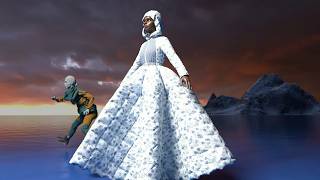
Hello and welcome. Nice to see you all here at PI Apparel. Uh, so I figure we'll start with a few words about me. Uh, I'm Michael Ferraro. I'm the executive director of the FIT Design and Technology Lab, which we call the DTEK Lab. And, uh, I made my first picture with a computer in 1969, so I've been involved in media technology innovation that entire time. I was at Magi when we did Tron, which was the first feature film to ever use computer animation. And Magi did most of the sequences for Tron. A group of us from Magi started another company called Blue Sky, which did— after we sold it to Fox, did the Ice Age movies, the Rio movies, the Peanuts movies. So at the time, it was the only CGI animation studio on the East Coast. And I was a system architect for the Academy Award-winning renderer, the entire production pipeline, in fact. In the mid-'90s, I created large-scale virtual worlds which were shown in contemporary art centers all around the world. So you can imagine what that was like with computers that were the the size of refrigerators. But we still did large-scale virtual environments with helmets and immersive screen presentations. In the late '90s, I started to do— build an animation system that was a real-time 2D animation system, which allowed you to take traditional hand-drawn assets and assemble them into performable characters that allowed us to do really innovative production processes for serialized television. So we did TV series. We did large events. When Kim Possible, which was a very successful animated series developed by Disney, was launched, I had her set up in a TV studio where she was interviewed as a cartoon by news reporters on 15-minute headways across the United States. We also did large live events in front of thousands of kids. We did a project with Shaquille O'Neal who co-hosted an award show with two of the main characters from Cartoon Network's top-rated show at the time, a show called Regular Show. And then we did a TV series with MTV called Station Zero. In the mid-2000s, I started working at Lehman College, and I was building a media innovation center there, and I was part of the team that developed a series for which we won an Emmy Award, working with students from Lehman College to develop this series that focused on the best of the Bronx. I'm currently head of the D-Tech Lab, as I mentioned. Which is a core component of the FIT Center for Innovation. And the key component that differentiates our activities in the Center for Innovation from the other core component, which is biofabrication, is our focus is on di— uh, in design and technology. Um, and we're not an academic unit, so we really operate differently than the rest of the school. We serve as a bridge between academia and industry. All of our projects are industry-sponsored projects, and we look to leverage the fresh perspectives and new ideas of next-generation creatives as we help industry navigate the future. One thing that's not well known about FIT is that we have 40 degree programs, so we pretty much have our arms around the entire fashion value chain. We may be well known for our, our fashion apparel, but we have the the best toy design program in the world. We have one of the top-rated advertising and digital design programs. We have the only undergraduate cosmetics and fragrance program in the United States and one of the few in the world. So it really is very robust in terms of the different kinds of creativity and business focus that the school offers. And we've really looked to help brands, leading brands and retailers evaluate the impact of emerging technology on their digital ecosystem. And we've worked with a lot of high-profile brands, as you can see—Uniqlo, JCPenney. We did a really fascinating project for them some years ago. So from my perspective, what I have seen is what the central role that media plays in the new fashion ecosystem. And the kind of the few The core concepts that are really being impacted by it are the way in which media analytics informs brands about emerging tastes and the way social media platforms set and accelerate trends. We also have digital twins, which allow 3D media to showcase garments before they're produced. And then co-creation allows user-generated content to collaborate and blur the lines between the creator and the consumer. Um, there's a really important element in supply chain storytelling that helps document a product's journey, uh, reinforcing its sustainability claims. And there's an ethical alignment where media is used to audit and hold brands accountable for their social, environmental, and labor practices. Uh, And brand narrative, of course, you can understand the importance of the way media would create cultural relevance and long-term value by engaging the consumer in a story. And then media creators are becoming embedded in the value chain as value generators. So that really kind of speaks to the cultural capital that media offers. So when I'm talking about the integrated fashion value chain, I look at key media trends that are changing that value chain. And they're digital product creation, virtual reality, augmented reality, artificial intelligence, and live shopping. So these are the technologies that we really engage as we start to explore some new developments. And I'll talk about a few case studies that kind of underscore how that worked. And this was a project that we did for Ludacris. Who— rapper, actor— who launched a children's animated TV series on Netflix in 139 countries at once. It was— it's loosely based on one of his daughters who's a singer and a dancer and wants to do good in the world. So it's a charming, wonderful story. It's a CGI animated series. And what we developed was 3 collections of footwear, accessories, and apparel for the CGI animated star. This is just one of the three different collections. We prototyped those pieces in Browzwear. So we're using digital product creation to create the assets. We put them on the CGI animated star of the series, whose name is Karma. And then Mattel produced them as toys. So you start to see that loop between the development of a creative property, its manifestation in 3D, and its Execution as product, which really starts to speak about the way in which that value chain is becoming integrated. Another important project that we did, it was a big project that spanned 4 semesters. So we had the same team of faculty and students working on this project for the Girl Scouts, who came to us recognizing that their older Girl Scouts were leaving the organization. And one of the things they said on the way out was that uniform It is so geeky, it's embarrassing. It makes me feel terrible. So they asked if we could help. And what we did was spent an entire semester researching the history and legacy of the uniform. We then spent another semester designing a collection for them. And it was the first time they had ever had a collection designed. They had individual pieces designed over the years, but never a collection that was thought about in an integrated and holistic way. And the collection was designed as a layered collection. So it was a set of everyday pieces that they could reflect their pride and affiliation in an organization that they cared a great deal about, but where they could feel comfortable with their peers in high school. On top of that, we then updated the traditional pieces of the sash and the vest so that it had modern features like pockets, which they didn't have, which was really kind of criminal. And then we added accessories because they were very outdoor-focused. So again, we prototyped these pieces in 3D using Browzwear. It was really an interesting moment because we're third semester into this project. And that's when we found out that they had launched a brand redevelopment two semesters earlier, but didn't tell us about it. And had we been doing physical prototypes, it would have been a disaster to try and accommodate the evolving brand guidelines. But because we were working in 3D, we could accommodate these easily and work with the leadership to be able to set the color blocking, the logo placement, and develop this assortment, which we then did 3D scans— after we made physical prototypes, because we helped them through top of production sampling. And we did 3D scans of— this is a young woman who is a Girl Scout wearing piece— a piece from the collection. And we used these 3D scans and integrated them into a microsite that we developed that was specifically focused on retailing this new collection. In addition to offering the pieces, we also built out a social media campaign to help build community around the collection. And then we had sections of the website which we used to highlight the designers that did the work. So you got a focus on the history of the uniform as well as pages that focused on the designers and their backgrounds. And so you really felt like you were part of the dialogue. And then lastly, we launched it as a live shopping event using Bamboozler to create a remarkable retail experience. And what this woman— Jasmine Whitley, who was a very well-known influencer with a significant following, but was a Girl Scout herself. So she was able to speak to the Girl Scouts, offer the pieces, show them, wardrobe them. It was a very interactive dialogue. They sold a lot of pieces, and they had an attendance that was close to what they have when they launch a new cookie. So it was a really robust retail environment. Interestingly, we had taken them all the way through the development of an on-demand manufacturing solution that would have allowed the Girl Scouts to offer a much wider range of sizes, being more inclusive, and also allowed a lot of personalization and customization of individual pieces. But as it was, it was a step too far. And then subsequently there was a leadership change, so we never really got to execute that. But they did take a bit of heat for not offering inclusive sizes, which I warned them about. And on-demand manufacturing is such an important way of being able to address that. Another project that we had done with Cotton Incorporated, they had approached us asking, what we might develop to showcase fashion collections now that 3D is becoming so widespread. So we developed a series of short videos that focused on cotton's properties, and in particular treatments of that cotton that allowed it to align with different climates rather than seasons. And I'll show you a short piece from an animation that we produced. Sag. Yeah. So we created these kind of remarkable environments. In which to showcase these designs. All this was done by students, student-faculty teams. It was— this was done with Cloe and Cinema 4D. So we use a lot of different tools when we try to execute, create kind of distinctive new formats using emerging technology. The— another really sort of interesting development that we took on was the use of a virtual influencer. So it was a CGI animated character that co-hosted a live shopping event on the trade show floor at MECOM. And it was also a live shop— it was a live shopping event in front of a live audience with a virtual influencer. So a lot of different pieces that were involved in it. And this will show you a little bit of this character Zero, who himself is a content creator. Is talking to the designer about his shoes, both his physical shoes and his NFT collection. So it was a very kind of strange crossover between the real and the physical. So Zero is chatting with the designer here. There's 50, 75 people on the other side of this screen looking at us, and then we're streaming it off live. And again, you could buy pieces from this collection on the Bamboozer app and was really kind of a great way to demonstrate the sort of seamlessness that's possible with media technology. Um, the— another interesting project that used media at its core was a project that we did for a graduate student who launched her fashion collection as a dance performance in a virtual world. So we created this factory landscape, put all these atmospheric effects in it, and then had this— the collection that the student had designed on a model dancing. And you could walk around her and stand up close to her and watch the dance performance. And it was a really kind of weird soundscape, so it felt otherworldly and interesting. We've also really dug deep into the use of augmented reality to create story moments that drive home, for example, the importance of understanding the impact of single-use plastics. This was developed for a brand activation that we did for our Sustainable Business and Technology Conference, that design and business conference that we've run for 20 years. FIT has run a sustainability-focused conference for over 20 years. And we organized around this particular event around a theme called Earth Things First, and then built these brand activations. One of them was to create a canyon of virtual heroes, of FIT heroes that were virtual statues throughout the campus. But we also created these moments where you would find kiosks in the city, and then as you got to them, these activations would start. So that you start to become engaged with the impact of what a single bottle means when translated times many thousand. What we've done also was work with a woman who launched a— she has a very successful white-label footwear brand. Her name is Farrell Robin, and that's her brand. And she sells to Nordstrom and Target and a number of other big retailers. But she wanted something that really reflected her values and was a direct consumer product. So we organized a really strong purpose statement for her, which was organized around these ideas of defying convection— convention, redefining expectation, and igniting positive change. And we used that information to develop a really distinctive brand identity which we then were able to translate from a simple brand into a texture that could be used on all kinds of collateral material, like the pattern on this bag. And then they even developed these really innovative boxes for the shoes that are slipcases, that when you open the slipcase, you activate this animation by just pulling the box open. And since the brand was designed for women who travel. The animation is a woman carrying a piece of luggage. And it's— as you open the box, this type of lenticular animation becomes activated. So the footwear designs themselves were built around a system which included an outer sole, which was a sandal. In this case, they designed 3 or— I think 3 different outer soles. That could be worn by themselves, and then these soft inner pieces that snap into that sandal so that you can pack in the space of one shoe, one box of shoes, three different shoes. And the, so you'll see here where there's the sandal down the bottom, a ballet flat, which also has a sole on it so that you can walk around in it, but that snaps together, creates the design, and then what we then did was pushed it through AI to create renders from the actual sketches. And this was kind of a moment for the students because they didn't do the AI, I did the AI, and they were a little shocked when I showed this to them. And I held back in the final presentation because I didn't want to eclipse the amazing work that they had done, but I subsequently shared this with the brand. This is another variation of the same sandal but with a different insert that allows you to create this cap shoe sandal combination. And so before I wrap up, I just wanted to sort of talk about a few things that are really kind of— I've found interesting in recent developments. And I want to point out that these are not endorsements. These are just observations that I've made that I think are profound transformations. And there's certainly a few of them here that will be added to this list because there's a lot of exciting development that happens year to year. One of the things that's really— I found very interesting is a company called Savannah AI, which generates high-quality fashion visuals that allow you to regionalize them so that you don't have to do product photography that's regionalized for the different parts of the world that you're selling in. Make the Dot has a really interesting tool that is— helps create very dynamic and interesting line sheets that are using AI so that you can iterate through variations and get your VP of merchandising to really lock in on what the collection will be. A really exciting development from a woman in Italy called Fashion Insta. And she has an AI pattern-making, pattern-to-product offering that they're demoing and carrying all the way through manufacturing as well. So these are production-ready patterns that are actually connected to a factory so that you can do on-demand with them. And on-demand in general is such an important development, particularly for emerging designers, because it allows them to be able to launch collections that are dynamic and that are exciting without having to carry the weight of inventory and be able to offer a much more inclusive size range than, you know, a few different sizes in one or two different colorways. So Resonance is based here in New York. They've really done some interesting work. And 3D Looks got a really interesting fit technology that I think is also— we're going to find mixing into this. Integrated fashion value chain. And then lastly, smart tech packs, and in fact ways in which automation and production can be using communication tools that standardize and simplify the way product is moved through, through manufacturing. And they also have a connection to an on-demand manufacturing facility so that small production runs can be set up. And we have one of the— we launch an entrepreneur every year through an entrepreneur prize that we call the Pete Prize. And the first Pete Prize winner, she— they get a $30,000 grand prize, and they get the networking and support to help them launch their collection. She's currently using this whole process to do her second collection. Her first collection was sold on Walmart's Marketplace. So it's been really interesting to help cultivate emerging designers and how this new integrated fashion value chain really helps support them. And I like to end with a kind of a slightly unusual angle. Don't forget the human. Because as this organization called Consumer Experience Group, who does really detailed research on luxury consumers have pointed out that the relationship between the consumer and the salesperson is a vital component. And actually, the human all the way through developing loyalty, developing the human connection is really important. And it's something that's easy to overlook when you're looking at a new fashion value chain. So that's— That's it in a nutshell. Uh, happy to take any questions. I think— yeah. Since we started the DTEC lab, we've done over 65 projects that have had 90 faculty and 250 students. And all of these are industry-sponsored projects. So faculty and students are paid stipends. They're not lavish stipends, but they respect the intellectual property that they're creating and sharing with the brand. And it creates a fair basis for exchanging that intellectual property. So we basically are a work for hire or consultancy. And it's been an amazing experience for the students because from their perspective, it's a master class working with really expert faculty in close collaboration as they take on really dynamic challenges. Any questions? Oh, greatest challenge? Change management is the biggest challenge that all brands face in the digital transformation. It has been really hard. And in fact, the Girl Scouts was a great example of that. We took them a long way and then they got to the point where they just couldn't handle the amount of change. But we've seen that even when people execute projects and are able to get really clear demonstrations of what the value is, figuring out how to get your organization all on board with it in a way that respects who they are, respects what they do, and helps them be part of the process is the biggest challenge that I think everyone faces. And in universities, you can imagine that's even more so. Have you seen anyone achieving accuracy in pattern 3D going direct to production? I'm waiting to see how Fashion Insta does. The woman who's running it is a master pattern maker. She is very precise. She has a lot of experience in 3D, having worked for VF Corporation for a lot of years in DPC. So I'm really kind of interested in the AI tools that she's developed to be able to create really accurate patterns. So it remains to be seen, but I'm hopeful. What to advise new graduates? Stack credentials. It's not a monolithic solution. Be prepared for pivoting, changing, be agile, and don't give up hope. It can be daunting to face the world today with the political complexities and with the way in which technology is radically changing what we do. Do I envision consolidation in the fashion industry? Isn't it already happened? It's sort of crushed. It's really hard to imagine. And it's really one of the great losses is in craft and the importance of craft. And we see this across so many things that mechanization and industrial production has a way of crushing craft. We used to build houses because people were craftspeople. And now they're coming out of factories. Preassembled and they're kind of bland. That's the risk that we face with overconsolidation. There's always going to be a need for enterprise, large-scale, long-run. And there's a need for it not only socially but economically. But at the expense of some of the core values is really where the risk comes. But I think with these new technologies we have the opportunity for emerging brands to be competitive against enterprise. How is AI thinking about AT? Well, we think about it a lot. I do anyway. And I've been hosting an AI symposium now for a few years where we have a dialogue between leading developers of AI tools, faculty, and students so that communication is really fluid and touches on the issues of ethics and reliability and trustworthiness in addition to the creative opportunities. So I've run a series of things that I call Tech Talks, which are close encounters between tech providers and faculty and students so that they can have a more structured on-ramp to using the technology. And I've actually done workshops in some of the faculty classes introducing some of these AI tools. So, well, there's a good question there. There's two good questions. What are the criteria for tech partners we work with? I really— most everybody that's at this here is a good candidate for a tech partner. There's a lot of innovation here. I think that's really what the core of this community is. So I'm open to talking to anybody about how we may introduce some of these technologies to the FIT community. I'm not a faculty member, so I can't— I don't deal with curriculum. Faculty own their curriculum. They have to decide to adopt it, but the way in which I found to be most effective is by introducing the faculty in these small settings or introducing them through a case study project where they're actually working on it. In fact, that's how we got 3D to FIT back some years ago. We did a research project where we analyzed the leading 3D providers, and the team said, "Oh, we like Browzwear best." So we started working with Browzwear. Now, of course, lots of development is taking place across that spectrum. I'm glad I'm not in that business. It's a very competitive business and a lot of fast development. But those are great ways to get involved, and these tech talks are really great ways where we can introduce this technology so that people can begin to assimilate it, really understand how it can impact and influence their learning outcomes. There are— yeah, so new fashion trends based on cultural— yeah. There's a young fellow who came to me recently having developed I'm sure I'm running over here. Oh, I have a minute and 25 seconds? A young fellow who has a brand called Liquid Sound. It's a fragrance brand that's built around using AI tools to translate sound into scent. And he's looking at using artists as a way of communicating the subtlety and importance of this development. So I'm looking to— I will be working with a leading contemporary artist named Shahzia Sikander and with our fragrance department to develop a case study to explore that. So art will always influence how I think and what I do. As they say, once an artist, always an artist, no matter what you do. So I think with that, I'm going to say nice seeing y'all.










