Fit Tech with Purpose with Whitney Cathcart, 3DLOOK | Seamless
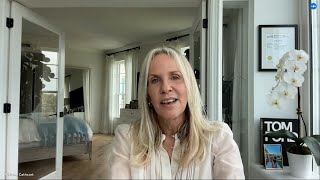
In this interview, host Michael talks with Whitney Cathcart, co‑founder and Chief Commercial Officer of 3D Look, about her 30‑year apparel background, the founding of 3D Look in 2016, and the company’s early AI‑driven mobile body‑scanning technology. Whitney explains the 2019 3DLC Grand Challenge submission—a “digital passport” that creates a 3D avatar from two smartphone photos to reduce online‑shopping returns and waste by giving brands anonymized body data. She details the biggest technical hurdles at the time: building diverse, high‑quality datasets, achieving accurate scans under varied lighting and clothing, and ensuring privacy compliance. Winning the Grand Challenge provided validation, exposure, and valuable feedback that helped the team grow from ~20 people to a larger, more specialized group, leading to the creation of an internal ScanMe lab and the use of synthetic data. Post‑challenge, 3D Look launched the MobileTailor SaaS platform for apparel retailers, expanded into the uniform market during COVID, and later introduced FitXpress for health, fitness, and weight‑loss applications, now accounting for about 15 % of revenue while apparel remains the majority. Whitney shares key takeaways: technology must solve a clear business pain point and be integrated into retailer workflows, and advises future challengers to focus their pitch, speak the retailer’s language, and demonstrate a must‑have solution rather than a nice‑to‑have feature.
Chapters
Hello Whitney, thank you very much for joining us. It's lovely to see you. Um, I hadn't put this as one of the questions that I sent you, but I thought let's start with, um, a little bit about you. So, you know, for those in our audience that don't know you, please can you introduce yourself and tell us a little bit about how you got into this industry?
Yeah, absolutely. So hi Michael, it's great to see you again. Um, I'm Whitney Cathcart, I'm one of the co-founders of 3D Look, and, um, I'm the Chief Commercial Officer as well. Um, I actually— it's an interesting story because I spent about 30 years in the apparel industry before transitioning over to the technology side back in— we were early, 2013, '14, '15. We started the company back in 2016. So if you can think back to then, those were really early days of AI. And I had spent 30 years on the manufacturing side of the fashion industry. I was always on the business side of it. And I really understood fit and the complexities that, you know, drive fit and drive great fitting garments. And as online shopping was increasing, you could just see that there was going to be a big problem with return rates. How do we buy things online and kind of mimic that in-store experience? So I actually jumped ship. I went and took classes in AI and kind of got myself dangerous enough, you know, back in probably 2015-ish where I knew more about kind of different AI models. Than your average retailer, certainly back then. And we founded the company back in 2016. So I think it's kind of a rare experience to have both kind of a, although I don't code or anything like that, but really have that apparel background as we developed our technology and solutions and went out to market because I really understood the inside of retail, which as you know, is a very complex industry.
Absolutely. No, I bet that's an amazing benefit to actually understand the challenge upfront and then be able to obviously build a solution tailored specifically to it. And we all know that fit is a huge, huge issue in this industry. So that's great. And also, I bet you're kind of laughing now because AI has in the last couple of years has just gone nuts. So you were well, well ahead of the curve.
I always say we were in AI before AI. Well, I mean, AI had actually been around for some time, but in terms of, you know, fashion, retail, manufacturing, apparel automation, we were definitely ahead of the curve. And I think, you know, when I look back on it, we weren't too far ahead of the curve, but we weren't behind the curve. So that was important.
Absolutely amazing. Well, we're obviously here today to talk a little bit about your submission to the 3DLC Grand Challenge, which this year is going into its 5th year. I believe I'm right in saying that. So I believe I'm right in saying that 3D Look won back in 2019. So if you can cast your mind back to then, pre COVID, pre-chaos. Can you give us a brief overview as to the solution and technology that you submitted at that point for the Grand Challenge?
So we had, as I said, we founded the company back in 2016 and we had developed a mobile body scanning technology. So it was an AI-powered mobile body scanning technology that uses different components of AI such as deep learning, computer vision, which again, back then was pretty early on. And our goal was really around, when I think back to it, this idea of like a digital passport where we would all be able to have access to body data by simply taking two photos on any smartphone device. And the concept that we applied, we submitted for the challenge was kind of this flywheel, which still exists today, where as online shopping was increasing, therefore returns were increasing. And what is the reason? It's because we don't understand the people that are shopping our brands or in for the retailers. So it, uh, the implication of our submission was really around, uh, consumer experience, uh, the consumer being able to have a better fitting experience, but then also this concept of, um, having brands and retailers then have access to anonymized consumer body data so that they could really have implications on their design and merchandising strategies which ultimately would drive down the waste in the apparel industry, which is enormous, as you know.
Absolutely. Thank you for that. And obviously you've touched upon it a little bit, of course, with the— obviously fit was being the challenge, waste. But if I was to put you on the spot and say, what was the specific problem that you were trying to solve at that time, what would your answer be?
Yeah, well, I think it was always driven around returns, but there are— when I think back to this, there are kind of 3 different pieces of that. One are how do we lower return rates? One was around consumer experience. So how are we engaging consumers? And then one was how are we then helping brands to understand the bodies that are buying their brands that they're not fitting? So again, there was kind of a trifecta on problems that we were solving with just one solution.
Amazing. Thank you very, very much. And again, casting your mind back at the time, what would you say was your biggest technical or creative challenge when you were creating your solution?
Yeah, well, there are always two facets to, you know, what really drove us at 3D Look right out of the gate on day one. Number one was we wanted to have or build the most accurate body scanning technology in the world that could be used beyond the apparel industry into different sectors down the road. So we always had our eye on that ball, and developing that was a big challenge, particularly back in, you know, 2016, '17, '18, where, you know, we didn't have, you know, access to kind of where AI has gone, particularly over the last couple of years. So building datasets that were really a unique representation of different geographies, of men and women, of different types of shapes, So I would say data collection on one piece of it, and we got pretty creative in how we collected data and built those training sets back in the early days. You know, since then, you know, as we've scaled, we've had access to a lot more data. You know, post-COVID, we developed our own internal body scanning lab, so we were able to, you know, expand on datasets and so forth. But back then, so one piece of it was on the accuracy side, and the second piece of it was on the consumer experience. Experience side. So what did that experience of scanning your body with your mobile device look like? How could we make it intuitive, simple, easy, private? So all of these things, all of these challenges, you know, you had privacy laws taking effect, you had consumers becoming more involved in their own data. And so really keeping up with privacy laws, but also things like making sure that we were creating user experiences that were simple, for the end user. So developing neural networks on, like, we build our own clothing detectors that could identify different types of clothing because when from those two photos we're identifying landmarks of the human body, building a 3D avatar of that body. So I, you know, over the years we've gotten better and better and better and more refined to doing that with clothing detectors. Also things we wanted to make sure that we were not overly sensitive to different lighting situations. So that, you know, we weren't telling a consumer they have to be in like a white room in certain clothing and they needed a piece of paper in between their feet or to understand their height. So that's, you know, I would say those were the biggest challenges when we were developing the technology. And certainly over the last, you know, several years, we've really been able to refine those models.
Amazing. Thank you very much. So again, the 3DLC Grand Challenge. So if I remember rightly, you were already part of the Py Apparel community. Community before you entered into the challenge anyway. But what really made you decide to take the jump and take part in the challenge that year?
Well, yeah, it's a good question. We knew there was a big opportunity, actually we felt like it was a massive opportunity to be able to work with you all and apply to the challenge, and that, you know, that would give us access to really smart people, to a lot of feedback, and it would be validation of our, not only our technology, but kind of the core mission on how do we, you know, help digitally evolve the apparel industry and really drive down return rates for consumers and brands, but also have deep implications into kind of environmental impact of waste.
Yeah, nice. And I did actually, I've just checked, I did make a mistake. I'm getting confused because it's 2025 and the 5 was sticking in my head. This is in fact the 7th year that we've run this challenge, which seemed right because I was thinking we've definitely done more than 5 of these. So yeah, this is the 7th year now in 2025, right?
Um, so, uh, so yeah, not the first year. I, I know that.
Yeah, yeah, you weren't the first winner. Uh, it must have been second or third year, but, um, that's great. And then what did you actually, you know, then you obviously took the jump, you took part. What did you find was the most valuable thing that came out of it for you?
Ah, wow. Well, number one, kind of, you know, exposure. So that was a big deal for us. It enabled us to, you know, really talk to a lot of big brands and retailers. And number two, the validation of the technology and kind of that we were on the right road here with what we were building. And I think also internally, it was a huge validation for our team because we worked really hard on the application. We spent a lot of time on it. We were kind of still in the very early stages of 3D Look. We had, I think it was late 2019 that we kind of launched our first larger customer. So, you know, beyond the recognition, I think it was also getting a lot of really good and valuable feedback that helped us to focus.
Amazing. And do you remember how big was your team at that point?
Oh my gosh, I should have looked. I want to say in 2019 we were probably around 20-ish at that moment. Maybe a little more, then COVID happened. We actually scaled over COVID. So COVID— Wow, OK. We got very narrowly focused into a particular sector. And that, you know, that really kind of helped us to scale. And we did a lot of really good things in 2020, which was, you know, unfortunate that COVID happened. But it really helped us to narrowly focus and scale our business.
Yeah, amazing. I'm glad to hear that because obviously it wasn't the case for a lot of people, but definitely when it came to digital tech, I mean, it was a thriving time, I think. How did actually winning in 2019 then influence the work, the research, the size of the business? How did it influence that?
Well, certainly it got us focused on the research. We understood that that body data was an important piece. So it wasn't just, again, about that, you know, user experience on the consumer side, but also how were we looking at body data. We've gone on to work with brands and create elaborate body data reports where we're able to look at how they are kind of, um, you know, building patterns and grading from there, which is linear when bodies do not change shape in a linear way. And so being able prove that out. That was something that really— that was something that was validated through the Grand Challenge. You know, we got, you know, we hired more engineers. We need a unique combination on our side because we needed, you know, machine learning experts, but we also needed experts in 3D, and that was kind of a rare combination there. So I would say on the engineering and data science side, you know, we did a lot of work on 3D modeling. That's when we went and we invested in our own 3D body scanning lab called ScanMe. We were able to generate a lot of data. Synthetic data was kind of early days back then, but we've generated— we use a lot of synthetic data now as well, you know, refining our clothing detectors, refining our lighting algorithms, adding measurements doubling the number of landmarks. So all of these things have gone on since the Grand Challenge.
Amazing. And just to add to that, what does the company and your solution look like today? Like, how is your, your focus, your offering evolved, changed, scaled? What does it look like?
Yeah, so right after the Grand Challenge, you know, we went into COVID and we launched our first SaaS solution called MobileTailor, which still today is is, you know, one of our largest solutions. We've got well over 100 brands and retailers on it. Um, we also expanded into the uniform industry, which was an industry over COVID where people were still going to work. Um, and the way the uniform industry sizes is by corralling large groups of people into a room, and you could not do that. So having a contactless digital solution over COVID really helped us scale into the uniform industry. I'm really proud about that sector of our business. It is one of the largest sectors of our business, and we still have those wonderful customers from who came to us in 2020. So having Grand Challenge, you know, kind of on our resume was an important part of, you know, having people feel like this technology had been validated. Last year also, we expanded into health and fitness and weight loss with our FitXpress solution. And so in addition to the 3D model that we generate and the body measurements, we've also added body comp data such as BMI, BMR, fat percent, lean body mass, fat body mass. We have weight progress tracking, we have weight prediction, we have, we have your ability to be able to put a weight in and see what you're going to look like. So all of this, you know, has enabled us to really be able to expand our business into other sectors. Beyond the apparel industry, which is something that we had always wanted to do going back to 2016.
Amazing. Congratulations. And how, how much, like, you know, we— in relation to the apparel side still, what kind of estimated percentage of your solution is still in that particular field?
Well, we're still early stage in that right now. It's a little over 15% of our total business, but again, we've really only launched that solution about a year ago, so We have a lot of really exciting things in the hopper there, and a lot of that has been largely driven by GLP-1 drugs and weight loss and kind of, you know, where health and fitness has gone. I think, you know, it was an industry we had always thought about, you know, way back in the early days. I think the implications of AI in, you know, total wellness has, you know, certainly bubbled up in a way in the last, you know, that had not existed back in 2016. So, you know, apparel is still the majority of business, but it looks like FitXpress is pretty quickly catching up in 2025. We've had a good first quarter, so that's exciting.
Looking forward to seeing more and more from that. And then I guess just a couple more things I'd love to ask is, what was the most important takeaway or lesson that you learned from taking part in the Grand Challenge all those years ago?
Yeah, it's a great question. So back then, you know, when people saw our technology, they'd be like, oh, that's so cool, that's cool, you can generate a 3D model of me and all these measurements and blah blah blah. And we had like, we were playing around with augmented reality at the time, and, you know, so we had these cool demos. Um, I think the implication of really understanding the business use case is paramount, and just having a cool technology is is not going to help you be a successful technology company. You really need to understand what the business use case looks like, how your technology is going to integrate with retailers and brands. I think that's like a, you know, I've seen it again and again with different, you know, companies that, you know, you've got a great solution, but no one knows how to integrate it. So really understanding the business use case and making sure that you are solving for a huge pain point. You can't just be a nice-to-have.
Yeah, absolutely. And I think that is probably going to be the answer to my final question as well. But that is to say, you know, we have tech startups, researchers, academics that are still taking part. If you had a piece of advice for them, what would it be in entering the 3DRC Grand Challenge?
Focus. I remember, I remember working on the application and, you know, it's easy to be all over the place. I I think really editing what it is you're solving for down to an elevator pitch and getting that on paper and in just a few slides is some of the biggest challenges I see with startup companies. You know, we edited, edited, edited, edited, and you really need to understand, you know, your audience, who you're talking to, have experience in that. Don't go into like a retail industry and just be talking tech, especially back then, nobody really understood, you know, the technology behind what we were doing. So while our technology stack is super, super complex, that's not what retailers and brands wanted to hear. What they wanted to hear was, what did it mean to be able to use our technology? So really being narrowly focused is very, very critical. And again, really understand like what what is the pain point, and is it a pain point, right? If it's not a huge pain, you're not going to take a pill for it.
Absolutely, yeah, you want to be a, a must-have solution rather than a nice-to-have. And I think you make a good point there. Yes, the industry has come a long way, and I think a lot of them are in understanding technology a lot more, but at the end of the day, you need to speak the language of the people that you're trying to, uh, to onboard. And I think—
a long way to go, which means there's enormous opportunities. You know, mobile body scanning, body data is the beginning of what happens when you're designing clothing, right? So, you know, you're using a fit model. Imagine being able to use fit models of your customers and narrowing down into different types of body shapes. But there's so much evolution and digitization that, you know, is happening across the supply chain so that at some point someday, We're in a model where, you know, we're really able to be more of an on-demand model as an industry and be making clothing closer to home and be able to understand what the body shapes look like of the people that are buying so that, you know, you're creating brands that, you know, are really driving happiness for consumers and delight for consumers, but also making sure that you are are, you know, not adding to the waste that these industries already contributed to our world. So I'm excited to see where the industry goes over the next 5 years. It's all moving very quickly now.
It really is. And I'm also very excited to see where you guys are going to continue to go as well. It sounds like you've been on a hell of a journey. So thank you so, so much for your time today. I know you're busy.
Good luck this year with the challenge. It's super exciting.










