From Digital Product Creation to Digital Transformation | VF Corporation | PI Apparel
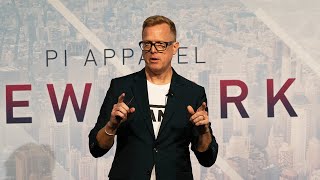
Joshua Young, Director of Digital Product Creation at VF Corporation, describes how the apparel giant moved from 3D design tools to full digital transformation across planning, creation, manufacturing, and sales. VF built a vendor network of 50+ factories using standardized Browzwear workflows, and created immersive experiences like Timberland's MetaBoot in Fortnite. Virtual try-on solutions can boost sales by double digits.
Chapters
All right. Hello everyone, my name is Joshua Young. I'm with the VF Corporation. I'm the Director of Digital Product Creation at VF, but as I'll soon explain, I actually do quite a bit more than just digital product creation at VF. By the way, there may be some of you, maybe many of you, who were expecting Centric to be in this room at this time period, and you're like, who is this guy? And he doesn't seem like he's talking about Centric. They're downstairs. In room 1, so we've switched. So if you want to go ahead and find them, that's where they are. It's room 1. So here, I'm talking about something a little different. I'm talking about going from DPC to full digital transformation. So what I've been hearing from some folks at this conference has been, you know, it's great. We love PI Apparel. There's lots of really interesting stuff we see. But everyone seems to be talking about digital prototyping. And there's not a lot of people talking about what's beyond that. Well, I've been doing— well, as I'll explain here in a second, I've been doing this a really long time. And so I love the whole digital prototyping thing, but I— how do I say this? I'm sorry. And I also apologize because I came in— I've been traveling for 2 days from Singapore. I got here from Newark after flying, going through 5 airports at 3:30 AM last night. So if at some point I just— space out and can't even think of what I'm trying to say, then that's the reason why. So bear with me. So anyways, what is the full potential of what we're doing with digital content? What does it look like? So first of all, one of the things I wanted to explain about the images that are— this image that's up here, this is a digital— that's a 3D image. It's not photography. That's just to give you, but this was created, and well, maybe not this exact 3D model, but the 3D models that we created were actually not created by my 3D DPC team. They were created by one of our factory vendors. So we've got a pipeline now that can go from a vendor-created asset to something that looks that good as part of our overall process. And so that's what I guess what I'm trying to think, what I'm talking about when I say digital transformation. So a little bit about me, like who is this guy standing up here in front of you? So I've been in this industry doing literally digital transformation for the last about 25 years, first with Nike, and actually all of these, you can see these brands. So I was working at Nike, been done consulting with Patagonia, PVH, Lululemon, Carter's in my career, and then am now at VF. And with VF, I lead the create and the sell pillar of our digital transformation program. So if you think about what that is, so I'm part of a team called Go-to-Market Transformation, and it is our digital transformation team, and we separate that out into these four pillars: plan, create, make, and sell. The plan team's merchandising, create, design, product development, make is manufacturing, and sell is, sales, marketing, and so forth. So I'm responsible for the fun ones. That's what I like to tell everyone. Create and sell the best ones. So that's who I am. So what have we done? I started with VF in 2020, was in Hong Kong. I literally started January 2020 in Hong Kong, and you pretty much know what happened after that. So it was a very interesting time. Started with a team of 12. We were doing about 5% of the total product creation for VF. VF digitally, and we had no vendors onboarded. And just in case you don't know, VF is Vans, North Face, Dickies, Timberland, JanSport, Icebreaker, a whole bunch of other brands. But the big 4 are the ones that we mainly work with. So what we've done in that amount of time— well, I've moved from Hong Kong to Singapore, and now we've got a team of 40+, 100% digital for a few of our brands. That means everything is created, an entire product line is created in 3D. We've got over 50 vendors. In fact, I just put 50+ 'cause I know it's more than 50, but honestly, I've lost count at this point. So it's 50+ vendors doing apparel and footwear digital product creation for us. So we, like I said, I like to say we have a fire hose of content coming out of Asia right now. So how have we got to where we are? It's not just one team. If you're going to embark on the same sort of digital transformation effort, it's going to require you do a lot of partnering. So we have a very strong digital product creation and digital materials, digital materials COE in Asia. We partner very closely with our brand team. So all of our brands have their own DPC teams, and we partner very closely so that there's a smooth connection between the brands. In fact, we have some of our illustrious brand team members here in the room right now as we speak. We also have a very closely aligned effort with our vendors. And so we don't just train them and walk away. We actually create a whole certification program that manages their levels of quality and makes sure that they can hit targets. So if you think about it, so the last one before I move on, one of the last things on here is that we also partner very closely with our sourcing team. The idea being is that everything that they do in the physical side, so they have physical standards and quality levels and capacity levels and demand planning, we've actually duplicated that for digital. So we, we want it to be a single process. You just decide what you want to get from your vendor. Do you want a digital prototype? Do you want a digital sample? Or do you want a physical one? Or maybe, hopefully not, but maybe in some cases, do you want both? And so that's the level that we're at right now. So mostly what we're talking about here is being used from prototype through to sales meeting, as you can see there. And for those big— well, we call it the Big Four brands. It's actually kind of five because Timberland PRO is unique in what they do. That's our workwear brand. And maybe I'll talk about that a little bit. Create. So what we're doing for Create is powerful. And like I talk about, it's mostly prototyping through sales samples. But what can we do with that content? So we use it for 3D concepting. We use it for 3D design. Something I like to call digital sample room, where internal to the brand, if a designer has an idea, they can go to a team of technical designers who will immediately turn it into a 3D asset. It's kind of the old version of an internal sample room, but digitized, which is super flexible. Digital prototypes, we have designers can apply color material and graphics. I like the— so people say, what do you have designers do digitally? We have a bunch of designers who work digitally, both on the footwear and the apparel side. One of my favorite team members is the team that does tents. They use something called— oh, now I see this is where my jet lag is kicking in. Gravity Sketch, thank you. They're using Gravity Sketch, which is a VR-based 3D design tool so that they can get inside the tent and design it from the inside. I mean, if you think about it, that's the best possible way to design something like a tent is with VR. So you can actually see what the— so people say, what's the use case for VR in design? Oh, I just gave you a great use case there. So digital sales samples, Product configuration, we have a, if you were with the Theodo presentation earlier, we have a whole internal customizer configuration tool that we use where we can go from assets within our PLM system all the way to production with a seamless, with 3D design in the middle with a customizer tool. And then we have digital asset management as well. So this is great. So what's the benefit? With all of this work that we're doing. So I like to say there's 4 big DPC benefits. Save time, save money, be more sustainable. So you've probably realized I've only got 3 here up on the screen. The reason being is because that's, if you're just gonna focus on create, you're probably only gonna get those 3 benefits. My favorite benefit is the green one. That's what I wanna do. I've been trying to tell my team at VF that I wanna make them, I wanna use digital transformation to make VF their next billion dollars. And I'm not joking about that either. I really think that's the potential. And I think that's where if you're just focusing on digital product creation within the create space, within design, in product development, it's good, but you're probably gonna only do the first 3 things. And this is why you need digital transformation to get out and do that last thing, which I really like. So make some of the other things, make better decisions, improve product quality, enhance design visualization, those are all great. But again, they all kinda relate back to the first 3. So the power of digital, what can we do with it? So what you're seeing up on the screen, the team in Beijing. They are what we call our elevated transfer, our elevated selling team. This is just the stills that they can create. I couldn't show you the animations because it's top secret stuff that hasn't been released yet. But we have especially, so let me back up. One gentleman on our team, one of the managers of this elevated team, Long Tao, He's Chinese. He lives in Beijing. And he has access to this amazing talent pool of contractors in China. And one of the gentlemen that works with us as a contractor on this team is Jinzhen, Jinzhen Hao. And he's one of the most talented 3D artists I've ever seen. And again, what's interesting about this content, especially the boot, is that that boot was created by one of our vendors. And he simply took that. And then elevated it with some fairly simple tools in a very short amount of time. So again, that's a huge savings in time and effort. So here's what we're looking at, or what I think of as the total benefit across plan, create, make, and sell. So visual line planning, consumer insights, visual assortment planning on the plan side, pre-line, presentations, digital sales tools, visual retail planning. If you've seen the Pixel Pool presentation downstairs, that's a great example of the visual virtual retail planning. Retail directives, digital showrooms, digital storytelling, all of that stuff can be done. And then on into e-com. So that's the first part of this presentation. Now I'm gonna do a little bit of shifting gears We had a little bit of a mix-up on the topic of this presentation. Originally, if you looked at the, in the agenda, I think that my presentation was supposed to be, what's wrong with e-com? Something to that effect. And so what I'm gonna basically show you is kind of a combination, it's a mix-up of those two presentations. So I've walked you through What are those benefits of thinking about your digital product creation process, thinking about it more holistically in terms of digital transformation? What I'm gonna show you is how some of those assets have been used on, or could be used on the selling side to make a massive benefit, a massive impact rather, to the way that we sell with product. OK. So is anyone old in this room old enough to remember this? So if you go back, way back, way back machine to 1998, this is what the Amazon website looked like. Do you remember the biggest— what is it, the biggest library in the world? So basically Amazon invented a website, sell books by title. Oh great, jet lag. Title, subject, and author. There we go. And that was, that was huge, right? This is like they invented, they invented e-com. What's sad about this is the next slide. That's what Amazon looks like in 2023. Now if there's anyone from Amazon here, to give them credit, they're working on some really cool stuff right now that I know I've seen it. And so there's changes coming, but Well, here, we'll compare them side by side. If you notice, you've got tabs, you've got a search screen, you've got a cart, you've got your account, and you've got help. They're even organized the same with a column on one side and the content on the other side. That's some, how many years is that? Who's good with math? 25 years, something like that, of, Progress, and this is what we've got. This is what we've got out of our e-com experience. And everyone uses this. It's not just these guys. And so the question is, how do we, well, let me take you through some more slides. So I'm gonna give you a set of challenges, and I want you guys to think about these challenges, and I'll hopefully give you some solutions. So first of all, one of the first areas where, where the fashion industry is really let down by that Amazon e-com model is when it comes to brand identity. Every single website you go to, series of little pictures organized over a number of pages, and you go through and you can do some filtering and you can do some searching, but that's not the experience that you get when you walk into a store. So here's an example, and this is something that's been— I've updated from a presentation I did, sadly, a number of years ago, and things haven't changed. These are 4 retailers that sell jeans. And all I did on this was take out the name of— basically, the logo on the screen. Can you— does anyone tell me which 4 brands these are?
Old Navy.
Old Navy. Okay. Which one? This one's Old Navy. Yeah. Okay. Any other ones? What's that? Levi's. Levi's. So, okay. Old Navy and Levi's. How about the top two?
By Abercrombie.
What was it?
Abercrombie.
Okay. Here we go. H&M, Louis Vuitton, Levi's, and Old Navy. So if I'm Louis Vuitton right now, I'm pretty not happy, right? Because why does the H&M stuff look like my stuff? Now to give the brand some credit, there's a lot of brands doing some really interesting things right now. Especially LVMH. Really cool stuff. But this is an issue. So where do we go from here? How do we get true brand differentiation online? When you go to a website, how can it feel like you're going to that brand's flagship store? And how can you maybe even get a better experience online than you can in store? So I wanted to put this slide up here just to give Banana Republic some credit, 'cause Gap sometimes, gapping doesn't get enough credit for some of the things they do. This was the only brand of every, of like, I must have been through like 50 different brands that actually had a differentiated brand experience online. This look and feel, their whole website is like this. All of the images that come up have this same sort of look and feel, so next time you see someone from Banana Republic, give them a big thumbs up. All right. So what are some of the possible solutions? So one of the things that VF did, and thanks to some other folks in the room who put in a big effort on this, was working with Epic to put together an experience for the consumer. So I'll play a video. I think we have sound on this one. Thank you to everyone for joining. Constra 10061 project with Fortnite. There'll be the forest, the desert environment, and an Arctic environment. Conceptualizing and build the team, MetaBoot 4. So can you bring the volume down a little bit? So what they're doing here is this is the game Fortnite, and we have a program at Timberland called Construct where we work with, you know, up-and-coming designers to basically design new shoes, something that pushes the limits, and we do it in a small period of time, so it's like an intensive exercise. What we did for this construct was that we had those same designers use Fortnite and all the tools in Fortnite to build out digital, what we call meta boots. And so you can see this first one here. That's the forest meta boot. And this is, again, all built with the tools within Fortnite. Tree growing through it and having it cracked apart. And then further on, we have the Arctic biome. So that's the Arctic Metaboot. And so what's— after all of this work is done, it actually created a playable map. And so you had the Timberland experience where you could go into basically the Timberland design studio. You could create a character, and then you could go through and do all of this parkour adventures through in fact, that's the map code if you play Fortnite, if you want to take a screenshot of that. It'll take you to that map and you can play that Timberland map. So that's one of the things that we found about this experience is it gave— it exposed gamers to the Timberland brand and it exposed Timberland consumers to gaming. So it was like a win-win for everyone. A great— not exactly what I'm talking about in terms of of what the brand experience can be online, but an example of how you can use these digital technologies to engage. And by the way, someone give me a, when I'm short on time, 'cause I have no idea how long I have today. Well, give me, tell me, let me know when I've got 5 minutes left so we can have some questions. All right, so the second one is deciding what to buy. These are two good examples. Everyone knows that one of the biggest problems with shopping online is that you can't try on clothes, right? And then we have a lot of people here talking today about virtual try-on, either for apparel or for footwear. But I don't think people really understand it's not just that you can't— a huge problem that you can't buy online, but some of the things that are a problem in the physical space you can solve digitally. Like in the first example here, these are stock photos. I didn't actually take pictures of people in the dressing room. That woman that's like, when you try something on, like, I can't see what my butt looks like. I mean, you know, and if I need a new size, I've got to hail someone in my underwear. You know, it's really— trying stuff on in store can be really difficult and time-consuming. The same thing with shoes. I mean, you get like a whole stack of boxes, and you're taking things out of boxes. And I'm sure everyone has been in the situation where you've got to lace up your shoes before you can try them on, which is super, super annoying. I mean, this is a lot. It's, you know, it's an effort. When to shop in store. Whereas, you know, if you've got something like virtual try-on in this example, and I think I have got a video here from Viking, they're one of the, the, the companies, and this is, we use Viking for our Timberland brand where you can do virtual try-on. So you select the boot, you do try-on, gives you a QR code, you scan the QR code, and then got a boot. So there you go. And this actually works really, really well. Now it doesn't give you the feel and it doesn't tell you the right size, but it's a really nice way of trying on shoes. Same thing for apparel. So this is— and I don't know, for those folks— well, first of all, I don't think Browser's talking about this, so they let me— if you didn't know that Browser had a virtual try-on solution, they do, and this is it. So go ask them about it. One of the reasons why I showed this is because we've built— On our apparel side, that fire hose of content on the digital side is all browse-wear apparel. And so all we have to do is grade those files, and now we've got a giant set of content that we can use online for virtual try-on. Now, the problem— one of the problems with virtual try-on is that half the time nobody knows it's there. I think that even our Timberland example, it's just a little thing in the corner. If this is really gonna be successful, the brands are going to need to market these solutions. It's exciting. I was actually on the, I didn't know Amazon had a virtual shoe try-on tool, but there was a page where it has this really cool video of, it looks like it was an advertisement of these Gen, what is it? No, millennials at a party having fun and trying on shoes, and it's like they're changing their shoes as they're talking, It's a great marketing video. I've never seen it on TV or anywhere else for that matter. So we have these capabilities, but we're not marketing them, and we're losing a huge opportunity. The funny thing is, is that the statistics that Amazon and the Viking people have is that when you use these virtual try-on tools, your sales go up by double digits. I mean, the teens. But when you start putting— if you're a billion-dollar company and you can make a 15% improvement in your sales by virtual try-on, that's that billion dollars I was talking about. All right, so the next challenge. So the flagship store. So this— I was in London having a great time. So I decided, even though I'm on vacation, I'm going to go into the North Face store and see what it looks like. That's what the North Face store looks like in London, which was just super amazing. In fact, this isn't even part of— I couldn't get some of the other areas. There was like a climbing wall, and there was a giant tree that went from the basement to the second floor, and there was climbing. It was amazing. It was such a great experience. And then you go to their web page. It's nice. It's the Amazon e-com model, but it's not an experience. You can click on some videos and you can watch some videos, and it's nice. It doesn't seem to me like it's the same experience that you can get. And so, you know, what am I gonna prefer? You know, why don't you— how do you differentiate your brand online? Is it through cooler pictures? I think the problem with a lot of the e-com teams is they're really stuck in that world that they think that adding more features is the way to bring people to your website, and I don't think that's the truth at all. I think it's people want experiences, and experiences are what's gonna change your ability to sell product in broader quantities and consumer engagement. Again, the Amazon website versus the North Face website, there's not a lot of differentiation other than the pictures. Challenge number 4, modern experiences. Has anyone ever seen this video? Does anyone know what this is? [FOREIGN] This was a concert an Ariana Grande concert that happened during COVID where in Fortnite— I think it was Fortnite— you could basically join this concert and then have this interactive experience with a digital Ariana Grande, granted, but basically play the concert, you know, a gameable, a gamified concert that people could participate in. So all of those different people. So Ariana is obviously the one with the feathers. Everyone else is in the little bubbles. And you basically follow her through this experience while you're listening to the music and interacting. So again, that's consumer engagement. If you think about Lululemon, one of their big reasons for success is, well, first of all, it's the best thing you can wear in Asia. Trust me. I mean, the sweat just disappears. If I put anything cotton on in Singapore, I'm just like a sweaty mess in an instant. But other than that, the way they've been successful is that they built a huge community, and it's a very tight-knit community. And so that's one of those things in terms of the consumers looking for, how do I become part of a community? And something like this is a great example of how you actually build those communities. All right, so that's it. Any questions? And I'm happy to answer questions about either sides of that Jekyll and Hyde presentation. So anything, anybody? Any questions? No? You don't have any questions for me? I've been doing this for 25 years. Now's your chance. Yeah.
I guess I have a question.
When we were talking about new technologies, you know, like digital farming There's such a resistance in the fashion industry, like people that are so used to traditionally getting garments built. You're talking about changing our whole retail experience that Amazon has been consistent with for 25 years. So what would be, I guess, some of the biggest challenges and how can we ease that transition into those experiences so that it's not this huge fashion resistance? Honestly, I don't think it's about consumer resistance. I don't even think it's about training the consumer how to do something differently. If I'm perfectly honest, I really do think it's about marketing. I mean, how many of you have ever gone on to a website where there is— I hate to say it— even the Vans— how many of you know about Vans Customs? So there's a few in here. So Vans Customs is, is probably one of the best, and I just— I don't say that because I work there. I used to work at Nike. They have, you know, they have Nike ID was the OG of customization. The Vans Customs website's amazing because you have a 3D shoe. You can put, you know, color, material, and graphics. You can even upload— I don't know of very many other companies that allow you to upload your own photos and put them on a shoe. There's this famous thing where Eric Eric Ribert. Yeah, I got them getting the name wrong. He, he's best friends with Anthony Bourdain. He, he took the Vans Customs and he put Anthony Bourdain's picture onto a set of Vans and gave it to him for his birthday. Like, that's something you can do on the Vans Customs website. I, I've talked to— I don't know how many people don't even know about it. It's really one of the best customizers there is. And so I think that's the biggest problem, is that Everyone says, let's do digital, let's involve the consumer. But then the company will market the heck out of a new product, but they won't market an experience. And I think that's really what it's going to take, is a brand really take— and Nike likes to say that they don't do those big digital experiences because they don't want to risk a $50 billion brand. In case something goes wrong. But then again, if you don't risk it, then do you risk being relevant anymore? And I think that's really important. And it's funny that I mentioned Nike because they just came out with a huge— it was at Airtopia on— if you haven't seen it, it's basically what VF did first with Timberland. Nike is now done with Airtopia on Fortnite with that same experience. So I don't know if that answers your question.
So a little point to that, I guess, uh, what I have seen for many companies, unless United or either of you, that companies don't, they don't have a digital product development team or department. They go into marketing VFX companies to develop these metaverse-like products, and then they don't do really good marketing for them, and then basically no one in the design team is involved. And I'm like, aren't they already making the people sometimes too bright? Like, why is that within your perception that integration is lost? Like that lack of communication?
Yeah. So that was my other— I guess that was my point by combining these two obviously different presentations, is that the success that VF has had on the front end, with digitizing our factories, digitizing the product creation process has now produced a fire hose of assets. So again, we're standardized on Browzwear. And just a shout out to the Clo people, it's a fantastic tool. If anyone tells you like, dude, which one should I choose? They're both equally as, I mean, let me put it this way, you can be equally successful with both tools. So I'll just leave that there for now. But where was I? But our pipeline is built with Browzwear. And so all of that content now, we don't have to hire a huge team on the backend, really expensive, to create all that content from the ground up. We simply can take that and put that into Browzwear's VTO experience, and we're off and running. But many brands don't do that because they haven't digitized. They haven't thought about it as digital transformation. Done it in a silo. We done? Oh.
Questions popping up over here. But quick question for you because you showed Amazon and their outdated website that's still dated, if you wish. But they're also still a multibillion-dollar company, of course. And you also showed the 4 different brands who more or less look alike. I agree with you. I've also visited the Banana Republic website and was also impressed with what they're doing there. I guess my key question, though, was there's this kind of running joke— I live in Holland— that most— the thing in Holland is there's a lot of— as an expat, it's difficult to shop sometimes because the, the motto there seems to be, this is what's working, and then every store has the same thing. And it's just kind of like, come on, where's the diversity? In that example you gave with the e-commerce model, uh, there's— it's a bit cookie cutter, of course, because to some degree it's working. Do you have any tangible, um, data that shows that a more experienced like Banana Republic or other generates an increase in purchase power, so on and so forth. The North Face, as you show, the physical store experience is dramatically different than the website experience, but they're going after arguably a tested process that works in selling goods. Is there any data that shows the opposite?
Yeah, I mean, honestly, Viking, which does the the shoe try-on, and then Amazon, they've shown us their data on their digital try-on tools. I think it was basically the same sort of footwear try-on. It doesn't just increase traffic, it actually increases the sales. And so the numbers are there. And that's just pointing your phone at your foot. I mean, that's not a very large bar, I mean, if you think about it. And there's other companies here I was talking to, and they're going to be mad at me. Another company who digitizes shoes for you, and then only when they're used in this virtual try-on experience do they charge you for it. So there's really no reason why companies shouldn't be doing it. There's no reason why companies shouldn't be doing the virtual try-on. Am I running out of time? What's the— 4 minutes, OK. So where was I? So that's just the tip of the iceberg. So imagine this. Imagine I go onto a website. It remembers I have a login, so it remembers who I am. It shows me only the things that are on the website if I want to, only shows me the things that fit me. If I go to the second— it also, since it since it remembers what I bought at that company, it shows me what's in my closet. And then it shows me what's in my wish list on the closet. And by the way, it also has my biometric data. Maybe it's something that Apple stores on my phone. And when I say biometric data, I mean my shape. And I can basically say— and so it knows even what will fit me, even if I don't have my numbers. And maybe I have my whole family's biometric data in there. So I can go shopping for my whole family if I want to. And not only that, I can bring up on a screen my avatar, and I can start mixing and matching outfits based upon things that I've bought versus things that I want to create outfits. And then I can share them with my friends to say, do you like what I'm wearing? You know, you had the best— I'm sorry, the presentation you have— I've forgotten your name. Yeah, the presentation you showed this morning from Clueless with— where Alicia Silverstone doing the— yeah, Cher doing the mix-up to decide what she's going to wear. She basically has a little thing on her computer where she mixes the— does a mix and match and then decides on her outfit for the day. When did Clueless come out? '90s.
'90s.
Come on. We can put men on the moon, but we— no, I'm kidding. We can stream 4K movies in real time to our TVs, but we can't do a simple, you know, outfit mix-and-match experience. I mean, you know what, look what Snap is doing. They have amazing, you know, facial tracking, body tracking capabilities, but we're not taking advantage of those for selling purposes. I just think it's a waste. So I don't know if that answers your question. You can tell I have no passion about this whatsoever. Any other questions?
There's some on the—
Oh, oh, that's what those were. I was wondering what those were. Someone ask me questions. Tell me if I'm— when I'm— you can cut me off because I don't want to run 2 minutes. OK. Can Virtual Try-On be used in DPC to get customer feedback before launch? Yeah, so I'm trying to think. In a previous experience I've had, We had body scanning data of our athletes and were actually able to use things like Browzwear to create made-for-measure garments for our athletes. And that reduced the amount of fittings that we would have to do from 20 sometimes or more down to like 2 or 3. So made-to-measure is a really fantastic opportunity. Certain athletes, when they're in their training season, are like 2 or 3 dress sizes different than they are when they're not training. A specific tennis player is an example of that. And this was a way— this is the best possible way we could fit those athletes, was using that type of technology. The process of trying for apparel. Yeah, so I mean, this honestly is pretty easy. Every apparel garment has patterns. You take the patterns, stitch them together in a virtual sewing room, drape them over a virtual avatar to give you a true-to-life representation. If you grade that style into the different gradings, then you have a graded pattern, and then you can use that style in Browz. So like, say you do in Browzwear, then you use Browzwear's virtual try-on experience. So it's a pretty straightforward thing. Does my job require an IT background? I hope not. Um, No, it doesn't, not at all. In fact, I had someone working for me that was like, who I wanted to hire, and she says, I'm really nervous about working with you because I don't know anything about DPC. And I said, I don't care. You know about footwear, and I need someone— I can train you the DPC part. I need you to know the footwear process. That's what's more important. And she's been incredibly successful. So I think I'm out of time, but thank you very much.










