From High Street to the High Seas - Why Human-First Retail Wins
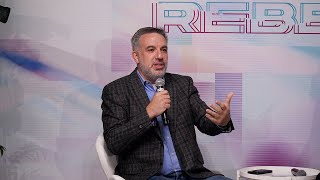
Rich, a retail leader who worked at Brooks Brothers, JCPenney, and Navy Exchange, argues that human-first retail wins across luxury and military stores. He says Gen Z demands in-person connection, AI should support human insight not replace it, and leaders waste time cloning best practices instead of observing their own customers.
Chapters
Now back to the regularly scheduled program. Fireside chat from high street to high seas, retail reimagined with a mission to serve. But what you guys are witnessing is a little bit more than that. See, Rich and I talk Saturdays, 6 AM, when, well, men wake up and are cleaning the house and whatnot. So you're just really witnessing that conversation. You're witnessing A Typical Saturday Morning, but live and in person. So thank you, Rich, and I'm going to start this off to introduce it. Why do we have this title?
Why do we have this title? Well, actually, because Michael came up with it. So when I read it, I thought this is actually a great title. I would probably change it to From Main Street to High Street to the High Seas because my career has taken me from Brooks Brothers to JCPenney to where I now work, which is with the Navy Exchange Service Command. So I've worked with customers and served customers at every level of the spectrum.
So career-wise, um, luxury, Brooks, to now is a heck of a different spectrum culturally, product-wise. Is there any unifying factors you find Or is it always serving the customer the same?
Yes and no. I think there are obviously differences when somebody is paying $1,000 a night for a hotel room versus $150, or they're buying a $5,000 custom suit versus a pair of jeans for $20. I think the unifying factor, and lately I think as much as I like the word empathy, I think it's a little bit overused in retail and people are using it the wrong way. I think developing a respect and understanding for the customer regardless of who they are and investing in trying to make their day a little brighter, bring those moments of joy, try to reduce the friction. It really doesn't matter what their income is and what the product or services that you're offering. It's got to stem from that respect for the customer. To be a little contrarian, by the way, our new podcast will be released next year, The Retail Contrarians.
If you're going to, like, I was just on TV, that was a subtle drop, about like Dollar Trees closing and they serve the community, and yet you're talking Brooks Brothers. But both of those, by having that empathy of what the customer needs, if you're serving it correctly, the Dollar Tree, the goal is, I just need this product, you're the only provider in my community. The Brooks Brothers, you have to identify the need. Is it in both scenarios the commonality, you have to identify the need?
I think it's a great question. I think if you look at Dollar Tree, in, in any retail location, in any service, you can have convenience, you can have the cheapest price, you can be the only game in town for the product that you offer, but neither are going to be lasting. Somebody is going to beat you on price, somebody is going to open up next to you if they think you've got too much of the market share. So what are you truly trying to do? And you're trying to create that gap between what I would expect to pay for something and the value that I get that's exponentially better than what I paid for it. So if I pay a certain amount for a hotel room, but it comes with a free breakfast and they make my bed every day as opposed to telling me they'll make it every 3 days because it's better for the environment, those are the— every little bit that you get that's extra that adds to the value is to me what that brand value is that you're trying to create. It really doesn't matter what level of the economic spectrum you're at. I like that.
Now, your career is also— spend a slight period of time, maybe a year or two in your life, you've worked in that time span though. I, I feel there's a conversation about experiential in retail that has kind of burst since COVID especially, where people don't want to just buy the product, they want to buy the experience, go to a pop-up store, they want to feel special. Have you seen in history over the 10+ years of your career a difference in that?
30+ years, I appreciate you saying 10, it made me feel young for a second.
For a split second.
But I, you know, I think when you start looking at mass communication and mass production, what you wind up with is a homogenization of the experience. And when you reduce everything to just the lowest possible price, it just becomes that. It's it's just about price. But I'll give a story and I'm gonna try really hard not to drop the F-bomb, but I think you can learn those service lessons and those lessons of respect anywhere. I am training to walk the Camino de Santiago in a year. You know because I usually call you when I'm walking. And so I've tested myself to stay a few subway stops away and I'm taking no taxis and no Ubers. And when I come in from LaGuardia using public transportation, I'm trying to get my bag through the turnstile and I asked which one I could use, and the attendant really didn't give me a good answer. The supervisor came over, showed me where to go, and then started to dress down the associate. Now, dressing down an associate right there on the floor wasn't good, and this is New York, so there were more than a few F-bombs dropped. It was actually really colorful, but the intent was great in that somebody gave a damn enough to say, show this person how he can get through with less friction. And I think we have to look for those things, whether it's a Dollar Tree. Dollar Tree right now, and in many ways I compete with them, but I'll admire it. I love the fact that you've got influencers that can go to Dollar Tree and they can create a whole Thanksgiving meal for under a certain price. And that's getting more than just, I'm going in and buying items for, well, a dollar and a quarter or up.
[Speaker:RP] I'm glad you, believe it or not, said influencer and our talks during walks. Because I feel, I mean, I've been online also 30 years, and one of the challenges I've been fighting for the first 20, online makes people appear as numbers. I'm having 80 million visitors every month to one of the sites I ran, and 50 million to the other, but those are dots, floating dots. And the more I've gotten into retail from media, I'm realizing it's relationships. You and I have had conversations. I'm learning. But I feel there's a societal movement screaming, "No, everything's anonymous. Go online, post a complaint. No one will track you," going against knowing the person. Are you seeing— I'm just talking culturally over 30 years. Are you seeing that shift, or how are you seeing that? How are you seeing that shift, I should say?
[Speaker:ADAM_STONE] Yes. I think you're seeing it, but I also think that you're seeing a little bit of a movement, and I don't like to judge. Generalize generations, but I do think that Gen Z is pushing back on this because they're the ones that want the physical space. They're demanding more print. If we expect to get let down and we walk into a store, walk into a hotel, walk into a restaurant expecting to get let down, then we're going to demand the cheapest and we want to get through unscathed. We have to start expecting better, but we also have to give better. And that starts by noticing the little details. I'll give you a quick anecdote. So Sunday was Day of the Deployed, and in my world, that's where we— and we try to remember them 365 days, but anybody here military-connected? So imagine you go home to a family. Well, imagine that one of the parents is deployed for 6, 7, 8 months and is not going to see their loved one. So Day of the Deployed is the day to remember that, and we do an event called NexCares where we bring the families in, We give them a gift card, they can put together a care package, they decorate it, they do arts and crafts. Last year, that moment that happened was when I was there watching, and one of the— I like to go and talk to our patrons, as we call customers— and one little girl was saying that her father was on a submarine. And yet, as simple as it sounds, of all the pages that we had to color, we had planes and we had ships, but we had no submarines. So she didn't feel noticed. That's a really small detail. That's the 11 Madison Park, whatever that restaurant is, where somebody noticed they really wanted the hot dog and they went out and created that hot dog experience. And if you know the story and you know, you know, you know. But it's about paying attention to those moments and raising the expectation level that we should start expecting service but we also have to lean in and earn it.
That feeling to be noticed, um, I feel there's a human connection there. And I like, uh, one of the things I love talking about with, especially I'll talk to students on leadership and I say you need to have that human connection. And I'm also wondering how much do you see that in Gen Z in that I feel like we're getting back to that. Level of the need organizationally, operationally? You have a frontline team, I'm sure, where now they want that human connection or want to understand who is Rich, what's the complexity there? Are you seeing that too, in a way?
I'm seeing elements of it. And I think that without going down a road, if you think about when social media came into play and it was supposed to connect us and it was supposed to allow us to see things in real time, And yet in some ways that materialized, but in some ways it took us in the opposite direction. Absolutely. We find our tribe and we listen to what we want to listen to, and that's where it is. So I feel that AI is having that moment. If you think back, those of you who are in sourcing, when we started to offshore goods and we had the opportunity to maybe raise the quality by lowering the price, there were a lot of brands out there, including luxury brands, that said, I don't want to raise the price. I mean, sorry, I don't want to raise the quality. I want to take as many dollars and pennies out of this, out of the cost as possible. And I think we missed an opportunity. So I do hear in the conversations with my students, and I teach at George Mason, that they want more in-person, they want more experiences, they want that human connectivity. But I think we're at that inflection point where if we don't invest in it as humans, as brands, as retailers, that it'll go south and we'll just default to the easy button. And I think that would be a mistake.
[Speaker:MICHAEL] But I love that, and I'm also additionally hearing you thinking to myself, it's so important not just from the consumer perspective, but operationally. You yourself deal with a variety of people on your teams, some very corporate, some very structured, some not so much. I'm assuming it's a skill that you have to constantly say to yourself, who am I speaking to? What are they about? What makes them tick? Much more than just, "I have 17 people under me, 20 people under me," et cetera.
[Speaker:ADAM_STONE] Is it a skill? I think it's a reminder, and I'm not good at it. I have to continually remind myself. I think most people are capable of it. I think most people have that element in there. They just have to fight that urge to say, "Well, that's going to suck," and just walk into it with that attitude. And that's the tough part, and I don't think that's a skill as much as it's just a general attitude and a view towards those that you work with. And we have a tendency— I have a question right now on my discussion board, and I'm starting to look at the responses. I have this belief that as retailers, and I'll pose the question to everybody, do we invest more time in the red or the green? Do we invest more time in the people that are failing Or do we invest time in those that are excelling? Do we invest more time in trying to turn around the stores that are failing or the categories that are failing? Or do we invest the time in those things that are winning? And historically, I find that we invest more in the red to try and mitigate it and not enough time investing in the things that are successful that could propel you forward. The reality is you have to invest in both, but you have to be disproportionate with your time. And so I'm waiting to see how the students respond to that.
You actually got me thinking of teams I've led, and I'm always actually reminding me of that. So there's been times historically I've had high performers that I neglected, and then I'm like, why am I spending so much time focusing on this? I can't, and I almost find I have to double my effort. Do you know what I'm saying? To catch up on those green, as you put it.
And how many people end up, you know, how many people are top performers on your team that eventually leave and they say, you know, found a better opportunity, it's not you, it's me. And deep down inside, if you really search, you realize you didn't invest the amount of time that you did in this person that wasn't doing well. And again, you have to invest in both as an organization, but where are you disproportionately putting your time? Are you putting your time disproportionately in the positive things that can move a culture and a customer experience forward.
I'm sorry, you just triggered a memory of mine. Sometimes you break 25 years old, memories kick at you every so often. One of the mantras I've tried is you don't want your top performers leaving. You also don't want your lowest performers getting fired because either way you have an attrition of some form. And it's like I've always kind of tried keeping that mantra, keep the best in, but see if you can save the, worse so you're not having to go through this constant cycle.
I think I'm far enough removed from this experience that I can say it and not get in trouble, but there was a large department store that may have been located in Texas that I was a junior executive with. And we had, um, we had the, the annual survey that said, do you plan to stay, do you plan to leave? And then we had the annual, you know, we quartiled, which I'm not a big fan of, but we quartiled performance. So we had 1, 2, and or 3 and 4 quartiles. And I remember getting a lecture that 25% of the people on my team weren't seeing themselves there for more than a year. And I was getting my hand slapped, and I said, okay, I understand that, but I'm not gonna take that serious, 'cause I was a contrarian, remember. I'm not gonna take that seriously until you can align it to the 25% that are 4th quartile. Because if you tell me that my 4th quartile performers wanna leave in a year, I'm gonna tell you I'm doing my job. If you tell me my first quartile performers want to leave in a year, then you better fire me and find somebody else. They can't make the correlation, which means the metric doesn't work. And that to me is how we have to think.
I am loving that we— our conversation has evolved into this leadership concept. One of the things I feel like I hit it off with you in all of our first conversations was I also felt to achieve that goal, is to understand the whole human. I love the fact in our conversations, there's things I've screwed up, and I'll admit it, I've screwed up many things in our— but there's also the complexity of, Dominic, I see you're doing this good, this I think you need help with, and in our own relationship. And I always feel the mantra, and tell me if you agree or disagree, but I think is you have to look at every person as that human. To help lead them out of that and not simply where I feel social media has taught us everyone gets painted with this blank slate of just one line.
I would agree with you, and I think that that goes with customers as well. I think it's becoming harder to predict what a customer is going to do. The economy is very volatile. I, you know, let's talk self-checkout versus staff checkout. I remember being at a conference 3 years ago and everybody was talking about self-checkout. About self-checkout being the next big wave and how much labor we were going to decrease. I know as a consumer there are times when I'm not in a people-y mood and I want to go through self-checkout. I know that there's times where I'm feeling like a Chatty Cathy and I want to go through and, you know, talk to the cashier. How do you predict that as a retailer? What you can't do is predict it. You have to understand the different behaviors and prepare for it so you can be more agile. And that's just one example.
Yeah, but now that you're saying that, I'm thinking of the panel discussion we had yesterday, Paula, Paula, Kim. We were discussing AI, and I would argue social media and AI now are creating that extrapolation effect. We'll look at the data, every single person does self-checkout, must be in a rush, so thereby this. And to me, the solution is to get more human, get on the floor and say, let me get a read of the situation, see why this mom's running out. But do you think it's extrapolating? What do you think?
It, it does if you let it.
That's deep.
It does if you let it. And, and this is the example that I'll give. A couple years ago, and this was in the, um, you know, I'd like to say I was an early adopter of AI, and really I jumped on board when they dumbed down the prompt. It had been around for a lot longer. But I was talking to a friend of mine that worked for a large CPG company, and they had just banned the use of AI for company memos because somebody had asked ChatGPT to write a memo. It went out to the company and it was not well written. I can tell you that I have worked for people and I'm thinking of somebody in my mind right now where they have asked me to ghostwrite something because of my expertise and then sent it back to me with a red pen, questions, clarifications. It doesn't matter whether you're having somebody help you write something, you're going to ChatGPT, you still own it. And if you're not investing in what the outcome is, then shame on you. And so I think that if, if, um, Jessica, you and I were talking yesterday, you, you, you know, I use AI. If you haven't noticed yet on stage, I have ADD. Um, I actually was diagnosed with it when I went through my, my MBA program. I went back and told my team, and they said, you paid for that diagnosis? Hell, we could have told you that.
We could have told you from 20 feet away.
You know, um, try editing a podcast that I'm on. But if you— I use it to help organize my thoughts when I'm writing, and it will come back to me, and it will look at everything that's out there and give me something that isn't a reflection of me. And I'll yell at it because it's fun to yell at ChatGPT. And by the way, proven that you get better results when you yell at it than if you compliment it, which is really scary. So I think we use it as an excuse when instead it should be— it's just a tool. Would you, if you gave something to an intern to have them draft for you and they brought it back and it wasn't right, would you not edit it? Would you just send it out if it had your name on it? No, you'd invest the time. We have to do the same thing with AI. We have to do the same thing with the customer experience. We have to do the same thing with, with how we're looking at the brand. One of the things that I'm looking at right now is encouraging our team to look at our brand through what I'm calling fresh eyes or first eyes. We have a tendency to look at the brand experience with our own experience, so we make assumptions as to what the customer already knows. But if you're trying to bring a new customer into the brand and you're looking at it with your eyes, you're missing it. And you have to look at it as if though somebody is coming in completely blind to the things you know And that's what your marketing and branding has to reflect, regardless of whether you're on Main Street, High Street, or the high seas.
I like how you call a callback in comedy terms. What I enjoy about what you said also encapsulates a thought to me in the sense I will admit I will slack Vanessa, who works with me, and she'll write back, I have no clue what you said. I'll use ChatGPT to reorganize my thoughts. And the reason I say encapsulation is on one hand, you need the human feedback of not, "How dare you say that?" Sometimes she says it like that, but generally needing that feedback as well as using these tools to further express and create this human cycle at that point.
Yeah.
Is that the correct example of what you're saying?
I, I think so, and, and I think so whether you're using AI or not. I use AI for developing lesson plans. So one of the reasons that I'm teaching is I think it's challenging to use a static textbook. I believe that one of the dangers in retail right now is this attraction to best practices. I think you can learn from everybody, and you should always be learning. But— and this, I'm not going to say this was mine, I interviewed someone for the podcast we have, Retail Relates, available on all platforms.
All platforms available, iTunes included.
But I think that when you chase best practices, you're just cloning what somebody else did well and you're not setting yourself apart. So one of the things I'm trying to do with, with marketing students and business students who aren't necessarily looking for careers in retail, because I think there's a talent need and I think retail could have a renaissance based on that, is use AI to develop more engaging lesson plans. And but I'll put information in and I'll get back what looks like it was written by someone with a PhD, and it— but I'll read it with fresh eyes and go, I don't understand what the hell this says, and how am I going to give this to a student and expect that they're going to know? And so I use it as a tool, but I still have to judge it against what am I trying to accomplish.
Um, when you're saying using a tool, I'm thinking of it now for the first time. My premise, my initial theory was my experience in media social media created this, um, back and forth.
And AI now—
but I'm realizing what I used to do— this is my own therapy session, you guys could just witness my therapy, um— I would use the social media as a tool. So if I saw it's your birthday, I'm not just posting happy birthday on Facebook, I'm calling you. And I see someone is suffering, a parent died, I'm calling them or showing up or, um, I've even— one neighbor of mine had left Secret Santa presents on their doorstep. They have no idea to this day. I just leave them presents. But I realized when we use any of this technology as a replacement, that's the challenge. But if you're using it to redo your lesson plans, reach out socially, or anything to further connect— that's my own confession, I'm realizing.
No, and I think that, I think that helps. And one of the things that I enjoy doing, and we try to do it with in our organization, and I try to do it in my own life, is when I can identify a new problem but maybe solve it with an existing technology. Not everything needs something new, even though we are always on the search for something new.
[SPEAKING SPANISH] We're discussing leadership, we're discussing retail, we're discussing working through customers. There's something we breeze past, which is working on oneself, in the sense that you're going to Spain, go for a little walk. Yes, just a minor little walk. And that's a journey on yourself in a way, not just physically, mentally. What led you there? Because I think that's a powerful part of you.
How many of you have heard of the Camino de Santiago? Okay, so the only reason I'm putting this out there is so that next year, if I haven't done it, you guys all call BS. And the reality is I have an ankle that could bark at me and say that I can't do it, but I do well with goals. And so I started a health regimen, and in order to encourage myself to get up and walk, I needed to, you know, be walking towards something. And so about this time next year, my goal is to walk the— for those who don't know, the Camino de Santiago, it's a pilgrimage that can be anywhere from 100 to 1,600 kilometers to towards Santiago de Compostela. It's a church where St. James the Great is venerated. My plan is to do 280 kilometers from Porto to Santiago. And if you do it the right way, you're carrying everything you're gonna use for that trip with you. And you're walking, and then you find a place to stay and you stay. You know, you're not staying in luxury. But I'm using it as an opportunity to learn. How can I start with one step? How can I make progress every week? When you think about the fact that you're going to carry everything for a period of time, you start really editing your assortment. And I will tell you, after spending a day with Sharon Lawler in Dublin going on a retail safari— highly recommended— we don't curate our assortments in this country. We throw so much stuff at the customer that no wonder they're confused. I had so much more fun shopping in Dublin because I could go in and I could see what I needed. And so when you then personalize it and take the time to learn the lesson, I'm gonna carry 25 pounds for about 20 kilometers on average per day. I am damn well gonna make sure that I'm using every single one of those things. And so I'm learning more about thoughtful curation as a process.
But I like the self-reflective portion you mentioned. You mentioned your own journey in your career, you mentioned diagnosed ADD, each of these things, you still have to take one step. And the journey is saying to yourself, "I need to walk more," and your solution is, "I'll do 260 kilometers a year from now." I mean, some people would just walk to the subway, but no.
Well, in all fairness, it started with, you know, you know, beginning of January saying, I'm gonna see if I can make it around the neighborhood, which is less than a mile, and, you know, came back huffing and puffing, and then eventually developed the goal. But I think it's that realization that we've all worked in organizations right now— well, we've all worked in organizations where the tech stack isn't as advanced as you'd like it to be. And so you sit there and say, well, we can't do the things we want to do. Really? Because I remember 30 years ago when I had a CRM that was made up of pieces of paper, and I got to know you over a few visits. So you don't need it. It is helpful. It can help you scale, but you can start today with whatever you have. And so it's how do you adapt that mentality?
But isn't this all a growth mindset at this point?
Yes.
Why are we all here? We're not here just to take a selfie. No one has done so, or nor taken a great photo of us yet. You're doing it because you want to learn. That was subtle. I'm very good at subtle lately.
Is this where we tell them whoever gets the takes the best possible picture of us and posts it, we will buy you either Dunkin' Donuts, Starbucks, or a coffee.
You heard that. Whoever posts the best photo on LinkedIn, tags us, Rich will get a cup of espresso.
The problem is I don't smile. I have resting retail face. So you can— I think I'm smiling and I look like I'm angry at the world.
And I'm a little disappointed only 2 phones went up. That was very subtle. But like, I think there's a reminder to me from this conversation. Where this conversation is getting deeper and deeper is a reflection. Your career has been a growth mindset. Is the rich now vastly different than the rich I would have seen at age 27?
Yeah, I probably— yes, I am.
I like the pause of contemplation.
Well, because I was about to say I get less frustrated, and that's just not accurate. If somebody was here that works with me, you know, I think I am— I'll give you the example. So I've been to— my career, I've been very fortunate. I've done buying and planning and marketing and product development. And so I've been to over 70 countries. And my, you know, if you asked me 20 years ago, travel for me was a checklist. And I'm going to relate this to retail. You know, I'm in Delhi in our office and I'm gonna go the 4.5 hours to Agra so I can see the Taj Mahal, get my picture taken in front of it, get the teddy bear's picture taken in front of it. Long story, different panel. And then I'm gonna go back and it's gonna be a long day, but there's my picture in front of the Taj Mahal. And if you've been to the Taj Mahal, we can have that conversation. Now it's, I wanna go somewhere, and my wife and I and daughter went to Sevilla, Seville. And we stayed for a week. We stayed in an apartment, and I went to the market every day and had coffee with locals. And so I'm slowing down more and trying to understand more about it, not just check it off the list. To me, that's related to retail because I think sometimes we're checking things off the list. How many times where you have a new associate that's checking off, you know, whether it's an Excel spreadsheet or a database or whatever, it's, "I accomplished this." Okay, what does it mean? I don't know, but Here it is, and it spits it out, so it might be right. And so I think the Rich today is trying to slow down a little bit more, not just because of age, but also because I'm trying to understand associates and stores and experience more.
Bringing it right to this, which has in a way been the subtext of this conversation, is that growth mindset. While you're here speaking, I'm reflecting to myself in the past 2 years, the past 1 year, what have I worked on? Well, I love the fact in my current business I'm constantly reflecting with Vanessa saying, "What can we do better? What can we do better? How did I screw this up?" And I feel like you're a reflection of that though, that you're saying to yourself, "I'm huffing and puffing. Only a year ago, I have to change," or your career now is going through some loops and turns and you're saying to yourself, "What do I need to change?" About oneself.
Yeah, and I think that's part of an observation and I'll bring it back to Main Street High Seas and The high street is one of my favorite. And it was a question yesterday about using AI to learn your customers. And, you know, I think you can— we interviewed, what was his name, Matt Samuelson, who is with Quince.com. Shout out if you haven't gone to Quince.com, their product is great quality. And he was saying, for all the systems you can have, you can learn more off of a receipt than you can off of just about anything. You have a receipt, you have customer information. One of my favorite things to do, especially working for a military retailer today, but any retailer, is grab my laptop, go sit in the, in the remodeled food court with more space because we care, and just sit there for a couple of hours and watch people and listen to the conversations and see what stops them and what doesn't and, and see where they struggle and what is easy and just make note of it as I'm doing things. And I think that's what brands have to do, whether it's, you know, Zegna, or whether it's Levi's, or whether it's Target, or whether it's Bloomingdale's, it doesn't matter. I think we just have to observe people more and have that willingness to push.
Observe people more. I also noted, it's not— you mentioned, we're mentioning the green and the red and the observation to connect that together. One of the things you even said to me about 12 minutes before this started You were like, "I love when you do this. Don't go too far this. Don't do this." And I think in a way, when you're observing, you're seeing the full facets of the person and not just focus on those red employees saying, "You guys got to do better or stop screwing up X." But you're reflecting from today, this is the good, this is the middle, this is where you can improve, do good, prove the bad, and you're giving that whole person assessment. Is that a correct reflection?
It is, and I'll take it from this. So think about PalmPilot, think about Montgomery Ward, think about Blockbuster, think about all the brands that are out there that stopped innovating because they started believing that what they did was best, and they had this confirmation bias. And, and I believe strongly that one of the biggest factors in the failure of companies, retailers, brands is that confirmation bias. It's that need to hear that you're right, that you're doing the right things, and that it's outside factors that are causing you despair. And because of that, you, you don't pay attention to, or you try to disprove the things that are saying maybe you're not thinking through it. And I think that's one of the biggest challenges in retail is that we're not testing as much. We're not comfortable with failure and we're just trying to kind of repeat the past or go back to the good old days.
But I'm wondering when you're saying it confirmation pilot, confirmation bias, and I said pilot because that was the sub in my back of my head. Palm Pilot's a great example. Our product is doing good. No, it's doing great. No one could possibly beat us. And then oopsies, there's an iPhone just next store. And I think equally saying, yes, we're doing good, how can we improve, might have had the culture in that organization say, is there another comp— competitor like a guy named Steve Jobs around? We should check it out and wonder if we can improve. So I feel like what you're saying is not just the confirmation bias, but also the self-questioning.
So I don't blame it all on ADD. I'm— what I'm doing is connecting the dots between personal development and professional development. So the personal development is, do I think I'm good? I think I'm pretty good, but I know I'm nowhere near where I want to be, so I'm continually trying to improve. And part of that is trying to invest in people so they can improve, because the better they are, the better I am. From a brand perspective, it's understanding that we may have, we may be seeing an increase, and we may be seeing upward momentum, but I don't want to just say it's a trend and we're going to ride that trend. I want to continue to trial and error test and push back against this inertia. Right now, and I'm trying very hard not to name retailers because I don't want to throw anybody under the bus. But I think you're seeing with a lot of retailers and a lot of brands this malaise. It's okay, well, there's tariffs. Okay, well, there's economic uncertainty, or okay, there isn't the talent that I need, or excuses, and they're legitimate, but get over it and start thinking about— because there's somebody in your space that is succeeding, and it's not just because they have all the money in the world, it's because they're thinking differently. And I think that's what we have to do personally, it's what we have to do professionally, it's what we have to nurture in Gen Z so that they're ready to take our spots.
You know, one of the things I try to do to reflect that is I will ask random people, Rich, questions every so often. Like if I hit a dilemma myself, I think it's saying, I don't know all the answers, Rich, gimme a hand or somebody. And I kind of find, my opinion, social media taught us the anonymity not to do that, just to post on Reddit as opposed to the solution of saying, I will call so-and-so and say, where am I screwing up today?
And I won't do show of hands because this wouldn't be fair, but I think I don't like criticism. I mean, I genuinely want everybody here to come up and tell me that I was fantastic and I should do this for a living. And I know that's not the case, but we all want that praise. And you and I, I think, bonded over this moment. Dominic was part of the podcast Retail Relates, which is available on all major platforms. And one of the things that, you know, because I'm editing it, I record it and then I edit it and then I re-edit it. And as I'm listening to it, you remember it.
Oh, not only that, I'm looking at Vanessa's face.
I sent him a message because I really, I give a damn about the people that appear on the podcast. And I sent him a message and I said, you know, can we talk? Because I don't want to just deliver this in writing. And it was probably 7 o'clock in the morning. I said, look, I want to record a section because I think you sounded not the way you want to sound. Yeah. The answer came across kind of— you didn't really answer the question. It was kind of almost aloof. I know that's not what you intended, but it's going to appear that way. And so we re-recorded 20 minutes. And what I really appreciated was you didn't kind of throw me under the bus or push back. You genuinely wanted that feedback. And because you genuinely wanted it, we re-recorded. I think it came out better and more reflective of who you are. I'm much more open to saying, hey, I think that's good and that's not good. And not that I'm the expert, but you invited or accepted praise. And I think that's the thing that we have to do again as retailers. How many retailers get all of the feedback from all of the surveys they do and isolate the great comments and go to their boards and say, look at this, they love us. I have a 95 CSAT rating. That is off the freaking charts. And I'll be the first one to tell you it's because I'm not talking to the people that are going to give me information that's going to help me improve. And so my team is constantly trying to go out and find those that would rate us lower that aren't filling out the surveys so that we can learn.
I am loving the fact that I had to think of that final thought. And you've taken us full circle. Our relationship formulated started because I screwed up. Well, let me get it all. And you were kind enough to say, "Hey Dom, not even screwed up. I just have some valid criticism." And I coincidentally was probably in a good mood that morning and took the criticism. I'd love to re-record. And I'm just saying that to me is the encapsulation of this whole that conversation, that growth mindset you coincidentally provided. I luckily responded, and that a year plus later starts developing. And it took only that moment for you to say, hey Dom, Saturday morning, I know it's early, you want to get on a call? And I'm cleaning the house, like, sure, I need someone to keep me busy. And now look where it goes. And I think that's the lesson. Once you take that moment to grow, to learn, to feedback, back and forth. So I thank you for that. And by the way, I thank everyone. I noticed nobody looked at their phones. They've been watching this whole conversation. So that to me is amazing.
And I'll leave one last thought, and then you can close it because we've been at 26. One of the things I'll advise students is feedback doesn't come easy— giving it, getting it. And so one of the tricks, if you will, is I'll say, don't wait till review time. Go to your supervisor and, and send them an email, give them press, say, I'd like to meet you next week because I'd like feedback on how I'm doing. And then when they give you feedback, ask them again. And when they give you feedback, ask them again. Because by the third time you say, look, I appreciate your feedback, but what can I do to improve? This, this, and this. I know, but what can I do to improve greater? By the third time you ask the question, you'll break through and you'll get great advice, I think.
You know, I think that's the— that's a perfect ending note. Everybody, please give it up for Rich.










