Future possibilities with Muchaneta Kapfunde | Fashion Made Podcast
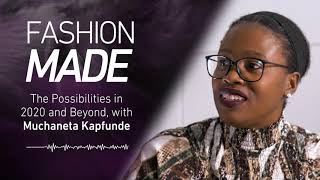
In this episode of the Fashion Made Podcast, host David interviews Muchaneta "Magdalena" Kapfunde, a sustainability advocate and writer, about the current state and future direction of fashion. The conversation covers the lack of clear definitions for sustainable fashion, the rise of greenwashing, and the pivotal role of consumer pressure in driving change. Magdalena stresses that education—both for brands and consumers—is the missing link that enables meaningful adoption of new technologies and materials. She critiques fast‑fashion business models, highlights the price barrier of many sustainable products, and calls for transparent pricing that reflects true environmental costs. The discussion moves to material innovation, citing mycelium‑based leather (Modern Meadow), biodegradable fabrics, and the limits of plastic recycling. Emerging tech such as AR personalization, data‑driven retail experiences, and digital‑only clothing are explored, with Magdalena noting both the promise and the current usability challenges of VR/AR and wearables. She advocates for collaboration between startups and legacy brands, urging companies to learn from agile newcomers and to rethink circular business models. The episode concludes with practical advice for 2020: consumers should seek out innovative startups, invest in products that offer longevity and functionality, and demand transparency, while businesses should educate themselves, experiment with technology, and partner with younger firms to accelerate sustainable transformation.
Chapters
I spoke to loads of companies saying to me, "Hey, we need to know about this area of technology. What's going on here?" And I said it'd be really great to put together masterclasses that you can— people who are experts in these fields can go into the kind of the company and hold a class. So then they're up to date, you know, because how can you tell someone to embrace something they don't understand? They're not going to embrace it and invest a lot of money in it. They don't get it. And when they do use it and misuse it, ends up looking like a PR stunt rather than something that they're investing money in because they want to implement it into their business model. So I think education is key, and that's what's missing. I think everyone talks about things, but how can you, you know, invest in something you don't know? You just don't know what it's about, what it will do for your business. Yeah, it's fun for the first 5 minutes, but then what? And will it help your consumers? What kind of customers do you have? Does this technology even fit in with your business plan? Are you just trying it because you want to try it? Like, all these questions are stuff that people need to really ask themselves, educate themselves, even do little projects within the company, test things out before they speak to everybody else, see what works for you. Because not every technology is going to work for everybody. That's just not how it works. And also understanding that there's no such thing as 100% sustainable, so don't try to be yet because we're just not there. We haven't got the technology, we haven't got the knowledge, we don't know how to do it yet. So that's always a big thing. When you were talking about regulations, that's an area that I think really needs to be regulated. There's no like strict way. I mean, everyone can be sustainable if they want to be. They can find something in their brand that they can call sustainable and then say, "Yeah, we're sustainable, we're very green." And the problem with that is that comes across as greenwashing. So then consumers, when they find that out, they're less believing in the brand and less believing in the fact that people can be sustainable and that what they're buying into is what they believe in. Yeah. You know, so I think there needs to be a bit more clarity what it means to be sustainable. That's why I love those apps like Good On You, because it marks how sustainable you want the brand to be. You know, if you're very anal and you're like, I need it to be this, this, this, you can tick the boxes and then the brands will come up. But if you're kind of like, well, I like to make sure they've got the right ethical practices, that they work in really good factories, people are paid a good wage, then those brands will come up. So it kind of, you know, everyone's level of what they consider sustainable is very different. What I would consider sustainable and what you would consider are two very different things.
Absolutely. Well, I could barely answer. My aunt asked me, what is sustainable fashion? And I think I went on about a 5-minute tirade that sort of flip-flopped from one to the other, and there really is no clear answer.
There is no clear answer. There's no clear definition of what it is. If you ask somebody, they're going to give you a different answer to someone else who might be really into sustainable fashion. They might give you a really kind of like, kind of warrior-type answer. And then you got somebody who might give you a very wishy-washy answer. So it's different, you know. For some companies, having, you know, biodegradable plastic bags is sustainable. They're sustainable, but the product itself might not be. Um, but I think the pressure from consumers to be sustainable for the fashion industry is what's moving forward, it's what's going to make us go forward, make us change our ways. And that's what I see 2020 being, personally. I see sustainability playing a role because consumers are demanding it. The consumer is changing. And I think I wrote an article about Forever 21 saying that the reason why they probably went into administration is because they never changed their consumer. They were going for a consumer that they were— was very popular with them back in 1994. But now we're in 2019, that's not the same consumer. You cannot pitch the same story to the— you know, to a consumer of yesterday like myself. Now you're dealing with a younger generation that's more informed of what's going on in the world. So therefore, what they demand, you need to be able to provide. And that's the problem, I think, with companies. They use the same formula and think that everyone's gonna, you know, love their brand based on that, but not anymore.
Do you think it was their messaging rather than their company strategy as a whole?
I think it was everything as a whole, because I remember Forever 21 when I was very young, and it was that kind of that shopping mall American type, you know, you know, product. And today's consumer, in terms of the young consumer, that's not what they're looking for anymore. They want an experience besides just the product. We just wanted the product and it looked cute and it was in style. That was fun for me. But now today's consumer want to know a lot more. Want to know the background. What are you guys doing? Where do you manufacture your clothes? Okay, you got a lot of this, why is it so cheap? What materials is it made out of? They ask all these really scary questions that would scare a company and, you know, make them hold on to their profits, catch terrified that the money is going to start disappearing because they're inquisitive. And you need to be able to answer these questions as a brand nowadays because the youngsters are really clued up, you know. I've got my niece telling me to recycle, you know. Yeah, we gotta recycle. We can't buy that. Oh, you should do this. Oh, you, you know. And she knows more than me, you know. And I write about it, so it tells you how clued up they are. So you need to understand that the consumer has changed, and therefore you need to kind of change the way you do your business and change the way you sell your product.
Do you think they're more demanding?
They are definitely more demanding. They should be, it's their money they're spending. Um, I think if you— buying clothes now is no longer just about just buying clothes. They want an experience, they want something that will last a while, but they want a great price, which is what the challenge is. Because if you know most sustainable brands, the stuff is ridiculously expensive. You get a few that are kind of okay, but generally the price point is pretty high. So what if you're a student and you want all these kind of sustainable, ethical things with the product, but then the price point is ridiculous? You're not going to pay for it. And that's the catch-22, I think. You want it all, but you can't afford it all because it's too expensive.
Sustainable and fast fashion famously don't mix. You know, we hear this time and time again.
They do not mix. At all. And you know, the— I think no solution is making— like, for example, H&M always have like their little green type, um, clothes in their shop. I think they all should be green. So why offer the cheaper version?
100%.
You know, offer us a £7.99 t-shirt and not the £3.99, because then I would keep that t-shirt a bit longer, look after it longer. Because that also plays a role, how we look after our clothes. If we look after them well, they will last a bit longer, you know. So when it comes to kind of providing for consumers, I think brands need to take this into consideration as well. Price points and what they offer. Don't give us that kind of choice.
Yeah.
Say to us, this is what we charge because of X, Y, and Z, and this is what we have on offer, and then we will pay, we'll buy it if we want it and we need it, we'll buy it at £7.99 rather than £3.99. So I think that is something that will help us kind of step away from fast fashion, because fast fashion is going to be there for a while. As long as it's cheap and cheerful, people might want to do good, but in the day, what's in your purse is what counts.
But that's okay, you know, fast fashion, there is a place for fast fashion, certainly in things like basics, you know, it makes sense to do that on a mass-produced scale. Ultimately, that is a more efficient way of producing those garments as long as they're going to be sold. So I think there is a place for fast fashion, but the pieces that separate you, that are your identity, which is how we all use fashion, yeah, those pieces need to be long-lasting, quality pieces, and people need to appreciate that they do have to pay for that, for that identity.
Yeah, I mean, I agree with that completely. I think that we need to change the materials first and foremost that we use to create our clothes. Imagine if we can buy tops that are biodegradable. Put them in your backyard compost heap when you're done and let it go back into the earth. You know, things— I think that's how we need to change it. We need to change the materials that we use because what we're using now is not working. Recycling plastic is not a solution either. It's a short-term solution. I think I've said this before, it's a short-term solution. It's great that people are coming up with these ideas and collaborating and coming up with different ways, but in the day, that is not a long-term solution because that goes back into the planet anyway and still ruins it.
So Plastic cannot be on our— sorry, but plastic cannot be on our bodies. That's not a sensible way to reuse plastic. You know, it's a very long-lasting, durable material when it's all clumped together, but when it's stripped down to the layers to make it into a piece of fashion, it then sheds. And that's, as you were saying, goes into the, into the environment.
And also think about plastic that's in the ocean and how long it stayed under there and the chemicals that are on that. And then, you know, how healthy it really is. But that being said, I do kind of applaud people trying to think outside the box and coming up with innovations that, you know, that reuse our waste. I think that's very important. But I think people just need to realize that that is not the main solution. That is not a long-term solution. That doesn't mean we have to rest on our laurels now because, oh, we found a great innovation, so we don't need to think about anything else. Great, we found a way. I think we need to continue to move forward and continue to find different ways that will make us stop using plastic completely. Or find a plastic that is biodegradable. That means that it doesn't do as much harm.
But there are new materials being made. I mean, there are companies making new materials out of anything and everything.
Yes.
These days. I mean, you probably have access to a few of the ones that are coming up recently.
Yeah, I mean, with the recycle, reuse, and, you know, they kind of— I think it's Christopher Raven.
Yeah, yeah.
He's very big on that. And I love the fact that he is trying to— he's mainstream, everyone knows him. And that's what we need. We need companies and brands like that who talk to consumers already. So then they can bring that message across. If you have a small unknown brand really kind of, you know, lecturing on it, no one's really listening, unfortunately. But if it's a brand like Christopher Raven, or if you look at Stella McCartney, people are ready to listen to them. Even Burberry is trying to go a little clean these days, you know. Companies like that are the ones that are going to help us move that message forward, help us experiment with new materials, adopt new materials.
Is it Modern Meadow? Modern Meadow. Modern Meadow, and there are lots of other companies as well.
Yes.
That are making these leather-like materials from— I mean, Modern Meadow is made from—
They literally grew it. I think mycelium is one of the materials that they use, which is like a mushroom. So they use— I think most people that are growing their own new materials are looking to nature. Looking to nature and how it produces and kind of mimicking it a little. And I think that is great. It's a great way to, to come up with solutions, um, is to look to how, how nature preserves itself, how it grows, how it evolves, and trying to take that and, and kind of like implement it. So I think it's a great way of thinking, you know. Yeah, I would never have thought like that. So that would never come into my mind. But that's why I think Tomorrow's fashion designers have to be scientists. They've got to know biology. It's not just about they can draw or whatever, it's a lot more than that. They've got to look about supply chain, manufacturing, using immersive technologies and how they can maybe visit factories in China but yet, you know, not actually physically be there so they can make sure that the factories are ethical, you know, and things like that. This is all using technology. And I feel like students need to have access to this. They need to realize that there's a lot more to being a fashion designer these days, um, than just knowing how to draw. You know, you've got to be curious about new materials as well and look at how you can create an entire collection in a way that will be sustainable. Because this is the kind of information that they'll bring to companies if a company was to employ them. They'll have this information on board, and the companies can try and adopt that. You know, and hopefully convince the old school companies that this is the way forward because I think that's half the task is convincing people that this is the way forward.
Yeah.
You know, I'm a supporter of one.
So how, how are you helping with this? Because obviously you write about a lot of things like you were saying, immersive technologies beyond just new materials. And I know that you want to really help bring technology adoption forward as much as possible.
I do. I mean, for me, I think it's important for companies to realize what's out there, to educate themselves and see what works for them. I want to see big companies step a little bit away from the PR stunts that we've seen in the last few years, because as exciting as it is, people don't take it seriously. They go, "Oh, okay, they've got drones up and down the runway. Oh, exciting." And that's it, you know. Yes, it brings attention to the fact that there's drones out there, but it doesn't— it's not a long-term kind of solution, I don't think. I think it puts you in the papers for a moment, 15 minutes of fame, and then what? What's next? I think companies need to invest in the type of technology that will help their company forward, that will make sure that they keep up with their competitors, and make sure that they can provide for the consumers that they targeting as well. So it's imperative that they educate themselves. And I think that's where we are at the moment. We're at the point of educating ourselves and seeing what works for for us, and that's the only way things will change. Also, they need to look at the business model. The fashion business model is no— it should no longer be used because it doesn't work anymore. We need to look at what would work, what will give us a more of a circular economy. How can we make that work? Um, and how can technology play a role? Because in the end, technology is a tool. It's not something to be scared of. It's literally like you pick up a pen and write. It's a tool. So how are you going to pick up this pen and how are you going to then use it to achieve what you need to achieve?
It's interesting because when an industry gets so much stick, it's almost united the whole industry. And I know that Rana Plaza has also done the same. The entire industry around the whole world is saying together, this is not acceptable and we need to get better. And I think from that you've seen groups like H&M Foundation, not directly from that, but since then, yes, the H&M Foundation. And I know that they made a massive pledge earlier this year post-Copenhagen, um, that they're all joining up together, and they had this big pledge for a few years down the line, which is good, you know, it's a start for people to say that we are going to do this, but we need action.
Yeah, you need— also got UN getting involved, Avery Dennison, and the 10 sustainable innovations they've come up with, the ways a company can be sustainable. You've got, um, Caring Group is doing quite a bit as well.
Yep, yep.
Um, you know, you've got all these different people, big and small, really looking to it. But it's a shame that it took a disaster like that. And I honestly think that if somebody hadn't started that hashtag, #WhoMadeMyClothes, honestly, I think that the industry probably would not have paid much attention to it, unfortunately. But I think that was a really good wake-up call because of consumers' reactions to it. Mainstream did not react, then maybe it would have been under the rug and disappeared, you know.
Do you think they've had it easy for a while?
Of course, my God. I'm always saying like some companies are like, oh, we don't use plastic bags anymore. I'm thinking, you guys are happy you're not using plastic bags anymore because you're not spending any more money buying plastic bags. So I don't think it's a sustainable thing at all. I don't think it's because they're earth-friendly because they'd have done that themselves years ago, you know. But the fact that consumers are demanding for them to use less plastic, they're like, hurrah!
Yeah, I don't have to spend any more money.
You guys, you can just 'Oh, your fruit's in your hands? Fantastic! We don't have to offer you little plastic bags anymore.' So, I mean, maybe it's a really negative point, but I honestly think that most supermarkets really think that way. They don't have to spend any money. And it's nothing to do with sustainability, personally. I don't think it's anything to do with, let's be not using much plastic.
It's more like, 'You're saving us a good couple of bucks.' If we're talking about technology changing people's behaviors in fashion, do you think that in 2020 there's a particular technology that might change consumer behavior?
Yeah, I do think that actually. I think a lot of personalization is going to play a big role. And I've heard about gaming and kind of those avatars and AR and all this stuff is going to play a really key role in terms of retail. Yeah. How big is it going to be in 2020? I think it's just the beginning at the moment in terms of introducing it to consumers, but I don't see it like being ridiculously big, but I think it's a good start. It's going to— kind of the run is beginning now. People are kind of interested in it beyond gamers, beyond people that are really into it in the first place. I'm talking about mainstream here. I see that playing a big role. Retail has always been money-making when it comes to technology. The retail industry adopts technology much more faster than, let's say, general fashion industry. They are looking at ways they can personalize shopping experiences for their consumers. They're looking at ways that they can kind of give them shopping ideas. Like, oh, your red top that you love is in, imagine, you know. Or you walk past the shop and an app pops up and says, oh, the red top you were looking for in H&M the other day has popped up. And then you come back to H&M and you go in and you go and get what you want.
Are there apps like that coming out next year or already out?
I think, you know, I've heard someone talking about that being a technology option and I loved it. I think it was, I went to a lab somewhere and they were talking about that. And I remember thinking, I like that idea.
Yeah.
Because I can imagine myself having an app and shopping and walking past Gap or something and then being told on the app as I walk past that, senses me or something.
Yeah.
Um, then tells me that, oh, that jumper you were looking for that was out of stock is now back in, you can come in and get it in your size.
This is the thing, but the data is there, you know, already, really, if you talk about SKUs and things like this. And if you were to incorporate that into sort of one sort of homogenized and conglomerated app. Yeah, but then who owns that data?
That's the problem.
And no one's willing to give their little You know, this is a part of the collaboration piece that we're talking about earlier on, that everyone's like, well, this part I'm not ready to give away because that's a huge privacy.
But the problem is we've already given it up though.
I know. Well, for us we've given it up, but if we've given it to Gap, Gap are like, well, if I'm going to sell it to another company, I'm not going to make, you know, am I going to make the returns on that? You know what? Yeah, you know, I'll give you this information, but what are you going to give me for it?
Yeah, I think a lot of companies had a lot of data on us anyway, whether we knew it or didn't know it, but they didn't know what to do with it. They didn't know how they can use this. And I think this is where technology will come in. It will help them use that data in order to make the shopping experiences of their consumers a lot more personalized. And I think they're learning now how to use it. But before, they just had all that information and probably just easy to sell it or just didn't know what to do with it. It's kind of like when you wear a wearable device and you get all your heartbeats and all this stuff and all this information, and you just look at it and you go, "Mm, okay." But then what do you do with it?
Yeah, yeah.
I feel like it's roughly like the same thing.
Do you have much of that? Because I mean, you must get access to so many sort of new, those just sort of off-the-shelf products and people say, well, what do you think, Magdalena? And you're like, um.
I do have quite a few wearable devices and I must admit I don't wear them anymore. And I think that has been the problem with wearables in general. They were exciting for the first 6 months, but then how do you get the customer to continue to wear it for life, I guess?
Yeah.
Like the way I would pick my mobile phone and go with it everywhere. How can they make me wear that smartwatch all the time? I'm not even wearing one now, you know, and I do have like 4 smartwatches at home. So, but the thing is, I think for me is that it's exciting for that moment. It's like when you get a new toy, it's exciting, but then it wears off. It's like, eh.
What do you think other technologies that are at risk of that? Because there's so many new tech coming into, whether it's the business side or the retail side of fashion. And something that we haven't spoken about yet, but I do want to talk a bit about, is AR and VR, you know, immersive technologies. For years people have been saying, you know, they're coming, this is how cool it's going to be, it's going to be really exciting, but we're still not there yet in the fashion space. VR is being used in other industries quite well.
Yes, but Fashion are slow adopters. They adopt fast. They adopt that kind of technology so slowly though. But look at, look at Asia if you want to see them using immersive technologies. They have jumped into that. They have embraced it. They love it. They, the consumers enjoy using it. It's just here in the West, it's a lot of talk but not enough action. People like the idea, but they never invest in it. And if they do invest in it, they're not really understanding the value of it either. And I think that's another problem. Yeah, it's all exciting. You got these goggles on, you can see this and see that, but it's not— I feel like it's not there yet. Have you ever tried these goggles on? Have you tried like the VR? They're heavy. It looks like 1980s a little in terms of it.
It's not heavy, it's stuffy. You can't spend more than 15, 20 minutes in there.
Yeah.
Um, I understand that wireless ones are a lot more— I think the Rift. Yes, I think the Rift and that generation, I think, are now getting to a point where it's slightly more comfortable, is wireless. Yes, some of them are bringing in now hand sensing technology, which is another great help, so you don't have to sort of hold these things around with you the whole time you're not plugged into a computer. So I think it is getting better, but from a wearable perspective, it has to be comfortable, right?
It definitely has to be comfortable. I mean, I always look at those type of technologies like a new mobile phone. Back in the old days, mobile phone was just something that people looked at and, you know, it's not comfortable, it's big, it's this, it's that. So we're at that maybe 1992 stage, right? Yeah, yeah, yeah. Where it's, it's interesting and you, you can applaud the innovation, but its usability is a little bit, you know, you're like, oh God, because I remember it was literally reshaping my nose. It was so heavy, I could just feel my nose like changing shape because it was just sitting there and I was killing it. And I was like, you know what, I have to take it off, I can't do it, take it off me. Yeah, so it wasn't— so because of that, I couldn't enjoy the innovation because I was just in pain on my nose continuously. So I feel like it's literally like at 1992 right now. You need to bring it up to the iPhone stage, you need to bring it up into 2000 2020, you know, 2020, and bring it up there. Because where it is now, it's still got a long way.
So VR, we're saying a big no to at the moment, but AR for a, I guess, a shopping experience is, is very plausible.
A lot of people are investing in AR. VR was what people, everyone was looking to invest in. I feel like AR is taking over a little bit now. People are investing a lot in that with the glasses, and there's loads of rumors of all these smart glasses that are going to be coming out soon. And I mean, I haven't seen the evidence of it yet, but you know, a lot is going on in space. So I think that people are more willing to invest in it.
Yeah, that also brings about sort of digital overlays. Obviously companies like Fabricant and other companies making, you know, digital-only clothes now. And, you know, I, I know a famous DJ that has used digital overlays as well. Um, I think some collaboration, I can't remember who with. Um, so people are starting to use it. So Instagram overlays where they're wearing one piece of clothing but they just overlay with another. Um, have you seen many sort of applications of this?
Um, I remember one of my friends, is it Karina Knobs, if I'm saying it correctly? She actually just opened a pop-up shop with that type of stuff working. I think she was working with the fabricant. And people could digitally try on these clothes and stuff. So it's something that is, is interesting, fascinating, innovative. Um, and I know I had a conversation with someone about it, whether it's something that's going to catch on or is it just more of a kind of a PR stunt type of stuff. And I think they convinced me because originally I thought it's a bit stunt-y, a bit— I can't see how it can be used. But this person convinced me that it can be used. Imagine it in the future in terms of retail. Imagine it in that respect, or being able to show somebody, you know, something using it and showing you like this, and you don't physically have the product, but you can physically show it to somebody else. And always different ways that it can be kind of used.
Someone said to me that also you can, instead of all the returns that happen as well, because apparently a lot of people buy clothes, put them on, take the photos of themselves, and then send them back, which I had no idea that was even a thing.
That last step I didn't know, because I know sending them back is quite big.
Yeah. So yeah, but so they, yeah, so they put them on take a photo, I'm wearing my nice new Gucci jacket or whatever, and then just put it back in the box, send it back, and it's just returned. And because obviously returns now, you just get all your money back naturally.
Okay.
And, um, yeah, so that is also something that it could replace. Apparently that's a consumer habit that digital fashion could replace as well. So I find that quite interesting.
Definitely. Imagine being able— I mean, I think I've tried one, an outfit using that type of technology, and it didn't look great on me, you know, because they're still figuring it out. But that is definitely a good idea. If I was able to try clothes that way in my own home without actually having to worry about, will it fit me? Is it in the right size? Oh my God, it looks good to me, it looks great on the model, but will it? Then I would definitely embrace that.
Well, they're getting— they're really getting there. I mean, Gucci, um, they had their shoes— Gucci shoe app as well, which I tried out earlier on this year.
How did you find it?
I thought it was really good. I still don't want to buy Gucci shoes, but that's just because I'm not a Gucci shoe kind of guy.
But if you think that if it was a shoe company that you love and they use that technology, it would be great.
If, um, you probably can do this, but if it was Air Jordans and I could find out all the, all the Air Jordans and just flick them on, I mean, I'd probably use it. I'd probably use it. Probably encourage me to, to buy it. So I think those kind of things definitely would work.
See, I like that idea. I like— I mean, shoes for me are never a problem because my feet never change the size, but I think for me clothes are like the biggest thing because the returns, um, industry, like people returning stuff, I mean, in fashion industry is such a big thing, such a problem.
Yeah, and as soon as you move from that fixed structure of a shoe, of a watch, and you move into fluid movement clothes, you know, especially like, I mean, I could probably get away with digital overlaying a polo neck top, but a nice flowy top or something like that with lots of little intricate design pieces on it, they have to see how it moves without actually having to physically try it. It's always been the sort of 3D hindrance. Yes, for um, there's always been the hindrance for sort of 3D fashion.
Yes, and also like online stores as well. Can you imagine how great that would be if they were able to put that in and you were able to see the top flowing and moving?
Exactly.
All these things like that. Well, the amazing thing that Fabrikam does with all the products that you've seen— I love it. Um, we actually went to interview them once. It was great stuff that he showed. Okay guys. Um, you know, to be able to do that, it's a great selling point. I think it makes people a bit more confident to shop online as well. If it's just a flat picture, you kind of have to really use your imagination. But this technology is actually helping you not to use your imagination so much because you can actually see it now physically.
But we're not there yet, so maybe one for 2020 or 2021. Yeah, this time next year.
Yeah, I think 2021 we'll have this conversation. Do you know how we predicted that?
Yeah, exactly. Um, also I'd really like to know things, you know, are there any, um, sort of apps or uses of AI that you're predicting for next year?
In artificial intelligence?
I mean, that, yeah, God, we've been going on for a while.
I feel like, you know, someone just promises you something over and over again, but yeah, it's not being delivered. AI apps-wise, you know, I've stopped writing about apps so much because there are so many apps out there, at a point where you're just like, they're all the same a little.
Okay, so what about some other things, some other tips for 2020, if there's anything that's on the horizon that you think is quite interesting.
I think that when it comes to consumers, they need to look a lot more to the new startup brands and what they're up to. If they are serious about sustainability, they're serious about getting a product that's more personalized, I think they need to look to startup brands who are more flexible when it comes to embracing technology because they are starting their company with that mindset. Well, if you look at much more established companies, they have to change their mindset and change everything, and that will take time. It's not going to happen overnight. So I feel like consumers Consumers need to educate themselves with new brands and what they're up to and embrace that and help them grow. Because if, like, the kind of the companies that are older see people embracing that type of technology, consumers loving that type of technology, they'll probably adopt it quicker as well. So my message to consumers for 2020 is look at up-and-coming companies. Look at the new products they're kind of bringing to the table. And invest in that. I think when it comes to fashion, you've got to invest in your products now as well, not just buy here, there, and everywhere. Invest in a good product that will serve you well, whether it's something by Pirates, which is a company that creates, um, like, like really trendy clothes. Um, and the great thing about them, that is that the clothes look after the person who's wearing them. So imagine your garment moisturizing your skin, looking after you, kind of, um, making sure that you don't smell your sweat, or all these little kind of things that we want in a top. You know, wouldn't it be great if you sweat a bit on the tube and you get out and you don't smell bad? You know, it takes care of you. Or imagine if your skin's a little dry and you wear the top and it moisturizes it, your skin. I mean, this is when you look at technology as a way of looking after you and putting your best interests. So if you buy something from them, and it's not that expensive, that's supporting the future, I think, of fashion. So that would be my message to consumers. Investigate, look into it, educate yourself, invest in brands like Pirates. To businesses, like fashion businesses, I would say to them that the technology is there for you to change how your business model stands at the moment, and you should look into doing that. That's a great place to start. Find out the ways that you can change it so you can be more sustainable, you can be more appealing to the consumers who are looking for brands who are more responsible. And the tech is out there. It's just a matter of figuring out which one works for you as a company. So again, it comes back to education, which I think is super key in 2020. Businesses need to educate themselves. They need to look at what's out there, see what works for them, work with consultants, collaborate, find out, you know, work with the young companies that are out there that are, have, can take those risks that the older companies cannot, you know. Work with them, see what they're up to. Stop looking at your competitors and look at the younger ones who are are thinking and they've got a different mindset. So therefore, they are the ones that if you're watching them and you're learning from them, that will mean that you'll go way above your competitor. You'll go that little bit forward. So I think companies need to be that way, need to watch and do and learn. In terms of the industry as a whole, in terms of fashion technology and people within the space, I think that we need to start thinking about what our next step is. Where are we going? Where is this going exactly? If you got tech products, where do you see yourself going? Are you just getting tech, building tech products for the sake of it, or are you building it as a solution? People that write about it, you know, looking at what's out there, you stop writing about the same old, same old people. You know, there's so much going on in this space. Write about other technology, other brands that are coming into the space and making such great changes to it. It's not the same old, same old people every time. I mean, that's what I, I find to be a bit of a problem sometimes. You know, how many times you have to mention that same company in the last 5 years? And there's every 6 months or so, there's always something new going on in this space. It's not the same old, same old. So I would say, let's start, kind of start that conversation. Let's educate people with what else is going on beyond the everyday companies.
Good. Well, I hope everyone's listening because yeah, that's some good advice.
I am preaching out there, but then again, you know, as a person who looks at things from bird's eye view, I'm also still learning. I'm always like, I never say I'm an expert whenever I talk about this stuff. I'm always saying, you know, I basically, I'm kind of starting a conversation in something that I am very interested in. When I talk to people, I take in what they say. I'm like a sponge, literally. When I speak to experts, I'm taking it all in and being like, wow, that's a great idea. And I think that's what people need to have is that conversation. You just start that conversation, just talk, find out what works for you. And then ask questions. And I think that's what 2020 is about— education.
Education.
Education, education, education.
Brilliant. Thank you so much.
My pleasure. Thank you so much for having me, David.










