Future Ready Workforce: Cultivating Skills for the Digital Era | 3DRC, Kalypso | PI Apparel
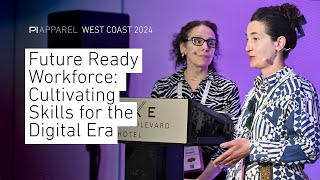
Chelsea Snyder and Dr. Lynn Barady presented the 3D Retail Coalition's new skills matrix and modular curriculum for 3D roles in apparel. The program uses a tiered badge system across software platforms like CLO and Browzwear, with TAPAC accreditation in development. Portfolios matter as much as certifications when hiring.
Chapters
Good afternoon, everybody. Thanks for joining us today. My name's Chelsea Snyder. I work as a senior technical consultant with Calypso. And today we're here to talk to you about the 3D Retail Coalition, which I've been a member of for about 2 years now. My background's in fashion design. And after working in the industry for a while, I moved on to education. So I was a professor of fashion technology at the Academy of Art University for 9 years, starting with teaching students how to upskill with Photoshop, Adobe Illustrator, Gerber AccuMark. And from there, I discovered 3D. And I spearheaded the virtual garment curriculum at the Academy of Art, and actually was one of the first universities to teach CLO 3D at a university level in 2016. So from there, I ended up finding my way into consulting where now I help brands on their DPC journeys, help them with anything from upskilling, learning the process to use, and even organizational change management in that space. And so I'm joined here today with Dr. Lynn Barady, and she'll introduce herself.
Hi, I'm Lynn Barady. I'm the department head at Oklahoma State University. My department is design and merchandising. We have both fashion design, fashion merchandising, as well as interior design. I've been in education for a long time. Before that, I was in industry and worked with sizing and fit and production of garments. Since I've been— well, since 2003, I've been working in the 3D field, first with body scanners. I'm a sizing and fit expert. And then more recently, I've been working in the DPC realm. And I've been a member of the 3D Retail Coalition Education Subcommittee for the past 7 years.
All right. So first, like I said, we want to just talk to you a little bit about the— 3DRC Education Committee. So on this slide are our members that have put a significant amount of work into the resources that, that we've built and we're going to walk you through. The mission is to provide direction, resources, and networking opportunities to help members unlock and accelerate the potential of the 3D digital transformation through digital trans— through digital upskilling. So what we've done is we've built a comprehensive list of the necessary skills for 3D design roles, so helping to inform the development of educational courses and certification programs. And then we also want to talk to you a little bit about what's next. So certification matrix that we are going to talk to you about. This is definitely going to continue to evolve, and then also just new work streams and member onboarding. So here's just a snapshot of the 3D Skills certification, and we have built— like, why we built this again is just to really create a standard assessing 3D skill levels with the knowledge and have definitions to create a common vernacular across, again, industry and education. And it was built through collaboration with educators and through brand experts utilizing interview forums, surveys, collective experience of the members, and then just identifying the key role types that use 3D technology in their desired skill set. So the working team were representatives from educational institutions, as you may have seen in the slide before, brands, and even technology solution providers gave us some input. And who can work— use this? Resource are brands and solution providers, and then also educational institutions, but really for anything from hiring to recruiting purposes, and just like, again, to help shape curricula and also roles within 3D in brands. We have a few of the brands that have collaborated with us. And then there are several more that we'll be getting on this slide as well.
Okay. So the first thing that we did was to develop the skills matrix, which we utilized companies from all over the world and people who are in HR positions or in the technical positions that we were looking for. And we asked them, "What skills do you expect for somebody in this position?" And you saw the 4 positions. It was the 3D artist, 3T materials, 3D tech designer, and 3D 3D designer. So notice that those are just skills. We did not ask what software they were using. We consider the skills matrix completely agnostic. So once the skill matrixes were developed, it was time to put our work into action and develop some courses that could meet all the skills necessary for each of the positions. I've been on the committee, again, for 7 years. And we offered— Oklahoma State University offered to start the development of those courses to see what it would look like. We looked— we decided to start with designer and 3D tech designer because those are the skills in my faculty that we felt were the strongest. As we looked over the skills, we decided that we needed to know a little deeper understanding of what each skill was. So we ended up partnering with some of our alumni who work in these roles at a major company. And we met in— At the time we're meeting in 1 or 2 hour increments and saying, okay, here's the skill. What do you need to see about somebody who you think— so what was the outcome of this skill would be? Or we sometimes would need to break it down, like make a garment. Well, okay, you can't just sit somebody down and make a garment. You have to start somewhere. So we have to first start with a block, or you have to start with what an avatar is or how to use an avatar. So breaking down the skills into shorter smaller pieces. In order to do all of this in education, we use something called Bloom's Taxonomy. Bloom's Taxonomy is the theory behind education, and so it's got lower order thinking and higher order thinking. If you're looking at the bottom, that remember, understand, apply, that's where you start. You start with teaching students how to remember things, how to understand things, and how to apply them. The higher order skills that create, evaluate, and analyze, that's when you get into the critical thinking and problem-solving skills. So you'll see that we'll start with the understanding, remember, and we'll move on up to create. Okay. So here was the— an example of what we've done. So you see that we took a look at each of the skills on the matrix. We looked at that key hard skill and then we figured out, okay, how do we get somebody to understand what that key hard skill is? So we talked about, well, what level do they need to be at? How deep do they need to go into it before they actually can do something that they can show you what it's like? And how do we prove that our students can do this? And that's going to be very important in just a minute to understand it. We also made sure that we were starting at the bottom, at the understand and remember level, before we got up to the critical thinking level. So as we went through this process, we quickly realized that one course was just not going to be enough to build the skills necessary to start in these positions. Uh, we ended up creating a series of 4 classes, um, 3 in terms to build the skills in 3D, and then we had a capstone course which focuses on the particular skills of each 3D job requires. For example, a 3D tech designer must be able to build a set of garments with appropriate seams and stitches, interfacing, lining materials, etc. To build a tech pack, but a 3D artist wouldn't necessarily have to have those same skills. They have a different set of skills to know. To encourage completion, we created some badges. We wanted our students to have something tangible to show that they have reached a certain level of accomplishment. And we felt that that was important because very often you might get somebody who puts down, oh, I know how to do, let's just say Illustrator. But you don't know what that level is or how strong that is. And we know in education that sometimes technology gets tacked on at the end of a course. So you're taught pattern making for 14 weeks, and then you get 2 weeks to be on a computer to see what the computer can do. But you don't really learn it in depth. And so we felt it was important that the employers understand exactly what the students have learned. And remember, this is all coming from industry. This is what industry was telling us that they want— assurance that these students have the skills that you need. So we've got 4 badges. The first 2 are foundational badges, which go with Course 1 and Course 2. Then we've got an intermediate badge, and then the advanced certification badge within each area, so that you know exactly at what level and what area that the student has reached the certifications in. And this is just for one particular university.
So we would like to get some engagement from the audience, and one of our questions for you is, what are you seeing for certifications from educational institutions, brands, independent educators? Does anybody have any insight in terms of like what they're seeing out there? Anything that you look for within your company. And it doesn't necessarily only need to be 3D, but things that you rely on for certifications.
So when you hire someone— yes?
There hasn't really been much yet. Yet. People will list that they're proficient in, and then I just look at their portfolio to see to see if what they've showcased aligns with what I would like them to be able to do. But it— like, I'm an alumni that works at the university too. Like, I'm trying to do what you've done.
Excellent, excellent.
Um, and, um, it would be great to, yeah, have these kinds of certifications. All I can think is that recently we were at the Flow Summit, and they're working on accreditation, like an actual thing that somebody like a freelancer could go away and say, I've been certified as a key user for this particular software. So I think that would be really useful in industry to know that somebody has that from the software provider. Yep. Yeah, but in education, that's a different thing, right? We want more specific sometimes versus like a holistic thing. I wonder— I actually have a question about your badge accreditation. Could somebody do all three areas?
Yes.
And have like a—
But they would have to have different— yeah, they would have to go through the courses and get the skills for each one, yes. And also note that the skill matrix— remember I said the skill matrix is agnostic? We're not just giving you certification for one software. We're getting you certification to work with all the different software. So we're getting into, you know, 3D— Style3D, Adobe Substance 3D. We're using both CLO and Browzwear. What we've been told from industry is that they rarely use just one software. They have to use them intermingling— interminglingly? Anyhow, together.
Yeah.
Yeah.
I was wondering in this slide, what's the difference between 3D design and a 3D artist certificate?
The artists are the ones that— and I'm not the expert on this, but this is the one that creates the images. So they make the images look good. So that's the different poses, the different lighting, that sort of thing.
Yes?
Correct.
Yeah.
[SPEAKING CHINESE] which includes—
they work with Browzwear, but all of their patterning courses teach with 3D as an element to even like educate the students on like what is a pattern and what does that shape look like and how does that map onto a body and things like that. And so the students are able to go through that and then get like, you know, the little LinkedIn like I accomplished this training or certification. But then to your point, like, the portfolios are speaking loudest. So if all of the students are doing this 3D work in their educational program, you know, you can always just see their touch to it when you literally look at their work, getting an expert project or whatnot. So yeah, that's just another school I know that we've sourced from and have gotten to see some talent come from.
A lot of schools are at the curve or ahead of the curve. A lot of schools aren't. I just— I was talking to somebody earlier today that I saw a junior from a different university wanted to transfer to my university. And the only thing she had ever done even on Illustrator as a junior was to scan some hand-drawn images into the computer and add color chips and a border. And I'm like, ooh, you're going to have to start over again to get the skills that you need from our university. So, we're trying to bring up as many people as, you know, as many universities as we can to give you guys the choice in, you know, what will fill your roles.
Yeah, and Lynn and I were talking about this too, just in terms of portfolio, because in this industry, we really lean on portfolios because it's such a visual industry, and it definitely is reliant on those images. But then again, today, like, these certifications are good to accompany that because there is so much that, there's a lot that you can do now to mock up a portfolio. And it, yeah, you of course wanna trust everything everyone's saying, but being able to have that to back up their claims and what they're showing is definitely really important. And I know when I was teaching, we didn't have a resource like this, but just to speak to a tech designer, they are working in physical 3D, but we used our— the 3D software CLO3D in the portfolio program so that they were able to further visualize their designs and not have to constantly be in front of the sewing machine and spend the many hours that it takes to create a physical product. So yeah, but having a certification I think is really important just to further dictate like this is another skill that they have.
Right?
Yes?
I'm just wondering, did you talk about like how long the students are spending to get these accommodations? Is this a program unto itself within the university or is it like—
It's both in our school, in person and online, and it takes as long as you want it to take. So our students take it over the course of 16 weeks, but you can accelerate that and get it done in 4 weeks. Say 4 weeks.
So anybody can get this? They don't have to be enrolled in your fashion program? No.
It's an add-on?
Separate?
It's a completely separate certification.
Okay.
Let's go to the—
yeah.
Sorry. There we go.
How do you confirm it's legit?
Like, who's—
With the students' work?
Yeah.
They have to submit the—
okay.
Perfect. This is the perfect segue into this slide. Thank you. I'm gonna give her that $10 later. Okay, well, first of all, in our course, you do actually turn things in. And if the faculty member does not approve that you've not followed the— and it's up at a certain level, then you wouldn't pass that area. You'd have to go back and redo it until you passed. However, there's an organization called TAPAC, which is the Textile and Apparel Programs Accreditation Commission. They're the people who accredit the university programs themselves, which is a very long and expensive process. And what we've done is we've gone to them and said, listen, industry has developed these sets of skills that we want to see in the curriculum of as many places as we can get it to. Can you help us? And so they're actually coming up with a process to certify these programs. So it's like a small accreditation program to certify them, and then they will eventually have a TAPAC certification on them. TAPAT, this is an ongoing rigorous process. So I'm in an accredited program. Every year I have to give them updates on what I'm doing, what updates, you know, what I'm doing in the school, in our program, what we're teaching, everything. And so it will be industry informed. So the committee who will be doing the accreditation will be both educators and people from industry. And so we'll need volunteers in industry to help us out. They'll be reviewing portfolios, reviewing the work that they've been done, and they'll be stamping that institution, "Yes, you're good for another year." And that gives the assurance to the employers of what the students are getting.
Yeah, go ahead. [FOREIGN LANGUAGE] No, um, okay.
I'm wondering about the accreditation of the instructors instructing.
That's part of it. Part of the accreditation process requires a full certification of what the— what skills the instructor has. It could be somebody from industry, it could be somebody with a PhD who's gotten training, but all of this is being decided. We're in the middle of it right now.
But who facilitates the training of the trainers, I guess I'm wondering?
It could be like they've gone through, you know, CLO3D's training program, they've gone through Browser's 3D training program, it could— we have not decided that part. Point right now.
This is something we're right at the—
[FOREIGN LANGUAGE] And these people are in industry and educators. I think, and again, everyone was saying the portfolio is the loudest work. These people will be assessing what the student work is. When we submit our student work, we have to submit the best our students can do and the worst that a student has done that has still passed the class. So if somebody— so if you're saying, whoa, your, your standards are way too low, we don't accept this, then the school must bring up their standards.
Because yeah, I find it seems like a lot of instructors might be creating programs that they don't necessarily have a ton of experience in. And is there— yeah, what would be the training of the professors? I think would be another great thing to know, that as a student, knowing what my professor been accredited for.
Yeah, yeah, yeah, yeah. I mean, I'm not going to go there because, you know, they give us a PhD and they tell us to go teach.
So, like, a lot of the apparel professors have been in industry for the last— like, they haven't been in industry for the last 20 years and they've been teaching the same pattern program for ages. Pretty cool.
Which is exactly why we need this though, is because if they're not going to upskill themselves This is it. Get upskilled. So hopefully we'll be able to use TAPAC to identify, we'll have, you know, things that they can put on their resumes. We'll have companies can come and take a look at who's, you know, what schools are being certified. And we're hoping to launch this November. It's going to be the International Textile Apparel Association, which is the conference that educators typically to. There's about 800, 850 members of that, of schools in all 50 states and globally. And so we'll be launching that. [FOREIGN LANGUAGE] No, they're looking at international as well. They have had some international universities come to them and ask for accreditation. So they're still growing. Okay, so our last slide I think is another question.
Yes.
Yes.
Yeah, so are you as a company including DP skills in your job descriptions? So thinking about hiring new talent, is there anything that you can all give us?
How many of you guys knew that there was a 3D Retail Coalition? Yes, yes, yes.
Thank you.
Thank you.
Yay.
Yay. Because I want to— Anything more specific than that?
Yeah, like we're leads on 3D in industry. Like, of course, like that is the whole job.
Yeah. Oh, no, I'm sorry. Did you know that PIA Apparel has the 3D education? Yes, that's what I meant.
Sorry.
Oh, thank you.
My apologies.
Maybe I think for your question, like, would you guys care to spell anything specific?
Yes, yes, so specific in terms of is there specific software that you're requiring that you're adding to the job descriptions, any types of workflows that you expect your new hires to understand.
Yeah, we see it few and far between. I look at a lot of job descriptions just because I always look at them before I send them out to my students to make sure that they would meet can meet those. And I don't see as many specific DPC skills. Sometimes it's just must have experience in Browzwear or must have experience in Clo3D, and that's it. And, you know, yeah, we can meet that, but if there's something more specific, my opinion is, is ask for it so that you know that you're getting the right people applying for the position.
[Speaker] It would be like experience fitting and fitting 3D, or familiar with simulation of material drapes and properties.
Beautiful.
Ability to mesh and manipulate trim components, or rendering and lighting development experience. Yeah.
Yeah, I'm just kind of curious with the students that are signing up for these kind of courses, are they all focusing to go into apparel, or are some of them focusing going into film? Because they are starting to overlap.
And that's kind of—
I think some of those people can work in both industries if they actually want to. How does that happen?
Well, we actually work with our— we have a gaming department. And they were very excited that we created this. They're not as interested in the— I mean, they love the fact that they can make their own clothing. They're not as interested in the fit. But they love it because we've got a 3D body scanner, so they can scan themselves. Put it into, you know, browseware or CLO, dress them. Yeah, but, but it's perfect because they've got some awesome skills they're bringing into the classroom and teach my students something that they wouldn't normally know.
Yeah, and it's trying to get those job descriptions out to all of those kind of categories, right? Because I think a lot of— we are missing out on a lot of talent because there are people that's just completely oblivious that they can actually go into the fashion industry and they're focusing on the film industry. And it's a matter of just upskilling in one area and they can definitely bring something into the industry as well.
So actually, this technology has been challenging. Yeah, like people say digital, like I'm professionally digital, or, you know, I apply, I send out a job description to hire somebody for a 3D technical specialist specialist. I get people from the film industry and it's like, oh, if you had read deeper, it would pertain to apparel, but it's— yeah, how do you—
they might be good for it.
Yeah, yeah, it might be quick learners.
Yeah, yeah.
So we're kind of facing that overlap for sure. Yeah, yeah.
So maybe adding like experience in the apparel industry, but then also like nice to have experience in the film industry and 3D modeling, just kind of adding those additional experiences into the job descriptions could broaden your, yeah, your pool.
There's a lot of weird terminology, yeah. Yeah.
Like what's 3D modeling? The other thing that we also wanted to bring up with this question too is in terms of internally with your existing existing talent, like, are there any existing training or upskilling resources that you find particularly useful for your teams? Or, like, for a certification program that Lynn has, like, you don't have to be a student there, so you obviously someone could utilize a resource like that, but anything that anyone has that their teams are using in terms of upskilling training resources?
It depends on the team. So when, like, thinking of, like, a more creative, like, a designer or developer, like, them learning a 3D tool in general to just allow them to create with new tools and maybe better articulate whatever it is that they really own or do, um, is vital. Whereas, like, my team, we are in the DPC space, like, very 3D focused. Predominantly in apparel, but within our team, because we're the experts in that space, really leading kind of, kind of like a center of excellence. There's a lot more learning and upskilling to better understand lighting and rendering and how to create a digital experience or environment that I wouldn't ever expect a designer to need to really know how, because they should be able to just step into that space have that environment set up for them. That's to the brand experience that we want to create. So I think depending on where within the brand we're looking to grow or learn or whatever, it looks a little different.
Yeah. And are you feeling like it's a little bit more ad hoc in terms of providing those resources? We do a lot of cross-sharing.
So apparel definitely has its core tools. Tools and kind of even like foundational elements like materials and whatnot. And then like footwear, they have a whole different setup that is a lot more traditional, and then say accessories as well. And so like we have individuals on those teams that come from film and gaming, and so a lot of just exposing what those kind of backgrounds and expertise are and pairing team member here with that person to like mentor and learn from and kind of just create those more organic relationships. Yeah.
That's great. Yeah.
Great.
So the next thing that we wanted to give you guys an insight on is like what our next steps are. So the current work stream, as we discussed, is a certification matrix. And this is ongoing because it's ever-evolving. Lynn had mentioned she's currently working on the accreditation for TAPAC, and it's definitely not, she isn't on her own. The 3DRC has been helping her vet the documentation that is needed to submit this accreditation. So members will continue on that work stream with the certification matrix. But we do have some exciting news that we have another work stream starting 3D Apparel Footwear Leadership and Upskilling. So this is basically a continuation, in a sense, of the certification matrix, but really thinking about those leaders in the 3D apparel and footwear roles and helping support them to better create job descriptions, for example, and like, what do those look like, and really what they could be. Looking for. And, you know, just like you're saying, visual effects, like maybe some of that could be put into those job descriptions and helping them there. So we are looking for new members.
We're getting to cutoff. Oh, okay.
But yeah, please scan the QR code to sign up to— we'll reach out. And if you have reached out to us in the past to join, we'll definitely be reaching out because we're going to be starting this new workstream soon. But thanks for joining us, everyone. [FOREIGN LANGUAGE]










