Game-Changing Fashion Tech Startup Pitches | 1/2 | autone | PI Apparel
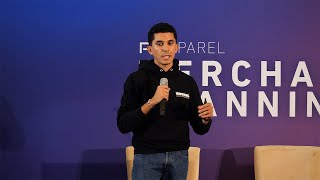
Adil pitches Autonome, an AI inventory platform for fashion brands losing $400 billion annually to overstock and stockouts. The system forecasts demand at the SKU level and automates daily replenishment tasks. At Roberto Cavalli, it cut replenishment time from three days to daily execution and reduced inventory by up to 55 percent.
Chapters
Good morning everyone, my name is Adil. I'm the CEO and co-founder of O'Tone. Very quickly before we get into the nitty-gritty, a bit about me. Spent 10 years of my life in supply chain and data science, worked at LVMH and Kering. Born and raised in Paris, I live in Milan and moving to New York. So that's all about me. So we started O'Tone 3 years ago. Very quickly about O'Tone, we're AI inventory optimization platform. And before we start, actually, I have just one question for you all, right? Bless you. Just to keep up the energy, can someone tell me how much do we actually burn every year due to inventory distortions? Out of stock, overstock. Guess a number on a yearly basis. Don't be shy. Can someone tell me something? 30 billion. Here we go. Someone else? 1 trillion. 1 trillion. All right. Someone else? So we have 30 and 1 trillion. All right. The answer is actually in between. Is it? Does this work? No. Can I go back? All right. Here it is. So almost $400 billion every single year. And the sad thing about it is just like we're being asked actually to tackle that problem with what you see on the right side of the screen. Something very tedious that hasn't changed since the '90s, whether it's like system of execution like ERPs or system of planning. I won't name anyone, but this is how we're supposed to do actually our job as planners and merchants. And this is where I actually like, you know, we come in place. So you can see Autonome is kind of like a third evolution of software. You had system of planning that then like moved into a system of execution all the way around, and now you have system of action. How we can make sure that at the end of the day, we allow our user to finally execute the optimal inventory decisions on 3 steps. One is basically your data, which is extremely important. How allow you to integrate all your data, whether it's internal or external to you, in one single place. Intelligence. If you have like, you know, to maneuver like a huge assortment metrics, it's impossible for the human brain to literally understand what are like the weak signals in your data and how we can actually push you what matters the most. And the third one, which is something that happened like to very often to us, is like the fact that brands and retailers operate in a silo mode. Everyone looks at their data in a different way, but ultimately you're all working together for one single point, which is to make like your company very successful. So workflow are actually like very important. So we're very happy about like, you know, since the last 3 years to say like, We help our brands and retailers to reduce their inventory by more like, you know, that 55% and help them to increase their sales. And how do we do that? So everyone is scared about like the Shein and Temu of that world, but like the beauty about these two companies is this, like they leverage their data just like anyone else, better than anyone else. So we kind of like build property data to allow you actually to do that, have this internal and external data, push it to for intelligence, like actually engine that will understand at the lowest granularity. So you SKU size, a point of, point of sales level, what's going to be like, you know, the future of that combination. And we push that on a communication layer, so like the user interface, to make sure that you're able to understand from a storytelling standpoint what's going to happen actually in your business. How the platform is being actually like, um, conceived— we tackle literally every single milestone of the inventory optimization value chain, from like your upstream to your downstream, the way you buy your product Do we allocate and replenish? Do we actually rebalance your product from one point of sale to another? Do your reverse logistic? Taking into account your constraint in terms of like, you know, the cash constraint, the strip. We were talking about sustainability like earlier. It's amazing like to do sustainable product, but ultimately like, you know, if you're not able to forecast properly, these are the same trucks that are being like transporting the inventory, the same planes, the same boats. So like, you know, this is where like you actually impact on that. One KPI that we're like the most proud of at Autonome is something we monitor on a daily basis is productivity. The productivity is the user is actually like, you know, the direct input to better sales with less inventory. How we make sure that we reduce the time that you're spending on a daily basis extracting the data, reworking on it, doing pivot table, et cetera, to ultimately like, you know, have little time to focus on the decision that will matter the most. And this is where like we'll help you on that. So where you see actually On the right side is just that every single like Monday you have like your task list for the week. We're going to tell you actually like what you need to do across your business and we're going to explain you like what's going to be the ROI on that. So like for someone that's like 25, 30 years old, 40 years old, they're spending their days like on spreadsheets and are just like waiting for the week like to finish. Here at O'Tone is different. When the week like finishes at 2 PM on Friday, getting you ready for the weekend, You actually have an email showing you like what has been the achievement you've done throughout the week and what has been the impact you had like for the brand that you're working for. We are very shameless. So we're like, we're proud actually to say like, you know, that we outperform every other like players on every single layer, right? Like, you know, the fact that we built Autonome out of the frustration of the software that we were using to bring something absolutely like new from the data standpoint of what I mentioned from the intelligence. Forget about just historical data, looking at the past to predict the future. If the past was actually skewed, the future will be skewed on that. So how we'll help you to do this is literally not only looking at your historical data, but looking at the factors that will impact actually the future of your business. And the last layer is obviously the communication. We ship actually updates on a daily basis at a very fast speed. And these updates come from our user feedback. So the same thing as well, just like how we detach ourselves from very long roadmap. Like when you have a request telling you this will happen probably next year, or you have actually to pay an extra dollar for that. All of that is literally included in what we're doing because at the end of the day, if you're happy with the platform, the platform will be better. This is a great use case with one of our customers, Roberto Cavalli. Probably the name rings a bell here in the US. So this is a great use case in the sense that everything was absolutely done manually. They had issues in their bestsellers, they had overstock in what they were not selling. And what we've been able to do is not only reduce the out-of-stock situation in their top-selling items, but also making sure that at the end of the day, they were able to perform tasks at their highest scale. And I think the quote from their director of data insights is pretty interesting in the sense that just for the replenishment task, it used to take them like 3 days to do that. Now they do it like on a daily basis. So we increase actually like the scale for them like to absorb tasks, making sure that they were tracking their business more consistently. And therefore like, you know, the ROI on that is literally pretty impressive. So this is what we're doing. Our motto is literally like to bring value from day one. We're not here like, you know, to push this as like an IT project. It's literally like a merchant projects, how we can make you happy and proud about the work that you're doing. And that was it for me. So yeah, thank you so much for your time. That was Adil from Motown. Thank you.










