Global Diversity Requires Supply Strategy and Vendor Diversity | GAP & Fashion United | PI Apparel
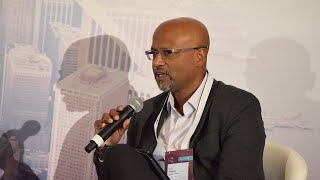
Gap's Alex Thomas, Comer Brands' Yelena Mogilevsky, and FashionUnited's Christopher Fraser discuss embedding diversity into supply chains. Gap's Pace initiative ties supplier codes of conduct to gender programs. COVID and shipping costs pushed brands toward near-shoring and political trade agreements like AGOA shape where companies can source duty-free.
Chapters
Hi, I'm Carolyn DeBayer, and I'm gonna be speaking with these wonderful people and hopefully answering some questions about our topic today. Just a bit about my background, couple minutes, and then each of us will introduce ourselves for a couple minutes, and then get started with questions. So I'm Carolyn. I am an adjunct professor of footwear design at California College of the Arts in San Francisco. I also work as a consultant with footwear brands on sourcing and merchandising, manufacturing, and just kind of helping brands that want to start footwear, either a collection that they've never had or a new footwear brand. And the last thing I do is I do footwear expert work for patent and trademark and trade dress litigation. So I will be hired to provide an expert opinion, either at trial or deposition, submissions, reports, things like that for trademark and intellectual property-related issues in the footwear industry. So moving on to Christopher.
Hello, I'm Christopher Fraser. I'm a news editor at FashionUnited.com. I've been covering retail business-related topics for about 7 years now. Supply chains and sustainability has been a hot topic over the last several years, so it's something I've been reporting on regularly. And yeah, I'm excited to be here and answer some questions about the current state and future prospects for supply chains and sustainability for you all.
Hi, I'm Yelena Mogilevsky, and I am SVP of production and sourcing for Comer Brands, a family-owned company who owns lots and lots of different brands under our umbrella. So sourcing and diversity is something very dear to us because we have price points points and products that really go gamut, gamut from Ross all the way to Neiman Marcus. So you can imagine that our supply chain is very diverse. Also, I'm an adjunct at FIT.
You need to give the microphone.
Pass it around.
Hi, good afternoon. Alex Thomas. I'm the Vice President of Global Quality, Manufacturing Engineering, Color and Fit. At Gap Inc. As you probably know, Gap Inc. owns a few brands between Old Navy, which is our value segment, through to Gap, our heritage brand, all the way through to Athleta, a performance women's, and Banana Republic, which is our outdoor-inspired brand. So we source from over 25 countries worldwide and over 1.2 billion units that we ship across all our stores. So yeah, happy to be here.
Yeah, and I'm sure you all saw Alex speak this morning, so super excited and honored to have him here again, you know, speaking one more time with us this afternoon. So the question or the title of our panel was One Size Does Not Fit All: Global Diversity Requires Supply Strategy and Vendor Diversity. So I look at it and think, okay, so supplier and vendor diversity comes in so many forms. Is it diversity in the workforce that's part of your supply chain? Is it diversity in your vendor selection? Is it being global or somehow achieving this but manufacturing locally? There are so many questions and ways to approach or even look at what we're talking about. So I'm excited to get started. And then, you know, for companies that are doing business, you know, within and outside the US, you need to establish a strategy of some sort or a diversity initiative if you don't have one, right? I mean, that is what we need to do, and it's a step-by-step process. So excited to see what all of you have to say and contribute. I'm going to ask each person a question, but would love the other panelists to jump in as well so that we can cover as much territory as possible pretty quickly. So I'm going to start with Alex. As companies across the globe and in the United States strive to bring diversity, equity, and inclusion to their workforce, how can brands integrate these same initiatives into their supplier and vendor strategies?
Yeah, so I would say this is at two levels. On one level, you know, we have our— Gap Inc. have our values, right? We have our values, our code of conduct, what we stand for, and that's pretty much consistent across wherever we work with, right? So the inclusion that we have is, you know, goes above and beyond in many cases what the local legislation calls for, right? So whether it's how workers are treated, their right to representation, all that is very much tied into what Gap Inc. values are, right? So that's at one level. The second level that I would say is the, is how the vendors and our suppliers and partners are actually configured. So for instance, geographically, we might find that in north of India, our partner factories have a lot of male workforce. South of India or south of Vietnam, you'd have female workforce. You know, so these are the geographical constraints on how the vendors themselves are configured to a particular, region. So what Gap does in these spaces are, you know, we have programs that make sure that the representation is not only aligned to our values, but also there's enrichment in the process. For example, the Pace program, women's empowerment, you know, ensures that the whole career development for women happens in India and Vietnam. And that happens so that the inclusivity that we espouse at corporate is also magnified in the areas that we work in.
Would either of you like to chime in on that or should we move to the next question? Whatever.
I think diversity is so challenging when you are dealing with a supply chain. So you can't really make other countries diverse, can't make those factories diverse. So sometimes it's up to you yourself. I think for us, We chose to really kind of take this initiative by really going into Sri Lanka and saying to ourself, what country do we wanna be present in? What country do we wanna make a statement in? And what country do we wanna make a presence and a positive presence in? And we chose Sri Lanka as that point. We built a development center, state of the art, and basically there, because it's our control and it's our ownership, that is where we can Diverse. We can diverse our own workforce. We can make sure that there's programs in place for development, for career development. And so by having our own factories and having our own base, you know, that's really where we're showing ourselves as diverse. And when we go to factories, we're trying to— I'm trying to really pick factories, and this is where it's hard. You look at their corporate social responsibility and you say, what do they stand for? You know, does that align? Align with what our company stands for? Does that align with Comar's reputation? So that's really where I find to be the most challenging is how do you pick those factories that align with how you yourself want to be perceived? And I think that's really the most challenging.
I think for companies, particularly large-scale companies who have the resources to easily put their money in multiple places in terms of diversifying their supply chains when it comes to underrepresented communities, there needs to be a certain level of commitment towards putting monies toward women and minority-owned companies for production, particularly domestically. While we, like Yelena said, we can't force other countries to have diversity, and there are countries abroad that are much more homogeneous than America is, but here, in terms of local sourcing for companies that are based here, it's easy to find women and minority-owned businesses to invest in, which, which companies like Gap are doing, of course. So I think that's one easy way to start with in terms of diversifying supply chains from that particular angle.
Thank you. It's great to hear from all of you on all the questions. It's awesome. I love it. So this next one is for Yelena. What does vendor diversity look like to your brand? You've already talked about it just a little bit. And what shifts have you seen over the past few years that help that have accelerated or slowed down diversity in your supply chain? I know that you were talking about, I think it was blockage when it came to shipping, right? That there were a lot of shipping problems that were happening. And a lot of issues that you've dealt with as a company. But how have things that have happened and shifted impacted how fast you've gone or taken a step backwards, that sort of thing?
Yeah, absolutely. So I think that as soon as COVID hit, All of a sudden, our vendor base became status quo. It was so hard to kind of build your vendor base in a time of COVID So here we are, you know, in 2 years later, and you're saying to yourself, wait, so I haven't onboarded a new factory. I haven't, you know, as factories or vendors are reaching out, you know, you're kind of trying to chat with them, you're trying to engage, but I've always been in the mindset of visiting a factory before I give an order. So all of a sudden, the way I source source is just so completely different now. And that really impacted with, you know, our vendor base. Now all of a sudden, you know, I don't want to say post-COVID, but a couple years down the line, and we're saying to ourselves, you know what, because of the logistical issues that we're having, we have to look at our vendor base completely different and how we write orders completely different. So whereas cost right now, and when I say cost, I mean FOB cost, might not be the end-all be-all when deciding where I place product. At this point— oh my gosh, that's me. I'm so embarrassed. That's actually my phone, and it only rings for my kid. I have a dial tone that rings for my child only. It's in the zipper, in the front zipper. Victoria, friend zipper. It's okay, it'll just ring. It'll stop. Eventually she will stop calling. So now when I decide what factories, I'm not just looking at FOB cost, I'm actually looking at transportation cost. I'm taking that container cost. I'm seeing what that container is gonna cost me, okay? And now, which I never did before, So the drastic change in container cost between China and Bangladesh is now making me decide, wait, all of these goods that I have in Bangladesh, maybe I should be moving back to China. Even with the extra tariff, we're saving money. Now we're looking at your vendor base, how to fill containers, okay? Whereas before an LCL, shipment might have been okay. Now all of a sudden we're saying, no, why don't we group our programs together in factories so that we can fill containers when we're shipping? So the way in which I place orders in that sense is completely diversified. I'm now looking at factories that can offer nearshoring, you know, All of a sudden, speed to market now means something completely different when there is zero speed to market, right? You used to place a PO, you used to know exactly that that PO would X factory, and you actually knew when it would get to the warehouse. I now place a PO, it's an arbitrary X factory date, It gets on a boat, you know it's going to get here, but once it gets through the logistical system in the US, you have no idea when it's getting to your warehouse and furthermore to your customer. So all of a sudden nearshoring and finding factories closer to home have a whole new meaning. You know, can I afford to pay a little bit more but ship quicker? And sometimes that answer is yes. So we're looking at a completely different factory base closer to home. I'm excited to say, I'm really, it's kind of like something that I'm so excited to kind of get into. And with also sales and the way sales are right now, getting goods faster really means a lot because customers are writing less. So if you can backfill, orders by getting them here faster, I think that you can increase your sales orders. So all of that to me kind of equals how we diversify and really how we place orders in a way different manner than we did a few years back.
Great. Okay. Anything to add or move to the next question?
Totally up to both of you. I guess the only point that I'd add is about vendors, partners, diversity in product handwriting. You know, we have, say, that the— we have design teams in San Francisco, design teams in New York. And although the same product may be the same, there's a certain time when the supplier's handwriting really comes into play, you know, whether how they interpret the design, how they interpret the fit, And although we have the same tech pack, we have the same bill of materials, the interpretation could be very different, you know? And we find that diversity of interpretation quite interesting. You know, sometimes you might find that some designers actually like the way how the slightly different interpretation is actually better for the product. Yeah.
Different points of view are critical. I'm going to grab this. If it's okay, because the question is for you and I need to ask it here where you can hear me. So Christopher.
Yes.
I love that we have someone here that is not from a brand, but is from a media company. Super exciting. Brings diversity to the panel as far as point of view. What have you observed and experienced is being done on a political scale to impact economic development and innovation related to supply chain? Supply chain and vendor diversity?
Well, in 2021, when we had the transition of a new American presidential administration from Trump to Biden, one of the first things Biden did was initiate an executive order to handle the severe supply chain crisis we were in. Currently trying to work its way through the House of Representatives is a Supply Chain Act to create more offices for supply chain oversight in the United States and to target issues with United States supply chains before they get to be a much worse problem. As we saw during the COVID-19 lockdowns, centralizing supply chains in one place proved very detrimental. There were a lot of issues going on with essential goods that were needed both domestically and abroad. There's countries— Japan, I know, invested— I think was attempting to invest about $2 billion to convince companies there to bring their manufacturing back domestically. And Germany also has a Supply Chain Oversight Act itself for targeting supply chain issues before they become a more detrimental problem, like how they were during the COVID-19 pandemic. So legislation's making its way through countries that with large masses of corporations such as America, across Europe, Japan, where, you know, we also hold a lot of the world's population, China especially, Because globally, we are so reliant on China. When China was the first to lock down, we were up shit's creek without a paddle.
That is correct.
But now, there's a lot of legislation in place to work on making sure those things are not a problem again, and companies are looking at not just having production centralized in China, even though it's the most cost-effective and our longest-standing global relationship when it comes to trade within modern times, But due to what we saw after COVID-19, we're starting to look elsewhere.
Would you like to add to that?
Yeah, so from a political scale, as you mentioned, right, I guess the most obvious examples for us is the duty-free locations, right? So when you have, I think with the AGOA Act, Africa Growth Opportunities Act, right, there was quite a few years ago. So everything from the Sub-Saharan Africa was duty-free. So all of a sudden, there was a lot of movement in manufacturing towards Sub-Saharan Africa. And then there's, we have CAFTA, which is Central American Free Trade Agreement, and NAFTA. So all these free trade agreements at a political scale mean that you're able to get duty-free garments from these regions, and it's more beneficial from a landed cost perspective, right? So not just your first cost, or FOB, may be higher, but your landed cost is going to be more cost-effective than getting them in other locations.
Okay. Can I have the other problem with sharing mic? That's what happens. So the next question I think is for all three of you. And, you know, a lot of people are looking at starting to diversify their vendor or supplier strategy. They might be manufacturing everything in one place, sourcing it only in one place, with a workforce that is all from there as well, right? And not diverse at all. So that's kind of, in my opinion, the bad, the right, the bad way, I guess. I don't know. I don't want to be critical. But what are some suggestions that you have for our audience on you know, kind of how to assess and look at kind of what they've got right now. And what can you offer as a few suggestions of ways to start looking at making changes that would be more long-term to ensure that they have a diverse portfolio of suppliers and vendors, as well as diversity in their workforce, which, you know, goes hand in hand with other things that we're looking to achieve.
Uh, first off, and I cannot stress this enough, and if you take away nothing else from what I say today, please do not concentrate your supply chain in one place. We saw what happened with that last time. No one had fun with that. Uh, secondly, more constructively, uh, one thing I think companies need to look at is identifying issues in the supply chain before it happens and creating contingency plans in case there's a hiccup, because one hiccup could cause a product delay, could cause a whole domino effect of very negative things. And that's not good for anybody and cannot only affect the relationship between the company and that one initial supplier, but can have a domino effect to all suppliers involved for whatever the supply— however extensive a supply chain can be. Now we have an entire economic problem, which we've seen recently with many companies. Uh, secondly, Identifying what your best-selling products are to know if they— to have a plan B for making sure those things can still get to market. That's very important as well because that's essential to your bottom line, your best sellers. So those would be my top 2 things I would recommend for companies to look at in terms of their supply chain diversification, as well as making sure you have a mix of both domestic and international vendors, and one can handle something if the other falls.
Having a backup plan.
Yes, there should always— there always needs to be a plan B.
Okay.
Lena?
Yes, I'll add to that, and I definitely agree. When I looked at this question, I kind of said to myself, you know, when you look at vendor diversity, you know, what are you saying? And with the way we do it, I look at core competencies. You know, there's lots of factories that, you know, what is their core competency? The last thing you want is to get a new vendor and they fit every other bill, but you're trying to make them make something that's really not their kind of bread and butter and what they do on a day-to-day basis. So really looking at what product do you currently make? Are you making it in more than one place? Okay, so do you have a backup plan? Do you have a backup plan that is different enough? You know, a backup plan of two different factories in China might not be the most diverse. You know, is your backup plan, you know, do you have two countries to make your product at the price that you need and the quality that you need in two different countries? So to me, that's one. You know, the other thing when I was looking at this question is I was saying to myself, Port Paris. You know, one thing that we didn't do before that is so important now is not only looking at that factory or that vendor is Where do they ship from and where are we shipping to? So now my strategy is looking at actual port pairs when I'm choosing a factory and not just looking at that factory, not just looking at an FOB price. You know, we're looking and taking into account so many different factors and so many more factors in making our decision. You know, it used to be, price, quality, and on-time shipping. And now there's a lot more variables, you know, many layers have been added. So I think diversity really takes on a whole new meaning when you're looking at your vendor base from a different perspective. Really look at it to make sure that you have different factories that can make the same thing. You know, look at your port pairs. Are you utilizing the best port, A, shipping out of, and B, shipping into, in order to get your goods here fastest and in the best quality? The longer they're on the boat, the less quality gets deteriorated. So to me, that's really what diversity means and how we're kind of where I am attacking it.
Sure. So the suggestions for diversity equation, I'd say a few things, right? So maybe 3 key takeaways. One is everything we do in supply chain is to mitigate risk, you know, to get our best possible combination with the lowest possible risk. So there's external indicators out there like the EIU economic that gives you a particular risk in an area or a region, right? So we extrapolate that to what happens at a particular region level. So that's one. The second level would be the investment in engineering for things like quick changeover. So traditionally, factories, many of our factories started out making long-running products, get more and more efficient as you run thousands and thousands of units. With engineering and just-in-time manufacturing, you have short runs down to a unit of one with customization. So expand diversity in that space. The third, I guess, would be the concentration. So after, I think to your point, Christopher, the takeaway on risk concentration. So one of the things that as a company we do is not more than X% of our production in any one region maxed out, in any one geographic region, country. Again, this is after our— we've always had a map of what this should be like, but that definitely became more concentrated after all the port closures and the government WROs and everything else.
OK. We've got about 11, 12 minutes left. We have, it looks like, 7 questions, although only 4 are showing up on the screen. So I'd love to leave time for the questions for sure. But we've got 2 more that we have here to cover, and then we'll jump into the list. So hopefully we can get through it all. So the next question is for Christopher and Alex. Diversity in your supply chain might not necessarily mean sourcing and manufacturing outside of the United States, right? We've touched on it a little bit, but I prepared a question on it to dig in a little deeper. So how can brands that are making products here at home bring a diverse approach to their vendor and supplier portfolio? So this isn't about the workforce, it's more about, you know, the suppliers and vendors. But how do you do it here domestically when you're trying to do everything locally?
Well, first off, it depends on how broad your definition of local is. If we're talking domestically across all America or within your own state. And I think it could be something as simple as looking at what you need and who around you is doing it best and what their closest proximity is to you and what that speed to market can be. Number one above all else.
I'd say the first and biggest issue is probably scale. You know, so with all the offshoring and outsourcing that's been happening, You know, there isn't a significant scale operation that's available. You know, you have— there is up to a certain level, but if you did want to expand, then there'll have to be serious investment made, you know, in the space.
Yelena, how can a diverse approach to finding vendors and suppliers open up new markets for brands in our industries? You know, we've got, what, apparel and footwear and accessories, people from all over, I think, here today. And, you know, how do you find the vendors, right, that bring in new markets?
Yeah, I mean, I always think that going out to your factories and asking for them to send you newness is invaluable. They have R&D teams that are always working on product that we don't even know about. A lot of times we're not asking or they're not sharing, but actually just asking your vendor base or any new vendor, hey, for me, in order to onboard you, it's about newness. What do you have to show me? And I always say the key to getting to be a new factory and for me to onboard you in Comar is to show some sort of something to my designer that she hasn't seen before. Give me some innovation. If you bring me an innovation, I'm telling you I'm going to onboard you if you fit all my other criteria.
Right.
I completely agree.
Chiming in on that, I think it's also very important for companies to look at emerging economies because manufacturing is often one of the first initial power players in growing emerging economies across the globe. Particularly right now, we're seeing that a lot in African country— countries in Africa. Where manufacturing has become a key component of their economic growth right now. And those factories are often new because these are emerging economies, and they're factories that not everyone has their hands on yet, and they're doing strong manufacturing work. You can go there, see them, see if they have anything to offer you. So looking at emerging economies is key to helping diversify your vendor supply chain.
Alex, do you want to add anything, or we're going to jump to the—
All I was going to say was that onboarding new partners is tough. It's a complicated space, and there's always a balance between innovation and operational excellence. So at the fundamental level, we have great product at the right cost on time, right? So what we often find is that when there's— some of our partners have a lot of innovation to offer, but not necessarily the best operational piece, you know. So the— that's almost a baseline, you know. So there's a non-negotiable towards what we can do and everything else is, is layered on top.
Okay, we've got about 6, 7 minutes. Perfect for our questions. Try to get through as many as we can here. So for Kumar and Gap, what tools do you use to assess whether factories align with your company values?
So I mean, for us, that's kind of the first step really is to do a factory audit. So we're lucky enough to have our own feet on the ground in a lot of the countries that we do business with, and we send in our own people. So the first thing is to really look at the factory, speak with the workers. CSR is very important to us. What is the factory CSR policy? What is their sustainability policy, and how does that match up to our policy? And that's really the tools that we use. We are always looking for improvement. And to me, that's what's key about onboarding a new factory. As long as they show improvement and a way to get, you know, closer to our values or to our values, we're gonna engage in them.
Great. Alex?
So just to add to that, right? So when we onboard factories or vendors, we know, share of values, right? So first off, we have our social compliance audits, you know, where we make sure that, you know, this is what we stand for. And either we, either we are in agreement or we're not. And cost is not the only function for us, right? I mean, the— we have as many factories as we deactivate or we reject as we onboard, just simply because, you know, we have interviews with the workforce, interviews with management, you know, we have 2-3 day long audits where we find stuff and we say, no, this is not for us. You know, we, we don't see— A, we don't see this aligning with our values. And B, we don't see a culture of wanting to improve. Right. So in that case, we're out.
Next question. How do you ensure the diversity and inclusion values permeate through the entire company? And I think, how do you hold yourselves accountable? Alex, do you want to start with that? So as we ask the question, it ends up disappearing. So take a look. Well, no, take a look. It's still there, but once you start talking, whatever, it's going to disappear. So take a look before you answer.
All right.
It's like they disappear fast.
Yeah, so I'd say within Gap Inc., we have what we call our words to live by that's on our website. It's publicly— it's published. And it's a set of values, right? So what we do is during our quarterly reviews, we talk about those, you know, are you— are we acting this way? Are we showing up this way? If you're bringing somebody new into the company, you know, are those the values that the interview panel see with them? And if someone's to be promoted, you know, do we see the values in them? So all these are definite elements to say, you know, if you show up with these values, then there's there's sustainable growth, you know, for the individual and for the ecosystem.
Great. I'm just gonna skip right to the next one so we get through a couple more. In a recessionary period, what's your view on manufacturing diversity? Staying with the cheapest location or growing nearshore, paying more for faster turnaround? I think, Yelena, you've talked about this a little bit already. Yeah, I could touch upon that. But maybe it sounds like we need to expand just a tiny bit on that. And it's up at the top now.
Yeah, I mean, I kind of touched upon that. I think that in a recessionary period especially, how fast you get product could be just as important as how much that product costs. In a time when stores don't want to buy as much, if you can be the person that fulfills backorders, you know, that you can get goods in faster, that you can— I mean, I think that you have you know, the upper hand. And I think that that's really what, you know, I'm trying to kind of bring into our company is that upper hand.
In diversifying, your supply chain and costs are rising. Is it your customer or your product quality that's being affected by rising costs? I'll have either Alex or Elena because they're more brand-oriented.
Great.
And then I want the last question to be, which countries in Africa are you seeing rapid growth in? And I want Christopher to answer that. So we're just going to go right into the top one and the bottom one. You two and Christopher, and we're done.
Yeah, I guess the short answer for that question is it's both. You know, the customer's affected, we're affected. You know, there's things like I mentioned earlier this morning, there's been a huge yo-yo in cost. Costs. Cotton went up 3 times, 300%, then it went down 100%. So naturally, our clothes are not going to increase by 300%. So a lot of those costs are absorbed. So we are impacted. So we have net macro guidance that we look at. Product quality is a non-negotiable. We do not go for a lower quality just because the costs are rising. That's an absolute no-no. We don't do that. It's either balancing the cost at what we call a first cost or the selling price. And precisely what's happened with all the supply chain fluctuations that there has been in the past, where we have been impacted and where the impact is possible in some elements that's passed on to the product cost as well. But I'd say absolutely not for product quality.
[FOREIGN LANGUAGE] Off the very, very top of my head, Kenya and Nigeria are two big ones. And a lot of the growth you're seeing is happening in mostly North African and Central African countries. I primarily come aside from covering supply chain and sustainability, the luxury fashion space and covering that. And you see brands like Vivienne Westwood doing part of their manufacturing, having some of their supply chain in Africa. You see a lot of emerging African design— designers that are African by heritage who are showing at Paris Fashion Week and New York Fashion Week, doing some of their production in and having some of their supply chain in their ancestral countries of origin, like these North African and Central African countries.
And, you know, a lot of leather and footwear is coming out of Morocco now, and Tunisia.
BVH has a big presence in Africa.
Right, and Morocco especially. My mom was born there, so I— it's a special place in my heart for Morocco. And a lot of ostrich leather and other leathers out of South Africa are pretty popular as well. So we are at zero. I know there were a couple of other questions, but please feel free to come and ask the panelists one-on-one. And hopefully we answered some of your questions. And yeah, thank you so much. I appreciate it.
Thank you.










