How an International eCommerce Marketplace can Achieve Sustainability | THE LNK | PI Apparel
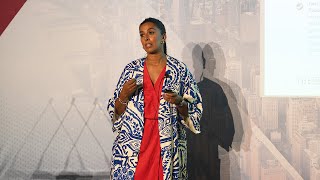
In this presentation, the founder of The LNK (The Link) explains how their startup creates a hybrid marketplace that blends the speed and logistics of Amazon, the brand independence of Shopify, and the curated artisan focus of Etsy to enable sustainable fashion and lifestyle brands to sell internationally. The talk covers the market saturation that emerged during the pandemic, the company’s mission to address textile waste and fast‑fashion harms, and the operational model that includes global warehousing, duty handling, and carbon‑conscious logistics partners. The speaker details how The LNK carefully curates brands—requiring sustainable practices, controlled pricing, and longer collection cycles—while highlighting partnerships with artisans (karigars) in India, water‑harvesting initiatives, and social‑impact programs such as training formerly incarcerated women. Packaging is designed to be compostable and water‑soluble, and each order includes transparent storytelling about the brand’s origin. The presentation also discusses consumer habits around donation and fast fashion, provides alarming statistics on textile waste, micro‑plastics, and emissions, and argues for mindful consumption. Finally, the scaling strategy is described as a country‑by‑country rollout using small street teams, slow mindful growth, and selective partner vetting to ensure sustainability goals are met.
Chapters
The Link? The Link, yeah. It's T-H-E-L-N-K, which is right up here at the top. If you guys wanna find us on Instagram, you can find it under Shop The Link, which is on Instagram. So a little bit about me. This is my second company. My first company was a digital marketing and tech agency, and sold that in 2015. So after that, took a little bit of a hiatus, took a break, and then this is my second company. Where we noticed a huge saturation. So, what ended up happening during the pandemic, as you guys all know, is everyone and anyone scrambled to create a business online. So, Shopify skyrocketed, Etsy got saturated. So, people that were selling even fake items were on Etsy. They were just trying to make a dollar out of a dime anywhere they could because As we know, the world shut down. So, how else do you make money? In the saturation process, everyone was getting lost. So, now Instagram became saturated, the different marketplaces became saturated. So, what were the brands really supposed to do? So, what we did, the easiest way for me to explain what we do is if Amazon, Shopify, and Etsy came together to build a modern sustainable marketplace in 2023, would be what we're doing. So, we have the speed and the agility of Amazon. So, we've solved logistics for all brands around the world. So, we take care of the logistics by setting up warehouses, whether it's a mom-and-pop shop or whether it's at a proper DC in the area. And we take care of duties and shipping and all the burdens that they have that they can't grow an international business with. We've taken care of that. We've taken that completely off their plate. We're Shopify because we have the independence of brands. So, when you're on Shopify, you go and you build a website, and then you're off to the races, and you're able to build a business. So, we have got the independent brands. And then Etsy because of the curation, and also because, you know, you've got all the different creators and the artisans around the world. So, you put all three of those together, that would be what we're doing right now. So, I was gonna start with why we should care about sustainability, but this is such a small group, I'm just gonna go right into what we're doing here, and it's also towards the end of the day, I'm sure you guys wanna get home. So, right now, what we notice when I first started building the company, which was in 2020, My God, I can't believe it's 2023. So, what we noticed is brands are very particular with who they work with and who they want to work with, who they hire, and the materials that they're actually working with. So, we started off in apparel and now we've slowly grown into house and home and then eventually kids wear and we're going to keep adding categories as we grow. The biggest thing that came back from a lot of brands is, A, will you help me put my brand on the map? I want my brand to be known as a sustainable brand. It's very important to these guys, because they understand that the countries that they're in, not always sustainable. So, in India, for example, India actually doesn't charge any, so they don't charge anything for CO2 emissions or anything. Usually, countries have taxes that they charge. India's the lowest. Of all countries in terms of what they charge. I think it's 1.6% as opposed to, say, France or the other countries which charge up to 16%. So brands in India, for example, they're asking us, they're saying, are you going to make any sales? Is this going to be promotional? Are you going to sell this as fast fashion? And they're very intelligent about these questions. If we're doing fast fashion and we're trying to turn things around super quick, They don't want any part of it. They'll do collections after 3 months and they're completely fine with it, sometimes up to 6 months and they're also fine with it. They won't do things in a week-by-week basis and turn it around that fast. We do have one brand that is on our site, deems that they're sustainable, I still question them, but they're able to turn fabric and they're able to turn around the shipping times quite fast. When I talk to them, they say that they work directly with artisans and the— we call them karigars in India, but they're usually the people that are making our clothes for us. So they're very, very, very aware of what they're doing. So when we look at what's going on right now in the world— by the way, if you guys have not watched Extrapolations or Extrapolations on Prime, I would highly recommend watching it. Don't expect like a deep plot twist or anything. It's nothing like that. But it's really here to show what is happening in our world and what we are here to expect by 2030 and 2050. And it's very scary, very scary. It's the— as you know, the planet is heating up. We're seeing it right now as we speak in different parts of the world. And this show with some very incredible actors and actresses shows just that. So I would really recommend it if you can and to your friends and family. It didn't do well because I guess a lot of people were just waiting for the plot, but there's no plot, it's just all facts. So where we're at right now is there is so much, so much textile waste that's happening right now. There's 92 million tons of textile waste that's happening right now. That's about a, that's like a dump truck every second that's headed to the landfill, and if we don't stop that right now, by 2050, that's gonna go up to, what was the number here, 134 million tons a year. So this is where we're at right now. The apparel industry's global emissions will increase by 50% by 2020, by 2030. The average US customer throws away This shouldn't say US customer, this should actually just say the average consumer throws away 81.5 pounds of clothes every year. Do you guys here, how do you guys get rid of your clothes when you don't wear your clothes anymore? I go to the store and sell it to them. Give it away to the store? I'm actually looking for a way to get rid of them. Okay, do you donate or do you— No, I prefer to— Okay, yeah. Um, like, do you do it online or—
ah, piles.
I like that. Okay. And you yourself? Okay, donate. And yourself? We'll get back. Um, so that's— so that's good. So donation is good, but the thing is is sometimes when we're donating, we do it blindly because we just want to get rid of the items. So it's really important to see with whoever we're donating with. So I, up until very recently, donated all my clothes to Diabetes Canada. I'm from Canada, by the way. I'm a Canadian. So I donate all my clothes to Diabetes Canada, but then I asked them, I said, what do you guys do with the clothes after, like, no one's, you know, you haven't given them to anyone, or they're just useless and just kind of sitting around? They get thrown away. So now I'm more mindful of where I'm actually giving my clothes. So now I give them to— there's a place downtown Toronto, it's called Workwear for Women, and it's for women that are looking for jobs that are come from, you know, they've come from battery or a dire situation and they're looking for jobs. So I actually go and give my clothes there because at least I know I'm helping people that can that can use the clothes for good use. So really understanding at a deeper level where we're actually giving away our clothes and what's actually happening to them. The number of times a garment is worn has declined by around 36% in the last 15 years. So right now, items are worn only 7 to 10 times before they're tossed. So again, going back to that example of the brands in Africa and India, for example, where they don't make a collection until 3 to 6 months, like 3 to 6 months at a time, is really trying to be mindful of the way we're wearing our clothes and how many times we can actually wear our clothes. So funny example, on the weekend I had an Indian party to go to. And my husband, he asked me, he said, what are you wearing? I said, I think I'm going to wear this outfit that I just wore a month ago to another wedding. And he said, oh, I don't think you should do that because you just posted that on social media. And I turned and I looked at him. I said, you are the problem. I'm like, you are exactly the problem of what is happening right now. I was like, just because I wore it on social media doesn't mean like I can't wear it again. So I was owning it in that moment and I said, absolutely, I will 100% wear this again. And an outfit is meant to be worn many times, right? Outfits carry stories. So I think, you know, this whole social media era that we're in where people are buying clothes and returning clothes, which is also another really big problem, people are not mindful of like the amount of cost that it takes for a company to take back that return. It's very unmindful purchasing that's going on, unmindful purchasing behavior that's going on. $500 billion is lost each year because of underwearing and the failure to recycle clothes. So most of the time, our clothes come with metal— sometimes there's metal fabrication, or there's little detail work that goes into clothing. and then when we donate it, we give the entire piece of clothing away, not understanding that a lot of that clothing can't even be broken down. So what ends up happening is it ends up in our ocean or it ends up in the landfill, and a lot of that clothing cannot be recycled at all. So again, taking the clothing with whatever details it has on it, and if you are giving it away or you are tossing it, take it off if you can before putting it away if you actually can't use that piece of garment at all. And then also maybe even cutting it down with scissors or whatever have you so that it just doesn't just lie there in the landfill, it can actually be broken up. Nearly 10% of microplastics dispersed in the ocean each year come from textiles, which I was just talking about. 2.6 million tons of returned clothes end up in landfills, actually ended up in landfills in 2020 in the US alone. Fast fashion brands are producing twice the amount of clothes today than in 2000, so I don't wanna take any names, but there are, it's a very big problem right now. And fast fashion is, they're producing on a whim, they're producing on the fly, and they're producing by the day. Sometimes these fast fashion companies, they'll take a look at, most of you guys know this, something selling really well through an independent brand on Instagram, they'll take it, rip it, and then produce multiples of it and then sell it at a markup. So I really highly encourage, for those of you guys that are here, is shop independent brands, know their story and who they're working with and how they're sustainable. As long as we can do our part, slowly everyone will start to do their part. So it really comes down to, to the self. So how did we get here? So back in the day, as you guys know, before the Industrial Revolution— actually, I'm a 1981 baby, so I remember my mom knitting my clothes for me and also sewing my clothes. She would grab patterns from Fabricland and she would make my clothes for me. So fashion and high fashion wasn't accessible to everyone back then. And then post-Industrial Revolution, It started to become more accessible. And then growing up, middle-class families like my own family, they didn't have the money to afford the type of fashion that we wanted as kids. But slowly, companies started to catch on, and then they knew exactly what the streets wanted. They knew exactly what we wanted as people, and they started to replicate luxury houses, luxury fashion houses. And that's how we are here today. So a lot of what we wear is like— so back to my mom and her getting patterns from Fabricland and actually going and choosing the fabric and making our own style. It's like, let's return back to creating our own personal style. What is our personal style? And really owning your personal style. It could be anything. And it doesn't have to be what's the latest in trends or what's the latest in fashion. I'm just going to keep this here for you guys too. I just finished talking about this, but if you guys want to read that really quickly, it's 52 micro seasons in a year is how fast these guys are producing fashion. As we have grown, so we started off, in India. When we started off in India, we got a massive learning lesson there. We knew exactly how they wanted to work with us, and they actually asked us, they said, "Please don't put our items on sale just for the sake of selling them." And this is great because our brands are actually in control of their own prices, and it's the message that we also give to our consumers so they know that when they're purchasing the item, They understand the story behind it. They understand the depth of it when they're going to purchase the item. A lot of brands, Indonesia, Africa, and India, we've noticed that they do a lot of water harvesting. So around monsoon season or when there's a lot of rain, they do a lot of water harvesting. It's a really cool thing to see. It's a very, very, very cool thing to see. A lot of fabric, when it's washed, it leaves behind this thing called, you guys already know, but microfilaments. And that, imagine you're washing tons and tons and tons of clothes, especially in fast fashion, how much of that is being left behind and then it goes into our ocean. So it's very scary to think about how much is being produced out there then how much is being left behind and is going into our ocean. People like India, for example, I said this at the beginning, I'll say it again here, is they are looking into how to cut down CO2 emissions. There is intergovernmental panels on climate change that happen every year. There is a lot of talk happening. I won't get started on some recent political activity that happened with India and Canada and the States, but I think, again, we as individuals really need to take it into our own hands to dive deeper into and educate ourselves. And for those of you guys that just arrived a little later, I was saying that you guys should watch a series on Prime. It's called Extrapolations. and it's amazing. It's very well put together and explains exactly what is happening in our world. I remember being in grade 12 geography class and them telling us exactly what we're going through today, so it's really about being mindful. So water scarcity, water harvesting, already talked about that. Compostable bags, brands were also very concerned with how we were packaging their items. They wanted to know what the boxes look like. They didn't want any fancy packaging or fancy boxes. They wanted compostable bags. Again, very mindful. They're much more ahead and much more mindful, in my personal opinion, than we are here in North America, absolutely. It's just the way that they go about what they're selling and how they're selling it is very sustainability-focused. Sophisticated, if that's a word. So, what we're doing right now to achieve sustainability across the board is we're doing a lot of social media messaging, so we have people on the ground in each of our countries that we're growing in, and we really encourage a lot of video, who you're working with, we want everything to be seen, how they're working, how they're stitching stuff together, Just recently, actually, there's a jail in India where it's just for female prisoners. And a lot of fashion houses, after the women have been released from prison, they work with them and they bring them back into the work world. And they teach them about sewing and stitching and fabrics and all of that. And so it's really important for us to show those messages as we're growing because It's very important, and it's also, it's very contagious to see that, and you're just like, how do I get involved in something like that? How do I also take that message and further represent it? Our package and messaging, so our boxes, after they receive, so when you receive them, they're covered in a lot of tape, so we make sure that nothing happens, that the box is fine when it comes. but the box itself, if you put water on it, it disintegrates. So, our packaging, we're very conscious about it. Our messaging, every one of our packages, it comes with a note in it of where the brand is from, it comes with the story of the brand. Again, being very transparent. The way we communicate with our brands, we are very stringent of communicating with our brands one-on-one. So, one-on-one before they actually come on the site and and create a store. So it's not like Etsy or Amazon where anyone can create a store. We're very mindful of who we let onto the marketplace because A, for the consumer, at least the consumer knows that they're getting a very high-quality product. And then also for the brand, they know that it's not just anyone and everyone that's going on the marketplace. That these are people that also really care about their items. So, yeah, that's the last one right there. So carefully selecting which brands can be a part of the marketplace. And then the partners, of course, the partners we choose with in logistics, packaging, and wholesale. So DHL is working very hard right now, and how much everything from CO2 emissions, what they're putting out there in the world, and in our air, and how it affects air quality, and so on and so forth. Really making sure that every single one of our partners that we're working with is on some sort of a mission or some— they're working a small percentage, if it is right now, at least they're doing something. But they are working towards the crisis that we're going through right now. So logistics, packaging, wholesale. We've had— we're a startup. We just raised our seed round. And even though every penny counts, our burn rate matters every minute, it's very important that we're not just going for the cheap stuff, that we're actually going for the stuff that we know is gonna help us in the long run and it's also gonna make our brands happy and it's gonna make our consumers happy as well. And that is it. Thank you so much for being here. Do you guys have any questions? Does anyone have any questions? No? Yes?
Very generic question. I'm assuming that the docs have covered it already.
Yeah. How—
oh, okay, now I'm nervous. I do not do well with mics.
Okay.
How scalable is this approach, especially in terms of volume of product and in new markets. Surely, you can't use the same formula when you enter different geographies, because the sustainability needs of a country may vary, right? So, how do you accommodate for that?
It goes country by country. So, in every country, we set up a street team first. So, in India, when we got there, we set up a street team of 2 people, and we only did— we did one vicinity at a time. So we started off in Bombay, which is not the most sustainable, and then we moved into Pune and then Ahmedabad and so on and so forth. And then in Africa, Uganda, we started off there first, Kenya, Tanzania. So it's not a— we're not growing like this. We are growing very slow. We're growing mindfully. And I truly believe that when you do things mindfully and with patience, you actually grow faster than everybody else. 'Cause if we grow so fast that we're just taking on everyone and anyone, then at what point can we go back to the beginning and be like, oh shit, where did we mess up? So, it's actually better that you do go slower and you do things more mindfully. If you take, for example, Shopify, which I love, I absolutely love Shopify. But Shopify has gotten so big that even if they wanted to build a marketplace, which they can, they have Shop, the app, is where do you start? You have millions of brands on there. Who do you know who's sustainable, who's not sustainable, and so on and so forth? There's different things you can put into play, but it requires more manpower, more hours. So, they have different goals now. Okay. Great.
Thank you.
You're welcome.
Anyone else?
No? All right, excellent. Thank you so much. I love New York. I love being here. So this is great. Thank you very much, guys.










