How Brands Build Obsession & Emotional Loyalty | Retail Rebels 2025
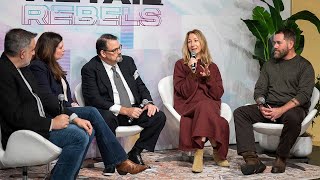
Four brand leaders debate how to build obsession: start with a strong visual identity and consistent story, hire teams that live your values, and make customers the hero. Filson, Ralph Lauren, and Victoria's Secret share how music festivals, care packages, and frontline staff create emotional loyalty that AI can't replace.
Chapters
And I'm hoping everyone's feeling good this morning and is wide awake because first session is the most high energy because— no, it's not, but we're gonna make it. We're gonna get a little bit exciting here. I'm Dominic Miserandino. To my left, I am—
I'm Kira Ghanan.
I'm Rich Honeyball.
Jelena Billiard.
I'm Alex Carlton.
And I do that because I'll mess up someone's name, so I make them do it. It saves me time. Today's wonderful panel is Crafting Brand Identities That Spark Obsession. That is emotionally intense. You're nodding. You see how intense that is. To start this conversation going, Because it's one thing to be noticed, but another to make people fall in love with your brand. Maybe not to the level of obsession, that would be weird, but at least to fall in love with the brand. I'm going to start this right to Alex. How are you building emotional connection in a way that makes you— your brand not just irreplaceable, but coveted?
Time is a real factor. So I think that we have spent a fair investment in establishing meaning and value, creating a foundation for Philson over the past 11, 12 years. And again, it's really creating a sense of meaning through visual language, being consistent, creating a world, really triggering sensibilities. So there are a lot of nuances in that, and it's not a quick exchange. It's a long-term proposition. And again, I think just foundation building was an essential part of what we've been doing at Filson.
Mentioned the nuances. So this nuance road a little further. Rich, let's have you take further on nuance.
So I love the foundational aspect of it because I think a lot of brands get that wrong. I think a lot of brands will start with the sizzle and forget the steak, but there has to be that sizzle, I think. And there has to be that level up in the experience that makes you stop, that makes you think. And from my perspective, I think the experience isn't— it has to be related to the the product that you sell and the brand you're selling, but it has to go beyond that. It has to say that you actually understand who the customer is, you get them, and you're trying to make it better for them.
Storytelling and authenticity. I mean, for me, I think storytelling is part of every brand's identity. You're constantly doing it. Sometimes I'll do subtle hints, like when I'm on stage, I'll say, Dominic from RTM Nexus, and we connect people and connect with me on LinkedIn. I did it very subtly right now. That was— no one got that. OK, great. How do you keep, though, the storytelling so it's not just a ritual, but the authenticity comes through so they actually identify, obsess, and they want to continue coming back to the brand? Who wants to take that first? Because it's a little more of a wild card on us now. Alex, you're smiling first, then—
I think it's a matter of engineering various touchpoints. And there's always going to be an ebb and flow, whether it is, you know, around the entire ecosystem. So what happens in social media? What's happening at retail? What's happening at.com? What's interesting on a product page? What's interesting from a product perspective?
Okay.
You know, so I think that ecosystem and how it sort of ebbs and flows and vacillates is how you retain interest, you know, sort of retention and keep people within your world. So that's a starter.
That's a good start. Wait, nope, sorry, Yolanda's ready. I wanna jump on that energy right there.
Yes, I do agree. Absolutely. One thing that I feel like a lot of companies, brands miss is the team that's going to power that. So I think that's usually a blind spot before any of this magic content reaches the customer, there's a very, very big point, which is team building and drawing actually people into your company that align with your brand values. That is your first customer. So that is your first point that it's either going to make a brand successful or not. That's why the founders today of some of these up-and-coming amazing brands that are hitting the market are so successful because they're able to put their soul into the story, but they're also able to recruit people that want to work for that brand, and they want to work for that brand because they actually live that brand and that brand excites them. So before I would say all the emotion and brand storytelling, getting the right team is where first point of magic really happens, and the customer can feel it when, when the teams are not aligned, when the leadership is not aligned, it starts to trickle through and it starts to fall apart as it hits the market.
Getting the right team. Rich, I think you've dealt with teams once or twice too, but keep going.
Yeah, and I think— let me build on what they've said. I think your customer, your customers have to be the hero of the story, period, end of story. You need to have the right team building it. You have to have the right product, the right atmosphere. And I'll give you a tangible example. So I work with a, um, a a retailer right now, this weekend was Day of the Deployed, and it's the day that we remember all of those who were deployed. In order to honor that, not to sell more product, we invited families that had a deployed family member to come in, build a care package, we gave them a gift card to help do it, we gave them supplies so that they could decorate the box and put crafts in there, and then we shipped it for free. That wasn't to sell more product, that was to make them the hero of the story and give them something tangible as part of the community that we want to be part of, that we were asking for permission to be part of. And so I think if you have the right people, every day your customer is the hero to the story.
You have to finish that. Great. Yes.
I think building on all of that, I'm tying it off for you here. You're good.
You're good.
Is this not working?
If it's not, I was doubling up subtly.
Oh, is this better?
Oh, they keep trying to cut you off, Dominick.
I just project, so I just assume you can all hear me. But I think, yes, the consumer is the hero of the story. Yes, you have to have teams. And yes, you have to have vision to start. What I see, and I was just talking to a company the other day, whose expression looked very different online than it does in stores. So your consumer's confused.
Yes.
What are you trying to tell them? Because you had a great vision and now the execution, because your team isn't pulled together properly, isn't coming to life and therefore you've missed the moment. So I think that's—
I want to keep that.
You want to keep it, I know. But I have to have the commercial break for the second to remind everyone here that there's this wonderful Q&A using Slido, which means questions will come to me that I might not have thought of if you want to use the app. So you're welcome to. But to go back to the regularly scheduled program here, something— a term that we've not heard a lot of recently when it comes to storytelling is this newfangled term called AI. I know you haven't heard of it yet, but how do you keep authenticity, which we started with, identity, a brand, um, with AI, the robotic nature of AI. Who wants to take that first? I'm going to look at who nods the most. And Alex, the fact that you're staring at me blankly, that was not as encouraging. Oh, wait, hold on. Here's a— give me the mic.
AI is incredible. What was the news yesterday? Amazon is eliminating how many? 30,000 employees. It's devastating. But with, with evolution, sometimes we also find these other bright linings. And so I know that these people and everybody who might lose a future role will find another way to evolve themselves. That being said, I do think that brands who stick with their heritage, brands who understand their DNA, can evolve with AI. Or whatever technology is coming at us, as long as they continue to say no to certain things, as long as they continue to understand like what they're really there for and what their consumer expects. So evolution, and this is an industry that doesn't evolve very fast, so I know what I'm saying, and to the audience I'm saying it, but we have to start doing better in that for the industry only because the consumer's expecting it. So we're going to lose them if we don't move faster.
I'll wait for one second because I would love a handoff right now. That'll be— oh wow, what a coincidence. Thank you, Elena.
Thank you.
AI really comes down to is it right for the particular brand? So it's—
is it right for the particular brand?
Right. So every brand has to answer that. I think what is important is to really understand does the customer want this and what exactly does my customer want and how do they want it and how is it actually going to benefit them when they are immersing in my brand. So I think it's an answer that everybody will have to answer themselves and find the right way that will offer something back to the customer. So it would have to be seamless and it would have to be right.
Now, I know Alex might have thought, wait, Richard, you have an answer for that?
Yeah, I want to throw— I don't know if this is contrarian, but I want to throw a different perspective.
I expect nothing but contrarian from you.
How is photography going to impact the future of retail? Years ago, everybody was talking about that when they were going from illustrative sketches to film. And then when you had digital photography, how is digital photography going to change? AI is a tool. And if the question starts with AI, in my opinion, you've already lost the plot. It needs to start with who are you? Who's your customer? What are you trying to do? What are you trying to solve for? AI, much like pen and paper, is a tool to be able to help solve that in the way that you need solved. It's— I love the technology, I love the use case for it. It is yet to be completely discovered, but it is not the starting point to the story.
This is not a fully caffeinated audience for deep thoughts like that, but most of them are nodding, which is a good sign.
But the AI will tell them when to caffeinate.
Oh, that's true. Alex, Do you have a whole month to finish that one off?
I go back to the internal sort of adoption.
Okay.
And really looking at how do we get our teams, albeit on the creative side of the business and the design side of the business, how do we utilize the tool? If your brand message, if your brand values are clear, then they can be enhanced and optimized by use of the tool. So, you know, I, I think right now it's, you know, one of the challenges I face are trying to assure the teams that it's a positive thing. Utilize the tool. It will only allow you to do more, express more, create more, produce more. As opposed to replacing you.
Now, I'm gonna take a question, a little bit inspiration from this audience. Half of the brand equation, of course, is what you're doing, but it's also discovering— well, it's also discovering who their consumer is. Smaller brands can certainly use AI to amplify their messaging. But how do you guys recommend smaller brands discover who their audience is? Who wants to take that first? Any ideas that come to you? I'm giving a little more intro so you guys could think about it more. Any ideas how smaller brands could help identify who that other side is so they can break into this all? Look, Kira's like, give me the mic.
Just because I don't like to share my toys. I actually think that everything in this industry is a balance of creative and commercial. And all of the best ideas come from a creative space. So there is a gut moment where you're saying, who do I want to target? What does my brand— who is my brand intended to target in the vision that I have? Not until you actually start to get revenue going, some sort of information back, can you really refine that and leverage the tools in the industry to go out and very specifically target? I don't think that you have to spend a ton of money to figure out who your audience is right out of the gate. I think a lot of us know who they are based on the products we're trying to create.
Who else wants to take— Rich does, I'm ready.
Yeah, because I'm struggling. I don't want to say I disagree with the statement because I think it's the perspective that you look at. I actually—
not disagreeing, it's just contrarian.
Yeah, contrarian. I like that word. That's the word of the day. Um, I think actually you're seeing an example today where a lot of larger brands and a lot of larger retailers don't know who their customer is. They've lost touch with it. And the sad part is they're trying to find, you know, trying to use AI to rediscover themselves, which to me is the wrong thing. Smaller brands that are emerging can get closer to the customer, can have real conversations And one of the benefits to AI is it can democratize data. It can allow the smallest brand to take the information that they have in their small amount of sales, in their interactions with customers, and aggregate it in a way that they can have learning. So I think that's actually one of the ways that AI can help.
I like that. I'm looking at the two, trying to read whose face, but it's Yelena, Yelena's face.
I do want to agree that it For small— smaller brands, I think it's much easier to understand who their customer is and to stay closer and more intimate. I think as you start to grow and scale, which I think is interest of a lot of brands, this is where you need to do a little bit more work and heavy lifting, understanding who your customer is and who you want your customer to be and how you want to build those relationships, how you want to segment, how you want to talk to them based on the product that you're selling. But I think smaller is easier.
For sure. What was easier?
I mean, I go back to just being authentic and original and being really clear with your identity, who you are, your voice, and understanding that in a way you're holding up a mirror to the audience. And if you're genuine, you'll attract folks who are genuinely attracted to your brand. Like likes like. I know, you know, when we launched social media, we did not have a lot of customer data 10, 12 years ago at Filson. We started to really leverage what we were seeing through our social communities to kind of hold a mirror up to our user. And again, just that consistency, being really consistent with our messaging, our values, it started to emanate and grow.
I like that. Now we have two points here. Number one, I get paid a $3 Amazon gift card every time I remind you guys about the QR code to submit questions. Michael's gonna send me the gift card later. It'll be great. Number two question though is about connecting with brands. One of my proudest moments, actually I'll introduce the question and then you'll see the example, is what is your favorite example from your career in terms of connecting brand. One of mine was I was the CMO of AdoramaPix and I took my laptop and I sat in the lobby and every time someone walked into the physical location, I'd answer their questions. And it got to the extent I know as the high Orthodox Jewish population in Brooklyn and as Italian American, "Eichan reden lo bissl de Yiddish un sprechen un Yiddish." And it broke down communication barriers when you could speak a little bit of Hebrew. But it was to identify the brand was to say to the customers, you know, hey, I'm here, just talk to me. Do any of you have your favorite story in your career of that moment highlight that you could illustrate to this wonderful audience of fully caffeinated people with high energy of something you've done with brand? I like the self-awareness in the corner over there. Who wants to have that first? Are there favorite their favorite career moment that came to mind when I said that long intro on purpose to give you time to think. Yeah, I can't.
All right, I'll give everybody a chance to think. So working for a military reseller for the last 10 years, I can look back 1 day ago, 2 days ago, 3 days ago, and I'm gonna find wonderful stories. So I'm gonna challenge myself a little bit more. I worked for a heritage brand more than a decade ago. The average age was such that every time a hearse went by, our market share was declining. And so we had to find a younger customer. And when you have that, you're tempted, or sometimes inadvertently, you divorce your current customer to go after that new customer. And we did not want to do that. Yeah. So we ended up putting together ways that we could honor their— the existing customer and bring in a new customer. We did it through music and sports. Okay. And the moment for me was a 2-day takeover of a dive bar in South by Southwest. With musicians that were new musicians like an Aloe Blacc or Vintage Trouble that had a vintage vibe, and you had sons and daughters and grandmothers and grandfathers connecting, and we were part of that experience and could share that with them. That will always resonate with me. Whoa.
Oh, look, boom, Alex is ready this time.
Number 2, I, I can pile on because, uh, you know, Filson, 100 plus-year-old company, aging demographic, I mean—
You're gonna use the Versa example, aren't you?
That was a good one. You know, our sense was how do we put the defibrillator on this, you know, old brand, and how do we move from being archaic to relevant, and how do we really enhance the relevance factor and do it with a dotted line? So it's not an either/or, it's an and. We were thinking about the granddaughters and the grandsons of the brand, not necessarily, you know, sort of this referential archaic, but contemporizing it. And just, you made me think of with the music and sports, we sponsor the Kraken NHL ice hockey team in Seattle. We do projects with Chris Stapleton, Yellowstone, so really, Establishing that organic relevance through, you know, sort of our customer today, just through that younger lens, has been really an important part of our strategy.
Right now I'm realizing it must be Yelena has a thought because the mic wasn't rapidly grabbed against my will. So Yelena?
I will agree with both points. Experiences for brands are very important. When I worked for Victoria's Secret Pink a long time ago, we would throw parties during spring break for college girls. And this was really early on before even— maybe it was like 10 years ago, 12 years ago before brand experiences became a hot thing for every brand to have in their playbook. And it really does bring you— it goes beyond product and stores, which stores is also a great way to connect with your customers, but seeing them in an experience that has nothing to do with product, but it has to do with the values, and the emotion that you bring to the table is really incredible. So I would say brand experiences are a must today and exciting also for everybody who works for a brand to actually come that close to the actual consumer.
This is the point where I immediately hand over the mic.
Thank you.
Yes.
Because I have a lot. I have a lot of brand connection moments. That's the best part of the job. Right, when you can really see it come together and all the backend work with all of your cross-functional partners, and it really makes me do what I do. But one stuck out because you guys all are talking about music. I spent a lot of time with Levi's. We had a lot of music moments, which was really incredible. But I think the one that stood out for me actually is I had a unique opportunity to spend many years with Ralph Lauren. And I was brought in to relaunch or launch new brands under the Ralph Lauren umbrella to acquire new consumers. But how do you do that with a very heritage-driven, strong DNA brand? So we launched a brand called Denim and Supply.
Do you remember Denim and Supply?
I do.
I feel like I know you from that time.
You do.
Okay. So Denim and Supply was launched exclusively at Macy's. It was the biggest launch that they had. But the most interesting part of it was the 360 campaign that came together that was really embedded with product. So what is he or she doing? She's listening to music. She's an artist. There was a collaborative of young people who were coming together who may or may not be fans of Ralph Lauren, or parents were fans of Ralph Lauren. And we were trying to pull them into the mix. And so we— did a campaign with Avicii, and Avicii was, I guess I could say he was up and coming still at that time, an EDM DJ. And to have the Ralph Lauren executive team at an EDM concert was a hilarious moment. But to see that connection with all these young people and get them really jazzed about Ralph Lauren, I have to believe that some of the Polo power that's happening today is because we started bringing new people along back then.
I love it. I'm going to merge two of the questions into one somehow. And basically the question from the anonymous audience is, is there a case where AI is at odds with customer authenticity? And the other one is also a little bit of integrating it to in-store and person. And, uh, my answer I was going to give out the gate as the author of a copycoming book on branding and an expert myself is that You have to use AI as the extension to oneself and not the replacement of oneself. That's what I was waiting for.
Okay.
Contrarian, I'm ready.
No, no, no, not contrarian. I'm going to draft off of that before she grabs the mic. And I love the fact you do that.
Violently grabs the mic.
So the first one, the case where brands are at odds, where AI is at odds with customer audience and brand identity. I'll give you a very tangible example that leans into what you said. Part of my responsibility is I oversee our call center, our customer care center. It's not just a call center. If anybody has any experience with call centers, our average call time is in the 6 to 7 minutes. Efficiency, it is not. But that's because when our customers pick up a phone and call, they want to talk, they want help, they want a human. If I replace that with a bot, I'm gone.
Ooh.
Okay, so that is a case where AI and technology is at odds. But if I leverage what Dominic just said, I shouldn't be trying to replace the human with the bot. I should be using AI to make that human better. And the way I can do that is use AI to take some of the tasks off that human's plate, to allow information to be more readily accessible in the way that Tractor Supply does, where they can immediately access it if they're on the floor. So I think that's again where you look at the the customer, the associate, the problem you're trying to solve, and is AI a tool, and not pit AI against the human and say it's one or the other.
I love it. Do I— oh, Alex is a little eager. Are you ready? Can you do it?
I—
yes, I, I mean, AI can certainly be at odds, especially with a company like Philson, where, you know, internally We think about engineered naïveté. And, you know, I use the Wizard of Oz analogy a lot about like the guy behind the curtain. You don't want to see the guy behind the curtain. You want to believe in the power of Oz. And, you know, I think that we can use the tool to enhance our story and improve customer journey experience, all an endless litany of of enhancements. But as long as we are responsible and true to our brand image values, then that's how it comes together.
Do either of you want to add on that? Are you ready for another one?
I can add on that. I mean, I think that the AI— we're in our very early, early, early, early times where we're using customers to test and learn. And sometimes I would say even aggravate. I think a lot of AI tools that are already out there are maybe not ready to roll out, but soon enough, I'm going to say like in a few years, we're going to find the right ways to use the AI for appropriate moments. I think right now, very often it is used as a replacement to customer service, which I find maybe not ready yet. We're not there yet. I think a lot of people still like to talk to a human, but we'll see. I think AI in terms of retail, I still think we're not there. We're going to see in the next few years what seems to fit the best and what the customer actually wants.
Boom, here we go. Oh, she's ready.
I'm ready. I come from a place where I think AI is a tool. So you talked about it as a pen and paper. I don't necessarily think it's I don't think it's beneficial if the consumer experiences something different and they know it's AI. I don't really, that to me is not an emotional connection to a brand. But with that being said, I do think that there's a lot of focus in the industry on how to leverage technology in general to create better in-person experiences. I agree with that. We've been, I'm currently in the intimate space. We've been trying to make that an easier experience for women, for as, well, as I think as long as the industry has been commercial. And so trying to use AI to create better fit techniques, better visibility, better visuals, and a better understanding for her on how intimates are supposed to fit is really where the focus is in that category on AI. But I agree, we are nowhere near like a consumer rollout of what that looks like. So you see a lot of tests in the market, and I think that they're exciting.
I think we're getting to the point of one final question. If we're lucky, we can pull it off. Believe it or not, I'm not going that way. I'm not going that way. I'm going one before it, to the in-store experience. I've advised a lot of companies, and I'm on a few boards. And to me, the consistent thing that's forgotten when it comes to in-store is the team on the ground. I had one board of director look at me and say something like, oh, they're just a minimum wage employee. And I said, no, that's the primary. That's your front. How valuable in your eyes is that frontline first person they meet for that in-store experience? Does anyone have a story on that one?
Extremely important. I think that stores are important. Store associates are representatives of your brand and more more than just having that experience in a store. You as a customer want to be seen. And I think that's what maybe aggravates a lot of people about AI is because AI cannot yet see me and gauge my frustration, gauge my sub, sub, sub, sub questions about a product and what does that actually mean. So I think that customers, customer service or store associates in a store are important because they actually see you, they hear you. And they can really make a connection and help you actually make that transaction. So I think that that's still very important when it comes to store experience.
I see Alex. Retail is the reality of your brand. And it's the truth. And it is tactile. And we work in a tactile industry— texture, scent, all of it, that's where it really comes together. So critical, critical that you bring the reality into your brand. And that's where, again, I think there's just a lot of value there that can't be left behind.
Rich, oh wait. I'm ready.
I can't think of a thing that's more important. It starts with product and the execution at retail, whether that's online and the convenience that you provide to the consumer and the simplicity, or it's in stores with the same expectations from the consumer. I was recently in an unnamed large beauty retailer, and I was with my 11-year-old because that's what we do now is we go into these stores. And I had a miserable experience. The store was a disaster. There was 100 10-year-olds running around, and I couldn't find anything. And I was looking for an employee, a beauty advisor, and they were all behind the counter, and I was very frustrated. And so when I did finally go up to purchase something, I guess I wasn't very nice about it, and my 11-year-old called me a Karen. So I really do think that my expression and my frustration was because I wasn't getting service in the way that I expected when I was buying a $20 lipstick for my small child. So it is the most important thing.
So first I'm going to say that the number of questions that we won't get to, it's really cool to come to one of these and there's actually questions. So just because you're not—
I'll address it. OK.
So I would say one of the quotes that I absolutely love— I teach as well, and I teach retail and e-commerce— is John Coltrane. Sometimes you have take a look at old things in a new light. You talked about it with your brand, I had it with one of mine. 100 years ago, if you walked by your favorite store, there was a department manager outside and they were treated like royalty. We, we acted differently as retailers. And so instead of focusing on AI and technology, I think as retailers and as brands, we have to start focusing on what made us great 50 or 100 years ago, and how can the technology bring that back. And I think it starts with empowering those people that are on the floor, to do more than just stock shelves and shuffle things around and have their hours cut when we can't make profits. We have to use AI to empower them to help the customer to find information and rethink what retail is all about. And I think when we do that, I think you'll start to see it thrive. And from an educator's perspective, I think we'll start encouraging more and more talent to consider retail as a career first and not an accidental backup.
And with that intro, uh, Rich just mentioned the abundance of questions, and I'm also cognizant of the fact that the clock is running. So what I'm going to do is a little different, but I, I know Michael approves of it. He's giving me the thumbs up already. I'm going to say my name, and I want you all to know who we are and approach us after this panel. Talk to us. The purpose of this is connecting. And there's no way we can answer everything in this panel in 2 minutes, all the questions. So please, I'm Dominic Miserandino, CEO of RTM Nexus.
I'm Kyra Ganane. I run the Ralph Lauren intimates and sleepwear business at Delta.
Rich Honeyball. I have a retail podcast, Retail Relates. I teach at George Mason and I work for the Navy Exchange. And hit me on LinkedIn and I'd love to talk about any of these questions.
Yelena Billiard. I'm a creative brand builder.
I'm Alex Carlton. I'm chief creative officer at Filson, where I've been for 11 years.
So everybody, you know, I'd like to thank everyone on the panel. I'd like to see you all looking down the phones and connecting with LinkedIn. And yes, thank you very much.










