How Creativity and AI meet Fashion | Maison Meta, Nima Abbasi | PI Apparel
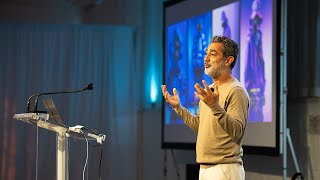
In this presentation Nima Abbasi, co‑founder and partner of Maison Meta, explains how his company has become a leading AI‑only creative studio for fashion brands. He describes a custom end‑to‑end workflow that trains generative models (primarily Stable Diffusion) on product photographs so that every element of a campaign – background, clothing, models, accessories – is generated entirely by AI, eliminating traditional photoshoots and post‑production. Abbasi showcases world‑first AI‑generated projects such as the Moncler Genius campaign and the Revolve AI‑generated fashion collection, highlighting dramatic reductions in cost, time‑to‑market (weeks instead of months), and the ability to instantly adapt imagery for different markets, billboards, or social media. He introduces the concept of “artificial creativity,” where AI visualises mood‑boards and design directions, aligning creative teams faster. Abbasi also details the launch of AI Fashion Week, a global competition that produced over 400 AI‑only submissions, with three winners entering a Revolve‑backed incubator to turn their virtual collections into real products. The talk covers technical specifics (training data requirements, use of local servers for IP protection, retouching workflow), ethical considerations (transparent AI use, up‑skilling staff, sustainability benefits from reduced travel and shoots), and future plans to package the workflow into a software platform for broader corporate adoption. The session ends with a brief Q&A covering color‑material benchmarks, IP security, and skill requirements for working with AI tools.
Chapters
So, um, I'm Nima. I'm one of the founders and partner at Maison Meta. Um, so before I get into the presentation, none of what you're about to see actually exists. It's all been generated through AI, and that's the only work that we do right now. Um, so we are the, probably the leading AI creative studio in the world. Um, we work with a range of clients from Moncler to Zara, uh, Revolve Group, H&M, Louis Vuitton. So a whole list of clients. This has happened extremely quickly. We started digging into AI about a year ago and then realized the, the potential that it had. And really all of this has happened in the last 6 months. Um, what's been really The unique, uh, component of this and what really sort of differentiates what we are doing with anything out there is this custom workflow that we've developed. So, you know, everyone's seeing a lot of these, uh, AI memes on all sorts of, uh, social channels. And I think the hype of what can be created with AI, um, is very different to the reality of what can be created with AI. And we have this challenge literally every day talking to clients who don't know what can be done, what can't be done, and, and how it works. Um, because, you know, if you're a global brand, it's, um, it's one thing having super creative imagery that's inspirational and concepting, but it's another being able to replicate your actual products in AI and then pull that into another image that's also generated by AI. So the work that we do is not setting the background and then Photoshopping or copy-pasting a product into it. Everything is done through AI. And then because we're so deep in this space, we start to advise other organizations like Google and UBS. And actually, in September, we have a couple of courses coming out on Domestika, which is sort of like a master class competitor on how to use different generative AI tools like Midjourney and Stable Diffusion and others. So AI can be used for so many things across a fashion company, from customer service to product design to logistics, even to, you know, e-com or website optimization. Our focus is on sort of a slice of what AI does. And, uh, primarily it's about generating, uh, content and imagery. So we've worked on global advertising campaigns all the way to, you know, images for product launches on, um, social media. Um, we've also started working on actually generating fashion collections. I, I'll show you some examples later of what we've done there. And then we, we've coined this term artificial creativity. So this is the idea of allowing creative teams, design teams, interior design teams to be able to very quickly come to the same page in terms of what the vision is for a certain type of product for a certain type of environment. So rather than people, you know, traditionally having Pinterest boards and mood boards and all this, we can actually create what the vision should look like, and that makes all the team work together much quicker. So if you're doing a photo shoot, before everybody gets there, everyone has a sense of what the final output can, can look like and should look like. And even with one, um, client who's a, a celebrity sports, um, uh, uh, icon, uh, who's developing a, uh, cosmetics brand, we actually started to work with him on, uh, using AI to do branding and packaging product design. So, so the range is quite, um, quite broad. Um, We've also, because we've been really pushing the boundaries of what's possible with AI, we've been behind a few of the firsts in the space. So we did the, the world's first generated AI-generated campaign for Moncler Genius. I'll show you some images of that. That was their collaboration with Pharrell Williams, Alicia Keys, Adidas Originals, Jay-Z, Fragments, and a couple of others. We did the world's first ad campaign, which went on a billboard. It was super, super challenging to upscale it to fit a billboard that's sort of 48 feet by 28 feet, I think it was. And then we did the world's first AI-generated fashion collection with Revolve, which they produced and sold online. So this is an example of the work that we did with Moncler Genius. So this was as part of their launch in London. I think it was around February time. So again, if you look at something like this, I'll say a couple of things which are really important. So this was done in February. The technology has come much, much, much further. So the quality of what you can produce is much, much more powerful right now, even in a matter of months. This project traditionally would have taken Moncler Genius probably 4 months of coordination, shoots, teams, agreements, paperwork. From start to finish, we did this in about 4 weeks, and that was from concepting, creative, and then actually creating the imagery. And again, the difficulty here was the ability to actually bring their products and generate them through AI and then pull them into sort of the settings. That's really the most difficult part of it. Here's another set of imagery. Yeah. So this was part of the first, uh, campaign that we did with Revolve Group, which is a, a big fashion tech e-com company. It was to celebrate their 20th anniversary. Um, so from there we, um, started talking with them and, um, the Michael Mente, the CEO, is a, a huge believer in AI and a massive champion for for the cat, for the category. So one of the advantages of AI is that, you know, we started with, you know, this sort of campaign and very quickly we were able to adapt it, upscale it, um, and, uh, sort of adapt the imagery so that it could be used on billboards. So that's one of the huge advantages of using AI, that you're not stuck with whatever you produce. At first. You can change it, you can adapt it, you can upscale it, you can have different people within there. So, you know, one of the other things we hear a lot from clients is that, yes, we're doing this campaign, you know, we use all our budget, but, you know, our team in Japan or our team in Brazil wants it to be localized, wants it to feel more like the customer base down there. And so in traditional shoots, that's done and gone. You have to go back, redo everything, pay more fees, wait more time. With this, the ability for us to change the background, the imagery, the clothes, the person, the settings can be done in a matter of days. And so that gives the brands that we work with maximum flexibility. In terms of where they can take it. So these were some other images, and this is where they were on the billboards across California. So, you know, everyone talks about, so why should we use AI? What's the value proposition? So for us, the way we talk to everyone, it's really a matter of 3 or 4 key value propositions. One is massive saving in cost. So the budget that Revolve was able to save in generating these advertising campaigns, they were able then to put that money towards media. So they were able to promote the campaign much more widely and on more expensive sort of territory than they traditionally would have been able to do. Obviously, speed to market. So again, these were done in a matter of weeks. You know, when, when campaigns are planned, you know, 4 or 5 months in advance, you have no control of how things change, how trends evolve, what new cultural elements come into play. So by doing this, we're able to go to market very quickly and really be on point with what the conversation is or what's happening around the world. And then I mentioned the other value proposition, which is really about customization and personalization and scaling. So, you know, we could use this for social media. We could easily use it for outdoor advertising. And then, you know, if, if Reebok wanted, we could customize it for a local audience in any country that they want. And again, all of this is done quickly, but also without all the necessary paperwork and other things that you would have to go through to get more rights, to renegotiate rights, to apply them, so on and so forth. So this was the collection that Revolve in the end produced. And again, this was a matter of how we can scale these projects into so many different places. The original idea was a campaign for their 20th anniversary at Coachella. Then it became a billboard ad. Then it became a wall poster campaign. And then the idea was, well, why don't we actually try to produce the collection and sell it online? So, you can see the jackets in the middle on the left. And then bottom in the middle too. And then the other pieces were also from the same collection. So this was the first time that an AI-generated collection was actually produced and sold online. And it was super, super, super exciting. And actually, it's part of the Business of Fashion's recent AI case study. If you haven't seen the report, it's actually really, really good. There's a couple of pages about this, but then there's a— a whole lot of other resources and ideas for you guys to look at. So the— not— we didn't realize how much attention this sort of world of AI and fashion was going to get. There's been a lot of attention across the board. And there's a lot of questions around ethics and are we replacing jobs and so on. And I think these are really important questions to address. So in terms of ethics, we always advise all our clients that they really should put up front the fact that they're using AI to do certain things. And then the press love this sort of question of, you know, are you putting people out of a job? You know, we look at it in the same way as how technology has progressed over time. And how it has sort of adapted the way people do business. You know, when the automotive came out, I'm sure a lot of carriage drivers were really scared that, you know, they were gonna be out of a job. But in the end, new categories, new services, new jobs are created. And we see the same thing with AI as well. I think the main goal or the key conversation that we have with actually a lot of HR departments is, You know, make sure you upskill, reskill your audiences because the AI on itself can't do everything. And so it's the matter of how do you train your people, find the right people who can use AI to do all the things that you want to do, but be able to do them more efficiently, more quickly, and sometimes with better quality. So besides the work that we do in the studio, there's a couple of really other important things to mention. So, back in January, we decided that we were going to sort of put a stake in the ground and do the first AI Fashion Week. So, what does that mean? So, traditionally, obviously, you know, designers have to create a collection, produce samples, hire expensive locations, you know, try to bribe models to show their clothes. So we decided to provide a, a forum. It ended up being at Spring Studios in New York where actually New York Fashion Week takes place as well. And we did a competition across the, the globe and we had submissions. We had over 400 submissions. I'll go through some of the details later, but everything had to be done using AI. All the collections had to be purely done using AI. The 3 winners from AI Fashion Week, and we had a sort of a public voting and then a jury. So the 3 winners have entered as the first cohorts a couple of weeks ago into the first AI fashion incubator that we've developed with, with Revolve Group. And what that means is that the 3 winners are now able to get the support and the infrastructure and the massive sort of resources that Revolve Group has to offer for them to create their brand, do product development, sourcing, produce the collection, and then sell it online and not have to deal with anything besides creativity. And I think that's been one of the issues around other incubator programs or, you know, designer competitions that it's great that somebody wins a collection, wins a prize, and they're sort of named the next emerging talent, but then they have to go and raise money and figure out how to do product sourcing and make samples and deal with factories and, you know, set up an e-commerce shop and deal with, you know, logistics and customer service. So we've sort of taken all of that pain away from the 3 winners. With the help of Revolve Group. And so we're working with them to produce their collections, which will be out in end of August, September. So just a little bit of overview about AI Fashion Week. And this is a great place to also look at the talent that exists around the world. We had submissions literally from Africa, Middle East, Asia, all sorts of places. There was over 400 submissions. About 1,500 people came through the doors at Spring Studios to look at the collections. For the public voting in the 2 weeks, we had over 14,000 people register on our app. Massive interest around the world to actually view what was happening. We had 1.4 million page views in a matter of a couple of weeks. And then the 3 winners were the ones who are going into the incubator. So these are some examples of some of the collections that were produced. And, you know, in addition to the public voting, the last 10 went to kind of like an expert industry jury that included everyone from Pat McGrath to Matthew Drinkwater that many of you may know who's the, he's sort of the OG of tech and fashion. We had Erika who's the head of Adidas's Three Stripes Studios. Michael Mente who's the CEO of Revolve. Tiffany who's the head of editorial content at Vogue Japan. So, you know, the collection, the top 3 collections were picked from them. And I'm showing you, so this was the winner in the end. So this is a collection that he made. He's an architect based in Portugal. So another, actually, really another architect. So all of this has been done with AI. Nothing is done in any other way. Purely through AI. Again, the details. So I was mentioning sort of the benefits of using AI. I think on one end, because of the meme culture we're in and because of social media, everyone's looking at these like crazy collaborations of like I hope wearing Balenciaga. But again, I think really for the companies that we work with, for the brands that we collaborate with, it's really about what it does for my business and, you know, how does it appear on my bottom line, not in 1 year's time, not in 2 years' time, but within a month's period. So reducing costs, and being able to reinvest that or just save those costs is one of the biggest drivers for, for using AI. Um, there is this sort of one-time flat fee for using the images. Uh, so you don't have to go back and do paperwork. And again, um, the faster time to market, it's a matter of 3 or 4 weeks rather than months to do content and, you you know, the sort of big halo campaigns, um, is really attractive to a lot of people as they're rushing to get things out of the door. And there's always last-minute requests, um, both, you know, centrally but also, um, globally. Um, once the images are created, we can scale them across the board, different channels, different countries, different sizes. So that gives maximum flexibility in terms of, leveraging your one-time investment to do many things. And like I said, we have one beauty client that we work with who had used all their budget to create a campaign, but then their team in China wanted a campaign that was more adapted to that audience. And so we're able to do that for them in a matter of days once all the creative, once all the imagery was done. And we can make images, we can change images all the way to the last minute, literally. You know, again, traditionally, that would mean going back to whoever was the talent, re-signing paperwork, potentially, you know, paying more fees. All of these issues are taken out of the door, so we don't really need to think about those. And again, I think there are sort of these hard costs, like budget for doing a campaign. But many people don't really think about the amount of resources and time that it takes for one of these things to be done. We have a very small, lean team. But when we work with clients, we start to see that there's like 25 people from 3 different organizations on every call. We've no idea what some of them do. Most of them have never spoken on the calls, but it's just a matter of all the time and effort that it takes to coordinate between all these companies, you know, hours spent on Zoom. Whereas, you know, with this sort of process, it's very binary. It's let's figure out the creative, let's adapt it quickly. We can even workshop it with clients live so they get a sense of where it's going and then produce it in a matter of time. We have two clients. Um, one is an apparel company based in the UK and the other one is, um, I guess a global fast fashion company. Um, and for them, reducing the carbon footprint. So the sustainability angle on using AI is a big driver. They both have, you know, annual sustainability reports that they give to their, um, stakeholders, uh, each year. And so, you know, for them not to have to fly 20 people to Mexico and then to south of France to do these shoots saves not only significant amounts of money but also reduces their carbon footprint. The other, the benefit is sort of speed of what we call artificial creativity. So this is where you can actually imagine what this campaign would look like and be able to get all your team to get on the same page very, very quickly and get to the end point much quicker. So the real trick is about control. You know, I don't know who's used some AI tools like Midjourney. Anyone? Midjourney? DALL·E. Okay, has anyone used Stable Diffusion? Nice. So, you know, with most of the AI tools out there, you can have insane imagery and imagine, you know, the Pope on the moon. But if you want to take your product and put it on, it's very difficult to do. So the, the, the workflow that we've created uses a lot of Stable Diffusion. Um, and what that means really is, um, so Stable Diffusion allows you to train the AI, um, to learn what a product looks like and then pull it into the AI imagery that you create. It's a bit like, um, when you have a kid and you walk with them on the street, you show them the first car and show them the second car. and by the time you've shown them the 10th car, they know what a car looks like, and they're even able to draw it. So it's the same idea of training the AI, giving it lots of references of what a product looks like so that they can— so that the brain of the AI can pull it in. And for that, we don't even necessarily need studio-quality photography. What we've done with many clients is Either they take iPhone photos of a product from different angles, ideally minimum of 25, more would be, more would be better. And with those, we can train the AI to realize, recognize that product and be able to recreate it with some retouching. It's also important to have it in different contexts, so in front of a brick wall, outside. Again, all of this trains the AI to recognize that product in different environments and then allow it to be pulled in. So this is our workflow, sort of how we start with, you know, a project from concepting, finalize the brief just like you would do with any other creative team, if you like. Um, then we get into sort of AI exploration and experimentation, so getting a sense of where we can push it, where we can sort of create, um, uh, the process. Uh, then once we have the sort of the vision in place and sort of the direction all nailed down, um, then we can start to do, uh, the AI training. So that's where we teach the AI what the product is, the color, you know, the positions, and then from there we refine and finalize. There are always gonna be some little bugs in AI. Again, don't believe the hype that you're gonna get this pixel-perfect image at the end. So you're gonna need to do some retouching on some certain areas. I mean, that's improving enormously, but retouching is enormously important as part of the process. So this is a recent campaign that we're doing for a British casual wear company. So again, you can have these fantastical backgrounds and so on, but it's critical for the person to be wearing the actual clothes, the shape, the fit. The color. So that's what we can do with the workflow that we've developed. And, you know, many clients ask for different versions of photorealism. Some people want the imagery to look a little bit more exaggerated or a little bit more futuristic, which we believe should be the case with using AI, especially that's where culture is going, if you look at sort of the references in popular culture coming from gaming and, you know, movies, it's definitely that direction. But some clients, like this client of ours who's another fast fashion company, global one, that has a homeware brand, really wanted photo realism. Like, I want to have a shoot As if I was having a shoot, what would it look like? And the products have been trained in AI and look exactly like the actual product that they're selling in the store. Same here. And you see how you can control the light. If you look at the bottom of the glasses, the shadows, the setting, everything can be absolutely controlled to the nth degree depending on where you want to take— the final image. And these, again, on the table are exact replicas of the product that they're selling. It's not Photoshop. It's not copy and paste. It was trained and pulled in into the final imagery that we created. So this was another project that we just completed recently. It was actually at the Cannes Lions Festival down in in the south of France. This was another instance of— this is a luxury bag company from— based in Paris. Again, the bags that you see, the white one and the other color one, they've been generated in AI with us training it. and it looks exactly like the product that they have. So this has also allowed us to go down this other path of what we call generate— developing AI catalogs so that once that product is trained and the AI knows exactly what it is, changing colors and textures and so on is very, very easy. And so this allows us and our clients to have this AI catalog and then be able to generate imagery very, very quickly afterwards and use it for whatever purpose they want. So this was another AI-generated replicas. Again, nothing that you see here exists. It's all been generated by AI. And again, you see the textures on the, on the left. So you can apply textures, apply shapes, colors, shines, all sorts of stuff. This is sort of our techniques applied to beauty. This is all part of a beauty campaign. So this was the example I was mentioning about artificial creativity. So this is not the real Prada campaign. But if you are familiar with this one, you'll see the similarities with it. So what we can do is, before the shoot, develop this sort of imagery with the help of the creative director, with the help of the artistic director, so when people are on location, they know exactly the image that they're looking for, the angle we're looking for. the time of day that we're looking for, the setting that we're looking for. So all of these things can be done through AI because we don't believe and we don't want AI to replace everything. Brands like Prada will still do their halo campaigns using famous models and famous photographers and famous creative directors. But AI can help the process to be much more smooth and efficient Again, rather than everyone showing up with mood boards and inspiration photos and so on, they can show up with this and find a way to recreate it. And then you can take the inspiration in other ways. You know, you can create your own collections with inspiration that comes from any part of the world. And even take it one step further. This is sort of a dissection of Knoll Furniture. You can create all sorts of imagery as long as you know how to use the tools and sequence the work in that way. I think I'm at the end. If anybody has any questions, I'm happy to answer. But thank you for sitting through this. We have a question in the back.
[SPEAKING CHINESE] Thank you.
Are there any benchmarks, spectral values that AI can use for color glass streaming? I mean, in terms of the materials, the color textures and so on, as long as we have one example, we can then apply it into any product, any design that we work with. It's very, very easy. And that's why the process is much quicker than doing it any other way. I mean, some of the ones that I showed you earlier— let me just pull that— these are exact, exactly like the actual final product. These are exactly like the final product. Yes.
The what? The collections that were created for New York Fashion Week?
Yes.
How can they be made in the physical world? Were they technically accurate? What tools did they use to actually create those patterns?
So that's where our partnership with Revolve Group comes in. So we're able— so we're at the sort of stage 1, if you like, of doing this. The first stage is really about taking the collections. And let me just bring them up again so that you can get a better sense of what we're talking about. OK, so let's take this one. So working with Revolve, we're able to take these collections and work with their product team, product development team, to actually then put it into 3D, sample it. This is where sort of the resources of a big organization like that comes in handy that can support these people. Over time, and I mean, we're already seeing how you can actually, excuse me, take AI imagery like this and create 3D. With it. So that goes towards what some existing softwares do, um, uh, that makes it easier to go from sort of AI-generated to sampling to then production. Does that answer your question? Is there any way AI can help with more than just visuals such as TD, PD? What's TD, PD? Product development? Technical design, product development. I don't know. I didn't— I don't come from a world of fashion, so the technical components, I don't know. But I'd be happy to look into it for you if you want. Are your clients concerned that their creative IP is uploaded into AI tools for anyone to reference? Do you prioritize the content that you train for clients? OK, that's a great question. So we only use local computers. So whatever we feed into the machine stays on local servers. It's a great concern and one that actually the bigger luxury brands have. Like, they don't want their imagery to be out in the open. So we only use local computers to do the work that we do. Are you agency only or a software for companies to integrate into their org? Okay, another great question. So right now we, we're sort of an agency. We run the incubator and also we're behind AI Fashion Week. One of the projects that we're doing with Revolve Group as part of the incubator is actually taking our custom workflow, which which doesn't exist, and codifying it so that it becomes a platform or a software that any company in the world can use. We don't have the bandwidth to take on all the clients right now. And to be frank, there is no resources out there that we can really tap into to do the level of the work that we do. We're talking to people every day, but we just don't find it. So our solution is to develop our workflow into a software platform that then any organization can use for their design, for their creative services team, create imagery, create campaigns, anything like that. Are your clients— OK, anyone is there? OK, I'm getting lost with all the questions now. In the Revolve campaign photos, the models are AI-generated too? Yes. Everything you saw here, everything, everything, everything was AI-generated. Nothing was shot. You know, there was a recent campaign, I don't know if you saw it, for one of those trendy Parisian brands called Casablanca, which was sort of in the media as being done using AI. But that one actually, the background was done using AI, but then the clothes were shot in the angles and then sort of copy and pasted on. That doesn't really help from an efficiency or, you know, cost reduction perspective because you still have to do the photo shoot. And so really the trick is being able to train the AI to learn the product, then be able to pull it in so you don't have to do the photo shoot. Okay. Outside the AI, what top 3 skills that people need to know to work alongside the tech? Ooh. Um, well, for, for some of them it's sort of techie, but you have to know how to use Discord. Um, currently that's the case. It will change, but currently you have to be on Discord to then be able to pull some of the tools and use them. Other than that, it's really just curiosity. And there's a lot of great information out there on Reddit, on YouTube about how to use these tools. It's not a secret. You just have to be curious and spend the time to learn how to do it. Anything else? I've read all the ones here. Is there any other ones? Is that it? Okay. All right. Great. I'm here if you have any other questions, but thank you so much for your time. Appreciate it.










