How Filson Keeps a 120-Year-Old Brand Relevant
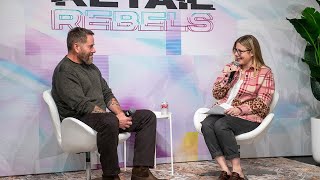
Filson's design leader explains how the 120-year-old Seattle brand stays relevant by sorting products into a DNA framework: 50% core heritage pieces, 30% believable extensions, 10-20% experimental. The company uses storytelling in flagship stores built from historic buildings and collaborates across teams to balance deep tradition with modern appeal.
Chapters
Hi everybody, thanks so much for joining. I'm Kristen Elliott, currently with Filson. We'll tell you a little bit about Filson in a moment. I have 20+ years in apparel retail marketing, and I recently joined Filson where I work with Alex, who will introduce himself in a moment, and I'm really excited to chat with him today because We've known each other for all of 5 months, and so I'm looking forward to learning more about Filson and Alex today.
Thank you, Kristen. Stoked to be here.
So Alex, do you want to— you've been at Filson for 12 years.
Yeah, I started in the summer of 2014.
And do you want to tell everybody a little bit about the Filson brand, those who might not be familiar, and then maybe go into what you were tasked with when you started.
You bet.
So, I mean, Philson has always been in my life or on my radar in one way or another.
I grew up in New England and I had a family member that would leave Boston and go to New Zealand by way of Seattle and would always bring home, you know, these exotic, heavy, stiff, rugged outdoor coats that would live in the mudroom, or these, you know, heavy, rugged tote bags that, you know, my dad would use for tools or whatever was in the barn.
So it was always on my radar, and it was like tougher, meaner, sturdier than the brands we had in the neighborhood, like the L.L. Beans and the Orvises, which were a lot just sort of softer and more approachable. And then, you know, growing up, I ended up in the business in the early '90s, and, you know, working at Ralph Lauren in the early '90s, Filson was always on the concept wall, part of the reference base that a number of companies I worked at would leverage. The company is really interesting. It was founded in the 1890s, in Seattle by a guy named C.C. Filson, and he and his brother started a general store in what's now Pioneer Square in downtown Seattle. And in the 1890s, gold was discovered in the Klondike and in the Yukon, and there were hundreds of thousands of people who would, you know, sort of funnel through Seattle to go up north to do gold mining. So the entrepreneur that he was, C.C. started to fashion folks going into subarctic territories with blankets, camping gear, wool coats, and he was really diligent with getting feedback when people would return. And we're talking like hundreds of thousands of people would use the products and come back to Seattle, and he would improve the quality. Well, the Gold Rush waned, and so dawned the beginning of the forestry industry. And everywhere from Northern California through British Columbia, Filson, the business Filson, was synonymous with jobs relating to the forest industry. And I'm talking, you know, everything from forest surveyors, lumber mills, lumberjacks, prospectors, also federal divisions like the US Forest Service. Filson would outfit the US Forest Service and actually is part of the US Forest Service catalog today, and we make uniforms for the US Forest Service. So for most of the 20th century, Filson was a, was a brand that was synonymous with the woods and the forestry industry, so it was predominantly a workwear brand. We dabbled a little bit with women's product here and there. There were certainly women in the Forest Service, as you know, in the 1930s, 1940s, current day. And the company was purchased by a family in the 1980s. It was privately owned up until then. It was within the Filson family. And we started to realize that a lot of the people who were using Filson products in the outdoors for work also would use it on the weekends and for recreation. So with more intention, we started to make hunting clothes and fishing clothes, and so entered recreation into the portfolio of products. So Filson was not only a workwear brand, now it was an outdoor recreation brand. And then, you know, that continued to grow. And today we think of the business still as a workwear brand, also an outdoor recreation brand, but also a lifestyle brand. The, the company was purchased in 2012, uh, by Tom Kartsotis, founder of Shinola and Fossil, and it was bought and he, uh, started to put together a team to reinvigorate the brand. And I was recruited in 2014. I met Tom in 2013 here down in New York. I was living in Maine at the time. I had just finished a run where I launched a sub-brand for L.L.Bean. Met Tom, had always wanted to get to the Northwest and was really intrigued by the idea of helping to reinvigorate and turbocharge the Filson business from a creative and brand lens. What's also interesting, kind of a fun fact, is since 1897, Filson has always been in business. It's always been in business and it's always been privately held. And today we are, you know, really proud to continue to steward that legacy.
So you head up both design, product design, and creative. How do you make sure that a long-term enduring brand like Filson stays relevant today?
You know, therein lies the rub. So, you know, and I think a lot of heritage brands struggle with this and manage it in very different ways. How does a 100-year-old brand with a pretty hardcore dedicated core customer, how do you protect your existing business retention while also prospecting and onboarding new users and a younger generation? And it requires a lot of subtlety. But, you know, when I, I got to Filson in 2014, you know, I talked to a lot of people in the industry. We did not have a lot of marketing data, and you know, there was certainly an element of gut and instinct in decision-making, but I think the most important thing that I observed was that people loved the brand. You know, it was very— it scored very high marks in —you know, affection, but not relevance.
It was like, "Oh yeah, I love Filson.
I have one of the coats or one of the bags, but I don't really use it. I don't really wear it." So I think, you know, we saw an opportunity to put the defibrillator on this 100-year-old brand and really shake it up and think about ways that we can connect with the grandson, the granddaughters. I think I mentioned that earlier this morning. Making it relevant, connecting with a current user, current generation. I talk a lot about animating and activating the product, whereas prior to, say, you know, 2012, a lot of the product imagery was your traditional catalog-type imagery. It was people PDPs, sketches, laydowns, and we established a photo strategy concept that was intended to take a fairly evergreen static collection that did not have a lot of newness, but sort of reenergize it and reinvigorate it in situ by putting the products into new environments, new situations, younger folks doing things, being rad, in the outdoors, breathing life, and also showing the product in different end uses. So a bag might be on a seaplane with a bush pilot, out on a boat, on a lake, by a campfire, on a snowmobile, in a— on a ranch, So really showing sort of the timelessness of those core products and how they can sort of manifest across a variety of end uses.
To me, that's all components of storytelling, whether it's overt or subtle. Can you talk a little bit about the importance of storytelling within a brand like this?
I think it's huge for a heritage brand. I mean, and I don't know if it just stops with heritage brands, but For Filson, we really wanted to double down on our house and really create a, a strong context. So the products represent a bigger idea.
The products represent a place, a world, a lifestyle, and it was really important to animate that and develop it and bring it to life, not just through film, but also through social, the way we would highlight or feature our Filson community, real people doing real things, people who lived the brand, lived the lifestyle, creating our store spaces. So I was, I think I was at Filson not even 5 or 6 months when I was tasked to concept our 7,000-square-foot flagship store in Seattle. And it was perfect because the building was built in 1907. It was called the Star Manufacturing Building, just south of Seattle. And it was a building that manufactured equipment for the forestry industry.
So think, you know, kind of like an original Stanley type outfit big industrial space. We basically, you know, looked at architecture of like rustic American architecture. We studied the architecture of the national parks. We looked at Seattle, you know, regional craftsman architecture. We looked at industrial architecture and kind of merged all of these elements together to create a unique distinct Filson experience. And, you know, my belief is always, you know, product is king, and everything we do has to have the same level of integrity as the product. And we couldn't find the right rails or the right hangers. Everything had to be created from scratch through a Filson lens. So if you pick up a tin cloth coat or a rugged twill bag, what's the appropriate connective tissue, what's the appropriate rail, what's the appropriate display case. So I think curating, designing, and building all of that to create a unique immersive world was a really integral part of manifesting our storytelling.
And what I hear here is a lot of consistency from the product through to the consumer experience. How do you maintain that consistency, especially on the product side, while still evolving it? So kind of two questions.
Product integrity, how we, you know, sort of what are the rules and regulations and the product filters?
It's kind of part one. Part two is what I think a lot of brands struggle with is the GTM and how do you go from concept to shelf or from, you know, product concept to consumer.
Part one, product.
What we did was really study the sort of original DNA, we had a reference point. So we had historic items, we had vintage items, and there was a common thread, which was, you know, rugged, durable, but also really basic, you know, naive almost, you know, almost like, you know, distinctly naive, almost like folk art. Like I think of, you know, Shaker furniture, its simplicity, has a voice. And so, you know, we looked at the patterns, and we looked at the right angles. And there was just, like, a lot of right angles and threads that today you would say, oh, those are too big, or the SPI is too— you know, you need to add more SPI for cleaner stitching. We kind of codified a lot of that product DNA. And the way our design team works today is, core, believable, outlier. And I'd say, you know, 50% of the products that we make are core or core-esque. And then, you know, about 30%, I'd say it's like believable coming from the house of Filson. And then we test.
And I think that's also really important to just, you know, plan for 10%, 8% of your product portfolio to test concepts.
But, you know, simply put, I think that's really helped us.
Also, when I got to Filson, we were bags and outerwear and men's only. So the really fun exercise was, how do we—
and it was a men's only brand back in 2014. So it was like, how do we expand on his closet? How do we bring this user into our world more frequently? And what is the perfect Filson t-shirt? What is the perfect Filson accessory? The headwear, the woven shirt. We grew fivefold in four years just by holding on to the product DNA, which had so much equity, and expanding upon it in a very believable and natural way. And there were certainly a couple outliers. We tried some wacky stuff, but for the most part, everything got a green light. And I think that's really where our— today, 10 years later, you know, a lion's share of our business comes from these users that have really come to appreciate that expanded line. Now, GTM is also interesting because I'm in a unique position where not only do I get to work on the product teams, or let's just say I'm immersed in the product side of the business. So at ideation, I have an idea of the end user and the end use and what these products are intended for: outdoor recreation, workwear, or lifestyle. Is he gonna be sitting around in a lodge with a nice sweater having a whiskey, or is he out chopping wood, or is he out snowmobiling? So So that connectivity to the product output, the product end use, we can sort of naturally manifest with a creative team who's sitting over here, with whom I can discuss the product briefs as we sit with marketing and as we think about how to bring it to life.
So I think that's a really unique position. Not a lot of companies have somebody who gets to create the product and then see its journey all the way through to what the consumer experiences on the creative side. What advice do you have for other brands that are looking to do that level of authentic storytelling or creation that maybe aren't set up that way?
Knock down the silos. Make sure that the product turnovers, you know, I think simply put, there's not enough value in getting one conversation between creative, production, marketing, and product design. And I know, you know, 'cause I've seen it, product briefs, you know, briefs can become diluted. There's the game of telephone. So I would urge, you know, within your go-to-market calendar, Make sure you have enough airtime with product briefings, handover meetings, turnover meetings. Make sure that the product team has a voice. And that—
and I'm talking from concept all the way through to product development. People who really understand the product. Make sure that the creative and the marketing teams are really tuned into what those original concepts are. And that way, the customer will—
it will yield the purest experience and intent of that product to your customer.
I was talking to somebody earlier about the kind of non-sexy parts of what we do, and oftentimes in marketing, which is building the process for creative or other departments to follow in that regard. But it really lays the foundation to be able to think think further and faster about the fun stuff. And I think that you are really laying that foundation for the teams at Filson, and it's really helpful. What do you think are some constraints of heritage brands today? Because you've worked on a number of heritage brands, and some doing well, some trying to find their way. What do you think the constraints are and how to get around them?
Before I answer that, I think it's taken me half a century to understand and appreciate the value of your internal operational acumen. And as a, quote, creative person, more now than ever do I understand that the vision from design, concept design, is only made possible when your operational function is tight. And again, I think it's really about establishing an operational function which really connects to the concept and connects to creative in order to manifest the output correctly. It's really challenging. So I hope you all have very strong operational folks in your respective businesses. Heritage brand made relevant. I mean, we could talk all day about that. There's so many examples of that. I mean, and, you know, it goes from, you know, your sort of like local outfitter store that's been around forever and how they modernize to, you know, antique luxury brands in Paris who hire, you know, JW Anderson. So I think there's many ways that we can consider updating and making relevant heritage brands. You know, for us, I think it was a matter of getting the product right, so having the right product, and then just really animating that right product in an aspirational way. And being really consistent. You have to know what you stand for, and you have to be fiercely protective of those attributes. Quality is something that we have just been unapologetic about. Price, unapologetic. You get what you pay for. You know, I was in a store yesterday and Saw Jacket, beloved, you know, household name. And I was just, you know, it cost 5 times the cost of a Filson jacket. Okay, maybe 3 times, but the quality was inferior. You know, I think we have really excellent quality. Know what you stand for. But again, I think it's really case by case, and it's really exciting to see the way brands are choosing to reinvigorate, and it's not always successful.
Yeah, it definitely takes a commitment to the heritage and a commitment to preserving that as you move forward. I want to commend people for giving us some questions from the audience. Thank you, keep them coming. Another thing that we are unapologetic about at Filson is one of the questions: Is made in the USA part of Filson's ethos?
So our number one selling coat, which is the Mackinac Wool Cruiser, it was patented in 1914. It was made for forestry—
forest surveyors. It's our number one selling coat. We produce it at 1741 First Avenue South at our headquarters. We have a manufacturing floor beneath the 7,000-square-foot manufacturer— uh, retail space. So we make, you know, we make products that are part of our Mackinac wool capsule. We produce our bags in the US. So there's a number of core, some of our most successful core products are still produced in the US. That said, you know, personally, I have a fundamental belief that quality does not know national boundaries, and you can buy and produce beautiful things all around the world. I've had the benefit of traveling to many continents, getting into factories, and just seeing really, really beautiful work. So, you know, again, I think our sourcing philosophy is really predicated by quality, know-how, expertise, and I continue to be amazed at, the skills of craftsmen and makers and producers that we're able to work with across many different categories, both domestically and globally.
Another piece of that is the experience itself that we keep coming back to. And as you mentioned, the factory that is below our sales floor is open to consumers to come tour. So there's also a transparency there with how goods are made. Made, which again takes a commitment all the way up and down the ladder to make that available to consumers in the way that it is. Some other good ones coming through here. And then I want to ask you about building teams. But first, what sells now? Is it the core stuff? Is it experimental stuff? Where do we see people buying?
Um, we're in a fortunate position where the hardest job today, and I think I can speak on behalf of the merchandising team, is what not to do. Uh, we've been fortunate in getting— being granted a green light by our consumers, our customers new and old, for a lot of different product concepts. Core products, home and camp blankets, pet coffee mugs, women's product, hardcore workwear stuff, luxurious moleskin shirts. You know, people seem to love our product. It's really the art now of planning focusing, understanding the timelines, understanding what the market is able to digest. And, you know, I'd be lying to you if I told you that we did not make some mistakes with being overly zealous, overbuying, spreading our dollars across too many categories. We've become much more disciplined with saying no and editing. So it's really the art of the edit at this point.
I think too, just a real-time example here is we are about to launch a connected TV campaign that has some associated retargeting display with it for my marketing friends out there. And we're testing into sending those people, linking those people to 3 different places within our site so that we can see and test what resonates. Is it going to be bestsellers, things that other people have bought in, in mass that might appeal to a new user? Is it our icons, or is it our homepage where we have some, some relative newness? So that'll be an interesting test, and I think that's another thing that even a heritage brand has to keep doing— testing, learning, never making assumptions that you know your consumer and what they want, but constantly asking the question, what do they want? And looking for that answer. Let's see another one here. Do you have a different narrative for D2C consumers and consumers and multi-brand retailers? I'll jump in and say absolutely not.
Well, with multi-brand retailers, give us more space. I mean, I think we are moving into an era where we are turbocharging Wholesale, we're really excited about it. We are beefing up our wholesale efforts. We are internally putting more focus on selling tools, education, product training. We're very excited to go shoulder to shoulder, fist to fist in a very competitive environment. We believe in our product. But again, I think that the more the better, the more products on your floor, the more comprehensive a product story you'll be able to tell.
And we definitely are developing all those new materials for our wholesale partners from our D2C mother brand. It is all from one place with one voice, and we're being very prescriptive about that to continue that. Can we talk a little bit about building teams that help drive this kind of storytelling, authentic marketing, and creative?
It's the old adage, it takes a village. I think that investing in our teams is our best-spent effort. We have brought in a number of industry professionals. We've also created an excellent environment for new folks who are learning. You know, I think that there's a real catalyst and chemistry with the internal mindset of sort of requiring entrepreneurial thinking within a 120-year-old brand. And that's very unique, and I love that contrast. It's the salt-covered chocolate chip cookie. You know, it's that tension of being really entrepreneurial.
There are no wrong ideas within the construct, within the brand parameters.
That have really made things possible. I know somebody was, you know, we were talking a little bit earlier today about retail, and I think, you know, I'm always so inspired by our retail teams, what they're seeing, you know, on the front lines. We've brought retail folks into corporate. Again, it kind of goes back to that comment about not being overly siloed. I think it's a matter of really being connected to your teams. We don't have private offices. And especially in my sort of funky position where I work with the design team and the creative team, I'm running up and down the stairs all the time. So there's a lot of access. And I think internal communication, I just cannot emphasize that enough. We talk to each other. We text. We are inspired by each other. But again, it's all within sort of the guidelines of getting things done and making sure we're hitting calendar. But it's really the energy. It's the culture. There's a common love for what we're doing. So yeah.
Yeah, you hit on it. That's great. Another one from the audience. How do you approach increasing the perception of value through marketing, I'll say, and creative? And I assume that means kind of with for the price of the clothing, how do we reinforce the value of what we sell?
That's a really interesting conversation because, you know, there are many different types of value and, you know, different types of value perception. We, I don't know if it came out yet or if I just approved it today, but there's a video that's coming out on social, of a rancher, a female rancher, who's been wearing a Filson down cruiser jacket, a tin cloth down-filled parka for 4 years or so. And she's talking through the attributes of the jacket in the cold. I mean, I was there on the shoot in Wyoming. We shoot real people doing real things, testimonials firsthand. But it just really struck me, like, this isn't nonsense. This is for real, you know, and these are real testimonials. Again, I think there are so many ways to articulate the value that the product imbues from a function perspective, a utility perspective. That's almost the easy part. I think the interesting part is how do we sort of educate people or let— or not educate, but, How do we communicate that it also looks good, that it's the right style choice? And that is where the design function, the aesthetics, the ethos has real value and meaning. And how do we show up on an on-body photo shoot? You know, tomorrow I'm here in the city, I'm doing some go-sees. We are very specific with how we cast, how we style, how we outfit. I mean, that in itself is a value proposal. You know, the backdrops we use, it doesn't look canned, it doesn't look, you know, for lack of a better word, cheap. You know, the imagery has quality. It's sort of following that thread of quality all the way through. The sort of expression of the brand and being consistent with it. If you go to our stores, the artwork in our stores is real. You know, the posters that we have hanging that Ansel Adams did for the national parks. I mean, they're like collector's items. We have antique furniture. We have things, you know, it's just—
it's being consistent. Please, please tell the anecdote about the barn wood in the store here in the city. Oh, that's—
it's a really cool thing. So when We were tasked to build a flagship store in New York City. It's off of Union Square. It's kind of across— it's across the street from Paragon. We were struggling with materials, so we ended up buying a barn that was used for cattle that was built in the 1860s in eastern Oregon, and we took it all apart. We sent it to British Columbia. Where it was all sort of tagged and re-engineered and used to build out the entire 2-story space of our store downtown, here in the city. So it's like that authenticity through and through and through and through. And sometimes, you know, people don't know exactly what it is, but they know that they can feel it. They can feel that there's something qualitative to the experience, and it sure as hell is differentiated. So I think that, that differentiation also creates engagement and curiosity.
I think you just answered another question which had come through, which is about how you've mentioned the world of Filson a few times today, and can you elaborate on that? And really, it is at every touchpoint the consumer has, there is consistency and there is investment in that experience.
Yeah, I don't— okay, this is going to be really random, but I was thinking a little bit earlier about my past experiences and things that I've connected with in my career. And I remember early '90s, my first job, you know, I was building furniture outside of Boston and I ended up coming to New York City in the early '90s and working for Creative Services. At Ralph Lauren at 980 Madison. And I don't know, who knows Mary Randolph Carter? She head of advertising at Polo for many years, but she had done a book called American Family Style. And this was in the heyday of Martha Stewart. And she was taking photographs of her, intimate photographs of her home. And there was like spilled sugar on the breakfast table and capturing the reality, you know, capturing the reality of her life was in itself poetry and revolutionary and sort of, you know, it was like a rebel move to sort of pull back the curtain and show her lifestyle the way it truly was and truly is. And I think that it's that detail, it's the sugar that spilled on the kitchen table that we love to sort of celebrate at Filson. It's all of the aspects. It's all of the details. You have to be so detail-oriented. A chain is as strong as its weakest link. So you just have to be really consistent from across the board in, in all details. And again, it's how the e-com experience is. Does it have the same smell, feel, taste as the retail stores, as social? So again, I think that we are pretty good with managing the details, and it truly is the details.
And also, don't be afraid to show the spilt sugar on the breakfast table, to show the messiness of life, because that is in and of itself authentic. Okay, we have 2 minutes left, and I think this last question from the audience is really interesting. With heritage brands, sometimes innovation can be slow. How are you integrating new technologies to amplify your brand, and is there resistance?
Yes, there's resistance because we're humans and humans don't like change. I I go back to that chemistry, that catalyst between being a historic brand, but learning up-to-date tools and technology to help us better tell our stories and expand our capabilities. So two examples real quick.
I know everybody's got AI on the mind.
One of our copywriters, I challenged him to start, you know, using AI because he had a profuse amount of work on his desk. Now he's able to do his current copywriting job, plus can start to grow into product training manuals. He just expanded his role threefold in a matter of months. So I think that's really cool that, you know, through the use of the tool, not being afraid of the tool, he was able to grow his position and his role and his influence. Likewise, in design, you know, people always talk about this tension between design and merchandising and art and culture. I don't really believe that. I believe you just have one product team that can work together. And what I tell our designers is, You know, the better, the more clear your storytelling is for merchandising, the more likely it is to be adopted, right? Like, you've created, you've got an audience. You know, we have our merchandising meetings. Show the whole thing. Show the end use. Show the guy on the snowmobile with the ripped up jeans and the Sorels wearing your brand new coat that you just thought about on your couch on Sunday. And, you know, put it together, or the quality of your turnover to creative. Like, hey, design, if you want better creative, now you can utilize these tools to better communicate that and establish more partnership cross-functionally. So I look at it as an opportunity to create more partnership, singularity of vision, buy-in. I think it's a really exciting time.
I'm so glad you brought up AI because I think if we don't say AI, we get drug out into the, to the alleyway at this conference. Thank you for chatting today. It's been lovely to hear about your experience. Thank you.
And I know there are a couple of questions that we weren't able to hit on time, but we can happily take it offline.










