How GAP is Reinventing Fashion with 3D & AI | PI Apparel
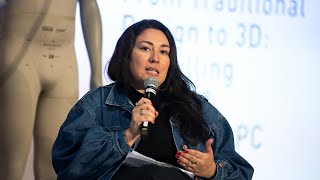
In this fireside chat, Dominik Slaeter (co‑founder of Enhance That) interviews Olivia Sinisgali, Head of Digital Product Creation (DPC) for Gap brand, about the transformation of Gap’s product development through 3D and AI. Olivia explains how her merchandising background informs her DPC leadership, the creation of a unified North Star and agile roadmaps across Gap’s portfolio (Gap, Old Navy, Athleta), and the importance of human‑centric change management. She details the role of "change agents"—trusted peer‑level contributors who champion adoption—and the need for continuous communication, feedback loops, and flexible training (just‑in‑time, office hours, contextual files). The conversation covers vendor upskilling, aligning external partners with the internal roadmap, and the balance between technology foundations (3D) and emerging AI tools. Olivia shares quick wins from early pilots, such as lightweight tech packs that cut design time, and lessons from failed attempts like inadequate training buffers. Looking ahead, she predicts that 3D will remain the technical backbone while AI will augment creativity, with the roadmap staying agile to incorporate new tools without losing focus on the North Star: delivering faster, better products to customers. The discussion underscores that successful DPC at a large retailer hinges less on the technology itself and more on people, processes, and clear, shared vision.
Chapters
Thanks for joining. Nice audience, good crowd. Um, uh, you're here at a fireside chat. There's no fire inside, it's more outside than inside, but we're gonna have a nice conversation. Um, if you look downstairs, there's a lot of amazing technology down here, but what does it take to use all of that amazing technology at a big-size brand like The Gap. And I'm going to have a conversation here with Olivia, Olivia Sinnesgaly. I had to practice a little bit.
You got it.
And we're going to focus on next to technology, what does it take to lead a DPC team today, and I'm super happy that you're here with us to share more about the GAP. My name, by the way, is Dominik Slaeter. I am the co-founder of a company called Enhance That. We help brands to integrate and automate all of their digital tools in a workflow that actually helps them them and their users to save time, clicks, etc. My background is as well in DPC. I worked in different companies: Nike, PVH, M&S. So I know a bit about what you're going through. So yeah, but maybe you can start with how does the DPC team at The Gap look like today?
Sure. So hi everyone, I'm Liv Sinisgali and I am the head of digital product creation for Gap brand. I'm really new to the DPC world. My background, I've spent the past 12 years of my career in merchandising, most of those at the Gap. And I think for me it really brings the background of knowing how an idea ultimately becomes a product through a very commercial mindset. Throughout my merchandising career, I was really interested in operations and efficiencies. And when I looked at when I started as an assistant through my whole career, a lot of what we were doing hadn't changed very much. But then if I looked at my personal life or outside of our retail industry, technology was just going by so quickly and it felt like there was opportunity to bridge those two things together. And so when the role opened, I was really excited to be able to bring my background of knowing the brand, knowing how people worked, the leadership team, but also be able to bring some of my interests outside of retail in to really pull DPC for Gap brand into the forefront.
And Olivia, if I think about my own introduction about DPC, right? I remember it was really amazing to see digital product that never existed physically. How was that for you? Do you remember the first time that you realized, hey, we're talking about a completely different way of making clothing.
Yeah, I mean, it was definitely really eye-opening. I had not had much exposure to it prior to, you know, coming into the role, but I have an amazing team who are true experts, both from inside the company and externally, who were able to give me a crash course. And I think the benefits of DPC and the ROI, you can see, it's so clear how quickly, if you scale correctly, you can just see the benefits for both the brand, the people at the brand, and the efficiencies that it can create for them. And so that was really intriguing to me and very exciting.
Do you still remember the first moment that you saw 3D AI creating product?
Yeah, I think the first image I saw was actually a Gap logo hoodie, which feels very iconic to the brand. But even within AI, I think there's just so much potential and opportunity that we constantly every day are finding new use cases, new ways to work. And so I don't know the exact time I saw AI, but I do remember my first 3D Gap logo hoodie.
So introducing new technology, digital ways of making clothing at the Gap is, I guess, not only about having the right technology, right? But it's also about how do you introduce it? How do you do that? What is your experience there?
Yeah, I think for me, this isn't just about introducing technology. It is really a business transformation and a revolution that needs to happen. You can have the best technology, but if there's not the trust, the building blocks, the support for the people, it will never be successful. And so for me, 3D is this foundation of moving the Gap forward digitally, but it becomes so much more than that when we think about every avenue that we need to touch, whether that be 3D, AI, visual sorting tools, and then just ways of working. Because ultimately, our goal is to get the best product to the customer as quickly as possible. And DPC really allows for that in new ways that we've never had opened or unlocked before.
Yeah. So you're saying it is more than only buying the right technology. It's also about how do you introduce it, how do you— bring it to people, what was the moment that you realized like, hey, we need to, that is an area that we absolutely need to focus on?
Yeah, I think for us to like start, you need a north star that you can clearly communicate to people across all functions and at various different levels. If someone can't tell you why they're going on this transformation, you just can't get it off the ground. There has to be buy-in both at the leadership level and also at the individual contributor level because they're the ones who are actually going to go through the most amount of change. From there, it's really important. We talk about it, my team will laugh. We're constantly referencing the roadmap. And the roadmap is, you know, the start of everything. But with that, it's important to stay really fluid. I think one of the things I've learned through this experience is you can have a game plan, but digital moves so fast and things are constantly changing. And so that roadmap might be 18 months out, but we're constantly seeing, okay, how do we test a new idea? How do we adopt? How do we iterate? What are we learning from that? And then how do you adjust the roadmap in order to make it the most successful. And I think, especially hearing feedback from the teams, like, it's really important to have that open line of communication for them to be able to share, hey, this worked really well. I think this could be a bigger way of working, or this did not go well, and here's why. And then us taking it back to say, okay, what do we need to do differently? How do we need to change? And really making sure that it's adaptable for the teams, because again, you could have the greatest tool in the world if you don't have the right adoption. It will never get off the ground.
Yeah. And I think we all recognize here, and having a roadmap, right, having a North Star makes a lot of sense. And I think we all know that that's what you need. But how to get there? Like, who did you involve in creating that North Star? Did you involve all of the brands or specific functions, levels? How does that work?
Yeah, so we get the benefit of being a portfolio of brands. Having Old Navy and Athleta who are further along on their journey was really helpful. I think my first month— Michael, my counterpart at Old Navy, is in the audience— I was probably Teams messaging him every day about 20 questions. How did you handle this? How are you thinking about this? And having that North Star that we all share in an enterprise is really important. Our brands are different. Our customers are slightly different. But ultimately, we need one way of working with slight adjustments by brand. And so coming together and creating that north star, we all have different backgrounds from our careers and that allowed us to really come together and say, okay, what do we each think it should be? How do we then take the best of all of us to create this vision? And then yes, you absolutely need the leadership buy-in at the highest level to say, this is how we should proceed, this is what it's going to look like in a few years. And then the roadmap becomes, okay, if the vision in 2 years is to be at X, Here's every step that it's going to take to get there. And that becomes really crucial. But again, your roadmap should always stay agile because ultimately, you're going to learn— oh, my mic keeps cutting out— something new every day. And you really just need to be able to adjust to that.
Yeah. And so you're saying you have different brands. Did you develop a different north star and a different roadmap for each? Each of those brands?
So our North Star is the same across all of the brands, which was, you know, a challenge to get to. But I think we all see the end vision of where we want to be. Our roadmaps look very different, and our tests look very different based on the needs of the brand. So, you know, other teams are piloting different areas. We're working on denim and piloting that. So every team is coming, but then we come together quite regularly to share and to really take our learnings and say, here's what's working at this brand. Here's what you can do. Here's what I can share, things we're learning, whether that again be training, videos, testing that we're doing, all of that. And we really have this open dialogue to be able to bring out the best of all of the brands.
And is there some level of— and that almost sounds negative, but is there a level of competition between the brands where they want to— I say it sounds negative, but I think it often works. In your favor, right? Like showing off how far they are, how much they can do. Do you see that? Do you use that?
Yeah, I'm a firm believer that a little healthy competition is good. That's probably my merchant background at heart. But no, I think we all want to ultimately get to the North Star as quickly as possible and not have it be a competition where you're not sharing the information. But of course, I mean, we sit in meetings and you see something your counterpart is presenting and you're blown away on what that other brand could achieve. The immediate follow-up is, how'd you get there? How can I get there very quickly? And so it creates this really healthy dialogue between us to say, how can we just, again, take the best of each other and apply that go forward?
Yeah. If you now overlook this whole process of you entering the DPC space, coming from a merchandise background, what are some of the things that you learned in your role as a— merchandiser that you still use every day? What are some of those insights?
I think the biggest insight is, as a merchandiser, it was described to me a long time ago that you're the center of the wheel. Your job is to help every function get to the end. And that is so valuable in my current role. I'm working with design and tech design, merchandising, visual merchandising, marketing, all of these functions who I had relationships with previously. And now I'm able to— use that network, use those relationships, and really build on it for what we're trying to do and make sure we have their buy-in, that they feel that they have—
I think we have a swap of mics, new mics. Test, test.
Oh, okay, much better. Thank you. And really take those relationships, and that's able to help us move really fast in what we're trying to do and opens up runway to say, you know, you have that trust, you have that belief from people who you've worked with for a really long time, and it really helps the build and the scale fast.
Yeah, so it's your relations with the different roles, but I can also imagine like you working as a merchandiser, and this goes for, for, for anyone in the room, right? Knowing what it takes in a traditional process or in any process to make clothing, to make a collection to sell the product really helps to speak the language, right? And to be able to communicate to all of these levels and functions.
Yeah, absolutely. I have a loud voice.
I'll just—
Yeah, maybe you can use mine. Yeah. No one's ever told me that my voice doesn't carry. So just in case. But no, I think, yes, that is absolutely true of knowing how product is made every step of the P2M. But I've also been very involved in operations even within my merchandising role, and I always had this interest in it. And so being able to know exactly where— exactly what our P2M looks like, every step of the process, what goes into it. I started as an assistant at The Gap, so I really knew what it took to build what the teams were going through. And I think what has also really helped me is I also know where there are a lot of areas for improvement and where places where the teams feel the pain every day, and how can DPC enable that and make things better and create more efficiencies, give them time back to be creative and do the things that they end up being really tactical jobs. How can those be removed and what can we open up the space for to be true creatives in the business?
Yeah. Test, test. No, I'll use this one. Yeah, yeah, yeah. So you're— and this is something that I really I like and I recognize in successful teams implementing, successful DPC teams, is that they're actually showing the value that they are creating. Like, how much is this going to save you? How much time, effort, click? How is this going to make you a better designer or merchandiser or product developer, right? And I think that's where, what the essence is of DPC, right? Showing how you improve their lives. I really like that. One thing I wanted to make a switch to is like where we also started the conversation, right? There's a lot of conversation about technology, 3D, AI, how is that going to work? Maybe even more crazy technology next year when we're here. But in the essence, what I've seen and what I've learned, at least half of it is about human interaction, right? It's not about the great technology that you bring. What are some of these insights that you had in that journey about the importance of that human interaction?
Sure. Can everyone hear me? My parents would be very proud that I can do this. Um, okay, so for me— better. Okay. Um, I think in terms of the importance of the human piece, change is hard and adapting to change can be even harder. Everyone moves at a different pace when they're learning about change. Um, we call it the valley of despair, and some people move through that valley real quick, and some people could spend a long time there, and it's important to understand the differences by person. And I think also what support is needed. So how do you adapt to change management? How do you make sure the leaders are encouraging the change? But then one of the pieces that's been really important and crucial for us is instituting change agents. So those are boots on the ground people on the teams who are experiencing the change with their peers and can be a voice of what's working, what's not working, encouraging them. They are a trusted source on their team that people look to as leaders, even if they're not their manager. And that has been amazing for us to use as a resource for my team in just how do we continue to adapt, what's working, what's not working. And I think, That's really important with any change. It's sunshine, those failures. There's going to be mistakes. There's going to be things you wish you could do differently, and that's okay. But it's really important to acknowledge them because it's very easy to paint a beautiful picture and say everything's perfect when it's not. And that's where the teams don't feel supported and don't feel heard. And that becomes so crucial on the human piece to make sure they feel like we're making change, we're moving in the right direction, and their opinion matters in the building of this huge transformation that we have. —have.
Exactly. Okay, so how does this work, these change agents? Are they— can you share a little bit more about that? Are those people— what kind of background do they have? Do they do next to their full-time job? What, what do people need to be looking for if they want to follow the same concept of introducing change agents?
Sure, so how we went about with our change agents, they're individual contributors on the various cross-functional teams and divisions who were selected by their leaders. So their leaders looked for people who have a positive attitude but are not overly optimistic. They are people who are really trusted amongst their peers and who their, their peers will go to when they have questions or they have frustrations. It's someone who they can trust. And they know has a voice. And I think being selected by their leaders, for those people who have been selected, it's a really great moment for their career to say, you don't have to be a manager, you don't have to have a huge team to make a difference and to be someone who can institute change. And so that's kind of how we've picked them. And then in terms of their commitment, it is just part of their job. It's a low commitment. We provide a lot of support for them, but making sure that they have the resources and tools, that they have the feedback loops to us. They do a 15-minute interview quarterly. They contribute to our quarterly newsletter and really sunshine the wins and, again, the failures. And so that's kind of their role. But it's been really great because, again, having those boots on the ground, people who are living through it, makes a really big difference in getting the total organization on board. Nice, nice.
And if you zoom out, you clearly have a plan. You know where you want to go to. You have a North Star. You have a roadmap. Being in a conference like this, I always like it because you get to see a lot of new things and, you know, of new ideas, new technology, meet up with different people. But there's also a risk of also seeing so many new things that you might derail from your initial focus. And that happens maybe to me, maybe to you, maybe to others. How do you make sure, but this can actually happen to anyone on the floor, right? How do you make sure that your change agents and your whole organization stays focused on that North Star and that roadmap in all of this disruption of new technology, 3D, AI, et cetera?
I think with any change, it's about the context. It's constantly restating, this is our North Star, this is where we want to be. And if that is the focus then, and constantly reiterate it, Bring it back to the front lines. No matter who you're presenting to, whether it be the CEO down to an assistant designer who's getting trained for the first time, everyone needs to be able to repeat the North Star. And the more you drill it in, the more you say it, really clear, becomes really clear on, becomes really clear on what needs to happen. I think that helps a lot, but then And also the goal is to continue to be agile because you're right, technology does change so much. The way we're working changed so much. And honestly, the customer changes so much of what they're looking for, how they're shopping. And that becomes really important in just being open-minded and being able to adjust.
See, from where we are right now, this moment, what's your view in the next year, maximum 2 years, on how all this new technology technology is gonna impact what you do and how you do it? And what do you see as the impact for how your people will do their day-to-day job?
Yeah, I think 3D design to me is the foundation for digital product creation. AI is amazing and will not take away creativity but supercharge it and how we're working, creating again efficiencies, unlocking potential for the teams. But true 3D design still needs to be the foundation. It is the technical pattern of how a garment is made. And so for me, in the next few years, I think it's how do you integrate both of those things together to take the best of both? And when should they sit in the pipeline? Does AI come first and 3D come second? Does it depend on the style, if it's core or complex? All of that are just differences that we'll need to figure out as we go. And I think with AI specifically, technology changes really fast. The best tool today may not be the best tool tomorrow. And it's just constantly, yes, not getting distracted by what's out there, but constantly looking for what's new. Conferences like this are amazing to see the different tools that people are bringing out and what could those do, how could those unlock different ways of working for us and, you know, Again, our number one goal is to get faster for the customer and deliver the best product to the customer. And so if you keep that lens and that's part of our North Star, then it becomes very easy to know what we need to filter in and what maybe just is a distraction and we can pass on.
Yeah. I have one last question and then maybe there's some more questions from the audience. If you look back on the last, 2 years, what is something that stands out for you as an achievement that you're really proud of?
I think for me specifically, for Gap brand, about 2 years ago, we really didn't have a DPC team. Old Navy and Athleta did. But we have quickly built out a full team. We have scaled for our first season very fast. And our summer, we ramp significantly. We've had really easy wins on things that we did not think were going to be part of our roadmap. So again, being that agile and adjust. And then we found things that actually slowed us down a little bit. And so we've removed those, we've pivoted. And I think that's what I'm most proud of is how agile my team is, how quickly they were able to build their themselves up within the organization. And really what we've been able to drive in less than 6 months is pretty incredible. And so I think the next 6 months will be huge for us. And we'll be in a very different spot. But that's what I'm most proud of.
And on these easy wins, is there anything that you think that is worth sharing here with this audience on what they could be looking out for for those easy wins?
Yeah, I think for me, it would be try a lot of different things to see what works best. We had an example in our first pilot season where one of our designers was pretty far behind on her workload. And she ended up submitting a very light tech pack to our vendor for some styles. And what the vendor sent us back was exactly what we wanted. It had all the detail. It took her half the time that it would've taken her had she done a full sketch, full tech pack. And that unlocked a really big opening for us is, okay, this worked. What does scaling it look like and how much time can that save? And does this even impact our 2D world, not just the 3D? What does this mean for the business as a whole? So I think constantly looking at that, try new things. It may work, it may not, and that's okay. But when you find something that works, scale it fast and move fast.
And what were some of the things that you tried and had to throw out?
I think we learned in our first training that we underestimated that everyone, one, shows up on time, and that you definitely need to build a buffer into when you start and when you don't. And then also just people's willingness. We've— some people are really slow adapters, and I think making sure that those people in particular we pay attention to, we make sure that they're hearing the why, their hesitation is heard by us so that we can really try to adjust our training for them. What do they need? And I think curating your training in small groups in contextual to what they do for the business. So if they're kids and baby designer, all of their practice files for 3D should be kids and baby. If they're an adult or women's and they do dresses, then it should be dresses. And really making sure that they see how this is going to impact their day to day, because when they don't, onboarding takes a lot longer.
Thank you. Is— are there any questions from the audience? Oh, yes, we do have them here on the Slido. What role do your manufacturers have in your roadmap for TPC?
A big one. We make sure that our vendors are upskilling and scaling at the same pace and in line with our roadmap. So the categories we're focusing on are the categories they're working to build out. It is imperative that you move at the same pace. And that you're aligned on that roadmap and make adjustments as needed because we need them to operate at the same speed as we are.
What did you give to them for them to follow your guidelines? What do you do to make sure that the product that they are creating is of the right quality, of the right standards?
Yeah, so they have visibility to our roadmap at the division and at the category level. So they're aware. They know how many, give or take, styles a season we will be implementing. And what does that mean then for how many 3D artists they need as well? And then I think additionally is we have a really amazing quality standards manual to say this is what we're looking for that the team built out. It creates a lot of checkpoints to make sure it's all clear. We're working at to the same goal. And that has been very helpful as we've moved forward.
Last question, and I think, what things did you remove from the pain points to make the workflow easier? I like that question.
I think coming from the business, I'm very aware of the calendar, and you cannot have a training during adoption. You really need to cater the training and the meetings around when the teams have the free space in their mind to be able to learn, to be able to have a moment to breathe, because they want to learn. They do, but bandwidth is always a concern in every organization. And so making sure that you're putting things where they make sense, we call it just-in-time training, but also making sure it matches to our calendar and we're not tapping it during the middle of adoption or a style out or meetings that they can't step away from becomes really, really important. What's the average training? Time? It's different by function and by type of training. We say roughly for Clo-set, it's about 3 hours. Clo looks very differently, but how do you do that in stages and make sure you're building towards it? And I think what the team has done an amazing job of is their office hours. So they really make sure is coming outta training, they are available once a week for a few hours. And what we've seen is really some amazing managers in our org send out emails to their entire CFT and say, no meetings during this time. My team will be at office hours. This is a brand initiative. And we see that those people are able to upskill really quickly because they're getting that one-on-one time with our amazing subject matter experts.
Thank you. I think we're out of time, but thank you very much.
Yeah, thank you.










