How Gatorade Built a Data-Driven Sports Hydration Ecosystem
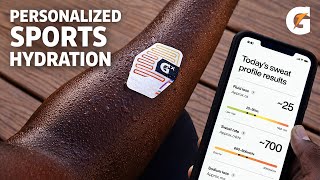
Smart Design helped Gatorade build a data-driven hydration platform by testing wearables like the Sweat Patch and Smart Bottle with athletes from the Brazilian national soccer team to Ironman competitors. Pilots revealed what different athletes needed, driving hardware and app design changes. The GX platform generated roughly $200 million in new revenue.
Chapters
Just want to thank you so much for having me. Special shout out to Natasha and Monica for bringing me into this community. It's really cool just to kind of see, you know, apparel and product innovation and how it's working. As a designer and as an engineer, I'm learning a ton. So please reach out afterwards. You know, I'd love to talk more and more. It's really cool. But so my background is in software and hardware engineering. I've been a software engineer for about 20 years. I've built everything from really large e-commerce platforms to physics engines for, for Sesame Street to the first mobile applications for Citibank and PayPal. But more specifically now, I work a lot more in robotics and IoT systems. And so the two products that I'm going to be showing today are more in line with like developing IoT, machine learning, and AI. And then more recently, just because it's been brought up a lot, I've started working more in autonomous products and not necessarily autonomous vehicles, but things that are going to be interacting with humans that are powered by AI. And we have been using things like NVIDIA's Omniverse and Unreal Engine to kind of do testing algorithms before we bring it into the field. I'm not going to be talking about that today, but I thought it was a cool shout out since it's been brought up so much. I'm a partner at a company called Smart Design. Smart Design has been around for 40 years. We are about 70 people of designers, researchers, strategists, and technologists. We are still founder-led, so we are not owned by a larger company, which gives us a lot of flexibility and We have built a lot of products over the last 40 years. In fact, every single person in this room probably has something that we've designed here or there. As an example, if you have a potato peeler or anything that has a rubber handle, we designed that. Just as an idea. Our studio, we have a brand new studio in the Brooklyn Navy Yard. It's huge. We do events there. It used to be where they used to build ships in World War II. It's also just a great makerspace. We do a lot of physical and electrical prototyping, so we still have a mechanical shop. We have an electrical shop. It's a really great space. So if you're ever in New York, please let me know. I was also— my wedding was here like 2 weeks ago, so you can add that to the space. It's a nice— it's a great wedding venue. Okay, so I'll get quickly through these, and then we can talk about Gatorade. We do 4 things at Smart Design. We do design strategy, a lot of work with large Fortune 100 companies that thinks about like the why and kind of getting to the motion of values of the opportunity areas and the pain points that their customers are feeling. The second is we do what is kind of our bread and butter, which is the design work. So taking those opportunities and then turning it into actionable design, and that could be physical or digital product design. It could also be both, which we're seeing a lot more as of lately. The third one is more tech-developed ventures. And this is something that my team kind of runs, which is it works and operates in two different ways. The first is it could be like working with a startup. And we've been seeing that a lot more recently where, you know, it's a company that is trying to get from maybe A to B. And I'm not talking Series A to Series B, but just trying to get their first product out or maybe their second product out. And they need— in order to do it, they need an industrial designer, they need a mechanical engineer, and they maybe need some software engineers. And so we'll plug in with their teams and kind of get that first product out, and then they'll slowly be absorbed into that team. The other way that we work, and this is much more relevant to what I'm going to be talking about, is larger companies are now wanting to act like startups. And so we deploy a very similar strategy of iterating, failing fast. But within the, in the protection of the brand, like a brand like Gatorade, where we do a lot of like closed piloting where they're able to release something really quickly, kind of understand how well it works, how well it doesn't, and then be able to iterate that without having, you know, any sort of brand blowback. And the last one, which is really new, is we've started deploying like human-centered design and design thinking inside organizations that would like to do it. And so oftentimes we'll work with the company. We even might hire a team. We then train them on design thinking, and then they're able to deploy those strategies internally. Just a few products that Smart Design does over the years, and just to show the large breadth that we do. So we've done innovation strategy with Instagram on understanding preteens. We helped founded the company OXO, and we've built thousands thousands of products for OXO over the years. We took Sephora's Beauty Insider program that was a loyalty program and turned it into a digital community that's been really successful. We've taken companies like Amplifone that is, you know, that is the company Miracle-Ear here and done a lot of business transformation to turn them into a much more digital program. And the last one is Gatorade, and I'm gonna talk a lot about Gatorade, so if we can go into that. OK, so that's enough about Smart. I now want to talk about how we worked with Gatorade to transition them from a traditional food and beverage company to a direct-to-consumer product ecosystem. But first, this kind of begs the question, what does Gatorade have to do with apparel? In short, not really much. Although I will say while working with Under Armour for many years, we deploy a very similar strategy for all our services. So thinking about, you know, it starts with research, it starts with opportunity. Where are the pain points within the product or service? And then kind of developing from there. But more specifically, I would say that brands like Under Armour or any sort of sports apparel and then also sports nutrition They both have very large correlations with sports performance. And so a lot of the things that we learned with Gatorade, we kind of took exemplars for companies like Under Armour or companies like Adidas to innovate within the brand. Okay, so now that I've talked about that, I'm gonna be showing you a small video of where Gatorade GX kind of is in the middle because it's kind of complicated. And then I'll kind of go back to the beginning and showcase how we got there.
Just as athletes never stop pushing to improve their performance, Gatorade never stops working to create superior sports fuel solutions. With the introduction of GX, Gatorade pioneered sports fuel personalization. Now we're using GSSI scientific expertise and our access to top sports teams to take GX to a new level. We've significantly expanded the program, partnering with many of the best teams in the world in the NFL, NBA, G League, global football, and top college programs. After extensive on-the-field testing, we're applying what we've learned to our latest product portfolio. At the pro level, we're launching an improved version of GX with a wide range of formulas and an enhanced digital platform. For the consumer, we're offering GX Pods and bottle customization through e-commerce. We're also working on further enhancements of the GX Sweat Patch, which will allow athletes to unlock their unique sweat profiles to create personalized fuel strategies. There's much more to come.
Oh, I took a sip of water at the wrong time. Okay, so, um, this video is great because you kind of get a breadth of what Gatorade GX was. Um, it's kind of like set right in the middle, which is great because the next thing I'm going to talk about is kind of the pivot to consumers. But the idea is we started with the pros and then we, we worked We worked and transitioned on what we learned there and then moved it into consumer. So we'll start from the very beginning. Gatorade was celebrating its 50-year anniversary. And for those that don't know why Gatorade is named Gatorade, which I didn't know this, which is so obvious, that they're at the University of Florida, they were always getting destroyed in the SEC and a scientist came to the team and said, I have, I have a reason why I think we're doing so poorly. And I've developed a formula that uses not just water but electrolytes and carbs so that they would be hydrated during games. And so that year they actually won the conference. And the reason why it's called Gatorade is the University of Florida is the Florida Gators and the aid was the liquid. And so that's why the company is now called Gatorade. So I didn't know that, but just a fun little anecdote. So anyway, so they're celebrating their first 50 years. And while they dominated the last, the last 50 in market share, they were starting to lose it because, you know, there was a lot of more competitors that were being involved, like Powerade. And they were thinking about what does the next 50 years look like for sports fuel hydration? So it started with a hypothesis— or I'm sorry, it started with a work session. We met with them for I would say 2 to 3 days, and we thought about how can we kind of start this innovation path. And one of the things that we've always noticed as design consultants is that usually when companies try to go through this type of transformation or innovation, they usually spend 3 to 6 months thinking about how to get aligned on like a vision, and they just spend way too much time with it. They either do that or they spend— they take a look at what their competitors do. They look at some trends that are currently happening right now and they kind of put them together. But what comes out of that is a lot more lateral information. And so what we did was we came up with this sort of formula of these 3 variables that would develop a hypothesis. So the first is core strength. What is your brand good at? The second is your brand truth, which is what does your brand stand for? The last one is a macro trend. If you can look at the next 5 to 10 years, where do you see the industry going? Then from there comes a hypothesis. After 3 or 4 days, we were able to come up with this hypothesis, which was every athlete is unique and sports fuel personalization was the future. When you take these 3 variables of Gatorade, of what they're good at, so their core strength is sports fuel production and distribution. Their brand truth was it's used by the pros and backed by science, and their macro trend was personalization. Now, keep in mind this work session was 8 years ago, and so at the time customization was very popular. You can think of companies like products or like Nike ID as an example where you're able to customize a lot of things, but we wanted to see how we could use body— people's own physiology to be able to deliver personalized fuel recommendations. And so we had a lot of ideas on that. So the next is, how do you develop a— how do you— where do you start? So you take the hypothesis, you want to test it with real users, and you want to put them in context, and you develop an experiment. So what we did was we took— maybe based on the hypothesis, we came up with these 10 experiments. And we wanted to think about how difficult each one was. And then we tried to place a bet on like a few different ones. And then, so I'm sorry, I lost my train of thought there. So the things that are great about experiments is they are, you can do them quickly. They're kind of messy. But once you get people in the context for them, You learn a ton, and they never go the way you think. In fact, I've been in a few that have been pretty messy, but you always get some really valuable insights that you'll never learn in a focus group. So we really recommend these experiments. And from here on out, I'm going to call them piloting. And so this is where I'm going to transition from what I would call a business case into how to create just a really successful pilot. This is the first one that we ever did with Gatorade. When we initially said we would love to test like these personalized fuel recommendations, they said, great, we have a perfect team to do this. We're going to do it with the Brazilian national team at the World Cup, which we were like, I was hoping for like some high school kids, but yeah, let's, let's do it with them. And so we developed this sort of playbook that we now deploy with every single pilot or experiment that we do from here on out. So the first is to test the hypothesis with real users, which is what you see with the Brazilian national team. Developing a working experience that focuses on the innovation specifically. So don't spend a lot of time developing out like what would be a full product experience. You can actually do that, a lot of, a lot of that work behind the scenes and just focus really in on the innovation to see how it reflects with their users. The third is create prototypes for design and technology goals. And the last one is piloting is a great way to collect diverse data. The reason why I put these two things together is that both of the products we're showing is going to be with machine learning and AI. And the ability of being able to use this with people is just a fantastic way to collect diverse data. The problem is that usually experience prototypes are really bad at collecting data. And so usually what we want to do is we want to have one that's testing the experience of how it would work in the real world. So that we can see how well it's designed. And then we also develop a prototype that just collects data that can be really good at it and efficient. So those are the two. So I'm now going to take you to two case studies that we worked on. The first is the Gatorade sweat patch, and the both is— the second one is the smart bottle. Both are very data-driven. And so piloting them was incredibly necessary for us to train our AI models. Okay, so the first is the sweat patch. The sweat patch, the way it works is Gatorade has been test— sweat testing athletes for years. In fact, when we started working with the pros, they would deploy their sports scientists to a practice facility and they would test all of the athletes in a lab. The problem is, at a consumer level, we knew that we weren't going to be able to bring all the consumers into a lab to— in order to test them. And so we needed to basically replace the lab with a physical product. And so after a few iterations, we designed this patch. It's a really lightweight wearable. You wear it on your arm. You then perform an activity. Let's say you go for a 5-mile run. Once you're done with that run, you'll see that these two channels fill up. The first one is— the one with the squiggly line is a fluid channel. So that's the amount that you sweat. And then the colored line right here is the composition of your sweat, which is made by a chemical reaction that's based on your sweat and lactic acid. And that is able to tell how much sodium is in your sweat. So once we have those two elements, we use computer vision to take that information off the patch and then turn that into data points. And you use those data points along with some activity information, you know, the weather, how long you're working out, and then also something about yourself, your age, your weight, your height, and you're able to create this sweat profile that tells you exactly what you sweat based on your own body's physiology. So we had to do a ton of different pilots in order to do this. One to obviously what I've talked about before, collect diverse data, but then the other piece from an experience standpoint, it was just a great way to test it in a lot of different types of environments. So I'm gonna show you a video right now of one of these pilots that we did in Kona at an Ironman, which was pretty cool, which I actually did not get to go to. Oh wait, sorry. I have one more slide. So the important thing about collecting sweat or doing an IoT product where the backbone of it is a sweat profile or is sweat is that it's really hard to find that type of data. It's not like I can go to a public database and be able to pull down a bunch of sweat information and be able to create some machine learning models. We had to get that information itself. And so we developed these pilots in order to collect this sweat data. Okay, and now I'm gonna show you the triathlon one.
Gatorade has been sweat testing athletes for years. There's something magical when you look down on your arm and you see your actual sweat filling the patch. You know it's working, you know you're sweating, and you know at the end of your activity you're going to better understand your own physiology and your own hydration needs.
We're here in Kona, Hawaii, where some of the best triathletes in the world come to compete in Ironman World Championship. This race is known to be one of the hardest in the world because the conditions can be really extreme. Dream. For the past 5 years, our colleagues at GSSI have been giving an immense level of athlete service to a select number of athletes on the island. We took 50 triathletes and showcased them this new technology, giving them an inside look of what they can do at home.
¡Hola!
Gatorade has been sweat testing athletes for years. Now that we have a sweat patch, we can bring that service to any athlete who wants to better understand how much they sweat and what type of sweat how sweaty they are, which allows us to make recommendations that they can use to better improve and optimize their hydration. One of the things we're most excited about is how easy the patch is to use. All an athlete needs to do is apply it before their workout, they go sweat, they come back, they finish their workout, they take a picture, that unlocks the results.
It's been incredible to interact with these athletes as they experience the Sweat Patch, and we look forward to bringing it to many more in 2020.
Cool. Okay. So yeah, that was the Kona pilot, but we did, I don't know, between 12 and 15 pilots that really kind of did a bunch of different experiences. So everything from triathletes to high school athletes, which is being shown right now, which is a little bit earlier in the pilot process. But like I said before, it was a fantastic way to collect diverse data. One of the things that we learned really early on is that we did quantitative analysis on where does Gatorade want to place a bet on who would actually value this. And a lot of it was gym goers. And so when we tested the patch initially in pilots with gym goers, more like, let's say, like CrossFit athletes, it wouldn't work fast enough. What we ended up having to do is go back and work on the patch so it worked a little bit quicker so that it was able to be used with those gym athletes because it wasn't working 30% of the time. If we didn't pilot it with the gym athletes, we wouldn't know that until afterwards, which would have been a huge disaster for Gatorade. The third is Gatorade was seen as a brand that cares more about science that provided emotional— educational moments and then opened the door to cohorts that typically are not a fan of Gatorade. This is super specific to the triathletes, which if you can imagine triathletes, Ironman, people that run marathons, they care a lot about what goes in their body. And they looked at Gatorade as a brand that they no longer had trusted or they see it as the drink that you get at 7-Eleven when you're hungover. And so after we did the experience with the sweat patch at Kona, what they saw was that they saw Gatorade as a scientific brand and no longer as the one that they had this idea about, which is really interesting and almost reintroduced them as a new way into the brand, which now Gatorade is thinking about, all right, now how can we— if we actually are more science-focused, we might be able to reach endurance and forever athletes a lot better. Again, something that we learned through piloting, which was really cool. So the patch was launched. It was launched like 4 or 5 years ago. It was kind of the Trojan horse of the entire GX platform because we couldn't design product— personalized product fuel recommendations without this patch that was basically the lab. And so since then, we've been able to build on this portfolio with it. In addition, it won a bunch of innovation awards at South by Southwest and CES. So it was a great success and I was really proud to work on it. The next is the Gatorade Smart Bottle. This one's kind of my baby because I worked on it for a very long time. The way the bottle works, it's pretty simple. So once you have a personalized fluid recommendation, you need to be able to track it, right? And so this bottle is a smart bottle and this information gets beamed down to the bottle itself. And is then able to allow athletes to be able to not only track their recommendation, but also be able to pace it through these LEDs. The other interesting thing about this is that, you know, at practices and at games, you're not allowed to bring your phone to track. So we had to almost like sneak in this information. So this was like a perfect way to do that into games. And like I said before, we developed the SmartCap for a very long time. We worked on it with the pros, we worked on it with college athletes, and we worked on it with consumers. And the thing that was the most challenging about it was that within each one of those cohorts, they almost wanted like very separate things. So if you think about it like at the pro level, they wanted it to be incredibly scientifically accurate. They wanted the raw data because they have sports scientists on staff that know what to do with that information. And it goes right to the coaches and not the players. And then you think of the college athletes, it's kind of similar to the pros where they have people on staff, but there's not as many. You know, a lot of the sports nutrition people work on multiple different sports, so they don't have the, you know, the type of infrastructure the pros do. So a lot of it goes on the coaches, but then they give educational moments to their athletes. And then the consumer athletes, the information is going directly to them. And so a lot of the information that we're giving to the pros wasn't nearly as necessary to the consumers. And so we knew that we had to pilot these things to kind of understand the nuances between them. And so this next video I'm going to show is one that we did with college athletes, which I thought was like the most interesting cohort because they were so specific on their sports fuel hydration. But then on like Friday nights, like the kids would eat whatever they want. And so it was a really cool like way to kind of understand these athletes.
Yeah, we're excited to be at the Michael Johnson Performance Center here in Texas. Uh, we're spending the week piloting the new GX Smart Bottle, really understanding how it's functioning and how it's working with the athletes to help improve their performance and hydration habits. It's a new smart bottle that we're developing, and what it does is it works along with the GX app to actively track your hydration throughout the day. It'll tell you how much you need to be drinking during your workouts, after your workouts, and throughout the day to stay hydrated. The technology behind this bottle is just something that I think a lot of people have never really witnessed. It helps me kind of be able to understand where I'm at in my hydration and understand how much more fluids I need to push during workouts, and I think it's an awesome idea. I think it gives me an edge to where I know where I'm at during the day. I think it's going to be a really good product for Gatorade, and I really I believe people are going to really, really like this. We want to continue to develop that, continue to push more athlete intelligence, help them train better, help them perform better, and really help them maximize their potential.
I'm going to go a little off script here because I want to hit on something that I talked about before, which is designing specifically for, for your innovation. So when you saw those athletes interacting with the app that was connected to the bottles, instead of building out an entire application where there's like an onboarding, how users get on and how we like store their information, we just said— we just asked Gatorade to get the names of the people, their age, their weight, and all the things that was required. And then we just threw it in a database. And so we spent a lot less time like building out an entire app experience. And the only thing that we really focused on was how they're going to interact with the app, the bottle, and how those things work together. Because it was really the only important part that we cared about. We knew that we would be able to do the other pieces. OK, so what did we learn from this pilot? Well, the first is an educational moment of everyday hydration and training recommendations. So what we learned with consumer athletes that was different from pro athletes was that the pro athletes cared a lot about the raw data. The problem is if we gave that raw data to the consumers, it would completely make their head spin. It really, it wouldn't really be actionable. We tried a lot of data viz stuff, but what we realized was that they didn't really know what to do with that information. And so instead of going from like database solutions, we worked more towards like educational and insight-based ones, which ended up being like super important because a lot of that information, a lot of people don't know about, like everything from pre-hydration, like it's actually more important that you drink water before you do an activity than the, the what you drink during. And then also about recovery, what everyday hydration does to your body and how it actually prevents injury. All these types of insights were really valuable that didn't have to be like proposed from like a data perspective. The second one was that tracking technology had many use to overcome for accuracy. So when we designed the one for the pros, because it had to be scientifically accurate, The bottle itself had an accelerometer in it and a gyro. It had a way where it used pressure to understand how much liquid was leaving the bottle. It had lasers in it. It was incredibly complicated, but it was also incredibly expensive. So there was no real way for us to kind of like pivot that to a consumer because no kid is going to buy a $500 bottle for Gatorade. So on the, on the flip side, though, learning that it was more insight driven, The bottle itself didn't need— for the consumers, didn't need to be nearly as accurate to be valuable to the consumer. And so what we ended up doing was we designed a really simple system for the consumer that just used a laser that would bounce off the fluid. We'd be able to track it. It was accurate enough, but still provided a lot of value to the consumers. The third was— and this was like one that was so specific to piloting— is hydration pacing was gamified through the LEDs. So every time that I would go to the pilots, especially with the high school kids, I would be watching them like on the, on, on the bench and they would be looking at their bottles and they would be showing like their friends and they'd be drinking it and then looking at it again. And then, and the cool moment with that is like, yes, you're tricking them a little bit into being excited about LEDs and how they move, but it did kind of create a little bit of behavior change. And so if you can kind of get them in the front door, with a bit of gamification, that's a great thing. And so that was something— that was a cool thing to learn. Now, on the flip side, the coaches were then watching those kids and being like, this is incredibly distracting. I really don't want these happening during games because they want to be really focused. And so at the very end, we ended up building what was called a game mode so that it would actually shut off the LEDs during games so that kids could focus on what was important during the game while still maintaining tracking. So this— the Gatorade bottle launched a couple of years ago. It's kind of the last vessel of the entire GX platform. And the tracking system was so successful that it is now being deployed in a bunch of new Gatorade products. That are being worked on right now. And personally, I'm from Massachusetts, and seeing Jason Tatum wear or use a smart bottle, I almost started crying. And I actually took this screenshot from like a TV that I saw. Okay, so I wanna just talk a little bit about the business impact for this, and I'll get out of your way. So the first piece, which is something that I didn't talk about in the very beginning, was that Gatorade made a very strategic decision that led to a lot of cool organic marketing. So a lot of times when people go through or companies go through R&D, they usually do a lot of it in private. And what Gatorade did was they decided they were gonna do everything in public and they're gonna bring all of the marketing and the press in on this experience and this transformation that Gatorade was doing. So every single time that we perform a pilot, Every few months or 6 months, 12 months, we would do a marketing activation where we'd bring in people like from Fast Company or people like from Engadget to try the entire system. Usually it would be at marketing activations like at the Super Bowl or the NBA All-Star Game. But what it did was create a bunch of like organic marketing where these people would write about, you know, what Gatorade was doing. It saw Gatorade as an innovation brand, innovative brand. Then also, it allowed Gatorade to spend marketing dollars on innovation and then get a return on investment by doing it publicly, which was really great. Since the Gatorade GX platform was launched, it has created $200 million in new net revenue because it was the first direct-to-consumer play that Gatorade had made since being a business. The last piece is that personalization became a major trend. The Gatorade Smart bottle and the sweat patch were kind of like key components to everything. The one, the personalized equipment was the first thing that was launched with the pods, but they're continually innovating in this space, and it has been like kind of a cornerstone or a success story in ecosystem personalization. That's it. Thank you.










