How Overseas Offices can Support Global Brands | KIABI | PI Apparel
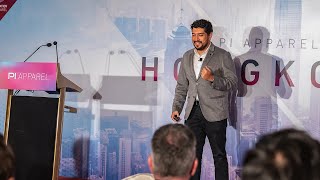
In this presentation, the speaker—an experienced professional who moved from a New York office to Hong Kong and has overseen multiple acquisitions—offers a high‑level overview of how overseas offices can evolve to better support global fashion brands in a post‑COVID, volatile trade environment. He first outlines three historical phases of global sourcing: (1) the 1980‑1993 price‑driven shift of manufacturing to low‑cost Asian countries; (2) the 1993‑2015 era of systematization, compliance, and quality‑focused “checker” roles as Asian production matured; and (3) the recent COVID‑driven disruption that exposed fragile supplier relationships and triggered a loss of trust. He then highlights current macro‑risks—trade wars, pandemic‑related shocks, shipping volatility—and cites a McKinsey survey showing that 75 % of fashion leaders are reconsidering near‑shoring and are looking for faster product cycles, more responsive inventory (read‑and‑react), or continuous stock availability. From this context, the speaker proposes a set of strategic functions for overseas offices: (a) leading a proactive fabric strategy that includes traceability, eco‑textiles, and circular‑fashion initiatives; (b) driving virtual sampling and 3D design workflows, building digital twin capabilities, and establishing collaborative platforms rather than merely pushing software to suppliers; (c) bringing design closer to production by creating creative‑friendly environments, breaking silos between design, merchandising, and sourcing, and enabling year‑round small‑batch releases; (d) fostering internal and external partnerships to break down isolated “merchandising bubbles,” up‑skilling and reskilling staff for new digital tools, and redefining the office’s role from a compliance checker to a value‑adding partner. He stresses that sustainability and transparency must be owned by the overseas office, not outsourced to governments or suppliers. The talk concludes with a call for collective action, acknowledging shared challenges across brands and inviting questions, but no specific Q&A follows.
Chapters
I appreciate you guys coming to this conversation. So I'm not here to give any answers, sadly. I'm just here to give a little bit of information on what is happening, what is the research saying, where are the trends going, and for you to make your own decision. And the question, how this all an overseas office, and I guess most of you working in an overseas office, what can we do to support global brands? So, first of all, who am I, right? So, why should you listen to me? Yeah, why should you? One of the— when I came here to Hong Kong, I came here from the New York office. So when I started, I was, you know, young person working in our exciting New York office, working with designers, working with sales. Planning, and understanding how that side of the world works. Then, like a lot of people, I came here for a short assignment, and that was 10 years ago. So I came here for 8 months for an assignment to how we can work from, in terms of processes and systems, with our overseas offices. And I was with a company that was famous for just buying companies. So once I came here, we were buying companies all the time. We had a new acquisition, so I had to go in and I will travel and I will visit what was their setup, how they were managing their overseas offices, how they were structured, and say, okay guys, we need to structure this, we need to look at the process, we need to see how we're going to work with the— now that we acquired you. The context of this. So first, if I see how currently we have all these changes, and we talked a little bit in the first session that we are just so full of change coming from all side. We have crisis in Asia, we are coming out of it, and there's disruptions in Europe. So the questions that all of these managers and global brands are asking is how they are going to structure their teams globally. What is this gonna mean for the future? So for this, I do think it's very important to understand first how we got into this place. Why are we here? Why are we— I mean, I know that from some of you that are from Hong Kong, you're because you were born here. But some of us, we came from abroad and all of a sudden we're in this industry and Hong Kong became a place overseas offices are a thing. So I put a chart here and just to understand that, and by TCLF, you know, means clothing, leather, footwear industries. So this is what I called Phase 1, you know, from 1980 to 1993. So what happened? All of a sudden, all the manufacturing and all these roles were moving to Asia. So, and we see where they are coming from. They are coming from Finland, Sweden, Norway, Austria. And where is it growing? It's growing in China, in Mexico, Malaysia, Jamaica. So all these roles are moving to countries that are cheaper. So what was the motivation then? Why are we moving to these countries? Because it's cheaper. Because it's a lot more informal and we can do a lot more and also, One of the things that I was doing during COVID I guess we all did side projects, I started a podcast. So, and one of my guests told me that one of the reasons also that we cannot forget why companies started moving abroad is also because they could get away with a lot of things. There is a lot of restrictions in the US, in Europe, and all of a sudden we're coming to Asia, and all of a sudden the restrictions are not there. We can get a lot, we can get with many things, and during this time, sadly, a lot of things happened that tainted the industry and that shaped the next stage because a lot of things were out of control and the focus was on cost. So we move to the next part, and all of a sudden, China develops, system develops, and then we see a huge, a huge push to start developing on this side of the world. Now we have new players. We have the Vietnams. We have the Malaysias, the Thailands, the Myanmars. And now the focus is after whatever happened in the previous phase when it was just price-driven, it's very informal. Now we have systems. Now we have more accountability. So what is the role of the overseas offices is making sure people are compliant, that the quality is there, that the quantities are there, and now we became checkers. We are checking that people in the production side are doing what they were supposed to do, that we don't get fined, that we get quality product, that the systems are okay, and that implementation is happening as expected. So interestingly enough, if we see here that it peaked in 2015. Then what happened? The trade wars happened. So then, as sourcing managers, I'm guessing all of us, we, well, I'm not a sourcing manager myself, but we were all involved in the process of like, okay, where do we go now? We need to be more flexible. We need to be prepared for it. So that added another layer of our job because now we don't only have to make sure that someone else is doing the job in the production countries, we also have to be ready for all these really short notice, maybe a tweet, maybe something else that will change the landscape of how we're sourcing or how we have to be prepared. I remember I was just coming to work as usual and then one day he's like, Someone came running and was like, "Trump just tweeted we have to move our footwear out of China." So then we have to start preparing other options. We start to travel to other places, prepare different countries, alternatives. So all of a sudden, the role of the overseas office now becomes more complex and it needs to be, have certain expertise, certain knowledge of understanding where can I source a product? I need to know not just the location, need to find a good supplier and build a partnership with it. So we see that the evolution went from we just want to make product cheap and we want to do it fast to we need to bring systems to have some visibility because things are out of control to now because we have all these very long supply chains, whatever disruption may happen in the way could be catastrophic. So then we go to stage 3, which happens, which we're just coming from. And it took me a little while to find the right picture for this because there are, I guess, many, many images that are representative of the COVID period. I guess, I mean, and keeping it within the industry, I think one of the things that broke a lot of people emotionally was that all of a sudden, all these relationships that you were building with your suppliers, all those chains that you were building were disrupted. It could be because of a container, it could be because the stores are closed, and now you have to, you have all these products in warehouses, now you have to cancel your production, or now you just lost your job. Why do I put that image? Because it reminds me of a couple of friends that I met during those days. They were crying. They were crying and I wanted to know what happened. And they were saying, well, we just built this relationship with these suppliers in Bangladesh and we've been working with them for years and all of a sudden I get— I have to tell them that my customer doesn't want to pay them. So basically they have to stop the production or whatever they bought, we're just not going to pay for it. So basically all these conversations about how are we going to build partnerships, how are we going to be more efficient, none of them matter because everything was disrupted and now that is breaking the trust. Everything that we built to move from everything is informal, we do what we can because it's cheap. Now we're back to square one. We lost the trust of our suppliers. The suppliers, there were massive protests because especially in places like Bangladesh that were getting, they were investing so much and all of a sudden they were not paid back. So that is the context. So what happens now? You are sourcing manager in Asia, you are the person responsible for a brand in New York, in Europe. And now you have questions. What should we do? What are we going to focus now? Because should we keep our supply chain as wide and as long as it was, knowing all the possible risks? And this is research from McKinsey, so this is, I'm literally just giving the news. I didn't do this research. But we can see that when they asked all these leaders, about what are the big risks. Obviously, there's shipping disruptions, there is the volatility, there's obviously the pandemic. So there's a lot of concerns of how are we going to manage this in the future when anything can go wrong? So how are they planning to, so how are you going to address it? And number 1 on the chart on your left, it says the role of our sourcing offices. So all these people are looking at this situation, looking at their supply chains, looking at the relationships sometimes that they had with suppliers and saying, okay, we need to relook at the way we're working today. We need to rethink our roles, we need to rethink the roles of the overseas offices, and we need to change the way we're working. So that was the context. What can we do? So I find it very interesting that we have this opportunity to be here because more than just coming to a presentation or just to have some lunch or to say that you're in the Shangri-La is to be able to finally talk to other people in the industry and see how we are dealing with this post-COVID, post-pandemic situation. It's also assuring to know that we're all struggling in similar areas. So I understand that, and it was also in this McKinsey survey, is that if 75% of the leaders of these fashion companies are reconsidering the nearshoring, we're talking about what is the role of the overseas office. So then the question is, okay, so what do I do? Back to the first question, what about me? What's in it for me? What should I do? So luckily for me, because I had the same question, in the same report from McKinsey, they are saying how these leaders are planning to solve this problem or to tackle it. And then we can see that there is like 4 options. It says fast-track product, and that's, A big increase. So I guess it's no surprise for us that most brands, most retailers, they want to have a fast-track product. We cannot live anymore with our 12 months, 9 months development plan because if something goes wrong, it goes really wrong. Second option is to read and react. So we need to be more careful as well with our quantities. We need to be careful with how much we place. Again, there are other concerns as well about sustainability and carbon footprint and all of that. Number 3 is, let me read it, normal seasonal calendar, which is keeping on our 9 months, 12 months. And most of them, what are they saying? Remain the same. They're not planning to touch it. If anything, mostly to reduce it. And another option is they're never out of stock. Also, how do we keep consistently products going to the stores, to our web? How do we keep this constant flow of products to our stores? So that's the challenge. Okay, so we know what the problem is. We know what the leaders of most of the brands want to do. Okay, so how do we bring it to us? First, there's one big factor, and I guess it was discussed in a few sessions today, which is the fabric strategy. Because yeah, there are all the regulations that are coming and looking into traceability and having more understanding of fabrics, where they are sourced. But that is a role that belongs to us, the overseas offices. We need to come up, we need to have the initiative to start looking at solutions and alternatives, and I'm gonna expand a little bit on what we can do in that area, but that is definitely something that happens on this side of the world. Virtual sampling is another solution. Again, this is all coming from this paper, so I'm just the biggest hack here. I'm just taking information from somewhere else. But virtual sampling and in all of its ways, again, also a very big topic that we have discussed today in different ways. In this room maybe or in this event, there's a lot of people offering different solutions in this area. And again, this is not something that we should just let someone else do. This is something that the overseas offices should be a part of. So then another part is we're saying we wanna keep having a constant flow of products. If you want to have never out of stock, then we need to have design near production. We need to, and this is where I'm trying to link it with what I was talking about the context. Because for some reason it's inherited and it's coming from the first phase, which is okay, design is happening in whatever your brand or your retailer is, and then you have merchandising and merchandising, they shouldn't be, they are just there to look at details, to pass papers. and that configuration doesn't work anymore. It means that how we as overseas offices can support design activities and to bring it closer to production. And lastly, partnerships. And again, this is all coming from how they are planning to tackle these issues. And of course, we cannot do it if we're still working with silos. If we still think that, okay, the design office doing on their own, The suppliers are here, and I'm just here working on my own little merchandising bubble, that's not gonna cut it for the challenges of the future. We need to start looking into partnerships, and it could be an internal partnership with a team that you have never talked to. You think, oh, well, I'm working overseas. I have nothing to do with the designer. I have nothing to do with the people at planning. But because we are used to these silos where You're just coming here to make sure that the factories are doing what they should do and that's it. But that's not what we should do in the future. So, Fabric, again, I'm not an expert and we have actually a few experts in this event, so I encourage you to seek for more information. But the big trends, and again, I took this picture from an article in Vogue and I really loved it. Because we all have these questions now about what can we do with fabric, what can we do with the amount of just waste that the industry generates. So we just had a conversation here, a panel about how effective are these sustainable brands, and I love that someone gave an example of the food industry because I think that that's really what we can expect. We have to learn from other industries, from other experiences. So what happens with the food industry? Before, people could even say— advertisements from the '30s, you see that Coca-Cola or Pepsi, was it, that was recommended by doctors? You can just put it on an advertisement. There was no regulations. It was totally fine. All of a sudden then, we started regulating and saying, hey, you need to put what really it is made of and you cannot claim that it does The product does things that it doesn't do. Okay, then later what happens becomes the awareness of the customer and then, like the example you were saying, you're looking for a healthier option. The customer is looking for a healthier option between all these different brands competing for my attention. I'm gonna choose the one that says light or I'm gonna choose the one that says nonfat. But then what happened, that was not regulated so then we come up with all these terms like free range, hand-picked, or whatever it was that really didn't mean much back in the beginning. You could just put whatever label you wanted on a product and then you as a customer, you think that, okay, this is the healthier option because it has no sugar or because it says that it's free range or it says that it was made in a farm. This is good. So then that got regulated. You cannot just claim these things and you need to prove, there are certifications. So now the food industry is, they are the ones leading the pace in traceability and knowing where things were made and not just putting labels out there. So we can learn from that. We need to start building the infrastructure to have the visibility to be able to communicate with our customer what is it that they are buying. We need to be the ones that give options to our customer that if you don't wanna wear this anymore, how do I bring it back, or can you buy a secondhand item? Or even better, we are very excited about web. I love it. We all have our experiences shopping online. We know that returning product is a big issue. How can we support our customers in getting the right size because there's people like me who insist that they are an M, but they are not an M anymore, and someone needs to tell me, you know what, try the L. Maybe if you get the M, it's not gonna fit you. So stuff like that, there is technology out there and there are ways that we can get involved to reduce the carbon footprint and how we are using our fabrics, our products. So Circular Fashion. Transparency tracking, eco-textiles, eco-washing, the amount of water that we waste in finishing effects and washing effects, and we have to look for alternatives and solutions. It's not the responsibility of the government, it's not the responsibility of, or even the supplier. We are the ones who should drive it, should own it, and should push for it. So that's on Fabric. Now, a topic that I'm more familiar with, virtual sampling. And then I guess here we have a lot of solutions and I've been talking to a lot of people today about where they are in their journey. And one of the things that when I started again in my previous company where we did 3D is that we have that silo of like, okay, design belongs to this place this place shouldn't do design because you just don't do design. That's just the way things are. But we need to start breaking those silos. We need to start finding a way to add more value. And one of the things that we did is that I went to Ningbo, of all places, and we had a link with the local university, and then we had all these fresh graduates and we just trained them on 3D. This is people that are fresh, minds open, ready to, we think in systems, we were raised by screens. So we are not afraid of a screen and working with a system. So they just ate it up. They were so productive creating these digital twins of products. Of course, let's say for the creativity, once you have a digital version of a product, then you send it to the more experienced, closer to market, and they can customize it and they can finish it. But it is a shared responsibility. If anything, the workload, we had most of the workload, and then when our offices in New York or anything, they were just there to finalize and to give the final touches. So that also explains how we can just, if we are just waiting for, for one specific group of people to take the full responsibility and the full change, otherwise we don't move. Well, we cannot keep working that way. Another option that we are still too focused on is because we are in Asia, we are like, okay, I'm just gonna focus on developing the supplier, asking the supplier to get the 3D software. I'm gonna make it his problem. But then what do you do with those? You're asking someone to get a license, to be trained, and they are saying, "Okay, yeah, I'll do whatever you want. I'll get the licenses, I'll get my people trained." What are we doing with those renderings? Do we have a process? Do we have an organization that knows how to work with a digital version of a garment? And I think that's also where our responsibility is. Not just pushing a supplier to get trained and to get software and equipment, but also build the processes to build the platforms for everyone to collaborate in this digital platform and start working. And this is for bringing design closer to production. One of the things that really, really shocked me when I was working in this company where we were just buying companies every month and I was going to different towns and I would see that the offices were really not, let's just say, not design-friendly. So it was basically a place where you just get samples and you just check them and then you will say, okay, but what if I want to have like a quick, collection, who do I have to work with? They don't have the right environment. We don't have the right place for a creative mind or for a collaboration to happen. And I think that's also where we need to start developing our capabilities for design and also our collaboration with suppliers. Because we live in a globalized world, like there is people from the house, travel everywhere, so I think it's much easier to find a right balance to breaking that silo and thinking that design depends on this specific region, this specific place, but it's more how do they give their input and how do we feed the value chain for them to make better designs, to be more supportive of the whole product creation process. Why? Because as I— we saw before, what leaders want is to have design coming through the year. They want to have smaller quantities. We want to be able to offer new stuff all the time. So that implies collaboration. That implies as well creating the right environment for creation. So it doesn't matter if your factory is in Bangladesh, if it's in China or in Vietnam, that you have a place where a creative individual can come and can share that knowledge, and then you can start proposing things to your customer, to your brand, to your retailer. And that brings me to the link of all of this, which is we need partnerships. Because it's a lot that we need to do. And we have seen why it worked the way it worked, and it was fun while it lasted. It was great that we can just focus on production, nothing else, just make sure that the products are on time. But now we need more from suppliers. The leaders need more from our overseas offices. We need to start developing new skills. We need to upskill and reskill, and I think that's why the conversation we had this morning about change management is super important. Because I remember when one company started their 3D journey, he put together his entire team, and we're talking about tech designers, merchandisers with more than 10 years of experience, and everything they have done in their lives was to take a garment, touch, feel, either measure, see the cost sheet, update the system. And the message was, this role is not sustainable anymore. So either you can keep doing what you're doing, which is fine, but who wants to join me today in a new journey and change your careers? So who is in for a career change? And that was super scary. But that's how they started building their 3D team based on ex-merchandisers, ex-tech designers, and a few project managers that they wanted to jump and learn about 3D because they understand that doesn't make sense to send samples to Hong Kong from India, from north of China to just measure them and then to send them again to the States or to Europe That's no longer— that business model is no longer sustainable. So if you are in this industry, and then the challenge that has been given to us is how do we make our roles sustainable for the future? How do we find our place in the value chain of the future? And once we figure out our place, how we distribute the workload internally, we obviously have to look at the suppliers How do we look at suppliers? What is their role? How can they support us? Because if we go back to, I just need to look what my supplier is doing and I have a position just basically someone just looking at what someone else is doing and there is no trust, then what is the purpose? As I put here, a chain is only as strong as its weakest link. If you have a million, million-some dollar company and your weakest link is your supplier because you don't trust them, then maybe you should reevaluate your choices. So I understand that we have fear of letting go because we, again, we are comfortable with our current role of just checking that someone is doing their job, just checking that the product is there, just checking that someone else did it. But that is, is not sustainable anymore. Yeah, thank you for putting the Q&A because that's basically all I have, but I would love to hear any comments or questions because I do think that it's a relevant topic for all of us. It's, again, I'm not an expert. It's just, I just like to read stuff and I have worked with a few different companies and I have seen how We are all looking at the same problems. I feel encouraged that when I've been talking to different people in this event, I see that we are all kind of facing the same challenges, the same questions. We want to do things, we see the challenges, we see the consequences of the reality that we live today, but we don't really know how to take the first step, where to go next. How to manage all these different players for the better of the company or the brand. So, yeah, I don't know if there are any questions or nothing yet. Well, if not, then we can always go earlier for our break. Well, thank you very much everyone and Oh yeah, very generous. Thank you. Yeah, and enjoy the event, and I'll see you later.










