How Retail Brands Turn Shoppers into Superfans
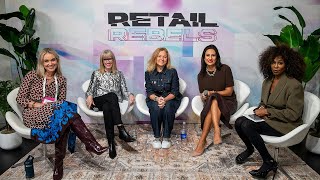
In this 2026 panel moderated by Marisa Byrne (Brand President, Journey) a group of women leaders—professor Marie Driscoll, retail veteran Paula Angelucci, planning & inventory lead Leila Jalali (David Yurman), and CMO Stacy Henderson (Tots Group)—explore how modern retail brands can transform ordinary shoppers into loyal superfans. The conversation begins with a definition of "connection" across the pre‑, during‑, and post‑purchase phases, emphasizing the blend of digital discovery and in‑store sensory experience. The panel then examines how frontline associates can become authentic brand advocates, leveraging hiring, training, AI tools, and social‑media creation (TikTok, UGC incubators) to build community. Supply‑chain reliability is framed as a trust pillar; disruptions erode loyalty, while data‑driven planning aligns inventory with brand storytelling. Participants discuss the challenge of maintaining consistent brand narratives across DTC, wholesale, marketplaces, and physical stores, proposing simple frameworks such as three‑word brand descriptors and focusing on iconic products. Loyalty programs are re‑imagined beyond points, with "client romancing" tactics—tiered VIP metrics, "wow" gifting, and experiential rewards—demonstrating measurable ROI (e.g., doubling VICs). The dialogue closes with reflections on women‑led brands, design for women’s comfort, and the value of user‑generated content in fostering belonging. Throughout, concrete examples, KPIs, and actionable strategies are shared, offering a roadmap for brands seeking to turn shoppers into superfans.
Chapters
All right. I feel very fortunate to be standing on this stage with this fabulous group of women. So my name is Marisa Byrne. I am the brand president of Journey, a footwear company. I've been in footwear for about 19 years, which very much dates me, but it has been my passion from— I am the person who puts my shoes first and then I plan my outfit around my shoes. So I think I picked the right industry.
Hi, I'm Marie. I'm Marie Driscoll. I'm a professor at The New School. I've been in fashion since I'm 9 years old, as everyone here can attest to. I totally love fashion. I don't know how I plan my dress, but I just do love dressing. That's it.
I have to borrow yours 'cause mine won't go on. Hi, I'm Paula Angelucci. I've also been in retail since I was 9, and I have a various background of big box, specialty startup travel and off-price. So clearly retail is in my blood and super happy to be part of this conversation.
Hi everyone, I'm Leila Jalali. I lead planning and inventory management for David Yurman. I have not been in retail since I was 9. I actually started my career in consulting and defense, so here we go. But I love retail and I love fashion, so very excited to be sharing the stage with all these lovely Very fashionable ladies.
I know, right? Hello. Hi. Hi, I'm Stacy Henderson. I'm the CMO of America's for Tots Group. Tots Group, we have 4 brands, Tots, Hogan, Roger Vivier, and Faye. I started off in the e-commerce world for Tots. And about 2 years ago, I was promoted to chief marketing officer.
You're going to be my new friend, Stacy.
Let's do it.
Let's do it. Yeah.
OK, so let's dive into this. I'll give a little bit of synopsis of what our panel is. It's From the Boardroom to the Shop Floor. We'll examine how brands connect data with creativity, align planning with authentic storytelling. Authentic, I feel like, is the word of the year. And translate vision into seamless customer experiences across channels and geographies. So I have note cards because I'm old school. Everyone's on here with their phones, but I'm going to go with my— people made fun of me last night, but it's okay. So we had our introductions. So I'm going to ask the first question. What does connection look like today through the eyes of a customer before, during, and after a transaction? Second part, how are brands recalibrating their goals accordingly? And I'm going to kick off with you, Marie.
So connection. I think we start online discovering for the most part, and we look through that sea of merchandise. We sort— like, I sort by animal print, by pink, by metallic, and then I go into brands. That's me personally. Everybody has their own way of navigating the endless aisle, but at some point we we end up going to a store. And that's where I think a lot of the connection is made. That's where we have that palpable feel of product. We have an experience of brand through the help and assistance of sales associates and store managers. We can get the storytelling. We can understand the background of a product. We can go so far as to who made it, You know, where it comes from, the origin, the sustainability, or just the storytelling of the inception in the designer's mind, something that makes the product ring true to the consumer so that you're connecting with more than material and product, but you're connecting with the brand and it changes how you feel. For me, what makes brands brands different and fashion different is that they change how we feel, and businesses that change how we feel have margin. Businesses that are efficient may have margin, but everybody's vying for that margin. But if you can actually connect with the consumer somehow one-on-one, because at the end of the day I am one, whether you're connecting, you know, it could be one brand connecting with many, but if you can connect with one consumer There's an opportunity for uber margin, and that's part of what makes fashion a good business to be in.
Great. Stacy, do you have— since you have 4 brands essentially underneath, how do you feel about the connectivity?
Yeah, for sure digital is important. I think the status— you can help me from the New School— 70, 80% of in-store purchases start with digital, right? And they have digital touchpoints. So I think digital is key and digital is super important. What we're also seeing, especially for the younger clients, the Gen Z, it's really— if we're not looking at our phones, the only time we're not is when we're with people. And even with people, we sometimes look at our phones, right? So what we're seeing is super important, of course, is like what others are wearing and how others are influenced by what they're wearing. And it's so evident, especially with the younger generation. Like, for some reason, the past 6 months, my boys— everyone had tight jeans or like sweats that had the clot at the bottom. And now everyone's in baggy jeans. I can't pay them to wear it. But that's really just, you know, it gets off their screen. It's about what are my peers wearing? What are people wearing? Like right now, today, I see those boots. I want your boots. You don't have to give them to me now. But I think that we do sometimes forget that old school word of mouth. That old-school influence when you see people. A lot of our customers that come in are a friend saw it, or, you know, for us, there's so many touchpoints. It could be a celebrity that was wearing it. There are just so many different touchpoints to bring them to the door. And then, of course, I think from a luxury point of view, once they're there, like you said, Marie, that you could immerse in the brand. You're able to have a store associate to add on to whatever storytelling they saw online. And it just keeps going on from that, from the tactile, the way our store smells, that whole entire experience sort of reinforces either what they saw in a friend and/or what they saw online.
That's great.
Yeah.
So switching to strategy at store level advocacy, which kind of ties into what we were saying and that connection that happens that's so important in the store, in what ways can frontline staff retail associates act as community builders and brand advocates rather than just salespeople? And how do brand leaders and store operations collaborate to make this happen? I'm going to start with you, Paula.
All right. Awesome. I love this question. I think one of the biggest ways that the store associates can work as advocates is really to be engaged in the business and engaged in the brand. And that really starts from the beginning. That starts from, you know, the hiring process to the onboarding. Do they connect? You know, we talked about a genuine connectivity, you know, how they feel about that. I think it really starts with them. They want to do a good job. They want to have the tools to do a good job. So I think, you know, the more companies can give them the tools and resources they need to do their job well, giving them the products that their customer wants, you know, really making sure that they have everything in their tool belt to really be a great associate. Really makes them a great advocate for the brand. And that really spills out. You know, that's something that really grows. Oh, you know, you work at Target. Do you love Target? I love Target. Okay, I'm going to go to Target too. Okay. You know, as opposed to, oh, I work, you know, at X brand and I don't really like it. And that, you know, can grow. So, you know, I think getting them to be connected, giving them the tools, you know, linking in AI and how does that help them learn and grow and have product knowledge. And be engaged with the brand, making them feel a part of it, being very communicative, being collaborative. All of those things really lend itself to great team building and then thus being great brand advocates.
I agree. I think I was actually talking to someone the other day about having the store be your brand ambassador. And something that was interesting was talking about how store associates now are actually becoming like they're doing the TikToks. And they're doing the social media and they're becoming, they're building this community that's really authentic and that I told you that's going to be the word of the year. But they really are building that, that brand like relevancy because they really believe in it too. They're really excited about it. And I think that's something in that younger generation that's, I say younger because, you know, like I, I didn't, we can say that. So, but I think that that's an interesting —point.
Can I add something? Do you want to go? I've been, like, doing a deep dive on Gap, and Gap recently announced that people with 1,000 followers they would support would be paid, which means some of those in-store sales associates, which just, you know, and we know Gap is in the midst of trying to rebrand, turn around, and be more relevant. And just a real-life example.
I mean, just add some thoughts on that. I think, you know, especially when it comes to jewelry, which is such an emotional purchase, right? The sales associates are truly the last stewards of the value chain. It doesn't matter how much you do planning, inventory management, quality. I think all of it lives and dies the moment that you have that human connection. And I think it all comes down to telling the right story. And I think we— I think that's where when a sales associate can tell the brand story and tell the product story. And for us, you know, we have the cable bracelets that are based on the Brooklyn Bridge, right? We have the— we have a collection that is all based on the fireworks across the Eiffel Tower. I think those are the stories that when it comes to the customer experience, really change it from just a pure transaction to a relationship that stays for a very long time. So I think they play play such a critical role. And then in order to be able to do that, they need the space. So to your point, I think they need to have a smooth operation set up for them. Chaotic back offices, inventory not available, these things don't allow them to be present at the moment when the customer is there. So I think they play such a critical role to create that loyalty and continue it.
I agree. It can also be the reason that someone walks away from your brand too.
Absolutely.
Absolutely. Because I feel like that's something that we've probably all experienced where you go in and you're actually turned off because they don't pay attention, they don't know the brand, or you know the brand better than they do. So—
Can I just add about this whole point about social media? When social media first started in luxury brands in 2008, 2009, when everyone was using it, it was almost forbidden to post something about your brand.
Remember this? I remember that, yeah.
And so now I think the big thing is going to be and I know for larger corporations it's a bit more difficult, turning them into advocates. Because what I realize, the things you love or the things you're passionate about, you're going to post them anyway. So why not let your store associates do this, right? And I know that there's probably guardrails or something that you can do for that, but I do think that's a very important way for people to feel like they belong to something and they want to talk about it because it's important to them. But I'm just happy we're not in 2008 anymore, and I have encouraged our store associates, when we have a big push, I'm like, feel free. Of course, we give them little guidelines, like don't go crazy, but feel free to talk about it. We want you to talk about what we do.
And just to add something, 10 years in the beauty space, right? And I remember trying to looking at the trends and what was happening. And you could see as the beauty advisors would go from one store to the other, certain trends would follow them. You're like, oh, now I see why we're selling that lipstick a lot there, because that's the person that drives that. It all comes back to that personal touch.
It really does. So I'm going to switch gears because this is a— I've been really excited to talk about this because it's very relevant with our current macroeconomic situation. I'm going to talk about operational excellence and supply chain because that's been really fun lately for a lot of us. Customers rarely think about supply chains. They— it doesn't really occur to them necessarily, but they feel it. When something is out of stock or delayed. So how can planning operations and supply chain teams partner with marketing and store teams to turn reliability into loyalty? I'm going to kick this off with our expert over here in the supply chain.
It's true. I think customers don't think about supply chain, but they definitely feel it. And I think, again, going back to the jewelry industry, the purchase is such an emotional thing and you need it at that point. And when it's not available, it erodes the trust. So in some way, I think reliability should be thought about as a brand, as something that drives loyalty and your loyalty strategy. So when it comes to supply chain, when it's not there, it's the trust that erodes. And when the consistency is not there, it's where, you know, you lose people. And The funny thing is people normally think about supply chain and the customer experience as really opposite sides of the brand, but I think they're really joined at the hip. I think if we look at the evolutions in supply chain, they've really happened when the customer expectations have changed. We went from going to a store and buying something and asking our friends what we wanted to now this really very, very complex way of looking and making decisions and integrating with the brand. So that's where supply chain, I think, plays a critical role. Now, data plays a role in that. And you talked about the integration to marketing. I think marketing also has evolved so much, went from TV ads, print ads, to now being very, very precise in terms— very personalized and digitized. And I think as marketing becomes more specific and precise, supply chains have to become much more intelligent. And I think that's where all this data and intelligence helps us make sure that we have the right product at the right place to ultimately ensure that that trust builds. So I think supply chains kind of create that authenticity and trust. The brand creates the narrative, and then the operations make sure that everything is there. And then ultimately, it's the human touch that creates that relationship.
That's great.
So I think you're right, but during COVID everybody became aware of the word supply chain. It's true. It's like, I think, like, I block those years out of my mind, right? It's like everybody all of a sudden, like, it's a supply. Nobody got their furniture on time. Nobody got their toilet paper on time or their peanut butter. It's like the whole thing. So I think the consumer is a little more understanding. And I think all of us in this room feel like the supply chain still hasn't come back to where it was in 2018. 2018. We were optimized to perfection. And really, is that realistic? It's like we've lived through a pandemic and now tariffs and all these different exogenous events that impacts our business. And so now we kind of have to have safety stock, and yet people still don't want to— one thing that you mentioned, Leila came to my class 2 weeks ago, and so I'm a student of Leila, and she said, What you really want is like a healthy nervous system, remember? And that— I didn't forget that. That's good. And that's really like you want a healthy organism that is running throughout the organization from the raw materials and the sourcing all the way to the consumer.
So do you feel though like when the supply chain does get disrupted that it kind of then falls on marketing in a way? Because if you don't have a product launch, and you have to completely pivot, like, how have you, have you encountered that, Stacy, where you've had to actually like change your kind of strategy on what you were doing because what was, it's not here?
Never with the Italians. Things always arrive on time. No, I think, um, yes, a couple of times, of course, we had to pivot because something wasn't available that we thought was going to be available that we've But, you know, of course, to create the content is quite expensive, right? And a lot of times, you know, if it's not a digital placement for, like, you know, print and all those things, those are, like, weeks and weeks in the making, right? So I think for us, sometimes we pivot, of course. Other times we make a decision depending on what the content is and what the product is. Do we move forward from a branding point of view? We know we want to do it from a branding point of view. We know that XYZ is putting out a sneaker similar because, you know, you have your intel. And do you still want to do it just to, you know, have almost a teaser and build up demand? And if that's the case, and a couple times we've decided to do that, it's more of like that teaser building up demand. Then at that point, we then equip all the stores and our online customer service people to be able to deal with that, right? So one is that communication to the store. Stores and the e-commerce people, we're going to move forward with this. The product may not come for like a week later. It's not like a month later, but a week or so later. But let's figure out how we're going to capture the information. And then what is that process afterwards? Do we, you know, do we start like taking orders? Do we take a deposit down? Does it allow us sometimes to be like, oops, we thought it was going to be here. And it's sort of that— I've seen it happen once where we like sent out a communication about up— it was going to be here, final touches, limited supplies, because it doesn't always arrive at one time. It will sometimes come at like— not all the sizes will come at one time. We can say a limited amount is coming, be the first, you know. So sometimes we do it like that to make it seem like, you know, we were working so hard on it and it's so beautiful now. But guess what? Little by little is coming in and get yours before they leave. In a very nice luxury way though, we say it.
That's very interesting. So talking about cohesive experiences across channels, how can brands bring consistency to storytelling and brand vision across DTC, wholesale, marketplaces, and stores so the customer experiences one cohesive loop and not fragmented silos? I'm going to be honest, this has been a huge conversation topic. Like my brand especially, I'm on several other people's websites, so I can't necessarily control the messaging. I have to really work with my partners to be like, hey, I really need to at least have your voice, but be saying these things that is the brand tone. And then taking that into DTC and taking that into wholesale, like it becomes really challenging to basically connect all those dots. And what I find is it really starts at that beginning. And all that planning of what you're actually going to put forth so that everything is cohesive and you do have all the assets that are going to put together in all those different touchpoints. That's just from like my personal experience. But I'm actually very curious to know from you because you work in the travel. So you've got all these different areas. You probably like from a demographic standpoint, it's varied. So how do you, how do you manage that connectivity?
Yeah, I think one thing is that we're not omnichannel, so we are just brick-and-mortar stores, but we are in travel in airports and in resorts. And so I think it really starts with crystal clear vision and then really great communication. And so everyone being aligned on what is the message that we're trying to give. And when you think about retail brick-and-mortar, It's about the service, the experience, right? So ours is going to be, you know, my translation is always going to be slightly different because my lens is from the field. And so, you know, what we're trying to make sure is aligned in all of the stores is that great memorable customer experience. So whether you're shopping a boutique, you know, in a great resort, or if you're passing through one of our souvenir stores at one of the airports, you're getting a best-in-class best-in-industry experience. And if you're buying tech, you know, we are in the know with all things tech. If you're purchasing a beautiful jacket from a vendor that isn't carried anywhere else, we know all the selling points. If you're buying a piece of luggage that's, you know, quite pricey, we're explaining to you, you know, why and what warranties it has. So I think for our standpoint, what we want to make sure is that what is resonating through all of our stores is the experience. So slightly different from an omnichannel, but same thing. You want what's communicated clear, and that's really the customer experience.
That's nice. Marie, I'm curious from you because I know we kind of touched on this last time when we had a conversation. What do you see of how to break down those silos between all those different channels?
I teach fashion retail, and I have my students go through the entire semester with one brand that is a public company so they can look at the financials, and then they look at all these different aspects of retail through that brand. But if the brand is a Nike that's available at Nike, and it's Nike direct-to-consumer, it's Nike's on Amazon, the marketplace, Dick's Sporting Goods, like Nordstrom's, right? Like, to go and check it out everywhere it is, and how does it ring? How is the brand expressed? Like, where's the similarities? I think when you think of brand management, what you have to do is start with what can everyone, regardless of their level of involvement with the brand, from the person that's sweeping the floor to the person that's managing the brand, what can they know about the brand? And so for David Yurman, it is the cable. Like, if they know one thing, it's the cable and the cable moves. For Tod's, it's the bottom of the foot, the bottom of the sole, right? It's that one thing, and if they know the story, then they're part of the brand, and the consistency builds from there. I think it's really hard to get your partners at, you know, if you're selling wholesale into a retailer, it's really hard to get that the kind of love that somebody might have for your shoe, for Tod's, in Saks. They just may not have it. They may love Louboutin, right? And that's what you're stuck with, but what's the trade-off. You actually may encounter new customers that never would learn of Todd's, right? So I think, I mean, I think from the brand point of view, you try and teach those simple things that people can know. And then now with digital, you can have QR codes that people can read and learn about the brand themselves. But I think like we find that lots of times the consumers know more about the brand than the salespeople.
That's very true.
I think you're talking about like that hero product or that hero, you know, what's part of it? What is the hero piece of Yurman? It's the cable. What is the hero? So that hero, you know, feature, benefit, or product, right, is kind of what you're talking through, I would say.
I think it's also the story, right, and the consistency. I think the challenge is not that we have many different channels. I think in a lot of places the channels are managed in a silo and it's not that consistency across, because customers are different. I think some products behave differently across the different channels. I think the importance is really how do you kind of bring it together. And I think it's an exciting time because it's a time that we can bring the data together. We can decipher the data in a way not needing like 30 people to look at it across all the different channels. So I think there is a way for us to be able to understand how things work. Now there's a complexity of the geographies that I won't even get into because that makes it even much more— difficult, but I think there is something about really learning from each other but also managing it in a consistent way across.
Do you have something to add, Stéphanie? I do have one thing to add.
I love the idea, Marie, I loved your idea about the simplicity, right? And I think to your point, so we have retail stores, we have e-commerce, and we have of course our wholesale partners. Retail and e-commerce And then of course we have marketplaces, right? Retail and e-commerce is very easy, right? Because for the most part we have one central customer service team that takes care of everything. Our customer service team also takes care of any type of questions from our wholesale partners as well. So if someone bought a shoe in 1995 and want to get the heel fixed, they go to the same customer service center as our retail and wholesale. But what I think is interesting, and my takeaway to this is, across all, there's one thing you can do. And you can focus on your iconic products. And there was one thing I created when I was at Versace years ago. I challenged our CEO. I'm like, let's keep it simple. I want you to go around here and ask all the employees internally, describe Versace in 3 words. And he's like, oh, everybody's going to say the same thing. Everyone will say the same thing. Everyone said completely different things, right? So I guess the takeaway would be, and what we started to do at Versace, and I've carried this on from job to job, 3 words describe the brand. You don't need a whole 20,000-page deck. Those 3 words. So now I'm going to add the 3 words, right? And you can do that with wholesale, retail, e-commerce, but 3 words plus the iconic products. That's all you need, right, to keep everything, that storytelling the way you need to keep it.
That's great. That's great. Great. Okay, so I'm going to move on to, I think, one of our final questions before we move into some of the audience ones is about loyalty, community, and belonging. Loyalty programs can't just be points. They need to feel like belonging. So what are the most effective ways you've extended the brand experience post-purchase? Example, clienteling, content communities, and how do you measure success? So I'm going to turn that over to Stacy.
Okay, I'm gonna keep this short because I feel like I've been talking too much. So, and I really don't, I'm very shy, so maybe, you know, but anyway, about, I'll start with, I'll try to make this quick, but a year ago at Tod's, we decided to focus on the clienteling and what I like to call is romancing the client. It's something that for me is super important, and the goal was the VICs, which is the highest spending of clients, We wanted to increase those by 20%, and we don't have a point system. We don't— that's not something that we do, but we do have different tiers of spending and clients, correct? And the main goal was let's at least keep this top— let's at least increase the top tier by 20%. So since we don't want to do it, of course, by discounting or promotion and sales, what we decide to do it with is what we call our client romancing. And we decided to offer— well, first we came up with our KPIs. After we came up with our KPIs, and that was not just with the VICs, but we said, okay, we want to increase the silver to gold clients by 30%, gold to silver by whatever. We came up with the KPIs. We did not have a budget to do this, and we didn't even have a team. So we knew that for these Money Can Buy experiences, we looked internally of what the company was already doing that we could offer that we just do anyway, right? And so because I now oversee marketing as well, we went to the marketing team. What charity tables do you have? We went to the PR office. Okay, we have a fashion show in Milan. How many people can we offer, you know, fashion show tickets to? Which I know lots of brands do, but we wanted to do it at a much more elevated level where you offer the— we have a whole entire week programming that we take our VICs over. We entertain our editors and our celebrities, and we have celebrity dinners that we already have in our branding thing. How are we able to look at our top spending clients, offer them money-can't-buy experiences, quote unquote romance them to get them to, you know, obviously go from this transaction to relationship building? And the last thing that we did that we didn't do before, we are— our highest ROI is our gifting. And that's just not gifting for promotional periods for Father's, Mother's Day, Father's Day, Valentine's Day. We became like quote unquote in bed with our clients and we started to gift based on, okay, that probably wasn't appropriate. We started to gift based on also birthdays and, you know, maybe even if it's not their birthday, as well as we knew someone's daughter just had a baby. We got into bed with these clients, we started to give these, we call them the wow moments, things that you would never expect from a quote-unquote retail store. What happened? In a year, we've doubled our VICs. Wow. Which is great because it was like we wanted to get 20%, we doubled our VICs. We've also almost, I forgot the percentage, but we're almost at 40% more of our gold clients, et cetera. And these are things that, again, I didn't have a budget to do it. I do next year because we're going to put more money into these gifting and we call wow experiences. Experiences. And in addition to the things that we already had in our pipeline, these money can't buy experiences, we will start to create them. I love that.
I love that it's about the wow experiences. It reminds me of like a Michelin restaurant where like in The Bear, they like highlighted that. I don't know if you've watched that show, but it's like all about bringing it so much more special so that it's something that's so memorable that they can't— that they go and then they tell all of their friends about this incredible experience and, and this caretaking that they felt that was special. And I think it all comes down to making your consumer feel like they're the ones. Surprise and delight, right?
Surprise and delight. And I think it goes back to what you were saying with data, but it's also qualitative. You can't gift people things unless you have— I mean, you can't gift a birthday gift if you don't know the birthday, right? And believe it or not, we were not that great at collecting birthdays, right? But it starts with knowing your client and really being razor sharp about the information we want our store associates to receive from our clients. At NRF a few years ago, Doug McMillan—
if it wasn't Doug, it was the US president of Walmart— said that loyalty programs, that's just another word for the lowest price, more promotions. And there is that aspect to it, but that's what consumers get sick at. And that's why the romancing, the knowing— anticipating someone's needs, that's really taking care of them, and it's surprising and delighting them, and it does then create customer loyalty. You come back, you tell your friends.
Well, and it probably paid off in dividends for you, especially with that clientele base that you were chasing. It really has.
I mean, the ROI on these things, you know, because also there are very few things our top clients can buy for themselves, but it's just the fact that we took the time time to do it.
I can't see on the Q&A if there's questions. I saw it popped up, there was a bunch of questions. I wanted to at least try to get one in, but is it not up? They were there, yeah. On the opposite end of a loyalty program, I will say, like, so my girl, she likes to discount. She really wants to get something for a good deal. And so what we really needed, and my brand manager is sitting in the front row, so I'm going to give her full credit for this. We needed UGC because she really responded to our consumer response to seeing someone else that looks like her wearing, styling things. And so that was actually how we brought into our loyalty program was we gave her, you know, discount essentially so that she would upload that information. Because if you think about the trade-off of how much I have to pay content creators, which by the way, I mean, that blows my mind every single time I go through that budget. But that was this— it was kind of a win-win. It was like, okay, I'm getting UGC, you get a discount. It's not going to cost me as much as I would have had to do this in marketing. And it was a way for us to really get her also involved at a community level because then she felt like a part of that brand. And we'd put the UGC on the website or on our Instagram so that she could see herself in our brand. And that's kind of grown. And we've started making almost like this creator incubator to be able to kind of reward people with that so that we could get more of that content and not have to pay through the roof. Um, okay. Here's a question. Oh, I love this question. What unique value do you think women-led fashion brands have? And how does Designed by Women for Women speak to the consumer?
Who here works for a women's-led brand? I do.
I did. Yeah, you got it.
I think that it brings a lot of value because, again, I'm going to say the word, but it makes it actually real. And I will say, like, I do 100% stand behind building footwear for women. Um, and it's by women, and it, it comes down to I don't think that shoes should be beautiful and uncomfortable. I really don't. I don't think those two things have to coexist. I think it took us a long time to get here where we realize we can actually build the architecture of a shoe that can be a lot more comfortable. We can put more into where the comfort needs to be by studying the foot. Um, I've worked with a lot of podiatrists in my career of really trying to understand and where these foot problems happen. Plantar fasciitis is crazy how many people have plantar fasciitis. So how do the biomechanics of that footbed with a woman's foot really work into the shoe? And so for me, it just comes from a place of really understanding kind of, and listening to other women of like, what, what are you looking for? What do you need? And let's make sure we put this in there and design to what is happening that's current in the marketplace, or how can we surprise and delight her? And I think it does. I'm trying to speak to her, and I feel like I'm always curious of what does she need and what does she want. So that would be my answer. Perfect. Bravo. All right. Good job, ladies. Anything else? Are we— I think that wraps up our panel.
That's a wrap. Yeah. Thank you.
OK, give this panel a hand.
Thank you all so much.










