How Sustainability Improves the Bottom Line | Queen of Raw | PI Apparel
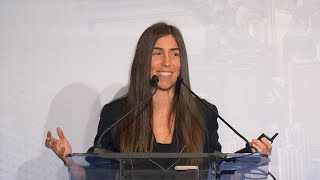
Stephanie Benedetto, CEO of Queen of Raw, shows how circular-economy models turn deadstock into profit. Unused inventory costs companies up to 15% of their bottom line. Her platform helps fashion and retail companies reuse, resell, or recycle excess goods while measuring carbon impact and unlocking new revenue.
Chapters
Thank you so much for joining us. I'm Stephanie Benedetto. I'm the CEO and co-founder of Queen of Raw, and we have our CTO and co-founder Phil Durasma here as well. Really excited to be talking about this topic today. It's very near and dear to where I think this conversation needs to go, how sustainability improves the bottom line, because so often you hear that S-word sustainability and it means so many things to so many people, but we focus a lot on the people and planet side. We don't always talk about the profit side. And in order to get companies, your companies, to adopt this, it has to make economic sense. It has to have some improvement to the bottom and the top line. Otherwise, why would they adopt it? So hopefully today, by the end of the conversation, you'll have a sense of how you can make sustainability matter to your company for that triple bottom line, for people, for planet, but also for profit. So, okay, this is kind of what I saw as the 4 topics I wanted to address today. The first, why does sustainability matter at all, especially with what's going on in the world today, right, during challenging times and periods of disruption? Second, how do new business models actually support this people, planet, and profit? Third, how can we actually leverage technology like blockchain, machine learning, all those fun buzzwords to actually drive true environmental and economic impact for businesses? And fourth and final, look, what are the strategies that we need to build for the supply chain of the future and to support our end consumers, right? And that's why we do what we do. So taking them each in turn, first, you know, Why now? Why, with everything going on in the world, could I even begin thinking about sustainability when I have so much going on? And this is it, right? I mean, I think if any good can come out of the hot mess in the world, it is just this, that the world has woken up to these issues. Supply chains are broken. And through the pandemic and through trade wars, right, we actually see What are the breaks in our chain and how can I turn those breaks into opportunities? And obviously, I'm sure these images are familiar to everyone, right? We've had blocks in port and more higher shipping costs than ever before. And what does this mean? It means your raw material and shipping costs have gone up probably exponentially. You got bottlenecks and cancellations in port. You can't get your stuff to your end customers. And you got shortages in the stuff you need to deliver and make what you do. And so this is why I think that very heavy, complicated S-word sustainability matters today more than ever. And I hope in this conversation we can show how sustainability actually will solve and improve all of these supply chain challenges. Through what's going on in the world, hopefully this image is not familiar, but I'm sure for a lot of people it's something we've experienced, right? More unused stuff than ever before. Through the pandemic, we have quantified that it's actually about $288 billion and growing in unused fabric and unused finished goods that's just sitting in warehouses collecting dust, are gonna be burned or sent to landfill, right? We had all those canceled orders, closed stores, missed seasons and collections. And It's not just the value of this stuff that's hurting our business, but it's that it's causing us also, which we'll talk about, additional financial harm, additional environmental harm, and now more regulatory and reputational harm than ever before. And for some of our enterprise Fortune 500 customers, we've actually quantified this at the company level, and it's eating up up to 15% of their bottom line in just one year. And we like to say at our company, right, at that volume, waste is not just environmentally irresponsible, this is a true CFO issue. And, you know, obviously all of that waste is hurting businesses' pockets, but it's also destroying our drinking water. And I know we all know the statistics, so I don't wanna harp too much on it, because I wanna talk about what we can do. How we can take action and solve this. But this image shows a river in China running red because of contamination, right, from textile dyeing alone. By some accounts, textile production is the number 2 polluter in the world of clean water globally, sits behind oil and agriculture, which of course it consumes as well. And one statistic from the World Wildlife Fund that always resonated with me is if we continue at the current pace of textile production, By 2025, two-thirds of the entire world's population will face shortages of fresh water and be exposed to hazardous chemicals from textile production alone. And I mention that because it's always resonated with us, and we use 2025 as kind of a goal and a metric that we're tracking in our company. We're not talking about 100 years from now. We're not talking about 50 years from now. We're literally talking about today, and we're talking about on our shores. And I know about this problem because my family has actually been in the fashion and textiles business for over 100 years. This is a picture of me with my great-grandfather, Papi. In 1896, he actually came over on a ship from Austria. He landed at Ellis Island, and he settled into the Lower East Side of New York. The original Jewish garment district. He was an immigrant chasing the American dream, and he had to make a living for his family, right? He came with nothing. So what did he do? He actually found old materials and supplies nearby, old fabrics and furs and things that immigrants brought over on the ships with them that they weren't using anymore, and he would repurpose them by hand with minimal waste and minimal toxins into the most beautiful fashion garments. And he sold it to local customers. And it was an incredibly profitable, successful business. He lived to a beautiful age of 105. I grew up hearing the stories from him of the old-school ways of doing business. Of course, since 1896, clearly our supply chains have gotten a lot more complicated. Hundreds of steps across the globe. You're obviously all dealing with metric tons of water, chemicals, craps, and oil used in the process. But our vision with Queen of Raw, how can we use technology to get back to the way my great-grandfather did business? It made sense for people, for planet, but also for profit. So, okay, you know, now we have a little bit of a feeling of why this matters now and what we can learn from history in order to solve these challenges and build for the future. The second thing I kind of wanted to focus on is the actual business models for sustainability. And when I say the business models for sustainability, I do mean that people, planet, but also profit. So this is kind of a very complicated and yet simplistic version of the complexity of our supply chains today, right? There's the actual flow of goods, moving through a supply chain. There's the flow of data in our companies moving through a supply chain. And then there's actually a flow of funds across our stakeholders moving through a supply chain. And so there's a lot of parties here and a lot of activities going on. And, you know, a lot of us are maybe are still doing things manually, the old school way of doing business, like my great-grandfather, right? Good old pen and paper, or maybe an Excel spreadsheet. But when you try to manage all of these steps and the complexity of our supply chains that way, you're going to experience even more breaks in the chain and even more challenges. So we get really excited by looking at the complexity of this and being able to take that off your hands, find quick and easy ways to automate and scale what you're doing, and give you data to help you do better as a business. Yes for people, Yes, for planet, but also for efficiency and your profit. So let's walk through it a little bit, right? I think unlike the S-word sustainability, the big word that I'm a big fan of is circular economy. And the second word in that word is economy. It's an economic principle to drive circularity, right? It makes sense. The longer you can keep your materials, your raw materials, your finished goods in a supply chain, the more economically viable it is and the more valuable it is to you, your customers, and your business. It just makes sense. So I think there are kind of 3 buckets when I think about circularity, which I kind of show here, that we really focus on because it helps drive change. It's easy to look at that word circular economy and sustainability and not know where do you go and what do you do on day 1, right? You can almost feel stuck in the mud. Well, these are kind of the 3 buckets that we think are a great place to start and then to grow from there with what you're doing in your business. First, you've got unused stuff, and this unused stuff has value. So how do you centralize it into one place so you know what you got across those really complex supply chains, right? Centralize it and manage it digitally all in one place. And then now that you got it all in one place, you know what you got and how valuable it is to your business. And the important thing then is to know, how can I take action? It's one thing to know about something and know you've got a problem. It's another to actually be able to do something about it that makes business sense. And so what would it look like in the vision and the dream that in your business to be able to click a button and reuse it? Now that you know about it, can you send it to another department or division within your company? Or click a button and resell it. You're not gonna reuse it, resell it, make some money, right? Free up that very valuable warehouse space. Or, "Nah, don't wanna reuse it," and, "Nope, it's proprietary," or it's past a shelf life, right? What would it look like to be able to recycle it or donate it? And, you know, once you do that action, that's great for business, that's great for your company, but you actually need to be able to prove what you did and the impact that you had. And so that's bucket number 3 here, right? How do you actually measure the carbon footprint and the environmental and economic impact that your actions have and produce the financial and legal reports that you need within your business in order to show the good work that you did. And I think that when you put those three together, you've got an incredibly powerful opportunity in your business to save and make a ton of money, more than you probably even imagine, and to really drive that bottom and top line with proof about what you did. Because your businesses may already be doing a lot or some great work in ESG and sustainability, but you often don't know how to talk about it and how to back up with records and proof what you did with it. So, you know, a lot of people, when we first started looking at waste and unused inventory and how to turn that into an opportunity and monetize it, they came to us and they're like big brands. I'd go in the fashion district, right, to all the big brands and say, "We have this idea, there's this opportunity, and you've got all this waste." they would say, "You know, that's a nice to have, but for us right now, it's not a have to have." Well, fast forward to today, and obviously this is the hottest topic of the day because it makes not just environmental sense, but economic sense. You wanna sell it? Selling it is valuable. You can realize untapped revenue, right? Recoup all of those inventory losses, free up that valuable warehouse space, and have a great story to tell your end customers. So the selling part of unused stuff is almost obvious, but what I think wasn't obvious to people in the beginning, but through the pandemic it's become the biggest demand, is why you should buy unused stuff from other companies. And that's because you need what you need when you need it at a discount, located where you're actually producing stuff, right? And with a great sustainable story to tell. How do you say no to that? And so that's where I think through the pandemic has really been an opportunity. Businesses selling more than ever before this unused stuff, but also the biggest Fortune 500 brands and retailers and our clients turning around and buying this unused stuff. Because buying it, they had supply chain disruption, they needed to fill orders. Deadstock, valuable, beautiful, first quality unused stuff offered them opportunities to find what they need where they were manufacturing. Get it at a great discount, increase their markup, offer great opportunistic pricing, actually improve your speed to market because it's readily available, you're not manufacturing something and waiting for it to be made, and obviously get a great sustainable story to tell, grow that consumer loyalty. So huge opportunity there to think about how this fits into your business if you're not already doing it. And, you know, as I mentioned, this is about people and planet, but also profit. So what are the actual money that can be saved and made by doing this? And we spent a lot of the time over the past 2 years during the pandemic building out an ROI calculator, showing you how much money is saved and made by the actions you do in real time. This includes savings in your day-to-day operations, right? Now that this stuff is digital and centralized and you can actually take action with a click and leverage our global network, it saves you on the personnel who are managing this stuff manually, right? By hand on Excel spreadsheets with hair on their head. Handwritten notes. It saves you on marketing opportunities, right? Because you've now got a great story to tell and you actually have the data and proof to talk about it. It saves you on all the financial and legal reporting that used to spend a lot of time doing manually. Now it's all automated for you. So that's the first bucket, right? Day-to-day operations getting sped up, quick, easy, cost-effective to adopt. Second bucket is obviously technology development and maintenance, right? I think a lot of our businesses were in one of the most powerful industries in the in a world that, as I mentioned, in many ways is kind of still doing things the way my great-grandfather did. And I think before the pandemic, getting companies, your companies, to adopt a technology innovation, it's challenging, right? You hear the word technology and, oh, the time, the resources I need. You know, it's kind of the same issue with sustainability. I just don't have time, I don't have resources. Well, I think through the pandemic, where people are at home. You're not in an office sharing those handwritten notes, right? Things need to be digital, quick, efficient. And that's what leveraging these awesome technology solutions that are out there today do for you. You can actually plug and play into solutions like ours that are no-code, in the cloud, ready to go with all this automation and scalability. And so you don't have to spend the millions of dollars a year and the time and resources and expertise to build these yourself. Find the partners who have done it already for you. Huge opportunity, and there are more in this field than ever before, growing every day. And the final kind of bucket in the savings that I wanted to mention is kind of automated logistics. A lot of companies, when we were first looking at opportunities to buy, sell, recycle, donate all this waste, they said, "Well, yeah, it's nice, but takes a lot of time and resources for us to even just physically get it to the donation partner or the recycling facility." Well, now those logistics are all automated for you. The verification, know your customer verification, the payments, the matchmaking, it's all done for you. So huge opportunities to unlock value. But it isn't just about these cost savings. You know, there's additional important time, money, and resources that are saved leveraging these kind of solutions. Obviously, when you think about waste, I think something people don't really realize, a lot of the big companies when we talked to them first years ago, would say, "Yeah, we got a certain amount in waste, but we think it's about, you know, X, so it's not a ton." Well, since working with us, they've realized it's more like 15X plus what they thought they had. And it's been sitting in a warehouse costing them Y and Z in personnel and depreciation and, you know, insurance costs over all those years. When you compound that, it does eat up a lot of your bottom line. So being able to free up that very valuable warehouse space quickly and easily, reduce those inventory holding costs. That's very important today more than ever. Second bucket, we kind of touched on a little bit already, but how much can this save you in business processes and efficiencies, right? There's a lot going on in your businesses and all this data about unused stuff. It's not just important to free up that warehouse space to do something good, to try to make some money. It's also that waste is very inefficient and expensive, and this data is dark. You didn't know about it. A lot of our companies didn't know about it before they start working with us. And if you don't know about it, how do you know how to do better with your capacity planning and predictive analytics in the future? This is information that is so valuable to your business to know what is this stuff made of? Why is it sitting there? Where is it sitting? Who did— where does it come from? Who does it go to? That data is data you need in order to do better in the future. Be more efficient, be less wasteful, right, and plan better for the future. And the final piece I kind of wanted to talk about when it's, you know, talking about profitability, I think it's no secret, right, that millennials and Gen Zs and everybody these days care about these issues. And so how does talking about the good work that you're doing actually enhance your brand perception? And your public loyalty, right? One of our enterprise customers saw 3 times the conversion rate in their online direct-to-consumer business just by talking about the work they were doing with TEDxStock. So a lot of the numbers I just talked about in the buckets drive bottom line, but this is also about driving top line. And, you know, if that isn't enough for why today this matters more than ever and why this is so valuable, We got all the changes in the laws going on. So it isn't just about bottom line, it isn't just top line, it is now legal liability. I am an attorney, but I am not legally allowed to be giving legal advice here, so please take what I say kind of at the high level, but there's a lot going on. This is just some of them in Europe. The laws now requiring climate disclosure, you're subject to even if you're not based there, but you do $100 million or more a year in revenue there. It's pretty much everybody, or a lot of us. So you're subject to changing regulations in the EU. Obviously in the SEC right now, we've got close to approved a lot of changes in your climate carbon emissions and your Scope 1, 2, and 3 disclosures. So any public company, right, you're gonna be subject to this here at the US level. And then at the local level, we got the New York Fashion Act, we've got the Reuse Act. So even locally, you're now going to be mandated by law to do something with your unused stuff or face very expensive fines and legal liability. So I think this is powerful, not just because we're gonna change the laws and this is the future, but because you wanna get ahead of it. Be a leader in your space and protect yourself from what's coming. One kind of call-out that I wanted to share a little bit, how all of us can get involved. We joined forces with H&M, Unilever, Cisco, Goldman Sachs, the Ellen MacArthur Foundation, and a whole bunch of other partners, and we formed the New York Circular City Initiative, backed by New York City government. And we produced a white paper, which is available at circularnyc.org. And that white paper showed how many good jobs could be created and how much money could be saved and made just by New York City going circular in the coming years. And I want— I mention that because as we're talking about profitability and the unit economics of sustainability, it would have been easy for us to put out a report of why this makes environmental sense, but we actually quantified specifically, and it's a great report about how many jobs created and money saved and made. And so take that as a blueprint. It's an initiative that you can get involved with in the future. Our goal is not to just change the laws here and slap businesses with millions of dollars in liability on the books. It actually gives you all of the examples of all the businesses who are doing things like ours that can help you offset that coming legal liability and solve these problems. So really trying to drive here the opportunity again for people, for planet. But also for profit. All right, in the interest of time and wanting to leave some time for Q&A, let's get into the third. Obviously, you hear technology, right? And I don't want to scare people away. This is about technology that saves you time, money, and resources, and that you don't need to worry about the technology, right? If my company and companies like ours are doing our job right, you don't need to worry about the blockchain and the machine learning and all that. You just need to know that you're getting the business results that you need. But for the interest of talking about some of the fun stuff we're doing and why I think this is important for circularity and for profitability, let's talk a little bit about it. Here at kind of a high level is just a snapshot of what we built in our proprietary operating system. The beginning, before the pandemic, when we first started the company, we were very known for QueenofRaw.com, our marketplace. It is very much like a ThredUp, a RealReal, a Poshmark, right? To sell unused fabric for you, buy and sell it. But what we have released now with Fortune 500 customers through the pandemic is called Materia MX. It's full enterprise software in the cloud that covers all these buckets and more. It's about helping you reuse, resell, recycle, mine that data, right? Report back on carbon accounting and integrate into your current business practices. Your supply chain, ERP data, business intelligence tools, right? It's APIs, a full suite. You don't need to know what all those words mean, but it's about giving you a one-stop shop and a place to control all your activities. And a lot of our value, what we saw companies needed was automated logistics, right? How do you click a button and have the rest take care of it for you? And so we as a business spent a lot of time through the pandemic look at what was going on in the world and how can we help you move materials from point A A to point B quickly and easily and take care of it all for you. This is where being a lawyer helped a little bit, and we have a full team, of course, who look at customs, duties, taxes, imports, exports, availability of this stuff. And a lot of what we spent our time doing as a business— but I wanted you— I put this up here not just because I'm really proud of the work our company's done, but I want you to know who else is doing good work like this. We built up a huge partner network and growing around the world. We're on every continent, and these are just some of our incredible partners that you can leverage and partner with to and benefit from that are doing great work, great work in circular economy and sustainability because of the results it drives from a business and unit economics sense. When you work with companies like ours, one of the benefit is, and I just wanted to highlight, you know, you're not just working with us and our network, you can bring your existing network into solutions like this. And so if you're currently doing good work reselling, recycling, donating, with solutions like ours, all you need is an email for that partner and it adds them to the chain and then they can participate and you get greater control and visibility at the parent level of what's going on in your supply chain. And that's where we obviously leverage tools like machine learning to drive business intelligence for you and like blockchain to track Where does this stuff come from? Who does it go to? And how do you prove what you did with it? And, you know, obviously I wanted to kind of make clear with a lot of these solutions, when you look at what's out there in circular economy and technology innovations, I think there's a tendency to feel that sustainability is only good for pilot projects, little eco-conscious collections, right? But what I hope to prove prove to you all, or at least get you thinking about, is that leveraging technology and solutions like ours and blockchain and machine learning, it's not just about technology for technology's sake. It's about the service that we're giving you and the opportunity to integrate and partner with our network to do this automated and at scale and to really drive that bottom and top line, as we mentioned. So one of the first integrations we did, many people looked at us at first and said, well, are you trying to replace an inventory management system? We've got one. We absolutely know you do. Many big fashion brands and retailers run on SAP, right? They're a great partner of ours. And the reason is because this is not about replacing your inventory system. It's about integrating with it and taking over where those inventory systems don't, right? Once you've got unused stuff sitting there for a certain time period in your inventory system, can you plug into solutions like ours? Pick it up, bring it in automatically so you don't have to manually add stuff, and then take over and take action on it. So I mention this not because we need to know about how we do it or why we do it, but that you can do these kinds of solutions automated and at scale. It's not just pilot projects or eco-conscious collections. So kind of thinking about, kind of getting to the close, you know, what are the strategies? There's a lot of what's going on in the past, and what we're trying to catch up through, right, right now, but where are we going in the future? Where is the business going to be for your business? Where's the future of this industry, and how can we really think about positioning ourselves and be prepared for that future? So I kind of wanted to call out a little bit this report from McKinsey. It might be a little hard to read up here, but I'll call out who— it went through a list of who were the super winners in fashion brands and retailers? Who dominated in value creation from 2018 to the present? And if you look at the list, although I know, I apologize, it's a little hard to read up there, it's companies like Nike, H&M, right? Inditex, Zara, Richemont, LVMH. And when I look at our list of companies of who we're working with, it matches. And I think that there's a reason, right? It's because these companies thought about this as an opportunity, got ahead of sustainability and circular economy and realized they're not just doing it for good sake. They're doing it because they want to dominate in value creation and be a super winner. They want to save and make massive amounts of money. So it's a nice alignment and something important to think about for profitability. This is probably very familiar to everyone, right? It's not just about the B2B part of it, it's about B2C. You're selling to your end customers. Who are they today through the pandemic? And this also may be, I apologize, a little hard to read, but a couple callouts of what all the latest reports show about your customers, who you're selling to. Sustainability matters now more than ever. They have a strong disdain for waste, and they prefer items that can be reused, resold, recycled more than ever before. Your customers are telling you what they care about and what they're willing to pay for. And there are a lot of reports out there showing that your— the post-pandemic consumer is willing to pay a little bit more for these goods. I'm going to push back a little bit on some of these reports when it comes down to the point of actually purchasing something and with your dollars. It is hard, even when you care so much about people and planet, to spend a lot more money for a like-quality good because it's sustainable, right? It's hard, I get it. But with solutions like ours, if you can actually save and make a ton of money and create a like-quality good or even a cheaper-priced good that has that sustainable story to tell, I mean, your customers are just gonna eat that up, right? And so that's where I think unlocking this value, you've got money then to put back into your supply chain. You can then save and make money and pay your workers more. Use more sustainable materials, right? Adopt these technology innovations and do it without your overall CapEx expenditure going up. So kind of final piece, a little bit, how do you measure and account for what you're doing? There are so many tools and amazing tools out there, right, that do carbon accounting. But when we looked at what was out there, we saw a lot of them were using stale data. From 20, 30 years ago. And there have been so many updates and innovations in how textiles are made and what they're made of and sustainable materials. So stale data is a challenge. A lot of the tools out there were great, but they were code-heavy. So even our biggest Fortune 500 customers weren't using them 'cause it just took too much coding and too much time and resources. And then the final problem with a lot of the carbon accounting tools out there is that they honestly didn't take into account the actual movement of goods through a supply chain. They measured what that— the impact of that environmental footprint of that actual fiber. But then when it went from customer person A to person B, it didn't take into account the cost and carbon emissions of shipping, or when something gets recycled or reused or donated. And so we spent the past year and a half with MIT, and they gave us a team of data scientists who worked with us to build out a plug-and-play algorithm to improve upon carbon accounting and to help you actually measure the water, the chemicals, the carbon emissions, the waste, and the dollars saved. So, you know, we've had incredible success with our customers and partners. Really wanted to close with one thought. This is a report, an algorithm that was run by a team at Georgetown. They analyzed publicly available information from 2018 to the present. Who was kind of leading in transforming markets. And somehow, you know, I am so proud of the work our team did, we came out on top above some pretty big companies that you see here. And I mention that because, of course, I'm so proud of the work our team has done, but to also show that doing this is powerful and can have a real impact on your business. When I asked the team at Georgetown, you know, how we ranked so high, how this happened, they explained to us a few reasons. They said, first, you're always out there in the news talking about the good work that you're doing. And so I mentioned that to hopefully encourage you all to get out there and talk about the good work that you're doing. It matters. Number two, they said, you have incredible partners that are talking about you too, that you partner with, from the World Economic Forum, NSAP, and the United Nations. So when you're thinking about these kind of solutions, partner with people. It is powerful. It brings everyone forward together. And the final piece, they said, you actually use metrics to back up the data of why you do it. So whatever good work you're doing, show them the numbers, show them the data, the environmental and economic impact that you have. So I know it's a lot of talking. I will close for questions, but I just want to say, look, my great-grandfather came to America wanting a better world for his family, and so do I. I want my kids to have clean water to drink, clothes that aren't toxic to wear, and a planet to live on. And we're not stopping till we do. We've already saved over a billion gallons of water. While saving our customers millions of dollars in the process, and we're just getting started. So never doubt you can change the world.










