How Technology is Re-defining the Future of Footwear Creation | Under Armour, adidas | PI Apparel
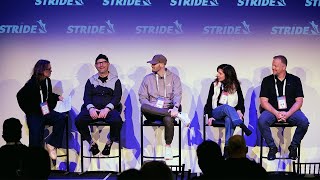
Senior leaders from Vans, Adidas, New Balance, and Under Armour discuss why footwear design still relies on outdated tools and fragmented workflows. They identify digital asset management and unified pipelines as critical gaps, and debate whether AI-generated visuals or data-rich 3D models matter more for the future.
Chapters
I'm going to ask each of the panelists and then sit down in a second. Just provide like a little intro about yourself, about 1 minute, and we can start here.
Only a minute. Only those of you who know me.
Script.
Yeah. Okay. Hi, Andrew Bjornson. I've been in footwear and product design for my entire career. New Balance, Reebok, Vans, a couple of those places a couple of times. Advanced Concept, Tims. Snowboard boots, bindings, helmets. The last 3 years in the digital design space for footwear and the last 2 years in apparel at Vans. And yeah, sure.
So I'm Nick Zimmer. I have been at Adidas for the last 9 years working fully in digital, starting in apparel and then moving towards footwear.
Mary Graham. I've been in the footwear and apparel industry for a couple of decades, and I feel like I've been in operations my whole life. Really started focusing at New Balance for 10 years, but in digital operations, probably it was a little bit pre-COVID, but COVID really amplified it. And I've been doing it ever since. I'm so sorry. I'm super happy to be here. I'm so excited that the footwear industry finally gets to start collectively talking about this. It's only 2 days. I really hope the conversation continues.
I'm Justin Schlauthauer, Director of Digital Product Creation at Under Armour. We're footwear, apparel, accessories, digital materials, and digital studio. So across the whole band of digital aspects. So I've been there for 18 years doing digital. So a little over.
Thank you for all the introductions. We're going to start with some questions. And I'm going to start with you, Andrew. What are the biggest gaps in the footwear industry's digital workflows today, particularly when it comes to fully integrated create, make, sell into a single digital pipeline?
Yeah, I think the big challenge is like it's such a legacy industry and the tools that have been used have been used for, for decades that designers are happy doing what they're doing intuitively by hand. If they don't have a tool digitally that is, is fast, intuitive and creative and helps them accelerate their workflow, it's probably not a solution that they're looking for. Now, if you're dealing with sole units and things that are hard, yeah, 3D makes a lot of sense to get there. I think it's, it's when you get to the uppers that it becomes challenging, right? But then you have— that's, you know, the create. Then the make is, is it better for the factories? Can they do something with the digital asset? Again, sole units are the place that's like been the one thing that's been like, yeah, of course this makes sense to do this. It's the patterning and the The weirdness of stitching something flat and pulling it around a last and then gluing it to something that's firm, and how does that create the dynamic? And then as you get to this cell, when you have like, oh, everybody wants like something that looks realistic sooner. Can you get them something sooner than a photograph or the real sample, or can you reduce samples? And I think everybody wants a piece of this pie, and it really gets kind of like cut up quickly and pull away in different directions that it doesn't have a cohesive one source or one tool that creates all those answers for you.
You know, that end-to-end process is really lacking, and so we're always patching software tools, processes together.
Yeah, and I think too, it's just like, well, why— everybody's why, why, what is it going to do for me better when you can draw, do a drawing and get a pullover within a day if you're over near a factory or sample room, or within a week or two if you're having it shipped over here. And then you can get it on a foot, you can watch it flex, and you can do all that sort of stuff. The big question is, then why do you want digital on the front end? And the reality is like, well, you need to be able to get people to buy into something. So you need to see your vision earlier and as realistic as they can. So it's really about creating something that's photorealistic. Do you need a model to do that? I think that's a big question. Thank you.
Any other panelists have any other thoughts on that question?
I also think one of the, the gaps is just the communication, the storage of the assets. Like, you want to make it easier to access them. Like, you'll probably hear this from me, like a redundancy, but it's like, find— like searching something on your website. Like, you want everyone to be able to access it rather than, you know, figuring out who to ask, where, where to get it from. Like, be 10 different people that may have the assets, but really streamlining that process, making it available to anyone that needs it when, you know, as soon as it comes in or as soon as it's completed. So you can see the most updated 3D model every time, you know, then it becomes faster. Then there's a—
yeah.
Any other thoughts?
Yeah, I'd say it's kind of like a mindset shift that needs to happen of understanding why we're doing this and understanding what the end goal is. I think that can kind of get clouded sometimes. Like you mentioned, things get pushed and pulled in different directions.
Yeah.
Depending on who you're talking to, they might want 3D for a different reason. And that can be hard to navigate when you're trying to do all of this and there's no cohesion that brings it all to like, we're all working towards one goal. Sometimes it's everyone's working towards a different goal.
Yeah, maybe even different between companies, right?
Exactly.
I think too, to add in there, like even with when you have something that's new and revolutionary and create a new process or a way to visualize something better, I've been in meetings where you're showing somebody something tangible, three-dimensional, and they go, can I see the CAD? And they just want to look back at an Adobe Illustrator file because in their mind, looking at that cartoon tells them something more as far as how it's going to be. And you're like, but this is kind of the real thing. Can she decide from this? But it's not the real thing.
To that point, I think that I use the word digital literacy. But it does take time for people to— I remember the first time I went from pharmaceuticals to footwear. And I was sitting in a meeting. And it was a teardown meeting. And we were looking at CADs. For like 3 hours and I was like, oh my God, how much can we really be doing this? And I didn't really understand the product then. And it took some time to be like, oh my God, now I get it. And I think we're in that same inflection point right now in the industry.
Mary, I have another question for you while you're talking here. Organizational digital tools takes continuous effort. How do brands maintain commitment, alignment, and necessary focus to make digital workflows effective long-term?
It's a big question. Thank God we have a couple days to talk. I think every organization is different, so everything I say, I do realize that, but some things I believe to be true are that, I'll start with sandbox and scale, starting with, especially in this space, having the ability and the right people, and I do think, Keeping that, you know, we pilot a lot of things, which is very successful for us. That works. And from an operations standpoint, it not just sets us up for understanding the capabilities of the tool, but the value and also things that we need to watch out for, the risks, if you will, as we scale. And I think that piece is invaluable. And then another part to that is especially with the way this, this area is so fluid right now. And the partnerships are huge and staying aligned on priorities especially. It's a long haul. And, you know, I would say I will speak from my own experience. Organizations are living things, you know, and everybody has priorities, which we touched on, and they shift. And business needs are driving that. So making partnerships, keeping partnerships, and I'll date myself, it's like taking the reservation and keeping the reservation, like really making sure that's a part of this work is important. And then, you know, for me, the last piece, and I use the term all the time, is connecting the dots. And you just touched on that. Like, truly, it's not enough to just invest and to do the thing. Like I always say, like that ta-da moment lasts like 15 seconds. And then really being able to— we talk about digital assets, like optimizing our creation is huge. And people and process are those connection points, right? It's not just getting another tool and another tool. It's what's the value? And ideally it starts replacing things. And all the while it should be supporting the people. And, and I think we lose track of that sometimes.
Any other thoughts on that question?
I, I, I, I was going to say, like, I think that's a great point because I think it's like you need to make sure all the shareholders and all the users within this system are being served, right? And it's like, I guess everyone needs to serve everybody else. So like, yes, a designer doing something in, in 3D earlier helps everything else. Like, if you can create a single result early, you can pick the fruit from that tree many times over. But if it makes the workflow slower or less intuitive or less creative at worst, then, then it's not serving any of the organization at all. And I think that becomes a big challenge.
But, Mark, yeah, I think you mentioned, uh, it's not just having another tool and another tool, because I think right now a lot of the tools are really good. And right, part of it is the adoption part is kind of hard. You can have the best tool, but if no one's using the tool, it doesn't really matter. And I think that's part of what's the difficult thing to get over, is getting people to buy in and trust what it is that they're doing. And I think trust is a big thing that happens when you speak about digital, is, is how can I trust what I'm looking at on screen is what I'm gonna get? And I think that's, that's a big uphill battle, but it's kind of constant. And the one way to do that is with the people, is making sure that everyone that is involved has a say in kind of understanding what that outcome will be.
Absolutely.
I think, too, like Mary mentioned, the people and the process, but then you have the product, right? In the end, we're creating this thing that goes on a human body and is a physical thing. And we'll get into later in the days is, When we work with a lot of digital people, they're like, yeah, but I'm creating this digital thing and that's the final result, say in gaming or media and all that sort of stuff. So if you're working with creatives from there, their mind sees it as like, yeah, this is it. I'm creating this perfect thing like this. But the perfect thing for the virtual space also ultimately needs to be turned into the perfect thing for the physical space. And if those two aren't serving each other, then, then you have another disconnect in there.
Yeah, I see we have some questions from Slido. So thank you to folks for submitting those. The first one looks like a service. So is it necessary or beneficial to differentiate digital within your teams from daily work that simply requires a computer? Digital innovation versus digital. Any thoughts on that?
Yeah, I'm wondering, is that the question more like digital can be a lot of things and digital innovation and 3D or digital like that is kind of a separate topic, I think. I think digital kind of gets thrown around as this big word of saying like, let's work in digital. Well, like, what does digital mean? And there's— yeah, I think there should be a distinction of understanding like if you're talking about 3D, that's something different than maybe like e-commerce, which can also be considered digital and stuff like that. I think honing in on what it is that we're actually talking about when we talk about digital is important because I think right now there's not a lot of continuity when someone says digital, what they actually mean. And I think that's something that we face internally a lot is digital gets thrown around all the time. But what is digital?
And our team also sees what we do, it's not just creating 3D models, but it's also helping the product creation process or even the end-to-end process by having the technology folks on the team to help with the digital— this side of digital innovation that maybe a designer wouldn't have the day-to-day to kind of look into and kind of present that to them and help them with the new tools and the training and help them get to where they're going faster and easier, more accurately.
Shall we look at the other question? Accessible digital tools and edtech process are really By Boree Kray, which is free textile sampling experience. How can this inspire shoe design open source? Anyone familiar with this sampling tool? Maybe if there is representative from here, maybe connect with the panelists after this conversation.
I will say speaking about the textile sampling, I think that's a big issue too. And again, conversations around that is creating those digital libraries so that you have scan materials that are accurate to the material, also have all the properties to them. And, and the apparel world is, is much more end-to-end capable with that. And I see that, and when I saw that in my space, I'm like, why don't we have this in footwear? I mean, I know you're stitching weird stretchy things and flat hard things and then stretching it around the last, but when I saw that, like, oh yeah, you stitch this flat pattern together, you're changing this panel, it's changing it on the avatar for apparel and you click drape and you adjust it. It's like somebody smarter than me that can actually make that get stretched on the last, cement it, and then pull the last out and have it do the shoe relax or drape or whatever you want to call it. Like, that would be amazing so that you're actually then creating a real pattern that the factory can use and everything else that goes with it when you speak about, you know, the end-to-endness of it. So we do use digitally scanned materials and there are those other— there are companies that are trying to do it at scale across the industry. But I think everyone's kind of trying to do their own thing. And then just Justin's point, which is how do you house that and make sure that everyone is pulling it from one library, let alone if you're in a corporation that has many brands, could you do it at the corporation level versus the brand level?
So yeah, it's more complicated.
It gets complicated.
Hey Nick, I have a question for you. How can brands fully integrate and extend 3D models throughout the product lifecycle to enhance efficiency across development, manufacturing, and retail?
Yeah, I think with that question, I kind of touched on it before. I think part of where you'll get the longevity is through the mindset of understanding what it is you actually want to do and having people actually buy in on that topic. Because I think right now we're kind of fragmented in why you're doing 3D or doing digital in general. And I think that's— a hindrance a little bit on getting things to flow all the way from an end-to-end process. I think right now we have the mindset of looking at things as a deliverable in some sense. We're trying to give something that has an end result instead of thinking of digital as something that's kind of the vehicle that gets you there. We have it like a design file that you deliver to something, and then that's that's the end of it. And then someone else maybe picks that up or maybe throws it away and starts over and does something different with it for a different purpose. And looking at it as an end-to-end process of understanding where this is starting from and where this is supposed to be going is really the key to making that work, is understanding where you want to end up and then kind of working a little bit backwards from there and trying to standardize that process. Because right now, I think Standardization is not an exciting topic, but I think it's a really necessary topic to understand how do you get what you need at the end. It kind of starts with how you build it from the beginning. And right now, when we start the design process, we give a lot of people a lot of freedom to do what they want and pick the tools that they want to use. And that's great for choice and allowing people to do what makes them feel creative. But with that, you— have a lot of other challenges that come with it. So you have different file formats that come in that maybe don't communicate. You can have people create things that don't flow into the process, or you create something and someone has to essentially start over from scratch from that. And having that type of workflow is just not really efficient, and it's also not really sustainable in the, in the process that you want to get to. So I think With that, it's looking at it more of a holistic approach instead of saying at certain points we want certain things and we would just work towards that one certain thing. And then we don't think about where that lives on after that. And I think that's something that as an industry or as a team, it's something that we need to take a look at of understanding where is it that we actually want to be and make sure that everyone is on board with that and we can work to to build out a workflow or stream that makes sense. Thanks.
I say also, like, having the digital product, like, having it consistent for— even if it's a small silo of product, like, having it consistent season over season will help show people— be able to rely on it. If you can't rely on it, then, then it's, why do I put the effort into it? So if you can rely on just a small portion of it, then you'll start to see it go more end-to-end. And I always like using the best tools for the job. But at some point, you know, you're making a digital product as much like a physical product. You have all the inputs that you need for a physical product into the digital product if you're making it accurate, like not just for looks. But if you have that, then, you know, the pieces kind of come together. And you have more reliance on it. And then you can actually use it for the benefits. Yeah.
I agree. I think that's part of the trust thing. And I thought that whole point about the end-to-end and the value that— an ROI isn't just one thing. It's not— I always say it's not just a number. The things that we can't measure directly, especially about use and creating flow, That is unrealized ROI if we're not doing that up front. And it's one of those things that we often say, you know, we'll get to it later, we'll fix up production. Like, that is something, 'cause we say that's the end. But I think especially to start getting the trust, and I think the small wins, especially in this space, mean a lot because it helps build it, helps demonstrate. It helps people understand, and that's got to be part of the ROI and the equation upfront and then committed to, because I think that's going to make the difference to help us really start to accelerate.
You mentioned sandbox earlier, right? So, that notion of starting with things to get the wins. One of the things we focused on was key stories. So, you know, at the beginning of season, which are going to be the key or the marketed stories, and those would be the ones that we'd really focus a lot of energy on for digital so that we could then come to make that product come to life earlier so that you get everyone to buy in to the notion of what that product is. Forget that it's digital. Like, if you fool them and they think it's a real thing already, then you won, right? But you get them to start telling that same story for the product's life from the very beginning, as opposed to waiting for a sample to show up in a final review.
A question just came through. Do you see any industries that serve as role models for this type of transformation?
It was—
I was going to mention it. That question because, you know, this industry is pretty far behind when it comes to technology. A lot of it because of the soft goods portion of it and the computing power that's needed to like predict things. But no architecture is— and actually like tools as well— but architecture has it like end-to-end. You can't like build 10 samples of a building and see if it, you know, if it's going to work or not, or if the heating is working properly, or No, it's more calculated.
Any other thoughts on other industries that are doing it well?
The gaming industry.
Yeah.
They really have visual. I mean, like, they do, right? But you see that's where all the innovation comes from, even from way back when with motion capture and now how quickly that's evolved. And when you do that Audi intake hill, the data you might have from your sports performance lab and then be able to translate that into information before you start the design work.
Yeah, I thought there was another interesting question on here around adoption of digital tools can be voluntary or mandated. How do you feel about tools and processes that block product creators from moving forward without digital?
Yeah, I think that's a—
that's like me.
Yeah, that's a really big question.
It is.
You have pros and cons for both, right? Like if you leave it voluntary, I think you mentioned this is like a pretty like, there's a workflow that works today and it's gonna be hard to change people's mind about using like Illustrator, let's say. So if you leave it voluntary and you have the same deadlines that you would have with using Illustrator and now we're asking you to learn a new tool that's very foreign to you and maybe isn't as intuitive right up front, it's gonna be really hard to get that adoption to buy in. Whereas if you mandate it, you can kind of force that learning to happen, but it's also at the cost of, if I don't want to use this, you're forcing me to use this, and it's kind of a double-edged sword there. So yeah, I think it's a really hard question to just say that there's a right answer, but I would say that.
Yeah, I think too there's like, like, like anything in life, there's no good time to do X, right? But when, when brands are succeeding and doing well, investments come into different zones, particularly digital or the virtual type product. Arguably you're doing well and you're not changing the system, one would say, well then why change it? But then when, when business starts to suffer, um, or, or there's a slump, yeah, and things need to be contracted, I mean, digital's probably one of the first places that it gets hit, right? And then if you look at the scale, like, oh, we're going to train everybody up in this thing. So you're going to take, you know, 6 to 8 weeks or more or whatever it might be, get everybody trained in this. That's kind of interspersed with their real, like, day-to-day old work. You know, that creates a, you know, a sludge in the system or something that slows things down. And then they never seem to have time to like flip it into the new workflow. And I've seen that over and over in many different brands where that's, that's failed. Like, hey, we're going to do this, we're training everyone up. 2 people adopt it, 28 people don't. They do fine, they're doing their thing, but the 28 other people are still doing what they're doing and you're still putting shoes out for production at the end of the day.
And I'd like to just add on to that if I could. And I, I don't think I do, I'll tell you what I do think. I think, I hate the word mandated and I hate the word voluntary. I do think there needs to be an agreement, if you will, and we'll just say it's mandated that it needs to happen, but it's not on that one person to learn something. You know, within that mandate, it's a mandate for everyone, like it has to be, It's where my brain goes and it's to all the points about why there's pros and cons to it. There has to be support and have everything else work around that effort to make sure it can go through. It's like setting people up for success. I always say we're not in it alone, we're not. That's the biggest thing because the responsibility is on I would say all stakeholders to be in that mandate together.
I think it all ties into that very standard change model, right? Where you're doing the status quo, you're going to change something, it's going to go crazy, it's going to get down, it's going to suck for a while, but you let everybody know that's going to happen and the anticipation will be that if and when things go better, you're going to get to a new higher place and things are going to be much better. If the wheels come off that bus down here, now you're in a lower place, morale's down, and the system's screwed up, and a lot of other stuff. I think you need to get that clarity on the potential of what it can be and let people see successes, whether it's at another brand or a small group of people who did this and it worked, to get them to say, have faith, this is going to be painful, but we can move into this new new thing for tomorrow that will ultimately make things better for you. And I think, you know, we're gonna get into it, but with AI, I think there was a lot of hesitation there. But then I think when you see, you know, some of the tools that are coming out, some of the ones that are over there where you do a sketch and all of a sudden it looks like the real thing, where designers initially might have had fear are now like, oh shit, that makes my job a lot quicker, a lot easier, or it sparked a new idea. And it'll be the balance of your creativity versus a machine's creativity. Sure, that's all part of the next two days' conversations. But I think when people see that and they see the excitement of what that does, to have faith— this is all about faith. Yeah.
Yeah.
I lived through a mandatory requirement to work in digital probably about 20 years ago at a company. And there's probably others here in the audience that lived that. Nobody did anything because it was so difficult to learn their software that we could never see what the next part of it was. And so I think like the mandatory, it's like if you force it without like a promise of what's going to be on the other side of it, it's really challenging.
There's real action behind it. And if I can jump to the dear anonymous who sent that quote, I couldn't agree more. Did you just actually leave the screen?
Yeah, I left the screen.
You have so many questions. It's too quick for us.
But yeah, I did just want to touch, you did mention support and I think that's huge 'cause I think that's a big thing that happens a lot is you mentioned let's train everyone up 6 to 8 weeks. You're at a certain point of literacy at that point.
Yeah, right, right. Training wheels.
You can't move on past that very fast without the right amount of support. And you mentioned an industry that is inspirational, is like you say video games. One of the reasons is that's full of technical people, that's full of 3D people that are working in, in that field. And when you bring this up to design who's not in that field and you're asking them to learn this new thing, the adoption is not going to be nearly as fast. And you need people with the technical support to support them. And I think that's a part that gets overlooked a lot is the headcount for digital experts to support design. Yeah.
Well, let's shift gears. I already saw a question pop up here on the board. We also have a question here about AI. So let's talk about AI is making rapid advancements in visualization capabilities, but how will it impact true 3D and the multidimensional power of digital models? And this question is for you, Justin.
Yeah, sure.
So it's—
AI is coming really fast, and there's benefits of it up front. And how it differs from 3D— there's confusion a lot of times. What's AI? What's 3D? At least from my personal experience. And it's like, hey, just AI that, and they expect it really fast. But the difference is the 3D is the actual product. There's data behind it. But what the AI is replacing, which I'm thankful for because it's the bane of our existence sometimes. It's like, oh, I need this like tomorrow, you know, and it's from scratch or whatever. And you have to build something in it and you're cutting corners. And then it's no— then it's just for a visual, right? So and we don't like to do it just for a visual. We like to have all the data behind it. So the AI is kind of taking those quick turn early design iterations because they want that visual and it gets the visual quicker, especially with some of the tools where it's more of an iterative AI design process where you can tailor it to what you want. It's helping with the— some people might not be as good at rendering, so it's helping with the speed to get something more tangible to start something new. You know, right now, you know, it's coming really fast. Maybe 10 years from now might be something tangible, but— Right. Right now, you know, it gives you that good starting point, the good visual that, you know, you need to get started to get buying for products. So that's, that's a really good aspect of the AI. And then it helps with 3D too. The better the rendering, the better, you know, the faster you can have a 3D done as well.
Are you excited or triggered?
Oh, I'm excited. Yeah, that's a great question because, because I'm super excited. Like, our team, like I said before, is it's digital encompassing. We're trying to help the product creation process. So 3D is one part of it that we bought into, and we're continuously perfecting. But when it comes to AI, that's another tool. It's like, take that off my plate. That's a big part of the workload. But the designers a lot of times don't have time to really dive into the best tools. Dive into the process aspect of it because, you know, it's like building a product, it's building a new product creation process that's faster, better, more accurate. In some cases, you get your point across more. It's just a different skill set that people need help with because they're in the day-to-day.
Yeah, I agree.
Yeah, I'd say I'm excited and triggered. I'm triggered by the notion that it's such a buzzword and everybody just thinks AI is going to solve everything and it means so many different things, right? Generative AI versus like No, the AI on the backend that's matching parts and pieces that normally would be somebody in a spreadsheet doing this, amazing. Not that it's not for creatives, but I think at the end of the day, people want something that looks like the real thing. And so if you run that through an AI engine, it gives you something that's truly like, looks like it, great. But it's still just an image, generally speaking. So as you get to the level of where AI's creating 3D, and what does that mean for accuracy of 3D or starting point, like a piece of clay, you're like, cool, now I can push and pull this. And I've broken the barrier of entry into 3D for everyone or AI for everybody, then you've accelerated the front end and accelerated creativity, then that's great. I just like people think that AI, oh, they did AI, and it's like, yeah, but then they went into Photoshop and they had to change all these logos to make it right like this. And I don't know why we didn't just do that on a photo like we did 25 years ago where we did colorways that just create the masks, and you're done. And guess what? If a person's doing the coloring on masks in Photoshop, an AI agent could do that super easily from this to that. But you still just have an image. Do you want it to be 3D? And why do you need 3D? And when do you need 3D? So yeah.
Yeah. Any other thoughts on AI here?
Lots, but we don't have time.
Next session.
You'll need another session for that. OK. Well, I see a question here that I feel like it might be challenging. What do you think, what are the expectations of digital literacy in our field? It seems like, I don't know, for me, I mean, like very dependent on like what your background is, what you're bringing to the role. Any other thoughts on that question?
Yeah, I think it's what you just said is very in line. Depends on where it is you're trying to go. If you want to go into design, I would say like, I don't know, Illustrator could be your digital literacy. But if you want to go into like a more technical role or a 3D role, I mean, I come from maybe more what you would describe as the jack-of-all-trades thing. I worked in advertising and worked on a whole bunch of different programs and render engines and things like that. But I guess if I had to give advice on And which one is better? I'd say specializing is easier because all these tools have so many things inside of them. You can pick any one of these tools— Blender, Maya, anything. You could spend years just inside of one panel of that. You could look into sculpting. You could look into modeling. You can look into rendering. All of those things take a ton of time to learn and understand. As long as you have a really good understanding of what it is that you want to do or want to specialize in, just picking one tool and working in it, then a lot of the foundational things, they transfer to programs. Modeling is modeling. Rendering is rendering, depending on which software you go into. It's all basically fundamentally the same.
Yeah, for what— Justin, I feel like this is somehow related to the question we have for you too. Like, what sort of skills do you think, if you're like a new person coming into the industry, what sort of skills do you think are beneficial for people getting into this space?
Yeah, getting into the space, I, I say for the AI portion, I would, I would say dive into it. Like, to me, it's like calculator for design. I kind of use that analogy a lot. Like, back in the creativity. So back in the day, like, the math teachers are like, oh no, there's a calculator now, my job's over. Like, you have to know how to use it. You have to know what to do. You have to kind of know what you want with it. There's still creativity, a lot of creativity involved, and to get what you want out of it. So the AI portion, I'd say dive into it. And it's not just for the GenAI, but for, you know, AI in general, you know, use it, use it for schoolwork if you're allowed. Like, like, but you have to really make sure it's accurate. And that's, that's one of the other things is, is with the AI, you don't just want to chat, type it in the ChatGPT, you want to have like information behind it. So there's other ways to, to work smart using AI. But then when it comes to the 3D skill sets, I would, I would say that like, like for buildings, if you want to build something from scratch, if that's what you're, you're into, that it takes a long time, but dive into it. There's softwares, there's a lot of YouTubes, awesome, like for that stuff. Um, but then I don't like for if you have a 3D model already, like what can you do with it? Like you didn't have to do the hard work of building it, of building that digital product, but can you at least learn rendering, like, or make it look the way you want it or present it the way you want it? 'Cause it's all about presenting your idea and the story behind your idea and how to get it sold. So using the best tools to do that, I think is super important.
Yeah. Any other thoughts? We have a couple minutes left. Any other thoughts on skills that you think are beneficial coming into this industry in this space?
As a non-technical person, I would say the thing that I've, the common denominator for me for the folks that I'm lucky enough to interact with, the one thing that I have noticed is they're super passionate at all levels, right? And learning, they're super passionate about the creation. So, and I, they really do get pumped over the learning piece of it. And so just getting really comfortable and good at that thing. It's not just the— it's not just doing that thing. It's really what you're creating and keeping your eyes on that prize, because that communication of ideas, that's— God, you know, they say a picture's worth a thousand words. To be able to do it in the way that they can do it today, I've really seen it change the way people work, and that's amazing on that individual basis. That's the amazing piece of it.
I think that like being a sponge and soaking everything up and thinking about adding more tools to your toolbox and learning takes time, obviously. But when you get to the back end of it, it's really exciting. And even with AI right now, right, I say this to a lot of people, and it's kind of like you're dealing with a toddler who can create something amazing and photorealistic. But when you— when it doesn't have the learning yet and you say like to a toddler, what's your favorite sport? And they go, I like bananas. And you're like, what? What did this thing just kick out? That wasn't even at all what I asked it. A lot of AI is that way now, but as it gets trained, or if you do enterprise training on it so it specifically understands your brand's product, it's going to accelerate super quickly and it will take out the pain points of the things that are mundane and open up freedom for more creativity.
Any thoughts, Nick? Uh, no.
Yeah.
It's really getting your time in, right? Putting the reps over work, understanding the technologies that you're diving into, and then also understanding your partners that can be part of the process, right? Well, with that, I'd like to thank the panelists. So let's give everybody a pause here. Thank you.
Thank you all.
Thank you.










