How the Apparel Supply Chain is Evolving | GAP | PI Apparel
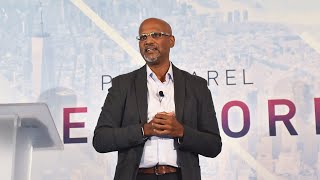
In this 2024 presentation, Alex Thomas, Vice President of Global Quality and Manufacturing Engineering for Gap Inc., outlines the scale of Gap’s four‑brand portfolio (Old Navy, Gap, Banana Republic, Athleta) and the massive volume of apparel it sources from over 25 countries. He describes how the pandemic, geopolitical trade shocks, raw‑material price volatility, and logistics bottlenecks have shattered predictability, prompting a strategic shift toward regionalization, vertical integration, and omnichannel fulfillment. Thomas explains that the traditional three‑legged supply‑chain model (quality, cost, delivery) has evolved into a five‑pillar framework that includes a real‑time Control Tower, predictive analytics, innovation, Voice of the Customer (VOC), and a culture that drives execution. He details Gap’s data‑strategy—capturing volume, variety, velocity, veracity, and value—to feed AI‑driven “precog” models that forecast quality, cost, and delivery outcomes. The VOC platform (PAL Reviews, Clarabridge, Medallia) aggregates 2.5 million customer feedback lines, which are looped back into product design, fit, and durability improvements. He discusses vendor co‑creation, moving from a purchase‑order relationship to strategic partnership with shared data. Sustainability and Industry 4.0 initiatives (IoT, automation, marker‑optimization, deadstock redistribution) are highlighted, along with the hardest automation challenge—sewing. Finally, Thomas reflects on the cultural shift toward digital‑first collaboration, virtual factory visits, and the impact of virtualization on interpersonal relationships, emphasizing cost, speed, and quality gains while maintaining in‑person touchpoints.
Chapters
[FOREIGN LANGUAGE] [Speaker] All right, so quick introduction about myself. Alex Thomas, the Vice President of Global Quality and Manufacturing Engineering based out of our supply chain hub in Hong Kong. And I must say, it's the first time that I've been out for the past 3 years out of the country with, I'm sure you've heard of the messiness, and it's been fantastic to see people in person, people who we've been talking to, had meetings, weekly meetings, monthly updates, quarterly updates, all on Zoom. And the first thing that strikes you as one of my colleagues is how tall or short they are. Completely unexpected. After 3 years of looking at a 2-inch Zoom window, the first thing is like, oh, wow. Did not expect that. So fascinating. I'm really glad to be able to be here in person. All right, so Gap, as you may know, is a $16 billion holding umbrella for the 4 brands that we own. First and foremost is Old Navy, $8 billion in revenue, and the target market is democracy of style. It's our value brand. Second is our Gap brand, our namesake, American heritage, and the classic Americana that we serve our customers with. Banana Republic, outdoor travel-inspired, higher-priced casual formalwear. And last but not the least, Athleta is our women's and girls' brand. That's with the power of she. So between these 4 brands, we serve 50 million, 55 million customers across Asia, Europe, and the US. All right, so this is a quick highlight about the company and with the customers we serve. This is our scale, right? So on an annual basis, we have, we source out of 25 countries or more. 156 million tees, 73 million units of denim bottoms, 21 million woven shirts, footwear, and 35 million units of sweaters, right? So this is our scale and supply chain. And getting— pulling this together is from 600 million yards of knits, denim, wovens, and about a quarter of a million yards of blended fabric. Right, so this is our supply chain from fabrics, accessories, all the way to garments, and then selling our products. Fashion and the disruptions. Many of you have lived this the last 3 years, no obvious surprises. First and foremost, factory port disruptions, Goods stuck in Long Beach, California for 8, 10, 12 weeks. Delays when you find shipping, you know, up to shipping date to be confirmed. You know, I'm sure most of you have seen that. Geopolitical trade factors, countries getting banned, countries getting on a watch list, and the impact is that rapidly moving to new sources of supply. Raw material cost, massive yo-yo. Cotton prices up 300%, then down 50%, then up again. Petrol prices from polyester up 200%, then down 100%. The pace and the frequency of these changes has been unprecedented in the last few years, right? You've seen typically there'd be one or two events that happen every few years. You take it, you plan, and then you reconfigure. This has been pretty much 2 or 3 events every single year. What that led to is a total lack of predictability. The more black swan events, the more issues, the less we're able to say, hey, what do we do going forward? How soon do we have to reconfigure? Fire drills every week. And the obvious issue is supply chain constraints. You know, when you're moving thousands of containers of goods every day, the lack of predictability is a massive issue. With fashion, the first and foremost is the recalibration of the supply chain. Our supply chain is contingent on buying materials, fabrics from one area, moving to a different area, getting it to a third area, and shipping it to a fourth area. Massive logistical just-in-time movement. All the disruptions have led to the first big change, which is regionalization and verticalization. So the more vertical we're able to keep our supply chain, the less variance that we see in the final shipping. So that was our first, first learning and moving in the space to. Omnichannel. I'm sure you've seen this again. You've had, when the pandemic was on, stores shut, e-commerce was on a rocket, everybody was buying things online. The stores opened, e-commerce went down, and everyone was moving to brick and mortar. Sustainability. This is where we get a lot of questions from, a lot of comments, a lot of feedback from our customers, where goods are being made. Are they in regions where they're not supposed to be made, which is linked to transparency and traceability— what, when, how, and where— very, very critical factors in getting goods into the US, getting them into Europe. And the customer centricity is all the feedback we're getting. Again, this is with all the social media, the amount of the data points, the number of feedback and the quantum has, again, has been a huge, huge shift in what we're getting and what we do about it. So all these had a massive impact on our ability to have speed and agility, which is what our supply chain drives every year. So the last piece is the Industry 4.0. Again, in the middle of all this disruption, the ability to move at scale has been— massively brought forward by IoT devices and automation. Any— so this is a garment factory. Any guesses which year this is from?
'30s?
'30s? Close. Not quite.
17.
2020. Sorry, 1920. So it's 120 years. So it's close. So this is 120 years old, right? So the apparel industry has not moved that much. There's been some changes, but the whole sequential movement of A to B, handing over one part to the next, it's largely unchanged. We've got production lines, we've got hangar lines, lean lines, The product flow is roughly unchanged in the last 102 years. What has changed is this, the what and the how. We've improved on fabrics. We've improved on materials. We've improved on trims. And the how is with our suppliers, our factories, our manufacturing processes. And all this has been governed by a set of key performance indicators. So our KPIs are getting more and more nuanced. We're getting a lot more data points, dashboards about the what and the how and how that's impacting our business. For those of us who've been working in supply chain for the past decade, couple of decades, this is something which most of you know as the three-legged stool. Getting goods from A to B, they basically had to meet quality, cost, and delivery, right? These are three big elements that we had to meet and exceed for supply chain. Fast forward 2020, 2021, '22, that's no longer enough. So great product is still at the apex, And the great product is, for one, it's beyond AQL. For the quality professionals in the room, you're all aware of AQL, acceptable quality. That means you'd have 1 out of 5 as a defect, 1 out of 10 as a defect, 10%, 20%. That's the accepted way of production. But that's not good enough anymore, right? Even the customer feedback we get on one defective garment has an impact. And continuous improvement. So product quality has to improve year on year. What we did the last year has to be— what we do this year has to be better than what we did the last year. Agility and resilience, right? So lean manufacturing excellence. So lean is a huge push on getting lines configured, fast lines, responsive lines, and getting innovation to scale, quick changeover. And together with that, you have the nodes, the network where we get our fabrics, raw materials, interlinings, linings, all that goes into a product. So massive impact on how the agility of the product is governed by these elements. Cost is not just FOB. It's tariff engineering. This little tweak on that garment will give you X% duty saving. You have smart solutions like Shapeshifter with marker optimization. And in some elements, the cost goes down to the fourth decimal point. Then there's cost engineering as well, where we make what we make. And last but not the least, transparency leading to sustainable growth. And sustainable growth is not just moving from A to B or country to country. As one of my previous colleagues used to call the garment business, maraudering garmentos, going from one place to the next. That's completely, that's done. You know, we're in all the places we can be. So what's important now is automation, getting sustainable costs and reducing your cost through these technologies. The final piece is the ecosystem. So where in the past we had our suppliers, our brands, it was a give and take relationship, right? I'm a brand, you're a customer, you're a supplier. That's pretty much out of the window. And suppliers and brands are partners in this. No, it has to be, it is rather, it's mutually assured destruction. One can't live without the other. And that's in service of the customer. The feedback we get, the input we get all goes in this virtual cycle towards what we supply, how we connect, and back to the customer. So with all this complexity, what's changed from the, the, the three-legged stool is five big elements or the thread that weaves this together. Top left is our Control Tower. Next is analytics, predictive analytics. Bottom left is innovation, which is the baseline for entry. It's not just a nice to have. And voice of the customer, what we get back. And linking all these elements together is the culture. Possibly the hardest part in this piece. The Control Tower is a really big element on how we manage our supply chain. The first and the biggest impact is, of course, business continuity. So we get signals about where the goods are being made, how the goods are being made, which impacts speed and agility. Is there a macro event? Is there a flood? Is there an earthquake somewhere? How is that going to affect our shipping lines? Is something not able to get to a factory on time? What do we reconfigure the production lines with? So these are all dynamic changes that, that happen. And that has a massive impact on speed. If we do this, then you get faster. And the agility towards quick-run changes, quick movements. The second part is the analytics and the data that we get. Most of us in supply chain know that a lot of the data is lagging indicators, meaning we know that a garment is defective after you see the defect. You know when something is shipped after it's shipped. It's all looking at the rearview mirror. So what we're trying to do more and more is what can we do to see in the future? You know, how do we get more predictive about this and plan better? So this is fundamentally linked to all the data points we get. So on the data, which is part of the big element of getting Supply Chain Done is, so first off, you have our science-based and data-driven approach towards all our KPIs. And the three big elements we look at are product, performance, and process. Your product element could be how the product is attributed. It could be a defect rate, it could be a ship-on-time element, it could be a 4-point for fabric, it could be fabric moving from A to B. Performance is how the product performs. So it's a— could be a test data, could be a fabric package test, a chemical compliance test. And the process is perhaps the highest weighted element. It has the biggest part of the pie. A good process yields a great product. So this is where we spend a lot of our time in. So talking about data, what we're trying and doing is getting towards as much of a big data as possible to get more and more predictive. And we do this by looking at these 5 big buckets. First off is a volume of data, which is the number of data points that we get, which is the time that we get data on. Variety is the different types of data, product attributes, fit, quality impact, inline, endline. Velocity is the speed. The faster we get data points, the faster we can make, we can take action on it. And these three elements, the top half, are pretty much your baseline towards getting more, more, more predictive with our outputs and getting to an index. Veracity is truth, how accurate the data is. So we have our internal trust and verify models. We have a trust index saying, you know, how much do we trust the data that we're getting from all these different points? Lastly, the value. Where most of you have seen there's a lot of data coming through. Do we really need to see this? Is it making a difference or not? Cool. Can I get the next slide, please? Okay, so linking all this is our VOC, voice of the customer. So at Gap Inc., we have a pretty good platform. We get about 2.5 million lines of data from all our customers with feedback and telling us what they like about a product, what they don't like about a product. So this is some of the feedback we get. Love the stretch, had to get a smaller size. Not grippy enough on my body. So what we found was that there was a little too much brushing going on on the garment. So increase the brushing or reduce the brushing of the garment. And stretch and recovery, what do we do to fabric properties, you know, based on this feedback? Do we allow a bigger modulus? This is all the data that goes back into product creation and then back in the cycle about getting better product for our customers. This is just a quick example about some of the work we do based on our voice of the customer. So we get, for example, a pair of jeans. We want— we expect an average of a 3-year wear, which means 100 washes. You wash it once a week, twice a week. Activewear, when you're running in something or you have yoga pants, wash it everywhere. So it's got to last a minimum— 100 washes. So based on the data that we get, something's working, not working, we then improve and change our product accordingly based on what we need, or rather based on what the customer is telling us. This is a little more of the harder piece, but the more critical piece about getting to a high-performing organization. So there's two parts here, and this is our company culture. The first part is what we do, and the second part is how we show up. So it sounds like catchphrases, but there's time and effort we spend that the more you repeat it, the more you show actions about how this is coming to life, the more real it becomes. Try fast, learn fast, fail fast. Create with audacity. Think about the customer, not what the department wants, not what this division wants, not what a manager wants, but what does the customer want from this? And focuses into getting our actions into making a better product for the customer. Speak with candor. That's, in other places, it's psychological safety. It's a baseline in any high-performing high-performing group or entity or firm. And this is the how we show up and what we do. So the talent on people, how do we motivate and get the best people with us who are able to make and drive the change for the company? Do the right thing. Again, it sounds easy enough, but in the apparel space, it's a values-driven company. There's a lot of things we don't do as much of what we do. So this is, again, a constraint on what we can do and what we shouldn't do, rather, as a company based on our values. Inclusion is how we act the same whether it's in New York, San Francisco, China, India, Vietnam, everywhere within our sourcing entities that we have. Having the same behaviors, activities so that everyone is part of the same culture. They feel the culture. And the last piece is execution. Own it, do it, done. Walk the talk. Any guesses where this picture is from? You got it. Yes. Minority Reports, 2002. So for those of you who may be familiar, Tom Cruise, precogs, they can tell the future. And the exciting thing is we are here today. We have precogs in our system. We have artificial intelligence. We have predictive capability. We're able to say, hey, with all these different data sets, we can predict with different levels of certainty what's going to happen. So this is, again, a big part of where supply chain is moving ahead. So it used to be making garments and making product, but it's making garments, making product with this, knowing what do we do going forward and how fast can we get there. And with that, thank you very much. And that's me.
Fear with my microphone. Thank you, Alex. I was ravenously taking notes. I forgot to introduce myself. Besides working at NTTUCET, I also teach at Framingham State University. So I'm looking for many guest speakers as I'm here over the next few days. But this is our opportunity now to ask questions to Alex. So do we have— I don't know if anybody— oh, here we go. They've already started. They've started rolling in. Slido at this point. So our first question is, how can vendors play a more strategic and empowered role further up the value stream?
Yeah, good question. So this is something we're actively working on. So in the past, like I mentioned, you have this vendor-brand relationship, right, where you have the supply and demand and you produce to a purchase order. That has been changing over the past few years. Now there's co-creation. We work with our partners to say, you know, you co-create from the beginning, right? What are, uh, what are your trends? How do we build this together? You know, so when you co-create a product, then a lot of the tactical elements that used to exist, you know, where you make the product, you go and QC something, you check something, that's, that's done, right? So we now say, hey, we, um, as a strategic partner, this is what we expect. And best of all, there's data to see how we're doing.
Right, right. Moving forward. Okay, how are— this is the next question. How are you— oh, that one just ran away. Here, they're changing as they go on the screen. I think the next question is, has Gap set science-based targets for achieving climate goals?
Climate goals, great question, but I'll have to defer to my colleagues in sustainability for that.
Okay, all right.
So if someone wants to meet up and find out about this, I can certainly put you in touch with the right department that'll give you that information.
Well, I would like that information too. So, okay, the next one is, how are you using technology? Well, this also you might need to refer on to your team, but your sustainability team. How are you using technology to improve sustainability in your supply chain?
Using technology to improve— oh, sorry, I lost that.
Using technology to improve your supply chain in regards to sustainability. I think that was the question. It just ran away. Oh, wait, here it is. How are you using technology to improve sustainability in your supply chain?
Yeah. Again, I wouldn't be the expert on that. And if anyone wants to meet me the next— today and tomorrow, happy to take your question and come back to you on this.
OK. This one might be easier for you, at least within your department. How do you feel predictive analytics will be leveraged, utilized in the day-to-day decision-making? And what areas of the business do you feel might be affected first? That's a mouthful.
Yeah, there's a lot there. Predictive analytics, so this is a multifaceted question. So we have everything from the 3 big pillars, right? We have quality, cost, delivery, your basic fundamentals. So with quality, we work on indexes, you know? So we have those 3 buckets you see, and that gives us an index, and that would actually predict what would be our output. So if you use this fabric, if you use this leather, made at this factory in this country, this is how your output would be. So we'd say, hey, that's not for us. So these are the 5 options. We choose something else. So this is where we're able to say that if you have this combination of attributes, then you will have a problem. If you do this, there's less risk. So that's the outputs that we have.
OK. Oh, how do you rapidly validate precog data against what customers truly want?
Yeah, good one. So this is, again, it happens at multiple levels. On our VOC data, this is a lot of us, there's a lot of information that we get from our voice of the customer. So give you an example. So sometimes we get information from our customers saying, hey, this is what was on your website, this is what I got, it's not what I expected. And then we'd find out that someone had maybe pinned the garment a certain way, you know, so it doesn't represent what the garment actually looks like. So we're able to make a change in minutes. And other times we say, hey, the garment is— there's a fit or a fabric that was made, but the customer's not responding, they don't like it. And that's gonna take us a longer time to change, you know, whether it's the next purchase order or the next season, that's when we make the change.
Right.
So the— The test and respond is how we're able to quickly make changes on what feedback we get.
It's pretty amazing. Okay, what are you using to capture and record the VOC feedback you spoke of?
Yeah, so technically there's two platforms. One is PAL reviews that you may have heard of to get the actual data on the website. And we use combinations of Clarabridge and Medallia. Medallia scrapes all the data, gives us an indicator that's positive or negative, whether— and it gives us attribute-based data as well. So combination of these three elements gives us the VOC. And on top of that, we also have a lot of well-intentioned partners, whether it's our own teams who come and give us data, and maybe they'll write to an executive directly. Saying I don't like it, you know, or I like this. So I'd say 90% is done systemically and 10% through other channels.
Okay, I want to ask a follow-up question. How big is this team that's like monitoring this VOC project or category?
A lot of it is automated. So we have, you know, we get a scrape, we get a flag. So we have a customer insights group, 20, 30 people. We have corporate quality. We have a few people sitting in San Francisco. So between them, they share data. But a lot of it, I said, is automated towards what we get. So it doesn't need a huge team.
Right. It takes a huge team of robots. Yeah. How does your team manage or mitigate deadstock and inventory buildup?
Yeah, deadstock and inventory. Again, a good question. I know we have multiple ways of handling this. One is we work with a lot of charities, we work with a lot of organizations. I think similar to those you might have heard of with, I don't know, Bombas is one of those companies that does something similar where they work and have different channels for redistribution of this. So that's one option. But again, not my area of expertise, but I can certainly find out.
Great. What aspects of Industry 4.0 have you found to be the most difficult to implement in Gap warehouses?
Oh, this is a— that's a pretty big question. What part of Industry 4.0 found to be the most difficult? There's multi-elements to this, right from getting a tracker kind of element on a carton, finding the way through where the inventory is kept. We're trying to solve multiple problems in distribution, starting from how fast can we get the goods out, how can we replenish, whether it's total stores versus omni. So it's a pretty big space with different problems to solve. So it's not one piece that I'd say we have a difficulty in implementation.
How do you account for assumptions built into your predictive analytics?
Yeah, this is multiple test and learn cycles, you know. So again, there's no magic bullet. It's— there's, you know, we've had as many, I'd say, false starts, failures as we have successes, but the more we kind of test and learn, we say, hey, we did this, didn't work, and therefore we need a different set of assumptions. So we have, say you have 15 attributes mapped against another 20 attributes on a scale. And then we find out that some attributes going back to value, they got no value to be there. So it's giving us a false reading.
Right. You guys are doing great with the questions, by the way. So many good ones coming through. So the next one is, how do you take VOC data to impact continuous improvements on your product?
This is a big one. This is where we said we have a lot of input on our customer feedback, right? So how we continuous improvement in product, the first, I'd say the biggest elements are the wearing experience. So whether the customer tells us, hey, it's either a garment is pilling, which means something in our wash or fabrication is a problem. So we change that. Another element is the fit. Sometimes we make a boxy fit, which is— which we had a lot of feedback on saying that's going to work, but the customer doesn't respond to that. So depending on what kind of feedback we get, then some changes made in minutes and hours, others can take a season.
It's pretty amazing. OK, I think there's one question in the middle here we haven't asked. What areas of— the legacy, the 1920s image business model, do you feel will be the last bastion of analog processes, or do you feel all areas are able to be evolved?
It's a process. The last area of— or the last bastion of an analog process— so the way that we have right now, and it's a really interesting meeting that we had with Alibaba. They've got a factory in north of China. So one of our partners, we— spoke with them to say what they're doing. So they're running apparel like a tech company.
Right.
And the analog process refers, well, one of the most analog process is sewing, sewing operations. So their logic is the harder or stiffer a material is, the more easy you automate it. The softer or flimsier it, the less it's possible to automate.
Right.
So sewing, I guess, is the one area. So if you look at the different garment processes, cutting, sewing, assembly, small parts, inspection, audits, shipping, you know, the whole product-to-market cycle. The cutting inspections are obviously easier to automate. The sewing part, you know, you have certain fabrications are easier, certain fabrics are not. So that would probably be the least or probably take the longest time to change, to change and to automate and evolve.
Right. I think that was our last question. So unless there's any other pending questions here— oh, that one. Oh, we have one more.
OK.
This is the last one. How do you feel comprehensive virtualization digitization of business processes will affect interpersonal relationships in business locally and globally? Good, Ander.
Comprehensive virtualization digitization of business processes. Interpersonal relationships. I'd say on one part, it's almost inevitable. There's certain changes that have happened with the pandemic that's irreversible. There's, you know, in the past, I'm sure many of you in the room, you've had, you work with partners, worked overseas, had to touch a fabric, had to feel and see how it fit. Virtualization, again, the last many years, You can do virtual fitting, you can do virtual garmenting, virtual photographs. And yes, it does have an impact. There is a relationship, but if I were to quantify it, can't tell. The one big aspect is there's been savings in cost, savings in time, improvements in quality. So to give you an example, so we used to say that you had to visit a factory to see what's going on. And you had a lot of people on planes, trains, automobiles going to every factory looking at stuff. But we've actually set up procedures where we can do a lot of this virtually. And while there have been a few, a couple of issues, by and large our KPIs and multitude of data points we look at hasn't dropped. In some cases it's improved.
If you're doing that digitally, how does that affect your relationship with your factories then? You know, you're not seeing them in person, you're seeing them on Zoom. Is it the same? Has anything changed?
Well, we do still meet and see our partners, but it's not as often as it was. You know, where maybe in the past it used to be once a month, once a quarter. Now it's, you know, we still have Zoom sessions on a weekly, monthly basis.
Right.
But we still have in-person meetings, right? So it's not completely obviated.










