How to Fast Track Your Digital Fashion Career | Nike | PI Apparel
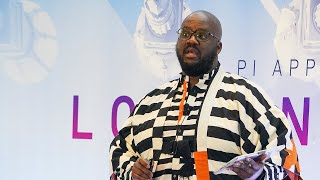
Christian Harris, Nike's senior technical designer, explains how to move from legacy software roles to brand positions in digital fashion. He mapped his own path from Gerber to Nike by building thought leadership through workshops, documentation, and community platforms. Harris recommends treating your career like navigation: create waypoints through projects and speaking, tailor your resume to each audience, and use industry events to stay ahead of new tools.
Chapters
Hi, everyone. Christian Harris. I am a senior technical designer and 3D lead of Global Apparel Development Standards at Nike. And that job title says not a whole lot about what I do. It's really terrible when I have to explain it to people who don't work in our industry, right? It's like I hate when people in my family are like, so what are you doing? I don't know. I don't know. So welcome to— Da da da da da, top clicker. Life is about cream. Got it. You tricked me. It's okay, we're still friends. Welcome to Where You Are and Where You're Going. So the inspiration for this chat came from a few places. One, we have a lot of technical designers that are becoming real estate agents and we need to keep that knowledge in the industry, right? But I have a lot of friends over the past few years who've sort of been stuck in a space. Sometimes our ladder in development or even design sometimes isn't as long as we'd like it to be. But digital offers a lot of new opportunities for us to even change categories and sort of break some of the conventional norms in our industry. And one of the other sort of weird experiences that inspired this is sort of— being at Nike now, this wasn't any of my coworkers at Nike, but there have been a few people when I mentioned where I worked before, what I was working on before, they've laughed in my face. It's like, oh gosh, that's uncomfortable, right? A blow to your ego. At the same time, it was an experience that I could connect with because I knew from where I had been and what I was doing, there were lots of things that people wouldn't understand and people in the spaces that I was trying to go into would see what I was doing a bit differently than what I was seeing and what I was doing, right? So I get it. I felt it was like a little shady, right? Like, you're just going to laugh in my face? But I had a lot of great knowledge and information to share. So as I said, now I am a senior technical designer and 3D lead for global apparel development standards at Nike. Prior to— and you guys better not laugh because that shady, and I still love this company, I was the product manager, product owner, evangelist for AccuMark 3D with Gerber Technology. Right, okay. So what I had to then grapple with is the perception of what I was doing versus the experience. And I think this is something that we can all relate to in our jobs, right? Like, we all do things where the job description doesn't always line up bit for bit with everything that we're doing. I work in a global— global apparel development standards. What does that mean, right? Everything that I do then doesn't always line up. So when we're trying to figure out where we are and where we want to go, we really have to think about that perception. So for me, I love Gerber. I still love Gerber to this day, even though they're an electric company now, which is a little uncomfortable. But I learned a lot there. But the perception in a lot of the spaces that I wanted to go into, because I wanted to move from being on the software side to being on the brand side, because I felt a lot of the innovation that would happen in digital is going to happen at the brand level because of the folks doing the doing, right? The software providers are providing the best software that they can, but the brands have to do the work. So while the perception was, oh, legacy software provider with a narrowly adopted 3D tool, the experience for me was a deep dive into exploring digital tools and the foundational tech development and history of how we got where we are. I got to do a lot of traveling, working with customers. When customers had a problem with the tool, guess who got to hear all the rants and get beat up on a little bit? It was me, but I loved doing that work with the customers. Because it gave me the best inside track to figure out how to develop the best tools and how tools can be implemented in a way that are gonna be productive-culottes for customers. In that role, I also got to do a lot of workshops with engineers and learn how to speak their language because right now we're in a situation where our tools are being used by the apparel industry, but all the software is being coded by people who are so far away from our industry that sometimes it's difficult for them to pick up and adopt and understand what we need to do and how we're trying to do that. So, now that I've kind of mapped out my perception of where I am versus the experience, I need to figure out how to get where I'm going. So, everyone with a 19 beginning their birth year knows what this is, right? And sort of take a step away from the presentation for a second to think about this, right? We all have had those experience then, those of us who were born at least in or before the '90s, of being in a mall. And you're in a mall, let's say it's holiday time, and you're going shopping, you're so happy 'cause you found something for your mom and she's impossible to buy for. But you've been at the mall for 3 hours, it's not your regular mall, you need to figure out how to get out of it, right? How do you get out of the mall? What is the first thing that we look for? The mall map, right, the directory, right? So that's what's on the screen for everyone who doesn't have a birth year that begins with a '19. When you find the directory, what's the first thing you look for on the directory? Right. Wasn't it so wonderful when you found that little star that said, "You are here," right? Like, we can all connect with that feeling, right? Like, you're looking feverishly at the map because you're in the middle of the mall and you're like, Okay, I think I came in from over there, but I came in Macy's, and that's Sears. No, I didn't come in from over there. Where am I? And you have a little star to tell you, you are here. It's nice, right? It's like when your GPS says, you have arrived. I always feel like, ah, I have arrived. So what is so great about finding this on the map is it's the most objective version of where you are. You know exactly where you are when you see that little star, and you can triangulate your position to figure out how you're going to get back to Macy's. Once you get to Macy's, of course, you got to find out how you're going to get out of Macy's. Remember which door you came in. Remember that part. And in this case, you say, well, I got Aunt Patty's White Diamonds perfume, so I'll just follow the smell of the perfume counter, and I know that's the door that I came in, right? So we're good. And then you get to the parking lot, and there are people stalking you for your spot. You're like, OK, I'm leaving, but I don't know where my car is. Give me a second to find it, and I'll wave. Whistle from whatever aisle I'm in. But it was objective, and that is how you start building from where you are to where you want to go, and in digital. So the way we can sort of tell a story to connect that experience of finding where you are at the mall, we get a few giggles, but it's very relatable, right? If we think about our journey in terms of a narrative, then we have the option to rewrite it. Okay, and when you're starting to rewrite that narrative, there are a few things that this gives you. One, it allows you to think about it as not just your experience. Sometimes we take our resumes too personal, where we're like, "Well, I did this, this is what's important to me," but really it's about a narrative. What story are you telling with your resume, where you've been, what you're doing, what you wanna do? So, we have to start with that existing narrative. That's the perception and what assumptions people will make about you based on where you are, right? They're going to look at your resume. They're going to look at what school you went to. And we all, from the apparel industry, know how cliquish those things can be. I love the sort of— it's very West Side Story sometimes, the rift between FIT and Parsons students. They're like, oh, they're good at sketches. And that's all they do. They can't actually make the garment. It's like, come on. They make garments too. But people will look at your resume and take their experiences and project them onto what they're seeing. And it's not the same for every audience. That's one of those reasons that you don't send the same resume to everyone, right? Tailor it where you can. Don't lie on your resume. We all know that, right? But let's just say again, Christian is not encouraging you to lie on your resume. Nike is not encouraging you to lie on your resume. These are all my experiences before I got to Nike. So this is no Swoosh secrets. Sorry if someone saw the Swoosh and got excited. But we have to start thinking about that existing narrative. And then the next thing that we wanna do is think about what's missing, right? Think about your values, what you wanna do, and then start to think about the things that you don't even realize you do well. And think about then what people depend on you for. You know how we have some coworkers that although we love them, it's like, Susan, why are you always asking me the same question? It's because Susan trusts you to answer those questions. And it might be a little bit— a little annoying, but think about it from the lens of, is this something that people depend on me for? And is this something that I should capture in the sort of what's missing? There are a lot of additional skills that we have. Like, one of the best things that I've been able to do in my current role is create a lot of training content and videos. And I didn't go to school for video editing, but having that skill and creating documentation It's very helpful. And I do it from the lens of a kid who always struggled with reading in school, right? Like, I was a kid that book— we have to do a book report? OK, I'm finding the book with the most pictures and the least words. That was me. And now I'm able to sort of turn that into documentation for designers who also were probably that kid who was like, give me a few words, many images, right? So we can tell stories with images. And that's one of those skills that I wouldn't have captured on my resume. but it's what people depend on me for. So that gives me an idea of what's missing from the existing narrative. When you start to talk to your folks, you can ask them for the feedback as well, but set the stage for honest feedback. Don't go fishing for compliments. And when you go around saying, "Hey, what am I good at?" people are gonna say, "Okay, well, maybe this, maybe that," but let people know what you're looking for really, and then, You know, be open to that feedback. Sometimes you're gonna hear things that maybe you didn't want to, and that's okay. You know, don't laugh in their face. Clearly I have a chip on my shoulder, right? No. So think about what's missing and then think about what you want. So we're gonna, just like we were in that mall, we found the directory, we know where we are, we gotta get to Macy's. You can create new waypoints to serve the narrative. So you're leaving the mall, you're like, okay, I'm passing Orange Julius, that's right there, okay, I'm on my way to Macy's, I saw that on, oh, there's The Limited, I remember stopping in there, great, we're sort of where we need to be. So you can create new waypoints that serve the narrative once you start thinking about what the existing narrative is, what's missing, and then what you want. And we wanna think about these in ways that redirects the narrative in our favor, right? So how can you create elements? If people are going to sort of say, well, you worked in legacy software, then obviously one of the things to do is to show people what I know about more current softwares and more tools that people are using in the industry and enjoying, right? Think about how what you wanna do aligns with your values, where you wanna go, and what you enjoy doing. At the same time, Create waypoints away from what you don't want to do. We all have those elements of our jobs, right, that we're kind of like, uh, I would love not to do as much of this. You can include points in the narrative that also move you away from that. For example, I did grading projects in grad school, and I was like, I am not going to learn more about grading because I don't want to be in the position where I take a job doing grading just because I need a job. I'll starve. That's how much I hated grading. I've since come around, but at the time, I thought about that, and I didn't include that anywhere on my resume because I don't want to do that. So what that looked like for me in that transition of going from working at Gerber, which I love and still love, to getting more on the brand side and at a Nike kind of level, I took that existing narrative, thought about what was— what was missing and what I wanted to do. And in the end, my idea of what I wanted to do based on my values and how I wanted to help people was demonstrate independence away from whoever I'm working for and at the same time sort of step into a space of thought leadership because I loved working with engineers. I had a lot of skills of figuring out how to communicate. How do you talk about pleats with engineers? Their ideas of folds, it was very Big Bang Theory sometimes working with engineers. It's like, OK, Sheldon. Calm down, we'll get through this, but I have a right and a wrong side of my fabric. Well, how do you know what's the wrong side? I can decide which side I want to use to say. We think that way too, but there's still— you decide what the right and the wrong side is, and then your pleat direction has an impact on which side you're going to pleat on. And so there are lots of little fun things like that in learning how to communicate with those groups that was helpful. So I wanted to step into that space of thought leadership. And the most important part with all of these things is that it is your responsibility to connect the dots for people. When you have these experiences and you want to create the narrative, it is not like— how many times have we seen a movie that doesn't kind of make sense because it didn't connect the plot points, right? It's like, okay, so this is what you want to do and this is what you did. How does all this work together? So you think about things to include and say and share that serve the narrative. So now we're at that point of thinking about building a new narrative. You got everything set up. What do we need to start to build the new narrative? For me, it was thinking about it like I have agency here. Like this is the story that I'm telling about the work that I want to do. You're the author. Again, it's your responsibility to connect the dots for others so that they get the plot points and it all works as fluidly as possible. Then once you understand what you want to do, serving the narrative is how you make decisions, right? You know and you understand what kind of stories you want to tell and what you want to share. So then the things that you do in between are about serving the narrative. For example, when we get contract work and things like that, we always say— so people say, well, can you do this and can you do that? Well, my daughter's going to prom. Can you make a gown? You can just say, sorry, that doesn't serve my narrative. Thank you. But when you're thinking about your time, it's very important to sort of figure out, is this going to get me where I'm going, and does this work with the story that I'm already building? Sorry. Back. So my tools to build the new narrative, and a shameless plug for my friends at PI. During the pandemic, this was after I left my position at Gerber, anything that PI was saying, hey, Christian, can you help with this? This is why you're being tortured with my voice today. Because my friends at PI say, Christian, are you available? Can you do this? I always say yes just because I like this environment. I like you all. I love my friends in industry. But this is also a great space to have great conversations. So when I wanted to take where I was and build a new story to let people know I have a lot of value in 3D and digital journeys and digital product creation, I jumped at every opportunity to have a stage like this, even though it requires me to get out of my comfort zone sometimes. I remember one of the things that I did during the pandemic for PI was a whole little masterclass-style course on everything I wanted people to know about digital. So it was like all the secrets that I couldn't share when I was selling software, and I got to share it using PI's platform. But in doing that, it was so far outside of my comfort zone, I was freaking out every day and a nervous wreck. And one of my mentors said to me, And it still sort of sits with me today. She's like, Christian, you're taking every area in which you feel weak and applying it to others' perceived excellence. It's like, oh, I don't know if she read it in a book or where she got it from, but it's changed my mind so much about how I approach things. Is even today as I'm putting this presentation together, I'm like, oh, freaking out. Oh my gosh, this isn't gonna work. Breathe. You can do it. You're not great at everything, but we're going to get up here and we're going to try and put these things together and tell the story. One of the other things that I did a lot of is all the contract work that I did, I included what I wanted to do and what I was already doing. So whether they wanted a digital proto or not, they were getting one. And it helped me put together other stories to tell when I was interviewing, like, here's how the digital proto has helped in this process. And they didn't always pay me to add that digital component, but it was including what I wanted to do in what I was doing, and it helped a lot because then I got to do that in some pretty cool spaces. So building a new narrative, these were my tools, but then there are several other tools out there that exist, some that I did and didn't use. One, you're at conferences like this, right? This is a great way to build new information, new knowledge, and have new things to share. So for example, if you're trying to be to add more value to what you offer to your company, to move up in your company, to change companies, to change job roles, digital tools are at a point where the age of having one tool in your ecosystem is long gone. So everyone that's in that exhibit hall now, you should have a solid idea of what their goals are and what their core competencies as a provider are, because it will come up in your work. At least, I promise, at least 2 or 3 of the companies that are there today that you're not currently using will come up eventually. And when that discussion happens in your org, if you're in a position to say, ah, I spoke with them at this conference, at that point, this was their goal, this is what they were trying to provide, and this is really where they saw their strengths. Here's how that aligns with what we're doing, or here's how that doesn't align with what we're doing, right? It's one of those little bits that your leadership will then look at you and say, wow, thank you for that. And you have the opportunity while you're here, and then it becomes another discussion point in your interviews, so on and so forth. I am currently enrolled in one of the digital classes at the New School. So training and education is also one of those things that in your story and in your narrative adds great subtextual little morsels, right? So if you're from one school and you're trying to bridge the divide because you're applying where maybe people come from a different academic environment, there are so many great certificate programs out there now, and you can take those. Take several of them. And it also shows people that you're willing to do the extra work to learn. And now you're in a position to give them a review of those courses. Well, here's the one that I preferred. Here's what was the most helpful for me. And you can take training for different reasons other than just wanting to learn. For me personally, because I have a crippling fear of failure, the training and education component is about having someone grade my work so that I force myself to get the work done. And they get the practice done in the tools. So that's where the value comes for me in taking trainings on even tools that I already know. If, like, in our day-to-day work, sometimes we don't always have an opportunity to be in tools the way some of our teammates are. So training and education is a great opportunity there. Another little tool to sort of add into your narrative if you're trying to change directions a little bit, Organizations like IACDE, they do a lot of really great things in digital, and they have a lot of great folks who are just interested in driving digital as far as they can in a lot of different categories. So look into your organizations. There's also self-led learning opportunities. So I give myself projects. That's a project I'm sort of in the middle of now, taking one of the shirts that I made, and I've already sewn it up several times, but it's like, let's see what it takes to get this sewn up in CLO And as I'm doing my class, I'm working on that kind of stuff. And then opportunities to do contract work and volunteer, again, include what you're doing and include what you want to do and what you're doing. And if you have opportunities to do things like speaking at PI or doing panels and things like that, they're always a wonderful thing to help elevate your own skills, knowledge, and information. During the pandemic when they were doing a lot of spotlights, I moderated a lot of them. Not because I'm an expert on digital showrooms, but because it allowed me to have those conversations with people who were experts. So you don't always have to be the most knowledgeable person on the thing that is being discussed. You can find other ways to participate and facilitate and build new skills. Learning how to moderate panels is a great skill to have in your back pocket. And, you know, there it allows you to participate without being the expert in those fields and things yourself. So I hope that was helpful at some point, and you guys got some nuggets and things to help you on your own journey to get out of the mall and into the parking lot. I included some of my favorite books at the end, and some of you probably already read these, but they've just been helpful in general for me when it comes to building my own me brand and understanding how to speak the language of leadership. The Toyota Way is a great one, recommended by one of my friends in this room. And then How to Win Friends influenced people. It's one of those things I return to and read routinely just because it's helpful. It's a lot of things we already know, but then they give examples that really show you how to work in spaces with a lot of people who you don't agree with. And that's certainly something we need a lot more of today.










