Leading Through Tech Transformation: How Retail Teams Actually Drive Adoption
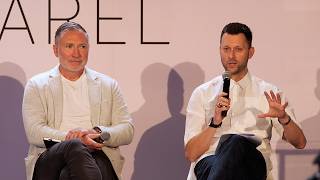
Retail leaders from SwimUSA, Birdie Grey, Joann Stores, and Calvin Klein discuss how to get teams to actually use new technology. They stress listening to planners' pain points, starting with small rollouts instead of company-wide launches, and showing concrete wins like time saved or lower inventory costs.
Chapters
Thank you for joining us today as we delve into leading with confidence and keeping your teams inspired throughout the tech transformation. We've assembled an awesome panel for you today, so let's give them a chance to introduce themselves.
I'm Dave Christie. I'm the VP of IT at SwimUSA. We're a wholesale distributor, and we also sell online direct-to-consumer through some of our e-com sites.
Hi, I'm Lisa Dodis. I'm the SVP of merchandising and planning at Birdie Grey, which is a D2C bridal brand. I've spent over a decade building merchandise and planning functions at high-growth companies, and so really excited to be in this panel talking about technology and bringing it to companies, as that's what I've been doing for the last 15 or so years.
So Peter Meyer, I am the formerly the head of merchandise planning for Joann Stores. Anyone who is either a crafter or has known or been associated with a crafter over their lives knows Joann Stores, unfortunately at the end of life for that company. But in my background, I've worked for large companies, May Company, Macy's, et cetera, for many years on the on the merchandising side and then also on the planning side as well.
Cool. I'm Steve. I think you know me by now. I'm head of AI collection merchandising at Calvin Klein. But to be fair, I also work on Tommy Hilfiger as well under the PVH Group. So—
Absolutely. We love Steve, right? He's awesome. So let's start our conversation. Let's start with Lisa. As technology reshapes merchandise planning, how do you help your team stay confident in their expertise and adapt without feeling overwhelmed?
Yeah, so I have found that in order for any merchandising or planning technology to be successful, you really need a skilled team to implement it and then continue to iterate on it. So bringing the team along and having them be excited and motivated to adopt this new technology is absolutely critical. And so what I found that, you know, there are sort of like 3 key factors that are important in doing this. So, number one is getting buy-in from the team. So, making sure that they are really excited about this technology. And, you know, some of the ways that have worked in the past is really listening to their pain points and explaining how this technology is going to address these specific pain points. You know, bringing as many examples as we can. You know, that this report used to take you 5 hours and it's going to take you 10 minutes. We had spreadsheets with over 100,000 SKUs we were forecasting. Excel kept crashing. Now you're not going to need to deal with that. And so getting that buy-in, getting the team excited is very important. The second thing that I found really works well in helping the team not feel very overwhelmed by all this is really getting them involved in the implementation. Having them, the team that will be using this software, be joined at the hip with the data teams, the IT teams, the vendor that is supplying the software. It's not only very important in making the technology work, but it's also something that helps the team be excited about it. I mean, as they're implementing and working through the technology, they're not as overwhelmed by it because they're actually, they're just doing it. They're not thinking about what it's going to mean. And then finally, having— celebrating the outcome and really, you know, when the technology is in place and it is making things easier, having, you know, moments with the team to say, you know, how is this working? You know, most of the time they'll say, this is great, this has really been life-changing. And, you know, setting up regular check-ins because, you know, there will be things that are really great, but then there will still be things that aren't working very well and that still need to continue to be re— like iterated on. And so, Having the team be involved in that continued iteration is also very important, both for technology, but also for team morale and excitement about the tool.
I definitely agree with you. I like to think of visualizing the outcome, right, as opposed to focusing, oh my God, we're just starting this and much more work. And also remind them of no more manual work and again, being able to really do their job and being more strategic as opposed to just being, you know, pushing papers around, right? Any other comments?
I think I would just add from a buy-in perspective that in my experience, there are a couple of other areas that are really critical. The senior leadership having buy-in and then having that be able to support the team, knowing that oftentimes they'll be pulled away from their current tasks and supporting that. And the second one then is cross-functional buy-in. I found that bringing the team, whether it be from finance or merchandising, along on the journey really helped from an empathy perspective so that the teams were able to understand exactly what was going on, what the requirements were, and then feel like they were part of the journey as well.
Absolutely. Absolutely. I agree. So next question, and let's go to Dave. What strategies have you found effective introducing new tools or processes without disrupting daily planning workflows?
Yeah, it's, it's been kind of a challenging situation because of our, say, multi-divisional setup and how each team does things a little bit differently. So we had— we tried a couple strategies that didn't work. We have a couple that we're working now that are, that are moving pretty well, and then we've got some ones planned in the future. Uh, one of the things from an IT and project management perspective that has been tough is our teams are distributed and we have multi-divisions, yet we have a small IT team and almost no project management. So we had to come up with strategies on how we're going to help and really propel them, because as, as everybody said already here, teams are busy doing their day-to-day job, planning how are we going to make sure that we're going to add value and allow them to continue to serve the business, right? So we, we also sort of preach that effort of, you know, if we're going to fail at a strategy, let's fail fast, let's be nimble, and let's try it. So, you know, two things that didn't work. One, we tried going with a route of let's do a centralized planning approach. Let's not bring in all the stakeholders for some reason. Let's just get the CFO to make the decision on how we're going to do it and lay the law down. That didn't go so well. So we quickly pivoted. A lot of pushback from the planning teams. You know, they didn't feel we were hearing their voice. And our planners aren't just, you know, traditional planners. That's not what they're doing. They're doing merchandising, they're doing planning, they're doing sales, they're talking to the retailers, they're doing a lot of different things, not just, you know, the planning aspect. So that was kind of a very important thing that we missed. And the other thing is the way that we originally set up the projects was Everybody was siloed. IT, mostly our analytics team that was preparing the data, cleaning data, getting it ready for the models to push out to the new tool, they were siloed. They were working along, you know, their requirements. The merchandising, planning, sales teams, they were doing their tracks with the consultants and the CFO, finance, and executive teams were doing their own thing. And we were sort of talking in like a weekly, you know, catch-up, but it wasn't, very concise and grouped together. So we abandoned that very quickly and moved into, that's been working well for us, is more of the cross-functional team approach where everybody had to set up in the beginning, what are your goals? What are your must-haves? And that has really made the difference 'cause now everybody goes into each phase of what we're doing and knowing what we're trying to get out of it instead of just not knowing or assuming we're gonna get you know, maybe every planning tool, you know, in that phase. So we've really broken that down into a smaller structure. It's been very helpful for the teams. It goes towards the fact of just taking things in smaller bite-sized chunks. And really an example, you know, probably of how this has made the most impact is that allowed us from an IT analytics team, we took a step back and we said, wow, they're struggling at trying to analyze this data. And our data wasn't clean to begin with. So we had to do a lot of things with cleaning the data. Getting everybody's attributes organized. We're probably 90% there. Once we got there, we realized IT says, "Hey, we're good. We're driving the file over. We know we dropped a 2 gig file over today. It matches 2 gig on the other side. We're good, we're done, right? We don't look anything else." But then the team's like, "No, the data's all wrong." So we ended up having to build a tool in our Qlik. We use Qlik as our analytics visualization tool. We built that so that we said, all right, you can go now slice and dice this the same way that it's in the planning tool, the way you're traditionally used to looking at it. And that has been the biggest impact to improving our UAT and really getting them to accept that the data is right. 'Cause once they think the data's wrong, it's almost impossible to get 'em to trust the tool ever again. So that's been our number one thing to do. And that has really worked well since we put that in. Now we're still not moving at the pace we would like to, so we're still relying a lot on Excel. And doing things, but we are at least taking what we've done in Qlik and getting them the data quicker. And a lot of things that we saw here today will, and yesterday too, will definitely help us accelerate. So we'll keep a lot of that in mind. And then really in the future, what we're doing, and we're just starting to prep this, is smaller chunks of features to put out there, right? And experiment, right? We want them to experiment. Don't be afraid of it. It's everything we do with AI as well. Don't be afraid to hop into ChatGPT and try a prompt, right? You know, even something silly like creating your own headshot or creating a cartoon version of yourself, right? Do something fun, engaging, simple. Don't be afraid of it. And we're trying to preach that with all the technology. But really in this world, because it's been almost Excel only, you know, for as long as anybody can think of. So we're really pushing that and, and giving them the tools hopefully to be able to do that experiment quickly while keeping it controlled in a certain part. That we know they're working with right datasets and clean data.
That's a great lesson. You know, when I think of silos, I think of inefficiency, miscommunication, and just not getting the work done. So, it drives again how it is key to make sure that you get buy-in from the entire enterprise truly before you venture onto the actual project. Any other comments? Okay, next question. This is for Peter. How do you determine which planning tasks are best handled by people and which can be supported or replaced by tech? And how do you bring your teams along on that journey?
I think that's a very multi-layered question. I think, you know, regardless of how, how you perceive what is able to be transferred over to tech. The most critical thing is, like you said, is getting the team bought in that it can be transferred over to tech. Bringing them along on the journey, I think, is very challenging. It's best done, I think, with what you said, which is looking at the benefit and really trying to coach through that it will take a lot less time. I do think it's a matter of prioritizing those when it comes to which ones are the the best ones. It's really prioritizing, is the juice worth the squeeze? Are you going to get the benefit out of it? And is it going to save the team time? I think ultimately is, is what the goal is. Um, you know, it, it unfortunately often, um, in the beginning takes more time. And I think that is what was very, very frustrating to teams as they go through any kind of a transition, is oftentimes they feel like they're doing double work. And I think it really does require doing things sometimes twice and then working through and then understanding, oh, there actually is a better way to do this. So I think it's a lot of times it's just, it's trial by error, unfortunately. But I do think that, you know, ultimately teams get there, but it really is prioritizing which ones are the ones that are going to ultimately save them the most time.
I agree. Yes. You know, I will, I always remember the faces of my planners whenever we would start something new, right? And I always tell them, you know, don't think of the short term, think of the long term. So again, visualizing the end result of what you're about to do. Anything else to add?
Yeah, I was just gonna, I totally resonate with what you said, that it's interesting. Recently, I'm also in a conversation where it's about, is the accuracy important or the workload? And actually can you facilitate workload more than the accuracy. So right now I'd say there's 7 global apparel businesses that I do my thing with. And of course, with all the changes in product and leaderships and there's constant— I always say calendar adherence is the most important. If you don't stick to a calendar or a timeframe, then of course everything's a knock-on effect. So because there's so much product changes, they're not able to get things like forecasting on time in PLM. So it's always a struggle to get that in time ready for capacity planning or the buys or rolling up the margin, etc. So it's actually, if you stuck to the calendar, there would be 3 weeks in the calendar process to allow AI to automate into PLM and you would have everything perfect. But of course, all the deadlines drag on and then it's now a conversation which I have literally had before I flew here. Well, maybe we could do it in PLM before the collection signed off, and then that will lead the reduction in workload just because it's ready. So I feel like, yeah, it's a conversation 100% of double work that there has to be that transition period of you used to do it this way, this is a new way, but there is that kind of transition period that always takes time. And it's a bit like you can mandate something from the top, like the CEO or whoever can be like, We are 100% doing this. But if the 70 stakeholders underneath are like, well, I just don't have time and everyone's changed the collection and we have like one week to do everything else, it's not going to happen, right? So the buy-in, I fully agree, the buy-in is so important. And to be honest, back in the day I would very much be quite siloed and a bit entrepreneurial and be like, let's just do it and drive it through. But honestly, like as I, as I've got older and experienced it, it's, 100%. You have to have everyone on board and also have those sign-off meetings together. Get everyone's buy-in because then if things don't go to plan necessarily, you as a collaboration agreed with that process, which you're covering yourself a little bit. But it's so important because it doesn't happen. And the mindset change is actually the bigger conversation than it is. This is going to save you money and time and be more accurate. It's, well, we've always done it this way. So I, yeah, 100% resonate with that whole side of the conversation.
Yeah, I just want to add to whenever my team voiced the same concerns around it's going to take us so much more time, I always liken it to if you were onboarding a new employee. So everybody knows, you know, sometimes your team is just so strapped and they need that extra headcount. And finally the new person comes in, it takes, you know, sometimes a couple of months for them to actually be very helpful and take that workload off. And so kind of view technology as that kind of investment, like you're investing in something to make your workload easier in the future.
Just going back to what Steve said, one of my pet peeves is, well, we've always done it that way. So, okay, well, we're in the 21st century. So I think it's important to, again, it's not about always what you're doing currently, but how can you do it better? Going back to Steve, what does purpose-driven leadership look like during a tech transformation, and how do you connect tech change to goals your team cares about?
I think that's a tough one. I feel in my world, I feel it— I'm going to get a bit technical, but I think regionally some organizations are different. So for example, in North America, in our organization, I feel tech leads the operating model and leads the conversation. And many people then struggle to do their day jobs under the new leadership or transformation of tech for their roles. But I'm based in Amsterdam, so we're very much— and to be honest, when I started this initiative as a side project and it's blown up to where it is today on the side of my day job, which is additional. Um, it's about how does the leadership and tech and the transition support decision-making in the current operating model? Because to get 7 global businesses and all those merchandisers to just change the platform or the way they work, or— I mean, it wouldn't happen. So it's very much about— I've really driven it that leadership understand that this is about decision-making and rather than we're going to change the whole process and how you work. So the buy-in from everyone was very much to your question, like bringing them along the journey. It's that it's not going to change much for them. It's more going to automate the process and help their decision-making. And honestly, I think 9 times out of 10, they're happy, as I said yesterday, because they don't want to forecast. They don't want to sit there for 10 hours like crunching sellout, crunching markdown. They're a bit like, if AI can look at the last 10 years and automate what it should be, they have more time for the fun stuff. And, and genuinely, that's how I sold it. And so leadership is much more into that now, that they are very much like, we do save time, we do save money, we automate the process. We now put it directly in PLM as a cross-check for line freeze or systems freeze, ready for the buy. And again, in a sense of convincing people to do it, it's a long journey, right? Because when I first came to the table with it, you can imagine, right? But I think now it's like, oh God, like I didn't have to do that. Now it's on option level in PLM, or oh God, did our stock position reduce by 8%? Oh, did we really save $6 million that quarter? And those kind of insights, I feel leadership obviously love it, people are like, it saved me time. So again, you're bringing them onto the journey, allowing the tech leadership to understand a bit more that it's more about the process and the operating model than it is the tech itself. And also, I think tech's a very wide term, if I'm honest. I don't work in tech. I don't really work in data science either. I work in product merchandising, but I have a team in data science that builds the models and we utilize everything to make product merchandising more efficient. So as far as tech as I've gone is actually automating the demand forecast on option level in PLM. So it, you know what I mean? So it's also quite different for us that the stakeholder management is quite different. We're not bringing in a whole new stakeholder community that we have to convince. It's more, these are the people that are doing it every day. And they understand now the benefits that it's going to help them. So that's kind of how I drove it, if I'm honest, as a side project that's now become like a full-time infrastructure for the company. And it was— I did it for EMEA first, but in wholesale environment. But now obviously I'm in talks with Asia for retail and global. So now when the new structure comes out soon, it will then be going global. So trust, results and kind of buy-in collaboratively then allows the extension, shall we say.
Absolutely. You know, I also always reminded my teams that, listen, this is not a tech project. This is our project. And tech is there to help us and assist us, right? So it's not just about bringing your team on the journey, but making sure that every single one from your stakeholders on down to your SMEs fully understand exactly what their part of the project is so that they can truly then also visualize the result and again, not stuck in, oh my God, we're going to be in this implementation stage and I'm going to be working 36 hours a day. So, anyways, again, it's just— it's amazing how, you know, we have all these tools, but again, they're just tools and if we don't think of the execution and if we we don't think of the collaborative work that we have to do as one team, then the tool is just a tool. So we have some questions actually. So the first one, we all know Excel is challenging for planning. Why is it so difficult to persuade users to adopt a more efficient solution? I'll start with that. Excel has been my husband for the past 30 years. And even though when I started my career, I was introduced right away to JDA, 'cause we had just implemented, so I saw the tech from the get-go, and having come from finance, again, looking at business holistically, but then I found myself over the past, like I said, 20 years, using Excel. Why is it so difficult? You know, if you know what you're doing in Excel, from a top-down planning perspective, it's a really, really good tool because then you don't have to depend on your tech person to, you know, change something on whatever tool you're working on, right? I mean, you can be independent and so on and so forth. But if you're talking allocation or forecasting at the item level where you are dealing with bazillion data, that's when you need your tech people, you need your AI, and you need your machine learning. So I think it depends on how you're using Excel and what options are being given to you to convince you to move away from it. But now that I'm being more and more exposed to AI and what have you, I cannot wait to have a truly automated open-to-buy. Not in Excel, but actually in an app coming soon.
[Speaker] I think if— I always say if you're a new brand tomorrow starting up, I think there's like incredible platforms that you could just go to now and it would do it. Like in Milan last month, there was this company that presented how you could do merchandise planning and it literally automated your collection based on sell-through. You could say, oh, what's it gonna be looking like on the best-selling print? And it would automate everything and link to range plan. I feel companies that are so traditional and have been going for so long, it's too much of a change. And I love this question because I think so many things are linked to merchandise planning, right? So for example, you could say the same question for product development. Why are they not using PLM directly? All the boxes are in PLM, just put your information in. Why are you all in Excel? And I really feel like things like— we have a thing called collection framework review, which means Every season, all the global markets come to Amsterdam. The whole collection is reviewed. Everyone goes through it. It's so easy in those meetings in Excel just to be like delete, add, cancel, change the color. If they were in PLM doing that directly in the meetings, it would be much more challenging. And of course, planning and then using that information that's coming from product development. So I feel like the chain isn't broken. So the Excels are just flowing the process. And also workload has a big conversation to do with this because there's so many changes along the process of proto reviews, collection framework reviews, etc., that they'd rather just work in Excel because everyone's doing it. All the markets are interacting in Excel. Let's get everything locked down in Excel and then at the very end dump it into PLM because that then goes to SAP for buying teams to raise POs. And I feel like the mentality, that's how you always work, that's how you always used to work. So I feel to change that in such an established company is quite hard. But there's definitely a more efficient way, 100%. Right, right.
Yeah, I also have found that teams often just don't trust the answers from the tools. So for example, we used Excel to forecast, and we had 100,000 SKUs. And so you can imagine forecasting that in Excel over the next 12 months at the SKU level was very challenging. And so we did get a great solution that took us a long time to implement. Initially, like, the forecast that it was spitting out just didn't make any sense. And so the team was like, well, we don't want to use this because it's wrong. And so, you know, I said, well, why don't we talk to the vendor and understand where they're getting that forecast, how it's coming to be, and how do we change it and teach the AI, or how do we feed it more variables so that it does give answers that make more sense? And so once it started doing that, once we did feed it all the information that it needed and the answers made more sense, the team became a lot more comfortable using it. But I do think that there's like a trust component with any new software that gets in the way.
I know we're at time. I just wanted to add one quick thing. I think it's, you know, why is it challenging? I think it's familiarity is really one of the biggest things. And then compatibility. You know, a lot of times implementations happen with new systems that then aren't compatible with existing things and don't work with Excel. And so sticking with Excel is just the path of least resistance. And then the last thing I think is everyone has a story of a failed implementation when you talk about going into tech. Everyone can tell you how we tried that and it failed and Excel is just easier. We know it, it works, et cetera. So, I think, you know, that's, in my experience, what has been very difficult to persuade people to change is just it's their own life experience that tells them why it's difficult.
Absolutely. And again, we're out of time, but To your point, I just want to underscore again, bring the entire team and get their buy-in from the get-go. I'm not talking about just the stakeholders, but all the way down to SMEs.
Thank you, Glenda. Thank you.










