Leveraging the Best of Gaming Tech | Unity Technologies, Tim Devlin | PI Apparel
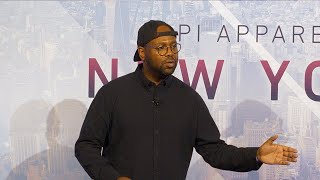
In this keynote, Unity senior program manager Tim Devlin shares his personal journey from a small town in South Carolina through outdoor‑apparel brands, gaming, and early VR experiments to his current role at Unity. He explains how Unity’s real‑time 3D platform has grown far beyond games, supporting millions of developers and billions of devices across music, social media, architecture, film, retail and manufacturing. Devlin illustrates the power of digital product creation for fashion and retail with examples such as immersive in‑store training, a collaboration with Zalando, and the potential to cut waste in the supply chain. He then expands to the broader vision of the metaverse, describing Unity‑enabled large‑scale immersive events (e.g., Insomniac’s Wide Awake concert) and the company’s recent acquisitions of Weta Digital and Ziva to bring AI‑driven human motion into real‑time experiences. Throughout, he stresses Unity’s core values—users first, best ideas win, collaboration, boldness—and frames real‑time 3D as a catalyst for sustainability, aiming to help the industry meet the 2030 Climate Accord. The talk ends with a call to creators and industry partners to co‑create a more sustainable, immersive future.
Chapters
My name is Tim Devlin. I'm with Unity Technologies. And today, I'm here to talk to you about this really long topic, unlocking and extending real-time to unlock and transform the fashion industry with DPC. That title was made up a long time ago with Michael, who has moved on. I miss Michael. But yeah, that's not exactly everything we're going to talk about. So I'm just going to launch into it and tell you about Unity and myself. So my name is Tim Devlin. I'm a senior program manager at Unity Technologies. I work for the Accelerated Solutions Group, which is actually the group at Unity that does bespoke software development for industrial clients. So we work with a lot of clients like yourself. I'm based in Berlin now out of EMEA, but I didn't always start out in Berlin. I'm actually from that little small dot somewhere closer to here, a little bit further from there in the world called Irmo, Irmo, South Carolina. Weird place where people kind of talk like this. And we celebrate things like this. We actually have a festival around okra. Believe it or not, that's really my hometown. I've been to that several years, more than I want to admit. And we've perfected the art of frying anything— donuts, Oreos, all of the above. Some of them are good. But yeah, I moved on from that place about 10 years ago. I moved to another weird place. I seem to like weird places that celebrate weird things. And landed here, a place called Portland. And people don't talk so funny, but people do some funny things. And we celebrate things like this. Yes, that's a doughnut with pickles on it. It's actually tasty. I don't know how, but it is. And it's actually the first town I found in America that we actually have proper football games. So I kind of stayed there for a while. I spent 10 years out there, and one of the things that we celebrate there There's things like this. The outdoors, nature, beauty, big geometry, and it drew me. It drew me there and I stayed. The outdoors is a passion for me. So I found myself kind of gravitating to it and found myself working in the industry. And I started working for a company called REI, and then later started working for a company called Columbia Sportswear. Really great company, really enjoyed it. And I was like, okay, I'm following my passions. I found nature, I found the combination of that with an industry that I care about. And while I was working with Columbia Sportswear, I started out as a buyer. I wasn't a really great buyer because I couldn't stay at my desk very long, and you need to do that for the job. I was way more curious about how things were made, what is technical development, how does product development work? And I was really blessed when I was there that Columbia sent me out on a trip. They have this shoe school and apparel school cool thing that we did, so I got to go to Asia with some teams, and I got to see how this actual industry works, how our product is made. What do we actually do on the other side of the earth with all the work that we do here, and within our brands and our companies, and the companies that we love? And it was different, right? I found out that the work is a little bit difficult. I'm a horrible sewer. I couldn't sew a straight line to save my life. If you've ever been in a leather or a dye factory or tannery, It's poignant. It will stick with you. And I learned there's a ton of waste in the process. It's something we knew. It's something everybody in the room is pretty much aware of, but hadn't really changed in a long time. And I hadn't really seen it firsthand. So having the ability to go on these trips and kind of see that, it really impacted me. And I came back to Colombia, and I really kind of got on this mission of, like, gee, this needs to be better. And I knew there was this thing, digital and digital technology, and we had started on a journey of digital product creation. And I was like, OK, maybe this is some of the answer, right? That's really what I thought. Let's pull full force into it. So at night, I was a gamer. I was always a gamer. I've always been into gaming. I knew about Unity. And I started doing this work with Intel Technologies. I was actually a guinea pig for them. I was doing a lot of UX testing. And they put me in early wearables, right? We were doing research in VR, some early AR. And in doing that, I started I actually played with this application. You can actually see me on the right there. And the application was called Tilt Brush. It was built by Google. And it's just a simple immersive space where you could paint a picture in 3D. You could paint really anything in 3D. But one of the things that I noticed when I was in the experience is that they had the ability to drop in a dress form just in space. And I was like, whoa, that's different. And you can actually see on the screen, I started to just naturally paint a dress. And I thought to myself, OK, this is different because I just saw this process of how product is made. And I work with the people. And I've seen the tech designers, and I see the data flow, and I'm in this space, and I just— if I could just have the people in the factory and the other teams that are across the ocean in the same space, and we could build product like this, then the industry is going to change. And that kind of set me off. I was on a mission. I was like, okay, I really want to get behind this. I want to understand the technology better. I started connecting with youth. I started trying to evangelize a bit more about what immersive technology is, what is AR/VR. And I went on a journey with that. I got pretty passionate about it and I started working with Unity myself and I built some applications. Is this going to play? It's actually going to play. Okay, cool. I built this application with my buddy Rashid in the background. I'm there and this is an application we built for immersive in-store training. This is my buddy Cliff at Columbia and we actually took this over the employee store one day and I put Cliff in VR for the first time. He's like, he's freaked out just about being in VR, but we did this training. I said, Cliff, just check this out. The idea was we make outdoor product, and how do you train the employee inside the store to understand which product fits which environment? So we brought the actual environment in, right? We made it snow, we made it rain, and we made the employee match up and figure out, hey, this technology aligns with this climate. I put Cliff in. It seems really simple. And I asked Cliff, what do you think? And he came out, and he was really shocked. He was like, hey, Tim, this is awesome. This is amazing. I really had no clue we could do things like this. When my employees on the floor, I come over and ask them, I'm next to them and I'm trying to train them around product knowledge, they're so scared to make an error in front of me or in front of a customer even that they don't even want to talk. This is the thing that they hate the most. They hate being embarrassed. This is safe. We could train them in the back. We could get them familiar with the product. We can get them familiar with the product marketing and labeling before they ever even have to get on the floor. "Wow, this is really powerful. Let's try some more of this." I was like, "Okay, that's cool." That's not a reaction I was expecting. At the time, this was kind of native stuff. Maybe we should push it further, and we did. I found myself actually going out, and this was kind of early days. I think maybe 6, 7 years ago, I'm not sure. I ended up speaking at a conference in Berlin, and we talked about the prototypes. So I found myself in a new step in the journey. I actually found myself moving to the third, Strange, weird city in the world that I decided to move to, and a place where we celebrate things kind of like this. At any point in the day, people will queue up for a currywurst, legit, always. And they're quite tasty. But yeah, again, strange city, strange food. And here I am on a journey with 3D digital product creation. I got there, and I was talking to PI and made some connections there. And I ended up meeting up with the really innovative, kind of forward-looking company called Zalando. And at the time, they had a real cool wing in which Zalando is an e-commerce platform. But from the data they moved across their e-commerce platform, they actually built 14 different brands completely from data, sourcing their designs through AI from data. And they built a company called zLabels that grew in 10 years to do $1 billion in revenue. And they wanted to take that company fully digital. So we came out and we started educating them on Browzware. How do you leverage 3D? How do you start working with 3D assets? And it was cool. I figured, hey, this is what I want to do, right? This is how 3D can start to change the industry. Companies that are digital natives, companies that aren't, if they adopt this technology, we can start removing some of that waste in the system. So the journey was kind of taking me where I wanted to go. I was happy about that. And along the way, I was realizing I was making some friends. I was meeting cool people, like-minded people. I was getting to see the world a bit. And they were on the same journey. And I hope you guys were doing the same because it's been a journey. We've all been on it together. It's been about, I think, 10 years since PI's been going. And I think it kind of actually started in New York in this building. We also went to the club somewhere that was kind of weird. But I'm glad we're back here. And yeah, that journey kept going. Then it got strange. I met a new friend, not so new friend, changed things up. And we all experienced the world going in a different direction. It slowed down. It got quiet. Our companies probably for the first time shut doors for reasons unexplained. Customers couldn't visit us. Goods couldn't move. And there was question marks on what was going to happen, when that would change. What would that change look like when it came back? So I figured this, right? For me, that journey slowed down pretty quickly. I was consulting. There was nowhere to consult. People do not need your services when their businesses aren't open. So what was next? And for me, what was next was, no matter what, seeing things getting weird in the world, driven by values. So I came back to Unity. And these are Unity values. Users first. Best ideas win. End it together, and go bold. I kind of like to go bold sometimes, and I definitely like working with people, fun people, so I thought I could get behind this. I thought I could get behind the company. I always believed in their tech, so I started talking to Unity, I started working with Unity, and found myself here. So it's enough about me, this is Unity. Let's talk about this now.
Who first shared their stories in caves, connected art, nature, and science, led us toward new horizons. Who thought to capture motion? Spark an engine to life? Turn television into a playground? Every day, you create the playful, the functional, and the unexpected. You break down walls and take us to astonishing places. Tell stories. Leave borders. And create beauty for tomorrow. Because at Unity, we believe the world is a better place with more creators in it, where everyone has a chance to shape the world.
So yeah, that's a bit about Unity. And most of you probably think we're just a gaming engine, but a bit more than that. Unity is actually the world's leading platform for creating and operating real-time 3D content. So that's not just games. It's real-time data moving in space, immersive space. So we're pretty big. We've grown pretty large now. We're in 49 offices in 21 countries. And again, born from gaming. So through that engine, through real-time 3D, we kind of stretched out from gaming. And we now— you can find us in quite a few spaces. We work with music. Social media, AR/VR content, architecture, film and TV, retail, manufacturing. So we've grown quite a bit. And to put that scale in context, our platform supports 25 different other platforms and technologies. So you can build once in Unity and deploy in 25 places, at least, and growing. That's pretty big when you think about scale and reach. If you're on a digital journey, you're working with 3D assets, and you want to get them to the world, especially as it becomes more immersive. In terms of reach, we've got 1 million monthly active developers on our platform working at any time, and we're reaching 3 billion devices each month. In terms of ad reach, we reach— we're second in the world behind Google, so it's quite a bit of reach behind who you can talk to and who we're talking to through games. And in terms of that gaming space, I'll tell you some more data on that, but These are the 3 guys that started it out. It didn't just start always so big. It started with 3 guys that had a dream to make a game in Denmark. And these are our founders, David, Joakim, and Nicholas. And they were trying to make a game back in the day called Gooball. Anybody ever heard of the game at all? Play it? It's because it didn't work too well. It was cool, right? They were thinking of themselves like Yahoo. Yahoo stands for Yet Another Hierarchical Orifice, but you know, And also, the guys didn't think it would work. So they kind of made a play on it. You always have other options. They had other options with Unity. They started opening up the platform. The thing that they made the game on, they put out there to other creators. And today, that same broken game is now behind 71% of all the mobile games out in the market. So that's quite a jump. Things like Among Us, King, Cube Surfer, If you're a Switch player, I travel a decent bit. I like my Switch. It moves with me. Games like Kingdom Hearts, Ori, Genshin, over half of all the Switch titles that are out there actually made on Unity. And for those of you that saw the people in the weird goggles in the video, AR/VR content, we're leading about 60% of all developed AR/VR content in market in industry now. So that's a bit about our reach. And a bit about Unity. Again, it started from games. But back in the day, there were a lot of people within games and back at the home office, and we were looking around and realizing that people were buying our licenses, but they weren't just buying licenses to make games. We didn't exactly know what was going on until we saw companies and brands like yourself were engaging in working with Unity and they became an industrial play. We actually built a wing within the business to start figuring out and investigating how to connect better with industry. And that's where Solutions was born. That's where my team came from. And we're still figuring that journey out. That's why we're here. We want to talk to you because we believe that real-time 3D is transforming everything around us. We really believe that one day there's going to be an actual digital twin of pretty much everything in the world, including yourself. Some of you may right now in this very room have avatars of yourself. A lot of you probably do in one form or another. Maybe it's your Bitmoji. Maybe you're playing Roblox. It's happening, and it's happening slowly, but it could increase. So what is real-time 3D? Real-time 3D is kind of this journey from 2D— and OK, this thing's broken. It's not showing you what it is. But it's got these 2D static images moving to an interactive space where you can interact with that static image. You're moving from pre-rendered to real-time render. And that's a conversation I think everybody in this room understands, right? Taking the light, processing it real-time as something moves, you can see it change. And taking 2D objects and moving them to a physical space and dimension into 3D. So that's what Unity is. OK, now you want to play. Fine. I get it. Tech. So I was kind of noticing on the journey that a lot had changed. That was 10 years kind of the story that I was telling there. And over the 10 years, these are my 3 favorite humans. These are my nieces. They changed too. One of the good things that came from the pandemic was I got to go home. I got to spend some time in Atlanta with my family. And I got to connect. And when I got there, something was different with my nieces that wasn't there before. They were glued to iPads, which I was pretty freaked out about. If you've got kids, you might also be a little bit concerned about this too. And I'm not from that day, right? So I take them out and I'm like, we're going to the park every day. Uncle Tim doesn't play that.
Let's go.
So we go outside, teach them how to make the tree bark boats. We're having a good time. We're on the playground and they bump into their friend. I'm not a parent. They're my nieces. They run, they see each other. It's COVID. They hug, they tackle each other. I freak out. Hey, I'm not a parent. I don't know if this is cool. Are you cool? Are they cool? Oh yeah, no, they're fine. They're classmates. Okay, cool. I'm glad you're cool with it. They've never met each other. What? Oh yeah, that's right. They're 6. They started school. Their whole education journey is now born from a digital place. Wasn't their choice. It's just the way the world changed. But it's now the standard. They've adopted it. This is how they communicate with their peers. This is how they embrace education now. That was a change for me. Kind of opened up my mind. Things were changing fast, really fast. I go back to Berlin. I'm talking to my friends, and I'm telling them about this story. I talked to my friend, Gesine. Gesine's a graphic designer, and she was looking for a job at the time. I said, hey, I know this cool company. I think we need graphic designers, and they're pretty cool. They're fun. They've got good values. "Are you interested?" She's like, "Yeah, Tim, I'm scared." 10 years ago when I studied graphic design, I worried about things like typography, print, layout. I worked with tools like Photoshop. That's all I needed. I had a portfolio. Today, I changed. I needed to know how to develop 3D characters. I needed to build 3D character content. I needed a portfolio that went beyond just 2D. I had to understand 3D. Not only did I have to understand 3D, I needed to understand how to take my 2D and my 3D content and leverage technology like NFT to put it in 3D space. That was the expectation to do the job that she wanted to do 10 years ago today. Scary. Things moving fast. So I go back on Tuesdays and meet up with my buddy Joe. I'm telling Joe the same story. It's Joe. It's a true story. Joe's like, Tim, what the heck do you do anyway? I've never understood anything you do. What is digital product creation? What? What is— I don't get it. I'm like, OK, all right, I get it. People ask this all the time. Digital product creation is like— Tim, can I just take a guess? Is it digital product creation, and it's using digital tools to make physical products? And I was like, OK, cool. You get it. This is where it started. This is what we've been talking about for a long time. This is what we came here a long time ago to— how do we all do that better together? He said, wait, but is it like using digital products to make physical products? Or is it even like digital tools to make digital products? And it was the first time anybody kind of challenged and thought about that whole ecosystem and which way the whole process was moving. But the truth is, it was all three. It is all three. In 10 years, it evolved. We're actually doing and making digital products— digital physical products from digital products. And if you don't think that's happening, there's a company like Nike buying up a full-on digital studio to make nothing but digital shoes that they're going to test and put into games to inform what they're making. In the physical world. That's a real thing that's happening now. And that's the paradigm of change that we're looking at in just 10 years in this industry because of things like digital product creation and the journey that we've all been on in this room. So I'm like, OK, this is really real. This stuff's happening now. We've got to go further. We've got to continue to push this. But all the while, the creators, they're still out there creating. Corona was out there, Corona in, but people didn't stop. People were making good stuff, doing digital work, trying to change the world. So what did that change look like in industry? What did it look like for us, right? So during this 10 years, some of us tried some things. We talked on stage about standardization and interoperability, and when are all these things just going to work together? When can I just push the button, plug it in, my CLO file moves to here, moves to there? When is that day going to come? So we tried some things. Some of them lasted, some of them didn't. We saw the birth of some new opportunities, new ways of moving data transmission, metadata, trying to figure it out. We all sat there, we all worked together, and we're still doing it. We're trying to just figure it out, but the day's not there. It doesn't just work. The change has been coming, but we still need to go further. And all the while, creators kept creating. It just kept happening. Creators don't stop. We saw our friends, people that we know, people that have been innovators and pioneers in this space reach success they didn't dream about, they didn't know would come, and break down walls they didn't think that they would have a chance to, all through digital. All through digital. People that have been on this stage right here. We started figuring it out. We started figuring it out together. And all the while, creators kept creating. This is one of my favorite creators, Ariana Nier. I can't pronounce her name too well, so I'm not going to butcher it. But it's called Under the Sheets. This is actually all digital fabric overlaid on natural landscapes. It's pretty beautiful stuff. So what did that change look like in our lives, right? The change looked a little bit different. Changed the way we work. Our pets, our children, they became our coworkers. And I like seeing your kids and your pets on the screen. It makes the day go a little bit more levity. That was fine. Some things weren't so fine. We thought about, we changed the way we consumed, right? So things being closed, consumption journey changed. We probably order a lot more online now. They had to queue. How many people remember toilet paper hoarding? This wasn't fun. None of these people were cool. This was not nice. So that happened, we lived through it. The creators kept creating. This is my buddy Sam Goodyear, Fallen Angels. Sam is pretty amazing. He did this with a company called Modern Mirror. So I say this to say, if you think about it over time, this is a true fact. When you think about technology and technology adoption, people don't have a recorded instance of moving away from technology when we figure out how to make it work for us. And that's the journey we've been on, trying to figure out how to make this technology work for us. So if I think about that, that 10-year journey, standing on the stage today, and I look 10 years back when I first kind of found into the PEI conversation and digital product creation, I look 10 years forward and I think about that conversation, like the day, when is it just going to work? The only thing I can really tell you is that that day is a lot closer to now than it was then. Very complex graph, but truth. So with that, the time for change is now. Time for us to figure out how to change it is now. It's changing faster than ever, and it's going to continue. But then it got even weirder. This thing came along, metaverse. We're all talking about it. What is it? When did it— where— who— what? Exactly. Okay, what is it? Why does it matter? Quick definitions. The metaverse is kind of the next evolution of internet. It's this omnipresent, ubiquitous, universal space in which the digital and physical world collide. It's persistent, it's shared, and it runs in real time. It's a simulation of parts of the world or the world in an immersive space, and it's actually becoming reality. A lot of people say Internet 3.0, who knows, but it's coming at us fast. So what do we do about it? Well, at Unity, it's a new conversation to us too, but our technology supports it. And we recognize, say, there's a lot we should start getting behind. So we kind of teamed up with Live Nation and we built this thing called Insomniac, a project called Wide Awake. We noticed that people couldn't dance during the pandemic, and it's something that people like to do. I hope you danced last night. I did. But we built this. And this is an immersive program called Insomniac. We wanted to give the opportunity for people to dance during a time when they couldn't back to people. So it took us 3 months of work. We plugged it together. And with the help of these teams, in 3 months, we were able to put together an immersive space in which we could come together for full-on concert, audiovisual experience, and livestream 12 million people virtually into the same space. In 3 months. Next version of this is going to put 20 million in there with a goal to get to 100. It's a third of the country in the same space digitally at the same time. That's what's coming at us. That's what metaverse could do. We did things like this. Things were shut down. We all work really hard. We don't all get a chance to ring the bell on Wall Street, but we should. So we took that same technology, and we went to Wall Street, and we put it in place. So that people could celebrate their hard work, their joys, and their successes with their companies when they go public. And this is kind of now a standard operating procedure. If you want to be part of the journey when your company decides to take a step forward into the marketplace, we can livestream this. And yeah, that took, I think, also just a few months to do, but it's a continuing thing. We're trying to figure out how to bring people together, how to make the technology work for good, and what was going to come in front of it. How can we use it? And that's what we want to do with you guys as well. And then we made some acquisitions. We bought some tools. So we acquired Weta Digital. For those of you who don't know, this is Peter Jackson's studio, great guy behind Lord of the Rings and Avatar, pretty amazing movies. And we acquired Ziva, Ziva Dynamics. Ziva is an amazing company that's not a real person. That's AI. And that's essentially what they do is use AI to figure out how to mimic human movements and behaviors spatially so that we can synthetically represent ourselves in this space. And we're continuing to push into that. We're continuing to think about what that means on the journey for you guys in the room as you connect with consumers. [SPEAKING CHINESE] And we're doing this because, coming back to the values, we believe the world's better with more creators in it. So we're going to keep making those moves, acquiring technologies, connecting with industry, and understanding how we can empower more creators to get behind our technology to help move things forward. Because going back to that core value, we're in it together. And if you're in this room, you're all part of that conversation, and things need to change a bit. So with that, I kind of summed up my whole thought of that 10-year journey to now with this. This is an old proverb from Burkina Faso, and it says, "Alone, youth runs fast." A young person with an elder is slow, but together they go far. If I think about the 10 years, some of us have gone pretty far in this space pretty quickly, and that's awesome. Some of us held on to some elder technology, and maybe we haven't gone so far. But together as an industry, this digital transformation, this digital journey, we still have a long way to go. We're actually still, per metrics, creating more waste each year leveraging digital than we have been the year before. And if we're trying to look at that towards our goals for the 2030 Climate Accord, we have a long way to go in terms of adoption, leveraging real-time 3D digital product creation to make this process less wasteful and more sustainable for everyone. And it may not be a journey for everyone in the goal, but there's some benefits that are going to come throughout that as we work together to do it. So with that, we want to inspire you to dream. We want to dream with you because we believe in a time where if we work together and leverage simple technology like this to solve problems like this, which are things that we're doing, then maybe together we can make this industry better. And we want to work with you to do it because we believe in a world where when people come together, it brings change for good. And right now, the world could use a little bit of that. So we're Unity. For the last time, we're in it together. Help us change the game. That's my spiel. I'm sticking to it. If you got any questions, let me know.










