Maintaining Brand Integrity and Authenticity | Everlane, Fashinnovation | PI Apparel
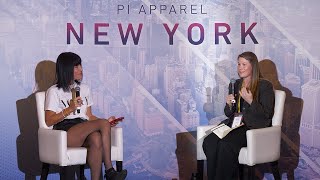
Katina Boutis, Everlane's Director of Sustainability, explains how the brand moved from pricing transparency to supplier reporting and impact measurement. She covers living wages, regenerative materials like ZQRX wool, and tools like FiberTrace and Watershed that track environmental data. The biggest challenge: people think transparency means perfection.
Chapters
Really happy to be here again today and just congratulate again the PI Apparel team on this wonderful event. And I'm really honored to be sitting here once again with Katina Boutis, the Director of Sustainability for Everlane. And just to quickly introduce myself for those of you who weren't here yesterday, I'm the co-founder of Fashionovation. We're a global platform where we've had now over 800 speakers around the world speak around innovation, sustainability, and entrepreneurship. This year we rang the bell at NASDAQ. That's like my big milestone that we've achieved. And it's been just really exciting to continue to build community around tech and fashion, which are very important when they come together where we want the fashion industry to go forward. So I'm excited to be here with you, Katina. Do you want to introduce yourself to everyone?
Sure. I feel like I was just here. So sorry if any of the topics today are a bit repetitive, But as we like to say, repetition is reputation. So we'll try to give some additional insights today. But anyhow, I'm Katina. I'm the Director of Sustainability at Everlane. Everlane is a direct-to-consumer brand that is really built on a foundation of transparency. And over the years, we have evolved our mission around transparency to be much more comprehensive around a very wide set of sustainability initiatives. So as the sustainability lead at Everlane, I work within the supply chain function. I report to our Chief Supply Chain Officer, which I think is a really critical place to be because whenever we analyze and assess where our greatest impacts lie, supply chain is where they're happening. So it's a really good place to be able to build cross-functional partnerships and really influence a lot of change throughout the company. But my team is responsible for both our social impact and environmental responsibility initiatives, so we We cover a very wide range of everything from our social impact audits of our factories and our mills, to greenhouse gas accounting, to a lot of certifications, just pretty much everything that falls under the umbrella of sustainability. And we really use the ideals of transparency and traceability as a foundation to kind of support that work and hold ourselves accountable. So yeah, so excited to chat more about this.
Yeah, me too. So first, traceability and transparency. On this topic, I was going through the Everlane website a few days ago, and I really noticed a lot of emphasis in this area for you guys. And what I really loved is that it's very transparent to the consumers also, if they want to browse through and understand what that means. So what are the first steps that you feel for brands that want to have the same ethos that you guys do on your e-commerce platform and toward traceability and transparency. When overwhelmed thinking it's too big of a task, what would you say to brands to start this process?
A lot. I think, well, maybe it would be helpful to kind of contextualize how Everlane has evolved within the transparency space. We were founded in 2011 as a new company, a direct-to-consumer brand during a time when that was a fairly novel concept. And we launched with pricing transparency. That was sort of our big disruptive angle. We were going to give the full cost breakdown of every product. Well, first it was a t-shirt, but as we grew, and still to this day, we maintain pricing transparency on every PDP. So we give the breakdown of how much our materials cost, how much does transit cost, cut, sew, labor costs, duties, sort of a kind of a very simplistic breakdown of all of the costs that into making our garments plus our markup. So that's sort of how transparency started at Everlane, was really a play to the consumer or a promise to the consumer that we're not going to try to take advantage of you. We want to show you exactly what goes into making our garments and exactly what you are going to pay and sort of support us as a company doing this. That was in 2011. And then in 2013, the Rana Plaza factory collapsed. Occurred, which was sort of a very big wake-up call, I think, to a lot of brands in the industry and also a lot of consumers at the time. So in the wake of that really horrible disaster, we sort of shifted our transparency message to be more focused on supplier transparency. And this is something that still continues to this day as well. We do have— as our company has grown and scaled, we have many more suppliers than we did back in 2013. But at the time, we started with really beautiful sort of editorials of our factory base. So really showing where our products are made, why we think it's important, why we choose to partner with these facilities, and giving a lot of really cool background information about the factories as well. So today we have sort of evolved again. As I mentioned, we are much more focused on a pretty wide variety of sustainability metrics, both social and environmental. And so a lot of our transparency efforts are sort of built around both of those spheres. But we still stay true to what the sort of original intent of the brand was. So we use a lot of tools to kind of help us establish or help support us on this transparency mission. So doing everything from like contributing to Open Supply Hub, which I think is a very, kind of simple entryway point into being a more transparent company. If somebody is looking to, to be more transparent in that way, that's definitely something I would recommend. Same thing with a commitment called the Transparency Pledge, which has done a lot of good work in sort of bringing brands together around a common set of metrics. This is more on the social side, but they're increasingly expanding more, sort of setting standards for what is important for brands to be transparent about as far as their vendor base is concerned. But we've done other things in the meantime. Something that is, is very important from an internal perspective, which isn't necessarily something we have been talking about externally, is pay transparency. So we recently launched— and this has nothing to do with my team, this is actually our people and sort of our HR function— but we have pay transparency across our entire internal organization. So people can sort of to see where they are within their growth trajectory at the company. And this is all just to say, we sort of are taking a very wide glance at transparency and what it means to us as a company. And I think I should also mention that we're now publishing an impact report. So in 2022, we published our very first comprehensive impact report on all of our impacts across our operations and value chain. And we continue to do so this day. We've committed to an annual impact report. Our most recent one was published in April of this year, and it's something that we're very proud of. We get a lot of space and a lot of time as a sustainability team to really go in depth on a lot of these areas of opportunity and also areas of challenges. So we really see transparency as being a really great method to talk about our wins and talk about our goals, but also, tell you where we're having challenges and being very upfront and open about that. So I think your question was, what should brands do? Sorry. So I mentioned Open Supply Hub and Transparency Pledge. I think those are both really great assets that you can access. I think the other things I would say, which feel very typical, and if anybody has a sustainability bingo card that they're working off of, things that we like to repeat all the time are, progress over perfection, and continuous improvement. So these are things that our team is constantly sharing with each other and also with our cross-functional team members. We are up against a lot of challenges in the industry. And as a brand that's sort of in the small to medium-sized sphere that we're in, we don't often have huge budgets. We have to really have both a top-down approach as well as a grassroots led initiative across a ton of different impacts within our supply chain in particular. So whenever we are thinking about how to start, where to start, what to say, what to do, we're always trying to contextualize it within how can we continuously improve on our own impacts and how can we prioritize the progress point rather than striving— we're always striving for perfection, obviously, but I think if anybody is working in this space, you know that that's very difficult to achieve. So always prioritizing the progress.
I love that progress instead of perfection. That's really good. And I think that it makes a lot of sense with just every step counts. And thank you so much for sharing all of that. Really, really cool. So being that we're here with— there's a lot of technologies and innovation. I'd love to know if you could share with us a few of the innovations and technologies that have been pivotal adoptions in the process towards transparency at Everlane?
Yeah, so we think about innovations and technology in a couple of different buckets. I think one of the most important things that we have been able to adopt in different ways are material innovations and material technology platforms. So I mentioned a couple of them yesterday, but I'll mention them again. FiberTrace is a really great one that we're using for a couple of really special farm-to-product as a traceability tool to be able to trace and track across the entire value chain exactly where our materials are headed and how they're getting there and what they're doing when they're there. And the same thing for Textile Genesis, which is another kind of tech-enabled platform sort of built off of— I'm probably butchering this— but sort of blockchain-esque, but not blockchain-powered, but a way to sort of trace materials as they move through the value chain from the farm origination or whatever that origin point is, the processor, all the way through to the finished good. So we're using those most closely right now from a materials perspective, but there's also a ton of innovations and technologies that we're using from sort of like a process standpoint as well. And that's both to be able to measure our impacts better, but also be able to improve on our impacts at the same time. So we use a number of tools like the Higg FEM, I think is a really good a good example. This is a facility-level reporting tool essentially that is— that enables us to have greater transparency with our suppliers and get primary data, which is really critical to understanding what's happening at our facilities and where we can benchmark them across our other factories that we're working within and provide progress points for them to move forward. And same thing for, for many of the other platforms that we're using. We use an organization or a company called Watershed to perform our greenhouse gas accounting on an annual basis and really help us understand what our product level and process level and also supply chain level impacts we're having. So the greater sort of like the data set, especially in primary data that we're able to achieve, I think the better informed we are about where our hotspots are happening and how we can move forward, but always sort of in the spirit of transparency. I think a lot of times we think about transparency as being customer-facing and not as much supplier-facing. And we really try to, I think, extend it both ways.
Amazing. Thank you so much for sharing all of that. In terms of sustainability, I feel like when I think of sustainability, I automatically get drawn to the people aspect of it. And you spoke a little bit about the transparency when it comes to people throughout supply chain. But for you guys at Everlane, How big of a role does human rights and fair labor play within your definition of sustainability, and how do you ensure diversity, equality, inclusion throughout the supply chain?
Yeah, it's a really big point for us. It's actually one of the focuses of our three-pillared kind of strategy and approach to sustainability. So we've built a short and a long-term strategy around three key pillars: keep Earth clean, keep Earth cool, and do right by people. So our Do Right by People sort of pillar within this 3 is really focused on exactly your question. So our goal within this pillar is to honor and uplift all rights for all people. So we like to think about this both from an internal perspective within the work that we do as an organization across our team members, but also extending this to our upstream team members, all of the workers within the factory, the partner factories that we work with. But similarly, from a community impact perspective as well. So this is sort of a very big pillar for us, and we like it so much, it sort of gets its own name and its own needs. But we have a couple of focus areas within that. First is fair wages. So I mentioned the pay transparency that we've done as an internal organization. We've also done a lot of work to benchmark different types of wages, you know, salaries and benefits and growth opportunities as an internal team. And I'm very excited to say, again, this is— I cannot take credit for this, this is more of our HR and our people teams, but we have achieved 100% living wages across all of our internal team members, which I think is really important, the kind of milestone to talk about. But it's also something that we're really working towards within our upstream supplier base too. So we take a lot of meaningful action in understanding and better benchmarking where wages are at the factory level and in different regions of different cities and being able to try to support our factories moving forward. And this is a much longer-term project that we're working on, but being able to work towards living wages across all of our vendor base as well is something that's really important to us. Similarly, gender equality I think is another important topic. We are a brand of primarily women, but whenever we also bent benchmark our factory base, it's over 70% women in the workforce that we're working within. So again, benchmarking, not just having those data and that numbers, which I think is really insightful, but how do we move more women from just being sort of entry-level floor workers in the factory to being in managerial positions and supporting them through, you know, different skills opportunities as well as wage opportunities. So we're focusing in a few different areas. But yeah, it's a really important one and it's one that we don't like to separate away from the conversation in sustainability.
I love that. And congrats on that, that's really cool. So organic cotton, I know it's something that you utilize in your collections. And I know you spoke about the materials and material innovation, but is there a certain material that you've seen or heard about recently that's coming out that you're excited about? Or yeah, talk us a little bit.
Yeah, so for anybody who is really interested in our material makeup, We go through a lot in a huge amount of depth in our impact reports on our material uptake by volume, our transitions to preferred raw materials, how we're thinking about that from a range of different perspectives. So I really encourage everyone— humble shout out, I guess, not so humble shout out to our impact report. And if people want to really dig into sort of what we're doing and what our approach is. But to answer your question specifically, I think what's really exciting right now are a lot of the textile-to-textile recycling initiatives that are coming up. There are a few that have launched in pilot phase. There are some that are pretty operational at this point and sort of are ready for— ready to be taken up by brands. And I'm really excited for that because, of course, we are all well aware of the waste issues that we have as an industry and the pressures that that's putting on a lot of different places in the world. So I'm really excited about those. At the same time, I think I can highlight two innovations that we have brought to market this year. One of them, or actually I think both of them are new to us, not necessarily new to the industry, but through the different analyses that we do to identify opportunities for innovative materials, we found two that we brought to market this year, and one of them is ZQRX. So this is a regenerative wool supplier out of New Zealand. On our website, if you search good merino or good wool, those products will come up. So you can actually, like, see what they look like and some— in the ways that we're speaking about them today. But they are credited with having the first carbon positive, or carbon, like, sequestration positive farms in New Zealand. And they're doing a ton of really doing great work to continue to adopt regenerative practices across more and more acres of land, incorporating in animal husbandry practices in order to do that. So we have really granular, detailed information on the amount of carbon sequestration that's able to be pulled out of the atmosphere and sort of sequestered into the soil through the different practices that they have. So we're really proud of that project, and we're really looking forward to continuing a relationship with The other one is a product that we launched earlier this year, and this is our, excuse me, TreadBear sneaker. I almost forgot the name. Our TreadBear sneaker, which is something that we're really proud of. This is our lowest impact piece of footwear that we've ever created, and we were able to accomplish this through primarily recycled materials. So it's a sneaker that has, and it's undyed, it's sort of a very, very cool, sort of natural approach to footwear. It has a fully recycled upper made of recycled cotton with recycled trims throughout. And the, the innovative part was that we were able to partner with a group of rubber farmers, rubber tree sort of harvesters, to produce a totally natural 100% latex undyed unprocessed rubber outsole. And I wrote it down because I didn't want to forget. But we also performed sort of an LCA assessment on what the impacts of the sneaker were because we had a hunch that it was going to be fairly low. And overall, this, for the pair, it's 4.78 kg of carbon dioxide equivalent, which is by far the lowest impact sneaker that we've ever been able to create. So it's something that we're really proud of. It was a big partnership across many teams within our company, from starting with design all the way through to sourcing and logistics and everybody who's involved in the storytelling of that product. So yeah, something that we're really proud of.
Do you know if the rubber is made in Brazil, Amazon?
Yes. No, no, I'm sorry, not in Brazil. The sneaker was, but it's from Laos.
OK, very cool. That's awesome. Congrats on that project. And actually talking about with like the taking waste and turning it into textiles, I recently met like a brother and sister twins, very young in their early 20s, started a company called Wastewear. Just wanted to briefly talk about it because it's pretty incredible. They're taking 100% waste from generations of manufacturer families in India and creating new textiles out of it. And it feels incredible and it looks really good too. But I love that and I'm excited about that space too. So what do you feel is the biggest challenge in radical transparency? What has been the biggest challenge for Everlane? And you already do so much, but I feel like people are always wanting more. What's the challenge in that?
So I think I've mentioned this already, but we really use transparency as sort of a driver for the work that we're doing. So it's a way to hold ourselves accountable. It's a way to demonstrate I think the validity and the integrity of a lot of the projects that we're doing. But I think there are a lot of challenges with transparency, one of which is I think that there's a sort of misconception that transparency equals perfection. And what our approach to transparency is, is we want to tell you as much as we can about everything that's going on, so sort of the good, the bad, and the ugly. The good being the progress that we're making, the strides that we're taking towards all of our different goals that we have, and how we're lowering our impacts for ourselves and for our customers and for our supply chain. The bad being where we're not reaching our targets and where we're having challenges, why those challenges exist, and why we're maybe off the mark. And then the ugly, which is is just sort of shedding light on a lot of industry practices and industry challenges that make this work really difficult, but still worth pursuing. So, I think that's sort of how we view our work within Transparency, and that's how we try to stay true to the work that we're doing. But I think we've often gotten challenges about not doing enough or not being, you know, as progressive or as far ahead as maybe we would like to be. So yes, I think transparency does not equal perfection, but it's a really good way to continue to demonstrate progress across the different impact areas that we're working towards. But at the same time, I think there are a lot of general challenges. I think context is one of them. I think there are a lot of really great organizations, NGOs, those that are working in this space to really push our industry forward and be paying attention to a lot of really difficult areas of our industry that need addressing. But it is really difficult to publish data for data's sake. I think we do not want to be sort of a platform where we are just dumping a lot of numbers and a lot of information that is not contextualized within the work that we're trying to do and accomplish. And it also doesn't really serve people like our like our upstream suppliers. So, we're always trying to, with any piece of information that we put out and talk about, we try to contextualize it within the needs of our company, what we're trying to do, and also within the industry. So, I think that continues to be a challenge because, you know, it's a very complicated industry and not everybody understands what it is that we're doing. I think that there's also a sort of bigger challenge with having good data and credible data. So we're definitely moving in a direction of having more robust data and information and a lot more primary data coming from our suppliers and our supply chain, but it's still a challenge and there's a lot of invested time and money and effort that goes into continuously improving that part of our operation. And yeah, definitely a place of continued growth, both for us but also for the wider industry. And then I think also just generally, General tech challenges. It might seem really simple, but some of these tech platforms that we have onboarded and others that we've vetted and explored and unfortunately can't onboard this time can be really technically challenging, especially for a company of our size, both in terms of the management and the upstart, but also in terms of the cost. So there's sort of that side, which I think is still developing and something that we're watching really closely. And then on the other side, there's just the realities of everyday work and prioritization. So we have a very good engineering team. We love to partner with them. They're so clever. They're so great. But sometimes we just do not have the capacity to add additional details to our PDP as much as we might want to and like to and feel like this is a good move for us. It can be technically challenging. It can also be vying for really important critical engineering resources that won't necessarily be driving revenue, but But that is really important to continue forward. So we're constantly having these challenges and struggles from the external implementation of new platforms, new technologies, but also just the regular internal vying for resources all the time of what do we put our— what can we focus on now that's going to be really important and critical to us, and where can we make the most impact fastest?
Amazing. And I have a curious question. You mentioned in the impact report you put your wins and your challenges. Do you ever have people from the industry when looking at your challenges reach out and say, hey, I can help you with this, this is what I've done? Like, is that something that happens?
Yeah, definitely. And that's something that I think we're really very happy whenever it does happen. And that's why we come to a lot of events and organizations like this, is because it's really great to be able to connect with other people who are having the same challenges. We know that our challenges are not unique to us. These are things that everybody else else is experiencing. And the more we can talk to each other and sort of break down some of these barriers of competition or whatever, whatever we think it might be, the better off we're going to be. And I think, you know, it's so important because we are, we're all working within the same network of shared supply chains, shared suppliers, shared materials. And the more we can sort of collaborate in that pre-competitive space earlier on, I think the further we're going to go.
I love that message, that's great. I know I have 3 minutes, I don't know if there's Q&A from— or Q&A questions from the audience, if you want to— I could do one or two. No, okay. If there's any questions, but we can also, as we wait to see if there is a question, finish off just with what do you want to see in the industry in the next, let's say, 5 years? If you had a magic wand, what would be like the ideal thing that you'd see happen?
Oh my gosh, well, do I only get to choose one thing or—
okay.
Oh, I don't know. I think since we were talking about sort of the human rights space, I think that that is an area that is much less talked about, much less understood, and not as easy to measure in the same ways that we can measure like greenhouse gas emissions equivalents or gallons of water used, her denim washed or something like that. I think that's the place where I'd like to see the most progress.
I love that. I don't have glasses on, so I got to get up. We're going to— for climate change, is more of the responsibility on the brand side manufacturing too many products or on the consumer side increased consumption or both?
I think it's both. I think that there's definitely a personal, connection to things and consumption, especially coming from— I mean, I'm a millennial, I'm an American, I was definitely brought up in a time and place that is very consumer-centric. I think there's a lot to be said about personal practices and what we can do, how we can be voting with our dollars, and what we can do. I think on the other side, there are huge systemic challenges, which is maybe more to the brand side of manufacturing, overproduction, which is part of what's driving overconsumption. I definitely think that it's both, and I think we have to be addressing both sides of that.
Amazing. So let me see, I could do one more question. Okay. How does Everlane approach the end of useful life or first life of products in terms of guiding consumers toward recycle or resell?
That's a great question. We are really supportive of all resale platforms. We do not currently have one sort of connected to our brand today, but it's something that we continue to explore and try to build a business case to adding that to our— as an option, like, to come back to Everlane to shop secondhand. But we, we definitely see it happening organically without our participation, which I think is something something that's really cool. And we encourage our customers to buy and sell on secondhand if they want to. So I think that that's, yeah, just a really cool thing to see our customers going and buying and selling their old Everlane product. It's a testament to, I think, the quality, but I think it also shows that there is a market for a secondhand sort of resale, reuse case for our product. So that— so we encourage our customers to shop secondhand. We do it on our website, we do it on social sometimes, and we also do it within our impact report. And for end of life, I mean, I think that this is such a huge challenge for all of us, and it's something that we are really working towards, but we are starting with the product that we sort of within the four walls of our organization right now, which are damaged returns, and we're doing a lot of work on sort of understanding the landscape of reverse logistics to sortation to preprocessing to innovative textile-to-textile recycling solutions, and this is something else that we speak extensively about, our research and our pilot projects in our report as well, but that's sort of where we're starting to really understand what the flow flow is of product and how to address it at true end of life and what the opportunities are for us to plug into.
Amazing. Thank you. We won't be able to get to the other questions, unfortunately, but it was really nice to talk to you again. And thank you all so much.










