Making Fashion Inclusive Through Data
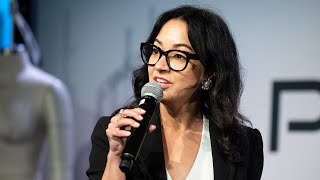
In this talk, Alina Diaz, a marketing executive and founder focused on petite women, exposes the systemic exclusion of women 5'4" and under from mainstream fashion. She opens with personal anecdotes and focus‑group stories that illustrate the emotional toll of ill‑fitting clothing, then presents stark statistics: over 80 million U.S. women are petite, yet only 10 % of brands cater to them. Diaz traces the historical roots of sizing charts to 1950s hourglass ideals and shows how modern data (Humanetics 20,000+ 3D body scans) reveal that current charts ignore height, width, and volume, leading to garments that are too long, too narrow, or simply invisible on petite bodies. She critiques recent brand missteps (Simone Biles jacket, Abercrombie jeans, Aritzia pants) and highlights the social backlash on social media. Leveraging the Humanetics data, Diaz and her team have built a new height‑and‑width‑first sizing system, incorporating volume and adjustable design features. She outlines a collaborative platform strategy: partnerships with petite‑model network Hybrevolution, inclusive shoe brand Stuart Weitzman, ballerina Mia Williams, and plans for pop‑ups, retailer collaborations (e.g., Nordstrom), and a community waitlist. The talk concludes with a call to action for brands, retailers, tech partners, and consumers to adopt transparent sizing, co‑design with petite women, and shift the industry toward height‑inclusive fashion.
Chapters
I'll start by asking a question that a gentleman shared with me this morning that he has to deal with with his daughter all the time, and I do. Have you been asked or told to go to the children's section to get your clothes? I know, terrible. Have you given up altogether on style because you don't wanna look ridiculous with fashionable-looking clothes because they don't fit. Happens. One of my favorite ones from our earlier focus groups was this woman that said, "In my hot list of my top people that I have on my phone to call is my tailor over my children's doctors." Emergencies. That one's funny. One that's a little bit less funny is a woman that says, "I wish there was a world where I didn't have to wear clothes. I would live in it." It's dreadful. And one that's even a little bit more heartbreaking from the focus group is a woman that said, "I had to do plastic surgery, not to be smaller necessarily, but to fit in a specific size." because her body measurements were all a size small except for one part of her body. So she wanted to be able to shop, and she went through plastic surgery. And the problem with that is not just fit, is about not being seen. It's about becoming invisible in an industry that's not recognizing you. And this is true for— here, did I do this right? I should. 80 million women in the US alone feel this way because the reality is over 50% of women in America are 5'4" and under. Let's take it one step further. The average height in the world is 5'3". We're not that tall, people. Like, we need to stop saying that to ourselves. And instead of me telling you even more stats out there, because I've done a lot of research as a marketer, you guys already know that, I want you guys to indulge me a little bit in the room for just 2 minutes. Can you please all stand up? Just shake it a little bit. I know we have drinks coming up later. Okay. Thank you. Thank you. I appreciate that. So now we're going to play a little bit of a sitting game and see who sits first and who sits last. So if you're 6'5", blue eye, not in finance, but in fashion or tech, you are TikTok famous. You can now sit down. I don't see anybody sit down. If you're 5'10" and above, Congratulations, this industry loves you. You can sit down now. If you're between 5'7" and 5'10" and you're a woman, you are a great fit model. If you're a specific size also, you can sit down too. This is interesting. If you are 5'5" and 5'6"— and don't get me wrong, like, these don't count, you know? It's 5'4.5" and no, if I wear heels, if I don't, sometimes I'm a little bit taller than others. That doesn't count. If you're 5'5" or 5'6", please sit down. So now, Here's a room of people just in this conference room, in this industry, that represent the people that are 5' under, 5'4" under, which is what we define as petite or short. So ladies, because gentlemen come later, I'm just defining for women first, this whole thing is for you. You can now sit down. Thank you. And the fact is that fashion brands, only 10% of fashion brands are catering to us. We only are being seen by 10% of people who are trying, 10% of brand who are trying. And here's the kicker. Like I said before, not only we've been short, we're getting shorter. So try to get used to that idea. We have been short since the 1930s and the '40s. We, and I'm talking American statistics. We can provide global later if people are interested. I have all of those. And in the '80s and the '90s, the average height of women grew to 5'4", 5'4" something. And in the 2000s and 2020, we are back to 5'3", between 5'3" and 5'4". So we haven't been tall all this time since the sizing charts have been created. Okay? It's not a secret. And just for shits and giggles and fun, we are getting shorter too as humans in our own bodies. So by the time that we are 70, women shrink between 2 to 3 inches and men at least 2 inches. So technically speaking, I'm still shrinking as I'm speaking. But the real problem that we see is the big disconnect when it comes to models. In the runway shows, only 2% of models are 5'5", under 5'5". Not because we're not beautiful, because we're not stylish. Clearly, this is a very group of very stylish women. And because we don't have the money because Petite women spend 30 to 60% more money in clothing than non-petite women because we have to change everything. But the problem is it's not just that the fashion shows are there because we are admitting to a standard that was created before us and we haven't changed that, is that who you see on the runways influences who we design for. That influences how we are fitting the garment. That influences what we do in mass production. And that influences what's available to everybody. So now you're seeing my point about not being seen. So when we look at the data, and this is part of the Humanetics studies, we'll talk a little bit more about that. We know this. Most women that are 5'4" and under find their clothes too long. Of course, I had to tailor this. And what's very interesting is that women that are not short, they find their clothes too narrow. So who are we really catering to? Are we just designing for the runway models? Because that's the exception. That's not the rule. And women are tired of it. They are being very vocal on social media. They're very, very vocal online. And even with the brands that are trying to cater to petite women, because some of these brands are doing their best and are trying to adjust their sizing and their clothing, they're getting hammered on social media. Just a couple of weeks ago, Simone Biles, our Olympic medalist, 4'8", got sent an extra, extra small jacket. Some people are nodding, they're like, "Yeah, we saw that." By Kite, by Kite, sorry. It's not Kite, very different. And it looks like a parachute on her. It's just way too big. She got 8.7 million views overnight. Not great for that brand. Abercrombie, who has been known for catering to petite women and being recognized by petite women for doing great jeans, also got called out when a 5'1" woman said there's too much fabric on these jeans and everybody was commenting on it. There's a lot of passion and hate around this topic when brands are not getting it done right. And Aritzia, another brand that is catering to petite women, only skinny women, also got called out by having an inseam of 33 inches on a petite pant. I know, right? So people know that the cat's out of the bag. They are trying to do petite, but women are frustrated. And I went into my Reddit rabbit hole, as one marketer does, to find all the insights and the juicy information that consumers give for free to us. If you're not doing that, you're missing out. One in three women— one in three conversations about petite fashion is negative. And if you are in marketing, you know that there's a big opportunity there. It should not be this bad. And what's heartbreaking is that most of the comments are not just about fit or style or which brands to wear. They're about identity. They're about not being seen. This woman says, "I have almost completely given up on buying clothes. Nothing fits. Everything else feels cheap. It's selling at the premium price." So women are frustrated. We're fed up, and I am too. You've met me this morning, Alina Diaz. I am 4'10", proud 4'10", and I own my height, and my height is my purpose to bring this to women that are 5'4" and under and make fashion inclusive. What you did hear this morning was that my career before this as a marketing executive in 25 years, I worked with some of the most iconic brands, some of them in fashion, to bring best marketing insights and bring resonance in culture. What you don't know about me is that I'm known to wear this 6-inch Gucci platforms all day without breaking an ankle. I've mastered my heels. I got more comfortable after COVID. And I walked 30 blocks on heels during the New York City blackout. So I went through all of the different things that petite women must do to make sure that the pants over us are fitting. But this talk is more about inspiring you, inviting you to rethink the economic, the sustainable, and the social cost of ignoring a system that's not working on us. So let's start from the beginning. We are inheriting a system that started from a very long time ago. Thank you, Lynn Baroti, who I think is in the room, who has schooled me on the history of sizing, that was created on the 1950s ideal hourglass shape. And from there, there have been other studies, but we have been adjusting, tailoring, changing for height, for proportions, for measurements. And I do wanna recognize that there's a lot of people that have spent much more time than I have, and I welcome a lot of conversations and collaborations, but something's still not working. Something's still not working that so many women are still complaining about the fit of petite. [FOREIGN LANGUAGE] And my observation is that we're still treating sizing as a one-dimensional measurement. We're not including height in our measurement. Height comes second. So we have to go to the store, pick in between two sizes, and then figure out which brand is closer to potentially fitting us either in the arms or the length or the crotch, and then tailoring from there. Because nobody, except for some of the petite brands, are saying this garment's not for you. When you buy men's jeans, 32 waist, 34 long. Easy, simple, pragmatic. Waste and length. Why don't we have that? I just don't get it. I'm new to this, but you know, I'm— I think that there's a better way to do a sizing system where we take into account a big issue that we're having with fit, with proportions for women that are 5'4" and under, and that is including height. So exactly a year ago when I came to PI Apparel, I said, I need the latest and greatest in data to create my own sizing chart. But I also needed partners that were willing to innovate with me, that were willing to reinvent a system that a lot of people in my journey has said, no, that's the system. That's what you got to go through. That's what you have to do. The data doesn't say that. The women are not saying that. So we have to rethink this. And what we've done together is combine my purpose of making fashion inclusive with their most recent data of 20,000 body scans in North America, the most recent study of body scans in North America to create our own sizing system. That is based on height and width. And if you have not met the team at Humanetics, they have a booth on, with the fabulous green chairs. They're the world leaders in body data, 3D scanning, and realistic avatar development. And not only they know their stuff, but they're really nice to work with. So a few things as we went through our work together. Developing our own sizing chart, that we said, well, what are the differences between the standard sizing chart and what we are creating now? Let's put this through the test to just really think, is our blueprint going to work? The first one is— and I want to see from show of hands. There's no wrong answer because I think it might be both. Who here in the room thinks that petite means Short. Who here in the room thinks that petite means skinny? Okay. Well, most brands disagree with you because they only put the P in petite after the zero and the double zero. So when you go to buy petite and I go to a store, do you have petites? Because now I just asked that question. I'm gonna start recording people, but I'm trying to be very nice about it. They say, "Oh, we hear the zeros and the double zeros." So petite is meaning skinny right now. We are telling people, "You are petite if you're skinny." A woman that's petite and is large would not identify herself as petite. She would not say that she's petite. So there is a confusion of a term that we need to fix as we're doing this work. And the reality is that most sizing charts are missing the majority of women that are 5'4" and under because they're large, extra large, and extra, extra large. So if you're petite or short and you're not a zero, good luck to you finding clothes. It's very difficult. The second insight is that we are assuming that women have an hourglass figure, the one from the '50s. I remember growing up in Dominican Republic and everyone thinking the ideal measurements are 34, 24, 34. You have to, you know, try to get your body to 34, 24, 34. That's the ideal. That's what we're implanting in young women's minds when we're putting a size chart that assumes that you are a model, but 5'10". The reality is what we found in the study, the relationship between the bust and the waist is much closer than what we're assuming. In a size 6, the waist is at least 3 inches bigger. The other difference is that the waist to hip ratio is not 10 inches, it's less than 10 inches. So we are assuming this fabulous Marilyn Monroe shape on everybody that's walking around the streets. That's not true. Third, and I'm going to give kudos to the brands that are already doing this, now brands are including inseam in their sizing charts online and say, we're catering to this inseam. If you are petite, these are the different inseams. But Petite doesn't only mean short. It means different arm length. It means different waist ratio from shoulder to waist. It also means a different crotch. It means different measurements across the entire garment, the shoulders, the back. Otherwise, we're always gonna end up wearing oversized clothes when we're not intending to. 'cause I know that's cool now. So together we are driving a height and width first system that is introducing archetypes built specifically for petite women with measured proportions that are not just assumed, that are coming from the study from Humanetics, and creating clothing that are designed, like I said, not altered for petite women. Our sizing system and the proportions of petite women are inspiring me and our team to design for what fits best for this body type. So the design process comes before than it is happening right now for petite women, as opposed to adjusting everything before— after it's conceived in the creation process. Another feature of considering our measurement and the way that we are looking at the sizing chart It's not just height and width, but also volume. So we're coming up with what I call fit problems solved fashionably, where we are looking into consumer data of what are the biggest issues for women's clothing fit, their biggest fit problems, and designing for that in a way that it can fit different torsos. For example, this jacket can be lifted up, lifted down. Different heights with different pants that can be adjustable. So we're looking at different things based on the consumer insight directly. So we can take into account height, width, and volume. But this brand is— oops, sorry, I went too fast. The video is not playing, but that's a video. You can imagine it. This brand is more than just clothing. We're building a platform for change. And this is where I want everyone to really dial in and encourage you to be part of it. We are partnering with— this went back up, right? Okay. We are bringing together petite models, the model community. We're bringing together scholars and educators and professors. We're bringing together all designers, pattern makers. We're bringing people that— and even brands that are already catering to the petite audience because I cannot rewrite the system alone. We all need to be part of it, whether you are catering to the petite women or not, and I'll tell you what your role will be. So to date, we have partnered with, uh, Hybrevolution, which is a platform for petite models, and to bring more access and opportunities to models to be featured on the runway and also in Fashion Week. We have a partnership with Stuart Weitzman as a very inclusive brand since the beginning. They design shoes and have shoes for women down to a size 3.5. So it's not just an exception, they make it a rule to include women with small feet. We want to do more partnerships like that. We're also elevating petite women doing big things. Like we're partnering with Mia Williams, the shortest New York City Ballet ballerina, featuring her in our ad campaign. And we are collaborating with designers and everybody in the industry that wants to be part of this. So, oh, there you go. So now I just needed to play it twice. There's the video. Fun. So here's my call to action to you. The first one is to get involved. If you are a brand or a tech partner or a solution that considers measurements or caters to petite women, I invite you to connect with me. I'm here all day tomorrow and connect with me through the app. Even if we don't connect tomorrow, we can connect through the app and have a conversation later because we are looking and inviting for partners to collaborate with us and to build a movement where we change and we put height at the forefront of fashion. And it's less— and it's more visible than before. If you're not catering to petite women, that's cool. I mean, we cool, but that's fine. But tell us. Be transparent in your sizing chart. As my goal of making fashion height inclusive, it's not just about what's happening with the petite market. It's about encouraging, advocating, and motivating all of us to be transparent with who are we really designing for. Because if you're catering to 5'7" to 5'10", put that on your sizing chart. Best fits on 5'7" to 5'10". Don't have all consumers guessing who this garment is for. Your customers are going to appreciate you. They're going to see you, and they're going— you're going to build more brand love. And the rest of us are gonna respect you. Because the next time that we see that a garment is not made for us, and then we have to spend the money and the time to adjust it, that's on us. Then that was not on you. So let's start being more transparent about who we're designing for in our sizing chart when it comes to height. And then finally, I would say, Now, not working. Yes. Follow the journey. If you want to be part of this petite movement, I am building a community of petite women who are invited to co-design, co-collaborate, co-create with me what the next designs are going to be and bring to an audience something that they've been missing for a long time. The more people that we have in this community, the easier it will be for me as a startup self-funded business to bring this movement back to the community and to bring the designs to life. So join the movement, if you will, signing up for the waitlist. And if you want to recheck on your sizing chart, visit the Humanetics stand because they have the best data, the most up-to-date data to help you do that. So let's put height in fashion. Let's think of the future of fashion where height is visible. We're not limited by our size, we're actually powered by it. And let's really stop changing women and start adjusting the system because we all have the responsibility to do that. Thank you. I'll take some questions if you guys can go to the Slido. Now I'm on the other side of the Slido. That's fun. I was always on this side. So I know we have to wait a little bit. We have time. Let me get to my time check master. We have time for— okay, we have time for questions. Perfect. The silence is deafening. Well, do you want to yell your questions? It's coming. It just takes 2 seconds. Yeah.
I, as a petite person myself, I experience the challenge of going to retailers, and even the retailers that offer petite options online are not even offering them in stores.
Yeah. We're eliminated.
It's very frustrating because now we find that we have to shop— Sorry. Brands that offer petite options are only offering them online. You cannot find them in stores. So I think it's a double-edged sword for us in that we have to order product online in order to see if it fits.
Yeah.
And then I, I find the return rate is significantly higher. I would love to be able to just walk into a store, try it on, see if it fits, and buy it or, or leave it there. But now it Do you know of any brands that are actually selling petite in stores?
So it's a great question because I feel that the way that I'm approaching it as a platform is where we bring retailers to give more opportunities for e-commerce startup brands that are catering to petite women to bring them into the store. So one of the conversations I've started is with Nordstrom. To— because they do feature up-and-coming designers in different seasons of the year. That's one way. The other way that I am bringing our drops to people is doing pop-ups in different cities. So the community will get to see them in real life and try them until it becomes a bigger brand. Brands that are selling, you know, I mentioned some of the ones that that I have bought from that still don't get it 100% right. So it's very hard to, right now there's no one store, Jill, that you walk into on Fifth Avenue or Madison or Paris that you just say, "All here fits me or something fits me." Because the petite section has been removed completely and it's been downgraded to being 0 and 00. So I wish I had a better answer for you. With time. I think that the biggest push is to get the community of people that care about this to fight for change for it. Is 14 or 16 still the average American woman's dress size in petite? It is. It's still the average size. So as we saw in the forms, the size is not the 00 or the hourglass figure. So that is still the average size in petite. I studied petite sizing more than anything. I wouldn't be able to tell you of all women. Where— we need you. Yay, thank you. I love it. Where is customized design and manufacturing? Good question. So my goal, as I am from Dominican Republic, as I mentioned before, my goal is to mass produce in Dominican Republic to give jobs back. Right now, I'm manufacturing in New York. So we're very close to the fitting, you know, design process. And I see that every day I'm at the factory. So once we do our first, let's call it beta testing of our pieces and things are fitted and we go into a larger production, the goal is to manufacture in Dominican Republic. What is your brand? My name, Alina Diaz. And how can I share with my petite friends? Just go to alinadiaz.com. Thank you. Is personal avatars and answers for some of this? How do you get retailers involved in this? I almost want to ask the Humanetics team to come and share that answer with me. My belief right now is we have to do a combination of both. So we've used 3D design in our design and pattern making process. And it's a combination of both. Because we are so reinventing something that the system is not necessarily there for. And we need to try a lot of things and see how they're going to react. So I welcome if you have better solutions to move the process faster. That's one of my business challenges is how to move the process faster in a more efficient way being a solo founder. So we've tried avatars, but it hasn't proved to be faster for us. Let's just say that. I'm petite and I found Banana Republic has done a good job on this past. What other stores do you recommend? I've— it's a combination of things. So like I said, I tailor absolutely everything and I can almost see in a garment if it fits a specific part of my body that I can then tailor the other part that I cannot, you know, deal without. So I don't necessarily shop at Banana Republic. I've done some Maurizia. Zimmerman has some styles that the length can potentially work. Is one of my, one of the designers that does petite. Alice and Olivia cuts very curvy, is one thing that I know. So I've liked that a lot. It's for two of me in length, but you know, the top fits well. But it's a scavenger's hunt, you know? Sometimes I could find something in, In addition, sometimes I don't, and it's the same zero of the same store, but in another pant it doesn't fit. So it's very difficult. You have to be able to adjust and tailor. Larger brands aren't always willing to carry sizes that aren't as productive as regular sizes. How do you convince them to make this investment? 50%. It's 50% of women. Are 5'4" and under. That's it. We're just in our minds thinking that people are taller. It's not true. It's that 50%. So they are thinking that the middle, the mass production, you remove the petite, you remove the plus, and you have the majority. The reality is the majority is in the petite and the plus. We're just designing for the runway models. It's the truth. How does simple body scanning help the buying experience for petite women? I have not tried that. So I would not know how to answer that, to be honest. I have not tried simple body scanning to the buying experience. I would think by what I've seen, some of the demos and some of the examples from the companies, that it could, but I'm not— I don't have the evidence to say that it does yet. So I will give you my honest answer. Any other questions? Thank you. Time for drinks.










