Merchandise Planning Insights from Industry Leaders | PI Apparel
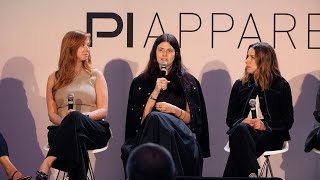
In this recorded panel, moderator Speaker A leads a discussion with four senior merchandisers – Jennifer Smith (Michael Kors), Kara (Tacovas), Shelby Goldfaden (MM.Lafleur) and Kira Ghanan (Delta Galil/Ralph Lauren) – about the biggest challenges and best‑practice approaches to merchandise planning across companies of different sizes. The conversation covers: (1) the tension between tailored store assortments and a unified brand vision and how strong cross‑functional relationships (buyer, merchant, allocation) can compensate for limited technology; (2) the critical importance of master‑data cleanliness and the pitfalls of fragmented systems; (3) change‑management hurdles, especially when scaling or trying to shift long‑standing processes, and the need to balance staying the course with timely pivots; (4) tactics for improving forecast accuracy, including leveraging store feedback, customer reviews, and real‑time data while keeping lead‑times short; (5) what makes a planning tool valuable – actionable recommendations, ease of use, and the DIVA framework (Data, Information, Value, Action); (6) best ways to partner with IT and data teams to avoid “junk‑in‑junk‑out” scenarios; (7) approaches for testing new product lines or planning strategies without disrupting existing operations, such as small‑scale bets, fast‑track pilots, and dedicated temporary resources; and (8) size‑related opportunities and constraints, from data‑integrity challenges in rapid‑growth brands to timing system implementations in larger enterprises. Throughout, the panelists stress collaboration, a data‑driven yet brand‑centric mindset, and measured risk‑taking as keys to successful merchandise planning.
Chapters
Hello again. So I'm sure you guys have all jotted down some insightful things to take back to your teams. And now we have come to our last panel of the day, saving the best for last, right? Before we all, as Steve said, get drunk. But anyways, so we are here to discuss how companies of all sizes are tackling merchandise planning challenges. So we are joined here with our four very seasoned panelists. So let's give them a chance to introduce themselves.
Hi everyone, I'm Jennifer Smith. I am the director of planning and allocation for Michael Kors. I've been with the company for about 8 years. I'm a graduate of the Fashion Institute of Technology in New York. I have one of my professors here in the audience. So excited to talk to you guys about all things merch planning.
Hi, everyone. I'm Kara with Tacovas, also Tacovas, however you want to say it. I have been with the brand for about 4 years, but have experience across multiple different companies. I'm just really excited to talk to you guys today.
Hi, everyone. I'm Shelby Goldfaden. I'm the director of merchandising at MM.Lafleur. I have been there for about 9 years doing a bunch of things, but merchandising is my primary responsibility. So excited to be here. Thank you.
Hi, everybody. My name's Kira Ghanan. I am the global GM for the Ralph Lauren brands at Delta Galil. And I've spent most of my career leading sales and merchandising teams for large global brands like Ralph Lauren and Levi's. And thanks for having us.
Cool.
So let's get right into our discussion, starting with Jennifer. Jennifer, at Michael Kors, what's the biggest planning challenge your organization is facing right now? And more importantly, how are you tackling them?
So I think in the industry right now, things are moving very quickly. The customer is changing how they shop. We want to meet her or him wherever they are as soon as possible. So I think a really big challenge for us, and I know a lot of you guys, is how do I decide what product needs to be in what store, when does it need to be there, and how much of it do they need? Balancing that with, you know, everyone obviously wants their own tailored assortment, but there's also a brand vision. Of what Michael wants. So how do you balance those tailored assortments and still carry consistency with your brand? So we don't have the most sophisticated systems, but that's fine. We have very talented people. So I always encourage my team, and the way I like to work is through building stronger relationships with our product teams. So you may not have the budget to buy the best system and all of the AI. I'm sorry for all of my vendors out here selling all of their amazing solutions, but sometimes that's not where you're at today. So how you can tackle these assortment issues and data versus product is building your foundation with your buyer, your merchant, your allocation team. So that when you're writing an open-to-buy, you're signing off on an assortment, the planner— I always tell my team, as the planner, you should feel equally good and confident about what is going into your store as your buyer does. And they should feel equally as confident about the merchandise plan you're signing up for that season as you do. So through those conversations and that relationship, you guys can share insights with each other and really collaborate and partner to make sure that you're putting your best foot forward for the brand.
I love what you just said, because truly, I mean, we can have the best system, best AI, machine learning, and all that, but if we don't have the right team and collaborating with each other and still infusing the art of what we do, then we all just become robots, and in the end, our results won't be optimized.
I, I have to agree with you. It's a system problem. So I work for a large company. For those of you guys who don't know, Delta Galil, it's a, a global manufacturing and licensing organization. And as a global GM of a new category with a very storied brand, and when I say that, I mean we're launching sleepwear and intimates for Polo and Lauren. None of our systems around the world speak to each other. So there is a lot of work that the teams are doing that I was doing 25 years ago before internet was like a big thing. So it's really surprising to me how large brands and businesses can get without that level of alignment. So how we're tackling it is a lot of spreadsheets A lot of testing new systems that don't work. Years of SAP conversion that will never see the light of day for me. But that is 100% the biggest problem that we face on a daily basis is like the data. Right. And it's super frustrating because no matter how great your product is, how good your pricing strategy is, how important your key retailers are, if you don't have integrity in your data, there's always gonna be mistakes. And we can all get over the mistakes and we can keep moving forward and growing, but it's definitely a challenge for us.
By the way, if you guys are thinking of implementing AI or any system, make sure that your master data is clean. 'Cause that's your responsibility and not the system that you're buying. Anyways, enough of that. So let's move on to the next, uh, question for Kara. Um, So this one's for Kara. Would you describe your company as small business, small, medium, or large? And with that in mind, what's the biggest opportunity and biggest challenge that comes with your size when it comes to planning tools, teams, or decision-making?
Whew, quite a question. So size is all relative. Depends on who you're comparing yourself to. We are 10 years old, but a rapid growth company. So among maybe our peers, we're a little bigger. Among the giants, we are small. But I think with that in mind, being rapid growth, some of the largest challenges are kind of what you guys are speaking to. It's data integrity. It's change management. And I think that actually hits any business of any size, whether or not you're new and this is the way we did things when we started. And you're trying to implement, like I am oftentimes, scalable solutions, not just this is the way we're doing it, but we have to change our processes 'cause we need to scale. Or in the reverse, if you're a larger brand and you're trying to change some thought process of how we've always done it this way, why would we change this process? I think that is one of the hardest things to tackle. And then I think as a growing brand or any brand, it's choosing the right time to add Add headcount, add systems. What systems do you need when? You know, if we're in the process of a system implementation and if I had done this 2 years ago, our data would not have been in a place where it would've been successful. Our team would not have been ready to have managed through this and provide actually a process for the system to go off of. You know, a system is a, It's an optimization. It's not a magic wand. Junk in, junk out. I know everyone's been saying that, but it's really picking the right time that not only is your data ready, but your team and your leadership is ready and recognizes that this is going to be successful. Getting those building blocks in place at the same time. I think those are some of the major headwinds for any brand of any size.
And change management is so— important. We were talking in one of the roundtable discussions earlier, and I asked the group, you know, how have your shopping patterns changed over the last few years? Someone said, they've changed every year. So then as a retailer, as someone that works in corporate, we should be changing every year. If we're all evolving as consumers, we need to be accepting that change as well and helping our teams see the change that's going on in the industry and help them accept it?
Yes, change management is very difficult. And of course, living in the world of planning by merchandising, for some reason every day there's always a new priority and everything becomes a priority. And we all know what that means, right? So I do think that to help us all live and be able to go home at respectable time rather than living there 24/7, we also have to then teach our teams and for that matter, the powers that be that, hey, not all of this can be done all at the same time, right? And that is part of a change in mindset because our world has always been get it done, get it done, get it done. And we do get it done, but we're dying. At the same time. So I certainly learned that from managing and coaching my team where I know I'm gonna lose these people if I don't say something, but it's not easy, but we have to start, right?
I mean, I think that's interesting topic of like we can't get it all done at one time, but I also think you said something that made me think about whiplash. And I feel like I've been, I mean, I feel like we've all been dealing with some whiplash right, in the last couple of months.
Yeah, our necks are like—
Me, Tara. Yeah, just, we won't say that, we won't utter the word, but there's something really important and I think we're losing it a little bit in this industry of like sticking to a plan. And I'm craving more of that. So we build a strategy, or you don't and then you die. But if you build a strategy, In theory, you should stick with that strategy. And in our world, it takes us, or it takes me, I don't know about everybody else in here, but about 12 to 14 months to put anything new in the market. So I can't whiplash a strategy every 3 months. I can't reprioritize planning or merchandising. And I don't think that that's widely accepted in every brand. So I think that's something we deal with, need to figure out better ways to handle.
And I will say that is, you know, one of the largest challenges is how do you find the balance of being reactive, proactive, you know, and then when do you steady the course and stick with what you put that time and energy to and that was right. You know, there's a lot of research that goes into a good plan and changing it consistently the more you touch it. We all know.
I think staying the course is, something that we would all love to see a little bit more. Just because sales are, they're instant. You can see how your strategy is working out. And I think if it doesn't work in the first few days, it's like we can't just scrap and go. I think staying the course in retail is very important. Things are changing and it's not like we're trying to implement things for years ahead. Being able to have a team and manage them in the way that it's like, it's okay if this isn't turning out the way we thought, let's give it some time, but let's also start thinking of some new solutions to implement. But I do like what you said, it, it's up to, you know, us as managers and team leaders to really implement that across the organization.
And not to diminish what you said about, we should evolve every year. I agree. But that doesn't— I mean, you can evolve within the same strategy, I think. So how do we make sure we're doing that as brands and as leaders in the industry?
Well, I think now that we are more data-driven, we should be able to have confidence to stay the course more often than not, right? And there are certain things that you have to stay the course. But there are certain things that you really do have to pivot. Unfortunately, I think in our world what tends to happen is that we pivot too much. So again, I'm excited about AI in that to help lead us in terms of having that confidence to stay the course and actually get things done, as opposed to onto something else and never get anything done. Any other points? Okay, let's move on to our next question for Shelby. What strategies have helped your team improve forecast accuracy or better respond to demand shifts?
Sure.
This job is so hard. I, you know, I always say to my CEO, like, I wish there was a crystal ball major in college because this is just so crazy. And I think I'm very much like a customer expert at MM. I've been there for a really long time. And she, she, the customer, we call her she, She has changed, she's evolved so much. Like her wants are just so different from what they were. You know, at first we saw our women saying, I don't wanna wear a bright color, I don't wanna stand out, I'm in a room full of men, like I just wanna do my job. Now, our best-selling color is like a brighter blue in a full suit. I mean, she's, She's going wild from what she used to do. So these shifts are exciting, but sitting on the other side, like at headquarters, you're like, ugh, how do we do this? So I think being able to forecast differently, it's a lot about working, honestly, I think, like with your product team and your production team. For me, the first thing I thought about was, how can we stave off orders as long as possible? So whether that's working with your fabric partner and you're choosing using fabrics that don't have a super long lead time. Because I don't want to place things a year in advance, and then she's like, mm, don't love it anymore. So working with your fabric team, you know, try and cut out the lead times. And then with your factory partners, which of course is very tough right now, but, you know, when can you place those orders? It's like, I want the most data as possible before I place this order. So let's work together on a calendar that sort of gets us to the place where we can have as much as possible before we hit go.
Something else that I think is super important is talking to your stores.
Oh, yes.
They're your frontline. They're executing. They're with your customer. I think sometimes we forget. We're like, we have the plans. We know what's going to happen. We got it. But they're the ones hearing from them. Them directly what they want to see from you, what they don't want to see from you, and why. I'll use an example. We had this whole strategy of every single handbag needs to have a matching wallet, every single one. We invested a lot of money in the inventory. Sell-throughs were not where we wanted them to be. So we were like, we don't need any matchbacks, we need all black, no more matchbacks. It didn't work. Then we go into the store and they're like, no, we don't need something for everything, but just a color, a hardware, something. And because we weren't talking to the stores, we just assumed the whole strategy failed because it was a bad strategy. But it was a good strategy. We just didn't do it in the right way.
Yeah.
Whiplash.
Yeah.
Store information is— store feedback is so important. As a team, we meet with our heads of each store. Every 6 weeks, we do— like a feedback meeting basically, just to figure out, you know, what's the customer loving. And I really do like to know what she's also disliking so we can figure it out. But yes, talking to your store team and talking directly to your customers if you can. Go to the store, help a customer. That's truly invaluable.
But there is a balance, I'm told, with data.
Yes.
So right before I came here, I was, stuck in a market appointment with an unnamed retailer who we, in the intimate space, we talk to stores all the time. And there's a ton of feedback about, and for all of you women out there, you'll appreciate this, a ton of feedback about the importance of fit, certain types of fit in bras, and what we like. "and for this particular retailer, it's about full coverage, and all the customers and the store staff are telling us we need more minimizers." Who knows what a minimizer is in the room? Thank you, okay. I learned this coming into this role. So a minimizer just kind of like makes it fit a little bit better, kind of stuffs it in a little bit better, makes your clothes fit a little bit better. So this unnamed retailer is like, "Minimizers don't work for us." We were like, here's 17 stores that we visited in the last 3 months that have all told us you need minimizers. So there is a balance of what people— and the reason why they're saying that, I think, is because they don't have great sell-throughs. And so all of the staff is looking for new minimizers. All the customers don't see where they are. So there's some sort of balance that we have yet to strike. But it was an interesting— as I walk into this and hear this conversation, I'm like, that's sticking in my head that we have to figure out the balance.
You have to definitely match it back to data because, you know, you can get anecdotal feedback that everyone is so passionate about, and then you look at the data and you're like, that is the opposite of, of what I heard. So of course, grain of salt, um, and, you know, staying with your vision. So not always like the customer voice and sticking to who you, who you are as a brand, but so many facets.
I do think there's also an element of what we're talking about. You're getting the retail feedback. You're verifying it. But you also need to verify your own data. Similar to what you were saying. You have a low sell-through. Was the plan appropriate? I think it's OK to be honest with yourself and say, maybe I was too aggressive. And that shouldn't be necessarily a metric of success in this case. And looking for information not just from retail, but there's always feedback online. You have search terms. You have, people love to comment on Instagram and tell you really what they like and really what they don't like. And it's going in the marketplace. It's those intangibles that you can mirror back in your data to verify it. But you can't just use one KPI as well. If it's just sell-through, then you're going to get some very skewed results. If it's just margin, you're going to have something very different. So it's really looking at your business from all angles as well. As you're measuring success.
Absolutely. For— oh, so sorry. For our bottom sellers, usually once a month, what I like to do is I go on our website and I look at the customer reviews. So I'm like, why don't they like this? I love it. Doesn't fit an iPhone. I'm like, easy.
Or where is it in the store or on the website? If you're looking for your bottom seller and it's on the last page, Maybe they're just not finding it.
So yes, absolutely, finding the balance actually in everything that we do is very important. So finding that balance between data and what customers are saying, what the brand is all about, right, the brand ethos, and what the customer is saying. Because if you only listen to your customer and yet it doesn't meld into your brand, then who are you, right? So, But listening to your customers and listening to the stores is extremely important. You know, my favorite, what I would do is I would go into the stores and I would go into the dressing room and try on things, and that's when I hear the customers. And then our salespeople love to also talk to them, so it was a firsthand comment on what things— and it was really interesting when you compare what the merchants or what the designers were thinking about a product versus how the customer received it. So it's important that we all think holistically in terms of what we do. And what I mean by holistically is I knew from the get-go that my success was only dependent upon the partnerships that I worked with. And number one being the stores. And then, of course, my buyers and my merchandisers and designers. So again, going back to that team. Right? Okay, so then we have another question for Kira. How do you stay nimble in planning without sacrificing long-term vision or margin?
Well, I mean, if I had a clear answer to this, I think I would probably be in a different place in my life, but I think we've sort of touched on it a little bit. I think it's a— everybody has said something. When you just talked about sell-through not being the best KPI, that's an interesting one because I do feel like the less inventory problems that you have, the more nimble, of course, that you are to make those decisions. Tests don't really exist in the way that I learned tests should happen, which is that you have a fast-track process. So you need 3 months, right? And then you decide, you learn, but it's all a long-term game. So I think if you come at all of— if you come at the planning element with what is my long-term value of that consumer, what is the long-term value of my brand, what am I ultimately trying to achieve, then you're going to be able to make mistakes and fail fast and move forward. I think we all have appetites that are too big. I think we make huge bets because we all deal with pretty big brands here on this stage. And then I think if you're in a small brand, you want to be big quickly. So I think that we have an appetite that's too big. So staying nimble by buying less, selling out, being very measured in how you're talking to your consumer, and not putting too many eggs in one basket. I currently have too many eggs in the China basket, as an example. So that's something that we've been working on, like diversifying, and that has prevented us from being as nimble as we need to be. So recognizing those things, giving yourself some rope to make some mistakes, And being able to really think about where am I gonna be in 2 years. Stop focusing on a 6-month plan, focus on the 3-year plan, and really give yourself the rope to make the right decisions.
I agree. You know, when it comes to margin, one of the things that really drove me nuts is when in your heart of hearts you can really only sell 300, but the MOQ is 1,500, we still bought it. Why? Well, I mean—
You can do that if you are balancing the assortment, right?
Yeah, but even if you were balancing the assortment, if you could only sell 300 and you bought 1,500, you're now left with 1,200 more to sell.
No, no, no, I mean take the margin hit. Take the margin hit on that one item as long as you have the cash cows to balance it out.
Thank you. That's what we should have done. But unfortunately, it's like, oh, but it's gorgeous, and you know, it's going to sell, and I love it. And you know, it's that, oh, I feel. But here's the data.
Yeah, I mean, I balance the I feel all day long too, working with a very strong brand equity with Polo and Lauren and their feelings on how the product should look. Coupled with the data that I have, coupled with other opinions of planners, merchants, marketers. I mean, everybody's in the mix. And it's what I think is most important about actually the merchandising function is that you bring all these people together and you can pull out the most important pieces of what they're saying. And you have brand integrity and you have strong planning and you have good sell-throughs. And obviously, that's the target and the goal. But I'm always a fan of taking the margin hit as long as you're not killing your season. Because the long range, you're learning something. Can I push them on that price? Can I push them on that fashion? Can I build a better relationship with that factory and get my MOQs down? Whatever it is, it's just a moment in time. And we should be able to sell 300 pieces of something.
I do agree with taking your moments and balancing your line. I also think that we don't always I don't think we spend enough time thinking about the effect on brand value. You know, when you're making so many, you know, riskier bets in your investments throughout a season, and you're buying into potential markdowns, and those aggregate over time, there's going to be unforeseen dogs as well. So if you know you can sell 300, and then there's also going to be, you know, 5 items that didn't check that you now have to liquidate as well. And we start training our customer that there's going to be markdowns. You'll find us at an off price. And so I think there is also a not as easily quantifiable effect to that as well that you just have to be really measured with. What can you learn, and how valuable is that versus what is that going to do to your brand value?
And I mean, I'm sure I have some Tapestry friends out here. Look what Coach has been able to do with their business. They stood for the brand vision, were able to grow their full-price business, weren't so reliant on outlet, and it's one of the most successful retailers, I think, sitting in this room today. And I think it just goes back to staying the course and really sticking to your strategy and sticking to your brand. I was at NRF a few months ago, and someone on stage was And she said, you can't be everything to everyone. Just be you. And those are the brands that come out on top.
So again, in our world of inventory management from beginning to end, it can be crazy. But it's up to us to not make it so crazy. Just keep the fun part. Right? So whether your business is small, medium, or large, with all the craziness, you merchandise planners, my partners over here, make your time count. And what I mean by that is, so I created this acronym for myself back when I was doing merchandise planning just to keep me focused. And the acronym is DIVA. DIVA, D stands for data, I stands for information, V stands for value, and A stands for action. If you guys are still spending more time on the data gathering and less on the value and actioning, you need to do something. So make your time count and go find that value and action it. Do we have any questions?
Be a diva.
Yes, go be a diva. Any questions? Any questions? Really? We put you guys to sleep.
Comments? Complaints?
Compliments?
Compliments.
Okay, so here's a question. How do you test new planning strategies or product lines without disrupting existing systems? Systems or processes? Who would like to take that, or all?
I can start. I think it's learning how to take calculated risks in a small way to help your strategies in the future. So if the bulk of your business is run on replenishment, run on core, and you want to take a bet in a small way with fashion, go for it. It's not going to be the detriment to your season. If you're looking to replace your entire core program in one season, that's a very different strategy or product line that would be a little bit risky. So it's just really divvying up, at least from my perspective, divvy up your business into those digestible pieces and take the risks where it makes sense, knowing that you can balance it out somewhere else like we talked about earlier.
That question went away, but I do want to say something about it. There's two parts to that, product lines and planning strategies, and I think there's two answers, and one might be a little rich, but just hear me out. New planning strategies really require dedicated attention. How many of us work for organizations that just dump extra projects on existing people, And I do feel like it makes the most sense to bring somebody in for a temporary moment to test out a new strategy, to develop it, to present it, to manage it. It's just a consultant. It's just a temporary role, but it makes a huge difference than asking your planning team to try a new strategy while they're— and not disrupt, right? And then the other one is a new product line. That's why I mentioned earlier a fast-track plan. So it's a different GTM. It's managed completely differently. That's the only way to really test a new product line properly.
I think the other thing too is with this great world of AI and data, we have so much access to information as far as total addressable market and what are people searching for on your website. And is that something you're offering? And if you do offer it, how big do you think it could be? There's a lot of ways also just to, if you're launching launching a new product line to get a better understanding of maybe the customer appetite without, you know, that should inform your level of buy. And then I think, you know, it's understanding with your leadership, is it a win if we sell out? Are we okay taking, you know, being conservative? How bullish do we need to be? And all holding hands as a business, 'cause the worst thing you wanna do is launch something and everyone says, well, we knew it wasn't gonna work, and now you have to liquidate.
Another question. What is important to you in a planning tool?
Accuracy.
Giving you a recommendation. We can all look at data as much as we want and stare at it, but what is it telling me to do with that?
Yeah, I think in the world of Diva, it's about— no, it's about value and action. If you're spending all day looking at different segments of data, I mean, I think you should be able to pull value and action out of that, but where you're really saving time is when you have a system that you're not spending all day clicking, clicking, clicking, clicking, changing a field, clicking, clicking, because you can do that in any system. You can do that in Excel. Where you need— what you need out of a planning tool is recommendation, is insight so that you're, you know, getting the value out of it.
Well, I would say I would look for ease of use, right? Flexibility. I've done so many due diligence with systems and they tell you, oh, it's so user-friendly, and they convince you to buy it and you buy it and it's not user-friendly. So truly—
It's user-friendly for them because they built it. Yes, absolutely. So you know how to use it.
So, but for sure I would look for ease of use and kind of like a self-service functionality as well. Okay, next question. How can you determine if poor store placement, poor website placement is a cause of poor sales rather than a result? Well, that's pretty loaded.
Try putting it somewhere else. If it's in the back of the store and it's horrible and you put it in the front and it's still horrible, It may just be a dud. But try something new, then compare it to what you're doing and see if it changes.
And then on your website, you should be able to compare traffic and conversion. If you have high traffic on that item and low conversion, then it's probably an item problem. Versus that if you have no traffic, then maybe it does need to move.
And if you've moved it around and it still didn't sell, it's the product.
Yeah, I mean, I think we sometimes take for granted that we have a whole slew of experts that are building this stuff. So I do feel like if you really believe it's an iconic product for you, for your brand, you should try a few different ways to present it. If you don't, and hopefully you didn't buy it big and make a big investment in it, then move forward because the longer you wait for that to hit, also it could be very detrimental to your brand equity. So just be careful about that one.
Next question. How do you recommend partnering with your IT data teams? What makes the ideal system partner?
I can take this because we're in implementation right now. But I think if you're in planning, you should be best friends with your IT and data teams. Because, yeah, as part of the diva, you are in data a lot, and you need clean data, and you need partners that are servicing it and providing it clearly. And they're going to be holding your hand during any kind of implementation and selecting a system. You know, we know what we need out of the system, but they are the experts of what will be going into the system and how it will be playing with their whole tech stack. And if you, bring on something that doesn't play well, you're going to get, say it again, junk in, junk out. So you need to be holding hands with them and making sure that they're as excited and see the vision for the tool that you're bringing on and that they see it as something that they can move forward to just as much as you do.
I love my IT partners. I don't know if they say the same thing about me. But I think sometimes I feel like when you work with, an IT partner, no matter how long they've been there, how great they are, it's almost like you're speaking two different languages. But I think we have the benefit of we work with physical products. And sometimes, I'm going to say dumb it down in the least offensive way, but like, if you can't figure out the cost of a product, what do you mean? We bought it. It exists. It's here. Help me figure this out. And just get past the, oh, well, I saw it in WMI, and then it was in MMS, and then it was there, and then it wasn't anymore, and I don't know what happened. Just talk about what you're trying to solve in very basic terms because we can all digest product. We're not— we don't do that complex of a job. It's a handbag. It's a shoe. It's a bra. And I found just taking some of the systems out of it and just talking about the issue with IT, it helps the conversations a lot.
Well, I've always had a love-hate relationship with my IT team, especially when they would tell me, "Is your printer on?" I mean, yes, it's on.
"Did you restart it?" Exactly.
Hard to eat with soft food, right? But anyways, I think it's also partly Just knowing who in IT does what, right? You know, you could be talking really just to the help desk and yet you're trying to, and yet the person that you need to talk to is actually the programmer or the coder or whatever. And we use IT, I think, very loosely, but there's so many different responsibilities within that area. So anyways, but yes, I've always had a love-hate relationship with them. Mostly love, really. Anyways, so next question. Love what you said about staying the course. When things go off plan, how do you decide when you need to pivot or when you have to stay the course?
I think that's a hard one. I think this is where it's not about data and it's about What does this mean to your long-term vision for the brand? Which can be very debatable. And I don't think anybody has the right answer here, but there's— okay, when I was at Ralph Lauren, we launched a brand called Denim and Supply. And we were very excited about Denim and Supply. We were so excited we put hardwood floors into Macy's. Which was a crazy thing to do at the time. And there was not— the business was good. It wasn't blowing the doors off, but it was good enough where we built a couple of stores. We had a great website. We invested a ton in marketing. And the question was, is should we pivot and refocus? It wasn't my decision, but— and refocus all of our resources into the Polo brand. And this was like a back and forth for about a year. Denim and Supply, over the course of 2 years, became a $350 million business, like overnight. And the decision was made to pivot, because those resources were better spent on a flagship brand that had long-term value that was more important and valuable than the Denim and Supply brand. So I don't know if that was the right decision. It was a beautiful product. I have lots of vintage Denim and Supply. Supply if anyone's shopping. But I think, you know, in that— and you can also have that same conversation when you're talking about staying the course, staying the course on Polo Men's, like when that was not working very well and now it's working very well. So I think it's a gut decision and it's a brand decision. And sometimes you make mistakes. As long as you fail fast, you can move forward.
I also think understanding the impact of what it is? Are we talking about one product missing plan by 5%? Or are we in the hole to budget by $100 million and we're only in Q1? So, looking at, okay, how big is this problem? How big could this problem be? And maybe there are some things where it's like, okay, it's just a little shy to expectations, let's give it a minute. Or is this a problem that's gonna continue to be a problem? So, it just kind of depends on what that impact to your overall business is, if you need to change now or if you have time.
Well, and I think kind of what we talked about, specifically you, on having as much time to make a decision and understanding what are those trigger points for a decision. So, if it's been selling for a week and it missed your plan and this is the first time you've launched anything like this and there's a lot of variables going into to that, I think you got to stay the course a little bit and analyze it and continue on. And then understand, OK, when is the next time I actually need to place? Or when is the next time I— the window in which I can cancel fabrications, I can cancel orders, or anything along that line? And giving yourself that timeline to dig in and understand. It's just creating that clear expectation with your partners too of if a week is not enough time to pull a trigger, we don't need to mark something down immediately. What is the measure of success to— if it's a brand new item, measuring it off plan, how accurate was the plan, what information went into it, and what are the KPIs we also can look at as a measure of success. Sell-through, margin, what is this doing for the long-term vision? But you got to understand, when is your next trigger point?
Well, thank you, panelists. We've actually used up our 45-minute— allotted time. Let's give them a wonderful hand. Now let's go be divas.










