Navigating Change Management in a time of uncertainty | PVH | PI Apparel
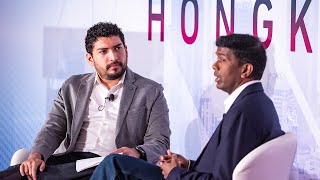
In this live session, John, Head of Supply Chain for PVH Far East (Tommy Hilfiger and Calvin Klein), discusses how his organization confronts pervasive change fatigue and implements change management across a global apparel supply chain. He introduces the AAA framework—anticipate, accept, appreciate—to help teams reset their mindset. John categorises employee reactions into four types (positive‑yes, passive‑yes, active‑no, passive‑no) and stresses the importance of identifying and engaging the passive‑no group. He shares concrete examples, notably the rollout of supply‑chain traceability initiatives that accelerate PVH’s Vision 2025/2030 goals, describing supplier resistance, pilot‑and‑scale approaches, and custom technology solutions. He outlines common roadblocks such as mindset resistance, reluctance to empower others, and the need to let go of entrenched ways of working, and explains how he addresses them through personal conversations and creating “white‑space” time. Success metrics are framed around people‑centric outcomes—employee well‑being, retention, and the quality of the journey—rather than pure financial KPIs. John also details communication tactics, from delivering a clear corporate vision to tailoring “what’s in it for me” messages for each employee, and highlights cultural changes like no‑meeting blocks on Monday mornings and Friday afternoons. He outlines the leadership qualities needed for the future—curiosity, agility, authenticity, and a people‑centric focus—and reflects on hybrid work models, the importance of upskilling, and the macro‑economic dynamics that will shape the next few years. The session concludes with practical advice: start with the AAA principle and over‑communicate change.
Chapters
Hello.
Okay, good transition with the mics here. All right, John, can you just quickly introduce yourself for the audience so they know a bit more about you?
All right, thank you. Nice to be here. Thank you for joining us in this morning session. So my name is John. I'm heading up supply chain for PVH Far East based in Hong Kong for all of our PVH Europe businesses for both our brands. For Tommy Hilfiger and Calvin Klein. Been in this industry for 25 years. Never thought that I would last this long when I started out as a young kid straight out of college, but here I am still going strong. And so been in manufacturing, that's where I started, and I think that's a great place to start to understand supply chain. And then been in buying and with several different brands, living across several different countries. And the best way to, to sink me is to put me in a swimming pool that's got not more than 3 feet water. And that gives you a little bit of my understanding of my life skills. So happy to be here and share a little bit about something that we're doing from our work with change management.
Thank you very much. So we're gonna be, I'm gonna have some questions here. Basically, it's gonna be a conversation. But as it was announced before, we welcome your questions as you see this interaction and you can post them on the Slido app. So let's kick this off. I just started this whole event talking about how much things have changed and how, if you are in Hong Kong, if you were in Hong Kong working for the apparel industry, there's change everywhere. We have to deal with, you know, first trade wars, then not being able to travel, then all these containers stuck somewhere in the world. We live in a world where change is just everywhere. So how do we— do we have this change fatigue? Are we just— how do we deal with this just tiredness of constant change?
Great question. I think it starts with the premise that there is change fatigue. And that's so true. I think all of us recognize that change is an integral part of everything what we do. But when change comes as a tsunami, then it can be a bit overwhelming. And I think what we've experienced so far is change fatigue is true. I mean, there are people who are beginning to feel overwhelmed as to how much change is change that's enough. Some of the things that we've noticed is that, you know, the way to accept the fact that it's changing is to use this opportunity as a reset. To press the reset button in the different ways of working. And that will already give us a platform to understand and accept change. And I call this the AAA batteries, right? The 3 A's, which is anticipate change, accept change, and appreciate change. And then that begins to accept reality because we're not going to be able to change reality, but I think it gives us an opportunity to embrace it a lot better. And one, if I may just add on something, When I started working with my team and in our organization, PVH, some of you, I mean, most of you would be familiar, the only thing that's constant in PVH is change because we are always trying to stay ahead of the game and so constantly evolving. And so there's never a moment, and our former CEO always used to say, there's no rest for the best. So if you are right up there as the best, then there's no rest. You've got to constantly keep evolving. So change is something that we've always been used to. And when changes start happening the way it did in the last 3 years particularly, there are 4 different types of people we recognized when we were effecting change, and I think it's important to recognize every one of them. One is there are those people who are positive yes. I mean, they are like extremely happy and they're like, let's go for this. And then there are those people who are passive yes. They don't really make it so conspicuous that they're willing to accept change, but they support it anyway. Then there are those active no. People who resist change. I mean, they are out there to say, "No, this ain't gonna work." And, "Why would we have to do this?" And the fourth category is, to me, the most important people to address is those who are passive no. They don't say anything, they don't support either. They're not pulling their weight, they're dragging their feet. And those are the people who are really pulling things back in an effort to change. And so, in a position of leadership, my responsibility was managing this change. Particularly focusing on those people, identifying those people who are the passive nos, because you don't know what's underneath, what's beneath the surface. And that was an integral part of managing this whole change fatigue as we went through this journey.
Okay. Very interesting what you mentioned, that from your position in the company, you can identify the different responses that you're going to get. Can you share with us some examples of how change management really made a difference in the organization? Organization?
Right. I think if I may use an example, one of the things that we're working on right now is the aspect of traceability. Now, I'm sure all of us are familiar with the traceability, supply chain transparency, and the whole thing that goes on behind it. Now, with PVH, especially in our division that we're working with, I don't think the pandemic or the last 3 years initiated or triggered any change. What it did was accelerated the change that we were already on. Whatever was our Vision 2025 and Vision 2030 suddenly became Vision 2022. And so it basically accelerated. And one of the things that we were working on was the aspect of traceability, creating transparency in our supply chain, not just from a regulatory point of view, but also the fact that we need to be able to provide to our end consumers what they were looking for. And that's with regards to traceability. Where are our products being made? Where is our raw materials coming from? So all of that. Now, when we started initiating traceability into our ways of working, there were several people who were like, why now? I mean, what's the big deal around this? Why do we need to do traceability? Don't we trust our suppliers? I mean, we of course trust our supply partners, but then why do we need to go about collecting chain of custody documents and all that? But we saw 3 years ahead and we started bringing in the saying that eventually our consumers are going to be asking for this, to say they want to know where are our products being made. So let's start creating that transparency so that we are able to provide to them. And then when we started rolling this out, we recognized there are certain pockets within the organization who are just not pulling their weight. And then when we had to go back and do a little bit of investigation as to why are we not moving as fast as we wanted, They were those people who weren't really saying anything, but they were not doing anything either. And they were critical parts of the organization. They were all associates, individuals in various departments. And then we start— then it started my journey of trying to manage that aspect with them, trying to talk to them on why we're doing what we're doing and explain the principle of just instead of going top-down saying traceability is key and we have to do it as an organization, for the associates it were like, so what's the big deal? And the moment I started talking to them individually, explaining to them, saying the why behind the what, then they started pulling their weight along. It was— they were slow starters, but they're all on the journey right now. They're all at different points of time, but they're all on the journey. So effectively, that's to me a good example of when we rolled out something as big as what we're doing, I think, uh, you know, it would have been a lot better had I did the why behind the what first.
Interesting how you mentioned your journey with change, because there is a directive coming from the top, but then you will assume that the basic circumstances, you just need an announcement and people will do what was announced. It is the way we work today. But then you get that sometimes active resistance of people just saying, you know what, I disagree with this. I don't think this is the way to go. But as you said, probably the worst case is when it's a quiet no. You just don't know why things are not working. So that means that you have to do the work to find out where is the roadblock. Can you share with us what those initial roadblocks look like? When you start implementing a change this big, what are the first roadblocks that you find in this path?
There are plenty of roadblocks that we faced. And one thing that we realized was announcements don't work. I mean, that's just the first level of information, and that's just the beginning. That's the first step. The roadblocks that we encountered first was the whole mindset, you know, why. Nobody likes disruption, and change disrupts stability, right? So the first mindset, first roadblock that we ever faced was people were resisting it from, why do we have to do this now? It wasn't really, it hasn't really been necessary. And many of us, I think, grow up with this thing saying, if it ain't broken, don't fix it. And I think it's true to some point of time, but if it ain't broken today, it'll be broken tomorrow. So you don't necessarily have to fix it today, but you start getting prepared to fix it tomorrow. So the better prepared you are, the better you respond to that situation. So when we started on this change management journey with our teams, the first thing was, it ain't broken today, so why do we have to fix it? So that's the first mindset. Secondly, The whole thing about the ways of working was we said we will go more and more towards empowering our stakeholders. And when it comes to empowering our stakeholders, allowing them to make decisions, trusting them, the aspect of letting go was another big roadblock. Everybody's so used to keeping things under control. Like, I can do it and nobody else can do it as well as I can. And so I might as well do it. Why do I need to empower somebody else? Couple of things, if we don't empower somebody else and I keep doing it for as long as I want to, I'm never going to be having enough space to improve my own skill. I'll just keep doing that for the rest of my life. But the moment I start empowering, it meant that I'm willing to let go. That ability to let go is a huge roadblock to overcome because it feels like people are like, I'm losing control. Whereas there's a lot of trust that needs to be engaged with in order to empower people. So the willingness to let go was another big roadblock that we faced with people, but we had to encourage people to let go so that the moment they let go, they're creating white spaces in their calendars in order to be able to think creatively and start upskilling themselves so that they can do things better while training somebody else. And many times empowerment comes with an aspect of, if I'm going to let this go and getting somebody else to do it, then am I going to be working myself out of my job? And the third thing that we had to change was that you're going to be working out of your current ways of doing things because you're going to be doing something different and something that's more value creation, something that's going to be more empowering. So, and that's a huge roadblock that we had to first overcome, to let people understand that change is essential and the way to respond to that change is to upskill yourself. And you can never do that if you're not going to let go of what you're doing. And trust and empower people and allow your stakeholders to be your partners and not always waiting for instructions from you and you thinking you can do it. It's true that sometimes there may not be people who can do it as well as I can, but at some point of time, I've got to let that journey begin so that they will become at some point of time better at what they're doing and I can move on to doing other things.
Yeah, I think it's interesting what you mentioned because fear, it's a natural response to change. Especially when you're saying, I've been doing this specific task for so long, I know I'm really good at it, why mess it up? Why am I going to change it? Another aspect, as you say, is that, okay, if you're gonna take this away from me, who am I? What is my role? What value do I offer to this company? And I think that that's where also, it's not just making a change, but preparing for the change? Because if I've been doing this specific task for 20 years, obviously, if tomorrow I don't have to do it, my response is going to be, what's wrong? Why do I have to do it? And can I do anything else if I've been doing this for 20 years and I'm very good at it? So do you think that also it comes with a culture from the company to, as you said, upskill and to challenge people constantly? To even if you are really good at what you're doing today, what else can you be good at and keep moving people forward?
The ways of working are continuously evolving. The way by which we adapt to different scenarios are constantly changing. What I can never be able to enjoy the future if I'm going to be letting my present be controlled by my past. Because if I've been doing certain things for X amount of years, and I continue to keep doing that, the environment around me has changed. The circumstances have changed. The scenarios have evolved. And if I'm not able to adapt to that, I'm going to be left by the wayside while the traffic continues to move. And suddenly I realize that I'm at the back end of traffic. And it has to be an intentional effort on my part, first for me to recognize that I must upskill myself in order to live in a new world. And if I do that, and if I don't have the people around me follow the same philosophy, then there's going to be a gap that's going to be created. And in that gap, things begin to fall through. And then it affects your performance. So it's important that your team and your people, your stakeholders, your people under your influence move on that journey as well. So it's also not just me recognizing it, but also being intentional in helping my team understand that we need to move together. And it's all about changing your ways of working. What was relevant yesterday is not relevant today, forget about tomorrow. And so it is about changing, approaching things with a very different mindset, and upskilling is an important part of that. And today there's so many opportunities to upskill oneself. You don't necessarily have to go through a formal academy to upskill yourself. On-the-job is one, and formal training is another, and informal training by visiting suppliers, visiting factories. And I always tell people in my team, especially in the last 3 years where people have not been able to travel to some of our supply partners, I felt there's been a big knowledge gap. There's been a gap in understanding and learning new things because after 3 years, when I started traveling to some of our supply partners, I found that they moved on to new ways of working. What I saw 3 years ago is very different from what they're doing today. And if I'm not able to keep myself updated on what's happening, I'll never be able to provide them the vision of where we want them to go. Because if I don't know where they are, I'll never be able to guide them to where they need to go. And so I constantly tell my teams that now is the time to get out and get to the supply factories, go meet our supply chain partners, meet all our stakeholders, and see how they've evolved and learn those things and equip and adapt yourself. So I think that's an important aspect of recognizing that you need to upskill yourself and keep moving in that direction.
Thanks. We got our first question through Slido, anonymous, like the most curious question ever. The most curious person, always anonymous, asking questions. How do you measure the success of change?
It's a great question. I think one of the ways to measure success of change is you're able to sleep peacefully in the night despite all the change that's happening. Success is very different for very different people and in different scenarios. Success can never be measured just by KPIs and deliverables. To me, success is not I have an EBIT margin of X percentage and I meet that EBIT margin. I have a top line and a bottom line growth of this and I meet that. That to me is not really success. It's one way of measuring success as an organization, but to me the focus is all about the journey to that success. To me, it's about the people, it's about the team. And while those KPIs are there, it's not about— and our CFO, who's now our CEO, always used to say this, getting to the destination is one, but what's more important is how do we get to that destination? What kind of a trail do we leave behind? So to me, a measure of success is about employee retention, quality of life, work-life balance. How do people feel? Do people trudge along and get to the finish line, or are they happy to be on the journey with you? So the easiest parts of measuring success is again those KPIs, those deliverables. Did we meet or did we not meet? But the real measure of success is the trail that's left behind. How are the people feeling at the end of the journey? Are they bruised and wounded and arrive at the finish line half dead, or are they happy to be on the journey and looking forward to the next? So success varies across different stakeholders, different industries, different scenarios in terms of measurable metrics. But what's really important to me is the people aspect. How are people along in that journey, and how do they feel at the end of it?
It's interesting that you mentioned that, because I find very challenging to say that, that, you know, how do you keep people engaged with you in the change. I mean, I get it. In management positions, you see the big picture, the 10-year plan, 2-year plan, and that keeps you focused. But that's not the reality for everyone in the organization, right? Like, there's people have different approach to work. Some people are like, oh, career, I want to see where we are in 10 years. Some people are just, I'm just here because I want a paycheck. I'm here because I just want some work that I live nearby. You know what I mean? I just walk to work. It's convenient. So how do you reach, do you give this message to people that come from different places and have different expectations of what they want from work to say, yeah, I'm still with you. I'm going to be with you through this change, even if it's going to cause some disruption in the present so we can be prepared for the future. How do you give a message that reaches such a wide range of people?
Yeah, I think the easiest thing in an organization is to deliver the big picture vision, saying this is where we want to go 2025, this is where we want to go 2020, 2030. I think that's important because unless there is a vision of where people need to go, we're never going to get there. So first people need to be aware of where and what is our vision, what's the big picture, what's the big narrative around this? And then it boils down to each individual saying, what's in it for me? How does it make sense to me? How does it relate to me? And so when we rolled out our Vision 2030 plan in terms of our sustainability, saying we want to be the most sustainable brand, we want to have all our products sustainable, and we need to be able to back up our claims as to why we are calling it sustainable. One of the associates came to me and asked me, saying, John, sustainability is for the brand, but what's in it for me? What's my role in all this? Why should I do what I'm doing? —right? So there are each and every individual, and that's where we start breaking it down from a CEO. He addresses 28,000 people, and then we start breaking it down team by team by team, and it boils down to the last people manager who's got those 3 people or 4 people under him or her to be able to individually have that conversation, say, this is the big picture, but what is your role in it, and what is in it for you? Exactly. That's the most important thing because at the end of the day, people, that's what they really care about. We all love these great narratives around that we align with the organizational vision and views, but deep down there is a personal need that has to be met and it's about what's in it for me. And so it's important to have that conversation individually. And I've had conversations not just with my direct reports, but I've reached across several to skip-level management go several levels down and talk to people because when they hear from me, they believe that they're hearing it from the horse's mouth because I do have access to everything that's happening in our senior management conversations. And when they hear it from me, they know that there is no brainwashing, that there is no, you know, trying to give the official narrative. They want to see how authentic I am and have that conversation individually with them and talk to this person to say, hey, this is where we are going, this is why we are going, this is where you can participate, and this can be your upside. Beyond that, whether they accept it or not, that's their choice. But you're giving them the information to work with. And I think that's important. And it's got to be intentional. Some of the— in our busyness with work, we get so caught up with driving after the results and deliverables and KPIs that we miss out on the people who are actually going to be responsible for steering that in the right direction. So one of the things that's worked for me well is when I create those white spaces in my calendar where I actually sit down with people, identify those key stakeholders, and have this individual one-to-one conversations and explain to them. And then be intentional about celebrating small wins. 2030 sustainability is a big target. I don't think how many of them would even be there in this industry by the time we get there. It seems like 5 years is— I mean, maybe you're going to be there in like 7 years, but it's still a long time in the lifetime of many people. And so we don't even know whether they'll be there. Celebrate quick small wins, and I think that's an important thing. So we, from our sustainability journey, we moved from 60% to 61% in a particular region. We moved to 90% from 85%, called the team, did a small little drink and say, hey, we moved the needle in that direction. And that builds traction with them. So I think that's an important aspect. People need to know why, what's in it for them, and intentional conversations with individual people. And in our organization of 28,000 people, I don't think we can shy away from the question, how do you talk to so many people? You must be able to break it down to levels and have each person who's a people manager have that conversation with people. Perfect.
We have some more questions from Slido. Oh, I appreciate people putting names now. Great. Vikesh asks, what are the changes which are you most proud of having implemented at PVH?
What are the changes which you're most proud of having implemented at PVH? Great question. I think several different things that are from an organizational perspective. And one of the things that I implemented personally within my sphere of influence is I told my teams that In a way, today's digital age where it's all virtual meetings, we get pulled into several different meetings much more than what is really necessary. I mean, in the past, we used to get invited to meetings where you need to be there physically. But of late, you get invited as if it's an open invitation. There are like 10, 12 meetings that get put into your calendar. You feel no— you feel bad saying no to it. So you get to attend every one of those meetings. One of the changes that I brought within my team, and that's a team of 126 people in my sphere of direct influence, and I said no meetings Monday mornings, no meetings Friday afternoons. Absolutely. I mean, feel free to say no to anybody who is putting a meeting in your calendar. Monday mornings, no meetings. Ideally, all Friday, no meetings, but if you must do Friday morning meetings, okay, but no meetings Friday afternoon. Use Monday mornings to plan your week, set your calendar, use Friday afternoons to wrap things up so that you don't do things on a weekend. And we work a lot with our Amsterdam office. Now Amsterdam for us on a Friday afternoon is Friday morning for them. And so they want to do meetings on their morning, which is our afternoon time, but the teams have been told clearly to say no. And the teams find it extremely liberating that you have somebody at the senior level coming and telling them it's okay to say no to meetings. And that has brought about a lot of change in the way the teams are able to complete their work or plan their week so that they don't have to carry things forward late, working late on a Friday evening or on a Saturday or on a Sunday thinking through work. And that automatically brings in a bit of, you know, a positivity into their mental health. They're much more fresh, which automatically improves the quality of work. I may not be able to tangibly measure quality of work from a mental health point of view from that aspect, but I know for sure a lot of people have been able to say that it's really helping them manage their calendars better. And the second thing is that when I took on this role that I'm in right now, my direct reports are all senior-level executives, and people who've been there, done that, And one of the most difficult things to do to that kind of leadership is to change the ways of working. I come in with fresh pair of eyes and very different ways of working, but without telling them how it needs to be done, but telling them where we want to go and allow them the space to be able to manage that. So much so that during my last review with every one of them, they all came back and said that how they've grown in their careers in the last few years that they've been with me. And so it's about giving them the space and allowing them to make changes in their own little frequency, but not being there to hold hands with them, but give them the vision. So by changing the ways of working subtly, right? So those are some of the things which I feel that I've been able to look back and say, that's worked. And quite happy about that.
Cool. So let's go to the next question. Rakesh asks, what was your suppliers' response when you started scaling up the traceability initiatives? What kind of technology application do you use for traceability?
Suppliers' response when we started scaling up traceability initiatives, it still is a struggle because not a lot of them see it the way we see. And it is a big burden. It's a task. I mean, it's not something that we've done in the past, and it's now beginning to gather momentum. And a lot more brands are also talking about it, but we are trying to stay 2 steps ahead of it, so we're going pretty intense. Some of the principles and policies we've put in place with regards to traceability does not just cater to the regulatory requirement of one particular country, but it's generally looking at the whole global legislations in place, and so we are trying to push the boundaries on this. So the first response from suppliers was that, you know, this is going to increase manpower, this is going to be so much of workload. So having the conversation with them to explain to them why is several different— was a task by itself. So what are some of the technology and application we are using for traceability? So we— there's several different— there is no one industry solution for traceability. I think we're all trying to figure out what is the best way in this forward. So we have worked with a particular supplier of ours and we customized a solution. And we came up with what looks like a pretty good solution to date. We've tested several different solutions out there in the market. The one we're working on right now looks like it's ticking a lot of the boxes. It's not there yet, it's not 100% perfect. It's got a long way to go there, but it does appear to be a good solution. Apart from that, we're also running several different traceability initiatives catering to different segments of our business. One for just our sustainable fabrics, you know, there's a particular traceability solution that we're running. One for our denim fabrics, which we're running a different traceability solution. So we are piloting 3 or 4 at the same time, and ultimately we will look to see which one best serves our needs. And when we talk to our suppliers, they all recognize that PVH, what we are doing is, you know, far ahead of what some of the other brands have been asking for. And they're now beginning to get on the journey because they realize, What separates a strong long-term strategic supply partner for PVH is participation in these kind of initiatives. We don't talk about price, quality, delivery anymore because these are non-negotiables, these are basic elementary stuff. But the differentiators are those in it for the long term, part of our strategic sustainable initiatives. And so the suppliers are beginning to get on board with this. And they see that more and more brands are asking, for it. If not today, they're going to come and ask for something equally intense in the future. They might as well get prepared for it. So it's now beginning to build some traction. But initially, it was a hard sell.
Yeah, I mean, I can imagine in my also limited experience implementing systems in general is that when you start with something so fresh, when you are the one leading in the industry, really, you know, you're paving way for the rest, right? Like, systems are not developed enough, you're discovering things, you need to make change. So even finding the right partners to walk with you in that journey, to give feedback, to make sure that you are correcting the system and you are feeding it in the right way, it's critical. Because you never get it right on the first try. You're going to build something together. So the quality of your partners is super important. When you were talking about suppliers, do you— You kind of try to layer it first, or do you try to go big bang? How do you try to implement these things?
So when we started out our traceability initiatives, we first wanted to define why are we doing what we're doing. Is it regulatory? Is it sustainability? Is it product data transparency? Is it supply chain transparency? So the moment we mapped out why are we doing what we're doing, then we wanted to pilot it. And to pilot it, we started out first identifying who are our top strategic vendors who will cover a bigger portion of our business. And then we also had to look at if it is for a regulatory purpose, we have to identify the risk origins, countries of origin which are at risk based on various different countries' legislations. So then let's identify a few vendors to give us that flavor as well. So it is a basket of various suppliers that we brought together and then we started piloting it. And from there on, now we start going into the scaling phase. We were now taking it forward and expanding on that. So on the first pilot project that we started, we are nearly 100% rolled it out to our supply base for certain product categories. And now the next phase is to expand that further. So it's a mixed basket of suppliers depending on why we are piloting what we are doing.
Clear. We have, again, you can send your questions to Slido. Nupur asks, what are the biggest change themes that you foresee in the next 2 to 3 years? Another pandemic maybe? No?
I think the macro dynamics are going to be the most disruptive. Because as we see today, we recognize that, yes, there is pressure because of the Russia-Ukraine situation. We're looking at a possible recession in Europe, or has it peaked, or we're still living through it. Then the energy crisis, the raw material prices going up, which is now beginning to stabilize, but then the macro indicators are telling us that this disruption is probably going to be there for a while. And that's probably— and of course the fluctuation of the dollar against, particularly against the euro and against the various currencies. So the macro dynamics are going to be the biggest disruptor, is how we see. Some of these factors are beyond our control. We cannot control the macro factors directly. But what we can control is the way we respond to it. And so how are we being agile? How are we being nimble? How are we managing our risks? How are we distributing our risk to manage in such a way that should there be another disruption in a particular region that our raw material supplies are not affected, that our finished goods supplies are not affected. Logistics was a nightmare in the last few months, but that's beginning to stabilize. But the stability is going to be probably a new normal of disruption. It's not going to go back to what it was earlier, and so the learnings from the past has to be applied to the future. So the biggest disruptor we see is the macro dynamics, and I think that's to be coupled with the various government and regulatory requirements that are coming. And especially for us as a global brand, we serve a global market, we have to be sensitive to the requirements of various governments all around the world. It's not one particular region. And so to be able to remain sensitive to all of that is another factor that we are considering in our ways of working.
Yeah, and I guess that when I hear you say that, that's very, I guess, intimidating for all of us, but also, I guess, exciting to know that, you know, there's changes just going to be constant for the next few years and it's going to be drastic. What should we expect from leadership in the next few years to manage this these times of constant change, what are the main characteristics of this leader for the future?
I would love to retire.
We all do.
I think the leadership of the future to me is firstly, be curious. I think it's important to understand what could potentially go wrong or could change and be able to respond to that. Being curious, I think it's an important part. Many of us are used to managing change as it happens and reacting to it, and we do a pretty good job at it. But that's not going to cut it. The important thing is to be able to respond to what may come. And so to stay curious is an important part. The other thing is being agile and being flexible. Set ways of working is good from a platform point of view, but be willing to disrupt that. And I think being agile and being flexible is an important part of that. To me, another, probably critical element of the leader of the future is be authentic as a person. I think there's an important aspect of people in this whole thing because it's people who are going to be part of this change and people are going to be part of this whole disruption. And one of the things that's never going to go away is that there is going to be a lot more of pressure on mental health, well-being of all our associates, of all our colleagues and peers and stakeholders. Leadership plays an important role in managing that because I always believe that take care of the people, people take care of the work. And be authentic. And I think it's— everybody understands this. People hear your words, but they feel your attitude. And what's important is how people feel in this whole journey as we go through disruptions in the future. And it's important to address that part of it. And what people want to see is integrity between what you do and what you say. And that's an important part of being authentic. And so to me, a leader of the future is one who has to stay curious, being agile and flexible enough to change, but most importantly, take care of the people side of it because that is to me the most single, single most valuable asset that we have to manage change and be there to make sure that just to kind of say what sounds like a cliché is that people really don't care about how much you know until they know how much you care. And I think that's an important aspect to me of a leader for the future, be a people-centric person. Great, thanks.
We have a lot more questions. Cecilia asks, embracing change can be a personal decision and influenced by individual values. What's your experience with getting every individual on board?
Thanks. Thank you. Absolutely. Embracing change is a personal decision and influenced by individual values. Now scenarios change, circumstances change, the environment changes, plenty of change that's happening. Does not and should not change is your personal values. However you respond to situation, you go back to your personal values and principles. That's the basis of everything that you do. You may have to make soft decisions, you may have to make hard decisions. Decisions are right or wrong. But as long as you base it on your values, and that's why it comes back to personal thing. As I go back to what I mentioned at the beginning, from a leadership point of view, it's my responsibility to be able to communicate that change and allow people and give them the best information that they can work with in order to be able to respond to that change. But the response to that is so personal, and my guideline to them would be, base it on your values. Go back to your values and see how does it align with your own values, and based on that, you make your decision. Consequence of the decision could be the way you wanted it or the way you did not want it. But as long as you base it on your values, there's nothing that could go wrong from a personal choice point of view. Of you. And so that's why it's a personal decision based on your values. I'm a strong believer in that philosophy, saying any decision that you want to make, any change that you want to respond to, go back to why you believe what you believe and follow that.
Clear. Any tips to encourage the passive no employee to speak up?
Take them out for a drink. That works. Be intentional, spend time with that person. Help that person understand why we're doing what we're doing and also allow that person to be able to make that decision without forcing it on that person. That person's got all the right to say no to a change. But what you really want to bring out is what is in it, is that a yes or a no? And that clarity can be received only when you spend time with the person. And the more we spend time with that person, the more we begin to understand. It takes effort, and it can be seen as, why do I have to do this? I might as well get this person out of my team. That's not the solution, but some of the best supporters can actually turn out to be from those who are resisting it the hardest, and they're not always there to speak up. So the best way to— we probably will not always be 100% successful, but at least you know what lies beneath the surface, and then you can take steps accordingly. So spend time with the person. Be intentional in identifying those people. You've got to do elimination theory. The moment you identify the first 3 buckets, then you know who are the ones in the 4th bucket.
Yeah, and also you learn more from your project. You learn more how it's perceived, or maybe something that that passive know may have insight that you didn't consider. Absolutely. Absolutely. Interesting question from Kenneth. Do you see corporations will return to office full-time instead of work from home anytime soon? Should I start wearing pants to go to work instead of just staying in my pajamas for the morning meetings?
It again depends on the nature of the business, the industry that you're in. The way I see it, I think it'll be good to have a hybrid way of working because it gives people the space and the flexibility. As long as people are self-disciplined around work-life balance. We should not use work from home or the hybrid model to kind of be available and be connected at all points of time. People will have to have that self-discipline. Personally, I would like the hybrid model to remain, at least for us in PVH. I can say this with fair amount of certainty, uh, we don't see us returning back to working full-time in office. Even though we touch, we feel, we see the product, it's all about physical, uh, as yet. Before we go completely digital, we are probably a few leap years away. But in terms of being physical, we are still allowing new ways of working to people. People who manage production are still able to go to the factories and the remaining days work at home and come to the office. We managed to optimize our floor space in anticipation of the new ways of working, which is about having less people in the office. So, and I think it is possible in the industry, but But if you're in manufacturing, that's a different aspect, right? So it varies. But as an overall, I don't see, it would be a shame to go back to old ways of working. I think there are new ways of working and it's got to be a hybrid model that best suits each requirement.
[Speaker] Cool, I have one final question to you. I think for the people that have seen your presentation talking about change management, if I want to give one first step towards change management in my company? What's the first step that I should take?
The AAA principle, which is change is inevitable, let's face it. So the more we are able to anticipate change and then accept that change and embrace that change, that to me would be the message. Because if we don't change, we will be changed out of lack of choice. And so it's important that we be intentional about making that choice to change. So that, to me, would be the first step, making sure everybody understand that change is inevitable and the more we accept it, the better. Secondly, communication is key. You can never over-communicate a change. The worst thing that we can do is put a communication out there and hoping people will understand. Nobody does. Or they understand in several different ways, which is not necessarily the right way. And so it's better to over-communicate than under-communicate. So the more we keep speaking to our teams and our people and help them understand why we're doing what we're doing, that's better. So the first thing is AAA principle: change is inevitable, accept it and appreciate it. And B is keep communicating and talk to the people, and that would automatically help people manage that change.
All right, thank you very much. Well, ladies and gentlemen, that was John. Thank you. Can we give him a round of applause for just sharing his wisdom and experience in change management? And I guess just get ready for the changes ahead.










