Overseas Manufacturing is Obsolete | COMUNITYmade | PI Apparel
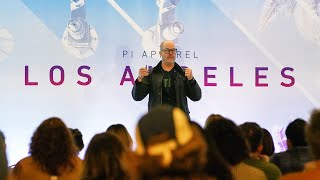
Sean from CommunityMade argues that overseas manufacturing is dying. He's seen the problems firsthand: low wages, child labor, pollution in Asian factories. The old model takes 18 to 36 months and wastes inventory. Nearshoring fixes this, improves worker welfare, and lets brands move faster and customize products.
Chapters
I wanna keep it casual if possible in a big room like this. So conversational if we can. I think I can see everybody. If you have a question, raise your hand. I'm happy to skip some slides if it means we get to talk a little bit. So also it means I haven't really rehearsed really well, so I'm happy to have some interruptions along the way. Part 1, how did I get here? So this is the part where I get to talk about myself, but I swear I think it's relevant. These logos are some of the companies that I had done business with. I spent a lot of time at ASICS, where I met my lovely wife. And I had traveled extensively throughout Asia working with the factories. These were great brands. I had worked with big brands. I had worked with fragile startups like my own. So I had a pretty good perspective of the industry. My first trips were to Korea. And as the economy grew in the '80s and '90s, Korea's economy grew and we moved to places with lower cost labor: Taiwan, and then Thailand, Vietnam, China, Indo, etc. Factories in Asia generally look like this. They were pretty clean. It seemed like the workers were pretty happy. They generally lived in dorms on campus. They had a, they had a commissary where they ate, and I ate there often. It seemed pretty good. I was aware that the cost of living was very low and that these people weren't being paid very much, but I thought it was all pretty good, and I kind of rationalized that if I wasn't there bringing jobs, that these people wouldn't have jobs, so I'm doing a good thing. And and I'm doing my part to make this space a little bit better. Eventually, I struck out on my own and did some work in design development consulting. I started a skate shoe company, and I found myself at a curious little startup in Venice where every pair that we sold, we gave a pair away, and that was TOMS, of course, and it was an amazing experience. We went from 5 people working in an apartment and a garage to, you know, $500 million global business that I think was at the front of this change toward conscious capitalism. We did some great things. This is us giving away shoes in Argentina. Pregnant pause. After a while though, because this was a startup, I was operating without a support team. So if I wasn't just in the key factory and didn't go to the subcontracted factories, this was my business, this was my passion, I owned it. So I visited some of the subcontractor factories and Typically, it looks something like this, which isn't bad. I think I did start to see cracks. For example, I started to see more and more workers that seemed like they were underage. Now, I deliberately chose this picture because I think her age is maybe ambiguous, and that was always the situation. They always had an ID that said they were of proper age, but still, you know, in the back of your head, you're always worrying. You go to the subcontractors and it starts to look like this and worse. And I, I mean, I have pictures in my head that I, that, you know, are still kind of painful. And with the way some of the workers were treated, the way they, the way they had children in the spaces made me uncomfortable. I saw Literally, this— I was shocked when I found this on the internet because this is the exact scene that I saw at one of our factories, was spewing this bright green stuff into the water. There was algae growing. It was kind of pretty in a weird apocalyptic way. And a lot of plants growing around this warm, steamy, green water. And then shockingly, a mile down the road were people doing their dishes in the same river, and kids in the river doing the dishes in the same river. Driving to these subcontracted factories out in the countryside, there were coal power plants, I'd say, every 10 miles. And so that's a lot of them, and they were still building them. Now this is 2006, maybe things have changed. but you get a feeling that shortcuts on sustainability are being taken in these places where I was doing business. So that was a little bit my journey, and it culminated in a situation in a Target shoe department where I always have visited lower— even though I'm in a higher-end branded business, I had always visited low-cost retailers. You older folks might remember Payless, Target, because they have these constraints on cost and they have to get really clever about how to achieve something interesting with design or function at these costs. So it was always kind of good inspiration to go there. And in this particular case, I found a TOMS knockoff that we had recently developed, and it was literally half the price of what we were selling it for. And I was really impressed, and I was swirling this around in my head. And I was trying to figure out how they did it for that cost, you know, because this is great. People can buy multiple pairs. They don't like it, they can throw them out and get new ones. And, you know, then the light bulbs and the alarms started flashing. It was like this movie moment where I could see in the past how we got here, how 50 years ago there was this promise of low-cost goods at a good— at a decent quality that we could ship them, we do the business overseas and ship them here, and then I could see the present about how all this business had grown around this opportunity. And then unfortunately, or fortunately, I could also see the future where this took us, where we don't have any consideration for labor, we don't have any consideration for the environment, we're all just focused on capitalism. And I mean, look, we're all here to make money, we're all capitalists. But I think we're also here, a higher calling, we all just wanna be happy. And that really supersedes the capitalism is supposed to get us to the happiness. And if we're sacrificing our happiness or our friend's happiness overseas to get to that capitalistic success, well, there was something wrong. I melted down, either, you know, depending on who I'm talking to, it was an epiphany or a breakdown, and that was it. I was done. I couldn't do it anymore. And I do blame John Steinbeck a little bit. I had, about that time, been reading Grapes of Wrath, and it's a great American novel. It's worth a read. But the point that I took was about the plight of the Okies The Great Dust Bowl of the 1930s, they were out of their homes, out of their jobs, and there was this promise of jobs in California. And en masse, these people came to California. Well, they ran smack dab into the Depression, and there were a lot more workers than there were jobs, and these workers were exploited badly, to the point of starvation. And it occurred to me that that oppressed labor isn't an Asia issue, it isn't a footwear industry issue, it's a human issue. If we're in a situation where we're motivated to keep labor costs down or to take shortcuts with sustainability, we're gonna do it. And the key to me was I had to change that motivation. I couldn't do it anymore. I kind of walked away from a— with permission, I walked away from a business that I had started that was really, to me, as good as it would get in that model, and it wasn't enough. So it's kind of a bold transition, isn't it? Well, that's how we got here, and that's my story, and I hope it kind of illustrated what's going on with overseas mass production. That's a standard model. That's how I grew up doing business, and that's how a lot of us still do it. So you start questioning, why would we do business like this anyway? If you think about the way a lot of us in fashion do business, if you want to build a product line, you have to plan it 18, or if you're in athletic shoes, 36 months out. You have to predict what colors they're gonna wear, what sizes they're gonna be. And you hope that it delivers on time. You have to plunk down a lot of money. If you're a young company, low 6 figures. If you're a big company, it's 8 figures. No? 7, 8. Yeah, possibly 8 figures, right? And you don't see a return on that money for, like I said, 36 or— 18 or 36 months. So that's real money that's lost. You end up with, because you didn't do a perfect job predicting what was going to be selling that season, you end up with on average 30% is either of any buy is marked down or closed out or we know in some high fashion world destroyed. You have these festering human rights and sustainability issues. You have a supply chain that's really complex and inflexible. We found out during the pandemic that it's risky and unpredictable. Those risks and unpredictability have always been there in the supply chain. You've got a mass of factories in multiple countries. You have, you know, tens of thousands of boats on the water at any given time carrying tens of thousands of containers each. And it's always been asking for trouble. I'm not sure it was really asking for a boat to be sideways in the Suez Canal, but that was always a possibility. And because of all this and because of geopolitical issues, costs are rising. And if you had said, okay, this is the scenario I want you to start a company and do business in. Anybody here would say, no, I'm not going to do that. Yet here we are. This is the situation we're all in. Why are we doing business this way? It isn't necessary anymore. And therefore, the title that oversees mass production is obsolete. I really hoped that somebody would have a question by now.
What? They're supposed to do it on the—
they're typing it in. Is there a way to type it in?
Yeah, she said.
Oh, OK. There's nothing here yet. I was not paying attention in class. Sorry.
There's nothing here yet, but I have a mic if someone has a question.
OK. All right. Appreciate it. Thank you. A conclusion of this is that brands, businesses, we don't seek to manufacture overseas. Consumers aren't looking. They don't want to buy stuff made far away. Across the ocean. We just haven't been given a choice. So what's next? I think to me a new model is inevitable. I think probably I'm preaching to the choir. Most of you I've seen when I walk around the expo, the businesses I see in there are geared toward production on demand, customization of product. These are things that really happen best if you're making things in a different way than overseas mass production. For me, and I think for a lot of us, that solution is making things closer to the customer. I, I, I choose these words because there are a lot of different ways to do it. I think there's local production, there's regional production, or there's nearshoring, but the basic idea is to make things closer to where the customers are. So I have 5 reasons why I think this is better. Top 5 reasons why nearshoring local production is superior to what we're doing at the moment. For sure, number 1, you guys could guess from the way my emphasis in this talk is that human rights and safety of the workers is number 1. If— it's kind of a lifestyle change, I think, for supply chain. But if production is nearby and accessible, a relationship with the factories and employees is unavoidable. You're automatically a part of their world. It's in your face on a regular basis, and there's consistent motivation to take care of these people because they're people that you know. There are faces to it. It's not just some world of people far away that is vague and undefined. One of the reasons wages are low in these countries is that there's a lack of institutional support for the workers. So it's not just about wages and cost of living, the cost of living is low because there aren't— there are shortcuts taken in their safety. I mean, we saw that recently in Turkey. If we have an earthquake here in LA, we had a major earthquake and, you know, it was tragic, but it wasn't on the scale that we see when something like that happens in some of these— in China, for example, or in Turkey like we saw, because We have, as much of a pain it is for some of us in business, we have OSHA that's regulating us, preventing us from taking shortcuts with worker safety. Producing closer to the customer is better for the planet. The same thing applies to sustainability. The very environmental regulations that inconvenience us or cost us money do work. We'd never allow a textile factory's radiant green waterfall to exist in our world. These are my words, they're really good, right? Yeah, we just don't accept, in our world, we don't accept sustainability planet abuses or human rights abuses. Yet somehow as consumers we've found it perfectly okay for the people making our our jackets and our iPhones and our shoes. It's better for business. Localized production opens up new possibilities. Lean production, made-to-order, producing on demand. These create some really impactful opportunities. So we expanded on it. If you're starting a business, there's a much more affordable barrier of entry because we're talking about lower minimums, we're talking about faster time from investing in the project to seeing it finished, it becomes a more affordable proposition. And if you haven't guessed, I'm really big on emerging brands. I think it's time for a shift away from some of the big flywheel businesses. I'm gonna spare us from any negativity. But I do think it's time for a shift. If you have a big flywheel business that's doing business a certain way, it's really hard to change. We saw that in a shift to direct-to-consumer business, you know, that was really driven by smaller emerging innovative brands. Faster, of course, obviously there's not transportation back and forth across the ocean if you want to develop a new project. There's not time in the air traveling back and forth. I know Zoom has helped a lot of this, but still there's nothing like a face-to-face meeting and that can't happen unless you know, you're traveling to the manufacturing. And faster development means faster return on your investment. Adaptability, I think, is super important to any business. As it stands now, we're basically taking a guess about what the customer is gonna want down the road. If we find out halfway through a development process overseas that there's a market shift, you're kind of screwed. I mean, either you're screwed or the factory is screwed. So if we're doing things faster and closer to market, then there really is that opportunity to change. You can change midstream in production if you're doing things locally. If you're— less inventory is less discounting, less waste. The reason is If you're making things closer to market, faster, you're not investing by definition in a bigger amount of inventory. You're ordering more frequently, lower amounts. On top of that, you have this ability to test market. Uh, you can produce a very small quantity of product, test it in the market. If it works, at that time you can invest in a greater production. So this leads to less waste and less discounting like I talked about, better for the planet, better for the environment, and more importantly, better for your business. and then I, uh, faster turnaround provides opportunities that pre— heretofore have not been available. Uh, personalization of product, customization of product at scale, better for the consumer. Um, if you're, you're making things closer to the market, you're gonna be servicing the consumer better. You're gonna be giving them the things that they want now at a faster pace. You're not, again, back to these big flywheel companies telling you what you want, what you, what you need. You can respond to actual customer demands, consumer demands. On top of that, there really is the opportunity to customize and personalize for the customer. We see this in body scanning technology. There's 3D knitting and engineered knits. These services can provide personalized product at scale. I think also we get a closer connection to the product. If we're, if the customer is interacting with the company to tell them what they want, you have a closer connection to your customers. And then I added, I added this one. It's my favorite, community engagement. If you're making things nearby, either in your local community or in your region, you're automatically a part of that local community. You're automatically supporting that community. You're automatically engaged with that community. Because that's where your employees, your workers come from. It's more than simply profiting from a community that you're doing business with, it's more being a part of that community. For example, for our business, Community Made, we are actively engaged in the local business district, we work with these three nonprofits, I'm on the board at Street Poets, Youth Mentoring Connection, and The People Concern. We can contribute to them and we can learn a lot and gain a lot in return. So what's next, part 2. I went through the benefits pretty quickly. Is coffee kicking in yet?
All right, yay.
I have a question. Yes.
I'm a loud speaker, so maybe I don't— just for the video—
Look, I'm a pro. I'll repeat your question to the audience.
While I 100% agree with all of your reasons for nearshoring and local manufacturing, what are our resources for that? And what's the plan? Is this the next part of your slides? Because I'm just wondering, I've been there before. I tried to build my own brand. I thought I like sweated all the details, sweated the details, all the details from the sustainable fabric to the to the packaging, to the, you know, and the only person that wasn't sustainable for was me because I couldn't sell an $80 tank top. So just wondering like, you know, where are the resources? Like where is this country going with that? Who's the factory owner in the US that can pay a living wage, not just minimum wage? And like where, 'cause like, you know, our economy that's, we, people with— we can't even afford to live in our cities anymore. So just where do we get skilled workers? All of those questions.
You clearly have been through this before. Yeah. So it was an apparel company you were starting?
Yes. Yeah.
How long ago was this?
That was like 15 years ago at this point.
Well, first of all, you're awesome for doing that. I mean, that was hard. You're bold. The question about resources domestically is, if we're talking about the US, is rough. I think right now, we talk about nearshoring. We can talk about doing things in Mexico for support. It's really, I think you guys probably know, there's a lot happening in Mexico now as a result of recent developments. But making things close, which is what we're trying to do in our business, it's hard. I mean, it's not all solved yet. There aren't all the resources. But I can tell you our story is that 5 years ago, 5 and a half years ago when we started, I was shocked at the lack of resources to make shoes here. I knew, you know, I had been at ASICS or Nike or Vans. I knew that we weren't making things here anymore. We shifted it all overseas. But I really thought the culture and some of the infrastructure was still here. I say it out loud now, and I can't believe how naive I was, because there was nothing. There was no way to get shoelaces made for us, and there certainly weren't any molded materials like midsole foams or outsole rubber. But we kind of, I don't think naively, dug in, and Shannon likes to say we were on Crazy Island. We were here all by ourselves, which is probably how you felt. I'm trying to do the right thing. It was only sustainable for me. I'm trying to do the right thing, and I don't know if anybody is hearing. I think timing was probably in our favor, and you were just early, because 5 and a half years later, we still don't have a lace supplier. We learned to make our own laces. But we have a midsole supplier in El Salvador. Vibram has been a great partner, and they are now making rubber outsoles here in the States for us and for others. We have— talk about minor parts suppliers— internal counters and sock liners and this kind of thing. But it's changed. And we have a technical knit supplier. We have a— for bigger production, we have a factory that's doing business to support us. The resources are there now. If you want to start again, I think you'll find it easier. The most important— comment you made was about workers. Skilled workers is hard. We are, but I can tell you we're doing it. We pay a lot, probably close to double minimum wage for our workers, and the business is working. So it can happen. It's not easy, but there is increasing government support, there is increasing awareness, so it's changing. I feel like we're here part of the, part Actually, again, what I see when I go to that expo is everybody is kind of working. When I see on-demand, production on-demand, I really see that as part of a movement to nearshore production because really that's where it works best. Playing devil's advocate, if every firm goes back to local production nearshoring, what happens to the people that rely on factory jobs overseas? I don't know, not my problem. It's not an easy answer. I say that everybody's going to have to reevaluate the way we do business. I'm not comfortable with the way we do business now. This is Sean personally. I'm not comfortable with the way we do business now overseas. Pulling out of there, yeah, some jobs are going to go away, but it's— and I do care, but I sincerely don't know the answer. I don't know who asked that, but I do know that I feel much better taking care of the people that I'm involved with, and that's the best I can do right now. I can't control the impact overseas, and I don't know that Long term, everything pulls out of there, by the way. There are products that definitely should be made at a commodity, at a lowest cost labor. We made medical gowns during the pandemic. The China supply chain caved for about 4 months, and we made medical gowns here during the pandemic, and they were 3 times more expensive than what they were coming out of China. We always knew that when China supply chain got back together and got back online, that that business was going to go back to China. I think that's appropriate. I'm not comfortable with the low-cost labor situation and how those people might be treated, but I think there's always going to be a place for lower-cost production. I know that's not a perfect answer, but I hope it helped. And if whoever asked that, if you got a follow-up, please. Yeah, so do you think larger flywheel companies have the influence to support suppliers to enforce a better work environment? I absolutely do think they have the environment, have the power, the influence to support suppliers making some changes. I'm not sure they have the motivation to. Right now, you know, they've got shareholders who just want to see increasing prices for their shares. So I think it's got to be consumers and us that drive them to the change. If enough consumers say this behavior isn't acceptable, then they have no choice but to change. Yeah, absolutely. Right now, we got to do the fight, but we're going to need allies from these bigger companies for sure. Do you think the right frameworks are in place from a regulatory point of view to enable nearshoring? From trade agreements to supply chains, et cetera. No, I do not think that the right frameworks are in place, but give us 5 years. I think we'll be partway there. I think if you— some of you are probably aware that Biden administration earmarked $9 billion to rooting out Uyghur-sourced products. Okay, that was probably politically motivated reaction to a lot of things happening with the China-US relations and consumer influence. But those are steps in the right direction and that's going to keep happening. So yeah, I do think we're going to get there, but no, we're not there yet. How do we ensure that nearshore products are accessible to consumers, not just ultra-wealthy? That— it's gonna take a little while. Right now our products are $250 to $350. That's not affordable to everybody. And that kind of— it goes a little bit back to my comment earlier that, look, there is a place for lower-cost products, products made in a lower-wage environment. I hope that— I say lower wage, not low wage. We all gotta make an adjustment. If it isn't a direct answer to the question, it still reminds me of this idea that the prices we see now from overseas production are not real prices. These are fake prices with government incentives from China government for the past 50 years has been giving incentives to production. And I say China because that's where I did a lot of business, the same, the same applies to any of these countries that are focused on low-wage manufacturing. Governments are incentivizing factories to make these goods at artificially depressed prices. As I mentioned, we're taking shortcuts with labor and the planet to get these prices. So at the same time prices are going to go up, I think we all— look, this is big idealistic. Sean, I guess, talking, but we all got to get used to the fact that things really should cost more. At CommunityMade, we talk a lot about choose well and make it last. Do you think there are opportunities for brands to impact the planet through common standards and audits of those standards? Eventually, we all feel the impact. I don't know exactly what common standards and audits Audits of those standards. Oh, are we talking about standardization for what sustainability means or what fair wages means? If that, yeah, I do think. I do think we need to get there. I'm not a big fan of third-party audits. They generally get corrupted and they absolve the the brand from digging into their own problems. But if it's government-enforced standards— man, I sound like a very pro-government guy. But I do think realistically, behavior at bigger businesses isn't going to change unless there's a law forcing them to change. All right, this is great. I hope me standing and staring at a screen is is super entertaining. Oh, predicted timeline for when this happens? You'd have to define what the success is. It's already started. It's already happening. For where we are not reliant on— let's just pick the US. When the US isn't reliant totally reliant on overseas mass production, I would have said it wouldn't happen in my lifetime. But you hear right now today Apple is deeply invested in nearshoring their production, which is a big one. If a company like that is actively moving out of there, maybe I'll see it before I'm— well, it'd be great if I could see it before I got off this stage. I'm gonna take one from the back. Yeah.
My name is Sebastian. I work for the government of Colombia here in the US. And actually, my job is to work with companies here and look for sourcing options in Colombia. And more than a question, it's a comment that now, though, from the last 5 years, I will say, companies are looking for new shoring. You see Mexico, you see Central America, you see Peru, you see Colombia. And I think it's more about what every country is capable of doing and what they can do best. Because the window of opportunity is right there. But you see Puma cotton out of Peru. You see more athletic shorts and sportswear out of Colombia. Basic things and mass productions out of Mexico and Central America. So my thing will be for the companies, especially someone that said that they just started a business like 5 years ago or something, to have clearly what is the fabric compositions, quantities, price points, and everything that is relevant for every project. So— and also approach government agencies like us. In every country in South America and Central America, there's agencies like us that can help you find the right supplier in Colombia. And also, there are certain things that involves also raw materials, shortage of some supplies that still needs to come from China.
Yeah.
Like in our agreement between Colombia and the US, it needs to be yarn forward 90%. So we are actually right now trying to renegotiate some of the things that were signed up in 2012. And we need that cooperation at the government level You know, to try to get more flexibility in short supply and also the availability of some raw materials, especially cotton and some cotton blends. So yeah, I just wanted to point out this to the audience now because it's what I do daily and something that you're mentioning right now about wages, sustainability, and all that. But it's also about when you decide to go to a certain country, try to see what products they can do best. Because some products, I will say, like backpacks, for instance, or luggage, those things you still need to do, for instance, in China or Asia because there's not the technology or the capacity and the right price to do it in South or Central America.
Yeah. Sebastian, I mean, these are good points. I think I'm going to summarize a little bit, and I probably won't get it exactly right, but I think Sebastian is right. You know, I'm talking about a bunch of top-line stuff, and he's in the trenches trying to make it happen. And every country is going to have unique challenges. Colombia has unique resources that make doing business there more advantageous than other places. And you pointed out an important one is that even If we talk about nearshoring in Central America or Colombia, that there's still pretty heavy reliance on overseas mass produ— on overseas raw materials. So that goes back to that question about change isn't going to happen quickly. I mean, all of this stuff needs to address one by one. It's easy for me to stand up and talk about top-line stuff, but Sebastian is out there doing the hard work.
Yeah.
Yeah. Fine.
So incredible work. He's community-made, direct-to-consumer. And on a positive note, how are consumers embracing this new way of manufacturing, doing business, especially with Gen Z? I know my daughter, she's 23. She refuses to buy anything unless it's vintage or used or made locally. So what are consumers thinking about community-made?
Thank you, Natasha. The question is about how consumers are responding. Well, obviously, we see a great response. We're a little bit biased, and our consumers are biased toward us. But I think the important point is you talked about Gen Z. They have this— computer in their hand that they can do a little research on every brand they buy. And this generation, they do not want to be associated with a brand that doesn't support their values. So for a brand like Community Made or any brand, you're going to need to be sincere about your values or you're going to get sussed out. And I think that's happening. Can I just take like 2 minutes? Or is there like a— Okay, thank you, Maddie. This is maybe the most relevant to you guys, and I'm sorry it's one slide toward the end, but the opportunities from speed to market that happen with a nearshore, a local supply chain, is that you get opportunities from the technology customization. I pulled XPV here. They're in the lobby and they're great people to work with. I think opportunities— and I know a lot of you— and I'm sorry, I don't know every company's name, but I saw a lot out there. I spoke with people doing on-demand production, doing services, either knitting technology or platform technology to support on-demand and more efficient production. This is all supporting— this is all part of reevaluating supply chain, and so there's a lot happening, and I think Web3 blockchain is kind of a new, sometimes dirty word, but it's gonna allow us to, you build a Web3-native supply chain and you're gonna have transparency, you're gonna have efficiency, any stakeholder along the way can see the information they need to see, and consumers are gonna be able to see that your supply chain is what you say it will be. And I do think also we can talk about, for new creators, emerging brands, ownership of your product as it goes through its lifecycle. And that's enough. Don't fight the existing reality. Build a new model that makes the old one obsolete. And thank you guys. Thank you. Thank you. Really appreciate it.










