Preparing Future Planners for a Data Driven World
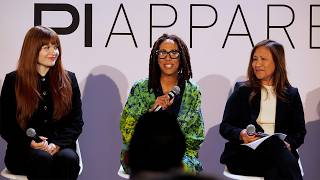
Glenda Leitch, Ramona Dunlap, and FIT students discuss how merchandise planning has shifted from manual data work to AI-driven strategy. Planners now need Excel skills, analytical thinking, and comfort with tools like ChatGPT. FIT integrates platforms like First Insight and Impact Analytics into its curriculum to match what the industry actually does.
Chapters
Um, I'm gonna actually ask everybody to do a, a short introduction, just give you a little bit more background about where everybody's coming. Uh, I do teach at FIT. We're part of the State University of New York for anybody who's not familiar. And, um, the courses that I teach specifically are all around supply chain, key business metrics, and advanced planning and allocation where we have, uh, started using some AI-enabled tools.
Hello everyone, my name is Glenda Leitch. I've been in merchandise planning and inventory management for over 20 years, but I'm only 16. Anyways, most recently I've been consulting, and again, most recently with Alo, and I'm now working more so on trying to find the perfect planning what I call end-to-end planning platform.
Good afternoon. My name is Ramona Dunlap. And in the industry, I worked for wholesale intimate apparel companies, so Sierra Lee Intimates before it split off to Hanesbrands, Warnaco at Calvin Klein Underwear before they were acquired by PVH, and Maidenform on the DKNY Intimates brand before they were acquired by Hanesbrands. So kind of a circular career there before going into academia. I am an assistant professor at FIT where I teach fashion marketing as well as data insights and fashion analytics.
[FOREIGN LANGUAGE] Hi, my name is Sierra Jenkins. I'm a senior student at FIT in the Fashion Business Management program. I am graduating tomorrow with my bachelor's degree. Bachelor's degree. Yay! I've most recently interned with Ross Stores in their buying department, as well as Brandon Blackwood, the handbag company, in public relations. And during my time at FIT, I've had the lovely opportunity to be a student of both the professors sitting here, Ramona and Miss Naomi Gross.
Hi everyone, my name's Jessica Leung. I actually started my career as a textile designer in the home fashions industry. And recently I decided to do a career transition and actually go back to school at FIT to go into merchandise buying and planning. So I also will be graduating tomorrow from the Fashion Business Managed program.
[APPLAUSE] [SIGH] Yes, they're graduating tomorrow. I'll be there in the rain. I will say that some of the sessions this morning really gave us— thank you, Steve— such a lovely introduction to what we're gonna be talking about, about education and how to really to sort of get the next generation of planners prepared for what they're going to be seeing when they go out into the industry. And we try to give that to them, or some of it to them, when they are still at FIT before they graduate. I would like to say that here we really are going to sort of dig a little bit further into what a lot of people have talked about already today, which is, what is the role of the merchandise planner in the transformation that's happening in the industry at the moment? What are the new skills that are required for success? How are brands adapting their planning teams to meet those needs? But I'm going to kick this off with a question for Glenda because as we've all heard this morning, there's still a lot of core metrics and data that have not changed. So really the question is, what are some of those key metrics that remain constant despite everything else that's going on? And then, you know, what are some of the changes in the planning approaches? And if you could walk us through some of those in terms of the evolution of a traditional forecasting role to today's data-driven, AI-enabled environment in terms of responsibility, skill sets, and organizational structure.
Thank you for that question, Naomi. So, um, before my life in merchandise planning and inventory management, I was actually a CPA where I had to master the entire set of financial statements and knowing how such numbers came to be. As important and valuable that experience was, something was missing because I was basically just waiting for history to happen. I wanted to be a part of the team that actually made the numbers. So a very close friend of mine introduced me to merchandise planning. I was very excited because I knew early on that inventory can make or break you. So I left public accounting and selected— sorry, and settled in a merchandise planner with all the excitement to drive the numbers, develop strategies, balance inventory levels to sales, collaborate with cross-functional teams, you know, all the fun that merchandise planners do. But much to my dismay, due to the absence of appropriate tools, product merchandise-driven approach is winning over data, love of inventory from the powers that be, and they love inventory, Lukewarm support for merchandise planners, largely because they uncover opportunities or poor decisions from past. Very messy master data. You have all seen skirts being coded as pants or sweaters being coded as dresses. It's craziness, right? So I spent most of my time gathering data, cleaning up data, generating reports, attend meetings with no action, chasing down emails that were written in foreign languages. Truly, what happened to my dream in driving the numbers? But fast forward to now, thanks to continued ERPs and standalone planning platforms, companies finally putting importance and emphasis on inventory management and forecast accuracy, Data-driven mindset, customer centricity, more developed roles and responsibilities between merchandising, buying, and planning, and most recently, the advance of AI and machine learning. Merchandise planners can finally be strategists and no longer just number gatherers. Sorry, I almost made it, darn it. They are data-driven business storytellers. Sorry, my iPhone is just not— because I don't want you guys to miss this. They have become trusted, equal— trusted and equal business partners to buying and merchandising, as opposed to being mere shadows. They lead meetings with targeted outcome as opposed to just being attendees. They can now finally provide the balance of art and science. They can finally be the merchandise planners who drive the numbers, finally. Now, that said, with all this transformation, there's still plenty of work to do. We heard earlier today that there's a lot of work that needs to happen when it comes to practitioners having trust in AI. And everything that was said said during the panel earlier today from the three wonderful ladies, it's all true. You know, it— AI is really, uh, here to elevate and empower planners as opposed to replace them. Um, the intuition and their knowledge of the business can never be replaced by an AI. So that education in terms of AI and these tools needs to continue.
Thank you. All right, so from an FIT perspective, education really, I've been at FIT a long time, has really been transformed. We do still teach Excel. I don't want anybody to be surprised by that. It's definitely in the mix, but the bigger question is, what are the skills students need to start their journey in planning today from our perspective? So I'm gonna kick this off with Ramona.
So hopefully you all can appreciate this little bit of humor I saw on social media. It said baby boomers had one job for 40 years. Gen Xers, like me, we actually spent our time and our money getting degrees. Millennials spent one year doing 40 jobs. And Gen Z is questioning, why do you even need a job?
Okay?
And so I think that sets it up perfectly for new graduates and what they should bring to the table and also what employers should be looking for. So obviously Excel, right? We know that is the foundation, the analytical skills, but really it's about intellectual curiosity. So don't be upset when you have new grads who come out and they want to know, well, why did you make that decision? Well, I don't know. I saw on TikTok the other day XYZ was going on. Have that conversation engaged. So students should really be— and new grads should really be bringing that the critical thinking skills, but also that curiosity, staying open. We've talked about AI systems that are flexible, right? So the flexibility to understand if you're a new graduate or a student to understand this is what my job responsibility is, but there are gonna be other things that I need to do and to be flexible to learn because where new graduates start today and where students start today is likely not where they're going to end in 5 years. 3 years from now. So we don't even know what that's going to look like in 5 years or 10 years from now. So that intellectual curiosity, that openness and flexibility, those are the things I think to look for in new talent, as well as just that really strong foundation. And of course, since we are in fashion and retail, the love for the industry and the products.
OK, Jessica.
Yeah, I mean, building off of that, I think the most common thing that we hear of when we're in— like when we start the semester is to just be curious, to be open. Me and Sierra actually did an internship at Ross during the winter, and on the first day we were basically told to just be a sponge. Like, we did a lot of shadowing, and all they really wanted from us was to really just be open to learning. And I think that really made a big impact on kind of like our experience. But not only that, I think a lot of students now, they're because they grew up digitally native, learning new tools such as ChatGPT or any other programs comes very naturally and very easy to them. So they are open to learning new programs.
Sierra.
And sort of up there with curiosity, I think something that has been super important for me has been proactivity in my internships and my jobs. Supervisors are definitely the most impressed when you don't wait to be told what to do, but instead you can identify a problem and bring them a solution before they've even thought of it. I definitely think that's super important.
And I think one of the other things that's interesting about what they're saying is, is simply that, you know, we've already heard this morning that people who've been working in the industry for a long time, they have a certain way of doing something and they're kind of set in there and it's very hard to kind of pivot. And here we have young people who are graduating from college who don't have that. They don't have that intrinsic bias. They're curious. They really want to learn. They really want to understand much more deeply why everything is the way it is so that they can really, you know, chew on that a little bit. And then they can do something with it. And I think that's really compelling. And it happens in our classroom all the time. They really challenge me to think differently. And it's an amazing, really, collaboration in the classroom setting. So, as much as new young people going out into the industry are so critically important, there are reasons why those of us who are more seasoned bring great stuff to the table. So, my question is, what do new planners bring that the more seasoned planners may not be familiar with, um, that would be a little bit more than what you've already talked about? What are some of the other things that you, you've learned that you can recognize as being new?
Um, I think new planners are social media natives. We grew up on social media, and something that I saw often at my time interning in the buying office at Ross Stores was among my fellow interns and the young new assistant buyers is that you're plugged into social media even when you're not at your job and you're able to see these seedings of trends before they would ever move the mark on a trend report. And so I think that brings a really like forward-thinking, you can see what's going to be the sales mover in 6 months.
So coming from doing a career transition and working in industry, I understand all the constraints that we've all talked about today. But going back to school has really allowed me to kind of see with fresh eyes, kind of the fresh eyes that all of these students have. And I think the biggest difference between me being in school the first time versus now with this younger generation really is that what Naomi was saying is that they're really open to kind of challenging those constraints. But they've also grown up with sustainability talked about all the time. So when we actually work on projects or we're trying to figure out solutions, A lot of it has sustainability embedded into it. There really is no question to that. They just— it's just natural for them. So I think that is one of the bigger things that I have seen.
Thank you. The next question is really about the technology transformation in our classrooms. So again, I'm going to kick off with Ramona. How has technology in the classroom changed in the past 5 years that kind of aligns with this transformation to more digitally engaged AI-driven industry as a whole?
That's a great question. So we've actually heard more from B2B solutions and providers in the industry. We have built partnerships with companies like First Insight and Impact Analytics who are actually coming to the university, and they're looking to partner with us so that we can actually use their platforms in the classroom and incorporate the technology into the products not the products, the projects that our students work on. So our students are actually using technology that you all are using in the industry. So they're getting that real-world knowledge versus only reading about it or watching a webinar. Of course, we still watch plenty of webinars, right? There are webinars out there. There are case studies that our students use, but really being able to have access to these tools. So for example, not only are we partnering with First Insight where our students can get a First Insight certification in using impact analytics in Naomi's classes, when our students are working on their projects through our digital database at FIT, they have access to WGSN, to Fashion Now Future Snoops, to RetailNext. So all of that technology is coming in the classroom and students are implementing it in their projects, which is really fascinating to see. And they're even thinking of things that maybe we don't even think of. Like, we're, we're grading work and assignments, and I'd say in a lot of cases really just super impressed at the level of critical thinking that our students are applying, and the tools that are available are allowing them to have those efficiencies. So you all talked about that in the session this morning. Using artificial intelligence and using these tools to free the mind up and to think and apply knowledge in another way. So it's quite incredible, especially over the last 5 years. I'd say pre-COVID, we weren't here.
Yeah.
No.
Sierra. Yeah. In connection with the trend forecasting services, I remember my first semester freshman year, we all in the Fashion Business Management program had to take a trend forecasting class, and you really dive headfirst into utilizing WGSN and Fashion Snoops and all of those services, which I was very unfamiliar with coming into school. And I think that that laid such an important foundational groundwork the rest of my time at FIT, 'cause you use it in every class for every project.
Jessica.
So picking up off also on fashion forecasting, Ramona talked about Fashion Snoops, now called Future Snoops. When I started school the first time, they had just started off. And so coming back to school again to be able to see the progression of how they've built their platform is incredible. They have AI embedded into it as well now. So it's really nice to kind of see that like the tools we are using in school school are also evolving through time. And also, I think every student, I think one of the biggest worries is, how is— are they using ChatGPT? Are they actually learning? But the way I see it is that, yes, they are using ChatGPT, but they're using it in a way as a tool to be more efficient in the work that they do. They are constantly learning to speak the language of AI and learning how to prompt it to get the results that they want. They will make tweaks, but also they will use different types of AI platforms to kind of know the pros and cons between like, oh, if, you know, Claude AI is better for writing, then I'm going to use this. So they're really learning just kind of how to best use it efficiently.
Right. I think the other thing that came up this morning was also the use of agentic AI, where you can talk to the tool, and the fact that they're learning how to develop better prompts is giving them additional insights to be able to use those tools more efficiently, more quickly. And I think that's important as well. So we have a lightning round here, and that is for everybody. How should forward-thinking business leaders think about evolving or adapting their planning teams in the future? And I'm going to kick this off with Ramona.
[Speaker] So not that this is an FIT commercial, but of course I think when you're looking at talent and building a pipeline, it's almost obvious partnering with universities like FIT and other schools that focus in and really specialize in fashion. So I say to our students, you all do have the competitive advantage of really focusing in on the fashion industry and having a lot of tools that other universities don't have. So actually tapping into us and using us as a resource to help build that talent pipeline and also make it a shared exchange, whether that's through, um, guest speaking engagements, if that is through visits and allowing our students to actually come to your shop and see how operations and things are running. Please, just use us as your resource and let's build together.
Yeah. Sierra.
Yeah, I think that partnership with university is amazing. We just had the opportunity to visit the Skypad headquarters and get some hands-on experience with their tools and see what they can do. And I think it's a symbiotic relationship because you get to see how current students are exploring your tools. And I mean, for us, we get to explore companies that are out there and the opportunities.
Yeah.
Jessica.
I would say probably creating real-life scenarios where students can actually see the mirror of how industry actually works. A lot of our projects do mirror those sort of, functions, and like our capstone class, we partnered with Walmart to help them come up with something. So just having those projects that mimic real-life scenarios, I think, would be helpful.
And Glenda, from the perspective of once you're there, then what?
Oh, so you emerging explorers, don't be afraid of AI. AI is really here to help you and to get rid of all those mundane tasks that you guys do. Use it to help you finally create your, your forecast and your strategies and be more holistic when it comes to putting your forecast together. Focus on finding the value of the data as opposed to gathering the data. And always be prepared to have that story, to prepare that why of your numbers. If you have the why of your numbers and make it holistic, meaning getting inputs from all your cross-functional teams, then you're able to get buy-in from your partners much sooner than later.
And I remember you also mentioning the fact that, you know, having ongoing training for people who are working in your organization And again, we heard about this already. I think Shilpa, FIT graduate, mentioned this morning, you know, bring people with you and really making sure that they are part of the process and the transformation is so critical. So we have a couple of questions from the audience. Thank you so much. So I'm gonna ask the first one, which is to soon-to-be grads tomorrow, what is important to you guys and your generation as you look at companies to work for I think investment in your talent is super important.
If I can see that there's discussion of like a proper onboarding and investment in learnings throughout your time there, that's really enticing to me because I've been at many organizations and there's many different levels of investment in your talent. And I think from my perspective, I'm looking for somewhere that's really going to like I can grow and develop my skills and is interested in doing so.
Thanks. I totally agree, 'cause having worked at smaller companies and also at corporate companies, you can definitely see kind of the different varieties that they kind of offer. But in addition to that, I would definitely say I think one of the top questions that most graduates ask about is company culture. I think that's very important. And I think through what we're seeing kind of like through social media that, you know, they do care about, you know, the life outside of work. So, yeah.
Thank you. Okay, and here's another question. This is for me and Ramona. How do you as instructors stay current with rapid technological developments given your experience and expertise may be rooted in earlier systems? Sure, I'll start this one. So I've been teaching at FIT a long time, and I was at Macy's in planning. And what the charge I was given when I was hired— I'll be— I'll just say it— 26 years ago when I came to FIT was write a planning course. So I came from Macy's, we used their system, and I wrote a planning course. And the beauty of being in education is that you actually get to go out. You can go to conferences conferences like these, you get supported from your university, and people are willing to talk to you. So just keeping that conversation going, whether it's with executives that you knew before, executives that you meet at conferences like this one, your alumni— 26 years teaching, some of my alumni, I won't tell you how old they are— but keeping in touch with your alumni and keeping a pulse on where they're going, what they're doing. And how their career trajectory has transitioned as they've moved through this has all helped to keep us relevant. Things like workshops for faculty, sabbaticals, and really the sabbatical that I had done was the first year that PI had their merch planning conference, and I had one idea about what I was going to do, it was rewriting a course, and almost as soon as I started my sabbatical, I realized, oh no, this is not a rewrite of this course. This is— I need to bring on some AI-enabled tools so that my students are at the starting point, because that's when I started really hearing a lot about it. And it keeps you energized. It keeps me feeling young, and it's giving the students what they need.
Ramona, I think you adequately captured it. The only other thing I would add to that is, of course, reading white papers. And just really making sure that we are researching. If we can get a demo, like, please, we'll listen to your demo to learn as much as we can. And again, I can't stress enough how important it is to actually have the contact with the industry and just knowing what you all are doing and how you're applying things today versus even a year ago, right? We can't even talk about 5 years ago because everything is just changing so much faster than it used to be, even if you think about trend cycles and how things change. So I wouldn't add to that. And the only thing I close with saying is just we too have to remain intellectually curious and go out there and do the research.
Right. And as Ramona said earlier, we actually listen to the students and some of the new ideas that they come up with are really extraordinary. So it is a very different experience teaching today than it was 5 years or 10 years ago because of the level of curiosity. The students aren't afraid to ask questions. They really do, and they really want to understand and learn, and they will give you their opinion, and they have it founded in research that they've done that then helps to inform how you're going to teach the next set of students. So it's very symbiotic in that way. And I think I learn as much from them sometimes as they learn from me. And I think that's how I like to run my classroom.
Yes?
Yes.
Okay.
We have a few more minutes. Does anybody have any other questions for us before lunch? Any other questions?
Okay.
Thank you so much. This was wonderful. I appreciate your time. And I thank the speakers.










