Retail Forecasting Is Broken. Here’s What Needs to Change | MP USA 2025
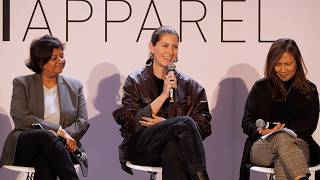
Peter Meyer, Rich Agarwal, Karolina Kozlowska, and Glenda Light explain why retail forecasting fails and how to fix it. They argue for data-driven, collaborative plans that adapt in real time, and say digital tools like AI and 3D design can cut the 12-month product calendar in half. Technology alone won't work without cross-functional ownership and accountability.
Chapters
So what I'd like to do first is just ask each of the panelists just for a minute or so just to introduce yourselves, where you're from, and what you— excuse me— and what do you do. Peter?
So briefly, Peter Meyer. I have just recently ended my tenure at Joann Stores as the head of merchandise planning and allocation.
Hi, my name is Rich Agarwal, and I love Joann Stores. I was very sad when they Closed. I am a digital transformation consultant with a very long tenure in the apparel industry.
I'm Karolina Kozlowska. I'm planning director in TV. Overall, 13 years and 3 continents of planning somehow.
Glenda Light. And considering that this is, I think, my 3rd or 4th panel, you guys all know who I am. Just call me the merchandise planning Lady, thank you.
On that note, we're going to go to Glenda for our first question. So as always, the Slido is on. We will see them in front of us. So if there's some great questions, we will jump straight in, but we have some ready. So Glenda, first question. What does a lasting merchandise plan look like in today's retail climate, and how are you building towards it?
Right, so I think long-lasting plans are the ones that are developed holistically. Meaning that you have from strategy to execution, it should be data-driven, but not just data-driven, there should also be that collaborative input from all of your partners. There should be that enterprise buy-in because in the end, come execution, if the rest of the team are not into it, you're gonna have some, issues. And I would say lastly, there needs to be adaptability because we all know our best-laid plans don't always happen. So there should always be some levers within your original version, let's say, that you can pull should something need to be adjusted.
Great. Next question is for Risha. How do you balance long-term planning with the need to stay agile and responsive to change, especially with demand volatility, economic shifts, or supply chain disruption?
I hope you came to my last talk because I did. I covered this extensively.
You want to do it again?
Yeah, first point, get a crystal ball. I think that will help. But in seriousness, so I mean, I think long-term planning is pretty hard at this moment in any case, but There are obviously some fundamentals, right? Like your brand identity doesn't change. You know who your customer is. Your customer profile doesn't change. Your brand ethos, like you stay true to all of those things. And then when you take the question of just volatility, market volatility, geopolitics, and all of the other factors, there are some fundamentals that you need to invest in, right? The last two days we have talked extensively about technology and the usage of like AI tools. That's something that can really help you, right? Leveraging AI in the right way can help you pivot, right? You, in this type of climate, you need to not just have like plan A, you also need to have plan, you know, B, C, D, you know, in your back pocket to account for any of the changes that are happening. And I'll do I definitely need to make another plug for DPC here because I mean, I can't say it enough, right? People need to invest in digital product creation because you no longer have the luxury of that 12-week, 3-month development cycle. Your development cycles need to be much shorter so you can pivot very quickly.
So I'll leave it there.
I think it's also funny that Everyone in our world talks like speed to market. We need to be able to react quicker. We need to see sell-through more, like we need to blah, blah, blah. But we still work like to a 12 to 13 month calendar. And then all of these 3D creation, digitalization, everything that we know is out there and can halve our calendar time.
Yeah.
It's like they won't, in essence, they, not that they won't, but it's not the forefront that this is what we're gonna invest in immediately. Even though it saves time and gets more accurate. But everyone's happy to pay massive air freight, huge liabilities. Like, oh, like all these invoices that come in, you're like, geez, did we spend that on air freight? Or, oh my God, look at the liability because we changed our mind. So we have all that drama plus 13-month calendar and all that lost money, and we're still working like we did 30 years ago. So I think the principle for me is, it's again, it's about the business case. If you did like a full year '24 assumption plan that we could cut 4 months from the calendar, we'd invest XYZ, but actually based on the $60 million we lost last year on these 4 variables. Yeah, it's so compelling, but it's still so new to kind of more established leadership that it's a dip in the ocean that might be a bit too scary. So it's like, like a Volvo, right? Don't fix what's not broken. So it's a bit like they're rather— they can explain air freight, they can explain liability conversations and happily pay the invoice. So I feel like it's a juncture position at the moment of we're about there, but it's still that like newness that everyone's a bit scared about. So yeah.
And I'll just add that, you know, DPC at this point is a mature technology. It is no longer a new technology. It's been around for 15, 20 years. So yeah, for sure.
And again, with AI, in 6 months' time it'd be different again anyway. So it's not like you're investing in something that's going to last another 10 years. It's a platform that will continue to continually evolve. and in any capacity, whether it be 3D design, whether it be demand forecasting, supply planning, like the whole infrastructure. So yeah, I feel when there's a new brand, a new young leadership, a new efficiency mindset, then those types of brands are going to be leading massively because the other ones are just still going to be having the conversations about why the goods late, or did you know we have that much fabric? Can you use it next season? No, because it's a different color. Like, you know what I mean? All those conversations, which are important. We work in product worlds, but efficiency is such a hot conversation, I think.
We're going to have to teach the younger ones to get away from the mindset of hurry up, hurry up, but wait, right? Because that's what we do.
Okay, so the next question is for Peter. What role does cross-functional collaboration between finance, merchandising, planning, and supply chain play in building more resilient plans?
Oh, I love that question. That is, in my opinion, one of the most critical things that you can build is that cross-functional collaboration. I think all too often we find ourselves in our silos. We build the most robust, beautiful plans, and then no one else aligns with what that plan is, and it all falls apart at the end. So to me, that is the most critical aspect. You know, there's also other portions. I don't think you mentioned marketing and every other aspect of the company. Cross-functional collaboration, I think, has become even more important as we become leaner within organizations too, because there is so much overlap. And where it used to be almost shunned to drive in each other's lane, I think now we just call that collaboration. And I think it's a lot more, a lot more important as we also look at using tools that are able to be utilized across an organization. You know, that's the benefit of having these conversations around this technology is it's one version of the truth, one source of data, et cetera, that we're able to leverage. So I think it's only going to become more crucial.
So I think absolutely, again, we can't stop talking about collaboration, right? But I think the other thing too about collaboration is roles and responsibilities, right? Because I can't tell you how many times working in planning allocation where stores will call the allocators and say, why did you not send me this product? Well, the allocators actually don't decide what product goes to a store. It's the merchandisers who actually create the corporate assortment, right? So I always say, listen guys, if you're talking assortment, you need to talk to merchandisers. If you're talking allocation from a quantity, then that's the allocation. So again, I think it's as important as it is to collaborate, it's also very important to know who's doing what, just to facilitate the whole collaboration.
Yeah, I think I talk a lot about it, or work like accountability as well. Right. Like if you know IDP, integrated demand planning, so some companies do it really well and some companies more just go to the global markets and say, what are you going to do this quarter on value? And then maybe break it down to quantity by average ASP. And then in theory, that's leading for the quarter. This is what the markets will do. But I always love like at the end of the quarter, it's like, but how accurate was it? And well, of course it's not accurate, right? And then it's like, but who's accountable? And there isn't accountability. So it's almost like there's a lot of nice fancy reports and not a lot of meetings, a lot of talk, but it's still like, well, it's still a bad number, and people plan to use that in the range plan. So I feel like roles and responsibilities 100%, but also accountability. Like, not that everyone should be like strung up if something's wrong, because there's always going to be drama, but I think, um, what's the accountability piece? Is it just insights from the markets, or is that actually you're held accountable for that target and that's what you need to reach? And I feel IDP is also that conversation that's kind of new to the fold, shall we say. Like, where does the accountability lie? Because like design, if you start late, you're going to probably end late. IDP, if it begins wrong, you're probably going to be planning the whole process wrong. So it's almost like, where is the KPIs in a sense of this is what we plan? Also, there's a conversation like, oh, let's say Germany+ planned 4% growth, but they did it quietly and nicely because it's linked to their budget. But actually, they did 20% because they're like, great, we did more. And they knew they were going to do more. But then you've not planned that 20%. Your supply chain's not ready. Your buy's not ready. So a lot of the stuff we talk about over these last two days is about us and how we adapt to change in the operating model. So just to add.
Right.
Just one last thing. Again, we can have all these wonderful, beautiful tools. And for that matter, you can come up with a beautiful number, right? But if there is a strategy to— to execute that number. It's just a number. So we, again, don't use IT or AI or machine learning as, okay, it's their fault, because the project is on us. And I think that we business leaders tend to, well, not all of us, but I think sometimes we tend to forget that because there's everything else that we're working on, and it's like, no, it's not IT, It's like, we didn't do our part.
So the next question we have is for Carolina. What types of data or insights are most critical to your forecasting process, and how do they inform better planning decisions?
Firstly, listening to you guys, I'm so happy that I'm out of big, big companies. Honestly, I've done that shift to like small independent luxury, and I'm never going back. In terms of the question itself, I think it really changes on how far in advance I'm forecasting. So what's happening, if I'm doing the first big budget for a full year, it starts pretty much with everyone does the same thing. What have we done last year? What was wrong? What we can fix? Do a nice plan, shave off 10% because it's a budget and something will go wrong. So we're not going for the best case scenario, plus at some point, Someone will push you for another 5, so you still want to have a bit of buffer. And then when we closer, I do start looking at a lot of insights. Again, that's collaboration from other teams. So I'll be looking at how our stylists in stores are reacting to the collection. I'm going to be talking to head of style. And I work in the— like, our creative director is the owner. She is the face of the brand for Tibi. So I have to know her feedback because if she wears it, people will buy it. She, like, I have an influencer in-house basically. So I started looking into that data that it's quite anecdotal to be honest. So I have to also take it with a grain of salt. But I started looking at that a lot and the runway look, how does, the style looks on the runway. How is it represented? Is it visible? Has it been styled after like under like 3 jackets? So that's when I start adjusting closer to in season and start shifting things if they have to be shifted between collections. How the collection looks versus, you know, what we've already seen or if it's not strong enough, do we think that like we can make it up in the future? So it kind of changes a lot. But you know, as everyone is looking at like everything all the time. This is a very vague answer. I'm so sorry.
No, it's all good. It's reality, which is important. So the next question, I'm just going to allow an open kind of organic conversation on this one. So the question that we've kind of planned is, how do you define success in merchandise planning today? Is it margin, flexibility, speed, or something else entirely? So of course it's everything, but I thought As a wider conversation, how do you feel— how do you define success in your planning today? Is it a certain KPI, or are you just benchmarked on allocation or liability? How do you see that?
I think for me, the big one is actually accuracy. Like, are we doing what we plan to do? I think the first thing is like, if you forecast and you're way off, I mean, if you're overperforming, that's nice, but you also, you have a new problem. You're either chasing stock or you're out of stock of something that you just didn't expect. But this is a nice problem to have. If you're under, you have to start looking into why it happened. So I think the success in terms of the role itself, I think is the accuracy.
Yeah, I agree. For me, it's more the accuracy comes with the value saving. So that's kind of money talks. So that's kind of where it is. Peter?
Well, it's funny. I do think that accuracy— and that's exactly the answer I was going to give— is forecast accuracy is really what's so critical. But I think what's becoming even more important of late is actually something that we don't often talk about within merchandise planning. Is agility. Because of everything that's going on in the industry, whether it be tariff or container shortage or whatever the issue du jour is, merchandise planning has to become even more agile than they ever were before. It isn't about building just the annual plan and executing against it. It's really being nimble and agile and working alongside the merchandising team, the buying team, all of your cross-functional partners to be able to make decisions in the moment and react quickly and adjust the plan accordingly. You know, I've worked recently in places where it is just the annual plan. There's not as much of a rolling forecast as I think as you need to have in order to be able to make those agile adjustments. But to me, you know, yes, accuracy is absolutely important, but But teaching and nurturing the ability to be more agile and more flexible and more collaborative, to use that word one more time, I think is a real skill set that we need to teach to the newer generation that's coming up through merchandise planning.
Yeah, I think, like, in our world, it changes every day. So if you were super rigid and strict, yeah, you need to be agile 100%. I think what's really interesting, as we're talking about accuracy, is almost benchmarking. Imagine every quarter there's an IDP submission, and this is like integrated demand planning. This is exactly what's coming from the markets this quarter, and you place your fabric buy based on that information. And then you're— as far as I'm concerned, I say all the time, that's fixed, frozen number. That's what we place the buy on. That's the KPI. What's our stock and oversold position? Overbuy rebuys, MOQs on that number. But I love it because the IDP team's like, well, no, because it's a rolling forecast. So the next quarter is the most accurate one, and then the next quarter is even more accurate until we start selling. And so of course their benchmark is like the closest IDP to selling, and they're like, yeah, we were this percentage. I'm like, but we placed the buy 4 months ago, right, based on that, um, submission. So I think it's really interesting like how loose and agile planning conversation can be, that they're really happy with the accuracy, but actually back in that day when we were doing the fabric buys, it wasn't so great. So that's agility, right? But also, it supports a conversation of what's actually accurate. What benchmark is everyone using? And the alignment of planning is really important, collaboratively doing that, right?
But that's why you have multiple plans, right? You have your original plan, you have your working plan, you have your current plan, because your original plan You use that, well, I used it anyway for purposes of accountability corporate-wide, because your original plan is always, that's what's tied typically to the financials. But my current plan, my working plan, allows me to then chase my inventory to make sure that if I'm not making that sales plan, I better be adjusting my inventory so I would at least get to a turn that I'm not dying with.
Right?
But just one last point in terms of, you know, what is successful Indigenous planning. I hate to say collaboration again, but I love to see my team work as one team, right? And, you know, they all have their expertise and they all have their responsibilities and accountabilities. And so to me, success is them all working together to get to that one goal, right? And sure, accuracy is very important, but what is accuracy, right? Because nobody knows what the future is. And for that matter, you can have the best AI, but AI again is just to help you get as close as possible to that actual or to be better than what you're doing. So if your error rate is, if you usually get into like 95% on your plan, maybe your AI can get get you to 98%. But again, well, having been an accountant, I put a lot of emphasis on accuracy as well. But when you're forecasting, what is accuracy? Right? So anyway.
I think what happens a lot is we also make the first plan. And even though, let's say, then like 6 months later, we like 5% off, it just hasn't happened the way we thought it's going to happen. We are close, but it's achieved in a completely different way than we thought. But we're still accurate overall.
That's the thing is, and I also say there's always a story behind a number. So I say that all the time. So like anything, if your inbound position is bad, like why are you only 60% on time or whatever, or why is the warehouse only shipped out 20%? You can look at the number and go, oh, but then there's always a story behind the number as well, right? Like it was blocked, it was a canceled contract, the size breakdown wasn't fulfilled. The vendor's factory had an issue. Like, so I also think like everyone would be fired every month if it was down to the fact of accuracy and a decision, right? So it kind of shows that it is a bit more of a human industry because there's always a problem, there's always an issue, there's always an inaccuracy. But that's life, right? And that's why, that's how we work. Like, you're not firefighting, but ideally you have solutions and backup plans. And that's kind of the evolution of how we work. And one thing to also say really quickly, it sounds like, imagine like every day we're at work like crying and really sad and depressed because we're just constantly firefighting. But what for me, like I have to have fun with doing stuff in the office. Like if I was in the office every day, like Jesus, not again. Like, so I really feel like it's when you're like you said, when you're a team and you work together and you're, Even if something really dramatic happens, but you're so, as a, like for me, I'm the most open person, literally, you probably see already. I would say to anyone in my team, I would rather know that the whole place is gonna burn down, but let's just sit in a room together and quietly talk about it and come up with a plan and a solution. 'Cause I always think when people run around the office for half the day crying or screaming because something's happened and this and that, I'm always like, it's cool, it's a t-shirt, what's the solution? You know what I mean? Like, we're not curing any disease, right? So I'm always very much like, what's the solution? And I'm very, very like that. Let's come up with a plan as a team, no drama. And when we got it locked down, we're good. And if it's good or bad, it's okay, we have a plan. So it's very much about have fun, be in a team dynamic, and then it makes the the good and the bad times a bit more, you know what I mean? I wanted to add to that point, 'cause I think it's super important as well.
Then now I'm adding to your question.
Sure, sure. We have time, it's all good.
About making sure that we have the story. Again, a number is only a number if there's no story behind it. And that story should include, you know, what were the assumptions that you put into your number? Like, how did you actually get to that number? If in there you said that, okay, you know, we're going to increase our sell-throughs by X because we are launching this product at such and such time, and then here you are in actual in-season and that product didn't come in at the time you expected it, then it's a little bit easier to then explain why you were wrong, right, or why you were accurate. And I think because we're so busy, we don't— we're so busy gathering the data as opposed to as opposed to creating the story, we tend to forget to jot all that down. And come the time to explain why you made plan or didn't, you don't remember what the heck you did, right? But thankfully, there are now systems, there are now systems out there where you can actually record all of your meetings and all of your assumptions and no longer you having to go through bazillion emails, and you can now go to your buyer and say, hey, that wasn't just my decision. You and I both agreed on it. Here you go. You signed off on it. So, anyway, again, don't forget what your— what factors you put into your plan so you can explain and you have your story.
I think what you just said actually comes back to the previous panel about how— why people trust planners or like people more than systems.
Yeah.
Because we can tell you, oh, we thought delivery would be here and this performed like last year. And even if it was wrong, we know why we said so. Right. And I think there may be lack of trust sometimes with systems is that you can't drill in. Like you can't tell how is it built. So I think like the systems that I've worked with where I could like drill in or like product for last year and then I can see this is how next year is planned, are the ones that are easier to adopt.
Yeah.
It's hard to understand something that cannot be explained, right?
So I have one more question that I have here. And then we're going to go to Slido because quite some are coming through now. So please send some questions in. We'll get to those in a minute. So the last question from here is to Carolina. If you could change one thing about how your organization approaches merchandise planning, What would it be and why?
I actually don't think I would change much because I taught them a lot. I spent the 3 last years teaching people about what I do actually, because I think that's what happens in the smaller companies as well, where there's no robust merchandise planning team. I'm the planner, I'm the buyer as well. So I think like at some point, sometimes like people don't actually understand what you do. I had like someone asking like, oh, can you set me up in the system? Like, no, I'm not ops. Like, that's actually not my job. So I think like in the beginning was just like trying to get people to understand what I do and I like a crazy spreadsheet split by week, by collection, by full price markdown and every metric you can think of. But I think the biggest switch happened about 6 months ago when I introduced software. And I introduced software to the company that everyone can use. It's very user-friendly. It has pictures. So even marketing looks at it. And I found my, like, I actually had a video, our videographer, in-house videographer come to me after I sent Monday reporting. He's like, oh, this sweater, this performed so well. I'm like, you read that? So I think that actually having those tools, if there are any like Tools that you can find that can incorporate wider team and for them to make it very approachable. Like I am able to set up reports that people access and they just refresh themselves. They don't have to build anything. They get pictures, they get metrics they understand and everyone can have different views. And I think that's something that helped the most because I feel like sometimes people just kind of don't understand what you do.
Cool, thanks. So we're going to go to Slido. So the first question we have is, how do you incorporate sustainability and ethical sourcing into long-term merchandise planning without sacrificing profitability? Richard?
I'll take that. So I think I would like to reframe this question, right? There is an assumption in this question that that if you— to be ethical and to be sustainable, you have to sacrifice profitability. I think that this is also— a lot of this is also our mental model and the way that we have framed the problem. Being ethical, sourcing ethically is not sacrificing profitability, right? We are entering into an era of very stringent rules and regulations. And if you are a global company, there is no way that you can bypass being an ethical company. We're seeing fines being imposed by both— even in this political environment, you're seeing fines that are being imposed by the SEC for greenwashing. You're seeing out of Europe, you have a ton of legislation. You've got extended producer responsibility that's come through. So, to frame the question as if you can't be profitable while being ethical and sustainable is no longer really a question anymore. The second thing that I'll also add is because of the kind of geopolitical climate that we are in and because the way we are seeing shrinking wallets of our customers, especially in the mid-tier market, right? Customers are looking for value. They're looking for long-term value. They no longer are looking for something that they can buy now and just wear for like 2 weeks and then throw it away. They want value and the way that you deliver value is with high-quality product. And usually high-quality product also tends to have a longer life, is more sustainable. So that's how I will kind of reframe this question.
Cool.
Also, producing less is sustainable right away. Even if you don't— maybe you don't work with the, like, tiniest cotton producer that went through million checks, which we hope they do, just produce less. It's already sustainable as well.
Absolutely. A customer is looking for value. It's quality over quantity.
Less markdown, more profit.
Yeah. And we have to really— even the mid-tier market can take a page out of the luxury industry, right? The luxury industry has really figured this out. They have figured out how to decouple quantity from profitability. And when you are creating low-quality product, you are operating on paper-thin margins because the customer understands the value that you are providing to them. So if you can start to produce higher-quality product and decouple profitability from volume, then you've got a real value proposition and a different operating model.
I think just to add on that, as we saw with COVID with luxury, For example, certain luxury handbag brands would triple their prices during COVID because of— we know why. So it's quite interesting that it doesn't mean the product got more exclusive or actually the product was better quality. And you have seen in some reports that actually some of the quality is not great at all and it's being produced in— as you know, they could be produced in the Far East. And with the EU law, as long as a majority of the amendment to the bag or the finishing of the bag was done in Italy, you can say made in Italy. But actually 70% of it could have been made in Bangladesh or China. It's just the finishing term of the EU law or wherever allows you to say made in Italy. So the perception of a luxury brand is always made in Italy, it's very expensive. So it's a mindset that luxury is this premium aspiration you want to buy and you can triple your prices and still sell it. So it's an interesting dynamic. So we have 7 minutes and 4 questions, so we're going to crack on a bit. So what's one thing you wish you'd have known about long-term merchandise planning earlier in your career? I'll give that one to Peter.
I would say I wish I understood that it's a roadmap. And really that the significance of long-term planning is that it helps to define and establish the resources that you'll be able to utilize to be able to achieve that plan. I think a lot of times early on in my career, I felt that planning was just a matter of getting a number on the page, making everything roll up correctly, and feeling like I got myself to 100%. And I think, you know, now understanding that it really is, it's a roadmap, it's a guide, that it's meant to be a discussion, living, breathing, long-term plan, but then also, we go back to sort of thinking about accuracy, how much thought you do put into that long-term plan though then really does impact the future because the decisions and the things they're putting on paper today are influencing decisions around capital investment and marketing resources and all of those things. I don't think I understood that earlier on in my career.
Now, one of the companies that I used to work for, we would do like a budget memo, but we literally had a point where we had to put each team What do we need to actually get there? Because if we don't launch a new category, like, it's just not gonna happen. Plus, like, maybe in a new assistant, whatever it is, but like, you have to know what you actually need to get there. Otherwise, it's just a number.
Yeah. So the next question I'll give to you, Carolina: is simplicity a form of luxury?
Yes? No? Um, I mean, I guess I work for, for a brand that That does make quite— So like the sort of ethos of the company is called the creative pragmatist. So it's the understanding that like dressing and participation in fashion, like dressing even if for someone who is not aware of fashion is a creative act, but it has to be pragmatic. It has to be like a practical thing. We like, when you look at our clothes, they are, quite, um, they're not utilitarian, but they are practical. They're like for, uh, mostly a woman who has things to do. Um, so in that way, yes, I think. I have no idea.
Oh, good.
Sorry.
No worries. Peter, question for you: how important is ESG and sustainability right now?
Well, you know, I might really punt this over to someone else. Thank you for passing it to me. No problem. Um, only because I haven't really operated, and I think I do think very important, but I think it always remains as an undercurrent. But I will say my most recent experience is it has become a little bit less of a conversation, and maybe that's because it's become more of a given or an expectation. I do think it's something that you can't take your eye off the ball on, but in my experience of late, it hasn't really been as much of a conversation. So I'd love to punt it to someone who maybe has seen it be more relevant to their experience recently.
I'll just add, I'll just build on what you said. So, you're right, I think it's less talked about at the moment because of very obvious reasons. But I don't think it has gone away in any way, shape, or form. Companies are not putting it out there, but everybody is, still very much focusing on ESG and sustainability internally, and that conversation is not going anywhere. I mean, what we're seeing in political climate is a blip. It's a 3-year blip and it will go away. So yeah.
Cool, thank you. Two more questions. This one is for Glenda, and I think this is a really good question. Is it— actually, we could talk about this all day, but we can't. Is it possible anymore to forecast the next 6 months to a year? Over to you, Glenda.
Sorry, I fell asleep there for a little bit. Um, yes, absolutely. Listen, you can forecast however far out you want to forecast.
Yeah.
Um, and in fact, um, I mean, my, my open-to-buy is always looking 18 months out. But like I said, that's why you have your original plan, you have your working plan, and you have your current plan, because You don't sit still. You cannot sit still. That inventory is a moving target, as your sales is. So you always want to make sure that whatever you had in your original plan, if it's not working anymore, you have to pivot. And that's why you have those multiple versions of plan, like I said, so that you can always chase your business. And for me, It's always about that inventory being aligned to that sales, right? Because let's say I made my sales, but I'm left with 50% of my inventory, well, there goes my margin as well. So there always has to be that balance of the inventory to the sales line.
I think, real quickly, I think the implication here though is, given everything that's going on in the world right now, that it's very hard to forecast. I think that's kind of where this question is coming from. And I think, you know, part of it is being a little bit— taking a little bit of a beat when thinking about forecasting. Not all things are created equal. Not everything comes out of China unless you're in a specific product category, perhaps. You know, we've all heard stories of toys and electronics and things like that where it's very, you know, and I'm just using China as the simple example. But, you know, companies have worked hard to diversify. And yes, there is some uncertainty. Uncertainty. But I think just sort of throwing our hands up in the air and saying, we don't know what's going to happen tomorrow. How can we forecast 6 months out? I think it's just— it's not possible to do. And you have to just break it down and be diligent about focusing on the pieces that you can and recognizing that there will be some unexpected turbulence in the areas that you can't control.
Yeah. There's 2 more questions, and we have under 1 minute. It's a topic we could literally all talk about for quite a while. So the next question: do you track what your competitors are doing and how important are they to your business? Um, 100%, you always want to look at what your competition is doing. Um, there are a lot of companies out there that can also provide the information. I think it's also— I give one example, like imagine you don't plan a 139 outerwear, but then your insights from the competitors all see that actually their option count has actually increased in that price point. They see that actually there's more depth on the floor or on e-com, or they see that actually this has become a bestseller. But you and your business never did that price point. So it's all about getting market share, right? It's all about— well, sadly, it's all about growth, right? The whole time. So what, what are you not doing that your competitors are doing? So If that competitor is doing this type of product, 9 times out of 10, you're going to have it in there this year or next year. And of course, you want to mimic price points because you always want to get that share. So long story short, 100%, you want to look at your competitors. And again, it doesn't mean that that's who you want to be. But at the end of the day, there are buyers out there from big department stores that have a— I call it pricing architecture. They want to be able to have a price entry, a mid, and a high price point. And that's because, yeah, you want to segment your collection. You want to have affordable volume drivers that pays our wage, and then you want aspirational products. So you want to make sure that you're competing on that level with who is your competitor that you define. One last question. Any advice for the upcoming graduates and new generation? Who would like to take that? Peter?
I would say my, my advice would be you have just spent 16 years doing exactly what you need to do for the rest of your career, and that's be a student. Be a student of the business. Know what your competitors are doing. We just answered that question. Go to a store. Look at websites that are comparable to yours and other things. Look at other industries, right? But really, it's intellectual curiosity cannot be undersold as the recipe for success. I've met a lot of people that maybe were less talented, but they were incredibly curious and they learned and they dug in and looked around. And I think that, to me, that is the best advice that I can give anybody is continue to be curious, continue to want to learn, and success will come.
And have fun. It's a fun industry. It is. It's crazy.
Exactly.
But it's fun.
Right. That's the last panel and the last of this event. So yeah, it's officially finished.
You survivors here.
So thank you so much for still being here. We really appreciate it. And as you can see, it's a hot topic and it's a, it's a small community. So it's so important that we're here today and yesterday to be able to discuss, learn, network, understand what the future can be. So yeah, we're super honored and very, very lucky that you're here. So we really hope that you enjoyed it. And of course, if you want to ask any questions or get hold of anyone throughout the whole event. You can go to the app, you can grab people via LinkedIn or via the PI Apparel Network. So yeah, um, before we leave, Joanna just wants to come on stage and say a few things on behalf of PI. But yeah, a massive round of applause for the panel, and thank you everyone.










