Retail's AI Journey: From Concept to Conversion | First Insight | PI Apparel
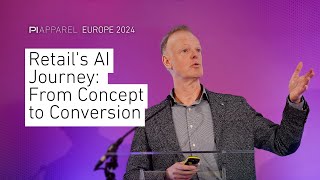
Peter Jebbins of First Insight explains how AI helps retailers predict which products consumers actually want before making them. The company tests designs on a 250 million-person consumer panel and delivers insights in 24-48 hours. One UK retailer generated $30-35k monthly in conversion revenue using the platform.
Chapters
So, as Joshua said, I'm Peter Jebbins from First Insight. So I'm responsible for their business across Europe and Asia Pacific. I've not presented at this sort of event for a while, and one thing that I do remember is often the later you are on the agenda, you get frustrated because everyone else stands up before you and they say the things that you wanted to say. But on this occasion, I'm really pleased actually. If I could have had a better warm-up act than Steve from Calvin Klein, then I don't think that's possible, right? So he said a lot of the things that hopefully will resonate with you now in terms of what I have to say in this particular session. So just to liven you up before lunch and to get a bit of customer audience engagement, just got to see a show of hands for those of you that are merchandisers, buyers, that sort of role? None of you? Oh, great. I thought there might be one or two. So one of the reasons we like this event is it's typically where we engage with people who would use our solution. Okay, my final question then before I move on is, who's actually using AI currently in their business? Show of hands. Anybody using AI? A few. Okay, cool. All right. So I think as Steve said right at the beginning, you know, AI is obviously the hot topic of the moment. Which is super exciting for us. First Insight have actually been doing AI in the market since 2007. So we actually think that maybe we're a bit late to the party, who knows, but it's nice that it is a focus for lots of companies. And I think what we do, and I think as Steve articulated, is certainly very, very relevant to retailers and brands. So let me quickly give you an overview of what we do, and then I'll press on the presentation. So we help retailers, brands, and manufacturers bring to market only the products that their consumers want to buy. And we offer unique insights on pricing and buy quantity and who you follow up with as part of that. So the— we can sort of give you our view of where the, the AI market is going based on our past experience and based on where the market is now. So let me kick off. So I think again some of the earlier speakers talked to this earlier on, and I think you're all aware, you're certainly in the market, you understand some of the challenges that exist. I think they've never been as many challenges as there are now in terms of the market, whether that's post-COVID, supply chain related issues, shallow recessions depending on where you are in the world. There's lots of stuff going on, and I think so what retailers need to be able to do is to be able to use their money very wisely to make the right decisions. And obviously that, as Steve articulated, relates to bringing the right products to market in most cases for retailers, and that's what we do. And I think not only do you need to be able to bring the right products to market, but you also need to be able to be very agile. So when money is tight and when you're looking at ways to invest your funds wisely, you want to make sure you spend that money on the right products. I think in the old days in the world of retail, then I think the good performing products used to shield sometimes the fact that some of the products you brought to market weren't the right products. In a tight market, then obviously you need to be much more careful about what you do and how you invest and which product decisions you take. And that's where Firstinsight as a company can help. You'll also see, and you'll all be aware of trends in the market, not only Barbie, but other things that happen in the market. And what you want to be able to do is to rapidly understand whether those trends are relevant to your customers. Historically, we've done a lot of digital testing. With consumer products using 3D images and then given predictions or insights as to how those products will perform. And again, you know, we're certainly seeing now that, you know, we typically in the past we would work with companies who were planning their assortment for autumn/winter '24, spring/summer '25. What we've seen certainly recently, I think it was mentioned earlier in the day, is many retailers now have lots of excess inventory. And they have that for lots of reasons. Supply chain related to COVID, whatever that may be, if they put stuff into warehousing. So now they now have a problem in terms of having stock tied up in warehouse that's, that's tying up money they could then invest in other new products. So what we've been doing lately is we've been helping a number of retailers and brands to actually test existing stock to help them accelerate how they dispose of that inventory. Because if you don't have the data, what do you do? You apply a 40% discount across all those things, right? And some of those products might actually maintain a higher price point. And if you tested them with your consumers, you'd know which ones they like and which ones they don't. And you could leave the price the same for those they like and then reduce the ones for the ones they don't. So that's a great way to protect your margin and ensure that you maximize your return. The other topic that's be very dear to some of your hearts, particularly the younger members of the audience, is sustainability. So one of the things that we are very passionate about is making sure that retailers only make products that their consumers are going to buy. Because what happens to products that don't get sold even after you've marked them down? Typically they go into landfill or sometimes they even get burnt. Neither of those things are particularly great for the environment. So again, testing using digital images, not making samples you don't need to make, Speeding up your product delivery process. All those things we think are really good for a retailer. And that's what we do. So we help you to engage, get those insights, get that data that Steve talked about, and actually reduce what he called the long tail. I'm sure a lot of you are familiar with that term, the long tail. When you analyze your sales of the products you sell, typically after the event, you know, most of your revenue, 80% of your revenue came from 20% of your products. So the rest didn't perform as well as they should have done. If you'd known that beforehand, that would help you to make better product decisions. So that's what we do. And the clicker's not working. Oh, there we are. So this is just showing a traditional— I'm sure many of you are familiar with this. This is the typical product lifecycle. And we've spoken about 3D, and I think some of the startups are focused around that area. So we can help you to test products from a very early stage in the lifecycle. We do some work at the moment with a famous sportswear retailer that you would know. They have currently 66 women's leggings in 4 different colors. That's a lot of product, right? Not all those products are going to sell at the same rate. And what they're doing with us is they're trying to rationalize how many of those 66 women's leggings they actually take to market and which colors. So we can help them to do that. So they don't get again left with lots of excess inventory. So testing at a very early stage in the process is really smart. You can reduce down your assortment and you can then test again as you go through that process. So again, it's something that many of our customers are testing throughout the product lifecycle. I guess our sweet spot, the thing we started out to do in 2007 using AI, was to help retailers and brands to actually rationalize their assortment. Which again is, is that use case I just mentioned there. So if you've got limited funds, so you're trying to be smart about how you spend your money, we'll help you pick the right assortment. You can do that locally in country, you can do that regionally, you can do that globally. So we help you to connect with your own consumers in your own consumer database, or if you don't have the consumers, we can help you to do that through what we call a, a third-party panel. So we have a global panel of 250 million consumers in any part of the world where you can test your products with that audience. Based on that feedback, then you can make decisions about how you take products forward. Pricing is another key challenge, I think, for many retailers right now. I mentioned the, the excess inventory use case. But we're the only tool in the market that allows you to make predictions on pricing. We give you a forward-looking demand curve without any sales history. I think one of the other comments from this morning's session was retailers are not great at newness. Not handling newness. And I think newness in terms of new products with no sales history, how do you price them? You guess. You guess based on the nearest product that's out in the market that potentially looks something like what you do. We can give you a forward-looking demand curve that will help you to predict what consumers would pay for that product without any history. So again, that's something that's pretty key and something that we think is interesting. There are lots of pricing tools in the market, by the way, but none of them do that. And IDC, Gartner, Forrester, they all recognize us as the only company in the market that can do that. We also sit on top of planning systems. So we do planning optimization. So the holy grail for planning currently is new items, right? So how do you plan new items you've never sold before? It's a bit like how do you price new items you never sold before? So we can help you to deliver the information you need to plan the new items that you want to add into that assortment that you've never sold before. And the new thing for us using AI, you'll be pleased to hear, is this concept to conversion. So that was the title of this presentation. So we recently acquired a company in the US called SnapRetail, and they've allowed us to build out our marketing capabilities. So I love this term. Imagine a world where as a merchandiser or a buyer in a retail organization, you only bring to market products that your consumers want to buy. So you don't give them any bad stuff. You don't give them stuff they're not going to buy. And actually, when they give you feedback on the products, you, you're able to track them. So when those new products are then launched in the market, you can reach out to them again and say, hey, you like this product, it's now available, why don't you buy it? So that drives your conversions revenue from the products that you've tested in an early stage. You can drive revenues for that as part of that process. So that's what we call concept to conversion, and that's quite an interesting idea. Idea, the idea of being able to rationalize your assortment, only bring to market products people want, and then when they come to market, target the people who you know want to buy them. So that will drive more conversions revenue. So in the whole process that I've just shown you, the one thing— and this has been something that we've sort of said, I think, right from the start of the company— what's missing from that process? What isn't there today if you're not working with someone like First Insights? And the answer is data. So what's going on across all those processes is your teams are using their intuition, using their experience to help you shape the assortments that they bring to market. And we're not saying that's a bad thing. That's actually a very good thing. But what we want to do is we want to help those merchandisers and buyers and designers to make better decisions based on data from your consumers or your competitors' consumers or whoever you want. So you can make even better decisions. It's really interesting when you sit with a merchandiser and you show them some of our data and say, "These products are going to perform really well." And they say, "Yeah, I know that." And I say, "Well, these are ones that aren't going to perform well. Why did you buy those then?" And the room goes deathly quiet. Because no one wants to know about the stuff that didn't sell well. We all focus on the stuff that sells all right. So this is about using data in a smart way to make your teams do better jobs. So this is really about that, that concept conversion I mentioned to you. So it's all about how do you use technology and how do you use things like AI in addition to what we do today with our algorithms. So this is the end-to-end process with some technology sprinkled in and some of the new stuff that's coming along. And for those of you that work with SaaS products, the great thing is lots of new stuff gets delivered very quickly. So we've recently launched a mobile app where merchandisers can express their views on products and compare them to what consumers think. So you're getting a more holistic view of what that product might look like in the market. So we're also, I mentioned that concept to conversion piece as well, and I'll go through each of these very quickly just to give you a flavor on some of the new stuff that, that is coming along. So talking about AI, and one of the newer features of AI is obviously generative AI. And I think what a lot of people are looking to do in addition to just using 3D is to be able to generate their 3D image from their tech pack. So generative AI can, can help you to do that in, in a very smart way. And I think what we do today is we provide those insights to customers, but we are looking to try and make that as easy and as quick as possible for our customers. So using technology in the right way, not to replace people, but to make the process quicker and more efficient is what we are looking to do. So one of the things that we've been doing as well over the last few years is, is building out integrations. So we work alongside your PLM system if you have one. And you can export products that you want to test from PLM and then write the results back. We can work with your planning system if you want to do that optimization I mentioned. And we can help you with things like matching the sales results, because that's what we do. We make predictions. When the products are launched, we ask you for sales history, and then we match that back to the actual prediction. So you can see that the margin gain, the value we've delivered to the business. So just to see— show you what the system looks like. So consumers are sent a link, they can play a game— we sometimes call it a game— where they look at products and they give feedback, very high-level feedback, in a very short period of time. And then we aggregate those results and we present them to you in a dashboard. So these are the insights. And just not wishing to get into too much detail, but what we do is we provide effectively what we call a value score. which is our predictor of how successful that product will be in the market. So a 10 is going to be a rock star, a 1 is going to be a dog. Okay, so if you get a value score between 1 and 3, we're saying you should eliminate that from your assortment, or you should minimize your buy if you need to keep it in for other reasons. So we tell you how it's going to perform in the market. We give you a predicted AUR or ASP. I'm sure you're all familiar with that term, which is basically the model price after— at the end of the lifecycle. When the product's had all its discounts applied. And we give you the sentiment and that feedback. So across those things, you can see how it'll perform, what the pricing will look like, and again, whether people like it or not, and any comments they give you. So from a design point of view, you can get some interesting feedback on things you think are going to do really well that maybe customers really like or don't like. So again, you can get that sort of feedback. We're also very good at helping you to understand something we call unique customer reach. So when you have a number of items in an assortment and you test them with a bunch of customers, you can identify the point where adding more products in doesn't increase the number of customers who will buy. So if you've got 10 products in a test, you may only need to go forward with the top 6 because the other 4 won't bring you any more customers. So effectively, we can help you to predict the level of reach you have with your customers in terms of their, their likelihood to spend. I mentioned pricing. I mentioned the forward-looking, we call it the demand curve. So we don't ask users to tell us what they think of the planned price. We ask them to give us what they think the market will pay for the item. So we have a slider bar from zero through to double the intended ticket price, and they tell you what they think the market will pay. Within the solution in using AI, we have a mechanism to make sure that we only listen to the right consumers, the consumers who really understand your brand, not just all the consumers, right? So if they like the right things and they're really in tune with your brand, our algorithms listen to their voice more than if they don't really understand your brand. So you're getting really good feedback and then we match that as we go through. But pricing is a really, really important area to make sure that you, you maximize your revenues. So I mentioned planning as well. So we actually complement the 09s of this world, the Oracles of this world, the tools that you may be using for your planning process. They will tell you they can plan the new items for you by taking something that's similar, a substitute or a similar product. But actually, we feel that having feedback from us on real tests from real consumers on your planned new product gives you a better view of how likely those products will perform. So we sit that on top of planning the continuity or the flow items. So we, we give you the best of both worlds. And again, we are actively working with a number of those planning vendors. Who use us and use the planning tool to bring those things together as part of our future roadmap. You can also— and I think this was touched on earlier by Steve— you can segment customers. So when you're creating a test or a game, you can decide how you want to see the data split by geography, by gender, by age, by whatever criteria you want. So we can help you to segment that data. And obviously, the results can be very different depending on the demographic that you're looking at. And one of the things that we do, we work with people like Under Armour, and we help them shape their global assortment. So they test their products locally, regionally, and globally with us. And they create the assortment of products that they want to make and deliver to the market across all those different territories. So it's something you can do at a very low level for items that you think are high risk or the new items you never sold before through to helping you to shape your whole global assortment. I think there's been a lot around this. And I'm excited by this too, right? The whole idea of being able to get something that might fit you, which which is good. And I think, but the reality is before you get to that point, from our perspective, you need to know what it is you're going to offer to the customer in the first place. So we're all about helping you to make those decisions about which products to bring to market and then how to price them and how many to buy. And it's really interesting because without data, again, people typically buy flat. They buy the same of all of everything. And by definition, you're going to have something left for the stuff that people don't buy, right? So, The idea of being able to buy more of the winners and dropping the losers or buy less of the losers is a smart thing to do. So we measure, we have something called item reinvestment. So the stuff you drop from the bad performers and you then reinvest in the top performers, we help you to measure that as part of your overall margin measurement for our joint activities together. So again, I've covered a lot of stuff there in a short period of time and I know you're all very hungry too. But so in terms of the benefits of what we do, so product selection is a really interesting one. Interesting one, right? So in the market today, as I'm sure you know, product success rates are less than 50%. So it's very much a binary thing, right? You put— bring a product to market, one will, one will succeed, one will fail. We've demonstrated throughout working with more than 200 customers globally that we can improve that success rate by up to 80%. So we're not crystal ball. If we were, we'd be a lot more expensive than we are, because again, but we certainly We've measured it probably twice as accurate as a merchandiser's guess. So effectively, we are proven to be much more accurate than a human instinct. And we can certainly share those details with you. The concept to conversion idea, so the idea of being able to track exactly what people like and showing them that. But even without that, what we're able to do is when you test with a product, assuming you're using your own customers, We have something at the end of a test where you have a shop now button. So if you've just looked at 10 new products you're thinking of bringing to market, at the end of the test there's a shop now button which will route them to your website. And our results have shown that people have been looking at your product even though they can't buy that actual product. If they go to your website afterwards, they're twice as likely to buy something from your, from your website than just getting there randomly from somewhere else. So one of our big UK customers they're generating $30,000 to $35,000 a month of conversions revenue as a byproduct of testing their new products with us. It's quite an interesting thing to think about. So that obviously can make a significant contribution towards your funding of a project with us. But you're actually generating money from customers who've also given you feedback on products. And that's building also out that whole customer lifetime value thing as well that you is important to you as well. So some of our customers are putting the testing capability onto their mobile apps so people can actually, when they're looking at the app, can then go and give feedback on products. So there are all sorts of ways to build this into your customer lifetime value type activities as well. I mentioned the point about reducing inventory so you don't buy the bad stuff, or if you've got the bad stuff, we can help you to price it to make sure you accelerate its disposal, free up that capital to buy some new stuff. So we can help you to do that. And I think the other thing is— so I didn't, didn't say it, but typically testing, getting results, you get those back in 24 to 48 hours. So we work with quite a few fast fashion retailers. We're geared up to give you very quick responses. And typically an engagement starting work with us, you can have the system up and running in a few days. So it's not a, not a big 12 to 18 month PLM implementation. You can get it done in a few days. And it actually will give you very quick results. Do you test everything? Absolutely not. Do you focus on newness? Probably. Do you focus on where there's risk? Absolutely. So it's definitely something that, you know, we work with you and say, I recommend that you test in these areas. So a big UK retailer we work with, they're testing 12,000, 13,000 products a year with us, which is 16% of their overall products they go to market with every year. So this is not something you've got to suddenly do across the whole of your business. You do it where there's a need to do it, right? Where you want the data, where it's going to help you make a better decision alongside any other data that you may use. I'm guessing there'll be people in the room who use tools like EditIt. They get trends data, right? How do you know that trends data resonates with your consumers? Why don't you ask them? So what we do is we take trends data and we test it with your consumers and tell them whether those global trends are relevant to your consumers. Or your competitors' consumers if you want to test with them. So you can test with lots of different audiences depending on what you want to do. And finally, on markdowns, again, something that we all don't particularly like, we want to avoid. If you get your pricing right, again, you can, you can help to do that. So that's definitely something that we work a lot on. And it doesn't have to be your whole pricing strategy. It can be specifically to help you get rid of excess inventory, to help you to price new items where you have no history. We've got lots of levers, if you like, of things where we think we can really help you be successful. Okay, so I'm going to finish with a case study. So I guess most of you are familiar with the Hushpuppies brand. I think this is a really interesting— it's actually a wholesale example, but it doesn't really matter. We do D2C, wholesale, you know, all sorts of different types of testing. So it is a good example where they've started using digital images rather than photos of samples, because again, they reduce the cost of associated with samples and the delay. So when this— before they started working with us, they developed 300 CADs. They now do— they actually now use more CADs because they want to be able to— and they can do it very quickly— they want to be able to test more products early stage and make decisions about what they then reduce down to. They actually reduce the number of styles that they present to their, their retail partners, but the actual amount of sales, as you can see there, has increased dramatically. So it's a really good example of Starting out with more at the beginning of the process that you're testing, getting that feedback and using that to reduce that down to present options, and then selling more of what you present because consumers have already said they want to do that, right? So there aren't many CEOs of retailers at the moment who are not being customer-centric. I think most, most people want to listen to their customers. They might want to listen to their competitors' customers too because they want to understand what they're doing. Or in the case of one of our UK customers, they want to reach out to a slightly younger demographic. Demographic. So their current demographic is a 55-year-old woman who's getting older every year. I know we all are, but you know what I mean. And they wanted to target a 45-year-old woman with their products. So make their products slightly more interesting, but not alienating their core market. So basically they are testing with their core customer, and they're testing with their target new customer. And then they're comparing the results and seeing whether that works for them. So there are all sorts of different types of testing you can do. We'd be happy to talk to you about that if you have an interest. So we're— Adam and I, who's over there in the stripy shirt, we're down booth 22. So if you want to talk to us, please come along and we can give you some more details about what we do. But we love AI, we're doing it a long time, and we're doing some new stuff with it too. So we'd love to tell you about that. So thank you for your time today. Appreciate it. Thank you.










