Revealing the Hidden Truths of Your Supply Chain | QIMA | PI Apparel
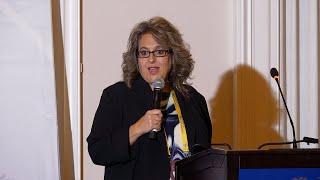
In this webinar, Terri Olano, Senior Business Development Manager at Keema (formerly QIMA), shares her personal journey from textile engineering to supply‑chain leadership and outlines how companies can gain visibility and control over increasingly complex global sourcing networks. She reviews post‑COVID sourcing trends, noting China’s unexpected rebound and the surge of near‑shoring to Mexico, while highlighting the quality challenges that accompany diversification. Olano introduces Keema’s tiered approach to supply‑chain mapping—starting with supplier questionnaires, progressing to product‑level traceability, and culminating in material‑level verification—supported by a digital data‑management platform that aggregates field audit data, surveys, and ESG metrics. The talk includes concrete case studies: an Italian luggage maker using invisible tracers to verify recycled nylon from fishing nets, and a cotton supplier employing genotyping to confirm Pima cotton origin and percentage. Throughout, she emphasizes the critical role of transparency, data quality, and ESG compliance, and concludes with an overview of Keema’s global footprint (100 countries, 60 offices, 30,000 customers) and service capabilities.
Chapters
Okay, well, thank you guys for coming. My name is Terri Olano, and I am a Senior Business Development Manager with Keema. And I thought we could start off this session— I just wanted to give you a little bit of background about me so that you knew where I came from, sort of. So I thought it would be appropriate to share with you guys my quality journey as a person so that as we start start talking about your supply chains and your journeys, you can see that there's a lot of similarities. So, and I apologize, I'm gonna look over here. So my name, I said my name is Terry. I'm from New Jersey, and like most girls in the '70s, I wanted to be Annie. I was convinced that I could make the sun come out tomorrow for everybody. The problem was, I have no talent. I'm talentless. Talentlessness, right? Talent? Yeah. I have no talent. I can't carry a note to save my life. So I was a little devastated when my mother wouldn't take me to the auditions. And it was a hard blow for me as a child. But I had to come up with a new career path. So luckily, the second best choice was to be in the textile business, which made perfect sense to me. So this is my little journey in emoji form. So I ended up going to textile— I ended up becoming a textile engineer. I went to Philadelphia College of Textiles and Science, back when it was still called that. And I got a textile engineering degree. And where my journey took me was, you know, I started off working for a lab for a major retailer. So I got some experience there. I then continued, and I started picking up little skills along the way. So I became an inspector. I did garment production. I worked in the apparel industry. I was an auditor. My experience with inspections and audits, I did about 2,500 different services in that portion of my career. So I've been in a lot of factories in a lot of countries. And that's where I got a lot of, a bulk of my experience. Once I went through 1 through 6, I ended up in sales and business development. So that's kind of how I came to be the person I am today and the person at Kyma. So I've been at Kyma 6 years, love Kyma, and from here I'm going to work with you on the supply chain, how you guys can protect your supply chain and know what's going on in your supply chain. Okay. So these are the things— sorry. These are the things that we're going to talk about. In this session, and I will, like I said, try to get through in enough time so we can ask any questions at the end. We're going to talk about your global sourcing, your landscape, how to uncover different things in your supply chain, Chima's guide to mapping your supply chain, and how our solutions can help your business. So two things I want to point out on this slide. So we have a QR code there if anybody is interested in getting more in-depth information instead of a colorful bar chart that's up here, please scan our code. It takes us to our Q3 barometer that CHIMA puts out every quarter with different information about the industry. And it is a lot more information than what you're going to see on the slides here. But hopefully what I can do is give you some additional information. So with the next couple slides, What we did was we were able to put these together from a combination of surveys we do with our clients, as well as information we gather from our onsite services. So our inspectors and auditors are out in the field, they're gathering data, they're gathering information. We're able to leverage that information and come up with some good data to share with our clients. Okay, so on this slide, this is showing that the demand for textiles in China is growing by 17% since the beginning of this year. As we know, when COVID hit in 2020, supply chains got all crazy. I'm sure everybody here experienced problems with supply chains. Clients had— couldn't get products made, they couldn't get The ships, they couldn't get products shipped. Everything in the ports was all jacked up. We just had so many issues. And that's when we saw a lot of clients leaving China and trying to do their manufacturing in other countries. But with all that, as we've heard all day, that always comes with some challenges. As you start moving out of China, that has a very mature manufacturing system and you go into other countries, you're going to have some ups and downs, you're going to have some challenges. So we are really surprised that this year China is now— it was on the decline a little bit and now it's on the rise again. So, okay. Mexico, we've talked about— sorry, we've talked about Mexico and nearshoring. A lot of companies are working in Mexico. It's a great option. You know, you have low— it's easy to transport over the border. You know, you have low tariffs. You have a lot of factories that have a lot of maturity. But there's been such an influx in Mexico, we're also seeing a rise in quality issues. Okay. We— so, you know, the main topic of this conference is supply chain is— and people are diversifying their supply chains. You know, it's always good to diversify because you don't want to put all your eggs in one basket. And again, China was that basket that everyone was working in for so long, right? So— but with diversifying, you do have challenges. You do have product quality challenges. And this slide I like because it does— It is information that we received from current customers and from clients that have given us information about, you know, what they found. You know, they ran out of China, they went to other countries, but what is happening to them? And now we have to try to figure out how to make their quality better. They need to figure out how to make their quality better. I can't make their quality better. So again, it's just some more statistics on digital transformation. Again, our field staff, our inspectors, our auditors in the field, they're capturing data. They're capturing a lot more data than actually goes into your reports. So when you want to look at the information and you want to see who are your better performing suppliers, who are your better performing factories, what are the common problems we're having, we can capture all this data. Give you information to help you correct your supply chain and improve it. Because at the end of the day, you know, you— we all want to improve our supply chains. Okay. The top 2 reasons that are here of going— of digitizing everything is visibility into the supply chain and looking to increase control over the issues with quality. If you don't know it's happening, you can't improve it. OK? And the same QR code that's on these is the same one for the next couple of slides. It all goes to the same place. OK? So this is a big one. So when you have limited visibility in your supply chain, you have risk because you don't have the information. One of the big things in fashion is fast fashion is really— the thing. Consumers want to change their wardrobes, but they want cheap apparel. They want it to be cheap. They don't want it to be cheap in quality. They want it to be cheap in cost. They want it fast. If they want it, something new in 2 weeks, they want it. That poses a challenge for manufacturers, because how do you do that while still giving them a quality product? Because your consumers are going to love you as long as the quality is good. But when your quality is not good, they're going to go all over social media and blast you. And social media is a blessing and a curse, right, as we all know. So this is one thing that has been a real challenge for companies that do fast fashion. And then some other crises that have come along with the congested ports, the closures, and just the visibility in your supply chain. When we did another survey, we found out that 61% of the industry does not have a full visibility of their supply chain. They thought they did, but they don't because they're only capturing portions of it. Okay, so, you know, we're here. How do we uncover these? How do we uncover these risks? So One of the things that we have at Kima is we have some different options that we like to work with clients about. And one is the first level is supplier mapping. Excuse me. It's a starting point. It's basically, let's sit down and let's figure out all your suppliers, your tier 1, right? Let's figure out your suppliers and what they're doing before you can take it to the next level. So it starts from the top, right? Your partnership with your suppliers, getting accurate information from your suppliers so you know what's happening in your supply chain. The next level would be product traceability. We can take— we have different ways to trace your product through the production cycle from raw materials through finished product. Again, giving you evidence about your supply chain. So now you're building on your traceability. And Level 3 is material traceability. This has been a big one lately because of the— with knowing your regions where your cotton is made, with your recyclable fibers and fabrics. If you're buying recycled polyester, it's costing you more than regular polyester. So you want to know that it's recycled. You don't want to just— be paying more for something that's not what you're paying for. And the scary part is only 6% of companies have full visibility of their supply chain. We did a survey and 6% have full visibility, so that's— that's okay. But 22% have, like, almost no visibility. So, to put that into perspective, So you go over to somebody's house and 25% of your friends have food in their refrigerator that they have no idea where it came from. Are you going to eat it? Do you trust it? Like, with today's day and age, if they said, oh yeah, it just showed up, are you going to want it? I mean, that's what this is. If you only have 22% visibility, How can you trust, yeah, right? How can you trust the information you have? I mean, I'd probably eat it, but you know, that's just me. Anyway, so this is our little, this is our plan that we have put together, our step-by-step approach, and we're gonna go through each one of these individually on the slides, but we, you know, conducting your due diligence through different, steps is really critical for your supply chain. Okay, and I'm going to go to the next slide just so we can talk about this a little better. So one thing that we— CHIMA has in place is a self-assessment questionnaire. The fir— again, the first step is note— is, is knowing what your supplier is all about, knowing really what are they bringing to the table, what are they doing. So we have a program where we can set up a supplier questionnaire We would send it out to all your suppliers, gather information, and then from that point you could start making decisions. Okay, and how we get to the next step. So at the end, it's all about getting good data. You can get data, but if your data— your data is only as good as the people that can get it for you. So if you were sending somebody into the textile industry that has an electrical background, you're not going to get the same robust data that you would get from somebody who has experience. So, okay, okay. So assessing your external supply chain risks. So we have a lot of different information, and we have a lot of information in our CHIMA database, but we also evaluate your supply chain based on the type of products you do, the countries you're in, you know, and we monitor this stuff on a regular basis. So again, collecting the data, we can see which countries are getting— are starting to have more risk because they're getting— we're seeing poor— an increase in quality problems, poor manufacturing. We're seeing more issues with— when we go in and do ethical audits, we're seeing more failures in certain countries. And one of the things we like to do is just keep a broad, you know, keep up with everything that's going on based on what we're doing. But we also will look at different trends in the industry, with the landscape, with the global situations that are happening. So really important that we collect this information. And this is the one I know a lot of you are interested in, is tracing your products and materials. So again, tracing your fibers. You know, is your cotton— where's your cotton coming from? What region is your cotton coming from? Which— oh, what region? Sorry. I'm so loud. I probably don't even need this. What region is your cotton coming from? How are you— Where is it going from there? How are you tracing your cotton from going— going from cotton to spinning and spinning to making fabric? Is it really the same cotton that you think you're getting? And from there, identifying your risks. And again, in your platform, documenting the information we have so that you can actually get a full picture of supply chain and understand You know, okay, I thought it was going this direction, but it's really going this direction. Kima has a very— oops, sorry. Kima has a very robust quality system and data management platform. Our platforms are very interactive and useful for our clients. They like to go in there. You can run reports. You can look at your supply chains, you can compare, you know, what you did last year to this year and really get a good idea of where you need to make improvements in your supply chain. Okay. And then partnering with somebody that has a lot of experience in ESG. And Kima has a lot of experts on site. We have— we send them out to do on-site verifications. We do all types of audits. Ethical traceability, environmental audits. We also do a lot of different inspections, and we do some things that do a combination of things. So we're, we're checking things during production in your supply chain and just really trying to help you get the best data and the best output as possible. So I wanted to— we threw a few case studies in here. To show you what we were talking about. So we have an Italian manufacturer that was using recycled nylon from fishing nets for some of their luggage brands. And they wanted to confirm the traceability and that it was recyclable, because again, recycled products, although we're all trying to use them and be responsible, they are more expensive. So what we did for them was we did a whole bunch of traceability audits. We did some chemical tracing of the nylon. We did some onsite spraying of the tracer. So what that means is we can spray a, it's like an invisible dye that can be scanned. So you can trace your fibers and your fabrics. And then we do, you know, sampling and we do the testing. So we had a lot of success with this. They were able to label their products the way they wanted to because it met all their requirements. So that's really important. One thing I know I talked to a few people today about, claims that you put on your products. You know, if you— everybody wants to be sustainable. They want to be— you know, say it's recyclable. They want to put claims on there. But just remember, claims need to be— have to be able to be tested and backed up. You need to have backup for anything you claim on a product. Here's another one. Sorry. Here's another one for cotton origin. We had an apparel supplier that wanted to make sure that the region that their cotton was coming from was not— oh, no, I'm sorry. This is for Pima cotton. They wanted to check the amount of Pima cotton that was in their product and also to prove where the cotton was coming from, if it was really coming from that region. So again, another type of service we did, we went to the fields, we picked up some fabrics, we did some unfinished garments on cotton, and we were able to do the genotyping on cotton to test that it was Pima cotton, and we also were able to quantify the actual percentage of the cotton. Okay, and so Kima's comprehensive ESG solutions, you know, with a lot of the stuff that I was just working with you about or just talking to you about, you know, we believe in transparency as a company. So one of the things that we always If you can be transparent, if your factories can be transparent, you can make improvements. You can't make improvements if you don't have full transparency and full visibility of your supply chain. We do risk mapping and mitigation. We do traceability. We do sustainable material and products. So we're checking for the recycled poly, the DNA testing, the carbon footprinting. Again, doing with the transparency, doing the self-assessment questionnaires, some supply chain mapping, that kind of stuff. Okay. So here's Keema. We are a 16-year-old company. Some of you might know us from Asia Inspection. That's how we started out, but we've been Keema for a while. We are in 100 countries. We have over 4,000 employees. We have boots on the ground, like I said, in 100 countries. We have 60 offices and labs globally, and we have over 30,000 customers that we work with on their quality needs. That's it.










