Rise of the Virtual Influencer | The Diigitals, Cameron James Wilson | PI Apparel
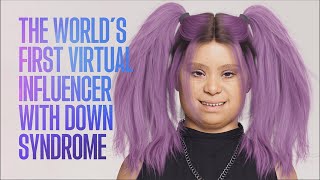
Cameron James Wilson, CEO of The Digitals, delivers a comprehensive overview of the creation, evolution, and impact of Shudu—the world’s first digital supermodel—and the broader virtual influencer ecosystem. He recounts his personal journey from fashion photography to 3D modeling, the viral launch of Shudu in 2017, and subsequent high‑profile brand collaborations (Fenty, Balmain, Louis Vuitton, Tiffany, Samsung, Unilever Magnum). Wilson explains the technical workflow (Daz 3D, Clo3D, Unreal, rendering pipelines) and how virtual models can augment or replace traditional modeling, creating new remote opportunities for makeup artists, stylists, and models. He addresses ethical concerns around representation, transparency, and the potential to reinforce or dismantle beauty standards, highlighting inclusive projects such as Kami (first virtual influencer with Down syndrome) and Awa (representing Ivory Coast cocoa farmers). The talk covers business aspects—licensing, IP, small team structure, and market dynamics—showing how the virtual influencer space has become highly competitive, requiring distinct voice and community engagement. Wilson concludes with Q&A covering software choices, character aging, and future expansion into Asian markets, emphasizing responsible, authentic storytelling in the metaverse.
Chapters
Hi, I'm Cameron James Wilson. I'm CEO of The Digitals and creator of the world's first digital supermodel, Shudu. I've had the pleasure of presenting at several different PIPOWs around the world before COVID and I'm really, really excited to be here today to present to you kind of just an introduction into the rise of Shudu and kind of virtual influencers kind of all together. So who is Shudu? Shudu is my creation, my baby who came into the world in 2017. And at the time, I didn't really know what I was doing. So I was a fashion photographer for 10 years and I wasn't enjoying it. You know, I wasn't happy with the work that I was creating. I felt fashion photography was an industry in decline. You know, budgets were being cut, corners were being cut, photography was no longer valued in the same way that it was when I started my career. So I was looking for something different, something else. And I fell in love with 3D programs like Marvelous Designer and a program called Daz 3D and started to create little images, little pieces of art. That went viral online. So Shudu now has almost quarter of a million followers. She's been in every magazine you can probably possibly think of, and she's done campaigns with the likes of Louboutin and Ferragamo. She just recently did something with Charles Keith. So she's working nonstop, which is amazing, as a supermodel should. When I created Shudu, like I said, I didn't have any idea of what I was getting myself into, but little did I know I was kind of stumbling into the world of 3D fashion. But also, I found myself kind of in the center of a lot of controversy. People had never seen a virtual influencer before. What did this mean for the future of modeling? Is she going to replace models? You know, is she going to replace makeup artists, hairstylists, what does this mean for the future of the fashion industry? And little did I know I sparked kind of this huge conversation with this image here of Shudu. So this was the first image that I ever created of Shudu and I posted it online and it became a viral sensation. It was shared around the globe by the likes of Naomi Campbell, Tyra Banks, And it was just an incredible feeling at the time. Again, I was just started out in 3D. This was only after 3 or 4 months of learning 3D programs that I created this image. So I knew that I was on the right track. After starting Shudu and kind of running her page for a while, I thought about how we could collaborate with brands. So using virtual models to collaborate with makeup brands, and what that could mean for the future of fashion visualization. So I chose the brand Fenty and recreated kind of like an advertisement for them, which they then reposted and got over 250,000 likes on their page before they realized she wasn't real and shut it down. So it didn't last very long, but people seemed to love the image. It was very, very engaging and had tons and tons of comments underneath. Trying to figure out what is Shudu? Is she real? Is she not? And we were starting to see that digital models and virtual influencers were incredibly engaging characters on social media. People reacted very strongly to that imagery and it had a very high quality of post compared to real influencers. So they were outperforming by a long, long way real people. This was the first collaboration between Shudu and a real model. So the model on the right is an Australian model called A'Jour, who I never met before. And I was thinking about creating real models in 3D and how that could mean that their career could be worldwide and global without ever having to leave their house. A'Jour, who is in Australia, you know, she's never really modeled before. Could then travel around the globe as a 3D model and pose wherever she wanted to in campaigns with Shudu or whatever she wanted to do. So thinking again about the future of modeling, what would this mean for models? Would it erase them or would it open opportunity for them? I think it really, really depends on the intent behind the creation. This was our first collaboration with an editorial for WWD, and we worked really closely with Clo3D to produce this editorial. They did an amazing job at recreating the garments extremely faithfully, and then we dressed Shudu and put her in this kind of desert situation. And it was the first time that anyone had ever done a fashion editorial in 3D. Completely without leaving a computer, you could have a model that was in the middle of a desert somewhere And it really, again, just presented what were the possibilities of the future of fashion if you didn't have to fly around the world to create these beautiful visuals. You know, this is an incredibly unsustainable way of producing imagery. And this showcased the possibilities of what could be done with 3D programs like Clo3D. We've also worked with makeup artists. So again, thinking about careers, how will they change? How will they develop? Working with famous makeup artist Sir John, who's worked with Beyoncé, thinking about what will his career look like in the future? So he provided us with a face chart, and we put that face chart, recreated that makeup onto Shudu, showcasing that creatives still will have a place within this industry. It's not gonna erase anything, but it will change the way we work with them. And it's important that people understand this because there is a huge fear of anything technological. As soon as something technological comes along like this, people back away and think this is gonna take jobs away, this is gonna remove opportunity. And it's important that we reassure people that this is actually gonna create more new, new opportunities, new positions, new jobs. And also remote positions as well. For makeup artists, you have to live in London or a city or something to be working constantly, but this presents the opportunity of actually being able to work anywhere in the world and produce incredible editorial fashion imagery. This was another shoot that we did, this time with Tiffany Co. and Vogue Australia, and this was the first time that we blended Shudu with a real model. So we actually did a real-life photo shoot with a model, and we layered Shudu over the top to create this incredible mixed reality kind of hyper-real photo shoot. Here's the real model. And I wanted to showcase again, what is the future of modeling? Where will models be positioned in this new future of virtual and 3D? You know, will they be completely erased or actually, do we still need them? Do we still need that human element to kind of bring Shudu and characters like Shudu to life? It's really, really important in Shudu's case where there is a lot of criticism of Shudu due to the fact that she is a dark-skinned woman in fashion. And for dark-skinned women in fashion, it's very, very difficult for them to have opportunities for modeling and, and things like that. So it's very important that we reassure people that this is presenting new opportunity and not taking anything away from the community that she represents. So I had the chance to work with Bauman very, very early on kind of in my career. And they approached me and said that they wanted to create their own virtual influencers. So up until this point, I'd really just been doing it for myself, you know, just— creating these characters here and there for me. And this was the first time that I'd worked with a client to create two characters for them. And I learned a lot. I learned a lot about the way that other people see beauty. You know, when you talk to somebody and you say, "Oh, you know, I want a smaller nose or this or that," their idea of what that means can be totally different to yours. So there was a huge learning curve when it came to creating these two models for Balmain, you know, learning about, how to describe to someone different features, you know, eyes and nose and lips, you know, how to describe to someone how to visually communicate what they want and, you know, how can I deliver that. But Margot and Cé were very successful and this was one of the very, very first fully CGI campaigns for a high fashion label. There was also Louis Vuitton several years before, but that was with a character called Lightning from Final Fantasy. And this was just— we were starting to see 3D being picked up more and more around this time. People were really starting to utilize 3D in the design process and think about the potential that it would have for gaming and the metaverse. This is years before the metaverse, but people were starting to see the potential of where these 3D assets could go, could they monetize these 3D assets? How can we actually utilize 3D itself without any physical garments at all? This was Shudu at the— on the red carpet, which she was actually the first virtual character on a red carpet ever in the world, which is incredible, as a hologram. This project was something of a real passion project as well. They approached us. They wanted this done in a month. The turnaround was crazy. We had to transfer Shudu from Daz 3D into Unreal and then project her on the red carpet as a hologram. So this utilized something called Hologores. And people could then stand next to her, pose, and get their photo with her. Which was something really, really incredibly ambitious, but also something that I was so confused as to why nobody has done this before. You know, you would think that Elsa or the Minions or something would have appeared on a red carpet many years before. But actually, this was one of the very first times. You can see here that we worked with a fashion model called Janice to provide the motions for Shudu, which again highlights just how different modeling will be in the future, the different ways that models can be involved in this project, and that it's still reliant on humans to generate these motions for the future. However, once you have these motions, you can then apply them to any digital model after that. So you only have to capture them once, And then next thing you know, you can use it on every model. So it's all about building a bank of assets. This was Shudu for Aless, and again, we were working with a real fashion model. However, she turned up to the shoot, the client absolutely loved her, the celebrity talent had kind of let them down, and they were really unhappy with them. So instead, they chose to use Shudu and her muse is what we call them, Misty, for the campaign, which was awesome. We actually saw Shudu for the first time posing alongside the model that played her. So a really, really great campaign. Misty went on to have a really great relationship with LS. Again, showcasing opportunity, how we can create opportunities for models. This was a Samsung campaign that we created, and this, this concept is all about showing the people involved in the project. So the models that you see next to Shudu on the left and the right are what we call muses. So they are the models that stand in as Shudu. So they would actually usually be Shudu in the image, but here they play themselves and they're all kind of together. It's a really, really sweet concept that I really, really loved. And the results were incredible. This was one of the first times we used video with Shudu. We actually used a technique where we kind of almost deepfaked Shudu's face onto the model, which at the time was kind of a little bit ahead of its time. It was very, very difficult to do. So, uh, it was a bit of a challenge, which is why it's so short. Um, but again, just kind of like pushing the boundaries, trying out different technologies, you know, how is machine learning going to affect virtual models, trying to kind of mix everything together, everything that's kind of going on. This was our first full fashion show. This was for a parade show, Miami Swim Week. This was all done digitally. And it was an extensive undertaking. It was a lot of hours of rendering and simulation. Created this entire catwalk scene, all of the lighting, the environment details, obviously, the models. And it was just a huge, huge project. We didn't really realize when we were getting into it just how long rendering it would be, let alone everything else that goes into it, the computers whirring 24 hours a day trying to produce all of the images to make an animation like this. And that's something that people need to kind of understand as well, is it's not just about kind of creating the images, it's about producing them, having the computer actually spit them out in a way. So the power of the virtual influencer. So all of those projects and all of the projects that we've done since then have taught us so much about the potential that these virtual influencers have. How are they going to be in the future? Are they going to still be just as entertaining? What we've seen is that the area has become extremely competitive. So being a virtual influencer now is just not enough. Before, when there were only a few, you could start an account as a virtual influencer, and you would see thousands of followers come just because it was a virtual character. Now there are actually thousands of these characters on social media. So you need a viewpoint. You need a position, a voice, something special that makes your character stand out. This is all of the media. We've been in tons and tons of media and done tons and tons of PR. But as I said, this was kind of more at the beginning. You know, at the beginning, you literally had to do any project, and people would pick it up and write an article about it. Whereas now there's so many kind of virtual models it really needs to be something specific. You know, there needs to be an edge to it. There's still a lot to be done, but it has to be thought about. It has to be managed well and, you know, really kind of considered about what the kind of point of the character is. So just a few kind of interesting facts about the engagement, the post quality, 4 times the post quality. So they're actually outperforming real influencers 4 times over, which is incredible. The audience is incredibly young, so it's people who are interested in technology, people who are interested in fashion, and kind of targeting those that are also interested in things like the metaverse and Web 3.0. So again, I mentioned the muses, and the importance of the muse shouldn't be, shouldn't be kind of dismissed at all. These muses are incredibly important to the narrative of the characters and kind of having a character that actually is successful because these virtual influencers are very, still very controversial. We've seen recently with the Lensa AI app, lots of people from social media having a backlash against artificial imagery and generated imagery. How can we showcase that actually there is a human element behind these artificial creations? So here are some of the models that we worked with, and they all stand in a studio. When studio is booked, they get paid, they get credited. And this is really something that I think should be the standard for virtual influencers throughout the industry. Unfortunately, it isn't. A lot of virtual influencers you see will pretend to be real. They will pretend to be AI, which they're not. They will not credit the models behind them. And they kind of tend to keep everything secretive, which is something that I don't believe in. I believe in transparency and being open and kind of educating people about this space. I fear that it has the potential to be misleading. You know, I fear it has the potential to damage beauty standards even further. You know, and I think this is something that we have to be incredibly responsible with. You know, not every technology is just amazing and wow, you know, we actually have to think about the repercussions this might have. And if you want to get involved in something like virtual influencers, being responsible and thinking about how to make a positive impact using virtual influencers. So it comes down again to authenticity. You know, how can a virtual character that is fake be authentic? And it's really about having an authentic voice, having an authentic point of view, having an authentic intent. And we do that with Shudu by working with a writer called Amma Badu, who helps us to, kind of see Shudu from her point of view, her community's point of view, engaging with her community, having someone from her community represent her, having that voice there. It's incredibly important. If you're creating a character of a certain community, it's incredibly important to engage with that community, not just project your image of what that person looks like or what their voice would be like. So this is something that we've actually created a couple of times this year. I've had the pleasure of working with Unilever Magnum to create Awa, who represents a community of female cocoa farmers in the Ivory Coast. And I also had the pleasure of making Kami, who is the world's first virtual influencer with Down syndrome. So I created Kami with Down Syndrome International and Fordham— Fordham and Bozenfoers in Singapore. And we really, really wanted to challenge gaming, the metaverse to be more inclusive. You would think that something as futuristic as the metaverse was very diverse and inclusive, but what we found was that actually it wasn't. You know, there aren't options to create characters with disabilities, characters that are bigger, you know, characters with Down syndrome. They were completely excluded from this space. So anybody that wanted to kind of be a part of this space, you know, they weren't being represented. And I found that something incredibly problematic. This is something that I learned during this process. So to create Kami, we actually utilized over 100 different women with Down syndrome. I was sent all of their photos and I compiled them into one face. So I layered them on top of each other to create an image that represented all of these women, and I thought that that was incredibly powerful. I didn't just sit there and imagine what Kami would look like, you know, or create what I thought a person with Down syndrome looked like. I utilized real metrics, real people to create Kami in a way that removed beauty bias. Because no matter what, if I was to create Kami, there would be some kind of subconscious beauty bias that led me to make certain features or do certain things. And I think it's really important that we recognize that within ourself and remove ourselves from that process. So here are some of the incredible women that are represented by Kami, and it's a project that I absolutely fell in love with during the process. The incredible stance that Kami has is something that I feel like people shouldn't back away from. When I get asked to create a virtual influencer by clients, they often want somebody that represents everyone. You know, they want somebody who is a little bit Asian, a little bit Black, you know, a little bit ambiguous, you know, and I find that incredibly problematic because you end up with a virtual influencer that has no point of view. You know, it doesn't really represent anyone. Nobody can relate to that character, but actually creating a character like Kami who has a very strong stance really, really says something about your character and about the point of view of your kind of company. So here are some of the content that we created with Kami. Again, it was really, really fun. We had a model with Down syndrome pose as Kami, and the day was just really, really incredible. You know, they had lots of fun, And it was supposed to be something that involved the community and brought the community together and showcased real people with Down syndrome so that people could start to relate through social media to these people and kind of understand the diversity behind it, you know, what these people are up to, what they're doing, the kind of careers that they have, just improving awareness all around. This is Cami with an artist Charlie French, again, just raising awareness, profiling, and being a great kind of spokesperson for the community. And it's really, really amazing to be able to produce kind of a character that can really stand for the community by representing them in a really positive way. Again, so like I said before, you really, really need a stance If you're producing a virtual character right now, it's not good enough to just be virtual. You really need to be saying something about the metaverse, about Web 3.0. How can we make a positive change? And there is still so much change that is needed within this space, within the metaverse, improving diversity, bringing more people of color into this space, bringing more people with disabilities into this space. This space, so really utilizing this technology now to represent underrepresented people. So hopefully I didn't go through that too fast. There wasn't a timer, so I don't know. So I don't know if we have some time for some questions. So can you apply makeup in Clo3D? So my process— I actually use Clo3D for what it's good at, which for me is cloth simulation. So I actually don't use Clo3D for rendering. I think there are many other programs that are great for rendering, and I think we should be utilizing the programs that are best for what they do. In the movie industry, you need to learn about 10 different programs and plugins and all kinds of things to produce the kind of images that you see in the movies. But for some reason within fashion, people are very, very scared of learning new programs. They want a program that does absolutely everything, avatars, cloth simulation, rendering. And that's just unfortunately not the reality of it. You can apply makeup in Clo3D, I think, through the texturing and things. It's just not how I would do it. I wouldn't render in Clo3D. I'm sorry if you guys are in here, Clo3D guys. But I just wouldn't recommend it. Do you put a character life behind the virtual model? How do you maintain the level of engagement and influence that she has on the community? I absolutely put character behind the characters that I create. However, I try to keep Shudu just a little bit more mysterious, try not to give too much away. It's just the way that I like to look at it, But to me and the people that I work with, we all know who Shudu is. We know her like a good friend. And she kind of has this personality that we all know what it is. But we like to keep it a bit mysterious, keep people guessing when it comes to Shudu. With other characters, of course, we don't mind sharing their personality a bit more, but Shudu's special. Is Daz Studio easy to use? I think it has a learning curve, but once you kind of understand it, Unfortunately, DAZ Studio, it's an incredible program for creating avatars, but it has this very, very complicated system of utilizing plugins and shop-bought content and marketplace content. It really overcomplicates things, unfortunately. But I think it's an incredibly useful program that I think people should think of when they're creating avatars. We also have Character Creator, and— We also have MetaHumans, but I definitely wouldn't recommend them. I personally, I've tried everything. I still think Daz is the best way to create custom avatars. What's next after making Shudu so famous and influential? Like I said, we are working on projects like Kami. So projects that have a real intent and purpose within the space. I feel like the metaverse has a long, long way to go before being as inclusive inclusive and representative of the real world as it should be. I feel like people's focus when it comes to the metaverse is making these weird and wacky characters, but completely forgetting about the real-life people that should be represented in the process. You know, it's all well and good creating these fantastical characters, but actually we should focus on creating characters that represent us and make people from certain communities feel included in this space. Space because the people who are creating the metaverse unfortunately aren't that diverse. This is a space that is overwhelmingly white and it shouldn't be. This is a space that should be inclusive to everyone so that we hear all of their voices and see all of their influences within this space. What does the Digital We Company do? Do you have a big team? So we represent 7 different virtual characters, which we then license out to brands to do kind of social media posts and things like that. We create all of the artwork around that. Depending on the post, we will hire 3D fashion people to kind of create clothes and things like that. And then we also create virtual influencers for brands. So if anybody wants virtual influencers to represent their brand, we can handhold and take them through that process. It's a very in-depth process. It's a very long process. But it is an incredibly rewarding one once you have a character that you can invest in for years to come. My team is very, very small. It's just me, my best friend, and my dad. And we actually have achieved all of this just as us. But I also have a management team in LA who help with the contracts and all of the licensing. Because with virtual characters, there's a specific surprising amount of IP being shared and licensing that needs to be done. So it's a little bit more complex than you might first think. Any plan to go to Asia? Any specific criteria you're looking for as a partner brand? Well, I'm here, so, and I'm exploring here as well. And it's very, very interesting the difference that we're seeing between what Asian brands want from models and what Western brands want from models. So we're seeing in the West, in the West we're seeing brands that want models that are really outspoken and quite controversial in terms of maybe their stance. Maybe they really stand for something like, you know, love is love or something like that. Whereas in Asia, what we're seeing is, it's a much more kind of a facade for a model, you know, something that is just very commercial, very branded with very little kind of outspoken voice. So, it's quite a different kind of criteria for the modeling here, but definitely interested in the space and how we can kind of interact with some of the already established models here. You know, I have friends here, Rosie.Graham, who is amazing in South Africa. Korea, Emma Graham, who is based in Japan. They are two great friends of ours. Nothing to do with me. I didn't create them, but we're great partners with them also. Are you taking requests from lots of fashion brands? Can an unknown brand request too? Absolutely. This is an open space for anyone to approach. Nothing is too, too small, if you want to say it that way. Nothing— yeah, nothing is out of the question. And it really depends on the brands as well. What they're aligned with. Maybe they have some messaging that's really interesting. It's not just all about selling product as well. What's your plan if Shudu or any virtual characters be old? I get asked this a lot. How do virtual characters age? And they kind of age in their own way. They develop over time. So Shudu, when she first started, she was very, very smooth, very unwrinkled, and not very much detail. But over time, she's actually gained a lot more detail. We've upgraded her model several times. She now has realistic human proportions. When I first created her, she was like some kind of Barbie monstrosity with 4-foot-long legs. But now she's much more human in her proportion. So they age in their own way. They develop. They become better over time. And whether or not they— get kind of wrinkles and creases, who knows? You know, it's really for them. They can age, they can go younger, they can go any direction that you want. So yeah. So if that's the last question, then it's been great chatting to everyone. I'll be hanging around, so come speak to me if you have any other questions that you didn't want to ask on there. So yeah, thank you very much.










