Staying Ahead of the Curve through PLM Roadmap Reinvention
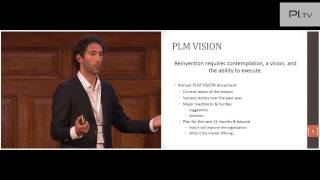
In this conference presentation, the Vice President of Operations at Fashion Avenue Sweater Knits shares a hands‑on, user‑centric view of implementing and continuously evolving a Product Lifecycle Management (PLM) system. He outlines the emotional landscape of a PLM rollout—excitement, fear, skepticism—and stresses that no implementation is perfect. Core themes include change‑management tactics (vision, communication, being the project’s visible face), train‑the‑trainer approaches to build super‑users, dealing with detractors and turning them into advocates, defining measurable success and ROI early, securing quick wins to build buy‑in, and maintaining an annual PLM vision document to reinvent the roadmap. He also discusses vendor collaboration, user conferences, data exploitation, and the notion that PLM implementation is an ongoing journey with no true end state. The talk concludes with a brief Q&A about vendor involvement and converting detractors into evangelists.
Questions this video answers
Yes. Five of the top development vendors are given access to the PLM on the development side, allowing them to collaborate, retrieve tech packs, and communicate within a single platform, eliminating redundant emails.
Yes. By involving a long‑standing, vocal detractor in conversations and listening to her concerns, the presenter was able to turn her into a valuable source of feedback, even though she remains skeptical until retirement.
Chapters
So good afternoon. Thanks for anyone that stayed with me here. Okay, so I guess I'm gonna come at it from a different approach 'cause I'm actually a user of PLM. Our company has PLM software. I'm not a consultant or vendor. So that's always a little different at any conference. I just wanna thank Jamie, who had found me initially on LinkedIn. I did a webinar for PI Group and I guess got some positive feedback and therefore got invited to speak here. That's how I got here. A little bit about, I guess, where I work, Fashion Avenue Sweater Knits. I always tend to do a poor job in explaining the company. I always think it's about me. So it's a sweater and cut and sew company based in New York. We do— it's a private company. Around $100 million plus we sell to the top 40 retailers in America. So that's a little bit about us. If you want to find out any more, you can find me after, but I kinda wanna make it about the process and the roadmap reinvention. So I Googled the word ponder, and this is one of the images I came up with, and I thought it kinda worked well with the whole idea of a roadmap reinvention. As we can see, this lacks a road or a map, but it's up to the little guy in the woods to figure out his path. And for anyone here that's been on any— a part of an implementation, the sponsor of an implementation, or, like, the project manager, they've known that there's definitely lots of turns along the way, and you got to plan, and a lot of it is unexpected. Some of the themes I wanted to talk about today are what Sue talked about, so I think I'm gonna kind of brush over that, was the idea of the implementation. For me, again, the idea that there's no perfect solution. The detractors. Measurable success. The theme of success does not mean stop. A PLM vision. There's no true end to the implementation. It just, you know, that's why, I guess, why we're all here. We're always looking for new and better ways. And Again, a constant theme of this has been, you know, change management and how to manage that. Okay, so, you know, before you get to any roadmap reinvention, there obviously has to be your initial implementation. So here I kind of walk through some of the thoughts and themes prior to, such as the mood of the company. You know, there's excitement, you know, change, it's great. Some people love it, some people hate it. There's skepticism. And fear. For my organization, there was, I think, a lot of fear. We have some employees who have been there a long time and they thought that, "Ooh, technology, they're trying to get rid of me." And that was important to explain to them. It didn't mean, that's not the correlation. You know, the goal of a PLM is to find tools and improve the way we work as an organization. Also part of an implementation is to create your roadmap. Establish your blueprint. Talk about a realistic timeframe. You know, again, these are themes of the conference and other talks I've been a part of. And for one thing I found very important was training. Again, I'm not a PLM vendor, so training is a money-making opportunity for a lot of people. So it's very important to clearly define how the training's gonna occur. Where I was, we did a train-the-trainer method. So I'm not a designer, I'm not a technical person, I'm not in production, but I was trained on the software, and then I trained everyone in the organization. I guess it also created some more value for me, but, you know, that's— no one from my company's here, so I could talk about that. But, you know, be careful and understand that you should create superusers, and there should be more knowledge than just you in passing the information along the organization. And then, you know, how you manage change management, and again, this was just talked about, so, you know, I can kind of talk quickly from my perspective. Have a vision, you know, make sure it's clearly defined. Stress the importance of communication, and always be the face of the project. In my case, it's a homegrown garment company, 30-plus years old, based in New York, so, you know, it's just the owner and then a few people in management and then just pretty much the employees. So I kind of viewed myself as the executive sponsor plus project lead. So I always had to be the face of the project. And you always have to smile and you always have to listen. It's very, very important. Okay, so no perfect solution. What does this mean? You know, exactly what it says. There is no perfect solution. Outside in the hall, there's lots of companies promising wonderful PLM solutions and they are, but I think for any project to succeed and for kind of the, for the employees to feel comfortable, they should know that we don't plan for this to be perfect. We understand that you're allowed to be critical of the solution of the implementation. We want your feedback. If you go into a restaurant and the food is supposed to be perfect, and it comes out and it's not, sometimes you kind of feel uncomfortable talking about it. So I thought that it was very important to break that wall down. You know, I wanted to make sure the user understood that I'm on their side, communication is key, that I was always there to listen, and— And then, you know, someone earlier talked about, you know, you need a little dictatorship. It wasn't a choice, you know, we didn't want them to have the back out option, you know, so we always wanted them to know that although this may not be perfect, we're here to work with you, we're here to make sure that the solution is gonna benefit the company, obviously, but it wasn't optional, you know, we made a commitment to the company, we made a financial investment, in this PLM solution. Detractors. You know, so I'm gonna kinda just talk about some themes. They're a little mishmash, but that's kinda how I thought that this, our implementation was, so that's the direction I was gonna go. You know, so part of any implementation will be dealing with your skeptics and non-believers. Anyone in the room had that one person in their company that really did not want the solution? Anyone? I had a few. They were willing to go knock on the owner's door night and day when I wasn't there, complain. The next morning I'm in the office having to kind of back into explaining why they're wrong. You're going to have to deal with those. There's no ifs, ands, or buts about that. What I found out is that they were right sometimes. You know, they actually had some valid points. You know, most— The one thorn in my side is someone who's been at the company for 25 years, is in technical design, has a wide array of knowledge that I had no idea of, you know, and she was able to kind of look at it from a workflow perspective on how she operated versus how the solution, how the software provider looked at it, and they didn't have as much experience as she did, you know, and initially, you know, maybe I was a little stubborn, But over time, I put my walls down and I listened to her. And that's why there I put, it's never personal. As the executive sponsor, project manager, lead trainer, there was a tendency for me to make it personal, 'cause you feel like you're getting attacked. At the end of the day, that's obviously not the case. You're there as an agent of change. You're there to improve the company. It's not personal, you know, so just be able to get over that. Some get over it quicker than others. The idea of measurable success, you know, again, it was just clearly talked about the idea of return on investment and making sure that you understand what value you're going to get out of what you're, you know, you're going forward with. You know, I think here to stay ahead of the curve, it is valuable to understand how you are being measured. Define success early and often. And I think that comes down to on a daily basis, on a weekly basis, on a monthly basis, on a yearly basis. Understand what success means. When I went into the project in my organization, again, it's a 30-year-old company. You know, we've all heard the story. It was Excel. It was Outlook. There was no— we had no technology, nothing. And we maybe didn't do a good job of establishing what success meant. So there was always this cloud hanging over the project in meaning, are— is it working? Are we doing the right thing? What are— what are some of the benefits we're getting out of this? So define it often. Define it early. You know, establish expectations. And then one thing I think is very valuable is, you know, each organization is very unique. We come together as a group to collaborate, to gather information, to bring back to where we come from, where we work, to hopefully make better decisions. But it's very important that you don't expect since someone else achieved this amount of return on their investment that you're gonna get the same value. It all depends on the people at your company, what you're doing, what you're doing right, and what you're doing wrong. This, you know, as far as establishing quick wins early to get the buy-in from the user, we've done this multiple times through our kind of— we've been live on a PLM since January 2012. So, you know, around 2.5 years, and we've definitely had our phase 1 implementation, phase 2, phase 3, phase 4. It's kind of an ongoing thing. And by quick wins, it's really, you know, listening to the needs of the users, working with your solution provider, and, you know, maybe working out some modifications to the software that are gonna allow them to save the time and the energy that you went into this, uh, um, implementation hoping to achieve. Um, you know, some things we did were as simple as allowing the users to edit multiple points of measurement at one time, allowing multiple people to respond to a collaboration. You know, very small things that maybe your solution provider didn't think of, but they end up liking and then they up, they end up using in their modifications and upgrades going forward, which you don't get any credit for, by the way. But it allows you to establish the buy-ins and you know, this is about a roadmap reinvention. So you, you as a project manager always have to be thinking forward. You always have to be trying to engage the user. This is not just, you know, when your people come to work, you don't want them to think of the PLM as just another place to work. You know, we're trying to create kind of like an atmosphere, you know, people talk about social media and social engagement, online, you know, web collaborations, Pinterest, Twitter, you know, and I think obviously people are trying to mimic that, those kind of environments a lot. You know, and making those small changes allow you to get those buy-ins. Success does not mean stop. You know, it says here, when things are going poorly, you will be expected to make change. We all know that. If things are failing, you know you're getting a call from your boss or the owner asking you, what's going on? I'm hearing bad things. You know? Instead, when things are going well, use that as an opportunity to push through new change. I've, I've found that, you know, it's all waves. You know, we've all been on the ups of the software, and then what happens is you have a tendency to kind of coast for a little bit. You really gotta ride the wave. If, if things are going well, you gotta look for other areas of opportunity to implement change. And I think that's a really great opportunity for your roadmap reinvention. Maybe you don't plan for it, but all of a sudden things are going well. Instead of all the negative chatter that's happening at the water cooler or lunchroom, I'm not sure what they call that in London, but you want to hear positive things. I found it's obviously more common to hear negative than positive. I think that's just a general principle sometimes. And I found this to be very true. About our implementation. When things are going wrong, no matter what office I walked into, no matter what working environment, I heard PLM this, PLM that. But if we ever made a change that improved the user's experience, you didn't hear about it. You know, it just kind of went under the table. You know, here, understand the user. You know, I'm sure we all work in companies with different environments and different attitudes and different energies. It's gonna be up to you to understand who works where you work to decide how this all plays out. I think that's very, you know, just a kind of a point I'll make over and over. PLM vision. Reinvention requires contemplation, a vision, and the ability to execute. I don't know, how far along— how many people in the audience are in their first year of their implementation? Second year? Second to— 2 to 3 years? 2— is— 2— OK. 5+ years? OK. So, you know, I'm sure in your lifespans you've had to do multiple kind of— you've had to rethink how the plan— how the project playing out. For me, what I found very helpful is I created an annual PLM vision document. What that did was it took an inventory of where I was currently at, and it looked, and it tried to kind of foresee where I saw the PLM going. This is a chance to be honest with yourself, with the company, with your peers, to kind of explain What's working? What's not working? What's— what are some of the major roadblocks? What are some of the hurdles? This is also an opportunity to bring your users back into the kind of to the— to play and ask them, what are some suggestions you have? What are some other solutions you see? Are any of your peers or friends working in other companies? What are they doing? Treat this as kind of a common platform to move things forward. Plan for the next month, 12 months, and beyond. The goal, I think, why we're all here is to hopefully improve where we work, the company, by implementing, by using the resources we've invested in. So, you know, think about it. You know, for me, where I'm at, I've been working on my PLM 2015 vision. And for, again, you know, some of the things here, you hear about like vendor collaboration, how do we get our vendors more involved? And then also on the development side, how do we manage our sample process and how do we improve on that? And then I think one of the bigger points for me, and again, I bring these up is if anyone has, thoughts for post or in the conversation afterwards, it's data. We've all been using PLM for a while now. We've been generating a lot of data. What do we do with it? You know, how do we use it? And, you know, what does it all mean? You know, we're all apparel companies, some fashion, some basics. I've been told by the designers that having information from Fall '13 based on what silhouettes we're making or going into development in versus what went into production, you know, so what was adopted, have no value. As someone who sees data as valuable, you know, I have difficulty trying to understand their reasoning. So, you know, we're trying to figure that out. So those are some of the issues that we're dealing with. No true end. There is no true end to the implementation. As the project manager, executive sponsor, it is your job to be a problem solver who is able to continually find new and better ways to utilize the software. How do you do this? Obviously, there's always internally. There's— when I say outlook, I mean, what's the kind of the mood of the company? Are things going well? Are you having to cut costs? Is business good? You know, when getting, you know, kind of jumping off a slide, but you know, when we went into the project, one of the returns on investment that our solution provider promised was like eliminate overhead, eliminate people. My CFO saw that and 2 years, 2 and a half years later, he's like, so where, why aren't the people gone? You know, and it was never made clear to him that was not the goal. And I think, again, so it's kind of like that outlook. If the outlook on his end, the internal change is to eliminate people, but for you as the project manager, that's not the case, you're never going to coincide. Obviously, some other internal changes are workflow, new departments, new division, new products, and also improvements. What changes have you made in the past? How are they playing out? How are the users working with them? And, you know, what's gotten better. The next thing is what new tools are out there? Homegrown, I mean, we all try to, we all want to listen to the people that work at the companies we work at. It's important to understand what we feel is beneficial to the organization. So homegrown tools. Also, you know, technology has gotten much easier and cheaper to create. So maybe you have developers on site that are able to kind of coincide and work with the software you have to develop platforms off of that. And then industry-wide, I think I— when I was in one of the groups earlier, I heard a term I never heard which was best of breed. And for me, I think that's a great term to kind of decide where the— what what the future is, I don't think that there's gonna be one solution you're gonna go with. We all kinda, like I said, we kinda coincide this with our home lives, and no one just uses one application at home. You have your, whatever, your email, your Twitter, your Instagram, your Facebook, and whatever other apps or lifestyle choices you make at home. It's not just one, and I think trying to correlate that into the workplace, is going to be very, very much where the future goes. Uh, how is our software provider improving? Um, has any of the software providers that do have user conferences? No? Well, I use NGC. That's the provider that we went with. Uh, and this past November, they had a user conference, which was a chance for 80 companies who use the software to get together and talk about how they use it. It's a novel approach, obviously it seems novel, but it's not, you know, to kind of get other companies together to talk about how they use the same software. I found it, you know, it was extremely valuable because sometimes we're stuck in our own silo. We put in a PLM to eliminate silos, but we work in one company, we hear one way, we have our silo. Go back to your people and tell them that they should organize a user conference, or obviously industry-wide conferences like we're at today. And upgrades. What is the company you invested your money in doing to improve the software that you're using? You should be aware of that. That's a very important point that I think you should always be drilling home. It shouldn't be looked at— I don't know who's a salesperson in the room, but a lot of times you deal with a salesperson, they leave you at the door, and then they, they hand you off. It's important to always have an open conversation, an open relationship with the person who bought you, who sold you the software to understand what direction they're going in. Because you can't plan for your reinvention or roadmap, you know, well, unless you know what direction they're going in, 'cause you're gonna have to use their tools. Change management. We have made the user aware of— that they cannot be scared of new, of change, of different. We rely on them to communicate how we need to move forward to allow us to get the most out of what we are trying to accomplish, which is success and true engagement in the software. You know, what defines success? You know, for me, the idea of the PLM was to provide a tool for the employees to use. To create an atmosphere able to handle change. Prior to implementing the PLM, I joined the— I was there for about a year and a half at the company. And I never ever heard anyone ask, how can we do things better? You know, when anyone else new joined the company, the only training method was, how did you do it? I have to do it like they did it. There was never any thought outside the box. It was a very, you know, it was just this place which was successful and things were going well, and maybe that meant that no change had to happen. You know, business was good. But as we see, garment, you know, fashion, garment center, and technology, they're all finally coming into the same world. I don't think they were very much together early on. What does the PLM stand for? Again, it's a resource and tool which enable the user to be the best at what they do. I take it upon my job as a vice president of operations to make sure all the employees have the tools they need to do their job. That's, at the end of the day, one of the main focuses that I feel I have. By finding a PLM, by finding a solution that was able to help them, I think we did that job. For Fashion Avenue, the PLM was a breakthrough. It was Excel spreadsheets, Outlook. It was what I consider a very old way of working. And again, people do work like this. You can't get around it. But when also when I use the word breakthrough, what it allowed us to have was the conversations about workflow, about change that without having the PLM as kind of this guiding force would have been very difficult. If you're gonna go into a room, you know, if you're gonna go have a discussion about what we're doing wrong and have no solution to put forward, it's gonna be a pretty endless conversation. So for me, I thought that we can have, we were finally able to have this conversation, we were finally able to talk to design, technical design in one room without pointing fingers on, "You do it this way, I do it this way," because we eliminated that and we created this one platform for them to work on. You know, and I think why we're all here is, you know, for fashion, the PLM's kind of a leap into the future. We don't know what the future holds. We don't know what the pure definition of PLM is. Where does it start? Where does it end? How does it integrate with e-commerce, with— with your salespeople, with analyzing sales data, with your development. You know, it's kind of all unknown. And I think that's why we're all here is to kind of create this vision for what PLM stands for and what the future holds. And how we get there, you know, true engagement with the software, which are aligned with the goals of the organization. We all have people we report to. We all have frustrations we've encountered. You know, at the end of the day, it's the user who decides the future of this project. It's up to the management to sponsor it. It's up to management to be part of it. It's up to management to agree to it. But the engagement has to happen at the user level. You know, that's kind of— that's my contact information. You know, before I kind of— I'll just kind of come back here and I'll— you know, the idea of a roadmap reinvention, you know, to me, and again, I think, you know, I'd like to just hear from everyone here, is it's going to be crucial to your success. No one here is going to have a perfect project plan. No one here is going to— It's all going to work out as you expected it. You know, how the project's going to play out is how you deal with the challenges and the issues. That's just, you know, that's a very important feature of any implementation. You know, so with that, that's kind of, you know, what I had to say for today, so I wanted to thank everyone. Do we have any questions? No questions. Yeah? [SPEAKING CHINESE] I'm sorry? [SPEAKING CHINESE] Are your trade partners involved? The retailers? Your vendors. Oh, the vendors. Yes, yes, yes. Yes, currently they are involved. We pick 5 of our top development vendors to be involved in the software. And they have access to the software on the development side. So they're using collaboration completely, and they are grabbing tech packs on the software. So we eliminated some of the save and email, and there's one place for all communication rather than multiple places for people to go and find data. You know, it would've been easy to talk about all the redundant, you know, all the benefits of PLM, but you know, that wasn't the point of the conversation. So I wanted to focus on more of plodding along. Other questions? Was that a hand? No? Yeah? It's a fan. Well, I just had one comment to make that I found quite interesting. You talked about your detractors. I have found that if you pull them in, they become your best evangelists. Have you found that to be true? I have. As far as I tried, I have one detractor that's so fierce. It's 4+ years in and she still hates the PLM. But she's retiring. That's okay, but I have pulled her in and I've involved her in conversations and I've listened to her and I've tried to kind of make it right for her. It's been a challenge, but again, I've learned a lot from her negativity and her information and her resources. So it's been, you know, the relationship has balanced out, you know, so. I've tried to pull her in. It was a tough one. Oh well, she's retiring, not you. Yeah, I know. Thank you very much.










