Supply Chain of the Future and Open Lab | Edwin Yee Man Keh, HKRITA | PI Apparel
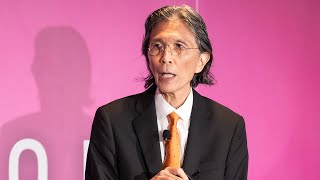
Edwin Yee Man Keh of HKRITA describes the future supply chain as smart, fast, profitable, and good. He highlights HKRITA's Green Machine, which recycles fiber-to-fiber in under five years, and plans for a Hong Kong factory that produces full garment lines in two shipping containers with zero discharge.
Chapters
It is amazing how much things have changed in our industry, even in our recent past. So I wanted to talk a little bit about technology and about how it fits into our business and what the opportunities are. And then just I want to leave us some thoughts about what we as leaders and as the movers and shakers of the industry, what are some things that maybe we should be thinking about for the benefit of not only the industry but also for the organizations that we work for? So first of all, a little bit about HK Rita. We are an applied research center that we operate in Hong Kong. Some of you will have heard of some of our research. And we research in all sorts of everything, material, systems, and what have you. A lot of you in the audience or the companies you represent already work with us. And for those of you who don't know us, we have no secrets. Go to our website, see if there's anything that is interesting to you there. Our big research themes are around things that we hope that all of you are interested in. Sustainability or circularity, carbon neutrality, what have you, all the emphasis change but the theme is still there. Industry 4.0, automation and intelligence, something that our industry industry really is working hard on getting better at. And then something what we call better society or social good. How do we take what the things that we use, things that we develop, services that we provide as an industry for broader application in society. So for healthcare, for elderly care, for high performance sports, for medical and what have you. All those things are opportunities to create high value or new businesses for our industry. Hopefully this works. I wanted to talk a little bit about consumer product supply chains. Things that we're generally involved in and things that we have, we have grew up with or we're in systems and organizations that are doing things in this. And I wanna talk about what the future looks like. So for somebody like me, This is a theoretical problem. I'm old, I'll be dead soon, don't worry about me. But for most of you in the audience, I see a lot of young faces here, this is something that is your career and where you create value in the next 30 to 50 years. So we know that the supply chain is changing and we know that our business is dynamic. And we look in frustration sometimes at what we are, how we are conducting business and we know that it's going to be different. So the question is, what does it look like or what could it look like and how do we prepare for it? And this is kind of sort of something that I've been spending some time thinking about and I wanted to think about that, for us to think about that and technology in the context of that. This is what we want to do and these are the tools that help us do what we want to do. And so that's kind of sort of the framework of what I wanna talk about this, this morning is where are we going and then let's talk about how do we get there, right? So what does the supply chain of the future look like? This is the money slide. Supply chain of the future needs to have 4 attributes. If you don't hear anything else or get any notes down for the rest of the morning, this is it. This is the, I think, are the 4 things that we need to think about as a community. The supply chain of the future is smart, fast, profitable and good. And if you really want the Cliff Notes to, or the short version of this morning's presentation, there it is. And there's the definition of what these things are. Because these words have a lot of broad meaning to it, right? So when I say smart, I think a supply chain of the future has to be a lot more accurate, right? It has to produce less waste, a lot less dead stock. So how do we make supply chains a lot more precise and less guessing. And fast is not so much about speed as it is about responsiveness to opportunities and risk and resilience in times of change as everything, as the earth beneath us is moving. How do we become— the way to think about this is this, like, I can, all of us can make pretty accurate predictions about the weather tomorrow. It's very hard for us to make predictions about the weather 6 months from now. And so the advantage of moving faster is that you're able to make more accurate guesses as a result of that. And so that's the function of fast, not speed for the speed itself, but for all the benefits that speed brings with it. Profitability is making money, but here the emphasis is not on whether we make money but how we make money. Today the focus is on the labor and the skills that we bring to the table to make money, right? And I think going forward we have to be, we have to add a lot more technology and data function into that. We need to make money slightly differently. Otherwise, you know, we, We all know this. If we talk about skill and labor, it's not gonna, prices are not gonna go up. This is a deflationary part of the business. Nobody is gonna give you more CMT next season for what they got last season, right? So we have to get out of that trap that we're in and move to some places where we can create value and value that the customer is willing to pay for. And if you look at all the highest market cap companies in the world, they're all in data and digital. So how do we migrate our business to look more and more like that? And then finally, good. Good is talking about how do we— how does the world perceive us as a positive as a contributor to the well-being of societies that we're in. So that we're not yelled at because, oh, we're creating wastewater, we are creating slave labor types of situations. How do we change that narrative so that we become something that governments want us to have, want us to be in there? How do we become something that people look at as that's a a force for good, that's a force for progress in the societies and communities that we operate in. The challenge for us, so if we're looking at that, the challenge for us is that this is not a 3 out of 4 option. My thesis, my suggestion to all of you is that this is something we have to do well in all aspects. If we are a, If we are fast supply chain but we are not, we're not smart, we're just getting the wrong things to the wrong places faster. If we are smart but we don't have a lot of support to help us enable us to use the information that we have, then we are going to be very frustrated and we'll miss opportunities. Nobody is going to live very long if they're not profitable. And then if you can do all of those things and you're not perceived as a force for good, then you become Shein, the brand that everybody loves to hate, right, and blame all the issues on. So we have to be good at or be seen as trying hard in all of these attributes of the supply chain. So far, I am just a— you can think of me as the— all of us as group of mice thinking it's a brilliant idea to put a bell on the cat. The problem is the execution of that idea, right? So this is what we want to be, but how do we get there? The roadmap is very important. There was an interesting article, Supply Chain Risk Management, that McKinsey put out, I think in 2020, talking about the issues that we have in supply chains. It's available online. It's on their website. It's an interesting read. So it talks about all the risks that we have to deal with and the types of risks and then not only that but the types of responses that we have to that risk. It's a really good article for us to look at because obviously there are risks that we can manage, there are things that are beyond our control and our response should be different. I think these are really cool things to consider. What attracted me to that article was not so much that there are these risks and there are these mitigation opportunities, but what attracted to me to this article is this particular graph there. And this is a graph of all the things that have gone wrong. You know, earthquakes, hurricanes, tsunamis and all that from 1980. The interesting thing that is happening in this graph is that these things are happening but the frequency of these things happening has been increasing in the last 20, 30 years. So the challenge for us in the supply chain in this segment of the business is that it's like that— it's like that we're patients and we have all sorts of small illnesses. By themselves, they are not an issue. But you add them all together and we're in risk of dying from multi-organ failure. So our ability Our capability and our capacity to deal with a lot of issues simultaneously is part of the opportunity and the risks that we have to manage. We can't be single-issue focused anymore. We have to drive, pull at different levers at the same time. This talks a lot about the strength of our team, the strength of our organization, and our planning. Things that we may in the past have not been able to spend a lot of time on, but things that we have to do we have to spend some time on going forward. I, apart from running a research center, I also teach supply chain operations and so as part of my work, I teach at the Wharton School and last year I took a group of students to Sweden and we were with Ericsson and we were talking about this and talking about that specific article and we asked Ericsson, their leadership team, well, given that, what are you going to do? And so they shared with us their 2022 to '25 sort of medium-term plan and their assumptions of the supply chain. What they are assuming is that, look, these things that we've just talked about, they're going to happen. You know, whether we like it or not, these things are going to happen. And this, we have to assume and plan for these things to happen in our business and in our marketplace. So we're going to be disrupted not only by these things that we usually deal with, but things that are outside our control. Geopolitics, climate change, and greater and greater demand for sustainability. And a general answer they have to all of this is that we have to digitize everything. At first brush, that doesn't seem to, I wonder if they're answering the question that we ask them. But here's the logic behind this. They say, look, if you look at the traditional dimension of supply chains that we manage, these are the things that we look at and we spend time on on a day-to-day basis. But now given that we think that there are all these disruptions that are gonna happen and they're gonna happen more and more, we have to deal with all these things at the same time. And the only way to deal with the complexity and the volume of change that we think we're going to experience is to have all the information that we can get our hands on in a form that we can get it in real time, we can get it in which it is machine-readable and that it allows us to make decisions without human management or human interference. Because that's the speed and velocity of change that we have to operate at. So it's not that the— how we get information today is bad. It's not that we're not getting things fast enough. It's just that everything has to be in a format in which we can do something with that information in real time and in many cases faster than the next brand and the next company. So that's the first challenge is how do we change our business so that it is less human-centric, for lack of a better word, and how do we spend more time not so much in the grooming and development of our organizational structure but in the development of our digital structure so that across the supply chain we are using a format that is universal to all the participants in supply chain. So that's the first challenge. This is not something that is native to our business. I mean, most people don't come into the fashion business because they want to be data scientists, right? They want to be artists. They want to have great expression of of what their designs and what have you. So the challenge here is a left brain, right brain recruiting the right people, getting the right intelligence into our business. So that's the human challenge which helps us solve the machine and system and digital challenge. So back to Ericsson, so what's— a couple of things that they said what they have to do is that first of all they have to develop a very deep understanding of what is it the customer wants and how to fulfill that. Now this is even a bigger issue for us, a bigger challenge for us. And the rationale for that is that in the textile apparel fashion industry, every single purchasing decision is discretionary. None of us in this room will freeze to death this winter if we don't buy another piece of apparel. If we if we announce a moratorium in this room, nobody buys any new clothes for the next 12 months, we'll be okay, right? So how do you, why do people buy? How do you convince people to buy your product as opposed to some other product? Understanding that customer motivation is going to be so critical to understand. Smart resilience is talking about Then how do you, how do you based on that make design decisions so that you can design to that so that you can have products that not only fulfills that customer expectation but also works in this dynamic and turbulent marketplace that we're in? And how do we do things like standardize a lot of the bits and pieces that we do so that we don't repeat things all the time and so that we can have, we don't have single points of failure so that we can, we have already Plan B in the works so that we can move things around a lot quicker so that we can make, so that the system can make on-the-spot changes and decisions. So all of these we talked a little bit about. The piece about being good, a good supply chain is the one that I think is one of the ones that is more challenging for us and one that is a little bit harder to execute, but one that I think it is important for us to at least be aware of and for us to have top of mind as we think about our business and our products and our relationship with our customers. Again, going back to this idea that Nobody needs to buy more clothes for the functionality of the clothes, but it is most, a lot of times, a self-expression purpose. It is for other reasons. So how do we help people by attracting them to brands that have positive image and they're good in our business? And supply chains, that are good are multifaceted, multi-disciplined, and there's a lot we need to do. And this is not a CSR discussion, by the way. This is not something that we do out of the goodness of our hearts. This is a core business decision that we have to make. And so when we talk about good supply chains, the characteristics of which have to be very clear as to be in sustainable and regenerative, right? It has to be good for every community that this supply chain touches. It has to create, not only create jobs but has to create careers. It has to bring advancement and development and it has to be, you know, it has to be wellness opportunities and engagement opportunities. In all the up and down the supply chain. We've been very focused on the consuming end of the supply chain, how the customer perceives it, but I think in this day and age, we have to talk about this from who is growing it and how is it being grown and what does that do to the environment in the process of developing even the raw material of this. Brands that are successful have been, examples of successful brands all have that in their DNA. The case study for Warby Parker from Harvard is talking about what a good fashion brand looks like. It's an interesting case. I would encourage you to read that. So, how do we execute this? How— what are some opportunities to drive some of the things that we've talked about today, if we see that as a direction. Well, one of the things that we're doing as a research center is we want to not only do good research, new materials, better recycling technologies, more robotics, automation, and what have you, but as we look across the way we've been doing research, we find that there is an opportunity to not only do those things better, but fundamentally do research better. The way we do research, the motivation for research and how research is done could be improved. So as an example, I want to share with you a new initiative that we have which is called the Open Lab, which is a new lab that is just, we just finished construction and we're We're putting equipment in right now and it is scheduled to be operational this summer and we'll have a grand opening this September. And so fundamentally this is a huge, big for Hong Kong, it's a big laboratory that we're doing something a little bit different in. Here are the three motivations that we want to work at. So first of all, we want to innovate at speed. This business has a short attention span. We're only as good as what you did last season. So when we talk about good innovation, we really have to accelerate the way we think about this. So how fast can we get things out in the marketplace? And we want to get away from the old thinking about, oh, we have intellectual property protection and things like that and we register enough IPs and and we're good because I think what we want to do is we really want to open up presentation and innovation so that we force ourselves to move faster. So one of the things that we're doing in this lab is that we're focused on know-how and not so much on IP. How do you implement things? And we have more and more engineers working with us at that. We want to inspire people to think differently and we want places like Hong Kong, this thing is going to be in Hong Kong. We want to create new value for a real purpose for companies and for all of you to be in Hong Kong. This is an expensive place and then most of the year the weather is lousy. Why should we hang out here? And one of them is that because this is going to be where the action's at for new opportunities and new thinking. We want to inspire and we want to make an impact with some of the things that we do. And then we want to scale here. We want to get things out of the laboratory. We want to get things in the marketplace. We want to get materials, products, and systems in stores, in factories, in supply chains. And then the way to do that is to partner up with all the stakeholders that we can. Innovate@Speed. Innovate@Speed is basically dealing with the messiness of the real world that we live in. When we talk with academics and real research scientists, they love fairly clean and provable and very robust research which they have you can publish it in scientific journals and things like that and it will be okay. And what we're saying is that if you want to innovate at speed and if you want to get to real-world solution, what you want to do is you want to throw out into the marketplace 70% solutions. And the way to think about it is this is how the software world operates. Version 1.0 of anything is going to be buggy. And there will be patches that come along and 2.0 will come along, but version 1.0 solves 70% of your problem. And 70% solution is better than 0% solution. So move things quickly. Maybe move things, sometimes there's some messiness to it, but that's okay. We have that tolerance to be able to deal with it and improve as we go along. And one example of that is how we did our current The big project is the Green Machine, which is this hydrothermal separation of blended materials, which is a unique way to use this heat and pressure to separate blended materials, and it's a fiber-to-fiber recycling system. 2016, we were doing the research on it, and we had a lab-scale breakthrough. Test tubes and labs, we figured out what the principle is. Then the traditional route is that then you do publications, you bench scale, and then you go out and you talk a lot about it and you raise some funds and then you have a prototype and then you have a pre-industrial scale and then eventually you roll out an industrial scale solution. So that was the classic 10-year research roadmap we were given. We looked at that and we say, you know, this is not gonna save the world. The world fast enough. We will have climate change before this is useful to anybody. What if we took a shortcut? And we went and approached not only the Innovation and Technology Fund, but some of the big sponsors of this project, which was the H&M Foundation. And we said, what if we went straight into engineering? What if we go from lab scale to industrial scale and skip the the steps in between. And here are the risks, but here are the opportunities. And everybody said, okay, let's do it. If we screw up, we'll learn a lot from it. And that was the attitude that we took. And then in 2017, we built our first system. 2018, the system was live. 2020, the first industrial-scale system is up and running in Bandung, Indonesia. Second system, we're with Eastco will be up and running in Turkey momentarily. Third system, we're looking at Vietnam and Cambodia with one of the brands. And then concurrently we have a post-industrial system that is up and— that's going to be up and running in the United States soon. So jumping very quickly from ideas to solutions and testing them out in the marketplace. So that's one of the things. And we want to do that in a more systematic way. This project taught us a lot about maybe we can, if we just work together in good partnership, maybe we can move things along faster. We want to make impact, so we want to inspire people to think about things differently. One of our most successful projects is the garment-to-garment shop that is operational in the mills in Tsuen Wan. That was our first shop that opened in 2018. Today there's about a dozen of We have these shops operating in various parts of Hong Kong, including one at K11, two at K11, sorry. This idea was three pencil sketches. These are the three pencil sketches in September 2017. And this first store opened up in September 2018. And this became one of our most successful projects. It's not great technology, it's not even very scientific. But it is, it really is the first project that we had direct contact with consumers, got feedback from consumers, understand why people want to recycle and we explored the idea, what if we sold services instead of selling products. And then that was a big breakthrough for us to look at all the other service and business models that we have out there. And that really was very inspirational for us. And so how do we do more of that? And then this is where we were trying to do that at scale as well. And then collaboration. And we just have the Open Lab as a group of brands already that are involved, a group of manufacturers, you know, the usual suspects. And then the different research organizations as well as people like the Peninsula Hotel, the Hong Kong Shanghai Hotel Group and the Swire Group which is Cathay Pacific, who are working on them with uniforms and recycling of soft materials that they use in these organizations. So how do we together build a platform that can solve problems that everybody is interested in? And how do we together create new business models and new ideas? And so this was last, a couple weeks ago. This is in Zhengguanhou, the advanced manufacturing center. These are construction site pictures as they were finishing up construction. And we have lots of collaboration spaces and we have something we call the Fashion Future Lab in which we're gonna move some of our half-baked ideas in and then we will have this huge, we're gonna operate two recycling factories there. We want to have solutions at scale. We don't want to have theoretical solutions. And we would like to welcome all of you to come by and visit us. Contact me, we'll start our— and I'll direct you to the right people who are doing the tours of what this is going to be like. So what do we want to do? We want to create a factory to really test these things at scale. Think about the craziness of that idea. We're building a factory in the world's most expensive city and it is going to be a standalone business. This business has to make its own money. We have enough business already for the first 2 years. We hope this business will last longer than that. But already people want to be in this, in a factory like this, so that is going to keep us going. The government won't, or sponsors won't give us more money. It's a platform for partnership and then it's a lab for the future. Our existing technologies, we'll upgrade there. We'll have new solutions, zero discharge factory. Our lab where our half-baked ideas are going to be. We have in two 40-foot containers, we're going to go from growing cotton to producing an apparel. So we're going to grow from cotton to apparel in two 40-foot containers. World's shortest supply chain, the world's most traceable supply chain, the world's most most transparent supply chain. It's going to be there. We'll have that. That's a half-baked idea. How will we make money with that? We don't know. We would like you to tell— help us. And so this is the idea. This place is what we call— it's the kitchen, not the dining room. It's where we come and work on things together. We think together we can have cool solutions like this that make sense for all of us. So this morning we talked about why we should be doing these things because the world is changing and we need supply chains that make sense and is mission suitable for the world that we're in. I think also the marketplace that we are going into, the traditional marketplace that we operate in is slowing down. Growth is single digit. Right now. So for all of us, the— it's a binary whether we win or lose. And if we win, it is at the expense of somebody else's business. The pie isn't getting any bigger in the foreseeable future. So how do we pick a side so that we become winners? And then we look at how we can be a much more sustainable and profitable and better supply chain. But for that to happen, we have to make conscious decisions and we have to pick partners. And it is basically all of us in this room versus everybody else that is not in this room this morning. So thank you everybody for this morning. I hope some of this was useful. Reach out if I can be useful in anything. Thank you very much. Oh, okay. I thought I would make a big quick escape. Are there any questions? Did this make sense or was this— well, how many— does this align with what— react to that, you know, is this okay or? Does any of this not make sense to you? Oh, there are questions already. As a professor, you move towards technology. Yeah, yeah. So I go back to that assumption. We have a left brain, right brain challenge, right? We have, and we have to make The challenge with what we are dealing with is that a lot of times in the supply chain we're dealing with a problem somebody created 9 months ago, right? In their design decisions, in their purchasing decisions, in their distribution decisions. And we have to deal with all the crap that resulted from that. I think it is much easier not to make those bad decisions in the first place. So, I think this is where we need to have more support for designers and for people who are making the front-end decision about where businesses should be going. And that, I think also, the earlier we make a decision, the more opportunities we have to think of how we solve that problem, the less it costs and the more, and I think it's just going to be a little bit more elegant. So how do we move these things and preempt these things from happening in the first place rather than wait for stuff to, wait for fires to happen and then we go in and put out fires, I think would be the opportunities. What are brands, just show up at HK Reader. We are totally non-selective about who we, who we research with. I guess we have turned down brands. If brands come in and say they want to work with us or they want to license the technology that we develop so they can keep it off the marketplace, and we've had that conversation, we say no, thank you for coming. Potential projects for the lab would be things like we would work on things like green materials. What are new types of sources of fiber? Fibers, what are replacements for petroleum-based materials, how can we work on replacement for nylon, Lycra, and things like that. I think there's lots of materials like that. And then automated, semi-automated manufacturing, and then a lot of these systems and technologies to do better work on things like demand forecasting, predictive analytics, and so on and so forth. Once again, thank you for your attention. I hope you guys have a great rest of the day together. Thank you. Thank you, Edwin. Thank you.










