🎬 Surfaces & Storytelling: Chris Nichols on Crafting Emotion & Realism in Digital Design
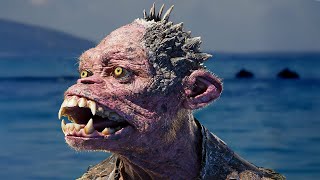
In this in‑depth Seamless interview, host Michael talks with veteran VFX texture and character artist Chris Nichols (Industrial Light & Magic, former Double Negative, Digital Domain). Chris recounts his childhood fascination with reptiles and practical effects, his journey from modeling to concept art and finally to texture painting, and how design fundamentals (composition, color theory, tonal value) underpin his daily work. He explains how concept art is broken down into surface references, the importance of a massive reference library and high‑resolution scans (Texturing XYZ, scanned fabrics, animal skins) for photorealism. The conversation walks through his staged workflow: broad color‑palette sketches, progressive detail via ZBrush, Mari, Substance, and V‑Ray/Unreal, balancing precision and flexibility, and adapting textures to varied lighting environments (e.g., Thanos under firelight vs sunlight). Chris details how subtle details—blackheads, scar tissue, calloused fingernails, goose‑pimples—add subconscious believability, and how performance capture informs skin deformation. He discusses collaboration across modelers, look‑dev artists, and supervisors, and offers advice for digital fashion creators on realism, material scanning, and leveraging cinematic lighting. The interview also touches on cross‑industry inspiration (gaming, real‑time engines, traditional makeup effects), teaching and mentorship, the impact of AI and real‑time rendering, and his personal favorite and most challenging projects (Thanos vs Corn Monster). The dialogue highlights the convergence of VFX and fashion tech, the need for continual skill updates, and the value of practical craft alongside digital tools.
Chapters
Hello everyone and welcome to another Seamless interview. Um, today I'm really, really pleased to be joined by Chris Nichols, who is a texture and character artist. He's also the man behind a lot of, uh, big characters that we would know from a lot of films. I myself am a Marvel fan, huge MCU fan, and Thanos is one of the characters amongst many that Chris has worked on. So Chris, welcome, really looking forward to speaking to you today.
Oh, thank you, Michael. Glad to be here.
Well, look, let's start, um, off simple. Um, please, can you introduce yourself and tell us a little bit about your role?
Yeah, so as you said, I'm a character artist. I've been working for about 20 years, mostly in the visual effects industry. I've worn a few hats over that time. I started off as a modeler, then I switched to a texture painter, and even for a few years I was a concept artist. These days I'm primarily doing textures again, and it's— I found that's the area of expertise that I sort of thrive in and I really enjoy. So I've worked at lots of different studios over the years, like Double Negative, Digital Domain, but these days I'm working for Industrial Light and Magic in Vancouver. Amazing.
Thank you very much. So yeah, let's dive into that a little bit deeper. So, you know, from characters like Thanos, who I already mentioned, Morbius and Alien Queens, you've helped bring some of the most iconic CG characters to life. How did your journey really begin and what originally drew you to the art of character creation and surfacing?
Well, I grew up in the '90s and I was a big fan of the Ninja Turtles as a kid. And besides that, I, I lived on a farm in Australia, and when I was little, I was just obsessed with amphibians and reptiles. And I always spend my days trying to find lizards and frogs, and I collect them and bring them home and put them in tanks and, you know, raise tadpoles, that sort of thing. And, um, my dad's a veterinarian as well, and so I always grew up around animals. We'd have wildlife that was injured that we'd get brought into the clinic and we'd sort of nurse it back to health. So ever since I can remember, I've always had an interest in nature and creatures, especially reptiles and amphibians. And some reason I have this like obsession with the surfaces of, of weird creatures and anything that feels mythical too. Like I've always been a big fan of fantasy. I grew up playing Warhammer, that sort of thing. And so anyway, when I went to school, like, I grew up in Perth, which is West Australia, like a very, very isolated city. And so Hollywood just seemed like a distant place that I, you know, no one ever even would think about joining the industry there. But, um, when I was going to school, I was doing graphic design. I thought that was going to be a nice sort of safe bet for a creative person like myself. And so, um, around that time, that's when you had The Phantom Menace came out around '99, and then also there was the Lord of the Rings trilogy. And this is where CGI was really hitting some serious innovations with creatures. For the first time, we were seeing living and breathing, talking creatures that looked really believable. And, uh, I think that was at the point where I was just like, oh, this, this— I have to figure out how this is done because I think this is what I want to do with my life. I want to, I want to be making creatures for films. And it still seems so impossible, like I had no contacts whatsoever, there was no direct path to get there, um, but I, I just knew that if I, um, if I tried, I could, I could eventually start to work on these kind of creatures that I was seeing on film and be a part of that process.
Amazing. Well, you obviously tried very hard because you, because you made it. As I said, you know, I keep on saying, and I'm sure I'll keep on saying it throughout the interview, you've got an amazing, uh, backlog of characters to your name, which is great. And The Phantom Menace, I was younger when that came out too. That was kind of my first intro to the Star Wars franchise. Absolutely, absolutely loved it. I think Jar Jar Binks got a lot of hate and didn't, didn't do deserve it. I'm still waiting for a spin-off, a Jar Jar Binks spin-off. Perhaps that can be your next pitch. Jar Jar Binks spin-off would be great. Um, and you've kind of already, uh, touched upon this, but obviously on paper, I guess, the transition from motion graphics into character design might seem like a big leap. Um, did your background in design influence how you approach, uh, character surfacing, or the way that, uh, you sort storytelling with the characters that you create?
Yeah, because it gave me, um, it gave me a foundation in design, and I use that every single day of my job. You apply those foundations in a way, uh, like if you think about the structure of something, you have to think about the composition, uh, you think you have to think about color theory, about tonal value, All those things are intrinsic to texturing. And so I learned all that when I was doing foundations, when I was doing color wheels and things like that back in school. And I remember thinking, I was like, how is this ever going to relate to my job? When I left school, I was like, did I learn anything? I think I did, you know.
I think, I think we all, I think we all felt like that when we left school.
But as it turns out, it's become very necessary to, to textures and everything really, anything art related. It all comes down to those foundations. If you don't have a good foundation, it's very hard to be, um, to excel at your job in, in any sort of artistic field.
Absolutely. And I probably should have mentioned this at the beginning in the, in the intro too, but of course when I reached out to you, Chris, one of the things that you had asked was why would the, uh, a readership of Seamless want to hear from me, like, what is the crossover? But all of those things that you've just said, I think whenever it comes to any piece of art— and clothing, I think, is 100% art, there's a creative process, uh, behind it. And now with all of the digital technologies that are available, um, to digitally reproduce photorealistic garments before they're even made, I think, uh, you know, in terms of texture, photorealism, color, lighting. There is so much crossover between film, um, and the clothing industry, so that's exactly why I wanted you here today. So this is going to be really, really fun. Um, you mentioned that you've obviously worn multiple hats, so you've been a modeler, a texture painter, look dev artist, a concept designer. How have all of those hats helped shape your— the way you approach a creative, uh, pro— project from the beginning?
Yeah, well, just being a concept artist for, um, you know, a few years, you know, usually when I was a modeling and texturing artist, we'd always start with the concept art that would come from production. And your first, uh, the first bit of what you want to do is try to break that down and analyze it and try to work out how you're going to interpret that into both the forms but also the texture, the surfacing, that sort of thing. So, um, I think like when I started doing the actual concept art, and, and, you know, that's its own thing in a way, but, um, I think what it does, it helps me sort of streamline the process a bit more because I can interpret surfaces really well. Like anything that's 2D, I can sort of break it down into its components and start to find really, um specific reference. And references is the bedrock of, of doing any sort of texture work. The more you have, the, the quality of the reference really is going to propel you forward. We're always working on, on a time scale, and it's usually— it never feels like enough time. So you really want to try to get to 80% as quick as you can. And so you've got enough time to really polish it. And so I think you are really trying to get something in front of your client, in front of the supervisors, that is going to provoke a reaction, whether a positive one or a negative one. That is really important. Sometimes the, like, I don't like that at all is better than I kind of like that. Because if you can eliminate everything it's not, then you're left with a smaller pie of what it should be, and you can really start to develop it from there.
That makes sense. I also— I've noticed a lot in recent years that there are CGI-oriented, um, films that they kind of do a pre-release to see how the viewers are going to react. And I don't know whether that's a tactical thing or whether they do it, and then because of the feedback they get, they're like, oh, we probably should go back to the drawing board with this or tweak it. How, how much of that— I mean, and I don't know if you've had that with the characters that you've worked on, but how much of that kind of releasing it to the general population is part of kind of like a tactical feedback loop, and how much of it is just let's get it live and then, oh God, we need to tweak?
Well, considering how much money gets spent at the front end I don't think it's ever a marketing technique, even though it quite often turns into that. It's a great way to get attention, right? If a character that's basically finished and in trailer shots has to go back to step one again, that's very, very costly to do. We've seen it happen over in the last few years where they've literally scrapped a design and gone back to, you know, the redesign to the initial concept. And, uh, I, I mean, it's a lot of it is taste as well. Like, you know, what doesn't work for you can work for somebody else. That's just natural. It's, it's not necessarily objective. But, um, I'm, uh, luckily it's never happened to me. Um, I, I've, I've been fortunate enough to work with very great concepts and, um, and they've translated really well to the final design. And maybe I've just been lucky, I'm not too sure, but I have a feeling it has more to do with sort of the very short timescales that films are being made these days, where things get a little bit more rushed and maybe there's not as much confidence there. But I really can't speak to that part. Like, I'm in a very niche part of the pipeline, so I'm only really making an educated guess.
Yeah, it makes sense. I'd love to talk to you a little bit about how you collaborate, because presumably at the scale of the briefs that you are part, part of, there's a lot of people that are involved. And I think, you know, a lot of our readers work within brands in creative roles. But obviously, if you're creating some form of digital asset that's going to be used in some way, it does touch upon a lot of different teams across a big value chain. Do you have any tips as to how you approach that and working with very, very different people perhaps across the, the chain?
Yeah, as you said, it's a very collaborative medium. We take our notes from the client, right? So we get a brief from the client and usually the concept art is quite vague a lot of the time. It's good to keep it vague because then a lot of people can bring some ideas to the table and you can pick and choose which ones are best. But I tend to try to use my toolset as best I can to, like I said, quickly get a reaction. So whether that is doing a paintover or picking specific reference, putting it around the concept art so you can be like, is this the direction we wanna go in? Or we could try this and this. And there's usually a little bit of time to do a bit of experimentation as well. And this is where I'm going to be working with both the modeler and also the lookdev artist. So one's upstream, one's downstream from where I fit, but you're talking to both of them and making sure everybody's on the same page and trying to communicate very clearly about where you think it should go and get their feedback and take that on board as well. Because the— you're working with very experienced people, right? You're not— no person's an island in the visual effects department. You really want to sort of learn from your, your, uh, your fellow artists and also listen to their feedback. And that's usually where you get the best results, because when you put your minds together, you don't want to just kind of go off on your own and do something because it may not fit into the bigger picture. Um, so that collaboration is just as important as being good at what you do. I found.
Absolutely, yeah, couldn't agree more with that. Um, I wanted to also, um, ask you a little bit— you mentioned a moment ago, I mean, I guess with any kind of digital art you're looking to evoke some kind of emotional and even a physical, uh, uh, response. And that is obviously a completely different scale when it's a film and it's on a big screen or a small, small screen at home. How do you go about taking that concept art and building emotion and storytelling into it. That must be a huge feat. So how do you even approach it, start it?
Yeah, I, I think that's the most fun part of the job really, is you're looking for the nuances, the little things you can put in that help further, like, with help with the storytelling. Like, for example, uh, I'll go to Thanos. Um, we, we were working off photographs of Josh Brolin, his performance, but you know, this creature is larger than life, and Thanos. So you're working with a purple-skinned creature too. So it doesn't exist in nature. And so you're trying to like work in all these subtleties to help sell the realism against something that's quite artificial. So one of the things that I remember doing on that was like, I put blackheads on the nose, I put tiny little scars in places. Really paid special attention to the crow's feet. I was trying to put tan lines in as well. So when, when the, um, when he wasn't scrunching his face, like, those crow's feet, they had a little bit lighter skin, as if, like, he'd been exposed to the sun. And over time, you see that, like, when you look at very tan people, generally the tan lines don't have as much pigmentation in there. So that's a little feature that I'm bringing in. Another thing was the hands of Thanos were very calloused, and I wanted to try to give this, um, this personality of a warrior, somebody that uses a sword, somebody uses their hands, so that the nails were like really cracked, the edges of the nails had a lot of callous detail, that sort of thing. And again, you, you're bringing qualities from the real world into a fantasy character, and that's what helps elevate it to something that looks believable. And I, I don't even know if the audience notices it, but it's more on a subconscious level. I, you know, it's a living, breathing creature, and the texturing just gives it a little bit more dimension.
Yeah, well, I've watched those films a lot. I won't say the number, but it is a lot. And now I can't wait to watch it again with this kind of new perspective too and notice all of these new things. Um, when, when you're given a creative brief, kind of what what clues are you looking for from that to inform those kinds of deep details that you then put into the design? It must be quite hard.
Well, the brief is— it can sometimes just be a bit of a description, but a lot of the time we have previs, uh, so pre-visualization. That's where they've already blocked in the film with, um, very simple sort of animation, but you can sort of see where the camera is going to be and sort of what kind of context the creature or the character is going to be in. And so that can really help inform you where to put the detail, like where to spend your time. Because if you never see, say, like the feet of a character, then there's no point in putting any work into that. Whereas if the camera is going to be right close up to the face or the ear, you need to be sort of making sure that, um, that's where, that's where you're focusing your attention. Um, but yeah, as, as far as the brief, like, you know, you're generally not going to get a very detailed backstory, but there might be a description about, um, what kind of conditions the creature lives in or the character lives in, whether it's a desert or some, like, a forested area or something like that. So you're always looking for cues of the environment that you can start to work back in. Say the creature is in a rainforest, it's a— maybe it's some sort of reptilian creature. Maybe you can add some moss or some sort of algae in certain areas to kind of, um, bring a little bit of that environment, a bit of that color into the creature as well. And so, you know, as you, as you start to develop it, you can start to see clearly what sort of elements to bring in and what to to not. And that can take a bit of time as well. That, that's the creative process. And, and a bit of it is adding stuff, and, but a lot of it is taking it, taking away. And usually what you're— the final thing you're seeing, you've— I've eliminated like a good portion of what I originally put in there to get the final result.
Absolutely. And I think, um, gosh, I, I can't even imagine from a creative standpoint the day that you actually finally sign off on the final thing, you must have just poured sweat, blood, and tears into the— into what, what, what finally goes into the film. I mean, is it, is it easy for you during the creative process to switch your mind off?
I guess I just know it's like when I'm in the middle of a creature, I almost have to eliminate what I'm doing outside of work because I'm in a very focused state. Where the best ideas are coming, and I sort of want to eliminate any sort of outward influence. So yeah, I, I, yeah, I definitely go into like a monk mode, I would say, where you sort of want to turn off all external stimuli so that you can, you can sort of draw stuff from the universe, you know. It's all, it's all kind of like, it's all out there and, and sort of getting fed into your head. Over the years, what I've done is I've collected vast amounts of reference of every conceivable thing. And I have them in photo libraries that I can always go back to. But a lot of it I've stored in my head as well. So if I'll see a concept, I'll be like, oh, I know exactly where to look for a photo that's going to be a great reference to follow. And so you'd categorically store them. And I find that's really useful to do. Anybody that wants to be a texture painter, I think they should really start to build a fantastic library of reference that they can draw from.
That is a very, very good piece of advice for our readers too. And I want to jump into that a little bit. So as I mentioned to you when we initially started speaking, in the fashion industry, I'd say probably now for about maybe the past 10 years, they've really kind of dove a lot deeper into digital product creation and using 3D tools. And funnily enough, Apparel has really been impacted by the film industry because of course a lot of CGI and texture work goes into the clothing that we see on screen. So there's a couple of big technology providers out there now that have actually come from film and applied it now to the world of clothing. Footwear, not as much because as you said, the feet and footwear tend not to be something that we focus on a huge amount in films, but on the apparel side for sure. And so what I wanted to ask is, for those that are working in this space, that are a digital, a material designer or a digital product creator, what kind of tips perhaps would you have from your world about how they can really approach the realism of a fabric-like surface that they're working with?
Well, with realism, A lot of it comes down to what your sources are. Like, we, we're very fortunate these days to have access to a lot of scan surfaces. There are several companies that sell very good quality scans of virtually anything, any sort of fabric, whether it's leathers or, or fabric like cloth, that sort of thing. And, um, and so having a library of all that material is, is really important to getting that realism. In the old days, we would be trying to take photos of, of fabrics and try to, um, do a treatment on them so that we could use them in CG. But now we're getting real scans, and so as a result, you can put the camera anywhere on a character's clothing and it holds up to camera because it reacts to the light exactly the same way as real fabrics would. Obviously there's a lot of sort of look dev tricks that make that happen as well. But I mean, for me, I always say, like, as far as a— let me think— I think nature's always a biggest inspiration for me. You know, like, whenever I'm developing something that's quite fantasy-esque, it's always good to bring in some element of nature, whether it's something that's evolutionary like camouflage or defense, but just the coloration, the transitions, that sort of thing. I think that's something that is always like really impressive to see, even if it's on a fabric or a skin surface.
Absolutely, nice, thank you for that. And during our prep chat, you had mentioned that your methods often involve things like layering displacement color maps, micro detail skills, sorry, scans. Could you perhaps break down a little bit your surfacing workflow and how you use tools like Mari and Texturing XYZ to help evolve that process?
Yeah, so I like, it always pays to start quite broad, I think, get the broad strokes in first. So Usually when we're working on the creation of something, we want to work in stages so that we're not getting too specific straight away. We're keeping it nice and loose and trying to gauge our client's reaction to it. So generally, I'm going to start with a color palette, picking that and maybe breaking it up using patterns or transitions, gradients, something that's quite broad and but still has the feel of the concept that you want to, you want to retain that feeling. And then when you're, you're at a point where you're getting approvals or a good reaction, then you can start to get the realism that like where you can put the camera right up close and it holds up beautifully, it reacts to light correctly. So that's where we start to use, um, either ZBrush. So ZBrush is a sculpting app that we can start to actually use, uh, different tools like scans or pre-made brushes that we make ourselves And that gives a lot of the medium frequency detail, say like wrinkles, um, or, or like folds of the skin, that sort of thing. And then we have access to, um, very high fidelity scans like I was talking about. Texturing XYZ is one of these companies that makes the best, uh, high resolution scans of any surface, and skin being one of them. So they have vast libraries of animal skins, from bat wings to ram horns, any, any type of reptile, like crocodile skin. And it's, it's wonderful because it's very high resolution, so you're not limited to, um, you know, the quality of, of the, uh, of the surfaces. But rather, you, you want to sort of use it as a tool. You don't want to just sort of rely on just the scan, but you sort of— it's better to sort of use crops of it and mix and match with other surfaces too. And that's how you get a really nice high-fidelity surface. And that technology is really quite recent. Like, before we had to use a lot less fidelity in our texture work, but then again, we weren't dealing with 8K cameras, so it wasn't as necessary. Now there's no place to hide. The cameras are so high fidelity that we have to put more detail than ever to sell the believability.
Absolutely. So again, on tech, I know you use Mari, which we've obviously spoken about, but I know you also bring in things like Substance and V-Ray procedural node workflows as well. How do you decide when to lean more into precision versus flexibility with the assets that you're creating?
Precision versus flexibility. Well, um, it really depends on what you're trying to create. Like, a lot of the time it's quicker just to use a pre-made preset, and you're not really going to get much more out of it if you're just trying to rebuild it from scratch. There's no point in re— you know, in reinventing the wheel. So a lot of those presets are made to sort of speed up the process to— like I said, you want to get to 80% as quick as possible, so you've got enough time to do the 20%. So like, if I can just sort of expedite that process to kind of speed it, speed it up, I, I always look for quick ways of doing that. Substance is a great way to get a result really quickly, but then I like to be able to work on top of it. I have that flexibility so that I can work extra details in there and change a few things to really kind of fit a vision or try to match some sort of reference. So, um, yeah, those tools are great, but like I said, I, I don't really want to be relying on them, um, 100% of the time. They're just there to sort of get to a place quicker, uh, with a certain bar of quality in place.
Yeah, absolutely. Um, you touched upon, uh, realism and lighting a moment ago. So a character like, uh, Thanos has of course got to look photoreal under a huge array of different environments. How do you maintain that realism across all of those environments?
Yeah, that's a really good question because obviously Thanos is purple and purple changes a lot based on the lighting. So if you're in a dark environment and if you're getting lit by, say, like firelight, then those colors are going to change a lot than say the character is in a sunlit environment where you got the purples are going to go more to the pink range. Um, there's, there's a lot of tricks that we use. You know, we have full access to the coloring comp, but you generally want to try to look dev a character so it works in all the environments, whether that is tweaking the values a little bit to try to brighten things up or get it to work in a neutral environment first. But there's always a little bit of room to finesse everything so that, um, you can tweak the color spectrum a bit or the values, uh, once they get into a compositing package like Nuke, right?
And, and what's detail— what's, uh, one detail that you're most proud, proud of the audience is— sorry, what is one detail you're most proud, proud of that that audiences perhaps didn't even notice on screen, but in your mind made all the difference for believability?
I'll probably have to go back to Thanos. Like, there was, there was just so much detail everywhere. We had so a lot, we had a lot of time for that character. And so I had the, I had the time to really go to town, like even on the goose pimples around the neck, you know. And again, I was using scanned surfaces of like real people's necks so I could work that into the surfaces. But, um, I, I, I think that stuff, like I said, you probably wouldn't even notice it unless you were looking for it. The calluses on Thanos's hands, the, the broken fingernails, that sort of thing. But I— that's what I love to do. I love to have a little bit of time to really put that, that work in. And I always think it helps a character look just a little bit better than it otherwise would.
Absolutely. Do you actually enjoy the films when you go and watch them, or are you sat there critiquing your own work? Can you relax and take it in?
Well, I always find the films are better if I don't watch them for like a year or two, but usually I end up going to a crew screening or something like that where everything's still really fresh in my mind, where I'm like, oh, we should have like, you know, done this or that. Yeah, I don't— without getting too specific, there's always like this and also comparing the other visual effects studios' work, I'm like, oh, that, that character looks so much better. Like, what did they do that we didn't? Um, but yeah, like when you can take a step back and rewatch it and you sort of forget all the, the pains of going through a production, I always find, uh, I, I'm like, oh, it's not as bad as I thought it was. Like, actually, you know, it looks a little better maybe than I initially thought it did. And so, yeah, it's funny, I, I, I like to give a little bit of time, and I usually come away with a bit more of a positive reaction. Good.
Well, as I said, and I'm going to keep on saying this, as a fan, I think you did a great, a great job. Uh, it was, it was, it was amazing. Um, what role does performance capture play in helping, uh, digital characters retain emotional, uh, resonance with the audience? And how does your work support that invisible layer?
Yeah, well, um, the fidelity of that stuff has gotten so good in recent years, like where studios are now able to analyze stuff that never used to be, um, available, like the way skin stretches over a surface. So for example, the way maybe an actor has a nuance to the face where it's pulling the skin or it's Like if I'm raising my eyebrows, the way that the skin bunches up here and it's pulling the, you know, the muscles of the face is pulling the skin up. And so that's the sort of stuff that we can start to work into the digital characters now where we're really able to pull all that performance capture and not just get the base form animation, but also the secondary and tertiary stuff And just adds like another level of believability to the overall result. So I think that stuff is really impressive. So as far as textures go, like I remember with Thanos, we were definitely working in some of the very, very high fidelity, almost structural detail to the skin so that it would stretch and bunch depending on what was being fired by the animation. There was some really interesting techniques that were getting used to sort of drive that. And again, it's one of those things that an audience member is not going to really notice, but on the subconscious level, it does give another 10%, you know, like, yeah, a little, a little increment of dimension that wasn't there before.
I'd love to ask you this. I know it's a very abstract thing to ask, but if a fashion brand was to approach you and really want your help on some form of virtual campaign, how would you go and approach the surfacing of garments and avatars to make it feel kind of like truly cinematic?
I think I would try to find something that really fits into a fantasy space, something that you can really only do in, in a digital realm like this, this sort of age we're living in with the metaverse and digital avatars, that sort of thing. It sort of opens up a whole new world of what you can do on a fabric that possibly you couldn't do in the real world. The way that the surfaces react to light, what sort of qualities are built into it, something really interesting, whether that, you know, maybe it's an iridescence that I would take inspiration from fish, like, as an example, something that's very hard to work into a surface but is intrinsic to the surface of, of certain animals, biological animals, bioluminescence, for example, as well. Like these are the sort of things that I would probably really enjoy trying to work into a fabric, something that just you can't get from a textile workshop, from real life.
Yeah, absolutely. I love that. Um, and you know, on the topic of other industries, um, are there any other industries outside of film that you look to for inspiration or technical innovation? Uh, you know, be that, uh, gaming or art architecture or another creative space?
Yeah, I— in recent years, the game industry has moved a lot closer to the film industry, and I, I even spent a couple years working for a game studio, and, um, I found I wasn't really having to change my workflows and techniques that much because it can now support the fidelity of films. And so I wasn't having to make compromises that I thought I might I was still using the same tools— Mari, Substance Painter, ZBrush, all that. And instead of working on, uh, like an offline renderer like RenderMan or V-Ray, it was all done in Unreal Engine. And the fidelity was fantastic, the lighting was really realistic, except it was all real time instead of having to wait for a render. So that's really exciting, I think. You know, that, that's still moving at a pace as well. The development's there, still getting better and better. And there may be a day when we don't use offline renderers anymore, it's all done real time. Um, definitely speed things up. Um, but yeah, you know, there's still some hurdles to go, but we're definitely heading in that direction. But I, I find that really inspiring that we're getting to a point where we don't have to wait. Um, we're seeing our results in real time, and as a result, we can do iterations much faster and come up with better results.
Yeah, absolutely. The Unreal team actually attend quite a lot of our events because they've got a fashion apparel and footwear side to their business. And it is amazing the kinds of things that they are doing. And it's great that they're translating that kind of tech because to your point, to the speed and the fidelity of what it can spit out is amazing. We're almost at time, so I'm going to speed up a little bit. I know, or I believe you also teach. Is that right? You teach the next generation of artists coming into that space. Is that right?
Yeah, I, I've taught at a few schools. I taught an online course for a few years as well. And these days I do sort of more one-on-one mentoring when I have the time. Yeah, but I, you know, I, I really love my job and texturing, and I feel like in recent years the visual effects industry has got a bit of a bad rap. And I, and I still think it's a very wonderful space for artists to grow in. And I try to evangelize texturing as much as possible because I think it's sort of, uh, it combines so many creative elements to it, and I'm really drawn to it. Like, I, I'm so lucky that I've found this niche and in this industry, and it's allowed me to thrive as an artist and as person. And so, and I see those qualities in, in other people too. Like, I just, I, I can usually sense when somebody gets passionate about texturing, and, and I encourage that. I encourage that because I think it's a very satisfying, uh, career to have in, in a very, uh, topsy-turvy world and industry.
Yeah, absolutely. I love that. One of the things we, we find in our community is that education just can't keep up with the rate at which the tech is now evolving. Is that something that you see in your industry as well? Or do you think the film and VFX side of things is a little bit more on top of that?
Well, I like— there's a— like with the AI, like AI is definitely at the frontier of all that, but there's a lot of— there's a lot of copyright IP issues still that is preventing it from really penetrating the industry and that all those kinks are kind of getting worked out. It's going to take a bit of time, but I, I think that's important for anybody that works, um, in, in the industry to sort of keep up to date with the latest trends and latest technology as well. So putting a bit of time into like learning new techniques or just, or just getting familiar with what is available, I think is really important. You don't want to get stuck in one mindset and using one toolset because it's just the nature of things are going to evolve. And you're sort of shooting yourself in the foot if you just decide that you're not going to touch any of that new stuff. Um, it's going to impact you and it should empower you. That's, that's what you should be looking at. It's just choose the stuff that you need and what's going to make your job better. And, uh, you know, you don't have to like learn how to code and, and, and sort of get crazy involved. Um, but I, I think, you know, It's important to, to be aware of the new trends and new technologies, but also it's really important to keep up with your fundamental art skills. Keep drawing and painting, study that stuff as well, because it all feeds into the end result.
Yeah, I cannot tell, tell you again how much overlap there is between your, your, your world and, uh, and the world of clothing. There are so many things that you've said during this chat that are exactly the same and will resonate 100% with our community because they've gone through the exact same thing. As digital tech has, um, has evolved and become easier to use for that community, a lot of people have kind of a little bit let go of the technical skills you actually need to create a garment by hand. And obviously, if you don't understand the tech design of how you're going to create something that can be worn and move in real life and stretch, uh, you know, you can do a great, a great job to create a digital garment, but the reality is, is that it might then not track translate into something physical. So I think again, huge amounts of overlap here. There's important that you retain the old skills and the craft that comes with that whilst adopting the new innovations that are coming out.
Yeah, I really want to emphasize that something that we didn't bring up during this interview was that a few years ago I went back and learned how to make creature masks, like as if, okay, like, like the ones you would see in practical films. Because I, I was highly inspired by like Jurassic Park, Stan Winston Studios, Rick Baker, all those legends that made practical stuff for film that would be put on camera. And, and that, you know, that's the predecessor to digital. Like, everything from, from that got translated into digital, and like how to make creatures and all that. So I really wanted to learn that stuff. So I, I spent a lot of money and time learning how to sculpt in clay, cast with plaster, and then using latex to make rubber masks, and then airbrush and paint everything. And it was such a great learning experience because I was, I was like, oh, this is the original texturing. You're like, this is how it was done back in the day where you sort of have to fake a look a bit more because you didn't have real translucency and phenomena that you have in digital. I say real, but it's, it's all fake, but you know what I mean. But, but just that process of getting my hands dirty and, and figuring out how to do pours and things like that in the clay was such an amazing experience for me because I was having to research how all that stuff was done by, by the, the artists of, of the old days, of the, of the sort of the golden age of, of special effects makeup. And, um, I, I think that it just made me a more well-rounded artist. And I think that's what you're alluding to, right, is you want to adopt the most, the latest technologies. Like, for me, probably 3D printing is also in there as well. Um, but also keep in mind about all the traditional arts as well, because again, it just empowers you and makes you the best you can be.
Absolutely, couldn't have said it better myself. Um, The final one that I will end on is, again, you've got an amazing and iconic lineup of characters that you've worked on in your time. Which one was your favorite to bring to life and which was the most challenging, if you're, if you're allowed to say?
I, well, I would say probably the most challenging, funnily enough, when I was a concept artist was, was Children of the Corn. I had to design the Corn Monster for a Stephen King film, and, uh, yeah, it almost broke me. It was so hard to get that right. Um, the, the other stuff I had a lot more support. Like, when you're a concept artist, you're sort of on your own and you're working with a director or producer, and you don't get to bounce ideas off people as much. But when you're in a visual effects pipeline and you're working on a creature you're having to collaborate very closely, and it's a support group because you can, you can get your good ideas out there, but also your, your bad ideas get sort of thrown to the wayside because of the reaction you get. And so I, I always find it's a little bit easier and you feel a bit more supported in that environment than concept art, where you're just like, how does this work? Is this good for you? No?
Okay, I'll do another design.
It can be very like, unless you're like a really confident person, it can be very sort of soul destroying. I would say.
I bet. I bet. And so that was the most challenging one. What about your, your most favorite character that you've worked on?
Oh, it's too hard to pick. I mean, it's too— it's got to be Thanos, right? Like, it was just such an amazing opportunity. And the results are so good, like, across the board. Everybody put put so much of their heart and soul into that character to make the animation look fantastic. The lighting, everybody, it was just like running at their highest level on that show. And it was such a pleasure and a privilege to be a part of that.
Absolutely. I, I can't even imagine what it was like being behind the scenes of something like that. But, but yeah, well, look, we're out of time. Thank you so much, Chris. I know you've got a lot on, so thank you so much for speaking with me today. As I said, there is a huge amount of overlap as technology continues to advance. I think more and more industries are starting to merge together in a weird way. So again, I think our readership will have learned a lot from you today. I will include your LinkedIn link in the, in the interview as well. So if anyone wants to reach out, I'm sure Chris would love to hear from you. And I won't ask what you've got coming up next because I'm sure it's all sealed, signed, sealed and under NDA. But I look forward to seeing, uh, what you work on next when it's out and released. So thank you so much for your time.
Oh, thank you, Michael. It's been such a pleasure.










