Tech Titan Panel: Facing Footwear’s Challenges Head-On | PTC, Kalypso, VibeIQ | PI Apparel
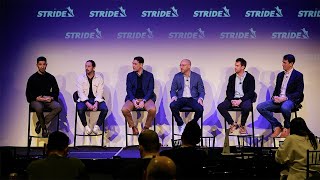
Footwear industry leaders debate digital transformation obstacles: 3D design adoption hits friction from technical complexity and data silos, while AI promises help with forecasting and waste reduction but has limits. Made in Old Town's campus model and flexible data systems emerge as paths forward.
Chapters
Happy to see all of you here. This is another amazing panel and we will be facing footwear challenges head on with a bunch of tech titans here. My name is Esteban Garza. I'm a manager at Calypso. I've been part of Calypso's retail and digital transformation team for over 10 years now. I'm also an active member of the 3D RCS Innovation Committee and I'm super happy to be here mediating this session. And it's great to see a lot of familiar faces. So as you all know, the footwear industry has always been on the cutting edge of style and performance, but is now facing some unique challenges from sustainability pressures, shifting consumer demands, the supply chain complexities, to the integration of technology like AI and the scaling of digital product creation. The landscape is— very rapidly evolving, it's changing. And today, you know, we have here an exceptional panel of experts that are all of, you know, a good mix of technology providers that are at the forefront of innovation. Each one of them, they, you know, they build a unique, they bring a unique point of view, unique insights and, strategies to overcome all of these challenges. I will let them introduce themselves so you can tell us a little bit about your background and what brought you here. Starting with you, Elias.
Awesome. Well, thanks so much. I know it's day 2 afternoon. We're going to try and make this as exciting and energetic for you all as possible because I think we're like the second to last before drinks and you all probably scuttle away to airplanes and leaving Portland. So I'm actually filling in for Noel Kinder, my fellow board member at Made in Old Town and former chief sustainability officer of Nike. And as a good board, kind of hop to each other when we need to. It's really a distinction to be here and an honor to be here in that capacity. A little unusual to have a real estate development project represented alongside technology providers, but I think it's also credit to the panel that This is an industry that's facing a lot of different challenges, and one of them is bringing everyone together and what that means from a supply chain manufacturing perspective. So I'm going to speak to that while here. Some of the rest of you might know me as the founder and CEO of Hylos and may have already met if you were here at the panel last night. Some of what we're doing at Hylos, that's probably more in line with some of the technology entrepreneurs we have on stage. But tonight I'm just going to represent Made in Old Town. So thanks for having me.
Alex Khan. Nice to see everybody. I head up sales at a company called Sirup. And at Sirup, we're helping fashion, apparel, and footwear brands leverage AI to manage their inventory better. So we're probably a little bit downstream from a lot of the folks here. We're less, less involved in the design process. But once you design those incredible products and you've got to get them out to market, We help whether it's your, you know, retail stores, planning, allocating people, ensure that they're getting the right product to the right store at the right time, which at the end of the day makes for a more profitable business. They can pour that, you know, additional profit, those additional resources back into your teams to help design cooler products at the end of the day. So I'll be talking a lot about the emergence of AI, again, less on the development side, more on, on, on on the inventory side. But again, great to be here. Thank you.
Hello everyone, I'm Ben Robbins. I'm the Director of Product for retail footwear and apparel at PTC. So I'm responsible for our PLM solutions in this space, as well as design tool integrations and reporting solutions.
Hi everyone, my name is Matthew. I'm one of the co-founders of VIKING. VIKING is a virtual try-on solution for footwear. This can be integrated into mobile apps, into websites, and also through AR mirrors.
Good.
Hi, my name is Brian Lindau. I'm the CEO of VibeIQ, joined here by Lauren Malpelli and Pam back at Buckingham somewhere. And we provide a software solution, what we call a digital product workspace, and it replaces tools like Miro, Excel and PowerPoint and let your teams come together— merchandising, design, product development— in what feels like a document, but it's actually connected to your product data so you can make better decisions as you're developing your product line and taking it to market.
Godri. Great. So as you can see, a great group of thought leaders. We will be discussing a little bit about some of the pressing challenges, issues that they are seeing impacting the industry. About exploring some of the latest technological advancements, the hurdles, and also the exciting future that lies ahead. We have a prepared set of questions as the rest of the panels, but we want this to be a dynamic dialogue, an open forum. So I'll encourage you to use the Slido QR code to submit questions, and we will do our very best to answer all of them towards the end of the session. So— I guess to get started, I think we can all agree that the footwear industry is being reshaped by digital transformation. At this point, most brands have started their digital product creation journey and they are now scaling to varying degrees of success. So I want us to reflect a little bit on the barriers of adoption. So my question to you is what can— brands do to embrace and scale digital adoption without adding complexity or restricting creativity? So what do you think it's still missing from current digital workflows? And I don't know, maybe Brian, you can kick it off.
Yeah, sure. Well, I mean, I feel pretty strongly that great products are made by people. And even though I'm a tech vendor, you got to get the technology out of the way. And I think 3D digital product development is an amazing idea, but it's very technical, right? And it's not easy. And so you create this giant 3D model and it's cumbersome and hard to move around. And I think just one of the— there's a friction point that's increasing a little bit. And there's other things driving this, but there's more data, there's more systems, there's more tools. And to move fast, you need to align your teams, communicate, make decisions and iterate. And I think 3D has presented new challenges in an already complicated environment when you're trying to align lots of people to get things done quickly. So I just encourage everyone to sort of think about a DPC workflow or digital product workflows partly about the model and the product that you're designing. But you got to bring back the emphasis on like, how's my team work together and how do I bring my stakeholders together and around that so we can make quick decisions and good decisions So you're designing the right things and putting them in the market the right way. So it's about people at the end of the day.
Yeah, that's smart decision-making for sure.
Yeah.
Uh, Matthew, I don't know if you have any thoughts on this.
Um, so with everything that we're doing, we require the, um, the 3D models in order to power these, uh, AR experiences. So, um, what we've seen is that sometimes we go to people that we're working with inside the companies and they like, will try and scramble to find where they can find a 3D model that's going to work with the technology that we have. And if they're not able to do that, then they'll start creating the 3D model through us as well. So then you've got a separate, um, you know, 3D scanning pipeline that's established away from what's been done on the product creation side. So, um, yeah, I'm trying to figure out whether that's you know, there are going to be two separate workflows in the future or whether it will align at some point. Yeah, that's a challenge that we're seeing at the moment.
Yeah, no, for sure. That's something that we've seen, you know, many of our clients struggle with and a question that they often ask themselves and are still trying to figure out. So you're not alone in this. I'm wondering—
yeah, I wanted to follow up on what Brian said, which I think that's a really important point. Design, I feel, is disconnected from production. And that disconnect is robbing a lot of possible cohesion and collaboration across teams. One case in point, how many factories are here today? One. One factory. Two. Okay, two.
Whole—
this— we're talking about 3D design here. There's two factories in the room. Design isn't self-serving. You have to make it, right? So I think that illustrates the point. That is the challenge. Until there are as many factories and suppliers in this room as there are design teams, DPC is on an island, right?
Yeah. Yeah.
Thank you, Alex.
I think it's a great point about the factories because right now a lot of DPC efforts feel purely additive. There's not a huge strong ROI for the designer user. The ROI is really downstream of the work they're doing. So creating incentive for those first end users to use the asset effectively, I think, is a challenge that we all just solve as tech, I guess.
Yeah. Alex? Well, I would just say that, and again, moving downstream, there is a disconnect between designers, planners, buyers, and so on and so forth. And we see it even within the merchandising org, different teams that don't talk, have broken processes at the end of the day, and leads to all kinds of inefficiencies. So it's across the board, especially as you get into larger organizations.
Yeah, no, that makes sense. Data silos, which brings me to my next point. I just find it fascinating that it all comes down to interoperability, which in my opinion, I think is one of the biggest challenges in the industry, especially with the countless product and design-focused technologies that are in the market today. 'Cause it's adding new tools and technology to our processes. It's very exciting having a new sexy, shiny new toy. But what we often see is solutions in place that are just creating additional work, data silos that are hard to integrate or just not using industry standards. And in the end, I mean, they're not adding value. So yeah, I'm just curious about the, Brands use PLM, they have e-com solutions, 3D authoring software, and all kinds of data platforms, yet data often remains disconnected. My question to you is, how can companies unify product data for smarter decision-making? Maybe, I don't know, Benny, do you want to?
Yeah, I think there's really two fundamental approaches to trying to unify and harmonize data. The first is like the classic hub and spoke. We have a master data management system that data goes to, it gets normalized and then is federated out to other tools. As technology advances, that's not a hyper-efficient process. And having tools, you know, like, like Brian's and, and others that can understand and read data in real time from other systems using more modern technologies brings that information closer to the end user. So they don't have to go to a reporting tool or Tableau or something to make a decision. It's accessible immediately to them. And as we can continue to make data closer to the person at the time they're making a decision, they become more effective. So, you know, standardization in service technology, standardization in file format understanding helps us bring that information closer to users.
Yeah.
And really that's what we primarily focus on in terms of interoperability now.
Yeah, yeah, for sure. I mean, we just, we keep building this process that spans multiple technologies, different functional areas and sub-processes, and really integrating them, having them work together properly is the key for success. Alex, I don't know what you think about this.
Yeah, I would say that at the same time, it doesn't have to be like an enterprise-wide undertaking. Right? So in our world, we work with a few of the brands that are here, Salomon, Decker's, Abercrombie on the apparel side. It's a lot to ask organizations of that size with the number of legacy systems that they have in place to unify their data, right? To move their data to a single environment, a single tech stack, single approach. What we will do though is we'll find areas where we can access useful data. So for us, we need like transaction data, inventory data, these kinds of things. We take that and we end up kind of homogenizing and unifying that data for them and turn that data into actionable insights that they can take very, very easy decisions based on. So I think the opportunity there is to kind of cherry-pick where there's useful data and leverage that rather than waiting 3 years to transform your entire—
Yeah. So more like identifying what those key use cases are and starting there.
There's a ton of value that can be unlocked with just these small projects.
Of course. Brian, do you have anything to add to this?
Maybe an observation and then an idea. Observation one, we started VibeIQ in 2020 and it seemed like things were getting really interesting from a technology standpoint. And what I mean by that is there's new, new tools coming on the market. It's getting quicker, easier and easier to make software, which means new software companies are appearing. There's a whole lot of AI software out there. I'm sure you guys are trying lots of different tools. So every time you try something new, you're creating a new silo. Right? There's a new— I got an image over there, I got a conversation happening over there, I've got a file that I sent through Slack, I got a file that I sent through email. Anyone use Slack and email and Teams and can't find anything? Like, is that just me? Um, so I, I guess my observation is that I think there's more silos forming every day, and that I think that trend is going to continue for a while. It's like today, any, anyone in your company can sign up for a new software tool Maybe you don't want them to, but they can do it, and it's usually free. And then suddenly they're like sending a link to someone like, "Hey, check this out." So that's a problem. But I think an opportunity that everyone should be looking for is like this kind of highly flexible, very free, like every person can kind of work the way they want. I think that's a good thing, right? Like when you force a tool on somebody, they kind of reject it. And then they jettison out to a document or monday.com or Airtable or something. I think we should all be looking for ways to promote the flexibility, but then find ways to turn that data into enterprise data. I like to say, like, so much of your company data is not in an enterprise system today. It's somewhere else. But the opportunity, I think AI can play a big role here, is to turn that data that's all over the place into enterprise data somehow. With, you know, tech like OpenAI and so forth. And that's an undercurrent, a theme. I think that's a transformative thing that could be around the corner for us is that some of that problem goes away so you can provide flexibility to people but still leverage the data inside your enterprise. I know it's super vague, but that's something I'm excited about as a technologist.
And I see—
I just see progress coming there every day and it's exciting.
Yeah, can I follow up on that point with— I mean, I think we're talking a lot about data in an abstract. I want to humanize it for a second because data exists in silos, but this is an industry that already has human silos and is built like product creation. You're going from a designer to a developer to engineering to all the different material suppliers that you have to bring together. And I think we've realized something now more than ever. When we let manufacturing go overseas, we let manufacturing innovation go with it, and we lost control of a lot of those silos to the point where we have to send teams every 6 weeks over to get done in 2 weeks what all that's concentrated in that season and bring it back. Right. And so where the ability to bring together new, different, new suppliers, new techniques, new technologies in-house or close to house and actually be able to change the way you're thinking about building a product is, I would argue, as important as the digital traces of that. And obviously there's not a really firm separation these days, but that is what Made in Old Town is built to do. So for those in this room who don't know about the Made in Old Town initiative, we're building a 323,000 square foot campus for foreign apparel innovation in Old Town Portland, just across the river. And it is bringing brand suppliers and vendors together with factories so that those silos are broken down. And you can, by driving in 5 minutes, have the interactions that you normally have to fly overseas for, and you can thrive on that proximity. So silos are dissolved with proximity in the physical sense. And then how can proximity in the digital sense further erode those traditional, I think, barriers. And I'd love to see that kind of a dance. And again, I'm the, I'm the real estate developer here and in the— with the non-HILOs hat on for a second. But I want to— I'm wondering how we can mirror that because these digital silos also have physical impact and whether it's on a supplier and all the— no one's talking about, you know, the data that suppliers have or the manufacturer and how that's going to be connected. So How can we bring that together? Is that part of the enterprise or not? And how do we think about that across the various parties on stage?
Yeah, no, I think you make great points because it's not all about those technology components and the data silos, but also the, the model that is supporting the entire process. Yeah. So, well, I think this one, this is an easy one to agree that integrated product ecosystem is fundamental for transformation and for to truly harness the power of 3D. But another technology that is, as we heard yesterday many, many times, another technology that is making it— expanding the realm of possibilities is AI. And not just in the footwear industry, but pretty much any industry you can think of. In our case, it is allowing for more creativity, for more experimentation. You are able to create design options for ideation very quickly or analyze market trends and consumer insights just to identify, predict future demands. The possibilities are endless. So what I want to hear from you is what's real today from an AI perspective? What is really making a difference for footwear brands and what is still maybe overhyped? And I don't know, Alex, do you have a point of view?
Yeah, it's a great question. And actually one of the brands that's here that we work with had a hypothesis that social media was driving a lot of demand for their products. And this is a product that's actually— well, if we don't wear them, I don't know if people are the right age, but their kids probably do. My kids certainly do. Sorry. Again, the theory was, though, that social was driving that, or at least to a great extent. And one of the things that AI allows that historical approaches to things like demand forecasting could not support is the ability to bring in disparate data sources. So not just looking at last year's sales or, you know, comp sales or what have you, but looking at things like weather, social, local events, pulling all that in and letting the models figure out what's relevant or not. In that case, one of the insights that we were able to uncover for them is that social actually had very little impact. So I think the promise of AI in that case is not just to help you forecast demand better, but to tell you what's signal and what's noise. So pretty cool and pretty revealing for this customer.
Yeah, proper insights. Matthew, what would you—
Yeah, we've seen in the last, last year in particular, like a lot of tools to create 3D models from just a small set of images, and it's amazing what can be done now. But the problem that we have with that is that there's already been a certain standard that's been set from photogrammetry and 3D scanning, and I think that's what the end consumer, when they're interacting with these, with the 3D models, they're expecting it to be of that level. and these AI tools are not there yet. There's like, they're often missing the detail, or there might be something on the other side of the shoe, and if you only upload two pictures, then it's good, it gives you a rough idea, but it's definitely not something that, right now, that we see any brands implementing in their imagery or for immersive experiences.
Yeah?
I don't know, Elias, with any of your two hats. Yeah.
When it comes to AI, I think the, the evaluation of a technology is when it reaches a certain level of maturity, it becomes invisible. Right. Just, just ask yourself about electricity and how visible its use is for you. And the more we're getting really excited about AI, at least from the Hilo standpoint, is the ability to have these tools interact the way a designer is used to and wants to interact with product rather than forcing a designer to rely on CAD engineering, mouse clicks, points, and boundary reps to create something. And so the promise of dissolving the barriers between creativity in the physical world and creating something in the digital is to us the most profound. What I'd love to see is I'd love to see a design floor in footwear where everyone's desks are just wooden desks and there's no screens, there's no mice, there's no keyboards. Designers are sculpting with their hands in clay. They're drawing, they're shredding things up, and cameras and motion sensors can interact with that and actually have them be building digital models that are manufacturable that they're iterating with.
Right?
That, that's a future that I believe in. That's a future that I think is a little more Protopian than a lot of what we think about when we think about AI. And then if there— this kind of relates to the cutting down the silos, but there's this one question that keeps getting upvoted about the true cost of product, which if we can get to at some point, I think that's a really— whoever asked that, that's a really insightful question and would be an interesting one to hear everyone react to.
Yeah. No, you're— it's certainly an interesting model, again, and visual. And I know that all the analog people here in the room are excited. Yeah. Just listening to something like this.
One day I want Hilos to make beautiful wooden desks. It's not what you think of when you think of Hilos right now, but a future worth fighting for.
No, with AI, the possibilities are endless. But I guess another area where AI is making a big difference is a supply chain. As you know, with the increasing frequency of supply chain disruptions nowadays for a number of reasons, political instability, global trade regulations, and natural disasters, I mean, you name it, it's more important than ever for companies to have a robust planning system in place. And more and more retailers are using real-time data and predictive analytics to try to identify those potential disruptions and understand the impact. So I'm curious, how can digital tools, in your opinion, help brands tackle those challenges and enhance operations in this very highly variable market? What's next for the footwear supply chain? Alex, you want to?
Sure. I would say first off that no AI tool or system of any kind is infallible. Barbie Pink is the example we often bring up. I think it was 2 summers ago now the movie came out and suddenly everybody has to wear pink for a month or 2. No AI model could have seen that. I mean, I shouldn't say no AI model.
Don't you think a human could have seen that coming?
A human, maybe.
Right? Like, come on, it's Barbie. Of course everyone's going to wear pink.
Fair enough. Yeah. Yeah. But most brands, most retailers, miss that opportunity, right? And so something like issues in the supply chain, you know, unrest in a faraway country, these kinds of things, an AI model might not be able to pick up on that. What it will do, though, that brands and retailers need to be aware of is act as an early detection system. So even today, it's a different example. But when we work with companies that like Chase Products, Today, it's usually, you know, weeks, sometimes months before a retailer really recognizes that something that they've got is flying off the shelf. We'll hear anecdotal examples of it for sure from the field, but it can be quite a while before they've got like tangible information that they can actually action versus an AI that's looking at data every single day is saying, hey, there's a disturbance over here or something odd that's happening in this part of our business. What do you want to do about it? That kind of thing. And so the ability to react very quickly is something that is available today and will only get better over time.
Yeah, no, that's— I'm sure a lot of people are excited just listening to that as an opportunity for pretty much any brand. Ben, I see you're smiling. What are you thinking?
Oh, I was just thinking about how unstable and dynamic our current trade and commerce situation is and trying to use something that's inherently using an algorithmic model to try to predict Trump. I don't want to say it, but, you know, syrup goes up, the price of syrup goes up 400% overnight. And it's like there's, there's no math problem to solve there, right? So it's how can we give tools so that you're in a place where you're able to react to those sort of very dynamic changes instead of trying to predict the future. If your sourcing mix— when I think about sourcing problems, the two I focus on are changes in legislation for traceability and knowing where Tier 2 and Tier 3, etc., comes from. How do we make that easy and fast? And then how do we help our customers get to a place where their sourcing mix is as optimized as possible? So if something happens to cotton or if they have to move factories for whatever crazy reason might happen, they have early enough visibility to it so they can react without hurting their business.
Yeah, yeah, very, highly, as I said, like highly variable market. And I'm just happy that we're not in the eggs business. But I don't know.
Sorry, I was going to hop in here for a second. The things that even before anything going on with trade wars, this, this was an industry that is reaching an inflection point. And I don't think it was— it's a mystery to anyone here. Like, we're not going to be making things the way we're making them today. 20 years from now.
Right.
And when I was asked by someone from Target, why now for Made in Old Town, their— my answer was that the current generation of people that have built these brands, most— a lot of people in this room I recognize having built and come in early in their careers and evolved with these brands are retiring. And there's this huge draft of knowledge with them. At the same time, factory owners in China and Vietnam realize that they're no longer competitive just by making in China or Vietnam. They have to be able to make anywhere. They have to be able to make everywhere. And so there's this interesting once-in-a-lifetime moment for this industry where suppliers and brands are having to reassess how they work together and what that future supply chain looks like, where they're going to make, how they're going to make, what regional mix of products are going to be made where. And that requires really tight collaboration and being able to work with those suppliers and vendors on a daily basis as you shape new kinds of products to be able to scale in regions that are unpredictable, whether it's a Yemenite missile off the, off the coast of the Red Sea or something happening in Mexico. So it's not— nothing's going to happen alone. You're going to have to do that with your supplier base and partner base. How do you bring them into that conversation? And we're in this interesting inflection point. Before anything happened with Trump 2, that was already top of mind. So I think this is a really incredible time to be in the industry. It's an incredible time for everyone in this room to be a part of because we're— we've inherited something that's no longer working and we get to really have a say in how to build it better this time, how to build it more sustainably. How to build it more responsibly, how to build it for the betterment of our individual communities. That's an incredible weight. That's an incredible responsibility, but it's also exciting. That's what I think everyone in this room came here for. And that's certainly what Portland's stepping up for. Yes.
I mean, just an observation on the AI conversation. It's a great buzzword, right? And I'm not sure how long it'll last. It'll probably last for quite a while, but I don't think anyone here should be trying to predict hurricanes and their impacts on the supply chain, right? Like you can— we can imagine a world where you can predict that kind of thing. But there's a very tactical problem that we can focus on first. This is a shout out to Mary Grimm over there nodding her head. She said something earlier today about how if you have good data, then beautiful, beautiful things happen. Am I quoting you correctly? It's a nice headline to an article. But like, okay, so let's like just frame it for a second. I think AI right now is doing an awesome job with ideation. Ideation, like you can create concepts really fast. That's easy because you don't need a lot of data to feed into that. I can just say, hey, make me, you know, I would draw this or sketch that. But then this next thing that happens after you have a good concept and that's predicting price, margin, demand, things that are based more on information that's sitting around in your enterprise somewhere. And the issue is, well, it's right there in your four walls, right? Maybe it's in your suppliers' walls somewhere, but like, it's so hard to get to. So there's a huge opportunity to use machine learning and AI to predict performance or adoption or things that are much more close, but they just need better feed of data. We've got to tear down those silos. So, you know, I would say AI is a buzzword. Focus on the, the opportunity and the why. Right. And I think after conceptual design, which is prominent here, the next one is predictions about is this the right product to put in the market? Is this the right collection to put in market? And you have the data already. It's about getting it and operationalizing it. So, you know, there's— you've got like— there's like a spectrum between practical use, close, close opportunity, and then like what's around the corner. And they're all interesting. But like just segmenting your AI strategy into blocks like that might be a good way to kind of frame it and think about how to build a roadmap or where to make priorities, what to prioritize in your, your transformation.
Could that reduce novelty though? Like in a creative industry, could any algorithm have predicted the Air Force One, right? Like would have been a success? Would that have killed it in the crib? Where does that mix come in?
But yeah, I think you got to have a good blend, right? Like the— you got to think big and then you got to have like practical Roadmaps, right?
I think it starts with a roadmap, the right POCs, proof of values, just to make sure that you're going the right direction. But as I guess as we're moving downstream now, I'm wondering about the consumer experiences and marketing. So as we know, 3D and augmented reality have allowed brands to expand their reach, engage wider audiences, and you have immersive experiences that are bridging the gap between the offline and online. So just getting people closer and closer to product. So I want to know what's next for digital consumer or customer experiences? How has this technology evolved and how can brands continue to leverage 3D and other digital customization capabilities to engage better with the consumer. Um, Matthew, you want to—
um, yeah, I mean, this— the, the last few years, I mean, especially since COVID there's been, um, a lot of movement from, from brands to make 3D models available for immersive experiences, for AR, for 3D viewing. Um, and I think that's, it's just going to continue. It's like a, is a new way to, um, experience products. Our phones are super powerful now. We can, we can We have this technology that allows us to have these virtual try-on experiences or to view something in a room. And it's, I mean, when you're shopping online, that's the closest thing that you can have to being in a physical store. I mean, you know, it really does give you that full immersion that, you know, what we're seeing as well is that right now it's generally only for like a small portion of the catalog that this has been made available. But People are— we still have some customers who have got like half a million sessions a month, and it's just going up and up and up. So the end customer definitely also gets a lot of value from 3D there. I think the challenge that we've had is like inside these huge companies, like getting those 3D files shared across to the marketing team, then over to us so that we can enable these experiences for as many products as possible.
Yeah, no, that, uh, they're making great points. I, I just wonder, Brian, do you agree with Matthew's point of view there?
Uh, like the, the how hard it is to get 3D models out there? I mean, 100%. Like I said, I think I said it earlier, right? Like, um, I think that's the big opportunity in the DPC space is to make everything more portable, more accessible, more neutral, so things can flow. There's a lot of value opportunities that I think are just getting blocked because of that, whether it's the consumer or the supply chain or the, the merchant. Your digital asset is such a valuable thing. Putting it in the hands of people who could leverage it seems to be where a lot of the problem is today. Right. So it's an opportunity, I think, for like this group and the tech vendors to solve that hasn't been perfectly solved yet.
Anything to add, Alex, Ben, or Elias? No? Then yeah, let's keep moving because we want to make it to the audience questions. I guess my last question is just a little bit more broad because we've talked about a bunch of trends, but those are only a few out of many that could revolutionize the industry. So I do want to get your general thoughts on, you know, what do you, which trends you think will be the, have the biggest impact on the footwear industry in the next 5 years? You know, what are you the most excited about? And I'm going to challenge you to do it in a sentence or less, just because we want to make it in time for other questions with the audience. Who wants to start? What are you the most excited about?
I'm the most excited about bringing digital actual creation tools, not just design tools, to designers natively.
I'm very excited about the prospect of AI helping brands and retailers predict demand better such that there's a lot less waste going forward.
Laut.
The 2D to 3D technology and being able to get models from a format that designers are more comfortable and familiar with.
Great. The scaling up of and the availability of 3D assets and enabling immersive product experiences.
Yeah, maybe not the answer you're expecting. Ben, how many pairs of shoes do you have?
Couple hundred.
Yeah, shoes are awesome, right? So like maybe— and like as a product, like I think we're technologists, but like we build products. Building products is fun. If you're building shoes for a living, it's because you like making shoes. So how about just getting the technology out of the way so you can focus on the awesome part of footwear design? I think that's, that's happening. I like the table analogy, by the way. It made me want to be a footwear designer.
Have we all gotten tired of screens?
Let's go.
Brian put me on the spot, but I love sneakers, have forever. And the easier we can make it for people to make sneakers I want to buy, that's what we're going to do.
Yeah, you do have a shocking amount of sneakers. Yeah, that's been established.
Well, thank you. It's been a great discussion so far. So now let's get to the questions. I think let's start with the one that you called out. Has anyone on this panel worked with AI to calculate the true cost of a product? Discounts, discards, and other expenses to determine the actual margin?
We have looked at this. The tools used for discounts and returns are overly assumptive in my opinion, and I think initial cost and FOB is definitely achievable with AI, but true net cost I think is not quite precise enough to be effective.
I know of one, one brand that has net margins per SKU, which I don't know if anyone else can tell me a net margin per SKU. I know of another that's trying to build out what they're calling the total cost equation. But I've spending a lot of time with both of those teams and has really driven home how it was like, you know, the three blind men feeling the elephant. And then it's like, you know, they know what your gross margin is and you, you know what your blended sell-through is and you know what your discounting is. So AI aside, just through a lot of different work with other brands, we were looking to figure out what the impact of on-demand would have on the cost structure. So if you're making on-demand, what does that do to inventory costs through days in inventory reduction? If you're making on demand, what does that do to sell-through? If you're making on demand, what does that do through conversion rate? Because you have much higher availability across all SKUs online. So a big brand here that in Oregon might have on average 70% SKUs available online, sometimes closer to 50%, right? If you go from 50% to 100%, you can double your conversion rate, which is pretty exciting. And if you are, if you're a general brand, you probably have 75% sell-through on average. Blended sell-through and 90 days in inventory is kind of a good average. So all of that with about a 55% gross margin delivers a 15% net margin on average kind of across the industry. And that's, that's just without AI. So how can you then, you know, take that and allow for much more efficiencies in supply, be it closer to market, less days in inventory or higher sell-through so that you can invest more in your product and less in downstream waste. And that's what we were looking to uncover there. AI had nothing to do with that, but that's what we saw on an average for net margin. And I don't know if that's surprising to anyone here. You might already know that, but it was pretty impressive to see brands nail that to the SKU level. I think it's really important because you can't optimize what you don't measure. And if you don't know it's an elephant, how are you going to start eating it? One bite at a time, right?
Yeah. Metrics, metrics, metrics. Next question. I'm going to skip a few that are specifically directed to some of the panelists, encouraging you to reach out. But if we have time, we'll go back to them. Lack of interoperability between technologies has been a long-term challenge. Is there any movement in the industry to address this?
Yes, I wouldn't mind taking it. I just left a company over a year ago to join Syrup. And probably their number one mandate and number two marketing message after AI, of course, is around interoperability and, and trying to build like a common platform across all these different parts of the business for brands, manufacturers, retailers and so on. I, I'm no longer at that company and I'm very skeptical of companies that try to do this. I think the right approach is to work with best-of-breed vendors, but to figure out how to bring that data together in such a way that they can all work together in one relatively harmonious technology environment. To try to find one company that does it all is not realistic, at least at this point.
Yeah. And, and actually, I will do a shameless plug here, not for Calypso, but for the 3DRC. For those who don't know, it's a 3D retail coalition, and it's just a series of committees that are precisely working on this, multiple brands getting together and working in no competitive ways just to address some of these issues. So I will encourage you to join and learn a little bit more about this if that is something that you're passionate about. So next question. Functional silos, discrete tools, and interoperability. Culture is also a challenge. How would you influence risk change of our leaders to buy it? It's a good one.
That's a great one.
Spicy. Who wants it? Who likes spicy?
You got to make it worth their time. And we talked about it before, right? If I'm doing additive work to support DPC, then what's my incentive to do it? So if we can do things like turn 3D models into accurate cost and bill of materials, it gives people carrot and stick, if we can give them a carrot for doing and adopting technology, it becomes a lot easier.
I've seen this twice before where the brand has had a really— just someone who doesn't care, who is— who like I think Eric Liebke embodies this. He cares obviously deeply, but he's willing to take risks and push things through and the footwear industry. A CEO of a startup told me this once and stuck with me. Footwear is an industry where no one can say yes, anyone can say no. A lot of brands operate that way. And sometimes when you want to drive something new, there's just— it's this like cultural consensus that can be destructive to trying new things. And it takes— when there's a leader that sees the reward, knowing there will be failures along the way and can take cover for it and say, listen, just do it, I'll take the blame. Really magical things happened on the brand level. And I think we've seen that with a few different leaders, some of them in this room, some— a lot of them outside it. When you have someone that's just courageous and say, listen, let's try things. A lot of them are going to fail. It's okay, but we're going to fail. We'll get into something better. That's really exciting. So just about who you have on that team, that's the culture you want to instill, right?
Yep. So last question, and this is one for each of the panelists. So I'm going to challenge you again to do it in one sentence. What is the biggest challenge you face right now in your work? What keeps you up at night? Brian, left to right.
In my work, let's see, working with Lauren. Just joking. Best of luck to you, Lauren. I'll get, I'll get paying for that later. I think, you know, AI is as interesting as it is. What's the analogy? Like, don't skate to where the puck's at. Any hockey fans? Skate to where the puck's going. I'm not sure we know where the puck's going. So like, it's harder and harder to predict what's around the corner. And that's tough for a technology company. It's tough for a company deploying technology.
I think for us, the thing that keeps us up at night is how to help the companies that we work with scale the 3D asset creation specifically for use with our technology. And there's, you know, we've seen a lot of movement towards the assets being shared with us, but we still must produce them specifically for the application that we have. So there's still a challenge, but I think things are changing.
Mine's very similar to Brian's.
It's—
AI is hot right now, but what can we— what's going to be next and where should we go for the next step for all the AI options out there? So what's the best thing that we can spend our time on after that?
My semi-spicy take is that we're actually trying to, despite the fact that we are an AI-first company, we're trying to slightly distance ourselves from AI because you get bucketed in this AI stuff. It's generative, it's predictive, it's, you know, people are confused about how to leverage it within their organizations. What we're trying to do is focus on business value and not hide the fact that we're AI. It's kind of like, of course we're AI. I mean, of course you would be in this day and age. But as a result of this, like, just general kind of confusion around AI, this— we spend a lot of time and it keeps me up at night trying to show value versus just leaning on this AI concept.
No.
From the Mayden Old Town side, I think one of the biggest challenges is building Phase 1, opening Phase 1 of this campus is going to happen this year, and that's within a year of first receiving our first funding from the state and followed by city. So this is the fastest development project that has ever happened in Portland, let alone the PNW. And that's exciting, but you want to balance that with making sure that you're being inclusive, that you're curating all the right partners, that you're being intentional with everyone that you're bringing to the table. And so taking that responsibility really seriously and being intentional while moving quickly because the city and the state can't wait. The neighborhood of Old Town can't wait and the industry can't wait. And we're not one for moving slow. That's, that's one of the biggest challenges, but it's a, it's a fun one.
Good. Well, thank you. Thank you for sharing your insights and your passion for footwear. And thank you all for joining us today. I will just encourage you to continue the conversation beyond the stage. So feel free to reach out to any of us if you have any follow-ups or questions either here or through the app. So thank you.










