The Ethics of AI in Fashion | PI Apparel
The video records a moderated panel on the ethical, legal, and commercial implications of generative AI for the fashion industry. Moderator Craig opens by questioning whether AI will replace or augment designers, noting that AI‑generated content often feels generic and lacks empathy. Legal counsel from Salvatore Ferragamo stresses the importance of reviewing AI tool terms of service and securing warranties against third‑party copyright infringement. Sylvia Šumčić, who is building an AI‑driven pattern‑making tool, argues that AI will only replace "boring" designers and that authentic storytelling and community connection are irreplaceable. Elia presents a multi‑faceted ethical analysis, highlighting AI’s massive energy and water consumption, and discusses high‑profile legal battles such as the New York Times vs. ChatGPT, style‑copying controversies (Ghibli, Rembrandt), the Artist Rights Alliance, the Tennessee "Elvis Act" on voice cloning, and the Anthropic‑Universal lawsuit over music training data. She questions the fairness of style copying under copyright law. Various industry practitioners share concrete business use cases: AI‑driven demand forecasting improving accuracy by ~12%, over‑development reduction, and cost savings on fabric procurement; a photographer training a custom model to offer low‑cost AI‑generated shoots; and a merchandising lead describing AI tools that prune low‑selling style options to cut inventory. The discussion repeatedly returns to the need for clear contractual clauses (representations, warranties, indemnities) and the challenge of jurisdictional differences. The panel concludes with a call for collective responsibility to ensure AI does not reinforce narrow beauty standards, to teach AI empathy, and to involve diverse voices, especially for people with disabilities, in shaping AI‑generated fashion. The conversation ends with an invitation for ongoing dialogue.
Chapters
How is everyone? We, we, we were back and forth in email about what we were going to talk about because there's a lot of different expertise and a lot of different opinions and ideas here. And, and if you guys are okay, and if you're okay with it, we thought we would start with the creative aspect and the implications of AI and the ethics behind creativity. And do we think that AI is going to replace our design teams or help our design teams? And I said I would be the first one to talk. You're never going to get this microphone out of my hand now. And I am a firm believer that it's not going to replace creativity. I don't know how many of you saw some of the tech startup demos earlier. But I feel when I start looking at things that are AI-generated and when I read copy— I'm a trained journalist, by the way. That's what I thought I was going to grow up to be. And when I read these things, I find them very generic, and I find oftentimes the images aren't as exciting. And I don't know how many people in the audience have played with GenAI to create things, and it's very helpful. I was at a conference in England with the creative arts industries, basically filming. And so to create set designs or theater, to start creating ideas ideas for set designs. They know what they want. Here's a castle in Transylvania. Actually, I don't want as much sunshine. I'd like a little less. I'd like some rain, not too much. I'd like some darkness, not so much. And getting different ideas to then go to the designers to go, okay, here's the storyboard that's in my head. Now you please go make it and let people do the real work. So jump-starting it, but not replacing it. But that leads us to copying. And now I'm going to hand the microphone down because you guys have a lot to talk about in terms of the legality of copying. I mean, I talked about years ago a project that Adobe and Cornell did where teaching AI the style of Kandinsky— here's a photograph, interpret it— teaching the style of Picasso— here's a photograph, now interpret it— not filters, but learning the style of. Well, that can open up all kinds of legal ramifications, can't it? So here goes the microphone. I'll shut up now.
Thank you very much. Hi, everyone. I'm, as you see, legal counsel in Salvatore Ferragamo. So it's a fashion industry, luxury. And I deal with the intellectual property issues. And contract law on this matter. And what you say, it's complex, because my role is to be— to support the design team in using this kind of new, let's say, tool. But at the same time, we need to protect our company. And to understand what we can do and what we cannot do. So, as a lawyer, the first thing that I do is read the terms and conditions. So when my internal clients, so my colleagues, come to me and ask if can they use one or another tool, we need to start from the terms and conditions of each tool. Many terms and conditions talk about this issue, the copyright and the responsibility of using the output that come from— the output that is— we don't know if it's infringing third-party copyrights. So that's the issues. So you need to take the responsibility. So the tool tells you, you have the output, you can use the output, but I don't give you warranty on the third-party infringement. So this is our first issue, and we need to face with this. Is. For the moment, many fashion industry are trying to sign contract with company, with vendors and providers that give warranties. So this is, from my point of view, the first step in the approach to the— maybe from a contract point of view, but the first step in the approach of AI.
Can I? So I am Sylvia Šumčić. I see that here I am still working in Timberland while I left Timberland a few weeks ago to build a tool to use AI for pattern-making process. So not exactly in design, but I wanted to add few things about replacing these designers using AI, because the reality is that AI will replace boring designers and boring brands. If you are afraid that you will be replaced by AI, that means that there is something wrong in your process and there is something wrong in your design. And the real designers are storytellers, are connecting with their communities, and this is something that AI can't replace. It will never replace human connection. So if our brands are not working strongly on this, on co-creating with their customers, on being very close to their communities, this is where they can be replaced by AI.
Yeah, and just to add to that, the conversation earlier in the day about empathy. We buy based on an emotional reaction. What separates us from plants is emotion. Empathy is very important, and AI does not have that, right? It doesn't. It learns what we teach it. And I don't know how many of you saw when GenAI was asked to complete a photograph of Congresswoman AOC, and it was just her, her head, right? And I'm not sure if any of you are familiar with what she looks like, but she's very She's very physically pretty, but she's also very trim, and she's very feminine. But AI didn't know who it was, and it completed her in a bikini. She's a congresswoman. If you show a photograph of a man, he's in a suit. Where is it learning that? It's learning that from what we're posting on social media. It's learning what we're— you're part of feeding it, right? So when we talk about the ethics and what we're generating, what we're finding, and to your point, if it's boring and it continues to be repetitive without empathy, yeah, you probably shouldn't be a designer. You just shouldn't be, right? But how do we interpret what's happening in the world? How do we give that emotion? And AI doesn't do that. You wanted to say something more about the legal aspects of it, yes?
Yes, but I have some slides, so I can go there.
Yes, go ahead, go ahead, go ahead. I'm going to give this to you because you've been doing an awful lot in AI at your brand.
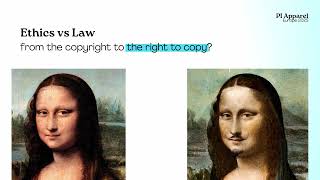
OK, so thank you, Craig, and thank you, Natasha, for the invitation. So my point is about, yes, the ethics of AI. And as Carlotta says, we are in a particular situation. We really don't know which are the new rules for this new era. And there's a lot of uncertainty about the use of AI tools also in the fashion sector. So I want to face just 2 or 3 points of issues from an ethical point of view. First two issues are about environment. So we know that AI is a very important tool, but it means that we have a very huge amount of energy consumption. There are some studies that are saying that the growth of the energy consumption of AI is equivalent to adding an extra country to the world. So in the best case, it will be like have Sweden more, or in the worst case, is like to have Germany more on our planet. The second environmental issue related to ethical aspects of using AI is also about the fact that AI is very, very thirsty. So we need a lot of water, and the water withdrawal in 2027 will be from 4 to 6 Denmark in the world. So I think this, if we want to discuss about ethics of AI, we have to start with these environmental issues. But as we said, we have also to deal with the problem of creativity. And as Craig was saying, which is the future? Of creativity. Are we— will be replaced by AI? I agree, maybe not if you are not boring as designers or lawyers. In my case, all the lawyers are boring, but you have to pardon moi. Anyway, we have some cases, interesting cases. We have this case, New York Times against ChatGPT. New York Times is saying you can't use our data, our articles, to train ChatGPT because these articles are ours, are covered by copyright. And so it's a sort of scraping war. We are deciding if it's correct to scrape data from all the web. Are we able to? Is it correct? Is it fair? Is it legal to scrape all the data from, from the website? And I don't know if you have seen these days, there's a Ghiblification. So all people are asking ChatGPT to do an image in the Ghibli style, in the Studio Ghibli style, the Miyazaki style. So in this case, for example, I asked ChatGPT to create an image of our beautiful location here and in the style of Studio Ghibli. And so here you see Lago Maggiore. The question is, from a legal point of view, and I think it's a very important question for fashion sector, is it possible to copy a style? Is it legal? Because in copyright law, style is not explicitly protected. So this is a matter we have to reflect. You see Sam Altman, the CEO of ChatGPT, with the image of Miyazaki, no? His photo profile. And so we have to discuss if we are moving from a copyright world to a world in which we have the right to copy. We have the right to criticize. We have to reuse data, information, and maybe sometimes some materials covered by copyright. And so we are facing a fight, a battle. So we have this artist, this Artist Rights Alliance. They are saying stop the value music because you use music to train algorithms and to produce new music. And they are fighting against AI. There's an interesting case in Tennessee, new law, the Elvis Act. You have this, there's a ban for the use or unauthorized commercial use of individual's voice for the sound like artists. We have a lot of hours of music on Spotify that are not made by humans, but by algorithms, but by artificial intelligence. And this is the last case I want to face today, and is about this lawsuit between Anthropic and Universal case, because Studio Universal says that you cannot use our music to train the algorithm. And the judge in this first phase is saying that using this copyright materials could be a fair use in case of algorithmic training. So we are in a very critical moment because we are deciding if we are shifting for the fair use of copyright materials for creating something new with AI. And so my point is, don't panic. So I agree with Craig because we cannot protect creativity against technology, but we need to enhance creativity through technology. Here you can see the next Rembrandt is a new Rembrandt created by artificial intelligence. It's a real painting. And a few years ago, a group of artists and engineers created this new Rembrandt. A new paint in the style of Rembrandt is a piece of art, of course. And I think so it's the future of creativity. Thank you.
Thank you.
And that's all.
That's a lot to unpack. Is it working? Yes? No? Yes. Yeah. Yeah. That's a lot to unpack because you covered everything from legal rights, right? And in the music world, in America, Pandora, Spotify, and the rest of the world, listening to music, knowing what you like, looking at that algorithm and then giving you more of what you like. And yet at the same time, not wanting to use music to train, but yet we all know, and many of us know, and the Eurovision Song is happening. There's a lot of generated music out there that comes from learning. So how do we draw the line? Do you want to address that a little bit between— what's there now and why we're suddenly becoming litigious about this.
So—
I won't let you talk.
Go ahead, go ahead.
Yeah, yeah, no, yes, this is the— I don't have an answer because this is a very, as I said, critic moment. So I think we need past music, human music to create something new, but we need humans. So we need human for prompting, for example, to say to AI what to do, to give the— to AI. So creativity is shifting from to use the maybe the instrument of the guitar, for example, to into the— to coding. So, but it means that we are not losing our creativity, our, our possibility to create. So it's something different, it's something new. And as you said, these are simply new tools. We have to to learn how to govern it. We have to learn for sure. So this is complicated for our minds. We are not ready maybe for this, but that's reality.
And I would add that every jurisdiction have different rules. So we need to face also with this issue because in, In the United States, the court may say what Elia said, and maybe in the European Union could be different. So that's why this is a very complex and hard moment from a legal point of view. So that's why we need to support, but at the same time, we need to be the audience, maybe, of what is happening. And that's why, for example, today we are here, because we believe that it's important to understand how it works, what is behind, to support, understand how to manage, and to deal with this new tool.
I have a great use case in creative space. Where photographer used AI to train it with their own photos to be able to work with clients that are not able to pay his photo services because he generally works with luxury fashion brands. Working with him starts from $20K and above, but he wanted to offer an opportunity to use his services also, for example, for models that wanted to have photoshoots with him. So he trained the model and he's selling those photos at much lower price because it is not requiring him to work on that. And this is also another way how creatives can work with AI. They use it as a tool and maybe as a way to open new blue oceans for them.
Did you want to add anything to that?
Yeah, I have quite a different dynamic to this in a sense of it's, it's so loose that when AI is trained by like 100 trillion gigabytes of data every day, right? For example, where legally can you actually ever track that? You know what I mean? Like, how can someone say you copied me? Because it's just everywhere now. And if I literally go back, by the way, this is not my job title on the screen, by the way. So I am— I run collection merchandising, but using AI to support more efficiency. So that's kind of unproductive tails. So for example, we're 40% overdevelopment. How can we cut that? So we use AI that we built in-house to say, for example, these 41 options in casual men's shirts will probably sell 100 pieces or less. Let's kick them out during the market preview before we book SMS. Of course, save money, be more efficient, make MOQs. You know the story. And that way we can come to the table with a more efficient collection. Things like demand forecasting, how much should we buy? We do see around a 12% accuracy improvement by placing the buy on fabric level. So obviously fabric FOB wholesale value saving. So that's my world now. But the story that I was coming to is when I graduated from university, which was 23 years ago, I got on the Next, if you know England, there's a— retailer, right? You all know it. So I got on the trainee buyer graduate scheme. And I remember very vividly, we was in a proto review and someone said, "Oh my God, that jumper is exactly like that other brand. We can't copy them 100% 'cause we'll get sued." And the design manager who overarched the whole of womenswear said, "Oh, like Mrs. Blah Blah is gonna sue us." They're not. And I think there's also the dynamic of how big your company is versus SMEs, right? Back then, that many years ago, they could have gone to court, they could have sued you for copyright, and you would have paid money. And of course there's legal cases, we see it everywhere, that there's, there's those cases. But where do you start with AI? How can you identify as an ethic, you exactly copied me? Because with ChatGPT, with imagery, and we know there's thousands of different platforms now that are working on this environment, when you take such a vast amount of data, how can you actually attribute it to you specifically copied me through this platform, and we know legal rights, you cannot legally framework that one thing. So I think the legal ethics and actual law is one side. How are you actually in court going to be able to claim that? And I think that's what the dynamic is. I'm, I'm very much a product guy. I've worked in product development, merchandising, and buying most of my life. In this current role, I do that, but with AI to support our decision-making. And I think for me, that's what AI is. It's not going to take your jobs. I truly believe that. I think it just supports accuracy. And in our company, we very much see that AI does come with more accuracy. And of course, most of the time it's a mindset change, right? Because probably 5 years ago, we were on this whole like 3D journey. We were on this whole like technology automation. But then also it sounds crazy, but when new leadership come in who are like old school, they love printed out fabrics, printed out sketches. They sit in a room and they want to coordinate. Like, the whole business goes back to that method. So when it comes to AI leading or copying, I, I think the dynamic is so interesting that we talk about it a lot, but probably 2% of the industry is actually doing it full force. And I think when you're actually in business, you're still talking, you're still feeling, you're still looking at fabrics, you're still talking about Germany wants this, but then 2 weeks later they don't want it, and you bought 5,000 and you have stock liability. So I think when it comes to those decision makings, it's still old school. But my journey now, we're bringing in AI, is more about not saying you did it wrong or you copied or something like this. It's more like, we told you this what it could have been, and this is the outcome. So it's more like a learning curve for the future. So when it comes to the ethical side of it, it's like, are you copying, or are you really is looking at what's out there. Because it was fine 20 years ago to go into a shop, buy that garment, walk into your proto view, and when I'd go to Hong Kong, we'd copy it 100% and shove a label on. So it's also the principle, like when you watch Devil Wears Prada, there's a principle in that film, right? Where she says, "Oh, you laugh about that blue color, how we constantly talk about that shade of blue." But she says, right? Well, that designer did it, and then everyone else copied it, and then you see in the store that you find it in, it hasn't changed. Like we still do that today. And if AI supports that decision-making, how will you sue AI in a sense? And also one of my key questions is how is AI responsible for that problem? Because it's probably not. It's the fact of AI is looking at like 1 million data sources, is looking at 20 years of your company history, and then someone in a room is making that final decision to say, we're gonna go with this garment, or we're gonna buy this, or we're gonna go to that vendor, or we're gonna copy that print. So for me, it will probably be never-ending because you can't pin down. And obviously that doesn't mean it won't be resolved. I do feel over time that courts and laws will have to define new, new practices and new legislations, because without that, like sustainability, there's a lot of talk, but brands are probably doing 5% of it. And I really feel if government come in and form legislation that's mandated, then you will see sustainability going through the roof if those practices are sustainable. And I feel that's the same with AI. Without that, everyone's just trying to run for P&L and EBIT, and you do what you need to do. So I kind of see it as— that's my view, shall we say.
Thank you. We've got less than a minute left, and we— there's so much to still just to discuss, and that's the point of this. This is— how we're using it is new. And I don't know whether we have any questions or not, and I don't know if we have time, but if you want to put the slide up for questions, and we'll see, because we're down to 30 seconds, but I invite you all to remain part of the conversation, because the only way we are going to move forward through this is if we all contribute. What is the brand asking us to look like? I work in the space now where I'm making clothing for people who live with disability, who have atypical body morphology. What are brands telling us about ourselves when we see everyone looking the same through AI? And this is an age-old problem. You know, Twiggy— people became anorexic. We had body morphology issues, personal body issues, because of our industry, one could argue. So what's our responsibility as brands? And when we think and look at these things, What are we teaching AI? What are you teaching AI? And what is your conversation? Do we have any questions that have come through? 'Cause I think we're out of time.
Yes.
Curious to know if there's a problem of the time, or do you think people that were ages 10 to 5 and 20 plus have the same considerations? That's a lot to unpack. I actually met a child psychologist who told me that because of social media, The way the world now is working with children is to teach them critical thinking. So if you have children, teach your children how to think. We have to think. We can't let AI do that for us. And we're at a very strange time right now. Where is it coming from? What is the source? Why do we need to believe it? Why do we need to buy into that? And I'm so sorry, Natasha, we didn't have the time to talk about the environmental impact because that's a whole other conversation that's coming, guys. Whole other conversation. Legal perspective, first thing you look for in a contract with an AI vendor that would be a non-starter? Going to look to legal in the room.
I don't see—
I didn't get today.
What is the first thing you look at in a contract with an AI vendor that would prevent you from signing up with them?
As I said before, yes, this part is rep and warranties on the output and on the— deliverable. So for example, for a creative advertising campaign, when a company, a production company, gave images— so the deliverables are images— it's important to regulate these, these clauses and to have warranties that they don't infringe third-party rights, at least. So yes, in this moment, I would say this is the most important clause from a contract point of view. So we look at this and we need to negotiate on this clause very often because I understand the point of the other party. Because it's hard to give warranties on the not violation of third party by the who? So by the AI, by the company that own the AI. So yes, I know that the answer is hard to have. And at the same time, as you know, in the contract, the stronger party at the end decide who have the warranties and the rep.
I'm gonna jump in on the last question. So how do artisans, creators, how do artists, creators, and artisans that want to preserve craftsmanship incorporate AI? So for me, it's very much, it doesn't affect creative. I mean, I work for Calvin Klein, so you can imagine it's very creative. For me, it's not about AI changing what they do or influencing. It's, for example, imagine you say 20% of the line is our moneymaker and volume driver, and that's what's in the range plan. Do not touch it. But 80% of the line, you do what you need to do. Be creative, do what you need to do. So it's not either or. I really believe that honestly, it's a collaboration that in all my meetings, it's very much— and I'm a product guy, we're involved in it. But imagine someone says, just leave 20%. 100%, like we're gonna get paid. Just leave that there. It's in the range plan. It's all looking good. Honestly, like that's where we're up to. And then 80%, we want newness. Does that mean key looks mandatory buy? Does that mean consumer assortment? Yes, but let the creatives build that. But at the end of the day, and I've run menswear for DKNY for two labels. I've run brands in European places for PD merchandising. I've set up buying for Calvin Klein. The commonality across all those roles in my 23 years of working since university is money talks. And honestly, investment into tech, investment into AI is very much about P&L, EBIT. And of course, when you see that enhancement, then you go for it. But our industry is about feeling and emotion, and it doesn't change. And I think honestly, maybe in 50 years' time when the new generation comes up, that aren't even thinking about fashion yet, and they get to that point, I do think our industry would've evolved to the fact of being more kind of structured, organized, linked to a calendar. And there's one thing to be said about AI and tech, but there's other thing to be said about operating models. And I think you can allow creators to be creative. You can allow artisans to do what they do, but it's within a calendar framework. I mean, I've sat there, in all the companies I've worked for and arguing with the creative director on why is that late, why is this late, and we need to make these deadlines. So I feel like you can be creative, you can do what you do, but in the future it will be kind of within that guardrail, within that timeline, and AI telling them do more of this. And you'll probably see more of it on the catwalk, more of it in campaigns, more of it as a higher sell-through because you're, you're not designing what you think will sell, you're designing now what you know will sell. And that's how I feel AI supports the conversation. My view.
Thank you. And thank you for letting us chew up 5 more minutes than we were supposed to. Natasha will leave now. Thank you guys so very much for participating. It was really great. And we'll keep this conversation going. Yeah.
Thank you. Thank you.










