The Future of Multi-Player Commerce | KIKI | PI Apparel
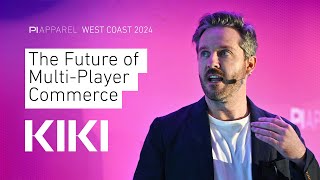
Brendan Garner of Kiki World presents a multiplayer commerce platform where creators and fans co-create products with brands. Using on-chain wallets and NFC-enabled products, Kiki captures customer intent through voting and preorders. The platform has 35k members and campaigns reaching up to 10k users.
Chapters
So good morning, everybody. My name is Brendan Garner. I'm a co-founder and head of platform here at Kiki World, where we're building the tools to create the next generation of brands by directly engaging and co-creating with their fans and communities. So at Kiki World, we believe that commerce is better with community. For too long, products, product lines, and marketing techniques have relied on a mostly top-down approach. Being mindful of the audience I'm speaking with here today and the innovation that you all bring, we wanted to come to the table with what we believe is a future-facing path for developing brands, products, and engaged fans. So from our perspective, and I'll get to our background in a moment, um, we see the physical product innovation, uh, pipeline as well as a lot of digital side activations as a challenged model that for too long has relied on outside platforms to engage and ultimately convert customers into lifetime buyers. Uh, it's immensely expensive, uh, to run a brand today. It's immensely expensive to try to claw information about the people that care most about what you're creating. And it's very difficult to get intent-driven data on what will actually sell and what your customers actually want. So spending time— 40% of customers spend their time on social media, meaning that you don't get first-party data insights into their communications, how they really interact with your brand, and what their intent truly is. So our solution path really revolves around a couple different players: brands, creators, and fans. So the idea that you can actually to interact with the people that care most about your products, your customers, at the bottom-up funnel layer is something that we are very passionate about. And so that link between customer and brand often these days intersects with a creator in the middle. A lot of us know people buy from creators more so than they do from brands, particularly new ones that may not have the heritage that some folks in this room today might be, um, fortunate enough to have. So just a quick background on how we came to be as Kiki World, building the future of community-driven commerce. Myself, alongside my two other co-founders, Yana and Ricky, have extensive experience not only in the e-commerce space, but also in product innovation development. Yana has spent well over a decade developing products for the likes of Sephora and Seed and a number of others. Ricky, our chief creative officer, has consulted from everybody from early entrants into e-commerce, uh, as well as large multinational corporations. Uh, my background is in e-commerce as well as strategic consulting and brand development. So, um, who are we? Uh, we're a startup. So this is a little bit maybe different than, uh, some companies in the room here today, but we're a tech startup, uh, backed by Estée Lauder Companies and Andreessen Horowitz, in particular their crypto fund. And so that's probably something that's a little bit different this year, probably not a lot around crypto, but the The way that we leverage blockchain technology as opposed to what you may read about in the broader media is something that gives our platform a really interesting edge when it comes to capturing first-party intent data and creating new types of social graphs amongst users. All right. So at this point, I was gonna do a live walkthrough of what our platform looks like, but I think what we're gonna do is continue with slides and then I can walk you through on your phones that you have there. A little demo that you can do yourself at the end of the presentation. So, Kiki as a platform is a co-creation platform and an engagement tool platform. So we believe in converting on your own turf more than anything else. Finding ways to create first-party engagement data through participatory rewards. So really engaging customers and future customers pre-purchase. So for too long, a lot of loyalty programs in particular rely on purchase to grant points, to level up, to really kind of go through the purchase cycle to actually receive rewards as a user. So we see that as something that's upside down and really think we have a better solution. Because more and more younger consumers in particular are really focused on being part of the product journey from its inception. They don't want to be told what to buy. They want to be part of the conversation. So how do you encourage people to actually take part and give up that information in a truly organic way? So I'll go back to that slide in a moment. Uh, the idea is to create rewards at every point of interaction. So on kiki.world today, if you navigate to the website, you create an account, you, you have the ability to choose the next nail color a product's going to be made, or which merch should be created next, or if we're doing a skincare line, what ingredient is most important. You tell us what that is, we reward you with off-chain rewards as well as loyalty points, which can then be converted into discounts. So creating those rich customer experiences that make people really feel involved is something that we've really seen from, from our experience in the space be very sticky and ultimately lead to a higher purchase rate than you would find from somebody that just comes from a social ad or may click on a link or come through another organic channel. So we believe in multiplayer commerce. So we've talked about community commerce. Now, what does that really mean? So multiplayer commerce takes the approach of providing direct revenue channels in order for creators and brands to be able to serve campaigns, distribute rewards, and ultimately convert into long-tail customers. Uh, we've seen a lot of success when it comes to what we call preorder commitment. So on a campaign that we launch on Kiki.world, let's say for a haircare product, we have one called One Night Strand. It's a temporary hair color product. Uh, we have the ability to grant preorder commitments, uh, to— that actually helps us understand the intent and therefore helps us understand the supply chain implications based off of leaderboards in our analytics API. We actually have suppliers that check our leaderboards daily to evaluate which colors they should be thinking about producing next. So making sure that easy shop creation is available, really securing content through on-chain verification of assets, as well as audience co-ownership of the campaigns and the products that are created themselves. The last piece being integrated social proof. So because everyone that interacts on Kiki World actually has a nested, what's called a smart wallet, hidden in their account, they never have to touch it. They never have to do anything. That's blockchain related, but every action that they take as part of a campaign has an asset tied to it that notes their intent, their preferences, and actually allows us to be able to connect users into rich user segments so that we can really understand what types of activities, what types of products, other brands they might be interested in following, all through a verified process. And that's first-party data that you can get access to. So what does that look like? So as I just mentioned, I probably could have spoken over that last slide. Uh, we go from a leaderboard view where a campaign's taken place. We have, uh, chat protocols in place to allow for users to discover each other based off of what's held in their abstracted wallet. And then we also offer opportunities to collect post-purchase data. So we've talked a little about pre-purchase, but any product, uh, that has an NFC chip enabled within that product itself. If you've ever seen a Kiki World product, if the brand's new to you, I encourage you to, to check them out. You actually can scan and with an NFC chip scan a URL and you can connect that product to your profile and you can continue to earn rewards for usage, which also helps us understand just how often people use specific products, when refills might be ready, for example. So let's look at a little example here. So we've touched on the idea that there's kind of 3 layers of community-driven commerce or multiplayer commerce, right? There's the customer or soon-to-be customer. There's the creator that helps amplify the product message, helps be an evangelist for it. And then ultimately there's the brand that produces the product and sells that product. So here we have a woman by the— that goes by the name of House of Nails. She has over 120 media impressions across her various Web2 social channels. She has a very DIY approach to actually taking the engagement and the success that she has on social and turning that into a sustainable product to sell. She actually relies on Google Forms and emails to capture first-party data because she can't get it despite all those 120 million impressions unless she's going in there DMing with users in asking for their emails. Not very efficient. So launching a campaign with Kiki World, you can see here there's a little mockup. It says, "Choose your favorite." This actually operates as a swipe, the same that you would in, you know, which kind of apps, right? So you pick your options. You choose your favorites. The creator, House of Nails in this case, gets that real-time data about what is most popular, what has the highest chance to sell. At what volume. Once that's done, once the user completes the campaign, they receive what we call a collectible. It's basically that on-chain attribute that is stored in the wallet that says, OK, great. You took part in this. That's wonderful. Here's this gift. And you can add on rewards to that. Maybe it's a free nail session, let's just say. So once that's complete, the product goes through its lifecycle. It's produced. And you can actually place the order directly on platform. So you go all the way from preorder engagement to reward to understanding intent all the way through checkout in one unified flow. All right. So complementary to what you might see on kiki.world today, we're building a uniform— a unified global platform that will connect the campaigns launched by various brands and creators available to anyone that has a Kiki account. If you want to keep a— if you want to keep campaigns private only to your user segments, your fans, you can do that too. But what it allows for is discovery and social graph interaction based off of engagement and intent. So gone are the days of farming for followers and attempting to boost numbers without really a steady understanding of what that return truly is. This focuses on engagement, driven campaigns, rewards based off of participation and connection, the ability for users to connect based off of their true interest, and the ability for brands and creators to understand the types of products that are successful, what might be coming down the pipe, and who to really target based off of that intent. So Create. So later this year, we're going to be launching a tool that is primarily driven or focused on empowering creators. So these could be content creators, everyone from TikTok to Instagram to YouTube, let's say, that interacts in the consumer space, the ability to launch their own campaigns without having to touch any bit of tech at all. Launchable in just around 2 minutes, these can be creators that work directly with brands and are promoting products. You're able to seamlessly select from types of campaigns you might want to create, configure rewards that could either be monetary or something special like a meet and greet. And actually publish them to a global audience in minutes. Once that campaign is configured and completed, creators and brands have access, direct access to the users that took part in those campaigns, so they can be retargeted, exported, and connected with in the way that makes the most sense for that brand. And the user on our platform is able to go from saying, "I really hope this is created. I'm sharing what's important to me," I'm feeling rewarded for being part of that journey. And now I have reason to actually go and place an order because I am part of the experience. So turning intent to purchase. So to kind of pull everything together here. So what is a multiplayer ecosystem? It empowers creators and the brands that work with them. And most importantly, it empowers the fans, customers, and future customers that instead of being spoken to, thinking about what they should buy because someone tells them to, being part of the conversation to really help educate not only the creator, but most importantly, the brand. What should they be thinking about? Going beyond market research, which of course is incredibly important, going beyond trend analysis, which is so important, but actually going first party, talking to the people in a scalable manner. In a way that actually can prove results. So empowering creators, innovating connections with the brands that connect with creators and customers, and then sustaining growth. So by constantly doing these light-touch campaigns during product launches, during marketing campaigns, whatever it may be that you're putting out there, by integrating these pre-purchase campaigns into the lifecycle, you give reason to come back. You give reason to reengage. That is beyond a like, that's beyond a share. So true actionable insights at every stage of the cycle. All right, okay, let's see if this work. I know that the Wi-Fi is not the most amazing thing right now. That's fine and totally normal, but if everybody wants to pull up their phones, we'll show you what a campaign looks like in real time. And while we do that, I was going to do it myself, but that's fine. So if you go to kiki.world and let me know— I wish I could show you guys, but that's OK. If you go to kiki.world and click on the Vote tab in the menu, you'll see a campaign called Future Face. Now you're going to need to create an account to take part in this campaign, but I think that's OK. All you need to do is put in your name and your email. We won't send anything your way, don't worry. But really what we're going to be doing is showing how you can actually take a very high-level concept, like what type of product we should create next, and think about innovative options and ways to capture that data. It's a very simple swipe campaign. So you're going to pick through a couple options. And at the end of that, you're going to receive loyalty points. And you're also going to receive a unique collectible that we'll share some information afterwards around how to access that. It's in your account dashboard. That's going to give you access to some future information we'll be sharing around what we have planned. So everyone can take their time either now or later, try it out. It's very fun. It's very, it's very engaging. And I encourage everyone to test out other campaigns going on on the site. But with that, I'm just going to open this up as well. So Kiki as a platform operates as a no-code platform, but it also operates as an API-first custom integration. So kiki.world, the website as you see it today, is actually an application built on our APIs. And so we have the ability to create private applications integrating in with various levels, levels of your, um, your tech stack. So with kiki.world, we have a custom integration with Shopify that allows for points to convert directly into discounts. We have the ability to build out those integrations in a variety of ways. Later this year, we're also gonna be integrating embedded forms into custom websites and e-commerce experiences. So if you don't want to launch your campaign at a global level, you want to do it at your own domain, you'll be able to easily do that with a simple SDK. So all of this being powered by our multiplayer commerce tool suite at the API level first allows for ultimate customization or ultimate reach by empowering others to leverage our no-code tools. To launch campaigns, to build with community, and ultimately build a more successful business. Okay, so with that, I don't know how we're doing on time, but I'm happy to answer any questions that you might like. Ah, that's a good first one. How does Kiki make money? All right, so, um, Kiki makes money by providing our tools in a couple of different ways. So at the end of the presentation, I spoke to the API-first approach to our software. So we operate in a more traditional SaaS model when it comes to creating embedded experiences. So private applications, custom domain experiences, think about it as a subscription based off of usage. At the platform level, so the no-code experience that I showcased, this is where it gets, I think, very interesting as well and very complementary to the more enterprise side. SaaS pricing structure that we have. So when you launch a campaign, you're effectively granted a number of points to distribute. Think about them as reward points that we give you to say, okay, hey, go out to your community, offer them rewards. You have to actually provide the rewards, right? You say you're giving away a free t-shirt, you got to give away the free t-shirt. So we allocate a number of points to you based off of a small monetary cost. If you want to increase the reach of that campaign, let's say that you launch one and 10,000 people take part in it, but 50,000 people want to. There is an incremental usage fee that, uh, that can be purchased within the platform as well. Um, I should also— I'd be completely remiss if I didn't mention that Kiki started, uh, to test this thesis, to build this platform by building our own product lines. So we now have 4 product lines launched in the beauty category. And they range from a nail product to hair, an eyeliner, as well as we're working on a skin development product right now. So those operate as traditional consumer goods products. And so we drive revenue there as well. OK, typically apparel production companies are very long. Ah, very good question, Anne, and something that we experimented with through the development of our own products. So when we first launched, we launched with this— it's called Pretty Nail Graffiti. It's a peelable nail polish. It's a very innovative product that our CEO, Yana, led the development of. And so our first campaign was simply to say, what color should it be? Let's pick one color. And of course, everyone picked the most expensive color that they wanted and the one that we hadn't developed yet. And so right out of the gate, we ran into the issue of, OK, how do you— get people to engage, tell us what you like, but then keep them engaged during a product life cycle. So I think the most easy example being Pretty Nail Graffiti there is that it took us about 3 months to get the product out. But as long as you keep your fans engaged in very light-touch ways, you'll do just fine. We saw a high conversion rate on that. OK, let's see. Typically apparel. Yeah, so when it comes to apparel, this is probably also a good moment to pause and mention something really important. So when it comes to the types of campaigns that can be launched with Kiki, you have your co-creation, asking what we should make next. But you can really turn it into any type of engagement tool that you want. It may be something as simple as a feedback survey. It may be something as simple as, where should we do our next show? You can actually, based off of who your fans are, how you want to engage with them, you can create loyalty programs that could airdrop them passes to events if they're a VIP or an ambassador, for example. So I would say ideal timing is 3 to 6 months for a quick turnaround product. But the truth is, I don't know if anyone's ever interacted with a company like Kickstarter, right? As long as you set your parameters well and you're clear about what you're doing, it's OK if it comes out next season. It's OK if that happens. And in fact, you have more time to nurture that interest and that desire for the product. All right. Yes. So again, Anne, great question. So Kiki started in the beauty space. We are now branching out into fashion. We're working with— some of the largest luxury groups in Europe right now on launching some phased release campaigns later this year, as well as some more in-depth holistic solutions. But from our perspective, beauty and fashion are so well-knit that they really come together well. And we're working on some under the hood right now. Let's see. So how many voters does an average campaign draw? So on our side of things, so Kiki being a relatively new company, sometimes it's 1,000 unique users. Sometimes it's upwards of 10,000 unique users. So we recently launched a campaign with a creator named Cherry Chai. She's this really dynamic woman who struggles with certain hair care products. And so we worked with her on developing a specific pigment that would work well for her tied to our One Night Strand temporary hair color product. And so the question moves. I lost track. Let's see. Oh, yes. How many votes? So that one saw well over 10,000 unique users, and I think 40,000 votes overall. Our campaigns are configured to be able to vote daily, but brands and creators have the ability to configure that one time every week, once a month, whatever that may be. OK, let me see here. How do you evaluate? Mm. OK, I just saw one around evaluating who is right. OK, so that's a nuanced one because ultimately, particularly our no-code platform, we want to be able to open up to as many creators and brands as possible. Now, right now, we're pretty selective in terms of who we work with. It's very important for a creator or a brand to have a very passionate audience that has a strong community. So these are often younger brands that are really used to having a voice heard, but haven't been rewarded, really truly haven't been part of that conversation, but are very active in terms of how they approach product purchase decisions, who they listen to for those product decisions. All right. Let's see. OK, these keep moving. OK, this is a good one. I like this last one. Why should brands use Kiki instead of a brand-specific feedback rewards program? So when you work with Kiki, not only are you able to hyper-target users in your own network— so you might draw— you might drive fans to our platform, of course, if you're leveraging our API-first approach, we could actually build a custom tool solution just for your audience. But when you integrate into the broader ecosystem, not only are you able to target your own customers, but you're able to actually glean info about customers that have similar interests based off of the campaigns, actions, and intent decisions that they've shown through taking part in campaigns and the rewards that they earn. So not only do you get the direct information, associated with your unique customers, but you also get complementary information that's verified under the hood from on-chain actions and storage. All right. So how would this work for fashion? I think this would be really fun, and I'd love to speak with you— some of you guys on this afterwards as well. So when it comes to fashion, as I think it was Anne who brought up the earlier comment around lead times, Really, because fashion is such a creative-driven industry from a consumer's perspective, it really lends itself to taking marketing campaigns and making them engagement-driven and reward-driven in order to really step out and differentiate oneself in the market. Now, some of the larger houses that we speak with, they are creative director-driven. So there is a strong pull that there is a unified vision that is that is steering the ship, so to speak. And so in that case, it may not be right to use a co-creation campaign, as an example. But our ability to integrate this more omnichannel approach and this more multi-pronged digital approach to say, okay, this isn't just about what color our next shade of lipstick should be. This is about what themes maybe we want to integrate into our next campaign, or where we should do our show, or what rewards we can provide to our most valued ambassadors. So it's very flexible in terms of what you can think of as a campaign. All right. All right, cool. Good one again from Anne. Thank you for the great questions. How are we increasing our reach? Is it US only? So our client app, kiki.world today, built on our APIs, is US only because our products are only shippable in the US just due to beauty industry regulatory things, I suppose. But it's accessible from anywhere in the world. You can go online today, um, if you're in Paris, uh, it doesn't matter. You can go on, take part in campaigns. And one thing that we're really excited about on the no-code platform side of things is that because every campaign doesn't have to be tied to a physical product, anyone can launch them across the world. So it's a democratizing effect as well when it comes to giving people the opportunity to launch their own campaigns, own products, or work with the brands that they already do work with in other fashions to be able to integrate and engage with new audiences. All right, let's see. All right, so on-platform, which its front-facing experience today is Kiki.world, which is largely beauty. We have around 35,000 members. So we're pretty happy with that. It's— we're growing at a very strong clip each month. We've been accelerating a lot through creator partnerships, through working with creators that want to launch their own campaigns and brands and products through our platform. And so this summer is when you'll see the release of the global ecosystem platform, where the ability to launch campaigns, connect with brands, connect with each other, uh, will be launching. So that will be a very different moment for us as a company in terms of scale. So it's very exciting. Okay. Mm. Is Kiki responsible for the materials used in products sold through the platform? So this goes a little bit back to who will be able to use it when we launch our no-code platform this summer. Our long-term goal is to make it as open as possible, but it's very important to us to work with the right brands that are doing product development in the right ways. So there will be a diligence process. Ultimately, is Kiki as a software company responsible for materials used? Uh, we are not, but we are very interested in connecting with those that do have verification methods that are using some of the other regulatory innovations to actually have better understanding of what's going into the products, how they're manufactured, and then how that message can be best communicated out to fans and customers who do really care about that, of course, more and more. OK. OK. I think that's everything. That pretty good? Awesome. All right, well, thank you so much for joining this morning, and I'm happy to field any questions afterwards as well. Hope you guys have a great day. Thanks.










