The Godfather of Sneakers: Steven Smith on Disruptive Footwear Design | Crocs | PI Apparel
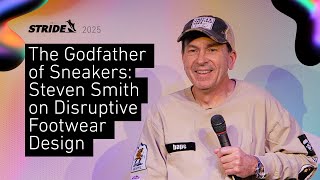
In this extensive interview, veteran footwear designer Steven Smith reflects on his 40‑year career spanning New Balance, Reebok, Nike, Adidas/Yeezy, and Crocs. He explains how early exposure to traditional shoemaking at New Balance shaped a philosophy centered on fit, form, feel, function (later adding fashion) and how that philosophy persists despite the rise of digital tools. Smith argues that technologies such as CAD, AI, 3D printing, and software like Alias, Maya, Shoemaker, and Sketchbook Pro are merely tools; they should augment, not replace, hands‑on craftsmanship. He recounts steep learning curves, the cultural clash of importing film‑industry software into shoe design, and the importance of choosing the right tool for the task. The conversation moves to mentorship, the closed nature of the industry, and how social media both democratizes and threatens designers. Smith discusses market shifts, noting that comfort and ease‑of‑entry become paramount for the growing over‑50 consumer segment. He critiques superficial customization, differentiating true on‑demand, foot‑scanned products from simple name‑tag options, and shares his experience with Nike ID and Crocs charms. Product development timelines are examined, with tooling and grading identified as chronic bottlenecks, while a six‑month sprint for an Adidas‑Yeezy shoe illustrates how rapid iteration can be achieved. Smith advocates for domestic manufacturing, describing his early exposure to New Balance’s Massachusetts factories, the decline of U.S. production, and the potential of modular, robotic lines to reduce components and waste. Sustainability is framed as creating longer‑lasting, higher‑quality products rather than merely recycling. Throughout, he emphasizes risk‑taking, storytelling, and direct engagement with sneaker‑culture communities as essential to keeping the industry vibrant.
Chapters
So welcome. I am going to start because we have a lot of questions for you. Ready? Um, you've been at the forefront of footwear design for decades and so have no doubt experienced the growing blending together of traditional craftsmanship with cutting-edge tech. How do you think brands and designers should be approaching this to ensure innovation doesn't come at the cost of artistry?
Um, You know, for me, people always forget that this didn't exist as a role of sneaker designer. And, you know, 1986, when I graduated from school, I got mocked for going to work at New Balance. Like, you're going to— you're going to design sneakers? Because at that time, our curriculum was based on what was located in Massachusetts at the time. And it was the early days of the tech corridor. You know, it was Wang Digital, Data General. Anybody even know those companies? And then Corning Medical. That's what they geared our curriculum towards. But I ran high school track and I heard about this position at New Balance and I ran New Balances and I'm like, people design sneakers. So I went up there and interviewed and it turned out I was only the second full-time designer they ever had in the history of the company. That was another guy, Kevin Brown, which started the year earlier. and the two of us were the entire design department. And, but the things that were instilled there to me at New Balance stayed with me the rest of my career. And it was, it was newer and better. It was not just newer and different. And I think that was a big philosophical thing that I think helped me. And I think that we never— there wasn't seasons. You just updated it when there were new materials or new processes or a new midsole. Component could be made and you could make the shoe better, not just different. And I think that followed me through my whole career. And I think that's the way I look at how things are today, where, um, as each things have progressed from Illustrator and Sketchbook Pro to CAD systems, um, they're tools to get me to new and better. And I think as, as things evolve from 3D printing and AI, you always have to remember it as a tool, not the be-all and end-all. So, you know, don't rely on it, be lazy as a crutch. I mean, the best intelligence is right here, so use it. And art, you know, AI— you know, AI started with what's up in here, and that's what it's all pulling from. So Just use it as another tool rather than a crutch. And amazing things await. You're never done 'cause the, the question's never answered 'cause you can always make something new and better. Why not?
Thanks. So there's a lot of excitement and skepticism around the use of AI in footwear. What parts of the footwear creation process do you think should should use it and where is human, like the human brain, like where should it stay?
You know, there's amazing things to be done. I went and taught a week course at SCAD and it was funny, I thought it was product and sneaker design, but it was actually for them to use AI. So I was kind of poo-pooing it the whole time. I'm like, why aren't you guys drawing these final renderings by hand? And they're like, well, the assignment is to use AI. I said, well, that's well and good, but you know, it's kind of lazy. You should learn how to draw. Because one of those things that as you integrate new technologies with the old craftsmanship that I learned my craft from pattern makers at New Balance. These guys were old New Hampshire shoemakers or St. Louis shoemakers. And one of the things that I think has made me successful in what I do is those guys taught you the handmaking and feeling the form as you, as you drew it because you knew it was going to translate from 2D to 3D. And I think some of that is a lost art. And I think it's a yearning for humanity to have that, that touch, that feel, that reality-based. And I think you always have to have that, have that in mind is the AI things, you know, you can create another Giga. It's like an overdone Photoshop rendering. But at the end of the day, you have to make something real out of it, tactile in your hand and always, always keep that in mind at the end. We live in reality, you know.
I am a big believer in making things with your hands. Yeah, I think it's just such a nice way to, I don't know, feel the product.
I mean, most of the things I did at Yeezy, I made the prototypes myself. Like, half the shoes I made in my garage at home. It, it, it's, it's therapeutic in some ways, you know, and it helped you deal with the insanity of how you were working. But out of it came, came the magic product.
Amazing. And we hear a lot about brands struggling to embrace digital tools, especially in design. Where do you think the blockers are in these digital tools? I know you're just talking about like manual, like craft, but if you look at the digital side of that, where do you think the blockers are?
You know, for me, in my experience and in the early days, It was learning curve, you know. And it was funny when I got to Reebok, they got us all Silicon Graphics IRISes, you know, it was $100,000 workstations and plunked Alias in front of us. And you needed to enter it in code, you know, C+ and C equals. And you're like, I don't know, what the fuck is this? You know, I just want to draw and create something cool. And so they brought someone from Alias who had done this his whole career and he's click-click-click— And there was a shoe! They're like why can't you do that? I'm like well this guy has been doing it for 10 years ya know uh... That would expect to learn it in 10 days. So I think there's patience of learning curve and transition. I mean wanted to use tool but always busy pull away to learn new craft or tools expectation was you'd do at home on your own time. And like, where's your life then? And I think my life and my experiences influence what I create and how I create. And it was funny that the same thing happened at Nike. You mean? And it was with Maya, which you go back and it was the Alias guys. And then the same thing happened. They brought in some wizards. They convinced John Hoke that this was the future and the magic. And they're like, OK, you're all— Buy a Jockeys now. And we're like, wait a minute. And so I think that kind of bureaucratic mentality of the people who are making decisions, who are the people who don't actually have to use it, should be forced to use it and learn it first so that they understand the pain of having to learn it. And then they can relate to you doing it because to me, you know, the light bulb went on. You know, I grew up in the Captain Kirk Star Trek era, right? Amazing. I mean, it's— you watch it now and it's— there's some hokeyness like the Gorn, his rubber suit bends and stuff, but their vision of the future was still so clean and pure and beautiful that it's believable still. And I went to see the reimagined one when we were still at— when I still worked at Nike, the relaunch of Star Trek with the classic young Kirk. And I watched the end of it and there were 2,000 digital artists, right? But if you go back and watch the original Desilu one with Shatner, it's two guys, it's Dean Jeffries and somebody else. And that was the light bulb, like, fucking A, you know, there is a show that's still believable that two guys did all the, the special effects. And then they did this reimagining of it. And there's 2,000 people to do what those two guys did in a studio in Desilu. And that, to me, was what was happening to us, where they wanted to take Dean Jeffries and his assistant and make them do the work of these 2,000 guys. And that's where it was wrong. So then that affects us where I'm like, you reject it like, no, no. And it hurts the digital tools, it hurts the process, it hurts the people, it hurts the company. There's just that understanding of, you know, this is something new. You have to allow us the time to teach us this. And at Nike, they pulled us away for like a week and put us in a room with the Maya guys and said, okay, everything's digital now. And we're like, well, I, you know, I'm a caveman with a rock, like click, Drag, okay, I can make a cylinder, I can extrude it, and I can add a sphere to the top, but I can't do a fucking shoe. You know, it's like that takes weeks. And it was frustrating. And then what happened is, I'm sorry, I'm ranting a little bit about this.
I remember this very clearly.
We got Denny Dolan, who was the head pattern guy for us, brought in Shoemaker. And Maya, much like Alias, came from the film industry. The terms were helicopter, dolly, and it was filmmaking software that they kind of like, okay, you can do product design with this, I guess. And so Denny brings in Shoemaker, which was by Crispin. And we're like, duh, we make shoes. And he showed this to me. Because at the time there were a few of us, myself, Jeff Henderson, Casey Jarvis. We were PC guys. We rejected Apple at that point. And you could run it on PCs because it was tied to the Crispin pattern making software. And he showed us Shoemaker and caveman dummy like me was able to learn it in 20 minutes. I did a shoe in 30 minutes and I was like, holy shit, this is it. And then The Maya to me was visual masturbation because people were like, look, you can be like a fly and fly down inside the shoe. I'm like, who the fuck flies down in that shoe? Who cares? You know, a consumer's not gonna fly down into the inside of their shoe. Who cares? What's gonna help me make the shoe better? So Shoemaker to me, you know, as a logical person was like, okay, I designed this thing. It's building the 2D flat pattern right beside me. Then this thing can go downstream to the Pattern Maker that then go to the factory. Like it made total sense, but Maya was a dead end. Much like a Photoshop rendering or something. And I'm like, so Denny was trying to start this revolution internally and, you know, upper management and design heard about it and stole all our dongles in the night so we couldn't use Shoemaker. And you're like, what is wrong with this? So, you know, I think to be understanding and to find the appropriate tool for people rather than ram it down your throat and force a singular system on things, 'Cause now I hate it. I would've loved it if I continued to use Shoemaker and that evolved. And I think that's part of it is understanding what is the best tool for the designer to use. And you know, for me, when I went to go work at Yeezy, I drew everything by hand. Kanye's like, "Oh, it's magic." You know, yellow trace and a Sharpie. And then I got my iPad with Sketchbook Pro and the pencil and it was a digital paper. This is what I've been waiting for. And so everything from then on in after the year one was done on my iPad. And then that was easy for me to then download the file to my CAD guy who was then able to build all the 3D for me. So I think that's what people need to just step back and what, what are the appropriate tools? And it can be down to the individual because at the end of the day, you want what I want to get out and give to you as the company. Me, right? And that's what it should be. It should be the easiest thing possible to get to the best output. I'm done with my rant.
Love that. But yeah, sometimes the translation of what you do and what you know into something that is unknown, it's just ridiculous, right?
Yeah. Well, it's, it's, it's being rammed into a system that may not be right for you as, I mean, at the end of the day, we're, you know, as designers, we're still kind of artists. We're artist with an engineering mind, which is this freak show combination of things. But it, it, it, I don't know, it's up to the individual. What's, what's, what's comfortable. You want them to be comfortable cuz then you have to get, get the best out of the designer.
Agreed. So you've been responsible for some most game-changing sneaker designs of all time. What's the secret to pushing bold ideas through and what common themes do you see in shoes that have stood the test of time?
You know, I always said that there were like 4 Fs. It was fit, form, feel, and function. And then, you know, after working at Yeezy, I had to throw in fashion in there, which was kind of cringy because, you know, my, my whole life was based around performance from those early days at New Balance, you know, being a runner. But once you tick all those boxes and it's the basics, You got that covered. Now excel in those things. And at the end of the day, we create objects of desire. You know, like I said, and there was a podcast I was on and I was thinking about it, like, what changed? Why, why did we have to step up our game and, and do things that much better? And at one point in time when I was at New Balance, we were competing against Nike, Adidas, and then this new upstart Reebok. Um, but then when I got to Reebok and we were doing innovation there, this thing came out, right? It was called the Walkman. And we're like, holy shit, I gotta make something so compelling out of a shoe to get that kid's $100 instead of Sony. So now it wasn't just Nike and Adidas I was competing against. I had had like Sony, Nintendo, Coleco. Uh, it, it's crazy when you think about it. So I think that's what drove us as designers to keep pushing the envelope and be relevant of what's going on in society, um, to keep the product interesting and entertaining. Um, and as new technologies come out, how can you exploit that and, and, and make something that's, you know, so cool that you gotta have it. And at the end of the day, I think that's an important filter to have. Like, you gotta make something so cool that you gotta have it. And I met designers throughout my career who would come in and punch the clock and like, yeah, it's just another $65 shoe. I'm like, do you want it? Like, no. I said, how can you expect anybody else? You know, you gotta make something that, you know, not designed for you, but that you would want. To spend the money on. And I, I think that's an important thing to keep in mind. And that's what I've always had. Like, am I getting a good value? Does this thing feel better than the last one? Um, is it lighter? What advantage does it give me? What story can it tell? Because then a lot of times too, you have to remember at a moment in time, a lot of the retailers started to remove people from the sales floor. We lost tech reps as positions. There was nobody to the storytelling. So the product had to be so compelling that it sat on the shelf and told its own story to draw in the person. Right. Because what's different than what you have and what you have and what you have? You know, I can get this from Skechers. I can get this from Lulu. I can get this from anybody. Like, why do I want that? And I think that's an important thing to keep in mind. Like, you know, you go through, oh, you know, it costs this much, we're going to hit this margin. Fuck that. Make something so cool that you're like, Holy shit, you know, that's like, I'd spend $200 for that and wow, it's only $70. You know, I think those are, that's, it's a key mentality to have. Like, do you want it? If you don't want it, why would anybody else? So I always keep that in mind and that's a filter I've always had on the product. Like get so revved up about it that you're, you're the advocate of it. They're your children, you know, don't you want your children to grow up and become something important. And that's the way I viewed my product. And they've stood the test of time, you know, from things like the 574 and 550 New Balance I did as a 21-year-old kid, 22-year-old kid. It's funny to look back at it. And I look at my place in the market, like competing against my 22-year-old self. That's whack, you know? And so you got to, you got to fight that even. It's, it's an amazing it's an amazing battle and experience.
What's inspiring you today, like in your work?
You know, it's usually what's around me in my life. You know, I mean, I love my race cars and vintage racing, and I think that's a thing for me, just being embedded in the sneaker culture. So I've been invited to a bunch of the sneaker cons lately to come talk. And this is something to all of you who work for the big companies, get out there, go see these kids. They want the knowledge from us. They want to meet the people who are creating these things. And I know a lot of the companies try to hide you. Fuck that. You know, you create these things, be the face, you know, they're thirsty for it. They want to know what it is behind it, where this thing came from. And it's an extension of the storytelling of the product. It helps create that object of desire where they have this personal connection to this person. It's so cool. They want to meet you. They want to understand it. And I think it gives them an appreciation for it rather than just being told about this guy, Michael Jordan, who played before they were born. You know, I mean, there's still the cult of that and what it, what it is, but I don't know. There's a magic to what we do and spread the magic. Why not? Right. It's free, right? It's free to share the knowledge and be positive. So be positive. Help these kids. They're thirsty for it. Inspire them to be the next generation. You know, I've got these kids sending me sketches all the time and I always tell them I like do something that's so cool that I fuck, I wish I did that. And that's what I want to see. I want to see things that like step up that competition. And it's not as a threat. It's more like, damn, look what I helped start. And I think that's an important thing to keep in mind. We're like carriers of this industry. Celebrate it, help them, help the future, bring them into it.
For mentoring is so important and inspiring others. And you mentioned this footwear can be like a closed industry. And with networking playing a big role about who gets in, how can designers who don't fit the traditional mold break through?
Mm, that's a good question. You know, in, in those early days, nobody was doing this, so it was easy for us to be the first of it, but it was also difficult to lay the groundwork of what it would become. I get a lot of kids who come through Pencil, through SCAD, uh, ArtCenter. I mean, super talented kids, and it's hard because You know, if it wasn't for those of us in those early days, you know, myself, Tinker, Wilson Smith, Bruce Kilgore, Kevin Brown, making this cool to want to do, there wouldn't be so many people wanting to do it. And I think that's one of the problems. I mean, I love Dwayne and all that, but he's pumping these kids out and they all reach out to me and I'm like, I'm sorry, you know, it's tough right now. There's not enough there's not enough places for you guys to land and you don't want them to be discouraged or, or disenchanted with it. But it's very hard. I mean, you have to stand out. I mean, social media is a big thing. The danger of social media is you put your stuff out there, there's no longer any, any protection for it. Yeah, it's tough. It's really tough. I don't, I don't envy them at all. I mean, even for an old fart like me to get another job is interesting. You know, all these companies talk to you and then they're like, yeah, you know, and it's tough to be a disruptor because, you know, you get this reputation of being a disruptor. Yeah, I remember that, you know, at Nike, like disruption was a big buzzword. You were there for that, Aaron, you were there for that, and then you were disruptive. And like, you're disruptive. I'm like, wasn't that what you told us to be? Well, we didn't really mean it. And you're like, what are you talking about? You know, but it's that, it's that disruption and risk-taking. And I think that's an important thing for these kids to remember. Take the risk. If you see something that is totally whack and you don't really know how to do it, try it. What's the worst that you can do? If you've never tried, you've already failed. You know, it was funny, I would always say that, and then I saw this quote from Edison, which, I mean, I like Tesla better. He was more of the true genius, but Edison was the marketeer. But Edison said, "I've never failed at doing anything. I've found 10,000 ways not to do it." But I think that's a key thing. Take risks, think different. Another one of my favorite quotes was General Patton, "If we're all thinking alike, somebody isn't thinking." And I think I always keep those things in mind. And my whole life I've been the square peg in the round hole, but at the end of the day I deliver, so you can't argue with the end results. Put up with me? Sure. If you don't, fine, I don't care. I'll go someplace else and bring my gift to them. Um, but yeah, sometimes you don't fit in the corporate structure, so that's what's good with a smaller company. You're more welcome. They want to learn from you because like, what's this guy's key to success? Um, it's like fucking shit up, uh, and out of it comes amazing results that can't be argued. I mean, the first shoes I ever designed as a 21-year-old kid is still in the market, stronger than ever. It's, it's Wack. I don't, I don't believe it some days, you know, but I don't know. I don't know what advice to give, you know, just keep trying and try to do something nobody else has ever done and show things that people have never seen before. That's what I've always tried to do.
Yeah. And find like where you stand out, right? Where you are different from others.
Yeah, it was funny. You think about standing out and it's funny, some people have the uniform of designer, right? And it was funny at Reebok, you know, when I did the Pump Fury and I was doing things like DMX and all the crazy technologies there. Jessica Del Genio, I don't know if you guys know her, she does a trend service. She was the assistant color and materials person there at the time. And so I left And they had these young British designers who came in and the one girl was like, "Oh, you know, I've seen that Pump Fury and, you know, I'd love to meet that Steven Smith. I'm sure he's brilliant with beret and dressed in black." And Jessica was like, "It's best you never meet him, you know, and you're only going to be disappointed." And, you know, it was funny, I, you know, traveling with Kanye as his head of creative, his right-hand man, I would be traveling everywhere like, "Yo, there's Kanye West." and some old white guy, you know, and Kanye would laugh. He's like, they don't know the genius. And I'm like, oh yeah, that's your superpower. They don't know who you are. Enjoy it. I'm like, okay, sure.
Well, speaking of old white guy, what consumers now over 50 becoming powerful market force, how should brands rethink about product design and marketing to this demographic?
Yeah, that's a good question.
Especially maybe in the eyes of where you're working now.
Yeah, I mean, comfort is king. I always remember that. You look at brands like Altra and HOKA. I mean, amazing. I— people forget the origin of HOKA, that it was two busted up old trail runner dudes who wanted to run downhill and not hurt their heels. And so they double stick their midsoles, but they made something that was a true revolution where people like, it's a big marshmallow, it's great. You know, and it changed it. You got to remember at the point in time when Hoka kind of came on strong, everybody was all about Vibram and FiveFingers and lower to the ground, low profile, which was probably good for about 2% of the population. But people put it on because it felt kind of natural. But then Hoka was almost like the antithesis of that, like, oh yeah, are you going to do that? We're going to do this. And, you know, it just proved that comfort is, is king. And, you You have to understand too with runners, male in particular, once you're over 40, the fat pad in your heel starts to thin by 50% as you age. And keep that stuff in mind. You know, it says baby boomers age. I mean, I'm the— I don't know where I fall. I'm kind of like end of December '64. So where am I? I'm in this gray zone. But everybody likes comfortable stuff, you know, no matter what age you are. And yeah, ease of entry. That's where Kanye was like, once he got in his 40s, he was, I don't want to use laces anymore, bro. I want to jump in and go. And I think that's, you know, it's a, it's a good, there, there's these weird things that pop up that should be triggers for you on your product creation. You know, the busted up old runner, jump in and go that are good insights into creating new product opportunities. So I think that, I think that's something to keep in mind as, as we age, you know.
Great. I'm going to go back to technology again. 3D printed shoes aren't mainstream quite yet, but customization and on-demand production are gaining momentum. What do you think about these evolving technologies, or do you think they'll evolve?
I thought it's really—
3D printed shoes have been around for quite a bit.
Yeah, you know, it's kind of funny. I go back to like the CAD analogy and digital tools. I remember I was watching like the Today Show and they had this guy on, and I don't think— I can't remember what company he was from, maybe Converse, and he had like a Chuck Taylor and he was showing it on there and he's like, this is a 3D printed shoe! And they were all like, oh, 3D printing, It's the future, right? And they're like, "So what, how does this thing go? You press a button and the shoe comes out?" And the guy's like, "Well, not really." And she's like, "Well, okay, what part of it's 3D printed?" He goes, "Well, this little piece on the eye stay." You can't lie to people like that and get them all fired up for something that's not real yet. It's cool, it's the future, it's a vision. But when it's fully 3D printed, yeah, it's magic. There's early stages, Koobs guys, the Zellerfeld guys, they're on the cusp of it, but it's still plasticky. It's still all one material. Whatever you do with it, it's a great new process. So design and build something that shows off that process rather than replicate what you can already make for— you know, you can get a piece of mesh for 50 cents. Why would I spend $50 on a 3D-printed replication of mesh that I can you can get for 50 cents. Invent something new, a new aesthetic, a new structure. Um, play off the process. That's the magic, right? Convince people that this thing is the future. Make it look like it's the future. Why make something that you can already make in a cheaper, more economical process? That's the magic. And then fit and feel— again, fit, feel, and comfort. Once those things step up to that level, figure out how you can push it. 'Cause when we had the roundtable yesterday, I talked about that. You can get, you know, like the, you can get a slide for $20 at Walmart that's a nice squishy piece of foam. It's not the best there is, but damn, you put your foot in and it feels great, right? So you make this 3D-printed thing that's $200 and it doesn't feel as good as the $20 thing. How can you justify that? So I think those are things to keep in mind. Every time it goes back to that early mentality that was instilled in me at New Balance. It's like, is it better? And I think that's what you have to do with the 3D printing and then customization. It's very funny. I hear that it's a buzzword like recovery. What the fuck is that? What are you recovering from? How do you build something that's recovery if you don't even know what you're recovering from? Um, and with customization, face it, the average person is lazy. You know, it's a giggle. They can click on something that puts their name on it. That's customization. Or is it something where you fully 3D scan your foot and you get this made-to-you shoe? What, what is that? Um, you know, with Crocs, it's the, the charms, right? That, and that to a lot of people is customization. I, I having worked at Crocs now, I start observing people and that is cool. You see people with their own little charms all over the place, so they write things on it. There's an opportunity for customization. So what does that mean and what can it mean? So I think you look at things on a slider, like is it something as simple as attaching something? Is it something that's made for me and anything in between? Between. So I, I, I think that's, that's for us to interpret. What, what we think is cool may not be what the average Joe thinks is cool.
Um, I think last night we were talking about how you were hired at Nike, right, as a Nike ID designer originally.
Yeah, it's pretty funny when you think about customization in that historical realm. It, it, it was interesting. Like, there was no headcount, and then, uh, Michael Donahue got one headcount for design, and they threw me in it, and they wanted me in running, but the only headcount available was this new thing they were creating called Nike ID. So it was me and whoever was going to run Nike ID, and they just kept getting expense reports for this guy they never met, but I was attached to the running team. But, you know, I did do some conceptual work on what ID was and cut and paste in pieces, and it was the early days of what could it be. Um, so it, it was interesting, you know, people did like to build their own colorways and things, and it does— it creates complications, you know, if you want to do custom graphics on things You do have to have filters to stop people from using licensed imagery and things, but you always have to look at both sides of it. Where's the win? Where's the loss? The loss is you could get sued for somebody putting a Smurf on your shoe that you don't have the license to use, but it also gives you opportunity to grow the business, to do a collab with Smurfs, to give them a cut of the business that now you have an exclusive. I mean, I mean, we just did a Bape combo with Crocs that launched yesterday, and it's like Jordan era frenzy where they had to call in the cops in New York City because people were dying to get these Bape things. And again, that's the customization because you've got the ape head and the Bape and "Ape shall not kill ape" gibbets on it. So, you can customize it, add this, add that. So I think there's still opportunity there, but I think you have to look at it through a positive filter of the business and how you can connect brands and, and bring the collab into it. So like when I, when I was doing the thing at Nike, I went to go do my own Nike ID. I wanted to, you know, my— it was funny, I had left Reebok and my eBay handle was Reebok Hater. And, uh, so I went to put Reebok hater on the back of my Nike ID shoes and it wouldn't let me do it. It was funny because it was Reebok, so it was trademarked. Um, but it would have been kind of funny. But then I even tried to put like my race car number on it, wouldn't let me put 66. I don't— I, you know, there was no logic. You would, you would have liked to have seen like, here's why you can't use that, as opposed to you can't use it. So like everything I put in, nothing worked. So then I frustrated and didn't bother making one. You know, I mean, you always have to think of the end user and what the consumer wants. Put yourself in their place. It's hard. It's hard to do, but because you're in love with your idea, right? But you really have to filter it and question it and get yourself in touch with the consumer, the person who's actually going to give you the money for it.
So what do you think about this 12 to 18 to even 24 months product development process? I'm curious because you've worked at a wide variety of brands, where do you think the bottleneck is getting closer to market? And did you have those same experiences maybe when you worked at Yeezy, other, you know, even Crocs? Like what does that look like for you and Where do you think the bottleneck is? Where do you think we can speed things up in this place?
There's definitely been a range of things, you know, doing innovation. You had a 3 to 5 year plan on things and then with Kanye, he wanted it now. So there were certain products that we did there, like the 500 that was an old sketch I had in my sketchbook that he saw and it's like, it's fucking fire, bro. Let's make it now. And Adidas cramped their sphincters, got all tight, but it was within 6 months we had that thing from the sketch to production. I mean, it's unheard of.
Yeah.
It was the fastest Adidas shoe ever to go to market. And then there are other things that take years. I don't know. You know, I mean, the biggest thing obviously is that we're the, we're the only industry that creates tooling and 14 different size breaks for the holes. There's that complexity, the grading. The foot is not like you put it in a copier and expand it at 100%, 110%, 120%. It's all variable in, in weird black art of the XYZ of how the foot grows. Um, so it's, it's complex. And I think the tooling, the tooling is always one of the big bottlenecks. And then the grading of the patterns, because from an infants all the way to like a size 15, because of those disproportionate proportions, it has to look right. It would look like the same shoe from this to that. So there's definitely— bless you— there's definitely art involved along the way from us all the way to the execution and manufacturing and production. So I think that's worth things like if we can get the 3D printing and digital replication, that can streamline it dramatically because all that data is there now and then it's plug and play. I think that's again where one of the magic of the digital tool comes in.
Is that how the 6-month shoe made it? Tell us like, How did that happen so quickly?
Kanye said, get the fucking thing out now. Adidas jumped, uh, that's what it was. I mean, they put all hands on deck at Apache at the factory to get that thing out. And then we also looked at the Kobe tooling and we tweaked the Kobe tooling to get, to get it, because I had a different bottom unit on it originally. And, uh, it was you know, it wasn't the exact COBie tooling. We did change it, but it, um, that was one way to do it was adapt the tooling to get it to market rapidly.
Got it. So looking back on your career, if you had to, you could only pick one design or project that you think defines your legacy best, what is it?
Oh gosh, I mean, it's a tough one. You know, every company I did something different. Nothing special. It's like asking your favorite child.
All right, let's go company by company.
New Balance. I don't know, I think the 1500 is still one of my favorites because at that time it was the ultimate. It was the first $150 shoe. I think it's a lost part of storytelling with a New Balance that the numbers designated the price point. Um, the 990, for example, was the first $100 shoe. The 1500 was $150. It was the successor to the 1300, which $130. Did you know that? Yeah, people don't know that internally. Um, so I think the 1500 because it was the ultimate. I mean, I also look at the 574 because of its economic reach. I, I go anywhere in the world and I see people in it, every age group. It's, it's pretty wild. Um, Adidas, the Artillery, you know, coming into the rap world. That's Kid Cudi's favorite, you know, one of Kanye's best enemy frenemy. Like, love him, hate him, attack him, hug him. And then, you know, going to Reebok, I mean, obviously the Fury, because it's It's the Fury, you know, it's in the Smithsonian, the London Design Museum. The goofy kid from Massachusetts, who the hell ever thought I would have things like that? Um, and then, uh, Nike. I think the Crib Mary Jane that I did at Nike was still one of my all-time favorites for, uh, infant girls, little shoe. 'cause it was the antithesis of everything I had ever done with performance and running. And then Adidas again, the, I think the MyCoach wearable sport electronics circuitry embedded apparel was a pretty amazing project even to this day. It was out again, outside the norm of the sneaker world. And it got back to my roots of that training at MassArt with computers and medical devices. I got to reapply everything that I learned in college to do this new thing that didn't exist before. And then Yeezy, I don't know, the Wave Runner, you know, Kanye and I would have this fight all the time because the kids would say, yo, Wave Runner is the definitive Adidas Yeezy shoe. Shoe? And he's like, 350, bro. And I'm like, the kids are telling me the 7, you know, the Wave Runner. And he's 350, bro. And I'm like, I'm just telling you, it's not me. I'm just the messenger. And so I don't know. I think, I think that one was important. Um, yeah, I don't know. And then Crocs TBD.
It's pretty good.
Yeah.
What's next for you? You're in the, you just started Crocs. What are your, like, aspirations for your next role here?
I want to help them broaden their, their product beyond purely 100% molded thing, beyond the clog. You know, what, what can they be? I mean, the hardest problem is when people come in, they're like, I'm going to change it, and they go over here and it's like, that's not how you help a brand. It's like, I'm going to help them go over here rather than over there. Don't forget who you are. There were a lot of cool brands that forgot who they were or got too trapped in who they are, you know, like TOMS. TOMS is TOMS. That's it. K-Swiss, beautiful crafted leather, upper middle class country club tennis shoe. They tried to be parkour. Who the fuck cares about parkour, right? You know, that's not you. And the consumer will tell you. That's not you. So that's the danger. And I told them that at Crocs. They're like, you help us do this. I said, well, I'll help you do this because I don't think you should do that. And, you know, they're like, oh, okay, because they want that industry knowledge. That's what Kanye always told me. He goes, you know, how could Nike let you go? You're the collected vessel of knowledge of this industry from its beginning things to today, there's nobody like you. I mean, Tinker, you know, obviously, but, and Kilgore, the early days of people that continue to be successful, but we're, there's a handful of us that saw it from its infancy to today. So yeah, I think it's taking that and helping them plan expansion. And I think that's always the thing. You're there to help them to grow their company and their business. And always think of it as expansion rather than replacement. 'Cause once you go over here and you left these people behind, which are your core and your DNA, then you have nothing if this fails. So yeah, I think that's the mentality. And we'll show you some fun new things from Crocs. And that's what appealed to me versus the, kill it, get things done, sport, win at all costs. Was— there was this whimsy and silliness to Crocs that I really, you know, like, kind of fun, you know. And it has been— it's been an amazing 2-3 months so far. And they're willing to let me operate like we did it at Yeezy, where it's just dream. They're like, this is, this is what we want you to do, we're not going to interfere. I've been getting asked to go to meetings and my senior VP was like, "Don't go, don't go. Don't get dragged into that crap. Just dream. Like, that's what we want you to do." I'm like, so it's kind of a, yeah, it's one of those magic opportunities again.
Yeah, we can't wait to see what you do there. It's really exciting. Yeah. I'm gonna ask, I don't know if our question screen is working. So I'm wondering if there's any questions from the audience that people want to— oh, here we are. Oh, there they are. I knew there would be lots of questions for you. Do you want to take the top one there?
Yeah, you know, that's one of the issues, I think. What is sustainability? Consumerism is important because we're all get our paychecks from it and our jobs. If it wasn't for consumerism, we wouldn't be here. So I think it's that mentality again of like, the world doesn't need more stuff, the world needs better stuff. And what is, you know, there's a lot of things that like people love to tout about sustainability, but yeah, it's eco-friendly or whatever, but where's the incentive for the people to save it, to recycle it, rather than just— they're lazy. People are lazy. They don't want to landfill. They just want to— yeah, I see so much stuff even in people's trash that it's so easy. It's two bins curbside, right? And I see them throw away recyclables, and you're like, you know, it's disenchanting because we want to be better for the world. So I think that whole idea of recyclability is cool. I think of like Bass Regions that I grew up wearing. You can resole them 3 and 4 times. I think that is a good attitude to it. How can you continue to use something rather than create more crap? 'Cause we're told by corporate leadership Growth, more volume. And it's like, "But we're sustainable." I'm like, "No, you're not. You're not." So make better stuff that lasts longer or serves a purpose because otherwise it's a wall of stuff. It's hard. I mean, that's the problem with fast fashion. That's why I love those early days at New Balance. There was no fucking holidays and spring, summer, fall, back to school, Halloween. Christmas, we didn't. We updated it when it could be better. And I think that, that world of fast fashion sidetracked us from the noble goal of newer and better and offering people something that is desirable. And hopefully I answered that. Wow.
You're getting a lot of questions here. Oh, they're just ripping through.
Which one should we— should we—
let's, um, I don't know. Should we talk about domestic manufacturing?
Which one's that?
It's on the bottom there.
Oh, the thought ones.
Oh, no.
Future of domestic manufacturing. I mean, I'm, I'm all about that. You know, I grew up in a, in a mill city in Massachusetts and I watched it just crumble before my eyes. And that's what inspired me to be a product designer, as I was surrounded by these mills watching things being made. And it was magic. And that's what drew me to New Balance. I went up there to 5 South Union Street, and I was like, holy shit, look at this factory. This is so cool. And I think that helped me because I could go downstairs to see how something was done, whether it was right or wrong. You could see the wrong way being done, and then that inspired you to make it better and do it better as a process, even beyond just the aesthetics and styling of it. And again, that kind of gets us back to the sustainability too. Once you see the process, I can make this better, I can make this smoother, I can use less materials because you had eyes on it. And I think that's one of the things that's a lost part of what we do is everything's overseas someplace else. Being able to walk downstairs and see it is, is a secret ingredient. It's secret sauce. It's, it's really cool. Um, and so I saw that early on. At that time, 90% of what we made was made either in Flimby, uh, Skowhegan. We had a, a factory out in Chicopee where all the Desma machinery was. They moved that to Alston while I was there. But you, you saw it all. It was cool, and then you saw it shrink. And the hardest thing to watch it all dissipate was people don't understand, like, we lost the factory, but now you lost the mill, you lost the tannery, you lost all the infrastructure that goes along with it. And it's not easy to rebuild all of that. And one of the biggest problems I see with all of it, and that's where the digital tools and 3D printing and that shows the promise in the future is rethinking how you do the process is the magic of it because I've always heard people like, so when I was at Reebok, we working on the next version of what the Fury was gonna become. And I had this vision for it of this fully, Went to visit this company called RAM. It was Robotic Automated Manufacturing in Minnesota, and they showed us this thing, and it was a machine shop, and it was a single robotic arm, and there was a circle of machines, and this thing took a piece of billet and went over here, over there, over there, over there, over there, and out of it came this thing. And I was like, fuck, that's it, that's what we need to do. And so myself and Merrick Jones, who was a young developer of who they gave to me as a trainee almost. We sat there and envisioned this factory of the future, how it could be fully automated. And one of the cool things about the FURY that people don't realize because it wasn't talked about is the standard shoe at that time, Princess Freestyle walking shoes, had 100 components. If you look at FURY, it's 20 components that makes the entire shoe. And part of that was reduction of materials, but it allowed us to reduce the materials, amp up the quality and cost of the materials to make a better product, but still hit a $120 price point. And it's a very Bauhaus way of thinking. And we then looked at that for this advanced manufacturing project. So I got the shoe down to 5 components, and then we went to Uvex that makes safety glasses, and they had a factory in Rhode Island. And it was, you know, rather than a circular factory like a Desma, for example, it was linear. And it was really cool because they had— the machines were in modules so that if you're on a rotary machine and one station breaks down, you have to stop the whole production. But with this linear manufacturing they did, they could do everything right until the broken machine, and then they could do everything after and finish the production. Or you could pull that module out, repair it, and still continue production up until that moment, or have a second module that you could plug and play versus a rotary system. And that fascinated me. So we sat there and designed this entire factory of how it could be automated, and I went to show it to Lou Panachone, who was the VP of regular inline, and he was like, can't you just make me a Princess for 15 cents less? And see, that's, that's part The problem is how do you get past that and get people to understand it? So it was a new way of approaching US manufacturing because basically what I always see, and it's frustrating because you think of what we did, it's a 1950s method of manufacturing that then we went and taught the Japanese, right? And the Japanese then continued to make sneakers. The Japanese then taught the Taiwanese and the Koreans because they were like, we could make 50 cents if we then export it to these lower labor countries. Then those guys went and taught China. They went and taught Indonesia, Thailand, right? And then we look at it, too many people go like, almost like Lou Panashone where it's like, let's bring that process back to the US. And you're like, no, it's a 1950s process that we put over there. Hasn't it advanced? Rethink it all. Re-envision it. Re-envision the product. And that takes you to that next leap of that new aesthetic. That process drives you to the new aesthetic and the new and the better product because now you're forced within this constraint to, to do something different. And that's where things like the Foam Runner, for example— Adidas just did not want to do that thing. They did not want me doing it anywhere other than China. I had to go black ops. I found the factory in the US. I did all the negotiation for Kanye behind the scenes, set up all the thing with the president and owner of the factory, and then went to Adidas. Oh, by the way, here's where we're making it. And they're like, but, but I said, nope, done. Here's like, well, they won't pass our standards. They pass our standards. And it was almost like it had to be rammed down their throats. And then in the end, they backstabbed us and, um, did dual sets of tools in China without telling us, you know. Then Kanye and I are there at Fast Company's Innovation Festival unveiling this thing, saying it's made in the USA. And then, you know, 2 months later, I'm getting DMs on Instagram like, why the fuck these things say made in China? You guys just said they were made in America. And I'm like, I don't know where they came from. Are they counterfeit? You know, nobody told us. So it's that commitment to all of it that will bring it back to the US. And, you know, I'm excited about it. I wanted to do that. Kanye had me building a factory in Wyoming. You know, people like, oh, you're just a sneaker designer. No, I wasn't. I did so much more for him. We had ordered the equipment. It was being installed and then he took off and went to Atlanta with his ADD and bipolarity. That was the end of the US manufacturing. But we were aligned a lot with Dove at LA Apparel. We did a lot through LA Apparel as much as we can domestically. So I think it takes us to be the voice of it and push it. You got to push it because otherwise people are lazy. It's just like the consumer in a lot of ways. They're lazy. You need to help them. And I think, I think the companies need that boot in the ass to make it in the US. Why not? What, what else do they have to do? And, you know, love them or hate them, but these tariffs are forcing people to rethink it. A lot of the car companies are already pulling in, trying to figure out how to shift some production back to here. I don't know, it's a dream. We had amazing factory and manufacturing here in the US. Why can't we do it again? I mean, you end up as a service country. That's no good. And then you rely on everybody else and you're cut off from, you know, if China said screw you, where we make anything anymore, we're dead in the water. So it's almost like a defensive thing in some ways. So What have they got to lose? Yeah, again, it's risk-taking. That's what was refreshing about, about Kanye when he was at his best. It's like he rolled the dice and put all the chips on the table. Every shoe we did and every product that we did, it was something that was out of left field and made everybody sphincter tight. But out of it came this magic. And I think we're the risk-takers. Question things. You know, what do you got to lose? If you never do it, you've already failed. So I don't know. Fuck the system.
Well, that's a lovely way to finish up. Thank you, Steven, for your time this morning.










