The LAB Team Building the M&S Digital Foundation | Marks & Spencer | PI Apparel
A Marks & Spencer executive describes building a dedicated Lab team to shift from 2D samples to 3D digital design. Early pilots in men's shirts and kidswear revealed both cost savings and adoption problems. The Lab now focuses on asset libraries, training through Early Adopters, and vendor onboarding to scale the workflow across the business.
Chapters
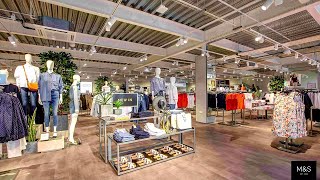
Last year I went to my first PI or PIE, I never know which one it is, in Amsterdam, and it was really in the formative stage of the lab team, and it was amazing to hear all those different insights and experiences and challenges that people were facing. And I set myself a bit of a personal challenge to actually, oh cool, wouldn't it be great one day to come and stand on one of these stages and share our story? And It's pretty mind-blowing that we've managed to get here today, and I've got some cool things to share with you. The last year's— last year has been quite a journey that's really accelerated where M&S is at with 3D, and I want to share that with you today. But first, one thing you just need to know about me. I love a factory. I love the craft of garment making. I love product. And my journey started at M&S about 15 years ago. I was a product tech, and I got the opportunity to really travel all over the world, meet lots of different manufacturers, spend time time on sewing lines, understanding how things are made. And what excites me about my new role as digital product creation manager is that I actually, I can show up and do better. I can make better products, use 3D to make better products. I can build smarter processes, and I can build stronger relationships because we can communicate and collaborate better. But first, a little bit about M&S. It's a British institution. Ask any British person, what underwear their mother bought them when they were a kid, and they would probably say M&S. Established in 1886 as a penny bazaar, we now trade in over 105 markets. We have over 900 stores in the UK, and 30 million— we serve 30 million customers a year. And this is what we're proud of. We have 50 departments in the business responding, listening to the customers, and it all ending in a vision executed in-store perfectly. But let me invite you behind the scenes. This is the reality, and I'm sure that's pretty familiar for a lot of you here today. But it's okay, we love product. The way that we develop product today does have some issues. It starts with those 2D CADs, those vague representations of our ideas. We review those together, make some changes, action some samples, then we wait. Wait for them to arrive. For them not to be correct, and because our ideas are evolved and it takes time to make them, we've kind of missed the boat on that idea. And we continue on through that process and ask our stakeholders all to exercise that little bit of imagination, and we know people like merchandisers maybe don't quite have the right imagination. And let me just expand on that centre image for you. 4 times a year, Every single category in that clothing category in that business lays out a shop floor layout like this with samples. All those samples dictate our milestones, but you can't see volume, you can't see the vision executed perfectly, and actually we end up spending more time on product, on more product than we actually buy and put in our stores. But do we always need these samples to make a decision? I smell an opportunity. So in steps 3D, and our digital journey actually started about 7 years ago. And you'd think we'd be making amazing progress by now, but let me share a little bit of what happened. Quickly, first, let me tell you what gets me really excited about 3D. I loved being able to see my blocks, do my grade reviews. Please ignore Dave and his slightly curious thigh gap on the 4XL. But it meant that I could save time, I could have better conversations with my stakeholders to get things signed off before we even went to a sample. And I also loved working with the students, being able to collaborate with them to realize their visions, and I really felt that 3D could make my life a lot easier. So, a little bit about kind of some of the initiatives that we ran before. 3D was very much a tech-led initiative in the business, and I think that's where really kind of where we went wrong. Um, it was a bit of a shiny object but exploited with no real kind of end-to-end vision or what it could really do for us. In the men's shirt department, we had an opportunity to reduce sampling, and that cost saving was realized. That was a success. We managed to produce great quality assets, and this was all back in 2016, so that's So that's a real triumph, I think. But why did it fail? It was super manual. It required outsourced creation and a single person trained in-house to be dropping in those textures and then rendering them. And that was causing a bit of a funnel. And it wasn't scalable. Then at the opposite end of the spectrum, we looked to answer scalability, give our kidswear designers a tool that they could exploit and use, drop textures, colors, show a variety of products. But with no real standards or controls— again, that's really our failing— quality was low, flexibility of the assets was limited. We couldn't really take them anywhere. We couldn't do much with them. And with that, the leadership team kind of lost a bit of trust in 3D. So we kind of took a few steps backwards. But the good thing was it was made by design. So that's a real opportunity, right? If we can put the right tools in the hands of the designers, that's a great thing to exploit. However, quality has to be better. So we hit both ends of that dial, but what we actually needed to hit was take up this space in the middle, the right quality at scale. And it needs to be fast, easy, relevant to where we want to go, add value to the process and to people's lives and jobs, and not be led by tech, but done in partnership. So I know it feels like maybe I'm being a bit negative about the past. I'm not. There were some successes. We did develop a bit of a superpower, right? We actually have an in-house sample room. We've got in-house pattern makers, and we put 3D in the hands of that team. We could combine physical and digital together, and that really started to build trust and confidence in 3D. And it was also that laying that foundation of skills that the teams actually needed in-house, understanding patterns, understanding what it meant in 3D. So that's really where it started. So fast forward to 2021. We needed a redesign, but what problem did we want to solve? This. This is completely broken. It's not sustainable, it's inaccurate, it's inflexible, it's high effort, it's high cost, low collaboration, all governed by samples, and that's determining our critical path. It makes us really inflexible. But what value do we want to drive? So we know that's broken, but what value do we need to get out of it? We want to make better decisions earlier. We need— we can exploit 3D to create accurate visuals that will actually serve our process from end to end. And we can also, from that, create flexibility and efficiency in our critical path. We can start to move those timeframes. But where do we start? We have to set the baseline. I've heard it so many times here today already. You have to know what quality is first. So how are we going to do that? And this is where the lab team comes in. We need to do it differently. Like I said, it needs to be a collaborative approach. We set up the lab team, cross-functional team, focused with no distractions. And at the core of it, we've got the 3D experts, people who know the industry inside out, lived and breathed design, pattern cutting. And they've come from the floor. And then we teach them 3D. We give them 3D skills. Around that core, we've got that multidisciplinary team— change managers, adoption specialists, tech people, even external resources that can help us move faster. And it's collaborative and agile. That's really at the core of what we do. It has to be done together, and it has to be done fast. We need to test and learn. And then from tech to technologists, they all know what it makes— what it takes to actually stitch up a 3D style. We can set best quality practices. We can develop that scalable process. We also created a bit of a space that is visible and accessible to our users, the people who we're talking to. It really puts us at the heart. It's where we research our tools. We run workshops and train people, and we have our story up on the walls. And anyone can tell you that story at any time. It doesn't look like much, I know, but it's our space to play. And with everything with the lab, it's about evolution. And this space is going to evolve too. So we've got the vision. We've got the team. We're putting quality at the heart of it. What we need to build is the digital foundation. These next steps are the recipe for a scalable approach to 3D. Start with your libraries. Again, I've heard this over and over again today, which is amazing. Blocks, fabrics, all keep the quality up. You don't want people to start creating their own assets over here or over here. We spent a lot of time testing this and making sure that each time we created something, we learned something from it. We analyzed, documented the best ways. Everything is baked into those blocks, render settings, camera presets. Users don't have to think about what they need to do next. They can just design. It's all underpinned by standards as well. A quick example about how we validated this. We created some digital twins in the swimwear department and the holiday department. We got the patterns, the fabrics. We set our own render light settings as like a first iteration, and then we tested with leadership and the team. And we actually had a really good response on quality. So we knew that we were traveling in the right direction, and we had somewhere to build from. Next is the process, the workflow, your one best way of working. Easy to train, easy to learn, and ensures quality. You don't want users figuring out for themselves. It's a complex process. You don't want them to lose confidence and get nervous. And the way that we tested that, we modeled a test workflow and carried that out with a group of users. And what it actually told us is that we could tell them too much. We could train them with too much information, or we could give them too much of the process to handle. We needed to keep it simple. Product types were complex. Again, we needed to start simple and build up the complexity. The third thing is technology. And this is where the cross-functional piece kind of really comes to life. The future is highly automated, and we need to think about building the solutions. When we're building the solutions, we need to make tactical decisions on products and tech solutions and then move forward, understand our requirements, and keep moving. A quick example about this is in our business, we rely heavily on PowerPoint. We explored Miro in combination with Closet, and we actually managed to have really great conversations with our leadership team utilizing both of those tools. It was tactical for now. There's more to do. There's more that we want to do. And again, this is at the heart of the lab. This is what we do. We test, we learn, we adjust, and keep moving forward. And then there's upskilling. This is where the true transformation lies. We need to excite users. We need to build their confidence and make it really easy for them to adopt 3D. We mustn't ignore vendors either at this stage. We need to make sure that we bring our suppliers along with us, otherwise we can't really scale 3D in the business. And it has to underpin quality. They have to understand where they need to hit in terms of those quality levels. Now, one of the most exciting things we did this year in the lab was to set ourselves a bit of a challenge. And this really tests each step of that foundation, and it really brings us to life. We learned a lot from it. It's a designer trained in under 2 hours creating consistent, high-quality 3D designs. So Early Adopters was an out-of-season, completely voluntary program that our designers could sign up to, to experience the simplest workflow that we could teach them. It was a super safe space to learn. We made sure we stayed in touch and kept talking. We gave them a really simple toolbox that was built of good quality assets. We trained them in a really comprehensive training guide of short videos and cheat sheets that took them through the workflow that they could do in their own time. And engagement— we made sure that they stayed close to the— we made sure we stayed close to the users with drop-ins in sessions and making sure we were available to answer questions and take any feedback. We also sought to inspire our users as well by inviting industry designers in to talk about their journey with 3D so they actually it actually became tangible to our users. It didn't become scary. It was a really nice opportunity for them to hear the challenges and actually see a resolution and see where they could get to. We had great feedback from this program. And actually, that's what's really important for us. It helped us check and adjust our approach and make sure that we could create a truly scalable seasonal process. When we actually started working in season. And this is our vision, that scalable 3D process. It starts with your digital foundation. You then go into your design and development phase. And that can be done in-house or with suppliers. And it moves through your review stage, and then all the way through to your customer-ready assets. That's our vision. So now that we have the— ooh, crikey, sorry. And now that we have the foundation, we can execute this. And that kind of brings us a little bit up to date. It's only the beginning. And the lab dedicated its time to setting that quality standard and building the foundation, and we validated that. But it doesn't end there. It needs to evolve and move outside of the lab, but the principles remain the same. Testing, learning, collaboration, and being agile. And we know the journey towards scale isn't going to be straightforward. It's going to be quite squiggly. But the team that we've built in this last year can face into this, the cross-functional approach— with the cross-functional approach. And we become— but we come even closer to our users. So, our next 3 key priorities are to embed a DPC team in the business. That can continue researching and exploring, but also stay super close to our users and get their feedback. We need to sit amongst them. Next, we ramp up our vendor onboarding. Again, like I said earlier, we can't do this without them. In order to scale, we need our suppliers with us, but they need to understand one best way. They need to be benchmarks, and, and we need to help them move forward. And then there's automation. And I know this is the big topic at the moment, is how do you, how do you take out the steps that are distracting people from the process? How do you make it again simpler? How do you make those tools work together and make it really simple? So a bit of a speedy recap of our lab year. It's been a bit of a journey, but we've built and really validated that foundation, and I'm really excited to set those priorities and see where we get to in the next year. And that's it. Thank you. Any questions or anything? Don't have a slide. No, no, we've got any questions? No. Thank you. Question: How do you plan to adapt the project learnings and the workflows now to the rest of the company? So yeah, that's a really good question. So where we did early adopters, it focused on our simplest products. So we, we've identified those departments across the business, and we've been able to categorize the products within that. And then we've built the training and the program around those kind of updates. It's just simple color, color and print and pattern updates. So that's how we've built towards where we're training them. And I think getting really familiar with the complexity of your product areas and understanding if you've got metrics that you can use to kind of leverage your planning principles and things like that. So we call it repeat, tweak, and create. Like, I'm sure you'll have your own, your own versions. So we're just centering around building complexity through those, and that's how we're scaling with the teams. Oh, God. I forgot about that. What do you mean 3D assets ready for the customer? Okay. This could mean a few things. So I guess there's the obvious one of the e-com focus, being able to put our products on e-com. One of our key issues in M&S and sharing here is, is waiting for that photographic sample to get product online. And a really exciting opportunity for us with 3D, if we can get that unlocked really early in the process, is that we can actually start getting content online when, when product's landing in stores. And obviously there's a wealth of other opportunities with us. We're not necessarily metaverse-facing as a retailer. That's not our customer base. So I think it's more about exploiting marketing and e-com channels. Is that okay? When I talk about 3D standards, what would be a standard, for example? OK, so this would be— if we look at blocks, it would be how you construct that block. So it might be whether you do a double turn cuff in digital, or you construct it in 2 or 3 layers, or 2 layers. It's the fine details around all the variances within how you create your products and your assets. So in the same way you might have construction guidelines for your physical products, you need the same for your 3D. And again, it's similar to fabrics as well. We need to understand what quality is and how we pin down one best way of doing it. Crumbs, there's lots of questions. Okay, I finished too early. Um, do you have different teams of 2D and 3D designers? So No, we don't at the moment. And we're looking to upskill our existing design base with those 3D skills. But again, it's about breaking it down into really manageable chunks that aren't scary, that are going to make it really easy and exciting to adopt. We know— maybe I'm putting a bit of a rose-tinted lens on it— it's going to be hard. It's not going to be straightforward. But we're really committed with our approach so far. And we've seen success with that. So we think we can carry that. Carry that forward. What technology is used for library management? So we're currently a CLO-focused kind of DPC team, sorry, and actually library management, we're managing those in CLOset as it currently stands, and we're sharing those with internal teams and our vendors. "What is your goal regarding the 3D? Is the main driver the store assortment planning or something different?" So it's about really taking it— it's about kind of getting to that end-to-end, really. Store assortment planning is one part of the puzzle. It's one part of those decisions made, better decisions made earlier. When our teams were laying out those big store layouts, If they could do that in 3D, actually, they can actually start doing that at the beginning of the process rather than waiting for the samples. So that's where we're going for the gains at the moment. Crumbs, I'm seeing all these questions coming in. Looking back, how could you speed up adoption of digital workflows and tools? Oh. I'm not sure how— how could we speed up the digital adoption? I think it's communication. So we heard in one of the panels earlier, it was all about how you need to over-communicate. So we can't just surprise our users with this. We need to tell them what's coming. We need to show them what quality is. We need to know the process inside out ourselves and be able to demonstrate it to them. In terms of speeding up what we did, I think we've worked pretty fast in the last year, so I feel like we made good progress. So I would say we carry that forward going, going forward. What about fabric library? So yes, we do scan the fabrics by ourselves. I've got Nico here in our team who's actually our material specialist who's been working on those fabrics. So yes, we do. We use Bizu and we're exploiting the physics platform as well. Yes, we've got a big library to scan, but we're looking at how we scale that up over the next, over the next year, whether that's with third parties or keep it internal. How did you define the right quality versus the right scalability, and how did you validate it? Again, I think this is actually an ongoing process. So the right quality, we need to talk to our users, we need to talk to the people who are consuming those assets. So we know what good quality is, but we need to make sure that they're being able to make their decisions with it and that they're able to get what they need from it. So it was constant feedback loops, constantly talking to teams, constantly talking to leadership teams and listening and framing it in the fact that it's a space that we need to learn about. We're not kind of setting that direction and moving forward. And by showing that we might make a decision here and actually change our minds or evolve it kind of in the next next phase shows that we keep moving forward. I can't remember what the rest of that question was, but okay. How's the color accuracy accepted by the team between 2D and 3D and physical swatches? Can 3D colorway samples actually replace physical? Don't delete that, leave that on there. That is a long question. Okay, we have had some challenges here, I'm not gonna lie. What we've done is when we are working with color, we're taking all the ASE files from the color team when they develop their palette. So we know that the intention is the same as they set out with in the start. In terms of acceptance, obviously, there's challenges with screens and calibration and things. And actually, that's something that we're working on at the moment. We've presented in a few different ways and a few different rooms with different lighting, and it's all kind of produced different results. So it's not something we've answered yet, but we're exploring around, OK, what's the right tech setup for us? And then we own that. Well, we own it to develop it and make sure that we can land it with the business and make it scalable. And can 3D colorway samples actually replace physical ones? Absolutely. That's what we want— hope to do with starting with the simplest workflow. It's familiar product, it's block-driven, it's just print and pattern color updates, 100% you should be able to show one physical sample and then the spectrum of your color palette in 3D. Absolutely, that's what we're doing at the moment with our teams. What's been the biggest change management challenge, technology, skills, or question mark? Crikey. What isn't a change management challenge in 3D, right? It's all difficult. It's not easy. We're trying to move the industry on. Technology's been a challenge for us because we've not been a joined-up team. And actually, within the last year, we've become a lot more united. So we're able to really kind of develop the right tools and think in the same way. It's not perfect yet, but we will get there. Skills, obviously, we know we've identified that we need to keep it simple. And when we did the workflow test, with a department, we found that we overtrained them. We trained them from A to Z. And actually, no, hang on. We needed to dial that back a bit, not scare them, not overwhelm them, and keep it really, really simple. So that approach of a designer can be trained in 2 hours to use Cloe. How cool is that? That's the optimum goal. And other change management challenges are just really— So leadership team have always been difficult. They expect so much more of 3D than a physical sample as well. And that's really hard to kind of counter because they want it all singing and dancing, or they're not sure what they want entirely, but they know they want more than the physical sample that they're seeing. Whereas our base level is like, OK, is it the same? Like, can you make the same decision? Let's keep moving forward. We're working on opportunities to showcase and elevate 3D beyond that. But again, it has to be scalable. It has to be the right approach. How do you plan to use 3D in communication with garment suppliers? So yes, I only touched on this a little bit. So this is a great question to be able to expand upon with you guys. We're actually doing a vendor onboarding program at the moment. Starting with our strategic and tactical vendors, so the top, uh, the top portion of the, of the people that, that we work with, um, we're giving them a kind of simple workflow to follow. We're onboarding them into our tools and our systems and making sure that they can understand what the M&S approach is, what quality is, how we get there. We then move into a benchmarking phase, which is super exciting because we, again, we give them a control toolbox, we give them a brief and get them to create it, and then we can benchmark and level those, those suppliers at the end. We can then give great guidance to them. We can help them, support them to get improve on their journey. And then the next step after that, which I guess is kind of probably more the communication piece, is once they're onboarded, they're expected to submit those designs to the teams that they're working with. In 3D using CloSet. We do have PLM as well in our toolkit. So we're working out what the best route is, but we've picked a tactical route. It's going to be exploiting CloSet for the 3D, and we're going to move forward from there. What are your next steps? The wish list. How do you imagine the next year's story will be? OK. So, the wishlist, I guess, top of the pile is that automation piece, right? Like, let's make it as simple as possible. There's so many different tools, there's so many different approaches. There's lots of manual work that you can explain to a user, "Well, you kind of just have to do it. Just bear with us a little bit longer and then you might have a solution." So, I think that needs to be a priority to really get adoption and buy-in. Much higher, but again, it's about which areas do you need to automate, and where are you going to start? Next year's story? Oh, I don't know yet. We learn quite a lot, so I don't want to commit to anything just now, so I'm going to dodge that one. I haven't seen so many questions today. Are you trolling me? I've got my team down there. How did you manage to get leadership buy-in for the lab team? Yeah, big question. There's probably some better people in the audience that could answer that one. How long did it take you to deliver your first tangible results? Leadership buy-in was tough. It was really hard. Lots of hoops to jump through. Obviously, we'd been on a journey with 3D before in the business, so there was kind of some mixed opinions and mixed feelings about it. There are some really mixed feelings about it. And we had to kind of work hard to undo those. We got some expert advice from the lovely Dom. And we worked together to really kind of settle on that vision, settle on where we were going, what value are we going to drive out of it, how were we going to exploit 3D, and then start to paint the values against it. I know we've been talking about sample reduction, cost reductions. They're really hard things to measure sometimes. I don't know about you guys, it's quite tricky, but we make some assumptions, we propose some costs, and then we keep moving forward. Yeah, it was tough in the end. How long did it take for us to deliver the first tangible result? I think once the team had landed, literally in a matter of maybe 2 months or something, we'd actually created that first test to validate that base standard and those foundations. So that swimmer asset I showed you, we actually managed to run that test from start to finish with them. And again, there we got great feedback. They loved the quality, but they didn't quite like the experience of how we presented it to them. Context and things. So it, it took us a couple of months since we— once we landed. What will we do differently if we start again? Uh, thank you. Um, what would we do different? I don't really know what I would do differently. Uh, that's a tough question. I think what one of the crunch points is with the evolution of the team, it's been really hard to make sure everyone stays with us. That's been, I think, one of the hardest things. And we've kind of added people in at different phases. This year has been crazy in terms of absorbing people with us and bringing people along. And that's one of the hardest things for me personally that I felt has been difficult to manage. So I guess my advice in that sense would be make sure you've got your story clear. Make sure you can tell that to people and tell it with passion, right? Like, everyone needs to be able to— needs to be able to do that. You have saved me. So yeah, I would say you just— yeah, you get your story straight, right? And go from there. Be passionate about it, which obviously everyone here is, which is great. So thank you.










