The New Rules of Loyalty & Customer Experience
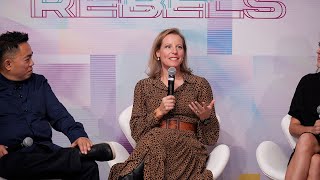
In this 2026 PI Apparel panel, moderator Maria Carlton (founder of Fourth and Forward Advisory, former Under Armour executive) convenes a cross‑industry group—Eric Cruz (creative director at Sphere), Sarah Ingelmar (executive director of custom experience at Clarins), Casey Rosette (former Vans/North Face marketer), and Paula Bianchi (digital & e‑commerce director at Navarro Parts)—to rethink loyalty, content, and customer experience. The conversation moves from the need to shift loyalty programs from pure transaction to emotional connection, emphasizing community‑building, experiential rewards, and unique product offerings. Panelists share concrete examples: Vans’ “Vans Family” program, Clarins’ Club Clarins masterclasses and influencer‑driven loyalty, Navarro Parts’ car‑meet events, and Benefit’s loyalty‑first mobile app. They discuss the role of AI in content creation, personalization, chat‑bots, rapid prototyping, and data‑driven storytelling, while noting change‑management challenges and the importance of authenticity in influencer partnerships. The group also tackles practical issues such as reward tier adjustments, regulatory constraints on points expiration, and the risk of discount‑driven loyalty. Finally, they explore emerging technologies—wearables, AR, and data partnerships—as future levers for immersive, sustainable, and frictionless loyalty experiences.
Chapters
Okay, we ready to get started, everyone? Hi, I'm Maria Carlton. I am founder of Fourth and Forward Advisory. Most recently, I was at Under Armour for 15 years running their global go-to-market in our digital commercial transformation. And I'm really excited to lead this panel today, which is not another fashion panel. Fresh takes on loyalty, content, and the customer experience. So I'm gonna go let the rest of the panel introduce themselves, and then we'll go ahead and get started with the questions. So Eric, do you want to go first? Introduce yourself.
I'm Eric Cruz, creative director. I'm with Sphere, which is this nice building in Las Vegas, but about a 25-year history working on brands like Nike and things like that through Wieden Kennedy and AKQA. That's me.
Hi, friends. I love the intimacy. My name is Sarah Ingelmar. I'm the executive director of custom experience experience for Clarence. I would say Clarence was the original natural beauty brand. Fun fact related to loyalty, in 1968 we put an insert in all of our product packaging that acted both as a loyalty card and as a customer feedback mechanism. So fast forward 2025, you know, we're still obsessed with customer listening, with loyalty, but we've upgraded our tools.
Hi everyone, I'm Casey Rosette. I've spent my career leading marketing for iconic lifestyle brands like Vans, North Face, and Jockey. Most recently, I was leading media and omnichannel marketing for Vans, and I'm excited to dig into the conversation today.
Hi everyone, I am the odd one out because I'm not in fashion. I am from the automotive industry. So my name is Paula Bianchi. I'm director for digital and e-commerce for Navarro Parts. So really excited to bring a different look to the fashion panel.
Paula, I think you're like right on because this is not another fashion panel because even though this is a PI Apparel event, pretty much everybody here is not really in the apparel space. So that's where this— we can talk about loyalty, we can talk about the consumer experience. In marketplaces that are not just brick and mortar or online and omnichannel for apparel and accessories. So that's where this will happen. What are those parallels and what are those kind of those insights that you all have? So I'll go ahead and ask the first question. And I think I'm going to go to you, Casey, first. Okay. As loyalty models evolve, how can we move beyond transaction to build lasting emotional connection?
[FOREIGN LANGUAGE] Yeah, so I think for loyalty programs in our space, when we're talking about beloved kind of elevated brands, it has to go beyond transactional. And to me, it's the convergence of what your brand uniquely stands for, what can you uniquely offer, and what does your consumer want. And to get to that point, you really have to listen, you have to do the research, you need to get in front of the consumer. And so at Vans, we have a pretty massive loyalty program called Vans Family. It's like 15 million consumers plus. And the challenge over the last year was really to look at how we reimagine that. How do we elevate it? How do we draw people in, especially Gen Z? And to do that, we partnered with our CI team and talked to consumers and really got into the psychology and the mindset of What was attracting them to the program? What made them feel connected on an emotional level to the brand? And the two things that really jumped out, and not going too deep into it, one was experiences. So as you think about, is it travel? Is it going to a show or event? But something tangible, something connective to the brand, but that offered them more than just a transaction. The other was really getting into unique product or one-of-one opportunities. So was it a signed skate deck by one of our athletes? Was it a unique pair of shoes that was signed by the collaboration partner? But those were things that kind of transcended that one-off, you know, mass commercial transaction. The latest example and how we started to kind of pull that into the program, we brought back the Warp Tour. So for those of you who— know what that is or have been to one. There was quite a hiatus. That came back with 3 stops this year and more to come. But a VIP experience was a great opportunity to pull consumers into that, to give them a ticket to something that was sold out, but more than that, to take them behind the scenes, give them a truly unique experience that they wouldn't have otherwise. And I'll just add, you know, what Stacy spoke about yesterday from Todds of those wow experiences. That's very much the same idea, maybe at a slightly less luxury level. But I really appreciated what she shared on that front.
And I think we think about loyalty programs with brands with like Vans, Clarins, beauty brands. I'm curious from you, Paola, like from an auto parts perspective, how are you thinking about an emotional connection with loyalty?
100%. And I think so I mentioned a little bit yesterday We have a day job which is selling parts, but then we have the emotional connection to the automotive world, right? So my job is not to create loyalty to my day job, right? Because like anybody can sell parts. I can just go on Amazon. What's in it for me, right? Like what would make me want to go to this brand versus this other brand? But Because at the end of the day, I'm a distributor, right? Like, I don't make products. So what we do is we connect with our audience where their passion lies. So you talked about, you know, experiences and all of that. And one of the things we started doing is car meets because that's what people need. They need this connection, this human connection, you know.
Like a car show where they come to show off their cars to each other. that—
Yes, we just offer the platform and you come, you come, you show with your car or not. You just come and, you know, look at the pretty cars or whatever the case may be and just have a good time, you know. And I'm not trying to sell you anything because that's not the point. So the loyalty lies in the experience and the shared values, not in the transaction itself. Yeah.
I was going to add to that. Just, you know, you mentioned this emotional connection. I think engagement is really one key word. Having worked on Nike for about 15 years, there was a cadence that Nike as a brand would have and a kind of relationship with its audience, right, that is very, very specific. For example, developing an actual app called Nike Training Club or Nike Run Club. That is, in many ways, a piece of loyalty app. But it serves a way bigger purpose, which is to engage the audience, the fan himself or herself, in a daily level. So there's that level of it. But even, for example, basketball players all around the world, when the NBA is in its offseason in the US, they travel worldwide in order to create basketball training camps. right, teaching youth worldwide how to better their game, right? So in many ways, it's always about being authentic to the audience that you're trying to serve and giving them something they didn't think was possible to be done. And that's how you retain loyalty.
And it's definitely interesting in this day and age. I mean, I come from Under Armour. So, you know, even your consumers are a little bit different. So your baller versus your female, you know, athletic, athleisure type of fan or yoga fan. And so it's like, how do you also engage in a way that is authentic to that consumer, even though they can be multidimensional for who they are from a demographic and a gender and a sport that they're into. So it definitely makes it a challenge sometimes.
What I think you're both touching on is community. But it's how do you create that community? And the brand has to have a right to be present but can't overtake. Like, it needs to organically evolve for it to be beneficial for the people participating.
But that's— no, that's what we find in the superfans and the engaged clients. And when I ask our members, right, how did you find out about Clarence? And like 90% of them found out through their network, usually the mom, right, a friend that shared the love of Clarence and the products. And so with Club Clarence, we lean into it and we encourage them, right, to attend experiences with the networks to discover, right, they care about the product. I mean, that's like, right, the table stakes. They're with Clarence because the product works, right? It's beauty, it's super personal, it builds your confidence, the formulas deliver, and the values align, right? B Corp certification, recyclable packaging, sustainable formulas. But what we can bring in is that connection back to the people. So invite them and the networks to discover the product, the newness, to play, right? Teach them like masterclasses, how to apply the product, how to get the most out of it really, and that surprise and delight. I think there's a community and there's a surprise, right? How do you keep reinventing the playbook of loyalty and give them something that's a little bit different every year based on what they're telling you that they care about in 2025, which is going to be different from 2026, right? That's the entertainment part, which is when you can have a lot of fun and really need to be attuned to the culture and do research and bring in your creative partners and your PR partners to seize these really cultural opportunities to surprise, delight, staying true to the brand and to why they're loyal to you.
I think one of the things that we can't forget is that it takes two to tango, and loyalty is created between your brand and the consumers. You can guide it, but you can't control it. So you have to listen to what the consumers bring back to the table, right? So it's not something that you can control 100%. So I think that's the important part of it, the community. I want to be part of the squad, right? I want that community is my people. Right? So how do we become part of the squad, their squad, right? Or they become part of ours. It's that connection, which ultimately leads to them thinking of us when they need, in my case, that part or whatever the case may be, because ultimately that's what we want, to make the sale, right? Like that's what loyalty actually means.
Yeah, going off of what you're saying and off of what you said, Sarah. So I love what you're saying about like the mom communities and that kind of like online really authentic. And I think that's, that has born into the influencer and like the TikTok channels and bringing people to Amazon and your own channels. But how do you, like, I think we've gotten to a place with influencers where it does not feel authentic very much all the time. Sometimes it really does, sometimes it doesn't. It's almost like how do you take that ethos of truly that mom community or a team sports community or whatever that community is and have it organically feed back into your own channels? Anybody? Sarah, you can go or anybody else.
Well, I'll tell you an interesting true story. 2 years ago, we had 2 products that we stocked out on. We sold hundreds and hundreds of units a day of these, like the flash roller and/or a mask that tightens and lifts everything instantly. It really does. And we're like, why? And we tied it back to Kathleen Jennings. I don't know if any of you follow her. She's this big Texas-based influencer mom. And she had talked about our product. And so she had this authentic love of the product. And then we formalized the partnership. But that's sort of what we— our approach to finding influencers. We don't just look at whether there's a fit with our objectives and our audiences, but are they true Clarence lovers? And we're very lucky that we find them. We don't have to pay for them to love the brand and to use the products.
We've taken a similar approach. I mean, on a macro level, certainly they have to be authentic. So not everyone's a skater, but they have to be interested in the action sports community. They're plugged into music, plugged into fashion. And then on a, you know, micro and mid, I mean, personally, last holiday, I mean, everyone who's in media and marketing holiday, you never get a break. But I was like hands on keys going through our influencer holiday plan and our affiliate extension because brand fit and taste was the most important thing. Any content that's going out there, if it's not the right fit for your brand, even if their following is small, small, it doesn't matter. Like, that's ultimately you and you're signing off on that. So I think like that connection and, and oversight is so important. You never know how it's gonna travel.
I love that. I think getting into, 'cause I'm gonna go to you right now anyway. As we think about technology, obviously we're talking about AI and everything. How is it changing retail? How is it changing the future and patterns? You know, AI and creativity is, very much about where you work right now. How has it— have you seen it change and amplify your business? And then how do you see that apply to a loyalty type of space?
I'm a techno optimist, so I'm always sort of pro things like AI or anything new and technology-based. But I think there's a lot of chatter about the negative sort of aspects of what something like AI could bring. But I tend to look at it the other way in that we creatives and we strategists and we brand builders are the ones responsible for how to create what these AI things can do. So I think in many ways, it's in our own responsibility to make the stuff that we want to put out into the world and do it responsibly. I think you'll see some examples of what Sphere has done collaborating with Google's DeepMind to recreate or reimagine something like Wizard of Oz at Sphere, for example, right? And, you know, within that, the chatter over, is AI taking jobs away, is actually amplifying jobs, right? And I think we're at that stage in the history of the world where AI is sort of forcing us to shift gears into a new way of thinking, a new way of working, right?
And I actually think what the Wizard of Oz is a good example of really the— the positives and the negative perceptions of AI? Because, you know, I think it's amazing. Like, I've seen like the previews of it. It's amazing. But you have those like naturalists are like, this is messing with an original classic, but you're reimagining it in a beautiful way. Like, how have you seen that in a close and personal way? And has that really affected anything at all other than just like, this is just the same chatter of people who just aren't ready or they just that just don't want to think about it differently when they have this, like, old classic thing that they love.
I think you will always have two sides of the coin and therefore two camps, right? And I think the way forward is to kind of really rethink how can you use it to our advantage, right? That's sort of how I always look at technology. There were people in 1996 who were sort of anti-World Wide Web, right? And we kind of saw how that evolved into where we're at now. The same thing could be said for social media, there's a lot of demons that kind of come with that. But I think there's equally as much sort of benefit to humanity as we've seen. And I think that will always be with us no matter which technology we're confronting.
So I'm going to use your techno-optimist term. I love it. We're huge into AI. I'm huge into AI from a content standpoint, right? Freed us from the tyranny of the photo library. Right? Klaus is a French brand, so we get a photo library that's shot in France with French monuments in the back. And now we can create our own composition for the local American client. We can have a Thanksgiving composition, right, when we send that email. And it just gives our designers such a creative freedom to— right there, they have the vision. But with the AI, they're able to really quickly bring it to life so that we can have better photography, better content, whether it's visual versus text, that's more relevant to the consumer. So I think the consumer is getting more relevant communications in the first place. From a creative standpoint, obviously you all know one-to-one, right? I can much closer to sending the right message at the right time to the right audience. So that also AI is enabling this. Scale, which is, you know, wonderful. And it also enables access to the brand, right? Like, I don't, for example, for customer care, I don't, I'm not available 24/7, but now I have a wonderful GenAI chatbot. Her name is Clara. She has personality, she has a sense of humor, and she gets really high satisfaction ratings from the clients. And that is, you know, wonderful because then the, you know, I get, if you wanna speak to an agent, You have, I mean, the clients have the agencies and we're there, not 24/7, but we're there. And they're also empowered with AI, so are humans in stores, and they can do an even better care because we serve up to them the right information.
Have you seen any downside at all? Like, is there even from a, has it affected your workforce in any way? Because I know that's a big fear, right? Gentech AI as a lot of things become streamlined? It's a talking point, right? And I just want to like see how it's applying in your business.
No, I know the downside is if you don't use it, you're going to lose out as an employee, right? As an executive. And I think also consumers are gaining tons, right? Because they have all these assisted like technologies to help them make their decisions, whether it's like professional shopping, like personal.
Yeah, on our side, it's such a traditional industry that it's the change management. So we have to go through the change management with our sales associates and with everybody in the industry to remove that fear, you know, and the what's in it for me, because they are afraid to use AI. Because they are still in that mindset that AI is going to take our jobs as opposed to AI is going to empower me and it's going to enable me to do more and to focus on what the human needs to be focusing as opposed to what I can just, you know, automate. So it's not going to take your job. It's just going to allow you to focus on what the human needs to be focusing that a machine cannot. Right, which is that conversation, that human connection that the machine will never be able to have. So in that sense, we had to do a lot of change management.
That's interesting because it sounds like the bot you guys have has a lot of personality, which is I think very cool because I think in an earlier discussion I think I was in today, it was talking about the downsides of AI and the customer journey with loyalty, and part of it was, I don't want a bot to talk to me, I want to be able to talk to a real human. I think I think it's getting better with agentic AI on feeling more like a person and some of that, but—
And they don't have to.
Yeah.
Right? That's the beauty is they have their choice. They have more choices than they've ever had. And when they interact, you know, with marketing automations or any technology, they have a much better experience. So at the end, the consumer wins. We win.
But I think if you think about where AI is right now, it's in its infancy. And as it becomes more sophisticated as a system, becomes a lot more responsive to human needs, is able to anticipate the way you think, the way you act, the way you behave, the way you would want to be spoken to, I think it's going to reach a point where it's going to become a lot more comfortable for people to engage with.
Mm-hmm.
And I'll just add, like, definitely leaning into AI. I think there are some examples especially with sports-based brands, is one where you just have to be really careful. So for example, action sports photography, not going to AI anytime soon, at least from a credibility standpoint, right? There's certain exceptions where you absolutely need that to be human-driven. It needs to show authentic skill and, you know, human-based sport and delivery. But then there's other exceptions where, to your point, AI is certainly an enabler of efficiency. It's helping to show the consumer situational experiences with the product that are great.
In addition to this, just to build on this, also in beauty, we use AI for design but not for models. So we will never show a model because we're—
product on skin.
Correct. Yes. That's the sandbox.
And I love that you're applying this to the loyalty conversation. How about— about storytelling. We know storytelling is at the heart of marketing, and it's definitely got impact with AI and the way that we're utilizing the data that we receive through programs. So any thoughts? I mean, Eric, I see your head shaking.
Yeah. No, I think we use it quite a bit in any of the creative industries. I think it's become a sort of rapid prototyping tool that enables you not just to storyboard, but actually to create and make stuff happen in motion. And so what I think is happening is it's forcing you to, you yourself, go in a higher level and a higher plane because it's able to do the service for you that would normally take others into an army of storyboard artists, of editors, of animators. Now it can do for you just based out of a kind of prompt that you have. So what it's doing is it's allowing you to kind of visualize what's in your head but do so in a way where the game has to change, the game has to elevate. And so again, in many ways, to me, there's more pros than cons in that regard.
There's a great podcast I've shared with a few people this week already, but called The Future of Storytelling. I don't know if you know it, but they cover the map and talk with a lot of really interesting people, but they're really kind of unpacking how you utilize AI to shape different parts of the creative process, but where it makes sense or it needs a human filter. So how do you speed up certain areas? And then how do you, you know, bring people in at the right time? I think a point they've drilled in is it's not about saving money necessarily, right? And we've heard that this week. It's where do you gain the efficiency to give the human touch the time and space you need to really develop something Amazing.
What about you, Paula? Anything from a storytelling perspective with auto parts?
I think it needs to be relevant. So we can't forget that, right? So the feedback is important. The data is important. We feed it to the AI. We need that human to make sure that it stays relevant because ultimately your loyalty program, it's not for a random person. It's for your customer, right? It's for your— I call them my Prince Charming, right? It's like that perfect customer that's going to want to come back always, right? So the loyalty program and the storytelling need to match. So the storytelling is the loyalty program and they all need to fit together because what you're creating needs to be coherent with the brand, with the products, with who you are, with your values, your brand values. So everything needs to make sense if you want your customer to believe you, right? To trust you. Because as soon as you have some dissonance between the different channels or the different programs and all that, then you look, you know, like you don't really have it together. And not just that, but like, who are you?
Right.
And the consumers that are very loyal are paying attention most, probably. So they're more likely to notice that.
Now, and I think, Erika, this is a question for you too. Coming from a brand that does storytelling very well, coming from Nike, obviously storytelling directly to consumer, and now you're at a place where the product is the story. So kind of what have you learned from your newer experience that could go back into the kind of the retail space and vice versa from those two experiences that you've had? Like where have you got some shared learnings or maybe some opportunities for retailers to do storytelling from what you've experienced at the Sphere?
I think to me it always still kind of goes back to authenticity. Of whether it's a brand or whoever to be able to kind of put something out there that's going to speak of the brand story, but speak to that fan in a way they didn't see coming, right? That there's going to be this sort of reaction to where it's like, wow, I didn't expect that, right? And I think in many ways it's about trying to elevate the storytelling into that shared sense of wonder that people can really kind of dig into and go, this brand or this sort of company is doing things in a different way.
Yeah, I think it really goes to like, who's your consumer? If you're on TikTok and you're trying to appeal to Gen Z, you can probably come into some of those TikTok trends and like jump on that real quickly. But for Clarins, you might do something a little bit more sophisticated with your consumer. I'm curious, with you, Casey, anything with Vans where you guys have had really good success with storytelling using, um, with AI or with technology helping amplify that storytelling for you?
I have to think.
Not to put you on the spot.
I will say, I mean, from an AI standpoint and technology, it's more been on the back end of late because we've pushed more into the roots of the brand and what has worked and we kind of got away from for a few years, which was on the ground, in-person, community building and experiences. And I feel like there's been a big movement back toward that. So the enablement has more been around how do we make sure we have data of who's engaged, how do we use that data respectfully and in the right way to remarket, to reengage, to offer something of value to them, loyalty connected or otherwise. But it's actually been a bias toward the being present in the moment and engaging with the brand in a different way. I think COVID, a lot of people walked away from that for a lot of reasons. And that's the shift that we needed to make that was really important, not just for current consumers, but it's the way that our brand authentically could engage a new wave of consumers. So Gen Z and Gen Alpha don't know Warped Tour. They weren't there for that before. Like, they need those touchpoints to really connect with the brand.
Very interesting, very cool. So, a shift to another question, and for any of you, who of your competitors or any other retailers that you see out there think are doing a wonderful job accessing loyalty, directing, really connecting with their consumer in a world-class way?
I have an example that just launched, Benefits. Benefit created an application that is not e-commerce first, it's loyalty first. So the whole mobile app experience for Benefit is recast as a membership experience. And they use amazing creative, right? Do you need your benefits, right? And it's just, I think it's so funny. But the whole app is like, okay, so you earn points every time you when you open the app but also when you engage in the games that the app offers, if you write a review, so advocate on behalf of Benefit. And I think it's really interesting because it's really Benefit basically being like, we're taking loyalty seriously that we're going to develop a whole app to build on loyalty, drive that engagement and advocacy. And obviously they're not doing it without a P&L. The sales will come come. And I think that's very interesting. And also, it's very modern, right? The language, you can tell that it appeals to younger generations, but it's also going to appeal to the mom because it's so witty. So I think that's a great example that, you know, our team is looking at for— because I think it's like it's recasting and rewriting the playbook.
We were talking yesterday during the roundtable, and one of the examples that came to mind was the airlines and how it feels like if you're not booking your travels with your loyalty airlines, you're kind of like missing out. So your access to the lounge, your, you know, your points, your perks, like there's so much tied to that loyalty program that if you're not in that loyalty program, you're really not having FOMO. Yes. And it's like, do I really want to travel without those perks? I don't. Right. So I think they really nailed the loyalty program.
I think the interesting thing, because I reached out to my network to kind of poll people on like, what is your favorite brand that's doing loyalty right, right now? And the surprising answer was that there's not a lot that stand out. The brands and the companies that I think are coming top of mind are travel-related. So it's hotels, it's airlines, credit cards that are doing, you know, unique access or, you know, special seating or whatever it may be. And brand-wise, it was hard for people to come up with that. Like, the default answer was smaller brands, like where I go to my local cafe to get coffee, like loyalty at a personal, very personal level. Personal level. A few that I, I mean, a little biased, but other than Vans, I think The North Face does a pretty great job because they have a unique like wear test option. You get access to product, you have a different return policy if you're opted into the program. REI and Supergoop, which I know is a bit of a competitor, but I, I like them. But there's been a shift, like I think for retail brands especially, it's more the experience space that has gained more loyal following.
Yeah, it's hard. I'll answer that in two separate levels because Sphere is one of one. There is no competitor. So it's not necessarily something that you could kind of compare with. But from a Nike perspective, obviously, a lot of the stuff that Adidas would do or Puma would do would be something I would pay attention to just from a kind of healthy rivalry. Standpoint, right? That in terms of— and the benefit of that being now is I get to work on all those brands under this new umbrella called Sphere.
So that's very cool. So we have only a few minutes left, and we've got some questions. I think we'll go right into those. So I'll start here. What has been your experience when brands start to ratchet back the rewards to save money? How can they balance the need to change their rewards thresholds? So it almost feels like Table stakes are loyalty right now. Somebody feels like really good about something and now it's like, oh, we're going to pull that back. Any thoughts on that or experiences you've had?
I've seen— I can just quickly speak to it. You know, there's an always-on loyalty exchange transactionally or there can be a time-based approach. So The North Face as an example, if you're part of VIP, I think it is, they do a quarterly redemption. So it's not— it is something you accumulate throughout the year, but you have certain time periods where you can actually leverage your loyalty points. And that helps, I think, more so with a predictability of revenue. Like, they're not hit with a surprise peak or swing just given the size of their loyalty program. So that's one thought on how to curtail it.
I think, well, in Canada, because I'm from Canada, it's different because Actually, points cannot expire by law. So what we had to come up with is a different way to offer loyalty that we can make it expire so that we don't have to carry the burden in our P&Ls, right?
So what does that look like?
So what that looks like is I can give you money for free. So for example, if you buy something and I give you $5 let's say just basic. So I can give you experiences and that, you know, can expire, let's say, whatever. But if I give you money, that money is free because you didn't buy something that earned you that money. I'm just giving it to you for being a loyal customer. So I can make that expire. So there's different ways.
I think you'd need to look into different ways to, Going back to your airlines example, I think that was some of the bigger, kind of, some of the original loyalty programs, right? But I think of Southwest, and it used to be you fly a certain amount of flights, you get a free ticket. And then all of a sudden it was, oh, now you have points and you have to wait way more. I wonder if that is then a backlash for those companies. In some cases yes, in some cases no.
I think it depends on the value proposition, right? Figure out what do I get. I know I'm getting a little less, but is it still worth, right, like the Chase Sapphire increased fees or the Amex Platinum or, you know, traveling, giving my money to travel with a certain airline. So I'm sure they've done their calculations and, you know, right, loyalty programs are profitable because of the top tiers members. So yes, if it's not a good value prop for you, it means you're not, you didn't make it to the top tier. Tier, but if they've done their work right, it means, you know, the top tier is still like by far still benefiting. And as Paola explained, you know, you just, you take something back, but you need to give them something in return that will not impact your P&L quite as much. But the good practice is you don't take something away without, you know, giving something more. And I think in the case of these airlines, right, if your top customer customer, you get more.
You do.
Yeah.
And I think what's important is to make sure that you're not quote unquote training your customer to buy on discount because a lot of brands will give you money for loyalty points and all that. But in reality, what you're doing is you're incentivizing your customer to just buy on discount. So I think that's very dangerous and very important to consider.
The race to the bottom.
Exactly. And like, is it really encouraging loyalty?
Yeah.
I love this last question that we have here. I want to make sure we have time for it. How can luxury brands use live shopping without it feeling cheesy or beneath the brand? So like, not the new days, but like the old days of QVC. How is like— and then FaceTime Live and some of those other things. Like, how are you guys thinking about that?
I mean, I've seen— and certainly in Asia, we've utilized it more in the past. I think if it's in the right time period where it's expected, so holiday or a key consumer moment throughout the year, and is it unique product that you're introducing and it's limited run, like those are two safer approaches where it feels appropriate. I think who is doing the selling and how you put that voice or image on your brand matters a ton as well. So you have to have the right talent or even bring in a designer, somebody who's from, you know, the brand internally. But what product, what price point, don't have it be a value proposition, have it be a small collection or something that will sell quick and in an expected time period so it doesn't feel like you're, you know, kind of unexpected in a lower, you know, perception way.
I wonder if there's something too also like—
Something unique, right?
Are you trying to like disguise disguise not to be like, so you can get this for $90. How do you almost have that experiential engagement with your consumer where you are definitely trying to sell it. You're not trying to sneak it from anybody. But how do you elevate that so that it is really more of an engaging experience and oh yeah, with that I want to go ahead and purchase this product.
If you stay for my lecture, I'm going to share one example of that.
Please.
Basically, I think the way to really do it in a way that's going to be engaging but also elevated is to explore different ways that you can put it out there. So AR, for example, we created an AR shopping experience for limited edition products that you cannot buy with money, right? We— I'm going to be doing a case study on that. We use this concept of sweatcoins.
Okay.
Right. So people can buy any kind of limited edition by paying for it. But what if you engage them through an experience where they had to run, dance, or kind of be active, play ball or whatever, and the more points you gain using your sweat, the more currency you can use to buy?
Would those coins be able to stay? Would they be able to expire in Canada, I wonder? They're not points, they're coins.
I love that, but I can turn it into dollars.
Yeah, there you go.
But no, I love that, and I think to your point, point and what you just said, if you run a specific product that's unique to that channel, then you don't risk devaluating your brand and your products that you sell in the other channels, right? So it's kind of like this pilot testing, and I think that's what you ultimately need to do, you know.
To me, it starts about the experience itself and how you— there's a There's a thing going on in the UK right now. It's called Blitz. Right? It's an exhibition on '80s new wave. There's this guy named Steve Strange. I don't know if some of you may know him. The way that you could get into the club is he evaluated you at the door, and only the most amazing-looking people could get in. Right? So I think it's kind of applying that same sort of methodology and thinking and creating a spectacle that can live for that moment that then can create an engaging experience. So if you think of that sort of level and that sort of approach, I think that's a way to be able to kind of create a kind of program to where it's really more about the experience and engagement itself.
Great. I know we're out of time, so I think as a closing thought, what are you most excited— I mean, there's been so much change with how we sell, the ways, the tools that we have. The different types of consumers we have, what out of all of that are you most excited about going forward?
For me, I think the next stage of technology, specifically wearables, right, is what I'm most excited about because I think it's going to change the game of how products are being consumed, used, or even loyalty programs are being hatched. Simply because if we think about what a mobile phone did for us and how that revolutionized everything, I think the things that we're seeing like AR glasses or even wearable devices that are now being able to consume your world both from a personal standpoint but also in a kind of external standpoint is going to be the next sort of wave of how brands can really ratchet up the engagement.
Very interesting.
Sarah? Data partnerships. I know, not sexy. But you know—
It can be.
For me, it's very sexy. Actually, because most of our business is still done through wholesale and typically we have great relationships, but right there they're still figuring out how open they want to be with their data. But you saw Walmart is going to give first-party data to OpenAI to facilitate frictionless shopping, and it's going to keep happening more and more with our retail partners. The key is going to be we want to make sure where that partner so that we can collaborate and use this in the service of inventing the experience of the future using your amazing human teams.
Yeah. I think I'm excited about the possibilities for creativity with AI driving agility in supply chain and product development because often, and that relates obviously to marketing as well, but If you're planning on a dev cycle 12 to 24 months out, you can't be as close to the consumer as you could be if it was 6 to 12 months. So what does that look like a year or two from now where you can be that much more plugged in and really serving the consumer what's right for them and the brand's take on what is of the moment?
Wonderful.
They said everything. It's not fair. I'm at the end. They stole all my answers.
Well, I can jump off of hers if you want me to.
No, but honestly, I think I agree with you. Data is is fundamental. I think wearables are going to bring that data, you know, and how do we use it to leverage all of those tools to enhance the customer experience. So I think that's what excites me. How can we make everybody's life better?
I think with that and going off of your sustainability too, it's like, how do we use this and really finish the entire lifecycle of the product and how do you keep that consumer with you engaging with the brand all the way through when they're done with that product. I think there's a lot of opportunity with AI, with technology on those return to stores and how does that open up— I was talking to some brands where they are allowing people just to bring back their whole closet even if it's not their brand. But when they get in there, they get a discount and then they're even engaging more with that brand. So how do we get really creative about that consumer and on the loyalty journey while being responsible with the goods that consumers have already purchased. So I think that is it for us. So thank you all for your engagement and really great talk.
Thank you.










