The Power of Virtual Try-Ons and Gamification | Karina Ochoa de Baker | PI Apparel
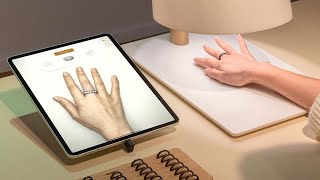
In this talk, fashion technologist and digital fashion lecturer Karina Ochoa de Baker explains why virtual try‑on (VTO) technology is essential for a more sustainable, inclusive, and engaging online shopping experience. She begins by sharing her personal journey in fashion tech and her commitment to sustainability, then outlines the major pain points of current e‑commerce apparel buying – poor fit, high return rates, lack of representation, and environmental waste. Karina walks through the end‑to‑end VTO workflow: a user captures an image or video, a 3D body mesh is generated, a digitized 3D garment (created with tools such as CLO or Browzwear) is draped onto the mesh, and AI provides size recommendations and styling suggestions. She highlights the role of generative AI (GANs) for rapid texture creation and photorealistic visualisation, and discusses how gamification principles (progress bars, badges, fun UX) can keep shoppers engaged. The talk also covers practical implementation challenges – device limitations, the need for inclusive skin‑tone models, clear UI, and cross‑department collaboration – and showcases real‑world deployments (Zero10 in Coach’s SoHo store, Cartier’s Looking Glass). Finally, Karina offers a strategic roadmap for brands: train internal teams, build an innovation unit, partner with vendors, and launch VTO with strong PR to drive consumer adoption, ultimately reducing returns, cutting waste, and enabling data‑driven product development.
Chapters
Hi everyone, thank you for coming. Today we're going to be talking about the power of virtual try-ons and gamification in online shopping. My name is Karina Ochoa de Baker. I am a fashion technologist and also a digital fashion lecturer. A little bit of my work. I love digital fashion. I love fashion. I love creating. I love using basically every single software out there. I want to learn it and I want to do beautiful things. But I want to do them sustainable. And that's what for me virtual try-on is very, very important. This is my students back in Colombia. I've been teaching since 2021. We have now two levels of digital fashion, and my students have gone into the workforce also to preach about sustainability and what digital transformation can do for the industry. This is some of the projects, and in these projects I done, mostly in Colombia. I have learned a lot about how the public perceive digital fashion in different environments through AR, through VR, through the creation of these digital works that talk about fashion. I have also created partnerships with companies like Zero10 that are AR solutions. I think I can have a good perception about how to build digital fashion, how people perceive it, how people shop it, but also how people want to experience it. I want you to think about these questions I have right here. When was the last time you bought something at a store? Right? Does anyone of you, you can raise your hand, if you still shop things at the actual stores? Okay, often? Okay. What percentage of your wardrobe have you bought online? Is it most of it now? Yeah, right, me too. Even though I thrift a lot, but I thrift online too. And are you satisfied with the fit of your clothing? Are you? No, right? Do you buy two sizes and then return one? Right, we are guilty of that. Not good, not good at all. And do we actually, for the ones in here that go to the actual store, do you trust the mirror? You go alone, you try on clothing, you're like, "I look amazing." Maybe you're hyped up because you're in the store. But then you leave and then you're going to go to your thing, you try it on and maybe it's not the thing for the actual event or the date. Happens to me, especially because I don't know what I look like from behind. I don't know if my jeans are pulling, especially here in the back. Happens all the time. What are the solutions for these problems? For me, the solution can always be found in technology. These are some stats from Google and Estadística. 59% of online shoppers, they feel dissatisfied with the clothing they buy because it looks different at how it did in the model that they saw online. 42% of online shoppers don't feel represented by models the brand uses to showcase these products, right? See all the gorgeous people, they're super tall. Some brands don't even put what sizes the models are wearing, which I'm like, can you please tell me? 'Cause she's wearing an oversized garment, but this garment doesn't say oversized. And I want it, right? Happens. And around 76% of adults in USA, they buy online. We are right there. E-commerce returns rate can be 2 to 3 times higher than when you buy something at the actual store. The average e-commerce returns rates are around 20 to 30%. And these numbers, they keep increasing, especially since the pandemic when all the actual fitting rooms closed, we were forced to start buying 3 sizes, 2 sizes, get it shipped to the house, put it on, and then return it. And then all the stores, like the brands, they have to accommodate, and they actually had to have free return policies. All of this is hurting the brands, and it's hurting the environment. This adds up to around $761 billion of merchandise. That is gonna be returned to the stores, is gonna end up in the stores or a warehouse. And what happens to that unsold inventory? It gets sold at a discount price, which is basically we're like just trying to make up for our losses. It gets donated, maybe. We are like a good brand, sustainable, that we're trying to do the good thing. Or it gets destroyed, and we all seen all those horrible headlines, right? And we all seen in the news My LinkedIn feed is full of it. All the clothes that we can see from the satellites in Chile. We don't want to be that industry and we actually have solutions and technology that can help us improve. Virtual try-on is one of those and it provides a more engaging and immersive shopping experience for customers while reducing our returns and the waste. Everyone knows this, right? 'Cause I love it. I didn't know I wanted to be a fashion designer when I was younger, but there were like two moments in my life that I'm like, "Oh, of course I like fashion tech." This is one of those. It was like, "How do they did this and when can I have it?" Well, now we can, right? And the other, I don't know if you, the only Barbie thing I like to play with was the Barbie Design with Me that had like the CD. You can print your clothes and it's basically like browsewear or clothes, but like back in the day in the '90s. And my older sister got it and I stole it from her. I love it. So how does BTO work? And this is just like my rundown 'cause we've seen many solutions and we're gonna walk through them in a minute. But this is in average how it works. This is just like the step by step. The user will provide an image or videos of themselves. And this can be done through your phone. You can have a massive scanner at the store. We've seen those too. And then the system will analyze the shape of your body and it will create a 3D body mesh. Then we also have in our system database that dashboard will have all the clothing from the company. And then it will basically take your 3D model Take your 3D garment, put it on, simulate it so it can accommodate to your actual body. And we have it in all the sizes, all the database, the colors. The user can select these and interact with this output, which is a visual output of how the garment will look on you. So you can actually spin it around, see it from the back, and see if the jean is gapping on the back. Virlo Try-On can also allow you— and the AI technology will give you a size recommendation. Which is great because then you can decide, okay, this is an average by body proportions. I can try these sizes and you can actually see how it looks. Then they can also give you recommendations of other pieces you can pair with your garments. I think we've all seen Google in the news in the past, was 2 weeks, with the AI-generated models, which in my opinion is great because it solves that problem where we don't see us represented in the models on the web stores, but doesn't account for actual fit. So it's kind of like prompting us to buy something that we think will look better on us based on that image. But we're still not at the point that I can say, okay, that's the size and I don't have to buy two sizes to make sure it fits. But they have paired AI throughout this amazing solution and they can also, as I said, recommend pairing of other garments to make a complete look, and it can give you a size recommendation. This is kind of what it looks like. So you will have your image or the image of the model. You will have the image of the garment and then basically superimpose like Photoshop one on top of the other, and then you have the output in a matter of seconds. And this is kind of what it looks like again. It can be you or it can be a model, as I said. Some of these solutions, you can put your measurement, like your height, your weight, and it give you a little bit more of accuracy. So we start to see that with the development of tech, more and more solutions come, different companies are working on it, give us different options. Still, I think I always like to think as the consumer and the end user is like, is this actually gonna give me the information I need to buy that one garment I actually want in the size that is going to fit me. So this is more of my favorite, which is a 3D accurate VTO, a virtual try-on, where we digitize all the pieces of a company and then you'll have your blocks, right? And if you're already here, you probably heard in all the other talks how all these softwares, CLO, Browzwear, and so many more can aid you in those solutions and you can even have them in a great PLM system. You can see them in all your colors. Size run, and so on. And in this part, it's very important to consider that that transformation with digital tools has to be done across all departments because we need to make sure, and Christian was talking about that yesterday in the morning talk, that the technical designers understand how to communicate with the digital designers and build these models that are accurate to the ones that are ending up in the store. And different process are needed if we're gonna put this garment in the virtual store. Just like without a model, or we're gonna do a lookbook, it has to be styled and photographed and rendered for the website. And then the garment that is going for production has to have all the specs, measurement details that the manufacturers are gonna understand. And 3D technology allows us to do that. And on top of that, at the end, we can take these virtual garments and put them in our BTO system. So here you can see for these 3D virtual try-on garments, the important part is that you need to have body mesh of the user body. So again, many solutions to get to this point, but always start thinking, how can we make this process seamless and easy for the end user? 'Cause not every single store around the world can have a massive scanner, right? Or can I have massive scanners across my 300 stores in the world? Yeah, it's complicated. We have amazing technology just right here. This phone, I bought the 13 last year because it has a lighter scanner. So allows me to do many, many things. We already have all this technology in our hands. So it's about us and companies to start thinking how we can create these experiences, my consumer is already shopping on the phone, how I allow them to do virtual try-on from the phone as well. So you can create a good representation of a body in 3D. You will have your garments created as well. And then you can put everything together with a great solution and try on the garments. Then we can also power this a little bit more with AR. Because it's great, I'm seeing this person, little tiny person in my phone, in my computer, but it's a little— we get in the uncanny valley situation. So ideally, the great thing will be to get into the AR moment that I can actually take a video and spin around and see how it looks, see actually how it moves. I will say that the technology is not there yet. Snapchat has great solutions, but if you have tried, you see that. The simulation of the fabric doesn't move great. And I don't think— if you're not an enthusiast as I am, it might get you a little deterred actually from buying. But we are going to get there. And it's important that brands, designers, and everyone in the industry start understanding what's happening because digitizing all these garments takes some time. I want you guys to know about GANs if you don't know already. They are generative— sorry. English. Generative adversarial networks. And it's a little— it's a type of AI. And the way it works, we can see it in this picture, is quite simple. Similar to the Google solution and the other AI solutions, you can see the garment and you have your model and you superimpose those things. And then it's kind of taking accountability not only the picture of the model, but all the environments. So it's very, very powerful, and it can give us a great output. So if you see in the second image, you can actually have a model walking, and the garment will move with them. So it's not 3D, but AI is really, really powerful and moves and grows really, really quick. So we're going to get there very, very fast. There is many papers out there, and I suggest you guys keep up with the network on LinkedIn because I always see all the good news in there. This is also Gant. I found actually this one on LinkedIn and I thought it was amazing how they were able to modify the pose and also the length and customize garments just with a click of a button. And now think about the applications for this in virtual trial. Quite impressive, right? See, modify the lens, click of a button. I was definitely amazed by it. And now let's get to the part of my talk when I tell you about gaming as well because I am not a gamer, full disclosure, not really. But I do love technology in all the ways. And I mean, we probably all have some sort of game in our phone that we really like, that we don't delete. And these apps keep bringing us back. We interact with phones. And even if we think about social media, they're like gamified platforms. They're like, ah, keep bringing us back. They have like, basically you have to see through things, you get little hearts and likes, and all of that make us happy, like a game will if you're getting some points. So, I think we as the fashion industry needs to take a few points and a few notes from their books. Especially with UX design, it's kind of fun 'cause I'm a fashion designer, and the designer thing kind of carries across platforms, because when I see something that doesn't look right, I'm a little bit like, ugh. Next, right? Or if you download an app and it doesn't work, you automatically delete it. Or the worst, if I'm trying to buy something and it just doesn't allow me to spend the money I hardly earned to buy these things, you get upset and you're like, "I'm never buying from this brand again," right? So how do we integrate not only the creation of all these garments, make a great platform, partner with great vendors to bring these experiences to our users, but in our own platforms, how we create the best experiences for them. Oh, I'm sorry. And this pyramid right here is so that you can see at the top what the user cares the most about. Yes, it has to work, it has to be reliable, of course, but it has to be convenient, enjoyable, and significant for their lives. These are 3 key points that I think are very important in video game design and UX design. Video games are multisensory experiences involving players both physically on pressing screens or buttons and mentally. So I think that's very important. Like where do we place the button? How we present this to our users, the colors we use, transitions, so on. UX also has the essential purpose of bringing players back. Into the game using elements such as progress bars, badges, and other counters that let the player know that there is more to be done. And isn't that what we all want for our online stores? We want them to come back. We want them to interact. We want them to browse through the stores. And if I have virtual try-on in my web store, I want them to try everything because that also will allow me— sorry— that also will allow me to understand what the user wants. If they're willing to see it in their own bodies in 3D, for example, I will know what they're more likely to buy next season as well. UX designers must ensure that the player don't get frustrated by badly explained games. And that's where I was going. We need to make sure— and these are very, very new technologies. I have seen brands start to put out there that they are integrating virtual try-on. But sometimes I go to the platforms and I don't know where to find this. Of course I'm curious, this is my job. But how are they explaining this to the average user? How are you letting your consumers know that you actually have this feature in your website? Is it seamless? Does it really, really work? Or are you putting it up there just for hype and getting in the news? This is a very simple image, but if I have these squares in front of me, I will immediately will want to fix them. Something as simple as this, and yes, it bothers me because maybe I am OCD, I don't know. But I think it bothers everyone too. Too busy, too complicated for the person to understand. Let's simplify these experiences, make them seamless for people to understand. Because Virtual Try-On is a new concept and we need to make sure that the user wants to use this experience but also understands that it's going to serve them a purpose. I think we all want to be sustainable. We start seeing some solutions and how they look a lot like video games. These solutions need to be pleasing to the eye but easily understandable. I think the international language is definitely math, but we all know how to communicate with these gestures in our phone. And I start thinking there is a language to that. There is a level of communication that everyone understands, especially if you are like a 3-year-old, 'cause they love to play in the phones and they know how to do all these things already. So we need to start understanding what is easy, how do I move all these materials, how is the user if I have different colors? Are they gonna click? Do I put different materials over here? If I put this avatar without any, indication. Are people going to try to spin it already? Right. Do I have to have assistance, which for your website you do. You have to, when you hover over it, it has to say basically what the button does. So all those things we have to consider across the process when we want to implement virtual try-on. Technology also should be inclusive. As we want to be green, we also need to be inclusive. And I don't think we're in a moment in history that we can pretend we don't know. So the people developing the technology needs to know this and needs to apply it. The brands need to make sure that their providers of technology understand that we need a different range of skin tones, right? We all need to be able to see our representation because we see it from Google, we see it from brands wanting to have a diverse selection of models and that if you If you don't have that, people won't want to buy your things because they don't see themselves represented. They cannot see themselves wearing the clothes of your companies. And we also not only have these two kinds of body, perfect female, perfect male. There is plenty in between. I really like this quote because BTO is a lot for web portals. But also, we start seeing that people want to wear or try digital fashion at the store. And they want to wear digital fashion of fashion outside in the open, like those videos that I show in the beginning. And this woman, I follow her on Instagram, she sells archive clothing that is amazing. And as I said, I love thrifting. But she say, I buy online, and in the odd occasion that I leave the house, I want the shopping to be a whole experience. We don't leave the house and we're not gonna not buy online, that is very convenient, just to go to a regular store. These technologies, if we implement that in our storefronts, in our windows displays, they can be really amazing and engaging for the user. This is an example of Zero10 in the Coach flagship store here in SoHo. The response of people in the streets where they just pass by and saw it in the window, everyone was amazed by it and what it can do. How engaging the technology not only helps you be more sustainable, but really engage you with the product. What the companies want is for the stores is to bring that foot traffic into the store and convert that in sales. Then this one really amazed me. It's from Cartier. They create the Looking Glass project. And at some of their selected stores, they have basically this machine. You take one of the rings, find your size. It has a little tracker on the top. And then you can just see yourself wearing all their collection in all the colors. Jewelry is expensive, right? And sometimes in the stores, they don't have all the colors, all the sizes. They don't have all the collection. And that also happens in fashion. But with virtual try-on, you can actually offer the whole range of colors, maybe some exclusive, at your stores. So I think this project is really amazing. It actually works with GANs and really, really— I mean, I'm not going to— I don't have enough time to explain it. But it's so amazing because it can take into account the skin tone, the whole environment, and produce an image using artificial intelligence off your hand wearing all this collection. And I remember the director of the innovation department of Cartier, I went to his talk and he say it was so amazing to see people 'cause they were like looking at their hand and then they did this and they forgot that they were using the technology. And I think that's the end goal for all of us, for people to enter to our web stores, to have these experiences in the stores and it is seamless. You forget the technology is there. I'm going to leave you with this quote from Sally Ann Hutton from Epic Games. She says, "The future of retail is play." I think that's key. Thank you, everyone. If anyone have any questions, please feel free to raise your hand.
So obviously, like, 3D garment is the preferred virtual try-on experience, is to have all the 3D garments and being able to do that. Do you think that there are good solutions out there for taking an image and overlaying it still as a midpoint? Do you think that's a good progression to work towards? Do you think it's not worth that step?
Let me go back to the beginning. And I mean, this is very much my opinion and thing. I think it's very important to combine it because AI is so fast. And I run through the process of doing all these things in my pipeline as a technologist, like using all the softwares, doing everything manually. And I get to points and garments are very complex, have many variations. There is still like, Even the education for 3D is not in most of the schools around the world. There is a big, big need for people that knows how to use all these softwares. So it's hard to build as many 3D assets as there is clothes, right? AI is evolving so, so fast and I cannot wait until I can texture a whole garment just with AI so I don't have to do it manually. I don't have to lay UVs and mark seams and do high poly to low poly and all these things because it's a lot. And imagine doing that for every single garment a store that has 2,000 styles is gonna put in their webpage. So I think it has to be a combination of both. It has to be the 3D mesh, I think it needs to be done with the patterns, with CLO, with Browzwear, with all these solutions because it will allow you to actually see, and they have the cloth simulation, right? I know how the physics of these fabrics behave so I can see if it's the tension, like even inside the software you can see, okay, pulling here, I have tension here, and then you will be able as a user, imagine, see that and they say, okay, this is gonna be tight on me, right? So for that, 3D. For texturing, for maybe size recommendation, and later on for custom garment creation, I think AI is key. And AI with GANs is, you can have an output of video and images. So it's not a 3D scene that you're seeing. The output of artificial intelligence at the moment is images and videos. So it is a combination of both where I think we really need to start investigating around everything and see how we combine this to make the best solution. Yeah. Hello, I have a question. If a company is starting with this process, what should be the first step? The first step is start training your team so that they can— your design team, your technical team— so that they can digitalize all your garments. You have to have a blog of 3D garments. I think that's a great first step. Also, have an innovation and technology department I think that's key because this technology is moving so, so fast. We have to be like every single day on top of what's happening and how can I implement a faster, better solution for my end user. Thank you. Do you have a question? Hi. What recommendations do you have for consumer adoption of VTO? I think it has to be, I mean, at this moment we do have to hype it and we have to introduce, like, get your PR team on it and do campaigns, like, make it fun. Like, virtual try-on, digital transformation, sustainability, it doesn't have to be boring. You know, show the consumers, launch a product, like, make it interested, like, interesting for them. But at the same time, make it seamless. Like, make sure it works great. Make sure it's ready to be out in the market because It's very frustrating if you hyped all the users, and they go on to try it, and then they can't, right? So, those two things I would say. Will there be outsourcers? Meaning, if I don't have a big IT in my company, can I send this jacket to an outsource for them to do everything for me? Yes, so in here there is so many vendors, right? That they offer technology, so I have seen people that digitize the garment. You cannot train your team. I mean, you at least have to train some designers so that they know how to receive the garments. But you can send the development of 3D samples to some of these vendors. There is so many companies nowadays that do that. So you have to look for them, for the good ones, and make sure you're getting— your digital product looks up to the standards of the physical ones, right? And then there is also vendors that do virtual try-on and the do peeling system that will integrate both. Yeah. And there is consultancy agencies that will help you put all of those things together as well. I— yeah, I think there is a few.
Hi, um, my question is, um, with the trends that you're seeing and the uptake of VTO, um, what do you think, in your opinion, is like a realistic timeline for like the uptake to be large enough to actually overtake the sustainability or the earth impacts of online shopping?
I mean, it depends on how fast we're able to implement it. I think there are solutions and we see them out there in the market. The fact that Google has done approaches towards that is something that we can start thinking in how we implement this, for example, in Shopify, right? It's probably just a plugin. So that alone, if we allow the users to have better information of what they want to buy, they will not buy 7 sizes or so many garments that they don't need. They will buy what they want. I think consumers are smart. They want to really, really know what they're buying, so we need to allow them to know. And I mean, it's hard to say because fast fashion is such a big problem, right? And people still relate. People are like, "Okay, if it's, I'm gonna buy." So I think, When implement like these solutions, you can really see right away a big change in the companies that are using good virtual try-on. So I will say right away in the returns and how like that even the production. So the first step you'll see a reduction of returns. The second step you start to get all this data information about what the user actually wants to buy so that you can plan accordingly and design better for those needs. So then you're like reducing and reducing. Using, but you have to make sure you're implementing across. For me, technology have to start in product development and then you already be more sustainable there. And if you take it all the way to virtual try-on, I think we can do amazing.
Do you have any thoughts around the acceptability around how accurate an item might look on a 3D model versus say, of photogrammetry, there's so many different methods to visualize an item on a body. Do you have any intel on what's acceptable to the consumer?
Yeah, so I mean, from working and also like from making these like micro events and like going to the other events like the Coach and the Dior and seeing how the people perceive it. So the photogrammetry or like the 2D, output when it's an image and you just see it will allow you as a user to see yourself represented in that garment and say, it will look good on me. When you just have that information, okay, that color looks good on me because this model has the skin tone or that cut in this dress will look good on me because that model has my body proportions. It will prompt you to buy it knowing that it will probably look good on you. but you don't know the fit. So then you have to implement for a 2D output size algorithm recommendation, and that will get you a little step further. But if you have a 3D mesh of your garment that you can put in the 3D body mesh of the user, then you can see where all that tension is. You can see all around if it's any gaping. We all have different bodies. We stand different, right? Our posture, all of those things are important in how— even the shoes I'm wearing. This skirt is too long for me to wear. To wear without heels. Things like that are important. So when I'm able to see how that looks in a 3D model, I am like almost sure that that's gonna look like that on me. So that's, I will say, is the difference. Okay. Okay, thank you everyone.










