They Said No… Until Marvel Finally Said Yes | PI Apparel
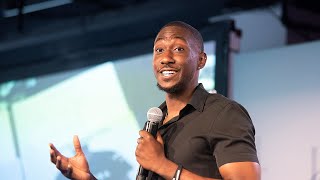
Paco Osando built Mzizi, an African-diaspora streetwear brand, and spent years pitching Marvel for a Black Panther jersey collaboration. After repeated rejections and a viral social media campaign, he finally landed the deal through a Disney contact, followed by a Lion King partnership.
Questions this video answers
Larger brands often focus on immediate ROI and may overlook initiatives that aren’t instantly profitable. To make a deep impression, they need to engage directly with the community, ask what impactful but low‑reach initiatives exist, and meet the audience where they are, even if the financial lift isn’t the biggest.
No upfront fee was required from us. Disney gave leeway; their typical minimum guarantee (MG) is six figures, but they recognized we were a three‑year‑old brand. We worked through a sublicensing arrangement with Sea Life, paying them a percentage of each sale, which they then passed to Marvel.
We are focusing on a B2B pipeline, currently negotiating a licensing partnership with Africa’s largest airline. I traveled to Ethiopia to meet VPs in person to lay the groundwork for their first foray into this space.
Motivating yourself consistently, especially through challenges, failures, and people‑management cycles. One must recognize that the original ‘why’ evolves over time and proactively identify new motivators—whether personal, financial, or about serving the team and customers.
I use AI daily for objective decision‑making, leveraging LLMs (ChatGPT, Claude, Gemini, Perplexity) to assess partnership fit and strategy. I also use generative tools like Sora for design references and to embed subtle cultural Easter eggs into our products.
Chapters
Good morning, everyone. Good morning. So I know it's a little hot today. I appreciate everybody for waking up bright and early to come to see me speak. I'll try not to take too much of your time because I know it's early, so people are a little sleepy. But I'm here to talk about IP, identity, and innovation, how brands can build fashion licensing partnerships such as I did with Marvel, Disney, and Paramount. So just a bit of context about myself. Again, my name is Paco Osando. It sounds a lot easier than it looks. I am Afghan heritage, but I was born here in New York. I bounced around a little bit in my past, so I spent a lot of my childhood in Ohio. Columbus. From there, I ended up moving down south to Dallas, Texas. Spent all of my teenage, prepubescent adolescent years out there and ended up going to the University of South Florida for undergrad. There was when I first started appreciating my culture a bit more. I think in each of the cities that I've lived in, I went through a few identity crises. You know, I didn't quite know who I wanted to be. I think I tried to assimilate with whatever culture was around me. And by the time that I got to Florida, I realized that, hey, these Islanders, these people, they're so proud of where they're from. They're building community. And coming from Texas, I had nobody in Florida. I was just lonely. I couldn't make friends. I didn't have family. I just wanted to be a part of something that was bigger than me and felt like I wasn't alone. So over the course of a year and a half, I had a bit of background in fashion. I went through like graffiti drawing stage in high school. I ended up putting those graffiti designs on t-shirts, sold them a bit. I knew a bit about printing, screen printing, direct-to-garment, sublimation. So by the time that I went to Florida, I met this one kid from Kenya. He used to wear just the dopest stuff that we'd wear here in the States. But have Kenyan fabrics stitched into it, where there's like the sleeves, the pockets, pants. And I just thought it was so cool, right? Like coming from Ohio, Texas, I never had saw anything like it, but I saw there was an opportunity. So over the course of that year and a half at USF, and keep in mind, I was going to school to become a pharmacist. I was studying biomed. I thought I was going to be on a completely different career trajectory. But seeing the kid that was from Kenya and stuff that he was wearing and having the background that I did, I was like, "Okay, maybe I can do something here." So going down that search for my identity and self-discovery, I ended up learning more about my own Ghanaian culture. Started— tried to do a full collection, everything from head to toe, from pants, shirts, hats, the whole nine yards. But I ended up coming out here to New York to try to find a manufacturer, everybody that do everything from start to finish, from ideation, design. Because keep in mind, I just had my graffiti drawing skills. I was not a full-blown apparel designer. I didn't have much background in supply chain and logistics. So I was like, "Okay, let me find a partner that can do everything from start to finish so that I can just present them the idea." They'll worry about designing it, producing it, shipping it, and I can just kind of worry on marketing and selling. So came out here. The company that I found told me that I was trying to do too much and that they'd have to hire extra staff in order to produce my entire collection. And me being me, I can be a bit stubborn. I don't know if that's the Ghanaian in me or just— being Texan, I tend not to take no for an answer. So I ended up scouring the Design District, tried to find another supplier, wasn't able to. Ended up like taking time off of school just 'cause I was like, "Okay, I'm a bit lost. I have this idea that I want. Pharmacy doesn't seem quite as appealing to me." Florida really was a lonely place. So I was like, let me figure out what I wanted to do and take some steps from there. So came back to Dallas, worked— and again, you guys are kind of getting the full context just so you know how we got to where we got with the partnerships. Came back to Dallas, worked as a pharm tech for some time, realized that I completely hated the field. That's no knock to pharmacists. It's a completely noble profession. But I just realized it wasn't for me and realized that I needed to take this idea of Mzizi a bit more seriously. So that's when I started doing more research, decided to scale down on the idea. Instead of doing a full-blown collection, let me focus on one type of product. And at the time, that was baseball jerseys. I had never seen an Africa baseball jersey before, realized there was a gap in the market, started doing my research to figure out which diasporas or African communities had the biggest enclaves here in the United States. And figured out where they're going to school, how to market to them, how to essentially engage with them. I realized that I couldn't be the only one that was feeling this way, that was feeling in between two cultures, disconnected, didn't have community or family, and wanted a way to feel proud without having to say too much. So after that, I ended up going back to USF, started focusing solely on Mzeezy. I never actually graduated. It was hard for me to pay attention in class at that point, especially when you have an idea that you're really excited about and it's starting to make sense. You see a gap in the market and you see the opportunity. Yeah, my mom wasn't the proudest, but alas, alas. So after that, started focusing on the first set of designs. Figured out the biggest countries that had the largest communities were Ethiopia, Eritrea, Ghana, Egypt, Kenya, Nigeria. And then I had a Black Africa jersey that had all the flags on it just so it'd be inclusive. And that way, if there's anybody didn't see themselves represented, at least there was something that was a bit more broad. As you can see, these designs were pretty rough. We never actually released these. These particular designs themselves. But after that, this was by my sophomore year, sophomore summer, I ended up debuting the first jersey, which was the Africa baseball jersey. As you can see, it has some Caribbean flags on it, African flags, and it was a hit. Everybody was asking me where I got it from, where can they find this? And this was before we officially launched. So by then I was like, okay, I got some product-market fit. I might be onto something here. And from there I ended up launching Mazzizi on August 30th, 2015, and said fuck school. So since then Mazzizi has blown up. As you can see, we've gotten covered by Vogue, Teen Vogue, Forbes multiple times. We've been on Afrobeat artists such as Davido or Mr. Eazi, GQ. I've been on the news a few times, spoke at some Ivy League schools. Yeah, the whole shebang. So about 3 years, or it was like 2 and a half years into the brand's birth, was whenever the Black Panther movie had dropped. And this was about, I want to say November of 2017. People had, they had dropped the official Black Panther movie trailer. And people were hopping on social media saying, hey, I don't know what to wear to the movie theaters. How about we wear some traditional wear? And then we had like a smaller segment that was saying, why doesn't Mizzizi make a jersey for the event or for the movie? And like, I thought that was cool. But at the time, we were only 2 years old. We hadn't achieved all this press yet. We were still kind of figuring out our bearings. And I was like, what does Marvel have any business partnering with a 2-and-a-half-year-old small Black-owned business? But again, I did my research, started looking for holes in the market, started figuring out how Marvel was going about marketing Black Panther, what products they had for it. Just how— what problems were they having with engaging with the African diaspora community in the US, and how could I position Mzeezy to be a solution? So from there, I ended up reaching out to Marvel's licensing department. I had sent them a pitch. And again, this is my first time in this space. I wasn't very familiar with anything. It wasn't the most, it was pretty crude and pretty unprofessional, and they should've rejected me. They're like, "We don't need any more licensing partners. We're good. We have enough. Get out our emails." So I was like, "Okay, that's cool." So I took to social media like most millennials would at the time, and I was like, "Hey, I think it would be really cool if Mzizi dropped a collaboration with Black Panther." please tag Marvel and let us know that you want to bring the idea to life. And it actually went viral. So there's the video. We can play it later. It got picked up by The Shade Room. It started circulating social media. And that's when I went back to Marvel. And I was like, hey, guys. There's market proof, proof of concept. What's up? They still didn't like that. They were still like, get out my inbox. We don't care. You're not even offering us an MG, a minimum guarantee. Why would we partner with you? And again, I can be very stubborn and bullish when it comes to an idea that I care for. And I ended up just revising a deck, sending it to them. This is the original deck, slightly tweaked, but kind of just going through the who, what, where, when, why, and how, showing them who we were, what it is that we wanted to do, why is it that it makes sense, how we compare to their current market, what the total addressable market size was, and yeah, just so that you guys can see. We were kind of saying that we wanted a partnership agreement with Marvel. Again, this is our first licensing collaboration, anything of the sort. Going in very rough. I didn't have ChatGPT or any LLM to kind of guide me in making sure that I was incorporating all the necessary information in a deck that people would like to see. But nonetheless, just kind of showing them what the product would look like, made a mockup. Outline the price point, how we'd go about making it, a bit of the design theory and why we made some of the choices that we did in regards to what we wanted to see in the Wakanda baseball jersey. They still were just like, leave me alone. Our no means no. And stop hitting up all of our colleagues on LinkedIn because it's getting around and we're getting quite annoyed with you. But alas, I really was trying to prove to them that it just makes sense. With the brand, we were targeting— I mean, at the time, Gen Z wasn't really a thing. But we were targeting 13 to 35-year-olds, those who were first, second generation Africans in the diaspora looking to initiate social change or just to be a part of something bigger than themselves. That were hungry for representation, that were trendsetters, wanted to have a vehicle that was relatable diversity. It was before DEI became as nuanced as it is today, but it just felt like an authentic partnership that just, again, just made sense. So it got to the point where after, even after I sent them the deck, and was sending the emails back and forth. They ended up CCing the legal department and were like, if you end up rolling out any product with Marvel IP on it, we'll have to take legal action. And again, you know, I was like, I don't care. The market wants this. It's on social media. It's going viral. It makes sense. Our customers want it. This is one of the biggest movies for the diaspora. Look how much money we can make. What's the problem here? And they just started ignoring me. It got to the point to where they stopped responding to my emails. They weren't really, yeah, they didn't like the fact that I kind of called out their current products that were on the market. And I showed them that like, hey, Based off what you currently have, it was cotton. It was really easy, like, faded, shrunk in the wash. It was a fraction of the price of our current products. We wanted to elevate the Marvel IP in a way that was just authentic to us. I came up with a bit of a market strategy. We had some— a bit of press that we were connected with back then. I did my research and figured out how Marvel was going about marketing. Their, I guess, fashion licensed IPs on Styled by Marvel. There was a few other collaborations I thought that we could incorporate with us. And then this was more so for the DVD, the week of the DVD launch in May as opposed to the movie launch because throughout this entire period, the trailer had dropped in November. I sent the pitch in December. I nagged them and nagged them and nagged them all the way to the movie launch in February. Still kept pushing in March. And I was like, hey, there's still an opportunity here, you guys. Even if the movie has dropped, there's still a chance for us to activate on it with the DVD launch that's coming in September— or in summer. So I think this is the video slide, just so that you guys can see what was the mock-up video that we put together with them. I appreciate y'all. It was a very crude video that we made when I was like 23 years old, but nonetheless, it got the job done. So as you can see, these were some of the social media reactions from whenever we dropped some of the pictures of the mockup, the video, people just going nuts over the jersey and showing that they wanted it. Some more social media reactions. Again, we were doing everything in our power to make sure that Marvel would see us, believe us, and recognize that this made sense. And I'm happy to say that after badgering everybody I could on LinkedIn that worked at Marvel in their soft lines department, it wasn't until a bit after March, there was one lady She ignored a lot of my messages, but she was still a bit responsive. And she was like, hey, I see your tenacity, your ambition. I see how hard you've worked over the course of the last 5 months. I see how much you've annoyed my colleagues. Let me just find an email for you at someone at Disney, which is our parent company, and see what can be done. So by this time, my team and I, we had decided like, hey, the movie had dropped. We have spent way too much time, money, and effort into a product that there's no guaranteed ROI at the moment. We can't even sell it. We're really just causing just noise for the sake of noise at this point. But again, I can be very persistent. So when that lady finally hit me back in March and she gave me the email for someone at Disney, I was like, OK, I would be just as aggressive with this email as I would have if I had gotten it months ago. Regardless if the movie had dropped or not. So I sent them this deck. I showed them all the social media proof that we had acquired over the last few months. And surprisingly enough, I got a random email back. It was like, hey, we love this nasty ambition. We've heard from our colleagues at Marvel how annoying you are. We'd love to work with you and see how we can make the Black Panther jersey a real thing. So lo and behold, we were able to launch with Marvel in May of 2015— or 2018— as a part of the movie premiere, or the DVD movie premiere. And then shortly after, they came back to us the next year saying, we love what you did with Marvel. Can you do something together for Lion King? And this was the live-action remake that happened in 2019 with I think with Beyoncé and her daughter and such. And yeah. So fast forward, this was our 6-year anniversary. As you can see, we're wearing some of the Lion King jerseys. There's a Wakanda jersey in the back, just showing the growth of the brand and how far we've came over the last couple of years. It's truly been just inspiring seeing just with a bit of tenacity, a bit of persistence, not necessarily caring how annoying you can be, you can truly get things done. So to kind of wrap everything up, the 3 points that I want to leave you guys with is that the future of licensing is cultural. I believe that brand partnerships, the ones that engage and connect and resonate with customers the most, are the ones that connect with their cultures and where they're from. I believe that diaspora stories will drive future collaborations. You're kind of seeing it now with Puma or with LeBron London and Arsenal and some of the jerseys that they've dropped that they're all incorporating just African motifs and nuances that are reflecting their fan base and their audience so that those can— people can feel more engaged with them. And that Gen Z and millennials are becoming increasingly identity-first buyers. I believe that especially in today's day and age with the political climate as it is, um, it's becoming a form of counterculture to buy products that represent where you're from and show off what you believe in. And I believe that as the younger generation gets a bit more spending power, they're going to increasingly buy products that show off those ideas and ideologies. And yeah, I think that's about it. I would love if anybody has any questions, and thank you guys for coming to my TED Talk. OK. So the first question from Ryan, identifying the opportunity with Marvel and pushing so hard yourself, what do you think are challenges for larger brands identifying these community-focused wins? I think a lot of times when it comes to larger brands, what you're looking at is the immediate ROI, like the fiscal— just how much money you can make. And naturally, at the end of the day, as a business, as what makes the most sense. I think sometimes you don't necessarily— in order to make the deepest impression on your audience, your consumer base, sometimes you have to do things that aren't necessarily financial-driven with ROI focus. Sometimes it's about just engaging and meeting your community on a level that can connect with them but doesn't necessarily have to be the biggest most profitable initiative of the sort. I think with larger brands, if you're taking the time to actually go out and talk to your audience, talk to these people that are in the community that you're trying to sell to, and asking them, hey, what are some initiatives, people, brands that are doing things in your community that are impactful, that you're keeping an eye on, that you know others are, that may not necessarily have the biggest social media reach or lift, but you think they're making an impact on the ground. And how can we best engage with them or meet them where they're at? Second question, did you have to pay an upfront fee for the licensing? And if so, was it a lot? No. I think Disney gave us some leeway. Granted, their MG is usually 6 figures. But they recognized that, again, we were only 3 years old at the time. They didn't want to put us out of business we even started working with them. So we were able to kind of work around the red tape and became a sub-licensee of a company called Sea Life. So there are licensing companies that typically handle different license from brands all over. And if the IP owner likes you enough, they can partner you with some of these brand holders or IP holders that already like hold their license license and work you in the contract to where you're a sublicensee. So essentially, we paid Sea Life a percentage of each sale that we made with the Wakanda jersey, and then they paid that percentage back to Marvel. We love your tenacity. What are you channeling now? I think as of late, I have been focusing on— we've been focusing on our B2B pipeline. There's another partnership that we're working on currently with an airline that's in Africa, the largest airline, so to speak. And if one thing the last 10 years has taught me is that working with Africans can be a bit challenging. So I actually flew to Ethiopia last year to kind of meet some of their VPs in person to see what can be done. It's going to be their first time licensing or being in this space. Space. So we're kind of working out the kinks now, but that's been my big driver as of late. So, and then hardest part of running your own business and what keeps you going after all these years? I think the hardest part of running your own business is actually the motivating or motivating yourself or just recognizing what can keep you going day after day, especially when you're facing challenges, failures, obstacles. Cycles, fires, people management. It's not easy. And I think you have to— I know people always say, what's your why? What's your why? But it truly— I believe that your why does change over time. And sometimes you have to acknowledge that and recognize that what motivated you in the beginning may not necessarily be what motivates you 5, 10 years down the road. But honestly, in each of those stages, when you see that your original motivator is changing, you have to be proactive in identifying what's the new motivator, reevaluating, does this make sense for me to continue doing? And if it does, why is such? And then recognizing that, OK, I have a new motivator. Let me take this, embody this, and utilize this to keep me pushing. Sometimes it's going to be self-centered motivation. It's not always altruistic. Other times, it's going to be about the people around you, the people that are depending on you, some the payroll, and recognizing that some people may not necessarily eat if you're not able to keep this business going. And getting to a point to where it's not about you anymore. It's about those that you're serving. How bullish are you with AI? So I think I've been pretty— how can I say it? I use AI daily, more so in helping me objectively make decisions. I use different LLMs such as ChatGPT, Claude, Gemini, Perplexity, and kind of asking them like, OK, I want to partner with this brand. Does it make sense at this time? Or how can I position myself so that we can be a solution for this brand? Or what opportunities may there be that we can use to serve them? Outside of that, sometimes even working with our designers using Sora to kind of create reference images that they can go off of just so that they know which way that— what do I envision in regards to jersey design or just maybe a symbol or motif or even research and development and trying to find what are the small nuances of each country? What are those Easter eggs that they that if you're someone that's from this country, you know about it. You may not necessarily know about it if you're not from there. But anybody that sees it that is part of that culture going to recognize like, hey, this guy gets it. So I use AI quite often. But there's always room for improvement. How does my mom feel about Mzeezy's success? [SPEAKING CREOLE] You know, she was a bit mad that I dropped out of school to run the business. But honestly, she's my biggest supporter. So my mom was our angel investor. She sold some stocks and was able to give me some funds so that I was able to produce Mzizi's first collection. Now she wears it everywhere. She runs around. She's telling everybody about it, giving wristbands. Yeah, yeah. I love my mom. But nonetheless, I think we're at time. Thank you guys so much. You've been a beautiful audience. Please feel free to meet me in the back or wherever if you guys have any additional follow-up questions. And yeah, welcome to the PIAPIRL conference.










