This Is the Future of Creativity… Whether We Like It or Not
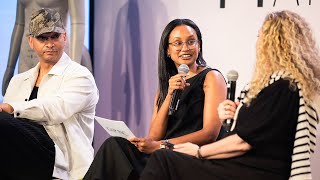
Jonathan Delagarde and Jill Mazur discuss how AI is reshaping fashion design at Gap Inc. They argue AI handles repetitive tasks like color tweaks and trend analysis, while human intuition and storytelling remain essential. The key concern: designers need to master analog sketches and mood boards first, or risk losing the skills that make fashion creative.
Chapters
[SPEAKING CHINESE] All right. Hi, everyone. So I'm really excited to kick off this conversation on AI versus human creativity. I think it's a really timely topic. I'm sure a lot of you guys have been looking into and hearing about and talking about AI and how it fits into your strategies. It's really relevant to how we're designing as far as the future of fashion. So as we were introduced, I'm Blaine, and I am a product manager at Gap Inc. At Gap Inc., we're not just watching the shift in how technology is evolving the way that we design product. We're a very human-centered, digitally-enabled organization, and we want to be leading that charge. And so what that means is engaging tech companies at conferences like PI, driving innovation so that we can really meet our customers where they're at. And so AI is a powerful tool to get us there, but human creativity is what gives design its soul. So I think as we go through this session, I want us all to think about moving from AI versus human to AI with human. And so I'm really excited to have Jonathan and Jill here with me today to talk about this. Do you guys want to give any other intros?
I'll give an intro. So thank you. My name is Jonathan Delagarde. I've been in the industry for around, gosh, almost 20 years now and have held design leadership roles at really big companies such as Nike, The Gap, specifically Old Navy at The Gap, Kohl's where I helped launch the Fearless Sport brand. That was the first kind of like big licensed fashion brand with Kohl's. Smaller, more fashion brands out of Europe like Diodora, startups. So I've really seen the gamut from big box retailer all the way down to value, to luxury, to startups, and just, I've seen with the successes there and also the challenges, the pain points in terms of product creation. And then with the advent of what's going on with AI, I'm starting to now see a different way, a different process of really making the concept to consumer process stay true. So yeah, excited to talk about that today.
Hi, I'm Jill Mazur, and I am not a designer. You would not want me to design anything. I can't design my way out of a paper bag. However, I work with business process and technology, and so I am a big proponent of technology. I'm a big proponent of AI when it makes sense. And I have been in the industry my entire career, so I have gone from manual sketch to digital sketch to Adobe to Procreate to 3D and now to AI tools. And I'm fascinated with how I see the impact on the industry, not just in terms of design, but in terms of the people that it impacts.
Well, it's a perfect segue because my first question is for you, Jill. So we know AI can support rapid iteration of design concepts and details, but where do you think human designers still still lead, and is that edge shrinking or just evolving into something new?
I think it's just evolving. I think that humans will always lead with creativity and imagination. There is nothing that AI can do to replicate the creativity and the imagination of, of a human. I think there's a lot of technology out there that can take inspiration from what exists today and can add creative flair to it and can create, new and interesting product, but it doesn't know what's going to sell in the market as much as a designer can look at a style and have a feeling or make adjustments or just understand where a tweak here, a hemline there, a curve here, all those types of things that are— and especially the feel of the material. All of those things that are so important to the types of products that we make. However, I do think AI has great tools and can iterate with lightning speed. And a designer does not have the ability to do that. So I think working in conjunction with AI tools can give designers a great edge to make better product, to make more relevant product, to innovate.
Yeah. I think when we're also looking at sort of the difference between what the strengths are of something like an AI technology versus Humans, design intuition is a big piece of it. And so we often talk about that as a gut feeling, which I interpret as a mix of experience, emotion, instinct. Jonathan, do you think AI can ever replicate that, or is intuition really that same piece, that last piece that differentiates us from the future with robots?
I think it is, and I think that The one thing, at least at this point, that AI can't replicate is just nuance, emotion, the way that a really experienced designer can talk about their design, talk about the collection, and how they deliver that experience, that emotion behind the creation of the collection to all of us. I think that's something where, you know, to your point, AI is a, a tool, and it's data in, data out. It's what we put into it. But really, I think the thing that all of us are passionate about is the stories that can get told with fashion, the emotions that it can evoke. Because, you know, my thing is that the biggest gift I get from fashion is when someone's wearing something I've designed or that I'm part of and they feel powerful, emboldened, and really, they just feel really dope about what they're wearing. And AI can't replicate that, I mean, yet. So I think that's the important part too about design intent.
I was just going to say, it would be interesting to ask AI, what was your design inspiration for this?
It'd say, well, you told me to do this.
Right, exactly.
The prompt you wrote. But speaking of data in and data out, do you think AI can be trained to understand like taste and culture and some of those nuances? Or do we think ultimately that's, again, still inherently human?
I mean, I think theoretically, yes. But then it's still not taking, I think, a unique approach to culture because it's still getting it from someone that's telling it what culture is. So that just goes back to the same data in, data out kind of situation. I think culture, again, is part of the storytelling part of design and creation. Ultimately, we're just storytellers here, and the product is a vehicle for that story. Yeah.
I think one thing that's also interesting is we adopt more of these AI tools? Obviously, we're talking about AI with humans rather than fighting against each other. But when we talk about things like that creative vision and the storytelling, how do you guys ensure that that remains intact as people leverage AI as part of their process?
Okay. I think it's You keep that intact by making sure that there's a robust process before I think AI is even integrated into the flow. You know, mood boards, like these analog things actually do help to really crystallize what we want to get out of the collection, the story, the design, and then For me, I remember just working at Nike. They put a premium on pencil sketching. That's part of the ideation process that's really important. It gives a certain sense of character and detail that they— it's really important to that organization. So being able to do that first before starting on the AI process, I think it helps us separate from just being so digital with it all. And I just, I think it's better than just starting purely in AI and saying, I want this collection, go. I think there's something that's maybe a little inelegant about that.
Yeah, it's a little bit more of a sort of enhancement as opposed to a replacement.
Correct. Correct.
Yeah. Is that something that you're seeing, Jill, in your work as you are sort of bridging business process and technology, how people are thinking about bringing AI into the mix and if it's replacing some of that hand sketching or additive?
I think for some of the companies I talk to, it is replacing the hand sketch. And for a lot of the companies that are making more sort of mass market product, it's very— I'm not going to say easy, but it is an easy way for companies that are doing repetitive styles season after season to just tweak here, update here, and basically allow AI to essentially take its cues and do a lot of the design work. I don't think designers appreciate that or want to feel like they can be replaced, and I don't think they should be replaced. But when you are not doing a lot of innovative design, you know, it's very easy to tell AI to recolor this, tweak this, turn, you know, change the neckline here, change the hemline here, do all of that and create a season, create a catalog very quickly. I hope that those types of tools are— I can see the benefit in them, but I can also see that designers will take offense to it. You know, my job is being replaced. And we don't want to see that. We want that creative input because AI can just do what you tell it to do, and a designer can make those adjustments and do the things that are necessary to make the product better. AI is never going to know that it's making the product better. It's just knowing that it's making the product the way you are asking it to make the product.
I think with that, it's interesting because if you— I think if the entire org uses that ability to take something and just make subtle changes to it, print changes to it, it could actually free up the design team to do something new. So for instance, if you have your Air Force One, you know you're going to run that year after year, new colors, new materials. You can just push that through, and then maybe free up time for the designers to do something new and iterate something on top of that. Could be the new Air Force One. So—
Yeah, that's very true.
Yeah.
Yeah.
No, that's a great point. Because it's, you know, what are those repetitive tasks that are not necessarily value-add? I'm sure— I mean, I don't want to speak for designers in the room. I'm not a designer myself. But I can't imagine it's the most exciting part of your job to just keep recoloring the same t-shirt or pair of shoes over and over again. It's about having that time to do the creative process and think about what's new, what's innovative, how am I going to push fashion forward. And bring our customer along that journey so that they do feel great in the clothes that they're wearing. And I think that's a great point because I think as industry leaders, one of the things that we have to think about is not just our current teams and people who are in place today, but also the next generation of designers. Like, how do we show that it's possible to be a creative partner and not a threat? It's kind of as you were alluding to— maybe not alluding to, speaking to Jill. That it's taking away my job as opposed to giving me some of that creative freedom back, potentially?
I'm not sure if I can—
Loaded question.
It's a good question. I'm not sure if I can answer it well. So I think that as designers are coming up in the world, and as they are learning new design tools, and they are— having a lot more skills, maybe, you know, things like hand sketching sometimes does go away. Things like, you know, hand drawing patterns, that those types of tools go away and those skills go away. And I don't know if Pat is out here in the audience, but we've been talking about this back and forth about keeping those skills alive and being able to, to use them to, to— for our next generation to be able to learn them. I think that technology is a fantastic way to be able to innovate. It's a fantastic way to modernize. It's a fantastic way to look forward. And if people are taught to be able to use those tools to make their own decisions, make creative decisions, take inputs from different areas, be able to have AI scan for certain trends or certain materials or whatever the types of inputs that you put in there so that you can then spend your time being more creative, putting together a more interesting product, adjusting fit, adjusting drape, adjusting materials, and so on and so forth. I think it can be very beneficial.
Anything you want to add?
Sure. I think to what you said in terms of for the younger designers, really having them embrace the analog part of design and seeing the worth in it. Whenever younger designers that are out of school hit me up on LinkedIn or something like that, and we're talking and there's a little bit of mentorship happening, like that's something that I bring up, like, you know, just embrace those skills and don't be intimidated by them. And yeah, AI is a tool, and I think it's just incumbent upon, you know, leadership generation after generation to make sure that that is the case, that it's a tool and not the, overarching encompassing kind of generator of ideas because we all need to feel human at the end of the day. And I think that's the kind of the gentle kind of balance that we have to kind of take on when dealing with AI. Yeah.
Yeah. And I think one other thing that you, as we were preparing for this, had brought up that was interesting is also emphasizing the fact that these AI tools are still trained on something. So it's those human inputs of designs that we've done in times past. It's the human input of the prompting or the sketch that you submit in order to get this new iteration or new outcome. So there's still that human component really at the heart of it.
Yeah, yeah. And it just comes down to nuance. I mean, that's one of the most— human things that we can add to any creative endeavor. It's just nuance, emotion, and being able to use that in conjunction with AI to make that ability to create nuance and emotion faster and more robust. I think that's where you can have a shot.
I have one last thought-provoking question. And then I want to make sure the audience has a chance to ask some. So if a designer uses AI to generate a collection, who do you guys think owns the creative credit? I want to know what you guys think about like authorship and authenticity in this world of AI. And if that's different than traditional models of being you know, inspired by other designers.
So I want to come at this from more of a technology and a legal aspect because that's a very slippery slope, right? So, you know, we talk about copyright infringement, we talk about trademark, we talk about counterfeit product, we talk about all these different things that, you know, even if you're looking at a print and you use a copyrighted print or trademark print for from a company, there are tons of lawsuits out there where you have a similar print. It's not different enough. And with AI these days, what are those rules? I don't even know that we have been able to establish that. And I imagine that there will be a lot of legal battles about this is too similar, you know, with, with somebody taking an AI tool and saying, design me this. This, you know, take an inspiration from the last season's Chanel collection, make it in whatever the material is, and not doing their due diligence to make sure that what their inspiration is is not just a knockoff, that they can be sued from it— by it. I think that that's going to be a really big issue, and I think that if companies are not careful and designers are not careful careful in the designs that they're making that are AI-generated, this could be a big issue.
I was listening to a music podcast and they were having a similar discussion about, you know, these AI tools that are used in music industry. They're pulling from catalogs, so now they can, if they hear something that they think is original by AI, they can figure out where they got the samples, so to speak, from that create this new composition. So in terms of the ownership, it's tough because then you're going to have— it's all about the prompt. If I am the designer and that's my prompt, is that enough to be an owner? To have ownership of a design. And I don't know if that's the case because to me, I still go back to that designer did not sketch it. They spoke it maybe into existence, but there wasn't a sketch. Like, it's 10% what you did and then 90% what AI did. And that means that it's owned by Midjourney or whoever did the work.
Yeah, I think that this is going to be one of the big sticky areas that we're going to find with AI, with just copyright infringement and all of those sorts of things. There's no way around it. But who owns the design? Who gets sued for it? Do we sue AI? I don't know.
Yeah, but I think it's a good point too of just, again, we talked a little bit about taste and nuance, being inherently human, but it's also important to have that human in the loop and make sure that you're reviewing those outputs because at the end of the day, all this like guidance from a legal standpoint, like it's always slower than technology. And I think we're all seeing how rapidly AI is evolving. If anyone was here last year, like some of the stuff that you guys are seeing downstairs is dramatically different than what we saw a year ago. And that's in a year, like 3 months from now, it's gonna look totally different too. So, We have to use our human judgment as well to make sure that we're still applying the same thought processes regardless of how that design came to be.
Yeah.
Yeah.
All right. I think now we want to open it up to questions from the audience. If you want to use the Slido, and we'll answer them.
I'm surprised AI hasn't logged in and started asking us questions.
Don't give it any ideas.
So while we're waiting, Jonathan, what— where do you find some of your design inspirations? You know, so when you're coming up with a mood, a theme, a dream? Where do you find you get a lot of your inspiration from?
I've tried really hard, especially in the last— in, like, the latter part of my career, to not look at as much fashion anymore, like, to really try to not be influenced by things I like that I would wear on a regular basis and really come at it from a a more original point of view. I love architecture. I look at that all the time. You know, I'm really fascinated by the storytelling part of building a collection, so I've just been reading more books, like reading more books about philosophy and seeing Seeing where that can lead me in terms of how do I describe, how do I wordsmith out this collection so that when I'm describing it to someone or where if someone's reading a lookbook, they can feel some sort of emotion or something that's relevant to them when they're reading about the collection. And then seeing that the visuals, the fabric, the colors really tie back to the words so that they get a full experience. Experience, both like visual, you know, depending on the project, audio. So yeah, that's where I'm looking at.
So it's not a prompt that you've typed into something?
No.
But no, it's a great point of just what that creative process is and making sure that that's not lost in all this use of AI and other technology. All right, so we started getting some questions. What AI services have you had experience using to design?
So I've used Midjourney. And I've used quite a few— Midjourney, Vizcom, Straight Lines, which is a newer platform here. Which I really like. I think with— I'll say with like Midjourney, whenever I try to input like my pencil sketches or like whatever, something like that, it definitely took a lot to get to where I needed to go. And I just started to think about like the time used doing that. And it's definitely— it's more challenging than I than I thought it would be in some cases.
Yeah, it's like it's its own skill set. Sometimes you can spend more time going back and forth on the prompt and getting that right to get what you're visualizing in your mind.
Yeah.
It's a whole skill set in and of itself.
It is. It is.
All right. Where do you think is the easiest and most efficient way to use AI within the apparel industry? And where do you think it shouldn't be used? Used. I definitely agree with Jill, what you were bringing up earlier of just kind of those repetitive tasks and some of the really easy, simple iterations, more colors, those types of things. But to your point, some of that more creative, innovative thought, there's something that's a bit harder to convey right now.
Yeah.
I also think with a lot of the analytics I mean, we're not talking design right now, but I'm talking technology. But a lot of the vendors that are downstairs and a lot of the analytics that they have, a lot of insights that they can provide from all the data points that they're able to gather, I think that's amazing. It's so much more efficient and effective to be able to collate that information from all of these thousands and millions of data points to to help companies make better decisions. You know, merchandisers have a very challenging task to figure out what a line's gonna look like, and being able to take cues and understand what's selling better and what's selling worse and what's trending and what's not trending certainly can help with making those decisions.
Yep. That's definitely a huge place where technology has the advantage over a person trying to do all of that work, just the vast amount of data that's out there. Are, we kind of talk about a little bit, it's, there's a lot of data out there in the world, but if I don't have like actionable information, if I can't pull it all together, if I can't fully understand if this signal is something I should listen to or not, AI can also help with that. So it becomes a lot easier to sort of, to know where to take some of those strategies.
I'm not sure where it shouldn't be used. I'm sure I can think of some places though.
Do you guys think AI is replacing the bot sample as a source of information? I mean, I think it is in maybe not replacing, but is another data point when you're thinking about what we were just saying earlier about analyzing trends and like seeing how things are evolving out in the market, whether it's social or runway.
[Speaker] Right, right. Yeah, I agree. I think it's not replacing it. I think buying samples to supplement or start the process of your collection is an art in and of itself. And I've seen, I think we've all seen times when parts of your org just go crazy buying samples, but there's no really rhyme or reason to it, or they're buying things that you already do in-house. So maybe that's where AI can be a little bit more helpful. Like, they may come up with a mood or a reference that you're like, "Oh, okay, I don't really see that in the market." But I think both of those processes or those things like buying samples and using AI, they can go hand in hand, I think.
Yeah. And I'm a very tactile person. I'm not the person that should be out there buying samples, by the way. —But no, to me, I think that is really a source of inspiration. And being able to touch and feel and see a drape and understand that how a garment fits a person or how a product fits a person is— I think that's inherent in our business. I don't think that can be replaced.
[Speaker:CHRISTOPHER] And I agree. And I think with buying samples, if you're really going to do some really important unlocks in terms of of just intelligence. You know, when you go to that store, you buy that sample, you talk to the person working there, you get a sense of what's working, what's not. You do impromptu just discussions with buyers to see, you know, and if you're really gonna get down with it in that way, then you're gonna start to get a little bit more intel than just buying a sample. So, you know, you can get some market intelligence as well, which AI can't do.
Yeah, yeah, exactly. All right. Well, unfortunately, we are out of time for the remaining questions. Thank you guys for submitting all of those. Feel free to grab any of us if you still want to learn more. I just want to say to close this out, I hope this was insightful, helpful. You know, again, as I started off, it's AI with human, not AI versus human. That's— there's ultimately strengths and weaknesses across both sides, and it's about bringing that all together to have a stronger design and creative process in the end.
Thank you. Thank you.










